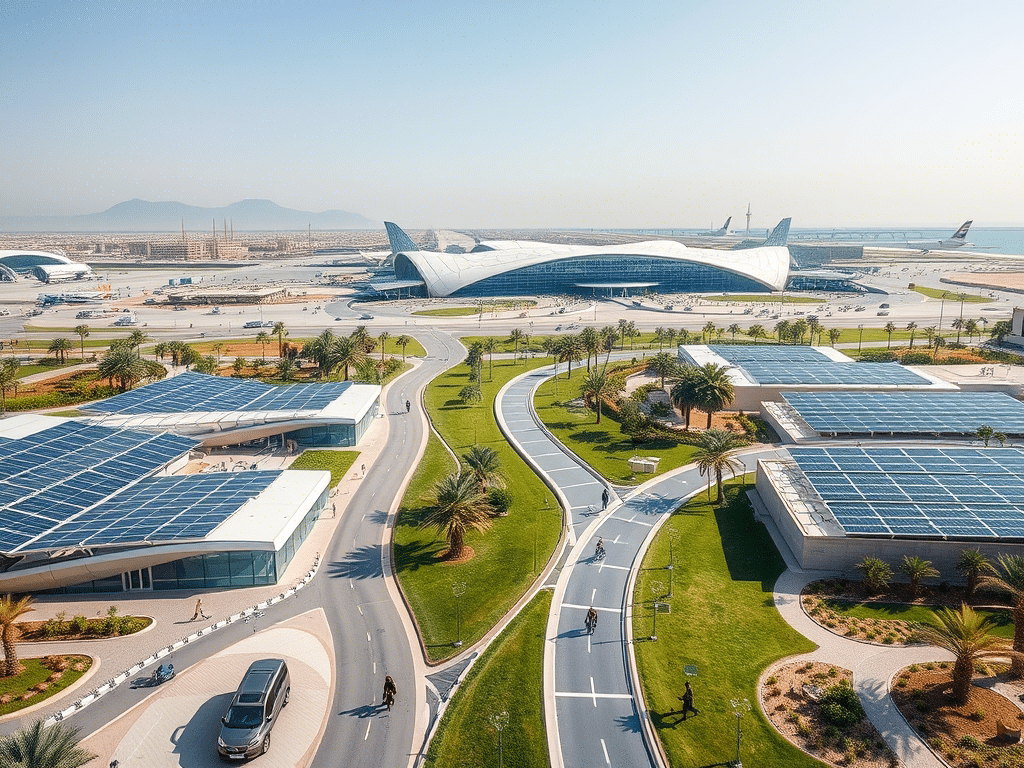
Turn on any news channel right now, and you will find war headlines, geopolitical noise, and market jitters. Yet, 5,000 kilometres away in Dubai, a Dh2 billion construction contract just got signed. That contract covers multiple phases of HAYAT by Dubai South — a 10-million-square-foot master-planned community of 2,500 homes sitting directly in the growth corridor of Al Maktoum International Airport. This is not a coincidence. It is a pattern. And if you understand that pattern, you understand why Dubai off-plan property investment in airport-adjacent districts keeps attracting capital regardless of what is happening internationally.
This article breaks down what the HAYAT contract actually signals, how airport-growth corridors insulate property launches, and why long-term planning cycles — not daily headlines — drive decisions in this market. If you are tracking new developments in Dubai’s off-plan market, this is essential reading.
The HAYAT Contract at a Glance
Dubai South Properties awarded the contract to Mohammed Abdulmohsin Al Kharafi & Sons LLC. Construction is scheduled to begin in Q2 2026, with initial home deliveries expected in 2028. The project sits adjacent to the Golf District and within direct reach of Sheikh Mohammed bin Zayed Road and Emirates Road — two of Dubai’s primary arterial highways.
| Metric | Detail |
| Contract Value | Dh2 billion (~$544.6 million) |
| Developer | Dubai South Properties |
| Contractor | Mohammed Abdulmohsin Al Kharafi & Sons LLC |
| Total Area | 10 million square feet |
| Residential Units | ~2,500 (1 to 5 bedrooms) |
| Unit Types | Apartments, townhouses, semi-detached villas, standalone villas, mansions, hotel apartments |
| Construction Start | Q2 2026 |
| Initial Delivery | 2028 |
| Location | Adjacent to Al Maktoum International Airport & Golf District, Dubai South |
| Strategic Alignment | Dubai 2040 Urban Master Plan & Dubai Economic Agenda D33 |
Why Airport-Growth Corridors Are Different
Most real estate markets slow down when geopolitical uncertainty spikes. But communities anchored to major infrastructure — particularly airports — operate on a different logic. They are not built on sentiment. They are built on capacity, cargo throughput, employment projections, and long-term urban planning commitments that span decades, not news cycles.
Al Maktoum International Airport is projected to become the world’s largest airport, with an eventual capacity of 260 million passengers annually. The first phase of its expansion is already underway. When an airport of that scale grows, the surrounding district grows with it — hotels, logistics hubs, free zones, retail, and, critically, residential communities for the workforce and investor base it attracts. This is why Dubai South already hosts the Dubai South Free Zone, Jebel Ali Free Zone access, a GEMS Founders School, and a 200,000 sq ft mall under construction.
Understanding this distinction helps investors see why deals like HAYAT are not bets on short-term market sentiment. They are strategic plays anchored to Dubai’s long-term yield and location fundamentals.
| Driver | Impact on Dubai South Property Market |
| Airport expansion to 260M pax/year | Massive job creation dis riving residential demand |
| Dubai South Free Zone growth | Business tenants require nearby workforce housing |
| Jebel Ali connectivity | Industrial and logistics workers need homes in the corridor |
| D33 & Dubai 2040 targets | Committed government capital into the district |
| Expo City Dubai legacy | Established urban framework enhancing desirability |
Launch Confidence Is Tied to Planning Cycles, Not Headlines
The HAYAT launch in 2025 and its subsequent Dh2 billion construction contract in 2026 are not spontaneous decisions. They are the output of planning cycles that began years earlier — feasibility studies, land acquisition, master planning, regulatory approvals, and investor pre-sales. By the time a contract of this scale is signed, the developer has already validated demand, secured financing, and committed to a delivery timeline.
Nabil Al Kindi, Group CEO of Dubai South, confirmed this momentum directly: the project attracted strong demand since its launch in 2025, driven by its wellness-focused design and strategic positioning within the airport growth corridor. That demand is not circumstantial — it reflects the structural appeal of master-planned communities that blend connectivity with lifestyle.
This is exactly why smart money continues flowing into Dubai’s off-plan property market even as global geopolitical headlines grow louder. Investors who understand the Dubai development cycle recognise that contract signing is a signal of de-risked commitment, not a speculative punt.
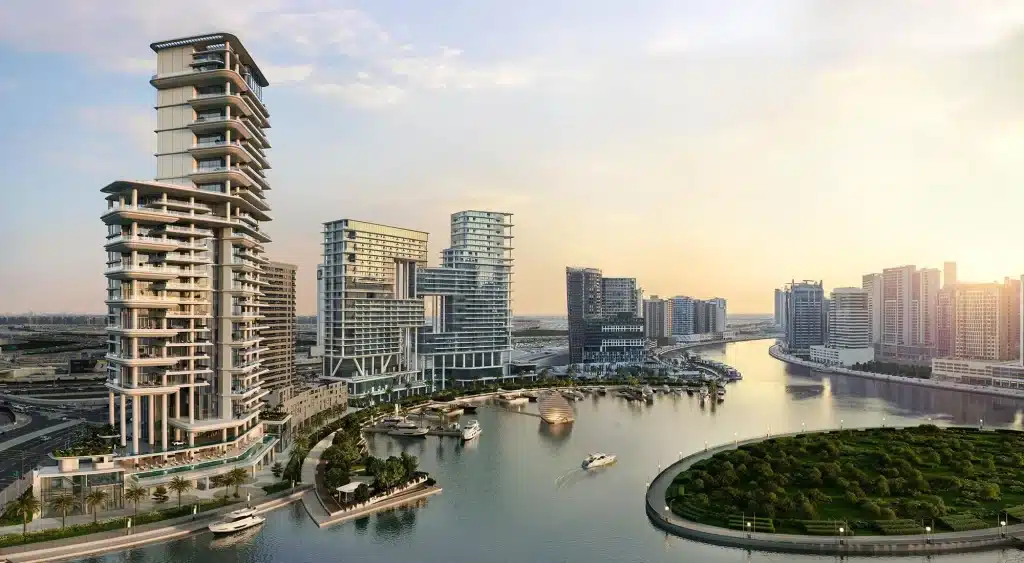
What HAYAT Offers: A Community Built for Long-Term Residents
HAYAT is not just a collection of units. It is a wellness-inspired, integrated neighbourhood designed to attract owner-occupiers, long-term renters, and investors alike. Its amenity mix signals a developer confident in long-term occupancy rates:
- Lush parks and shaded walking trails
- Family play zones and outdoor recreation areas
- Fitness and wellness facilities
- Community pools and landscaped gardens
- Dedicated relaxation and gathering spaces
- Minimalist architectural design emphasising privacy and adaptability
The broader Dubai South ecosystem adds further depth: a public bus route to the Expo Metro station, a nearby hypermarket of 50,000 sq ft, a mosque, sports courts, retail, and the GEMS Founders School. For families and long-term residents, this level of infrastructure is a fundamental draw — not a marketing bullet point.
For investors tracking off-plan villas and townhouses in Dubai, HAYAT’s unit diversity — from apartments through to five-bedroom mansions — means there is an entry point across multiple budget tiers, all within the same strategic corridor.
Dubai’s Macro Numbers Still Point Upward
Amid the noise, the numbers remain striking. Dubai recorded 270,000+ property transactions in 2025 — a historic high. January 2026 alone saw a transaction record of $19.72 billion. Off-plan deals account for approximately 65% of all transactions, and price growth of 10% is projected for 2026. Against that backdrop, a Dh2 billion infrastructure-linked community contract is entirely consistent with market confidence.
What further insulates this market from war-headline volatility is the UAE’s structural appeal: zero personal income tax, zero capital gains tax, a RERA-regulated property framework, and a Golden Visa pathway for investors committing AED 2 million or more. These fundamentals do not change because of overseas geopolitical developments. They compound over time.
For a broader perspective on how Dubai property is absorbing current shocks, this analysis on real estate market resilience amid volatility is worth reading.
Should Investors Be Watching Dubai South More Closely?
If you have been focused primarily on Downtown Dubai or Dubai Marina for off-plan property investment, Dubai South deserves a serious look in 2026. The combination of the airport expansion, the established free zone ecosystem, Expo City’s legacy infrastructure, and now a landmark contract like HAYAT creates a convergence of long-term demand drivers that few other districts in Dubai can match.
The critical question for any investor is not ‘Is the world stable right now?’ It is ‘Is this district structurally positioned to grow over the next ten years?’ For Dubai South, the answer is yes — and the HAYAT contract is one of the clearest public signals of that.
Investors watching off-plan opportunities should also monitor whether panic selling off-plan assets during market noise is actually a costly mistake — particularly in infrastructure-linked communities where the demand case is multi-year, not multi-week.
| Factor | Airport-Linked Community | Standalone Launch |
| Demand driver | Structural (jobs, logistics, population) | Sentiment and pricing |
| Planning horizon | 10–20+ years | 3–5 years |
| Government alignment | High (D33, Dubai 2040) | Moderate |
| Resilience to headlines | Strong | Variable |
| Amenity depth | Full ecosystem | Development-level only |
| Rental demand base | Diversified (expats, workers, HNWIs) | Narrower |
The Bigger Picture: Dubai Is Playing a Long Game
HAYAT is one data point in a much larger story. Dubai’s leadership has been consistent for decades: commit to infrastructure, build around it, and let the population and economy follow. Al Maktoum Airport is the centrepiece of that commitment for the next generation. The Dubai 2040 Urban Master Plan and the Dubai Economic Agenda D33 are not aspirational brochures — they are actively funded, multi-agency programmes that shape where developers place their capital.
When you see a Dh2 billion contract signed for 2,500 homes near the world’s future largest airport during a period of global headline turbulence, it is worth asking: who is nervous, and who is building? The answer, in Dubai South, is clear.
For investors who want to understand the current Dubai property market landscape and long-term investor strategy, the fundamentals remain intact — and communities like HAYAT are the evidence.
Interested in Dubai South Off-Plan Opportunities?
If the HAYAT story has made you think differently about airport-corridor property investment in Dubai, you are not alone. Thousands of investors are repositioning towards long-cycle, infrastructure-anchored communities in 2026. Our team at Prelaunch.ae can walk you through current off-plan listings across Dubai, including pre-launch opportunities before they reach the open market.
Fill in the form on our website at prelaunch.ae to register your interest and get exclusive early access to pre-launch prices. Our specialists are available Monday to Saturday, 9 AM to 7 PM.
Contact Us:
📞 (+971) 52 341 7272
Frequently Asked Questions
Q1: What is HAYAT by Dubai South?
HAYAT is a master-planned residential community by Dubai South Properties, spanning 10 million square feet near Al Maktoum International Airport. It will deliver approximately 2,500 units — including apartments, townhouses, villas, and mansions — with a construction contract of Dh2 billion awarded to Mohammed Abdulmohsin Al Kharafi & Sons LLC.
Q2: When will HAYAT homes be ready for handover?
Construction is scheduled to commence in Q2 2026, with initial deliveries expected in 2028. Phased delivery is anticipated across multiple completion milestones.
Q3: Why do developers still launch large projects during global uncertainty?
Large infrastructure-linked developments operate on planning cycles spanning years. By the time a construction contract is signed, demand has been validated, financing secured, and approvals obtained. War headlines affect sentiment in liquid markets — they do not reverse decade-long government infrastructure commitments like Al Maktoum Airport’s expansion.
Q4: Is Dubai South a good area for off-plan property investment in 2026?
Dubai South is increasingly recognised as a high-potential off-plan investment corridor. The Al Maktoum Airport expansion, the Dubai South Free Zone, Expo City’s legacy infrastructure, and new master-planned communities like HAYAT create a convergence of long-term demand drivers that support both capital appreciation and rental yield.
Q5: What types of homes does HAYAT include?
HAYAT offers one- to five-bedroom homes across a wide range of property types: apartments, hotel apartments, townhouses, semi-detached villas, standalone villas, and mansions. The minimalist architectural design emphasises privacy, adaptability, and modern lifestyle integration.
Q6: How does HAYAT align with Dubai’s long-term urban planning goals?
HAYAT directly supports the Dubai 2040 Urban Master Plan and the Dubai Economic Agenda D33 by expanding high-quality residential supply in a strategic growth district, reducing reliance on central urban nodes, and aligning residential development with the employment and logistics corridors of the airport and free zone ecosystem.