International investors seeking tax-free real estate investment opportunities are increasingly turning to the United Arab Emirates – especially Abu Dhabi – for its zero property tax policy. In a world where most countries impose annual levies on property, Abu Dhabi’s tax-free real estate environment stands out. This article explores how zero property tax in Abu Dhabi translates into higher net yields, tax-efficient property investing strategies, and a competitive advantage in global real estate. We’ll compare international property taxes, calculate after-tax yields, and explain the wealth preservation benefits that make Abu Dhabi a magnet for savvy property investors.
The Impact of Property Taxes on Investment Returns
Property taxes can significantly erode real estate returns. Many countries charge an annual tax on property value or rental income, reducing the cash flow investors receive. For context, here’s a quick look at annual property tax rates in key markets:
| Market | Annual Property Tax Rate |
| Abu Dhabi, UAE | 0% (No annual property tax) |
| Dubai, UAE | 0% (No annual property tax) |
| New York, USA | ~1.4% of property value (varies by city/state) |
| London, UK | ~1% of property value (via Council Tax bands) |
| Paris, France | ~1% of property value (typical local property tax) |
| Sydney, Australia | ~1% of property value (council rates) |
Table: Annual property tax comparisons for select global cities.
As the table shows, investors in major markets like the US, UK, and Europe often pay around 0.5%–2% of a property’s value in taxes every year. In contrast, Abu Dhabi imposes 0% annual property tax, meaning investors pay no recurring tax on real estate holdings. Over time, avoiding a yearly 1-2% tax can dramatically boost net returns and maximize rental yield.
Example – After-Tax Yield: Imagine a property worth $1,000,000 earning a 7% gross rental yield ($70,000 per year in rent). In Abu Dhabi, with zero property tax, you keep the full 7% net yield (no tax deductions). But in a country with a 1% property tax, that same property would incur $10,000 in tax, leaving only $60,000 – a net yield of 6%. If rental income is also taxed (common in many countries), the net yield drops further – often to ~4-5% after all taxes. In short, a UAE investor keeps 100% of the rental income, whereas investors elsewhere might lose 15-40% of their profits to various taxes. This stark difference highlights how a tax-free environment directly translates to higher cash flow and better ROI for property owners.
Abu Dhabi’s Zero Property Tax Policy and Net Yield Maximization
Abu Dhabi’s zero property tax policy is a core component of the UAE’s investor-friendly approach. Property owners in Abu Dhabi do not pay any annual tax on their real estate holdings. The only government levy is a one-time 2% registration fee at the time of purchase (similar to a stamp duty or transfer fee), after which there are no yearly municipal property taxes whatsoever. There is also no council tax or property rates charged to homeowners each year. Once you own property in Abu Dhabi, your ongoing costs are limited to maintenance, service charges (for condos/buildings), and any financing costs – but no money is lost to the government annually for simply holding the asset.
In practical terms, this means higher net rental yields for investors. Rental income in Abu Dhabi is not subject to income tax either (the UAE has 0% personal income tax). So if your apartment in Abu Dhabi generates, say, AED 100,000 in annual rent, you keep 100% of that rental income (aside from nominal condo fees or management costs). By comparison, in many Western markets, rental income is taxed as personal income – often 20-40% depending on tax brackets – on top of property taxes. Abu Dhabi’s model ensures that gross yield = net yield, a compelling benefit for investors focused on maximizing cash flow.
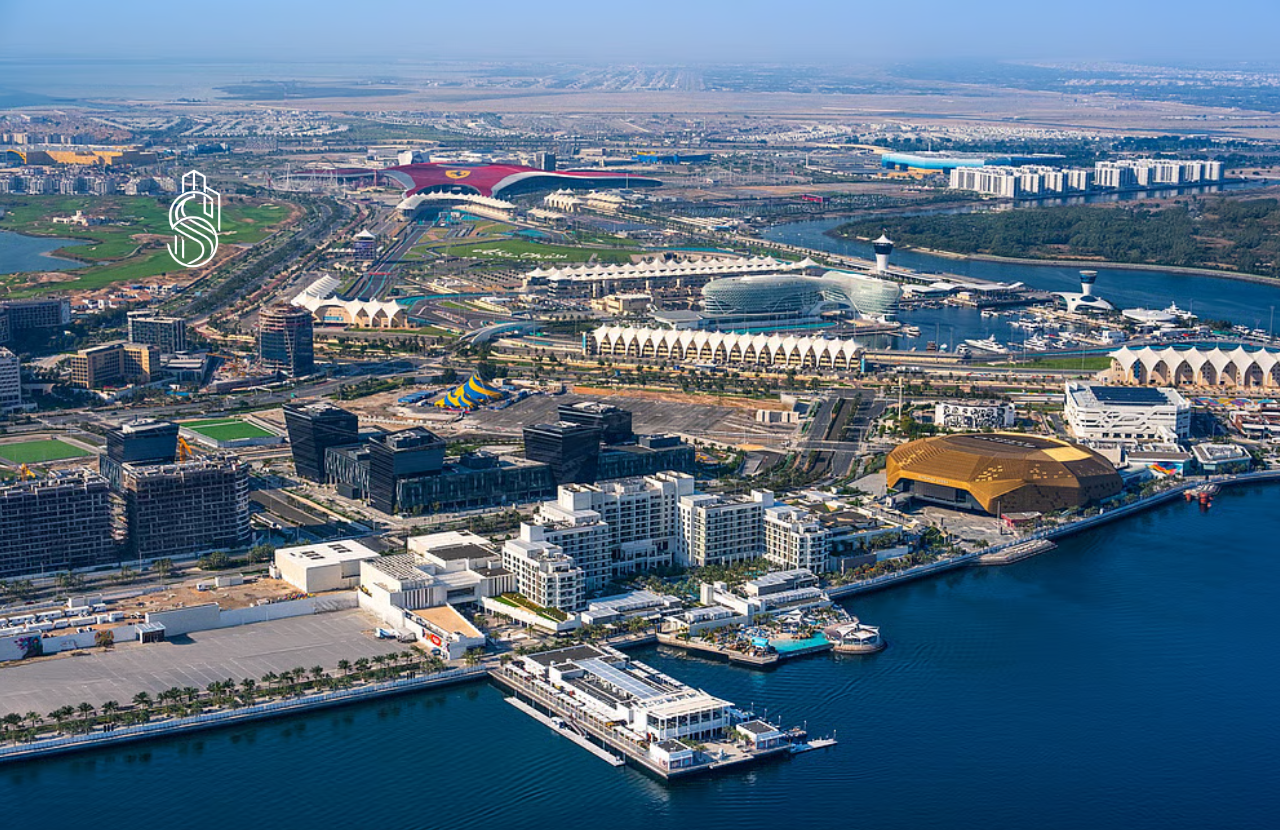
According to our internal market analysis, some prime areas in Abu Dhabi are delivering rental yields of 7-9% with zero tax overhead. For example, investments on Al Reem Island and Yas Island are seeing robust rental demand. In our 2025 Abu Dhabi ROI Hotspots report, we noted average yields of 6.2%–9.3% in top areas, with “Property Tax: Zero (forever)” boosting net returns.1 These high yields, untrimmed by taxes, mean an investor’s after-tax return in Abu Dhabi can be nearly double what it would be for a similar gross yield in a taxed jurisdiction. The absence of property tax acts like an immediate increase to your net income each year, which can be reinvested or saved.
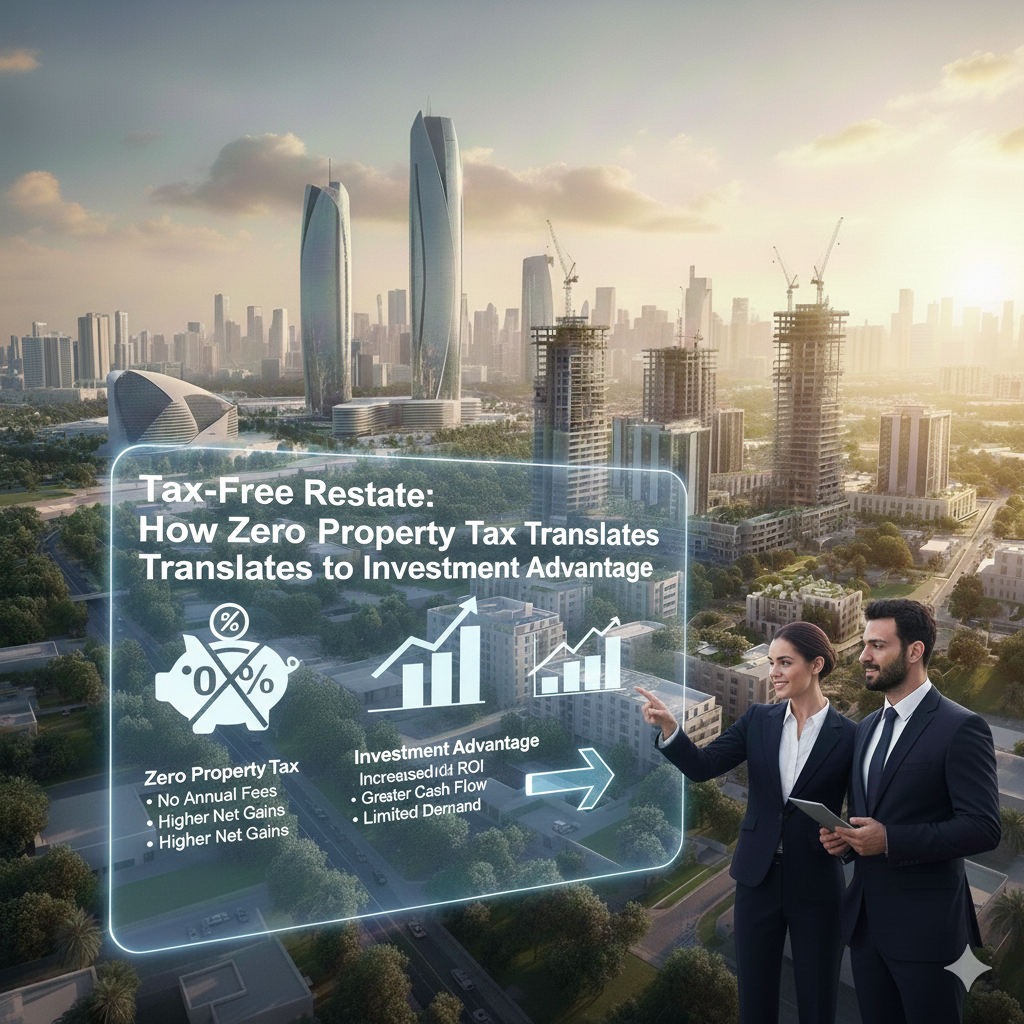
Tax-Free Capital Gains: No Penalties on Investment Growth
Another major advantage of Abu Dhabi’s tax policy is the absence of capital gains tax on real estate. If you buy property and later sell it for a profit, Abu Dhabi levies no capital gains tax on individuals. The profit you make from the increase in property value is entirely yours to keep. This is a stark contrast to many other countries:
- In the United States, federal capital gains tax on real estate profits ranges roughly from 15% to 20% for long-term investments (and can be higher when adding state taxes).
- In the United Kingdom, a seller can pay up to 28% in capital gains tax on residential property gains (for higher-rate taxpayers) once personal allowances are exceeded.
- Across Europe, capital gains taxes vary but often range from 15% to 30% (for example, France imposes a tax on property gains that can exceed 30% when including social surtaxes, unless you’ve held the asset long enough to get exemptions).
In Abu Dhabi, none of these sales taxes apply to individuals. You could realize a huge gain – for instance, selling a villa that doubled in value – and retain 100% of the profit, with no tax authority taking a cut. The only transaction costs would be standard agent commissions or the nominal transfer fee. This tax-free capital gains policy encourages investors to buy and hold properties for long-term appreciation without worrying that a chunk of their upside will be lost at sale time. Essentially, Abu Dhabi rewards patient investors: all the wealth you build through property value growth stays with you.
This has a powerful effect on wealth preservation and growth. Not only do you earn more each year from higher net rental income, but you also keep your full wealth accumulation when you exit the investment. Over a span of ten or twenty years, the difference is monumental. For example, an investor who sees $500,000 in capital appreciation on an Abu Dhabi property keeps that entire $500,000 gain. In a high-tax country, that same investor might only keep $300,000-$400,000 after taxes on sale – effectively losing six to seven figures of wealth to taxation. By investing in a tax-free real estate environment like the UAE, your property becomes a more effective vehicle for wealth preservation, since more of your money remains working for you and your family.
Moreover, the UAE currently has no inheritance tax on real estate. Abu Dhabi properties can be passed to heirs without the government claiming a percentage of the estate’s value. In contrast, countries like the UK impose a 40% inheritance tax on estates above a threshold, and many other nations have some form of estate or inheritance tax. In the UAE, your real estate assets can transfer to the next generation intact (local inheritance laws apply, but there is no tax due). This further cements the long-term family wealth advantages of holding property in Abu Dhabi.
UAE vs. the World: A Competitive Advantage for Investors
When comparing Abu Dhabi’s tax scenario with other global investment hotspots, it’s clear why the UAE has an edge. Europe’s property investors, for example, face multi-layered taxes that significantly erode net returns. Many European countries levy annual property taxes, high income taxes on rental earnings (often 30-45%), and capital gains taxes on sale profitsprelaunch.ae. This multi-layered tax structure means an investor in, say, Paris or London not only pays a yearly tax on the property value but also surrenders a large portion of rental income each year and then gives up a chunk of any profit made on sale. The outcome is a much lower after-tax yield and a smaller overall profit. In fact, one analysis found that Dubai (and by extension Abu Dhabi) offers unparalleled tax efficiency, maximizing both rental yields and appreciation potential, whereas Europe’s taxes “significantly erode net returns.”2
The United States, while popular for real estate investment, also has property taxes in every state (with averages around 1% of value nationally, and up to ~2% in high-tax states like New Jersey or Illinois). The US additionally taxes rental income as ordinary income and applies capital gains tax on sales. Similarly, Canada, Australia, and most Asian markets impose either property taxes or high-income taxes on real estate earnings (for example, rental income in Singapore is added to taxable income, and Japan has annual fixed asset taxes of around 1.7%). Against this backdrop, the UAE’s no-property-tax regime shines as a unique advantage. Globally, only a handful of jurisdictions (such as Monaco or certain Caribbean nations) offer comparably tax-free environments for real estate, but those often come with extremely high property prices or other barriers. Abu Dhabi provides a rare combination of tax freedom, modern infrastructure, political stability, and relatively accessible entry prices, making it highly competitive on the world stage for investors seeking strong net returns.
Notably, Abu Dhabi’s advantage isn’t just about the lack of taxes – it’s also about what you get in return. Rental yields in Abu Dhabi are among the highest in any prime market, often ranging from 6% to 8% in desirable projects, which is double the yields in cities like London, New York, or Hong Kong (where 2-4% yields are common). And because no taxes are eating into those yields, an investor’s net income in Abu Dhabi can far exceed that of a similar investment elsewhere. Abu Dhabi also benefits from being part of the UAE’s thriving economy: robust population growth, a haven status for capital, and government initiatives attracting businesses and talent (and by extension, tenants and property buyers). Investors get both the tax efficiency and the strong underlying market fundamentals. This one-two punch – high growth potential plus no tax drag – is what makes Abu Dhabi real estate a compelling addition to a global portfolio.
Wealth Preservation and Long-Term Benefits
A tax-free real estate investment is not just about higher yearly income; it’s about building and keeping wealth over the long term. By eliminating annual taxes and transaction taxes, Abu Dhabi enables investors to reinvest a greater portion of their returns, compounding their wealth faster. For example, an investor who saves $10,000 each year due to no property tax can use that $10,000 to invest in additional assets, pay down mortgage principal faster, or make property improvements that raise value or rent – all of which increase wealth. Over a decade, those tax savings could amount to $100,000 (even before considering any investment growth on that money). Essentially, the money that would have been paid as tax is now working for you instead of the government.
Furthermore, the psychological and practical benefits of a stable, tax-efficient investment environment cannot be overstated. Investors can plan long-term without fear that changing tax laws will erode their returns. In many high-tax countries, real estate investors must constantly navigate tax policy changes – like new rent taxes, increased capital gains rates, or added annual levies – which can introduce uncertainty and extra costs. Abu Dhabi’s policy of zero property and capital gains tax has been a consistent pillar of its economic strategy to attract investment. This stability and predictability is a huge advantage for long-term strategic planning. Investors focused on wealth preservation appreciate that they can buy quality real estate in Abu Dhabi and hold it for generations, confident that the value won’t be whittled away by annual tax bills or punitive sale taxes down the line.
It’s also worth noting that the UAE’s broader tax environment is very favorable for investors. There is no personal income tax on any earnings (not just rental income), and the UAE recently introduced a modest 9% corporate tax that generally does not affect individuals investing in property (it’s aimed at company profits above a certain threshold). There is a 5% VAT in the UAE, but most residential real estate transactions (especially first sales of new properties) are exempt or zero-rated, meaning property purchases and rental activity are not burdened by VAT in practice. This means an investor living off rental income in Abu Dhabi can enjoy those earnings tax-free, and even day-to-day life is not heavily taxed (no income tax, low VAT). The overall effect is that investing in Abu Dhabi real estate can be part of a larger strategy to optimize one’s global tax exposure and preserve wealth.
Conclusion: Abu Dhabi – A Tax-Free Investment Haven
In summary, Abu Dhabi’s zero property tax policy translates directly into an investment advantage for property buyers. By eliminating ongoing property taxes, boosting net rental yields, and forgoing capital gains taxes on sales, Abu Dhabi enables investors to maximize their net returns in ways that few other markets can match. The tax-efficient property investing environment in the UAE means that more of your money stays yours – whether it’s the monthly rental income or the lump-sum profit from a future sale. When combined with high growth potential, a stable economy, and investor-friendly initiatives, this tax advantage solidifies the UAE (and Abu Dhabi in particular) as a top choice for international real estate investors looking for both strong returns and effective wealth preservation.
Abu Dhabi offers what might be called an investor’s “perfect storm”: high yields, no taxes, and a supportive business climate. Savvy investors around the world are taking notice of the UAE’s competitive advantage globally. Rather than seeing their returns chipped away by property levies and taxes, those who invest in Abu Dhabi can reap the full reward of their investment acumen. In an era where every percentage point of return matters, investing in a tax-free real estate haven like Abu Dhabi can mean the difference between a good investment and a great one.
Ready to capitalize on Abu Dhabi’s tax-free real estate advantages? To learn more or to find the perfect tax-efficient property investment in the UAE, fill out the form on our website Prelaunch.ae, for expert guidance. Our team specializes in Abu Dhabi and Dubai properties and can help you identify opportunities that maximize your returns. Contact us at (+971) 52 341 7272 or sales@mbrproperties.ae for a personalized consultation. We’ll guide you through every step of leveraging Abu Dhabi’s zero-tax environment to achieve your investment goals. Your high-yield, tax-free property journey starts here – don’t miss out on the UAE’s unique investment edge!
FAQs
Q: Are there truly no property taxes in Abu Dhabi?
A: Yes – Abu Dhabi imposes no annual property tax on real estate. Once you purchase a property (and pay the one-time 2% registration fee to the Abu Dhabi Municipality), there are no recurring government property taxes. This is a permanent policy that drastically contrasts with most other global cities. Investors may have to pay normal maintenance fees or service charges to building management, but these are not taxes. The tax-free property ownership policy is a major reason Abu Dhabi is so attractive to investors.
Q: Do I have to pay income tax on rental income or capital gains tax when I sell my Abu Dhabi property?
A: No. The UAE does not levy personal income tax on rental earnings, so all the rent you collect is yours to keep (after any property management fees or maintenance costs). Likewise, there is no capital gains tax on the profit from selling your property. If your property appreciates in value, you keep 100% of the gains. This applies to individuals; corporations may have other tax considerations, but most individual investors are not affected by the new corporate tax either. Always check if your home country taxes foreign income or gains, but locally within the UAE, real estate income and profits are not taxed – making it a fully tax-free real estate investment environment.
Q: How does zero property tax improve my rental yield in practice?
A: Zero property tax means there is no annual reduction in your rental income by government levy. In high-tax countries, a portion of your rent effectively goes to paying property tax or council tax. In Abu Dhabi, you can calculate your net yield easily because it’s essentially your gross yield. For example, if your property yields AED 100,000 per year in rent, you don’t have to allocate any of that for tax – it’s all net operating income (aside from maintenance costs). This boosts your net rental yield by the same percentage that other markets would lose to taxes. Over the years, that extra income accumulates or can be reinvested, markedly increasing your total returns compared to a taxed scenario.
Q: What other costs should an Abu Dhabi property investor be aware of if there are no taxes?
A: While you won’t pay property tax, you should budget for one-time purchase fees and routine property expenses. At purchase, there’s a 2% title registration fee (transfer fee) in Abu Dhabi (lower than Dubai’s 4% fee). If you use a broker, a commission (often ~2%) may apply to the purchase. Ongoing, you’ll have service charges or homeowners association fees for apartments (these cover building maintenance, amenities, etc.), which can vary depending on the development. Villas have their own upkeep costs. If you rent out the property, factor in property management fees (if you hire a company), insurance, and a maintenance reserve for repairs. None of these are taxes – they are normal costs of property ownership. Importantly, without any tax burdens, Abu Dhabi’s ongoing costs are generally lower than in many international markets where you’d pay all those same expenses plus annual tax. Always perform a net yield calculation considering these items (we recommend doing so, and our team can help you run the numbers) to get a clear picture of your investment’s performance.
Q: Can foreign investors buy property in Abu Dhabi to take advantage of the zero tax benefits?
A: Yes, absolutely. Foreigners can purchase property in Abu Dhabi in designated investment zones (such as Yas Island, Saadiyat Island, Al Reem Island, Al Raha Beach, and others). Recent reforms have expanded foreign ownership rights, allowing 100% freehold ownership for expats in many areas of Abu Dhabi. By buying in these areas, international investors enjoy the same tax-free ownership benefits as locals. In addition, investing AED 2 million or more in UAE property can qualify a foreign investor for a long-term Golden Visa (10-year residency), which is another advantage (though not a tax benefit; it’s a valuable perk for those looking to spend more time in the UAE or easily manage their investment). Overall, Abu Dhabi welcomes foreign investment – the zero tax regime, coupled with strong property rights for overseas buyers make it very accommodating for international investors looking to diversify into the UAE real estate market.