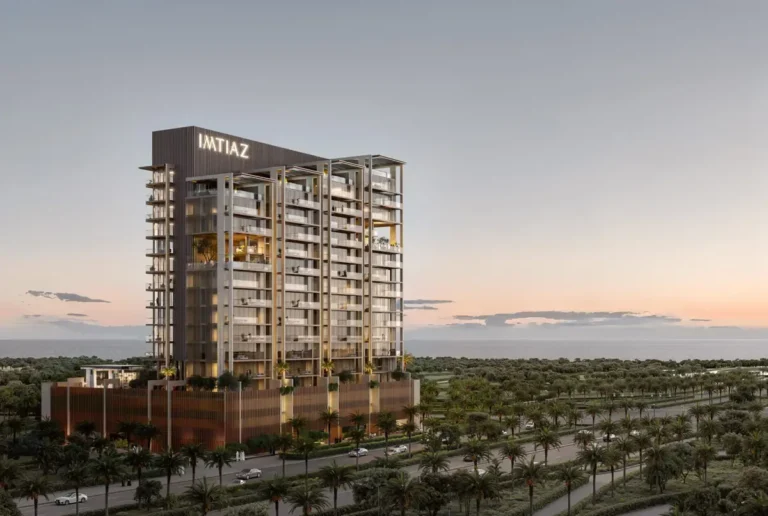
Understanding why certain properties emerge as superior investment opportunities while others fade into mediocrity requires looking beyond surface-level marketing promises and examining the fundamental factors that drive rental demand, capital appreciation, and long-term value retention. When you analyze Production City’s real estate market heading into 2027, particularly through the lens of serious investment decision-making, Golf Terrace Residences by ASAK Real Estate Development reveals characteristics that separate it from the broader field of available properties. Let me walk you through the specific dynamics that make this development worth your attention and potentially your capital.
Production City itself occupies an interesting position within Dubai’s sprawling real estate ecosystem. This isn’t a brand-new master development where you’re speculating on whether promised infrastructure will actually materialize, nor is it an aging community that has already exhausted its growth potential. Instead, Production City represents a mature, established area that continues to evolve and improve while maintaining the stability and proven demand that comes from years of successful operation. The community hosts a genuine mix of businesses, creative studios, and residential properties, which creates organic demand from people who work in the area and value proximity to their employment. This employment-driven demand provides a foundation for rental markets that remains more stable across economic cycles than purely residential communities, where tenant demand depends entirely on lifestyle preferences rather than practical work considerations.
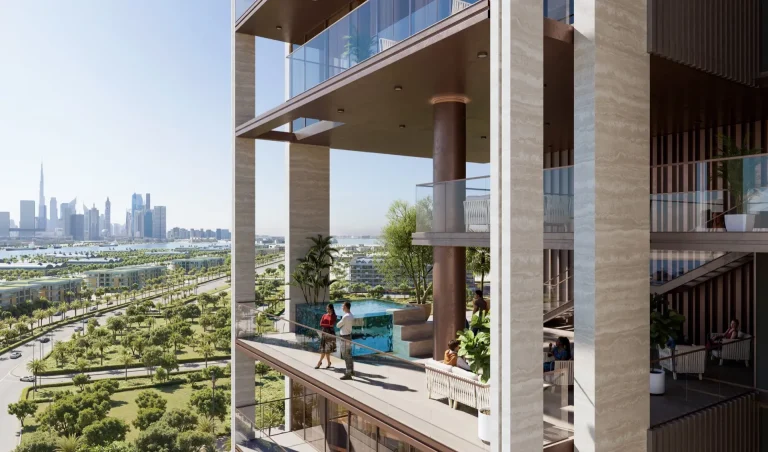
Within this established Production City context, [Golf Terrace Residences by ASAK Real Estate Development: Complete Guide to Production City’s Premium Golf-View Living] introduces specific value propositions that distinguish it from competing investment opportunities. The most immediately apparent differentiator is the golf course positioning that gives every single unit in the development permanent green views. In real estate valuation, views matter tremendously because they represent scarce resources that cannot be easily replicated. Anyone can build another apartment building with similar square footage and finishes, but you cannot create another golf course view without actually having a golf course to look at. This scarcity creates pricing power both for rental rates and eventual resale values, because tenants and buyers consistently demonstrate willingness to pay premiums for properties with superior views compared to identical units facing urban density or construction sites.
The investment entry points that ASAK has established at Golf Terrace deserve careful analysis because they determine who can participate in this opportunity and how the property will perform in rental markets. The studio apartments starting at AED 688,000 create accessibility for investors who might be building their first property portfolio or who want to diversify across multiple units rather than concentrating capital in a single expensive property. When you calculate potential rental yields on a studio at this price point, assuming conservative monthly rents in the AED 35,000 to 40,000 annual range for a fully furnished golf view studio in Production City, you’re looking at gross yields approaching five to six percent before accounting for service charges and vacancy. These yield numbers compete favorably with many alternative investments available in Dubai’s current market, particularly when you layer in the potential for capital appreciation as Production City continues maturing and as the golf course views command increasing premiums over time.
The accessibility of these investment entry points connects directly to how ASAK has structured the acquisition process through the [30:70 construction-linked payment plan that spreads capital commitment across the development timeline]. For investors, this payment structure creates interesting opportunities for capital efficiency that wouldn’t exist under traditional payment models requiring larger upfront commitments. You can secure your position in Golf Terrace with manageable initial outlays and then fund the remaining payments across construction milestones, potentially from other investment returns, from ongoing income, or from financing that you arrange as the property nears completion and banks become more willing to provide mortgages against tangible, nearly-finished assets. This flexibility means your capital can work harder across multiple opportunities rather than being locked entirely into a single property from day one.
What exactly are investors receiving for these capital commitments? This question matters enormously because the tangible assets you acquire determine both rental appeal and long-term value retention. The [unit configurations ranging from 476-square-foot studios through 1,710-square-foot two-bedroom apartments] have been designed with attention to how space actually functions rather than simply hitting square footage targets that look good on specification sheets. Efficient layouts mean higher tenant satisfaction, which translates to longer tenancy periods and reduced turnover costs that eat into your net returns. The fully furnished delivery eliminates the substantial capital outlay that would otherwise be required to make units rentable, and it ensures consistency of finish quality across your investment that protects your property’s market positioning. Tenants comparing unfurnished properties face additional moving costs and furniture acquisition expenses that make your furnished Golf Terrace unit more attractive, even if the base rent is slightly higher than competing unfurnished options.
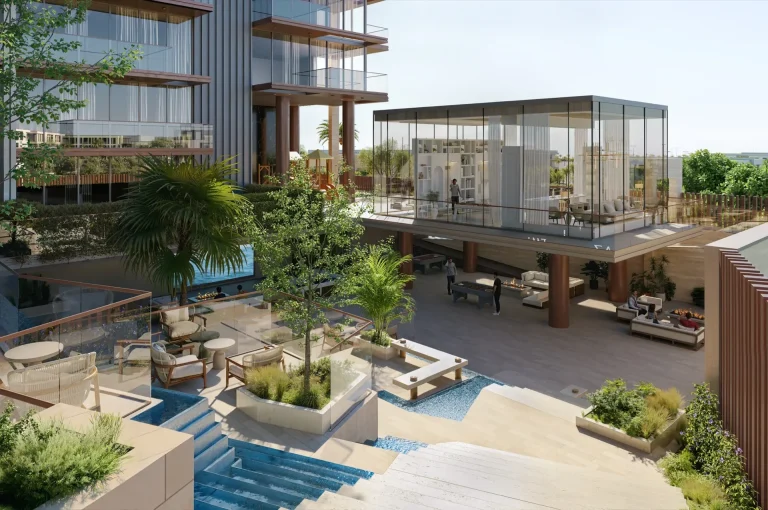
The [amenity infrastructure spanning the first floor and rooftop with those defining golf course views] represents another tangible asset that impacts investment performance in measurable ways. Properties with comprehensive, well-maintained amenities consistently achieve higher occupancy rates and command rental premiums compared to buildings with minimal facilities. When tenants are deciding between similar apartments across Production City, the building with the rooftop pool, the golf course views, and the quality gym facilities wins the comparison even if it costs marginally more per month. This competitive advantage compounds over time as word of mouth and tenant reviews establish Golf Terrace’s reputation, making future leasing easier and reducing the marketing effort required to maintain full occupancy. From a capital appreciation perspective, amenity-rich developments tend to hold their relative market position better than basic buildings because the amenities represent differentiators that cannot be easily added to competing properties after construction.

Comparing Golf Terrace to other Production City investment opportunities reveals several distinctive characteristics that affect risk-reward profiles. Many available properties in the area offer lower purchase prices, but those lower prices often reflect compromises in location, views, finishes, or developer reputation that create risks for rental demand and future values. You might save fifty thousand dirhams on the purchase price only to discover that inferior views or amenities make your property consistently harder to rent at competitive rates, costing you far more than that initial saving across years of ownership. Other properties might match Golf Terrace on quality but command significantly higher purchase prices that compress your yield calculations and require stronger rental growth to justify the investment. ASAK has positioned Golf Terrace in what appears to be a value sweet spot where the quality and differentiators justify the price, while the pricing remains accessible enough to generate attractive yield mathematics.
The October 2027 handover timeline introduces both risks and opportunities that investors need to evaluate carefully. The risk is that you’re committing capital to something that doesn’t yet exist, which always carries construction and delivery uncertainty regardless of developer reputation. ASAK Real Estate Development’s track record provides some reassurance here, but prudent investors acknowledge that construction delays can occur even with the best developers when unforeseen challenges arise. The opportunity side of this timeline equation is that you’re locking in today’s prices for a property you’ll receive in 2027, and if Production City’s real estate values continue appreciating as they have historically, you’ll receive a property worth more than you paid, regardless of your payment schedule. This built-in appreciation potential exists because your purchase price is fixed at signing while market values continue to fluctuate based on supply, demand, and broader economic factors.
The rental market dynamics that will greet you at handover depend partly on factors beyond any individual property’s control, including Dubai’s overall economic trajectory, employment growth, and population trends. However, certain characteristics of Golf Terrace and Production City suggest resilience across different economic scenarios. In strong economic periods, the golf views and amenity package position the property at the premium end of Production City’s rental market, capturing tenants with higher budgets who value quality. In softer economic periods, the range of unit types from studios through two-bedrooms means you’re offering options across different price points and tenant demographics, which provides flexibility to adjust positioning based on where demand proves strongest. This adaptability across market conditions creates more stable occupancy prospects than developments that serve only a narrow tenant segment.
Tax considerations play important roles in Dubai real estate investment returns, and the current environment remains favorable compared to many global markets. The absence of rental income tax means that the gross yields you calculate translate more directly into actual returns than would be the case in jurisdictions where substantial portions of rental income disappear to tax authorities. The absence of capital gains tax on property sales means that the appreciation you capture when eventually selling the property flows to you rather than being shared with the government. These tax advantages make Dubai property investment attractive for international investors whose home countries might impose much heavier tax burdens on investment returns, though investors should always consult qualified tax advisors about their specific situations, since tax treaties and individual circumstances can create varying obligations.
Financing considerations affect investment mathematics significantly, and the Golf Terrace timeline allows for strategic decision-making about when and how to employ leverage. Some investors prefer purchasing entirely with cash to avoid interest costs and maintain maximum flexibility, while others view mortgage financing as a tool for amplifying returns through leverage when borrowing costs remain below expected total returns from the investment. The construction-linked payment structure means you can defer final decisions about financing until closer to handover, when you have better visibility into interest rate environments and when banks can more easily value the nearly-complete property for mortgage purposes. This optionality has value because it prevents you from committing to financing strategies based on today’s conditions that might look suboptimal by 2027.
Portfolio construction strategy influences how Golf Terrace might fit into your broader investment approach. Investors focused on maximizing current income might prefer the studio units that generate the highest yields relative to purchase prices, accepting that absolute rental income from each unit remains modest. Investors prioritizing capital appreciation might favor the larger two-bedroom units that historically show stronger long-term value growth, even though initial yields may be lower. Investors seeking balance might split their capital across multiple unit types, capturing both yield from studios and appreciation potential from larger units while diversifying their tenant demographic exposure. The availability of multiple unit sizes within Golf Terrace allows for this kind of strategic portfolio construction within a single development, which can be more efficient than sourcing similar diversification across multiple buildings in different locations.
Exit strategy planning deserves consideration even at the purchase stage because the ease and profitability of eventual exit significantly impact total investment returns. Properties in established, recognizable communities like Production City with clear value differentiators like golf course views tend to sell more quickly and at stronger prices when you eventually decide to exit. Buyers shopping Production City will find your Golf Terrace unit easily when searching for available properties, and the golf views provide an immediate hook that generates showing requests and offers. Properties in less established areas or without clear differentiators often languish on the market for months when owners try to sell, forcing price reductions that erode returns or leaving capital trapped in illiquid assets when you need access to funds. The liquidity advantage of owning differentiated property in an established location has real financial value even though it’s difficult to quantify precisely at purchase.
The relationship between unit price and total development value creates interesting dynamics for future appreciation potential. Golf Terrace’s 105 units represent a relatively intimate development compared to massive towers with hundreds of units, which creates scarcity advantages as Production City evolves. When a development has only 105 units, even modest demand from buyers seeking golf-view properties in Production City can create meaningful price pressure because available inventory is limited. Larger developments face the opposite dynamic, where substantial available inventory can keep prices suppressed even when demand is reasonable, because buyers always have options within the same building.
Developer reputation and track record matter enormously in real estate investment because they affect construction quality, delivery timing, and how well the property maintains its condition and appeal across years of ownership. ASAK Real Estate Development brings experience and resources to Golf Terrace that should reassure investors about execution risk, though prudent investors always verify rather than simply trusting claims. The decision to deliver units fully furnished with white goods signals a developer confident enough in their product and timeline to make commitments that require precise coordination across multiple workstreams. Developers uncertain about their ability to deliver on schedule or to specification typically avoid making such specific promises about furnished delivery because the coordination complexity creates too many points where execution might fall short.
Ready to analyze whether Golf Terrace Residences aligns with your investment objectives and risk tolerance? Visit prelaunch.ae to request a detailed investment analysis, including projected rental yields, capital appreciation scenarios, and cash flow modeling customized to your specific situation. Our investment advisory team can walk you through the [payment structure specifics], connect you with financing partners if you’re considering leverage, and provide market data on Production City’s rental and sales trends that inform realistic return expectations. Contact us at (+971) 52 341 7272 or email sales@mbrproperties.ae to begin exploring how ASAK Real Estate Development’s Golf Terrace Residences might serve your portfolio goals in Production City’s evolving investment landscape.