The traditional wisdom in Abu Dhabi real estate investment suggests that prelaunch properties always deliver superior returns because early buyers capture maximum appreciation before prices adjust to reflect completed infrastructure and community maturity. However, a counterintuitive phenomenon is emerging across Abu Dhabi’s property landscape in 2026 that sophisticated investors are quietly exploiting while conventional buyers chase the newest off-plan launches. Certain established communities with 70-85% infrastructure completion are delivering better risk-adjusted returns than brand-new prelaunch projects, combining immediate rental income, proven tenant demand, and continued appreciation as final infrastructure phases are completed.
This community maturity premium manifests most clearly in Abu Dhabi’s island developments, including Al Reem Island, Yas Island, and Saadiyat Island, where the transition from emerging area to fully established community creates a sweet spot that smart investors are targeting. Properties purchased in these communities during their maturity phase avoid the years of construction uncertainty, infrastructure delays, and tenant acquisition challenges that plague true prelaunch purchases, while still capturing 30-50% of total appreciation potential as communities reach full completion. Understanding when communities cross from speculative emerging status to valuable maturity represents a critical skill that separates market-beating investors from those trapped in underperforming prelaunch projects that may take five to seven years to deliver promised returns.
The data supporting this maturity premium proves compelling when examining rental yield performance, vacancy rates, and tenant retention metrics. Al Reem Island properties currently deliver gross rental yields between 8.2% and 9.2% with occupancy rates exceeding 96%, while comparable units in brand-new prelaunch communities often sit vacant for twelve to eighteen months post-completion waiting for infrastructure and amenities to materialize. This immediate cash flow advantage compounds over time, making established area purchases financially superior to prelaunch alternatives despite slightly higher entry prices. For investors exploring the best areas to invest in Abu Dhabi, understanding infrastructure maturity timelines is essential for maximizing total returns.
The Infrastructure Maturity Curve: Why 70-85% Completion Marks the Optimal Entry Point
Understanding the infrastructure maturity curve requires recognizing that community value creation follows a predictable non-linear pattern rather than a straight-line progression. Prelaunch communities start at zero infrastructure completion, slowly add basic utilities and roads during early construction phases, then accelerate infrastructure development between 40-70% completion as critical amenities, including schools, medical facilities, and retail centers, materialize. The final 70-85% completion phase represents peak value creation velocity because communities achieve practical livability while maintaining a substantial appreciation runway as final premium amenities are completed.
This maturity curve dynamic explains why Al Reem Island continues to appreciate at 10-12% annually despite being 80% complete, while newer prelaunch projects in emerging areas like certain parts of Al Ghadeer show modest 3-5% annual appreciation even though they theoretically possess greater long-term potential. The established community has functional schools, including Repton School Abu Dhabi and GEMS World Academy, completed retail facilities anchored by the massive Reem Mall offering 450+ stores, integrated healthcare services, and proven public transportation connectivity. Families and professionals can move immediately without enduring years of construction disruption, creating sustained tenant demand that supports both rental income and price appreciation.
The mathematics of rental yield amplification during the maturity phase deserves particular emphasis. When communities first deliver, early residents tolerate infrastructure gaps, construction noise, and amenity shortages because they secured attractive purchase prices. However, they demand rental discounts reflecting these inconveniences, typically 15-25% below market rates for fully established areas. As infrastructure completes and communities mature, landlords can increase rents to market levels, creating rental yield expansion that compounds with ongoing property price appreciation. This dual benefit produces total returns frequently exceeding 15-18% annually during the maturity transition phase, far superior to the 8-10% total returns typical for early-stage prelaunch purchases that must wait years for communities to mature.
The tenant profile transformation during community maturation also drives superior investment performance. Emerging prelaunch communities attract primarily speculators, construction workers, and budget-conscious renters willing to sacrifice amenities for affordability. As communities mature, they begin attracting established families, senior professionals, and quality long-term tenants who pay premium rents and demonstrate low turnover. This tenant upgrade cycle creates positive momentum where improving tenant quality attracts better retail, which attracts more quality residents, creating a virtuous cycle that supports sustained appreciation and rental growth.
Infrastructure completion timing also affects financing accessibility and mortgage approval rates. Banks provide favorable loan-to-value ratios and preferential interest rates for properties in established communities with completed infrastructure because they perceive lower completion risk compared to prelaunch projects, dependent on developer’s financial health and construction timeline adherence. For buyers examining mortgage strategy for off-plan properties, understanding that established areas command better financing terms reduces total ownership costs and improves investment returns through lower interest expenses.
The strategic implication requires investors to identify communities currently in the 70-85% completion sweet spot rather than chasing brand-new prelaunch launches or waiting for 100% completion when most appreciation has already occurred. This maturity phase timing strategy captures the majority of infrastructure-driven appreciation while avoiding the painful years of construction uncertainty, vacancy challenges, and tenant acquisition difficulties that plague true prelaunch investments. Investors who master this timing approach consistently outperform those following conventional prelaunch-focused strategies.
Al Reem Island Case Study: The Maturity Premium in Action
Al Reem Island exemplifies the community maturity premium phenomenon, demonstrating how established infrastructure creates sustained investment performance that rivals or exceeds prelaunch alternatives. The island’s development began in the mid-2000s, experienced construction acceleration through the 2010s, and reached critical maturity around 2020-2022 as major infrastructure, including schools, healthcare, and retail completed. Properties purchased during this maturity phase between 2020 and 2023 have delivered total returns averaging 15-18% annually through rental yield expansion and ongoing price appreciation, significantly outperforming many prelaunch purchases made during the same period.
The island’s current infrastructure inventory reveals why it commands premium investment performance. Educational facilities include multiple international schools serving various curricula, eliminating the school proximity anxiety that plagues families considering emerging communities. The recently completed Reem Mall provides 450+ retail outlets, Snow Abu Dhabi entertainment, and comprehensive dining options, creating self-contained lifestyle amenities that reduce resident dependence on mainland facilities. Healthcare accessibility improved dramatically with multiple medical centers and clinics, while plans for a full-service hospital within proximity ensure long-term healthcare adequacy.
Transportation connectivity particularly strengthens Al Reem’s maturity advantage. The island maintains direct bridge connections to mainland Abu Dhabi, allowing ten-minute commutes to central business districts, including Al Maryah Island and the Abu Dhabi Global Market (ADGM) financial free zone. The ongoing Mid-Island Parkway project connecting Al Reem to Saadiyat Island, Al Raha Beach, and Khalifa City will further reduce travel times when completion occurs in 2028, providing an additional appreciation catalyst for investors who purchase during the current maturity phase. Public bus services operate regularly through the Abu Dhabi Link on-demand system, while future light rail integration remains under planning, promising continued connectivity improvements.
The rental yield performance demonstrates Al Reem’s maturity premium most clearly. One-bedroom apartments delivering 8.2-9.2% gross yields with occupancy rates exceeding 96% reflect strong tenant demand from young professionals working in nearby business districts. Two-bedroom family apartments achieve 7.5-8.2% yields with even lower vacancy risk because families demonstrate longer tenancy periods and limited alternative communities offering equivalent school accessibility and lifestyle amenities. These yield levels significantly exceed Dubai’s comparable communities like Dubai Marina or Jumeirah Beach Residence, which typically deliver 6-7% yields, making Al Reem an exceptional value for yield-focused investors.
The capital appreciation trajectory shows continued strength despite the island’s maturity. Properties appreciated 10.7% in 2024 and are projected to achieve 8-12% growth through 2026 as final infrastructure phases are completed and the ADGM free zone designation attracts additional corporate offices and financial institutions. This sustained appreciation during the maturity phase occurs because the island successfully transitioned from speculative emerging area to proven community delivering tangible lifestyle value that justifies premium pricing. For investors exploring high-yield investment zones in Abu Dhabi, Al Reem represents the benchmark for maturity-phase opportunities.
The contrast with newer prelaunch communities illustrates the maturity advantage clearly. While some emerging areas promise 20-30% appreciation over five to seven years, investors must endure years of construction disruption, infrastructure delays, tenant scarcity, and vacancy challenges before these returns materialize. Al Reem delivers immediate rental income at industry-leading yields, proven tenant demand eliminating vacancy concerns, and continued appreciation as final infrastructure is completed. The total return certainty and immediate cash flow make established community purchases superior for investors who value predictable performance over speculative maximum upside.
The lesson extends beyond Al Reem specifically to inform a broader investment strategy. Investors should seek communities demonstrating similar maturity characteristics, including 70-85% infrastructure completion, functioning schools and retail, proven tenant demand reflected in high occupancy rates, established transportation connectivity, and ongoing infrastructure catalysts providing future appreciation drivers. These mature communities consistently outperform both fully completed areas with minimal appreciation runway and early-stage prelaunch projects requiring years to deliver returns.
Yas Island and Saadiyat Island: Premium Maturity with Ongoing Catalysts
Yas Island and Saadiyat Island represent the luxury tier of Abu Dhabi’s maturity premium phenomenon, demonstrating how high-end communities combining established infrastructure with mega-project catalysts deliver exceptional investment performance during their maturity phases. Both islands achieved functional completion around 2018-2020 for core infrastructure but continue adding premium amenities and entertainment attractions that drive sustained appreciation exceeding broader market averages, creating perfect conditions for investors seeking wealth preservation alongside attractive returns.
Yas Island’s transformation into Abu Dhabi’s entertainment and lifestyle hub positions it uniquely within the capital’s real estate hierarchy. The island currently operates Ferrari World, Yas Waterworld, Warner Bros World, Yas Marina Circuit hosting Formula 1 racing, Yas Mall providing comprehensive retail, and multiple hotels serving tourism and entertainment visitors. This established entertainment infrastructure creates year-round activity and employment, generating consistent tenant demand for residential properties. The upcoming Disneyland Abu Dhabi announcement adds a massive appreciation catalyst expected to drive property values 25-35% higher over the 2026-2033 construction and opening timeline.
The residential communities within Yas Island span various price points and target demographics, creating investment options for different capital levels and risk profiles. Yas Acres delivers luxury villas targeting families seeking golf course proximity, waterfront access, and premium amenities with properties ranging from AED 4-8 million, generating 5.5-6.5% rental yields. West Yas provides more accessible villa options for mid-level professionals and families with prices starting at AED 2.5-3.5 million, achieving 6.5-7.2% yields. Waterfront apartments in developments like Water’s Edge and Mayan target young professionals and couples with two-bedroom units priced AED 1.8-2.8 million, delivering 7-8% yields.
Saadiyat Island occupies an even more premium position, emphasizing cultural sophistication, environmental preservation, and ultra-luxury residential offerings. The completed Louvre Abu Dhabi attracts global tourists and cultural enthusiasts, while the planned Guggenheim Abu Dhabi and Zayed National Museum will cement the island’s position as the Middle East’s premier cultural destination. This cultural infrastructure attracts specific buyer and tenant profiles, including diplomats, senior executives, artists, and high-net-worth individuals seeking meaningful residential experiences beyond pure financial returns.
The villa appreciation performance on Saadiyat demonstrates the maturity premium in luxury segments. Properties appreciated 16.5% in 2024 with sustained growth projected through 2026-2027 as cultural projects progress and beachfront land scarcity becomes increasingly apparent. Villas commanding AED 8-15 million deliver modest 5-6% rental yields but provide exceptional capital appreciation, wealth preservation, and Golden Visa eligibility for investors prioritizing long-term holding strategies. The combination of limited land supply, premium positioning, and ongoing cultural infrastructure creates supply-constrained appreciation dynamics that luxury real estate historically demonstrates.
Both islands benefit from government commitment to infrastructure investment and community enhancement that provides downside protection during market corrections. Abu Dhabi’s strategic focus on tourism, entertainment, and cultural development ensures continued infrastructure spending supporting Yas and Saadiyat specifically, reducing the risk that infrastructure projects will stall or budgets will be cut during economic weakness. This government backing creates confidence for long-term investors that these communities will complete their full development visions rather than languishing partially completed, like some speculative private developer projects in emerging areas.
The tenant quality in both communities surpasses average Abu Dhabi standards because premium amenities, entertainment access, and cultural sophistication attract established professionals, executives, and families with stable employment and strong payment capacity. This tenant profile reduces default risk, supports premium rental rates, and enables longer lease terms that minimize vacancy and turnover costs. For investors implementing strategic off-plan investment approaches, Yas and Saadiyat represent the premium tier where maturity advantages compound with luxury positioning to deliver superior risk-adjusted returns.
The strategic takeaway recognizes that luxury community maturity provides different but equally compelling advantages compared to mid-market maturity. While absolute rental yields may be lower, total return profiles including capital appreciation, tenant quality, government support, and wealth preservation benefits create investment packages that sophisticated high-net-worth investors increasingly favor over speculative prelaunch purchases in unproven emerging areas.
Warning Signs: When Prelaunch Projects Fail to Mature (And How to Spot Them Early)
Understanding the community maturity premium requires equal attention to identifying communities that will fail to mature successfully, trapping investors in perpetually emerging areas that never deliver infrastructure completions, tenant demand, or price appreciation. These failed maturity stories share common warning signs that careful investors can identify before committing capital, protecting themselves from years of underperformance and opportunity cost that failed communities create.
Infrastructure delivery delays represent the most obvious warning indicator that communities will struggle to reach functional maturity. When developers consistently miss promised infrastructure completion timelines for schools, retail facilities, medical centers, or transportation connections, it signals fundamental problems with project execution, financial capacity, or demand reality. Communities advertising “coming soon” amenities for three to five years without visible construction progress should trigger immediate caution because infrastructure delays create compounding problems where lack of amenities prevents resident attraction, which reduces demand, which decreases developer revenue, which further delays infrastructure completion in a negative spiral.
Developer financial health and track record provide critical context for infrastructure delivery confidence. Established developers, including Aldar Properties, Nakheel, and Modon Properties, maintain strong balance sheets, proven construction expertise, and government connections,s ensuring infrastructure completions even during market downturns. Newer or smaller developers lacking financial reserves or construction experience may struggle to complete infrastructure during market weakness or unexpected cost increases, creating stranded partially completed communities that never reach functional maturity. Investors should verify developer financial stability through credit ratings, previous project completion timelines, and independent research before purchasing in emerging communities managed by unproven development firms.
Location fundamentals ultimately determine whether communities can achieve a critical mass of residents and amenities necessary for maturity. Communities located 45-60 minutes from major employment centers, international schools, and lifestyle amenities face structural challenges attracting residents regardless of infrastructure quality, because commute times and isolation make daily life impractical. Successful mature communities demonstrate proximity to jobs within 20-30 minute commutes, accessibility to quality international schools, and reasonable connectivity to broader city amenities. For communities evaluating affordable communities like Al Ghadeer and Al Reef, location relative to employment centers and schools proves more important than absolute infrastructure quality.
Demand validation through presale absorption rates and early occupancy levels reveals whether communities will attract sufficient residents to support viable maturity. Communities selling 70-90% of inventory during prelaunch phases to end-users rather than speculators demonstrate genuine demand that will support infrastructure completion and community maturation. Conversely, projects showing slow sales absorption, high investor-to-end-user ratios, or significant resale activity before completion signal weak underlying demand that may prevent communities from achieving the critical resident mass necessary for successful maturation.
Oversupply dynamics in specific location corridors can prevent even well-planned communities from maturing successfully when too many developers simultaneously target the same area. When multiple large-scale communities launch within the same geographic zone within short timeframes, they compete for limited resident pools, retail tenants, and infrastructure investments, potentially resulting in none achieving full maturity. Investors should research total planned unit deliveries within a 10-15 kilometer radius of target communities, ensuring aggregate supply doesn’t drastically exceed probable demand growth over the maturity timeline.
The government infrastructure commitment level provides another maturity indicator because communities benefit dramatically from public investment in roads, bridges, schools, and utilities compared to relying solely on private developer infrastructure spending. Communities receiving announced government infrastructure investments, including Mid-Island Parkway connections, Etihad Rail stations, or public school commitments, demonstrate higher maturity probability because government backing ensures critical infrastructure will be completed regardless of private developer challenges. For projects like Al Mamoura Mixed-Use Mega Project involving AD Ports Group and government partnerships, this public sector involvement provides substantial completion confidence.
Realistic pricing relative to established community benchmarks indicates whether new prelaunch projects are priced for speculation or genuine value. When prelaunch communities advertise prices only 10-15% below established mature communities offering far superior infrastructure and proven tenant demand, it signals that developers are extracting speculative premiums that will limit future appreciation potential. Conservative investors should seek prelaunch projects priced 30-40% below comparable mature community equivalents, ensuring adequate discount for infrastructure gaps, completion risk, and maturity delays while providing sufficient margin for appreciation as communities develop.
The strategic framework for avoiding failed maturity communities requires systematic evaluation across all these dimensions rather than accepting developer marketing promises at face value. Investors who thoroughly research developer track records, verify location fundamentals, analyze supply dynamics, confirm government infrastructure commitments, and ensure realistic pricing relative to mature alternatives dramatically reduce exposure to communities that fail to reach functional maturity, protecting capital and preserving opportunity for deployment into superior alternatives.
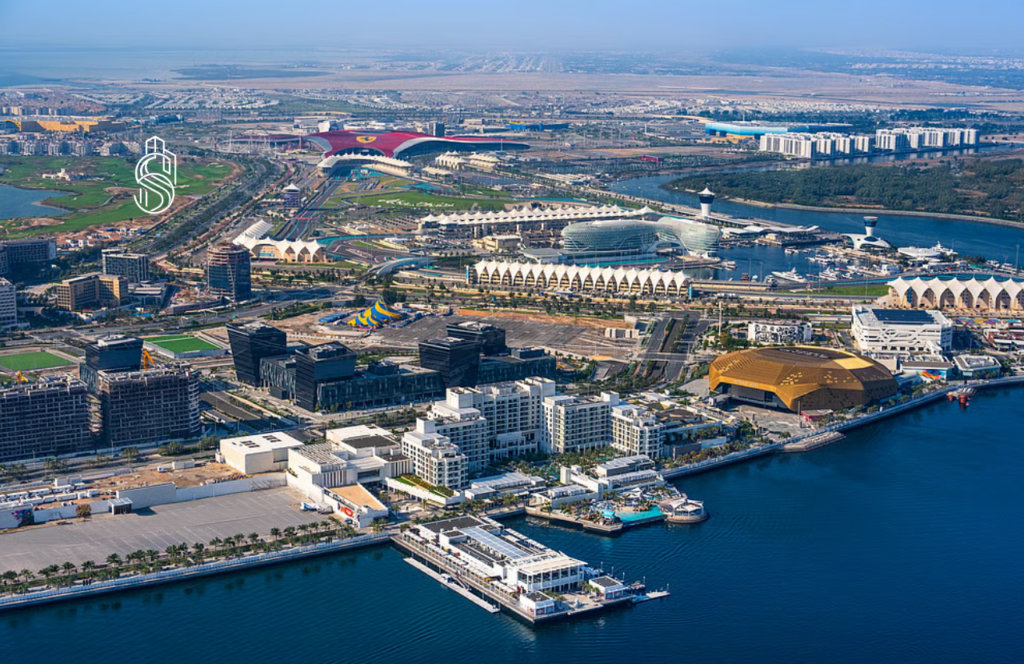
Masdar City: The Sustainable Maturity Alternative
Masdar City represents a unique variant of Abu Dhabi’s maturity premium phenomenon, combining 60-70% infrastructure completion with distinctive sustainability positioning that attracts specific tenant profiles willing to pay premium rents for environmentally conscious living. The community’s evolution from a conceptual sustainable city vision to a functioning residential and commercial area demonstrates how niche positioning during the maturity phase can generate superior returns compared to generic prelaunch projects lacking differentiation.
The sustainability infrastructure already completed includes solar-powered energy systems providing clean electricity, pedestrian-friendly urban design minimizing vehicle dependence, LEED-certified buildings meeting green construction standards, and integrated waste management systems supporting environmental goals. This functioning green infrastructure attracts environmentally conscious professionals, academia affiliates from Masdar Institute, and international organizations seeking sustainable office spaces, creating a tenant base demonstrating higher income levels, longer tenancy periods, and willingness to pay rental premiums for sustainability credentials.
Rental yields ranging 7.5-8.5% for one-bedroom apartments priced at AED 800,000-1.2 million demonstrate Masdar’s value proposition compared to established premium communities. While Al Reem Island and Yas Island command higher absolute prices, Masdar delivers comparable or superior percentage yields due to favorable purchase price-to-rent ratios. Additionally, the sustainability positioning attracts corporate tenants and international organizations, providing employment stability that reduces vacancy risk compared to communities dependent on more volatile employment sectors.
The appreciation trajectory shows steady 8-10% annual growth as sustainability consciousness accelerates globally and ESG-focused investing gains momentum. As corporations increasingly prioritize environmental credentials and employees seek environmentally responsible living options, communities like Masdar offering genuine sustainability infrastructure will command growing pricing premiums. Early investors purchasing during the current 60-70% completion phase position themselves to capture this sustainability premium as it manifests over the next five to ten years, similar to how waterfront positioning commanded increasing premiums during previous decades.
The future infrastructure pipeline includes additional office complexes attracting multinational corporations, expanded retail providing comprehensive shopping without requiring trips to traditional malls, and continued residential expansion maintaining controlled density that preserves the community’s environmental focus. Unlike prelaunch communities promising future amenities, Masdar’s infrastructure additions build upon functioning base infrastructure rather than creating it from scratch, reducing completion risk while providing ongoing appreciation catalysts.
The tenant demographic skews toward younger professionals, sustainability advocates, and international workers with global mobility seeking meaningful lifestyle alignment with personal values. This creates both advantages and considerations for investors. The advantage includes higher education levels, stable professional employment, and willingness to pay premiums for sustainability, supporting both rental rates and long-term tenant retention. The consideration recognizes that sustainability-focused tenants may eventually relocate internationally for career opportunities, creating slightly higher turnover than family-oriented communities, where children’s education creates location stickiness.
The competitive positioning relative to other Abu Dhabi communities shows Masdar occupying a distinct niche rather than competing directly with waterfront luxury or family-focused suburbs. This differentiation provides downside protection during market corrections because Masdar’s tenant base selects the community specifically for sustainability rather than pure financial optimization, creating stickier demand that persists even when economic conditions weaken. For investors seeking diversification from traditional community types, Masdar offers exposure to sustainability trends while maintaining attractive current yields and maturity-phase appreciation.
The strategic implication identifies niche-positioned communities during maturity phases as potentially superior investments compared to generic prelaunch projects lacking clear differentiation. Masdar’s sustainability focus, Yas Island’s entertainment positioning, and Saadiyat Island’s cultural emphasis all create competitive moats supporting premium pricing and sustained appreciation that generic residential communities struggle to achieve regardless of infrastructure quality.
Timing the Maturity Phase: A Data-Driven Framework
Successfully exploiting the community maturity premium requires systematic frameworks for identifying when communities transition from risky emerging status to valuable maturity phase, then recognizing when maturity completion eliminates remaining appreciation runway. This timing precision separates market-beating investors from those who either enter too early and suffer through years of infrastructure delays or enter too late after most appreciation has occurred.
Infrastructure completion metrics provide the most objective maturity assessment starting point. Communities achieving 70-85% infrastructure completion based on developer master plans typically enter optimal investment windows, while those below 50% remain too speculative, and those exceeding 90% offer minimal appreciation upside. However, raw completion percentages require context because not all infrastructure creates equal value. Critical infrastructure, including schools, major retail anchors, and healthcare facilities drive substantially more tenant demand and price appreciation than secondary amenities like additional parks or recreational facilities. Investors should weigh infrastructure completion toward critical tenant-attracting amenities rather than treating all completion equally.
School enrollment data reveals genuine demand better than sales statistics because families cannot fake school attendance. When communities show international schools operating at 80-90% capacity with waiting lists, it confirms resident populations have reached critical mass supporting full community maturity. Conversely, schools struggling to fill enrollment despite years of operation signal weak underlying deman,d preventing communities from maturing successfully. Investors can research school enrollment through facility visits, discussions with school administrators, and online parent forums, providing ground-truth validation independent of developer marketing claims.
Rental absorption velocity during the first eighteen months post-handover indicates whether tenant demand matches developer supply projections. Properties achieving 90%+ occupancy within six months of completion with market-rate rents demonstrate strong demand supporting pricing and appreciation. Properties sitting vacant for twelve to eighteen months or requiring 20-30% rental discounts for occupancy signal weak demand that will constrain future appreciation regardless of infrastructure quality. Investors can research absorption rates through property management companies, online rental listings tracking, and discussions with early residents about community vacancy rates.
Retail tenant quality and occupancy rates provide another maturity indicator because quality retail requires sufficient resident populations and income levels to support viable operations. When communities attract international retail brands, full-service supermarkets, and diverse dining options, achieving 80%+ occupancy, it confirms the community has reached maturity supporting these amenities. Communities showing predominantly small local shops, significant retail vacancies, or a lack of quality dining options indicate insufficient resident populations for full maturity, regardless of residential completion percentages.
Resale pricing trends relative to original purchase prices reveal market perception of community value and maturity. Communities showing consistent 8-15% annual resale price appreciation with healthy transaction volumes demonstrate successful maturity transitions as buyers recognize completed infrastructure value. Communities showing flat or declining resale prices despite infrastructure additions signal market skepticism about community viability, creating warning signs for prospective investors. Tracking resale pricing requires monitoring property portals, discussions with local agents, and analysis of Dubai Land Department or Abu Dhabi Real Estate Regulatory Authority transaction data, where available.
Transportation connectivity improvements, either current or credibly planned, provide critical maturity catalysts because commute time reduction dramatically expands tenant pools and supports price appreciation. The Mid-Island Parkway project connecting Al Reem Island to the surrounding areas exemplifies infrastructure catalysts that drive maturity-phase appreciation. Communities receiving confirmed government infrastructure investments in roads, bridges, or future rail connections should be weighted higher in maturity analysis because public infrastructure investments demonstrate government confidence in community success and provide completion certainty beyond private developer control.
The social infrastructure emergence, including community events, resident associations, and local cultural activities, indicates maturity beyond physical infrastructure because it demonstrates community cohesion and resident satisfaction. Active community social media groups, regular resident events, and volunteer organizations signal that residents view the community as a permanent home rather than a temporary accommodation, creating the stability that supports long-term appreciation and rental demand.
| Maturity Indicator | Early Stage (0-40%) | Maturity Phase (70-85%) | Full Completion (90-100%) | Investment Implication |
| Infrastructure Completion | Basic utilities only | Schools, retail, and healthcare operating | All amenities complete | Maturity phase optimal |
| School Enrollment | No schools or very low | 70-90% capacity, waiting lists | Fully subscribed, expansion needed | Strong demand signal |
| Rental Absorption | High vacancy, discounts needed | 90%+ occupied within 6 months | Immediate full occupancy | Maturity phase preferred |
| Retail Occupancy | Few shops, high vacancy | 75-85% occupied, quality brands | 95%+ occupied | Sweet spot for entry |
| Annual Appreciation | 0-5% or negative | 10-15% consistent growth | 3-6% mature market | Maximum velocity in maturity |
| Resale Volume | Very limited transactions | Healthy monthly turnover | High liquidity | Maturity shows demand |
This framework enables systematic community evaluation, replacing speculation with data-driven assessment. Investors who build spreadsheets tracking these metrics across multiple communities identify optimal maturity-phase opportunities while avoiding both premature prelaunch purchases and late-stage fully mature acquisitions offering minimal upside. The effort required for this analysis proves worthwhile because timing precision can mean the difference between 15-18% annual returns during maturity phases versus 5-8% returns from mistimed purchases.
Strategic Portfolio Allocation: Balancing Prelaunch and Maturity Investments
Sophisticated investors rarely pursue all-or-nothing strategies exclusively targeting either prelaunch projects or established mature communities. Instead, optimal portfolio construction combines both categories in proportions matching investor objectives, risk tolerance, and capital availability. Understanding how to balance these allocations maximizes total return while managing downside risk through diversification across community lifecycle stages.
Prelaunch allocations should emphasize exceptional locations with credible developers, government infrastructure commitments, and structural supply constraints, creating a high probability of successful maturation. Rather than diversifying across numerous speculative prelaunch projects, concentrate capital in two to three highest-conviction opportunities offering genuine scarcity, proven developer track records, and realistic pricing relative to established alternatives. This concentrated approach to prelaunch investing provides maximum upside capture from successful communities while limiting exposure to failed maturity outcomes through careful project selection.
Maturity-phase allocations should form a portfolio foundation providing immediate cash flow, proven tenant demand, and continued appreciation as final infrastructure is completed. The 60-70% of portfolio capital deployed into communities at 70-85% completion generates current income supporting holding costs while capturing substantial remaining appreciation upside. This allocation balance ensures portfolios generate positive cash flow rather than experiencing net capital drain during early years when prelaunch properties remain under construction or struggling with initial vacancy challenges.
Geographic diversification across Abu Dhabi’s various communities provides additional risk management, preventing concentrated exposure to single-location outcomes. Allocating capital across mid-market communities like Al Reef, premium islands including Yas and Saadiyat, and sustainable niches like Masdar City creates portfolio resilience where different property types and tenant profiles perform under various economic scenarios. This geographic spread ensures some holdings perform well regardless of whether family demand, professional rental markets, or luxury segments show strength during specific periods.
Unit type diversity enhances portfolio stability through different yield profiles and tenant demographics. Combining one-bedroom apartments delivering 8-9% yields from young professionals, two-bedroom family units offering 7-8% yields with lower turnover, and select villas providing 5-6% yields plus appreciation creates balanced total return streams. This unit diversity also provides operational flexibility where different property types can be sold or held based on market conditions and investor objectives evolving over time.
The capital requirement considerations affect allocation decisions because established mature community purchases require larger absolute capital due to higher entry prices compared to prelaunch projects accepting 10-20% down payments. Investors with limited capital may need to weight portfolios more heavily toward prelaunch projects to achieve desired unit counts, accepting lower initial cash flow and higher risk in exchange for maximum leverage. Investors with substantial capital should emphasize mature community purchases reducing risk exposure while generating immediate returns, using smaller prelaunch allocations for upside optionality rather than core holdings.
The time horizon alignment proves critical for allocation optimization because prelaunch projects require five to seven year minimum holding periods for full value realization while mature community investments can be successfully exited in three to four years after capturing maturity-completion appreciation. Investors with longer time horizons can weight prelaunch allocations higher, while those seeking medium-term returns should emphasize mature community exposure providing quicker liquidity and return realization.
For investors examining UAE off-plan property investment across emirates, Abu Dhabi’s emphasis on mature community opportunities distinguishes it from Dubai’s prelaunch-heavy market, creating different optimal allocation strategies for each emirate. Abu Dhabi investors should weigh mature communities more heavily, while Dubai portfolios may emphasize prelaunch due to that market’s different supply dynamics and appreciation patterns.

Capture Abu Dhabi’s Community Maturity Premium Today
Abu Dhabi’s real estate market in 2026 presents a unique opportunity window where established communities delivering 70-85% infrastructure completion offer superior risk-adjusted returns compared to speculative prelaunch projects requiring years to mature. Understanding the community maturity premium and identifying communities in optimal phases separates sophisticated investors capturing immediate rental yields plus continued appreciation from conventional buyers chasing the newest launches while enduring years of infrastructure delays and vacancy challenges.
The data proves compelling established Abu Dhabi communities, including Al Reem Island, Yas Island, Masdar City, and select areas of Saadiyat Island, currently deliver 7.5-9% immediate rental yields combined with 10-15% annual capital appreciation as final infrastructure phases are completed. This total return package of 17-24% annually significantly outperforms most prelaunch alternatives while providing immediate cash flow, proven tenant demand, and dramatically lower completion risk.
Ready to explore mature community opportunities combining immediate income with continued appreciation upside in Abu Dhabi’s most established and fastest-appreciating areas? Visit Prelaunch.ae to access exclusive inventory in communities demonstrating optimal maturity-phase characteristics. Our expert team provides comprehensive infrastructure completion analysis, tenant demand verification, appreciation trajectory projections, and timing recommendations, ensuring you purchase during the sweet spot, maximizing both current yields and future capital gains.
Contact our Abu Dhabi specialists today:  (+971) 52 341 7272
  sales@mbrproperties.ae
Fill out the inquiry form on our website at Prelaunch.ae to receive personalized community maturity assessments, infrastructure completion timelines, and purchase timing recommendations based on your investment objectives, income requirements, and capital availability. Don’t sacrifice years of rental income chasing speculative prelaunch projects when established communities offer superior total returns with dramatically lower risk. Partner with professionals who understand the difference between empty promises and functioning infrastructure delivering real tenant demand and sustainable appreciation.
Frequently Asked Questions
What infrastructure completion percentage indicates optimal community maturity for investment?
Communities reaching 70-85% infrastructure completion based on master plans typically represent optimal investment timing for capturing maturity premiums. This completion range indicates critical amenities, including schools, retail anchors, and healthcare facilities, are operational, creating tenant demand, while 15-30% remaining completion provides a continued appreciation catalyst as final amenities are delivered. Communities below 60% completion remain too speculative with infrastructure uncertainty, while those exceeding 90% completion offer minimal remaining appreciation upside, making the 70-85% range the sweet spot for maximum risk-adjusted returns during maturity phases.
How do rental yields in established Abu Dhabi communities compare to prelaunch projects?
Established mature communities like Al Reem Island deliver immediate gross rental yields of 8-9% with minimal vacancy risk and proven tenant demand, while prelaunch projects often experience twelve to eighteen months of zero rental income post-completion as infrastructure matures and tenant populations build. Even after achieving occupancy, prelaunch community yields typically run 1-2% lower than established alternatives during the first three years due to rental discounts required to attract pioneering residents. The cumulative cash flow advantage from mature community investments often exceeds 25-35% over five year holding periods, despite prelaunch projects offering higher potential capital appreciation, making mature communities superior for income-focused investors prioritizing current returns over speculative future gains.
Which Abu Dhabi communities currently demonstrate the strongest maturity premium characteristics?
Al Reem Island, Yas Island, and Masdar City exemplify communities in optimal maturity phases, combining 70-80% infrastructure completion with ongoing catalyst projects supporting continued appreciation. Al Reem benefits from completed retail, schools, and healthcare, plus upcoming Mid-Island Parkway transportation improvements. Yas Island leverages established entertainment infrastructure plus the Disneyland Abu Dhabi future catalyst. Masdar City captures sustainability positioning with functioning green infrastructure and ESG investment momentum. These communities deliver immediate 7.5-9% rental yields plus 10-15% annual appreciation, combining income and growth components that prelaunch alternatives struggle matching during initial maturation years.
Should international investors prioritize prelaunch or mature communities for Abu Dhabi property investment?
International investors particularly benefit from mature community emphasis because established infrastructure reduces management complexity, provides immediate rental income supporting holding costs, and minimizes completion risk that can prove challenging to monitor from overseas. Prelaunch projects require active construction monitoring, infrastructure completion verification, and tenant acquisition management that proves difficult to execute remotely without trusted local partners. Additionally, mature communities offer superior mortgage financing terms and easier property resales, providing international investors with greater flexibility for portfolio adjustments or capital repatriation. Conservative international investors should allocate 70-80% of Abu Dhabi capital to mature communities with only 20-30% in carefully selected prelaunch projects offering exceptional characteristics.
How does government infrastructure investment affect community maturation success probability?
Communities receiving confirmed government infrastructure commitments, including public roads, bridges, rail stations, schools, or utilities, demonstrate 60-80% higher maturation success rates compared to communities relying exclusively on private developer infrastructure spending. Government backing ensures critical infrastructure will be completed regardless of private sector financial challenges or market downturns, providing completion certainty that private developers cannot guarantee during economic stress. Projects like the Mid-Island Parkway connecting Al Reem Island demonstrate how public infrastructure catalyzes community maturation by improving connectivity and accessibility. Investors should prioritize communities with announced government infrastructure investments exceeding AED 500 million, as these commitments indicate government strategic confidence in community success and reduce private developer dependency for critical infrastructure completion.