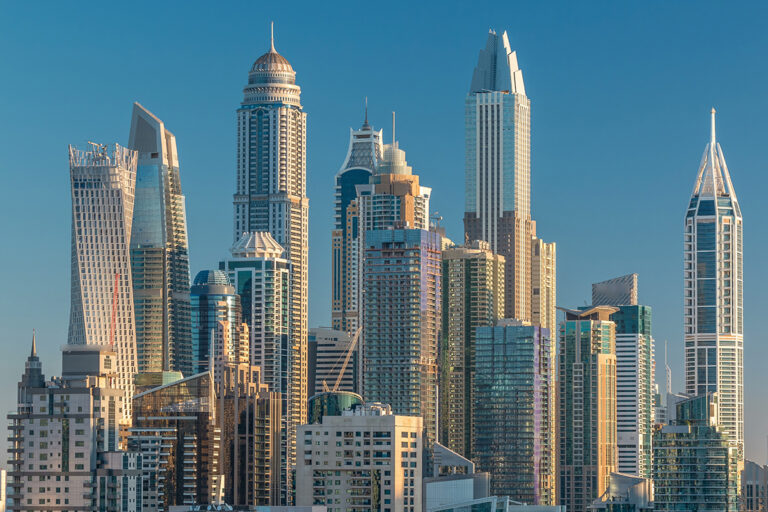
Every post-crisis recovery in Dubai real estate has followed the same sequence. Sentiment shifts first. Volume follows. Then prices catch up — and by the time prices catch up, the entry window has closed. The Dubai prelaunch entry window in April 2026 is no different. The April 8 ceasefire announcement was the sentiment inflexion point. We are now in the narrow weeks between that moment and the moment when the broader safe-haven rebound is fully priced into pre-launch valuations. What makes this window different from every other market pause is the speed at which it is closing — and the precision required to act before it does.
Understanding the Mechanics of a Ceasefire-Driven Market Shift
A ceasefire does not reprice a property market instantly. It reprice sentiment instantly — and sentiment feeds through into volume, which feeds through into price. This lag is the entire investor opportunity. The table below maps exactly where the Dubai real estate recovery timeline sits right now and how many weeks remain at each stage:
| Phase | Timeframe | Price Level | Window Status |
| Conflict Period | Feb – Apr 8, 2026 | –4 to –7% off peak | Open — best pricing |
| Early Recovery | Apr 8 – ~6 weeks post | Flat to +2% | Open — closing fast |
| Sentiment Rebound | ~6–10 weeks post | +5 to +8% | Narrowing sharply |
| Full Repricing | 3–6 months post | Back to/above pre-war | Closed |
Based on the post-COVID recovery cycle — the closest comparable — Dubai’s physical property prices returned to pre-crisis levels within three to five months of the sentiment shift. The 2020 shock was resolved faster than many expected: DLD transaction volumes were recovering by Q3 2020, and by late 2021, luxury off-plan buyers who had entered in mid-2020 were sitting on 25–40% capital appreciation. The mechanics of April 2026 are structurally identical, though the timeline may compress further because the conflict lasted weeks rather than the months-long COVID disruption.
What history tells us clearly: investors who wait for full confirmation of recovery are buying into a market that has already repriced. The window is not defined by whether prices are recovering — it is defined by whether prices have finished recovering. Right now, with average Dubai property prices at AED 1,759 per square foot and only 4–7% off their pre-war peak, they have not.
The Three Forces Keeping the Window Open – For Now
1. Motivated Sellers Are Still Visible Analysts tracked motivated seller deals of 15–30% below market value during the conflict period. These were predominantly investors with short-term liquidity needs who could not wait for the market to normalise. Post-ceasefire, this group does not disappear overnight — it diminishes gradually over weeks as confidence returns and urgency fades. Buyers who source these positions today are capturing value that will be gone once seller confidence fully recovers.
2. Developer Incentives Are at Historic Highs — But Already Tightening To maintain pipeline momentum during wartime uncertainty, developers activated a suite of incentives that were not available before the conflict. These included post-handover payment plans of 70/30 and 60/40, guaranteed rental returns for the first one to two years, Dubai Land Department (DLD) fee waivers, and furniture packages. The table below shows what is currently available and the expected trajectory:
| Incentive Type | Available Now vs. Post-Recovery |
| Post-handover payment plans (70/30) | Available now — likely tightening within weeks |
| Guaranteed rental returns (1–2 years) | Still being offered; historically withdrawn once demand firms |
| DLD fee waivers | Currently active on select projects |
| Furniture packages / fee inclusions | Crisis-era sweetener; among first to go |
| Pre-launch pricing below ready-unit value | 10–20% gap exists today; narrows as sentiment recovers |
Developer incentives are the first casualty of a recovering market. As demand firms and the urgency to move units diminishes, these concessions are withdrawn in reverse order of cost — furniture packages and fee waivers go first, followed by rental guarantees, and finally post-handover payment structures revert to pre-crisis norms. The off-plan property deals Dubai market available today will look materially different in six to eight weeks.
3. Pre-Launch Pricing Is Still Below Fully Recovered Values The pre-launch property pricing gap — the discount between today’s pre-launch entry price and the equivalent ready-unit value — currently sits at 10–20% across most corridors. This gap exists because of two compounding effects: the physical price dip of 4–7% from the conflict, and the inherent pre-launch discount that developers embed to incentivise early commitment. As sentiment recovers and developer urgency fades, the crisis-era component of this discount collapses first. Buyers entering now capture both layers. Buyers entering in three months will likely capture neither.
Why This Window Closes in Weeks, Not Months
The speed of post-conflict recovery in Dubai has been accelerating with each cycle. The 2020 COVID recovery took approximately four months for volume to normalise and six to nine months for prices to recover. The 2015–16 oil shock correction took longer — roughly 12–18 months — but that was a sustained structural pressure, not a sentiment shock. The April 2026 conflict more closely resembles 2020: a sharp, externally driven sentiment disruption on a fundamentally strong market base.
Three factors make the 2026 recovery faster than 2020:
- Pent-up demand is larger. Property viewing activity surged 75% in the final days of March 2026 before the ceasefire — indicating buyers were already staging entry. This demand converts to transactions rapidly once uncertainty clears.
- The market base is stronger. Q1 2026 delivered AED 252 billion in total transactions — a 31% year-on-year increase in value — even during the conflict. The market was not weak before the shock, making recovery faster.
- Foreign capital is positioned and ready. Foreign investment in Dubai property rose 26% to AED 148.35 billion in Q1 2026 despite the conflict. Institutional and high-net-worth buyers from India, the UK, China, and the GCC never fully exited — they paused. Post-ceasefire, that pause ends.
For a comparative view of how post-crisis recovery cycles have played out historically, our piece on Dubai Prelaunch Properties 2026: Why Experts Predict 25% Gains for Early Buyers sets out the cycle data in full.
Post-COVID vs Post-Ceasefire: What the Data Says
The table below draws a direct comparison between the 2020 COVID recovery and the projected 2026 post-ceasefire trajectory, based on DLD data and analyst forecasts:
| Metric | Post-COVID (2020–21) | Post-Ceasefire (2026, projected) |
| Volume recovery lag | ~3–4 months | ~4–8 weeks (faster digital market) |
| Price recovery to pre-crisis | ~6–9 months | ~3–5 months (conflict shorter) |
| Off-plan share during shock | ~60% of transactions | 70% — higher base |
| New investor arrivals post-shock | Surged 40%+ in Q3 2020 | Already +14% YoY in Q1 2026 |
| 18-month capital appreciation (off-plan) | +25–40% | Knight Frank projects +3% prime; broader upside likely |
The critical takeaway: the 2026 recovery timeline is projected to be faster and steeper than 2020, because the underlying market is starting from a higher base. In 2020, Dubai was emerging from a multi-year soft market. In 2026, the market had just recorded its strongest Q1 in history before the conflict began. This means the pre-launch entry window will close more quickly than most investors expect
What Fully-Recovered Pricing Looks Like – And Why You Do Not Want to Buy Into It
When the safe-haven rebound is fully priced in, three things happen simultaneously. First, pre-launch discounts compress — developers no longer need to incentivise early commitment because demand is strong without it. Second, motivated sellers disappear — their urgency evaporates as confidence returns, and they regain negotiating leverage. Third, payment plan structures tighten — the 70/30 post-handover splits revert to 80/20 or 90/10 pre-handover structures that require significantly more upfront capital.
A buyer entering fully-recovered pricing is not buying into a bad market — Dubai’s fundamentals of 6–9% rental yields, zero property tax, and Golden Visa-linked freehold ownership remain in place regardless of the cycle. But they are buying at a price that already incorporates the ceasefire premium, the pent-up demand rebound, and the removal of crisis-era concessions. The asymmetric upside — buying below sentiment-adjusted value with above-normal payment flexibility — is gone.
For context on which specific project types and corridors offer the strongest pre-launch appreciation mechanics in the current cycle, see our analysis at Connecting the Dots: Infrastructure Mega-Projects Driving Off-Plan Hotspots in Dubai.
The Specific Buyer Profiles Who Should Act Immediately
Not every investor is equally positioned to act in this window. The Dubai prelaunch entry window, April 202, is most valuable for three distinct buyer profiles:
- First-time Dubai property investors who have been waiting for a clear entry signal — the ceasefire is that signal, but the clarity it provides is time-limited.
- Investors holding cash from paused transactions — those who had deals at the letter-of-intent stage when the conflict broke out and stepped back. Re-engaging now means re-entering at conflict-era terms before they expire.
- Bulk and corporate buyers targeting multiple units — conflict-period motivated sellers and developer incentives are particularly accessible at scale. For how these buyer groups are currently moving, see our detailed breakdown at How Prelaunch Off-Plan Projects Are Attracting Bulk and Corporate Buyers.
Investors who are still evaluating whether Dubai’s fundamentals justify entry should read our foundational market analysis at The 2026 Investors Shift: Why First-Time Buyers Are Choosing Off-Plan Over Rentals — the case for off-plan property investment. Dubai was strong before the conflict and is stronger still at current pricing.
One Risk Worth Naming
The ceasefire is for two weeks. A permanent agreement has not been signed. Investors should enter this window with a minimum three-to-five-year investment horizon, which structurally insulates the position from any short-term diplomatic reversal. The Dubai off-plan market 2026 is not a momentum trade — it is a long-duration position in a city whose 10-year infrastructure and population growth trajectory is fully intact regardless of what happens in the next two weeks. For a clear-eyed view of the risk landscape in the current cycle, our risk framework at Dubai Off-Plan Market 2026: Boom, Bubble, or Just Maturity? covers the scenario analysis in full.
The Window Is Open. The Clock Is Running.
The April 8 ceasefire created the entry window. Motivated sellers, crisis-era developer incentives, and pre-launch pricing that has not yet caught up with recovering sentiment are all visible in the market today. In four to eight weeks, the first layer of this advantage will be gone. In three to five months, the second layer will follow. Investors who act now avoid buying into a market that has already fully priced in the rebound. Investors who wait will be paying for recovery they did not participate in.
Fill out the EOI form on prelaunch.ae and our team will contact you with verified pre-launch projects available right now — matched to your budget, timeline, and investment goals.
👉 Register Your Interest at prelaunch.ae
Prefer to speak directly?
📞 Call/WhatsApp: +971 52 341 7272
✉ Email: [email protected]
Frequently Asked Questions
Q1. Why does the post-ceasefire prelaunch window close in weeks rather than months?
Because price recovery in Dubai post-conflict follows sentiment recovery, not news events. Sentiment shifted on April 8 — buyer confidence returned, pent-up demand activated, and developers began withdrawing crisis-era incentives. Historical cycles show physical prices return to pre-crisis levels within three to five months of the sentiment shift, meaning pre-launch buyers who enter in the first four to eight weeks post-ceasefire capture the maximum pricing advantage before the recovery is fully priced in.
Q2. What developer incentives are currently available that will not be available post-recovery?
Developers responding to conflict-period demand weakness have been offering post-handover payment plans of 70/30, guaranteed rental returns for one to two years, DLD fee waivers, and furniture packages on select projects. These incentives are withdrawn as demand firms — furniture packages and fee waivers typically first, followed by rental guarantees, with payment plan structures tightening last. All of these terms are available today and narrowing within weeks.
Q3. How does the April 2026 recovery compare to Dubai’s post-COVID recovery in 2020?
The 2026 recovery is projected to be faster. In 2020, Dubai was emerging from a multi-year soft market. In 2026, the market had just recorded AED 252 billion in Q1 transactions — a 31% year-on-year surge — before the conflict began. A market recovering from a temporary sentiment shock on a strong base moves faster than a market recovering from a structural weakness. The post-COVID window to enter at below-peak pricing lasted approximately four to six months; the 2026 window may be shorter.
Q4. What is the current pre-launch pricing gap versus ready-unit values?
The pre-launch discount currently sits at 10–20% below equivalent ready-unit values across most prime Dubai corridors. This gap reflects two compounding effects: the 4–7% physical price dip from the conflict, and the inherent pre-launch developer discount. As sentiment recovers, the crisis-era component collapses first. Buyers entering now capture both layers; buyers entering post-recovery will capture neither.
Q5. Which areas in Dubai are best positioned for post-ceasefire price appreciation?
Prime established corridors — Downtown Dubai, Dubai Hills Estate, Business Bay, Dubai Marina, and Palm Jumeirah — fell least during the conflict and are expected to reprice fastest. Commercial real estate recorded a 69.2% year-on-year surge in Q1 2026 value, reflecting institutional confidence that never left. Peripheral areas with high supply concentration are more nuanced and require careful due diligence on developer quality and area absorption rates.
Q6. Is it too risky to enter the Dubai prelaunch market before a permanent peace deal?
For investors with a three-to-five-year horizon, no. Dubai’s structural fundamentals — 6–9% rental yields, zero property tax, Golden Visa-linked freehold ownership, and a population forecast to reach 4.7 million by end-2026 — are intact regardless of the ceasefire’s duration. The risk of a short-term diplomatic reversal is real but manageable for patient capital. The larger risk for most investors is not a geopolitical reversal — it is waiting for certainty that arrives after the pricing opportunity has closed.