On 20 March 2026, Reuters published a story that rattled inboxes across the global investor community. The headline was pointed: Dubai’s property sector is beginning to show early signs of weakness. Transaction volumes had fallen sharply in the first 12 days of March. Some sellers were reportedly offering discounts of 12 to 15 percent. Goldman Sachs data showed that total completed transaction value in early March was roughly half of February’s figure — a drop far steeper than anything seen during the 2024 Dubai floods or the previous Iran-Israel flare-up.
The Reuters article was accurate. And it was also incomplete. Because the same market that produced those sobering volume numbers also generated AED 10.92 billion in developer sales across March, saw luxury transaction volumes rise 42 percent year-on-year, and welcomed five new residential project launches in the final two weeks of the month alone. Understanding how both things can be true simultaneously is the difference between panic and perspective — and right now, that distinction is worth a great deal of money.
What Reuters Actually Said – And What It Did Not
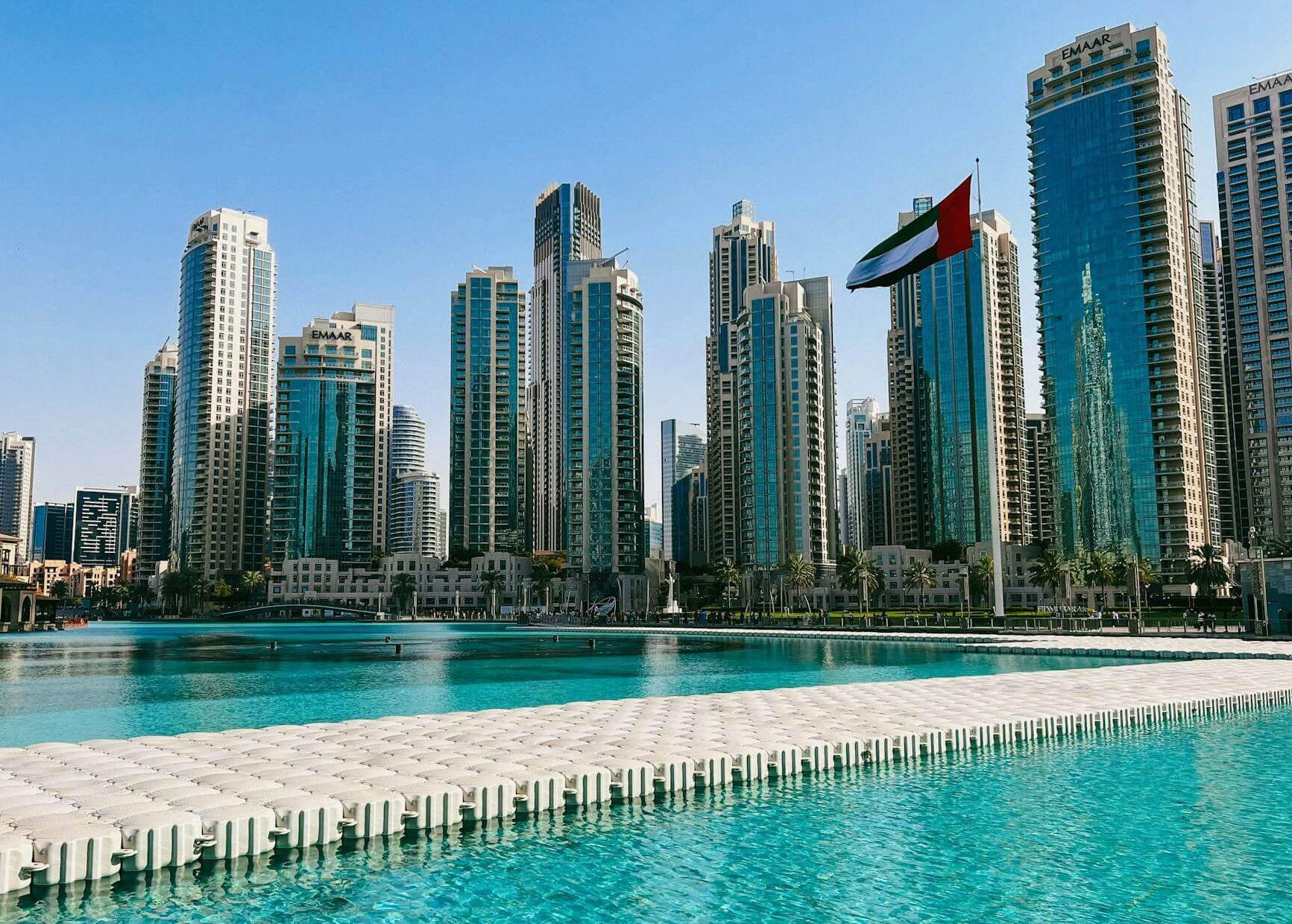
The Reuters warning centred on the conflict context: nearly three weeks into the U.S.-Israeli war on Iran, Dubai’s safe-haven reputation had taken a direct hit. Iranian strikes on UAE targets on 28 February 2026 triggered the closure of the Dubai Financial Market for two days. When it reopened, the DFM General Index fell 4.7 percent in a single session. Within two weeks, Emaar Properties shares had dropped more than 26 percent from pre-conflict levels. Real-estate transaction volumes in the UAE fell 37 percent year-on-year in the first 12 days of March, and 49 percent month-on-month, according to Goldman Sachs estimates.
Some properties near the Burj Khalifa were being listed at quick-sale discounts. An off-plan apartment on Palm Jumeirah appeared in a WhatsApp agent group at 15 percent below its original price — roughly $2 million. These are real data points, reported responsibly.
What the Reuters piece did not capture — because it could not have, given its publication date — was how the remaining weeks of March played out. Or how a AED 422 million luxury apartment on the Jumeirah Peninsula transacted mid-conflict. Or that 3,570 property deals closed in the single week of March 2 to 9, generating AED 11.93 billion in deal value. Or that the citywide median transacted price as of March 8 stood at AED 1,770 per square foot — up 14 percent year-on-year.
| Metric | Early March (Conflict Peak) | Late March (Recovery Phase) |
| Transaction volume vs prior month | -49% (Goldman Sachs est.) | Stabilising; 5 new launches announced |
| Transaction volume vs year-on-year | -37% (first 12 days) | +42% (luxury segment, to 26 March) |
| Developer sales (month of March) | — | AED 10.92 billion |
| Median price per sq ft (March 8) | AED 1,770 | Up 14% YoY; holding steady |
| Luxury deals (AED 20–50M range) | — | 79 transactions worth AED 2.36B |
| Single largest transaction | — | AED 422M apartment, Jumeirah Peninsula |
| Emaar share price vs pre-conflict | -26%+ (DFM) | Gradual partial recovery observed |
Sources: Goldman Sachs, DXBinteract, Keturah market analysis, Reuters, March 2026.
This divergence — between the headline warning and the full-month reality — is not a contradiction. It is a feature of how Dubai’s property market responds to shocks differently to equity markets. For a deeper understanding of that structural gap, the analysis of why war shocks hit stocks fast but Dubai property moves on a different clock offers the clearest explanation of the timing mechanics at play.
The Selective Buyer: Who Is Still Signing, and Why
The buyer who disappeared in early March was a specific type: the sentiment-driven speculator, the quick-flip operator, the investor with thin equity and shorter horizons. When geopolitical noise became geopolitical reality, those buyers paused — rationally. They are also not the buyers who were ever going to define Dubai’s long-term trajectory.
The buyer who remained active in late March was a different profile entirely. Himanshu Khandelwal, CEO of Dubai-based investment firm Asas Capital, described it plainly to Reuters: “There are many investors calling us to ask if you have clients who want to sell at distress or anybody who sells at a discount — we’re ready to buy.” That is not fear. That is strategy.
This buyer segment — Emirati clients, Indian family offices, and long-horizon international investors — has not left the market. It has repositioned itself to take advantage of it. Data from DXBinteract through 26 March confirms that 150 sales in the AED 10–20 million range generated AED 1.99 billion in value alone during the month, including two off-plan villas each priced above AED 19 million. These are not distressed buyers. These are buyers who understand the difference between price discovery and price collapse.
For investors trying to decode which segment of the market is genuinely holding, and which is vulnerable, the detailed Dubai off-plan buyer vs rental decision framework for 2026 maps the calculation with current data and scenario modelling.
Launches Did Not Stop – They Just Got More Selective
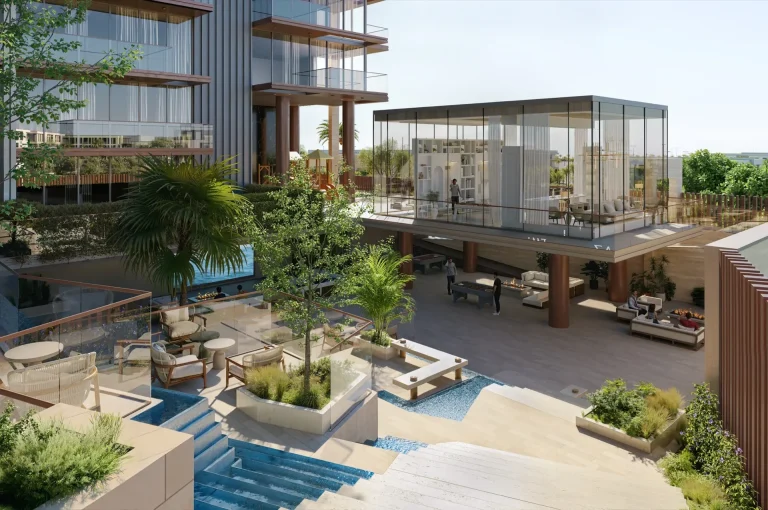
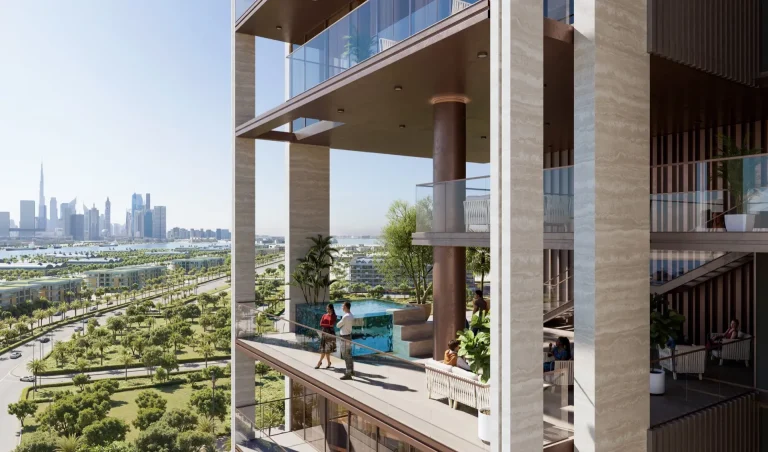
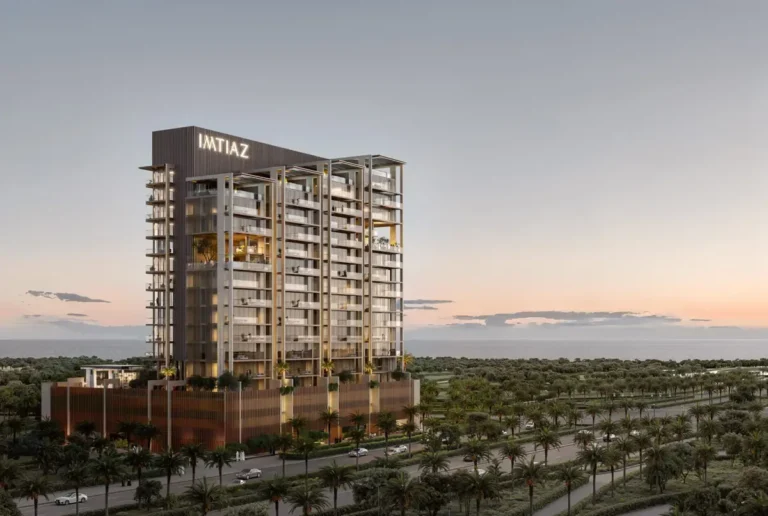
Perhaps the most telling indicator that Dubai’s off-plan property market remains structurally active is this: developers kept launching through the conflict. Five residential projects reached the market in March 2026 alone — Sea Cliff by Imtiaz on Dubai Islands, Flora Bay by Octa on Dubai Islands, The Winslow by IGO in Meydan Horizon, Golf Vale by Emaar in Emaar South, and GreenZ Townhouses by Danube in Academic City. Starting prices ranged from AED 1.1 million to AED 1.99 million across all five, with a variety of freehold structures and payment plans.
Developers do not launch during a genuine collapse. They launch when they believe — based on their own sales pipelines, reservation data, and investor relations intelligence — that there is demand to convert. The March 2026 launches represent an industry-wide vote of confidence that the market’s fundamentals, however tested by sentiment, remain operative.
| Project | Developer | Location | Starting Price | Payment Plan |
| Sea Cliff | Imtiaz Developments | Dubai Islands | AED 1.99M | 50/50 |
| Flora Bay | Octa | Dubai Islands | AED 1.9M | 50/50 |
| The Winslow | IGO | Meydan Horizon | AED 1.7M | 60/40 or 60/10/30 |
| Golf Vale | Emaar | Emaar South | AED 1.1M | 80/20 (10% deposit) |
| GreenZ | Danube | Academic City | TBA | 1% monthly plan |
Off-plan accounted for more than 65 percent of total Dubai property transactions in 2025, and industry forecasts project that share rising a further 10 to 15 percent through 2026 as major developers roll out large-scale projects in Dubai South, Dubai Islands, and Emaar’s master-planned corridors. That trajectory does not pause for one difficult month.
What the Macro Picture Actually Says
Strip away the conflict-driven noise, and Dubai’s property market enters 2026 with a set of structural characteristics that make it resilient — though not invulnerable. Here is where the data is genuinely instructive:
In February 2026 — the month immediately before the shock — Dubai recorded 15,369 residential transactions worth AED 45.39 billion, up 2.51 percent in volume and 9.59 percent in value year-on-year. That is not a weakening market. That is a market entering a test from a position of meaningful strength. Property Monitor’s Dynamic Price Index shows that average citywide residential values rose from approximately AED 1,484 per square foot to AED 1,676 per square foot across 2025 — a 13 percent annual gain — before the March disruption began.
Fitch Ratings, often cited as the most cautious institutional voice on Dubai property, forecast a moderate correction of up to 15 percent in the 2025–2026 period — a prediction made before the geopolitical shock. Critically, Fitch also noted that 87 percent of Dubai property purchases in 2025 were cash transactions, eliminating the forced-liquidation cascades that characterised the 2009 crash. UAE bank real estate lending has fallen to 14 percent of gross loans, down from 20 percent in 2021. The regulatory architecture — RERA oversight, Oqood registration, escrow-protected payments — did not exist in the previous crash cycle.
The Dubai population reached 4.03 million as of October 2025, growing at 4.47 percent year-on-year — roughly 470 new residents arriving every single day. That is not a demand narrative. That is a demand engine. And it does not switch off because of a month of geopolitical uncertainty.
For investors who want to properly map which sub-markets are insulated from supply pressure and which carry concentration risk, the 2026 Dubai oversupply risk map and safe investment zones provide a community-level breakdown of where your capital is most and least exposed.
The Two-Speed Market: Luxury vs Mid-Market
Not all of Dubai is experiencing March 2026 the same way. The market has split into two speeds, and understanding which speed your investment sits in is the most practical thing you can do right now.
Luxury and ultra-prime: holding, even gaining. ValuStrat projects that luxury villas and townhouses — less than 20 percent of Dubai’s total housing stock — will see prices rise 17.7 percent in 2026. The AED 50 million-plus segment closed 16 transactions worth AED 1.04 billion in the first 24 days of March alone. These assets trade on scarcity, not sentiment. When supply is structurally constrained, and buyers have global capital to deploy, short-term noise does not move prices in any sustained way.
Mid-market apartments: selective pressure, not collapse. This is where the warning signals have most traction. With approximately 120,000 units projected for delivery in 2026, sub-markets like JVC, Dubai South, and parts of Business Bay face genuine absorption challenges. Buyers in this segment are right to negotiate. They are right to ask hard questions about handover timelines. They are not right to abandon the segment wholesale — because the rental yields (6.5 to 8.8 percent in JVC alone) still significantly outperform comparable global cities.
| Segment | March 2026 Status | Rental Yield | Investment Signal |
| Ultra-luxury (AED 50M+) | Active — 16 deals in 24 days | N/A (capital gains focus) | Strong hold / accumulate |
| Luxury (AED 10–50M) | AED 2.36B in 79 deals (March) | 5–7% | Resilient — limited supply |
| Premium off-plan (AED 2–10M) | Stable; launches continuing | 6–8% | Selective — developer quality matters |
| Mid-market apartments (sub-AED 2M) | Volume softening; negotiating room | 6.5–8.8% in JVC, Al Furjan | Caution — oversupply pockets exist |
| Villas/townhouses (all price ranges) | Supply-constrained — rising | 5–7% | Outperforming; 17.7% YoY forecast |
For investors choosing between these tiers, the decision framework in Prelaunch.ae’s complete analysis of the 2026 investor shift — off-plan vs rentals walks through the financial logic in both directions, with real numbers from the current cycle.
What Smart Buyers Are Actually Doing Right Now
The investors making the best decisions in March 2026 share three characteristics. First, they are not allowing equity market movements to dictate physical property strategy. The DFM Real Estate Index is a sentiment barometer, not a valuation of your apartment in Al Jaddaf or your villa in Dubai Hills. These markets do not live in the same time zone, and conflating them is the single most expensive mistake a buyer can make in this environment.
Second, they are monitoring the secondary market for motivated sellers — the small cohort of overleveraged or conflict-anxious owners who may reprice. This is where selective entry points emerge. But they are distinguishing between genuine value and distressed products with structural problems. A 15 percent discount on an apartment in a development with a weak developer track record is not a bargain.
Third, they are extending their investment horizon. Property in Dubai does not recover from sentiment shocks on an equity market timeline. After COVID-19, the DFM fell roughly 40 percent. Dubai residential prices fell 5 to 10 percent and recovered within 12 months. By late 2021, prices had begun a rally that reached 60 to 75 percent above pre-COVID levels by 2025 — one of the strongest sustained property market runs the city has ever seen. Investors who exited in March 2020 on the basis of stock market fear missed all of it.
For a practical framework on where pre-launch investors should be positioning right now, the detailed guide to smart strategies for pre-launch investors in a shifting Dubai market provides a structured decision checklist built specifically for this market environment.
The Fundamentals Have Not Changed – The Market Has Just Matured
There is a version of the Dubai story that frames every moment of difficulty as evidence that the market is finally collapsing. That version has been wrong for five consecutive years. The Dubai property market has not entered a collapse in March 2026. It has entered a more selective phase — one that was already developing before the geopolitical shock added urgency.
Cushman & Wakefield Core described it precisely: “The Dubai residential market is transitioning into a more balanced phase.” Knight Frank notes that prices are up approximately 78 percent across this residential cycle, and a slowdown in the rate of increase is natural — it is what healthy markets do after sustained appreciation. Analysts at AGBI described the emirate as entering “a more mature phase of the cycle — one where growth slows and price differences widen.” That is not an obituary. That is an evolution.
For investors who want the full context on whether this is a boom, bubble, or maturity, the Prelaunch.ae deep dive on Dubai off-plan market 2026 examines the structural indicators that distinguish a cyclical correction from a systemic crisis — and finds Dubai firmly in the former category.
Position Yourself Ahead of the Recovery
The buyers who win in a selective market are the ones who act while others are still deciding. If you are ready to evaluate which projects and locations represent genuine value right now — not speculation, but calculated opportunity — the team at Prelaunch.ae is already working with investors making exactly those calls.
Fill out the enquiry form at prelaunch.ae to receive personalised project recommendations, developer analysis, and current availability — before the recovery window closes.
Contact us: (+971) 52 341 7272 | sales@mbrproperties.ae
Frequently Asked Questions (FAQs)
Is the Dubai property market crashing in 2026?
No. Transaction volumes softened significantly in early March 2026 following geopolitical disruption, but prices held — the median price per square foot remained at AED 1,770 as of March 8, up 14 percent year-on-year. Developer sales reached AED 10.92 billion in March, and luxury transaction volumes rose 42 percent year-on-year. This is a market under temporary sentiment pressure, not structural collapse.
What did Reuters actually report about Dubai property in March 2026?
On 20 March 2026, Reuters reported that transaction volumes had fallen sharply in the first 12 days of March — down 37 percent year-on-year and 49 percent month-on-month by Goldman Sachs estimates — and that some agents were seeing price discounts of 12 to 15 percent. The report was accurate for that snapshot window, but subsequent late-March data showed luxury sales and developer volumes recovering strongly.
Should I still buy off-plan property in Dubai in 2026?
The case for off-plan remains intact, but selectivity matters more than ever. Developer track record, escrow compliance, project location, and handover timeline are now more critical than in the 2023 to 2025 bull-run period. Off-plan properties made up over 65 percent of Dubai transactions in 2025, and that structural preference has not reversed. Focus on developers with proven delivery records and projects in communities with genuine demand depth.
Which parts of Dubai are holding value best right now?
Ultra-luxury and villa segments are outperforming — ValuStrat projects 17.7 percent price growth for luxury villas in 2026. Prime master-planned communities such as Dubai Hills Estate, Palm Jumeirah, Dubai Creek Harbour, and Emaar Beachfront have demonstrated stronger price resilience. Mid-market apartment-heavy areas like JVC face more supply pressure and require more careful due diligence.
What is happening to off-plan launches in Dubai in March 2026?
Launches have continued. Five new projects came to market in March 2026 alone, from developers including Emaar, Danube, Imtiaz, IGO, and Octa. Developers continue launching when their internal demand signals justify it — and in March 2026, they did.
How does the current situation compare to Dubai’s 2020 property crash?
After COVID-19 in early 2020, the DFM index fell roughly 40 percent at its worst. Dubai residential property prices declined only 5 to 10 percent, and the correction was complete within 12 months. By late 2021, prices had begun a 60 to 75 percent rally that lasted until 2025. The current shock has triggered equity market fear, so far, only modest physical property repricing — consistent with the pattern of 2020.