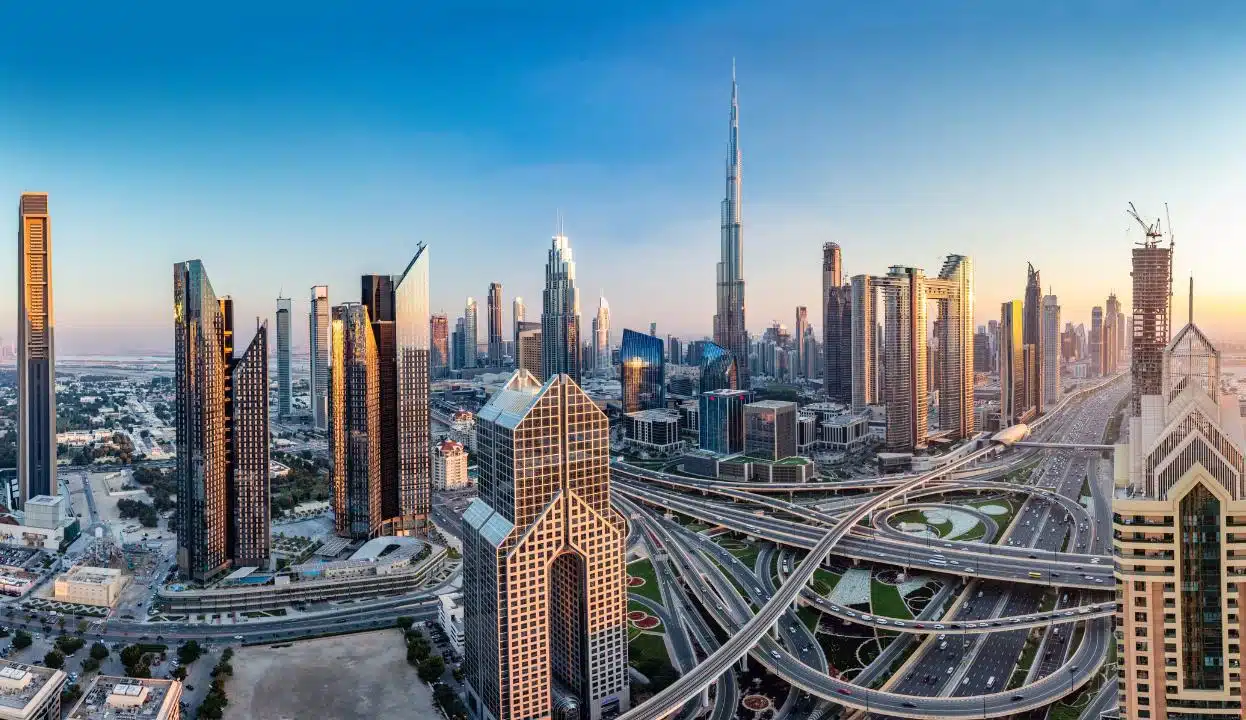
There is a segment of property buyers that Dubai’s developers have spent the last three years quietly redesigning their entire launch strategy around — and it is not the billionaire, the sovereign wealth fund, or the Russian oligarch of a previous era. It is what CBRE has formally classified as the EMILLI: the Everyday Millionaire. Net worth of $1 million to $30 million. Property budget of AED 3.7 million to AED 18 million. Globally mobile, investment-literate, and increasingly choosing Dubai over London, Singapore, or Hong Kong as their primary real estate market.
In 2024, over 39,000 million-dollar-plus homes were sold in Dubai — a record that no comparable city has come close to matching. What is more striking is that many of those buyers did not arrive as millionaires. They became millionaires through Dubai real estate itself, as properties purchased for under $1 million in earlier cycles appreciated into the seven-figure range. The EMILLI effect is self-reinforcing: Dubai creates the buyers it is now designing launches for.
This guide maps exactly what the Dubai off-plan mid-luxury investment 2026 landscape looks like for buyers in the $1 million to $5 million bracket — which zones developers are targeting, how launches have been specifically engineered for this segment, and where the most compelling prelaunch opportunities exist right now.
Who Is the Everyday Millionaire? Understanding the EMILLI Buyer Profile
CBRE’s EMILLI classification did not emerge from marketing strategy — it emerged from transaction data. This is a segment defined by six consistent behavioural characteristics that distinguish them from both the mass-market buyer below them and the ultra-HNWI above them:
- Capital liquidity: They have sufficient liquid capital or borrowing capacity to transact in the AED 3.7M–18.4M range without over-leveraging.
- Lifestyle-ROI duality: They want the property to perform financially and to be genuinely liveable — or lettable at a premium. Pure yield plays do not satisfy this segment; pure lifestyle assets without strong ROI credentials do not either.
- Golden Visa motivation: The 10-year UAE Golden Visa — accessible from AED 2 million of qualifying property — is a primary driver for this segment. The property investment and the long-term residency strategy are the same decision.
- International buyer profile: Knight Frank’s Destination Dubai 2025 report identifies buyers from Saudi Arabia, the UK, India, and East Asia as the dominant nationalities in this bracket. They arrive with global portfolio experience and clear benchmarks against London, Singapore, and Dubai.
- Quality threshold: Specification standards, developer credibility, community infrastructure, and branded adjacency matter disproportionately in this segment. AED 4 million in JVC and AED 4 million in Dubai Hills Estate are not equivalent propositions to an EMILLI buyer.
- Exit literacy: This segment buys with a defined exit horizon — typically 5 to 10 years — and actively models resale scenarios alongside rental income during the hold period.
The table below positions the EMILLI segment within Dubai’s full buyer spectrum and maps each tier to its off-plan community and unit-type profile.
Table 1: Dubai Off-Plan Buyer Segments — Where the Everyday Millionaire Sits
| Market Segment | Net Worth Range | Property Budget | Primary Goal | Dubai Off-Plan Profile |
| Mass Market | Under $1M | AED 500K–2M | Entry/affordability | Studio–1-bed; JVC, Dubai South, Arjan |
| EMILLI (Everyday Millionaire) | $1M–$30M | AED 3.7M–18.4M | Lifestyle + ROI balance | 2-bed–penthouse; Dubai Hills, Creek Harbour, Dubai Islands, MBR City |
| HNWI | $30M–$300M | AED 18M–110M | Capital preservation + yield | Villas, branded residences; Palm, Emirates Hills, MBR City |
| Ultra HNWI / UHNWI | Above $300M | AED 110M+ | Trophy assets + residency | Superprime; One Palm, Jumeirah Bay, bespoke mansions |
Source: CBRE EMILLI classification, Knight Frank Destination Dubai 2025, prelaunch.ae market analysis.
How Developers Have Engineered Launches for the $1M–$5M Bracket
The most significant structural shift in Dubai’s off-plan market over the past two years is not the volume of launches — it is the deliberate repositioning of product design toward the mid-luxury segment. Emaar, DAMAC, Nakheel, and Sobha have each made explicit product decisions that reflect EMILLI buyer preferences, and understanding these decisions helps buyers identify which launches are built for their profile — and which are mass-market products with mid-luxury pricing.
Branded Residence Integration
The fastest-growing product category in Dubai’s mid-luxury off-plan segment is the branded residence — a development co-branded with a global hotel group, fashion house, or luxury automotive brand. In 2024–2025, Dubai overtook every other global city for branded residence launches, with over 100 branded residence projects in various stages of development. For EMILLI buyers, branded residences offer three structural advantages: a 15–25% resale premium over comparable non-branded units in the same zone, access to hotel-grade property management and short-stay rental infrastructure, and a globally recognisable brand narrative that resonates with international resale buyers.
Projects in the AED 4M–12M range at Dubai Islands, Emaar Beachfront, and One Palm now include branded residence offerings from major hospitality groups, with additional fashion and automotive collaborations in the pipeline for 2026 launches. For a comprehensive view of the Dubai ultra-luxury off-plan boom and the developer strategies driving high-net-worth demand, the branded residence trend and its financial mechanics are covered in detail.
Larger Unit Typologies with Resort Amenity Stacks
Mass-market launches are optimised for unit count — maximising the number of studios and one-beds on a given footprint. EMILLI-oriented launches invert this logic: fewer units, larger floor plates, and a deep amenity stack that justifies the price per square foot. Sobha Hartland II, Dubai Hills Estate towers by Emaar, and the Nakheel-developed phases of Dubai Islands all feature two-bedroom-plus configurations as their dominant unit type, paired with resort-standard pools, co-working facilities, concierge services, and private beach or lagoon access.
This amenity depth matters to EMILLI buyers for both lifestyle and yield reasons: a two-bedroom unit in a resort-amenity building in Dubai Hills lets for 12–18% more annually than a comparable unit in a standard residential tower in the same zone, based on DLD rental transaction comparisons.
Post-Handover Payment Plans at Mid-Luxury Price Points
Historically, post-handover payment plans were the preserve of mid-market developers competing on affordability. In 2025–2026, Emaar and DAMAC have extended post-handover structures into the AED 4M–12M bracket — a deliberate move to expand capital accessibility for EMILLI buyers who have significant net worth but prefer to keep capital working across multiple assets rather than concentrating it in a single property. A AED 6 million Emaar unit on a 40/60 post-handover plan requires AED 2.4 million before handover — a figure that keeps the buyer’s remaining capital available for other opportunities while the Dubai asset appreciates toward completion.
The EMILLI Zone Map: Where the $1M–$5M Prelaunch Opportunity Lives in 2026
Not every Dubai community is designed for the EMILLI buyer profile. The intersection of strong rental yield, capital appreciation depth, master-community infrastructure, and developer credibility narrows the field to seven primary zones. The table below maps each against its key investment metrics and the structural reason EMILLI buyers are finding value there in 2026.
Table 2: Dubai Off-Plan Mid-Luxury Investment Zone Map — $1M–$5M Buyers (2026)
| Zone | Price Range (AED) | Best Unit Type | Gross Yield | Cap. Growth Outlook | Why EMILLI Buyers Win |
| Dubai Hills Estate | 3.5M–8M | 2–3 bed apt / townhouse | 6–7.5% | ★★★★★ | Master community scarcity; top schools; end-user demand drives capital floor |
| Dubai Islands | 4M–12M | 2-bed waterfront | 7–8.5% | ★★★★★ | Waterfront scarcity model; tourism-rental crossover; Nakheel delivery credibility |
| Creek Harbour | 3.5M–9M | 2-bed + study / 3-bed | 6.5–7.5% | ★★★★☆ | Branded tower adjacency; tallest tower catalyst; urban-professional tenant base |
| MBR City | 4M–11M | 3-bed apt / semi-villa | 6–7% | ★★★★☆ | 21.4% YoY price growth; downtown proximity; school and lifestyle infrastructure |
| Palm Jumeirah | 7M–18M | 2-bed branded residence | 5.5–7% | ★★★★☆ | Global address, short-stay premium, capital appreciation floor established |
| Sobha Hartland II | 4M–10M | 2–3 bed lagoon-facing | 6–7% | ★★★★☆ | Nature-integrated; limited supply in zone; family end-user demand depth |
| Emaar Beachfront | 5M–14M | 2-bed sea view | 6.5–7.5% | ★★★★☆ | 750m private beach; resort lifestyle; strong resale demand from regional buyers |
Source: DLD transaction data, developer price lists, prelaunch.ae community analysis (Q1 2026). Gross yields are indicative; net yields will vary with service charge and management fees.
The Dubai Hills Estate Case Study
Dubai Hills Estate is the single most instructive case study for understanding the EMILLI segment’s investment thesis. Emaar’s flagship mid-luxury master community has delivered consistent 15–25% pre-completion appreciation across every phase since its 2017 launch. Its community anchors — GEMS schools, Dubai Hills Mall, an 18-hole golf course, and a hospital — create a family end-user demand floor that insulates the asset from the rental-yield compression that affects more speculative communities during supply cycles.
Today, new Emaar phases in Dubai Hills Estate are entering at AED 1,800–2,400 per square foot at prelaunch, with comparable completed units trading at AED 2,200–2,800 per square foot in the resale market. The phase-one entry discount versus the secondary market is the EMILLI buyer’s structural advantage — and it disappears by phase two or three. For the full picture on Dubai Hills’ current off-plan pipeline and investment fundamentals, see our analysis of the best off-plan projects in Dubai Hills and their 2025 investment case.
Dubai Islands: Waterfront Scarcity at Mid-Luxury Entry Points
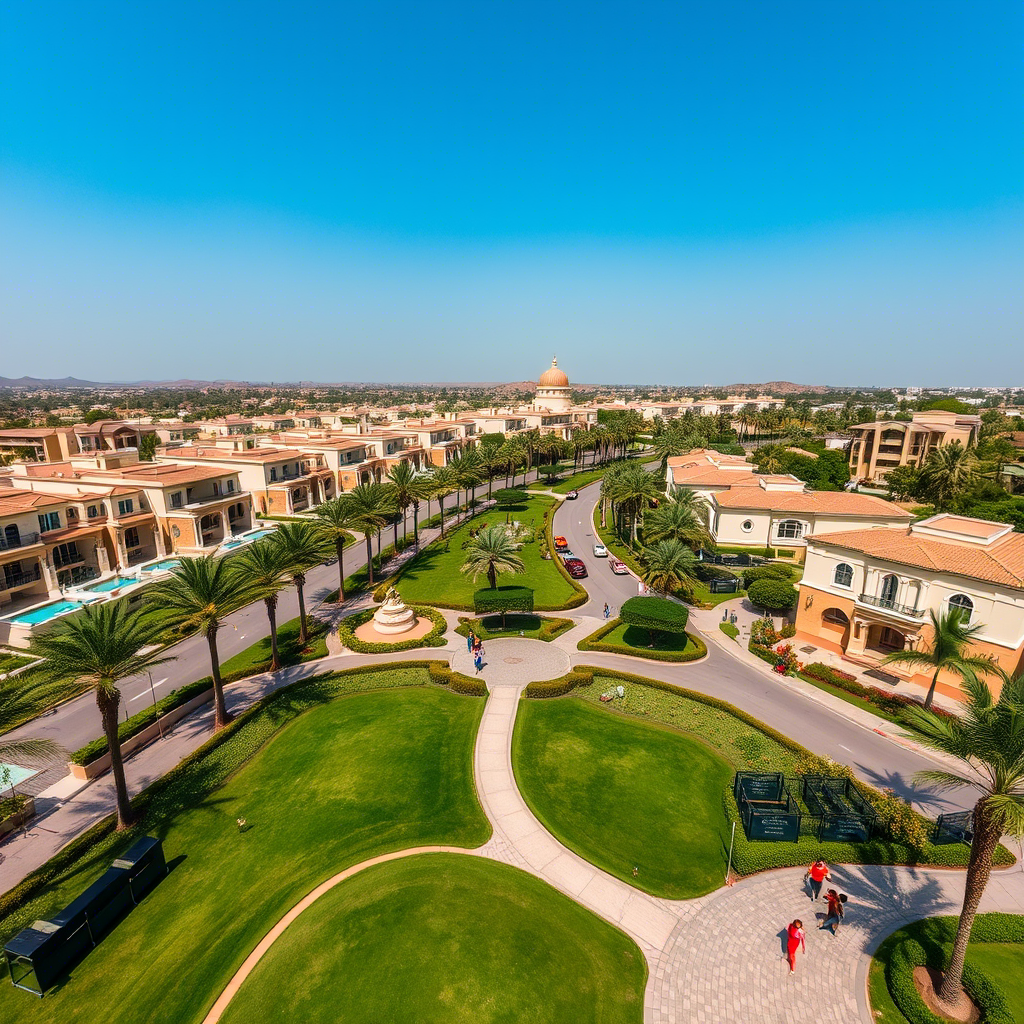
The Dubai Islands represent the most compelling waterfront entry point for EMILLI buyers in the current cycle. Nakheel’s five-island development prices beachfront apartments at AED 2,162 per square foot on average — compared to AED 4,980 per square foot on Palm Jumeirah — while delivering a comparable waterfront lifestyle proposition and gross yields of 7–8.5%. For an EMILLI buyer who missed Palm Jumeirah’s 2010–2015 entry window, Dubai Islands is the structural analogue at this cycle’s accessible price point.
The key demand driver is tourism-rental crossover: Dubai Islands phases are being developed with integrated hotel, hospitality, and beach club infrastructure that gives residential owners direct access to short-stay rental management — a yield-enhancement pathway that standard inland communities cannot replicate. See our guide to Dubai’s fastest-growing communities and where off-plan investors are generating the highest returns for a community-level returns breakdown.

The Golden Visa Multiplier: Why the AED 2M–5M Range Carries a Residency Premium
For international EMILLI buyers, the 10-year UAE Golden Visa transforms the investment calculation in a way that is difficult to replicate in any other major real estate market. A property purchase of AED 2 million or above — qualifying via a single asset or cumulative off-plan payments reaching the threshold — enables a decade of UAE residency, zero income tax on rental returns and capital gains, and access to world-class healthcare and education infrastructure for the investor’s family.
The residency premium is financial, not just lifestyle. An EMILLI buyer who relocates to Dubai — or gains the option to do so — removes home-country income tax liability on their global rental income and gains access to a banking and financial services ecosystem purpose-built for internationally mobile capital. For buyers from the UK, France, Germany, or high-tax markets in Asia, the tax efficiency of Dubai residency alone can represent AED 200,000–500,000 in annual tax savings on a mid-luxury property portfolio — effectively subsidising the cost of the property investment itself.
EMILLI investor insight: The AED 2 million Golden Visa threshold is triggered by qualifying off-plan payments, not just completed assets. A buyer purchasing an AED 4 million off-plan unit who has paid 50% (AED 2 million) toward construction is already eligible to apply. This means Golden Visa access can begin during construction, not just at handover — an often-overlooked advantage of early-phase off-plan entry in the mid-luxury bracket.
Prelaunch Checklist: 7 Checks Every $1M–$5M Buyer Must Run Before Signing
Mid-luxury off-plan buyers face a specific set of due diligence priorities that differ from the mass-market checklist. The higher purchase price, branded amenity complexity, and Golden Visa implications each require dedicated verification. The table below maps the seven non-negotiable checks for an EMILLI-profile prelaunch purchase.
Table 3: Prelaunch Due Diligence Checklist for $1M–$5M Dubai Off-Plan Buyers
| Priority Check | What to Ask or Verify | Strong Signal for EMILLI Buyer |
| Golden Visa eligibility | Does the unit hit the AED 2M threshold at the booking-deposit stage? | Yes — enables 10-year residency immediately on qualifying payment |
| Branded vs non-branded premium | Is the brand affiliation (hotel, fashion, car) exclusive to this project? | Exclusive partnership adds 15–25% resale premium; non-exclusive does not |
| Developer’s mid-luxury track record | Has this developer delivered projects in the AED 3M–12M bracket before? | 3+ comparable delivered projects with an on-time record |
| View and floor permanence | Will any future towers obstruct the view within 5 years? | The developer provides contractual view protection, or the master plan confirms no obstructions |
| Service charge benchmark | What is the AED/sqft service charge vs comparable communities? | Below AED 20/sqft annually; anything above needs justification |
| Resale market depth in the zone | How many secondary transactions occurred in this zone in the last 12 months? | 100+ transactions — confirms liquidity for your exit horizon |
| Payment plan vs cash discount | Is there a cash discount (5–8%), and what is the post-handover option? | Both available signals developer confidence and buyer negotiation room |
Complete all seven checks before signing the SPA. Mid-luxury transactions warrant independent legal review of the full contract documentation.
The branded residence premium check deserves special emphasis for EMILLI buyers. Not all branded collaborations are created equal. An exclusive partnership between a developer and a globally recognised hotel group adds a documented 15–25% resale premium. A non-exclusive licensing arrangement — where the brand name appears on marketing but does not entail operational integration — adds significantly less. Ask directly: Is this brand managing the asset operationally, or is it a marketing affiliation only?
For a broader framework on evaluating developer credibility and which developers have the strongest track records in the mid-luxury bracket, our guide to the top developers and communities for off-plan projects in Dubai, ranked by track record and investment performance, provides a comprehensive comparison across Emaar, DAMAC, Sobha, Nakheel, and Meraas.
Where Developers Are Launching Next for the EMILLI Segment
Based on confirmed and anticipated Q2–Q4 2026 launches across Dubai’s major developers, the following pipeline represents the highest-priority prelaunch windows for mid-luxury buyers this year:
- The Oasis by Emaar (Dubailand): A $20 billion masterplan with 7,000+ villas and mansions priced from AED 6 million. Q1 2026 phases are entering at the lowest price point in the project cycle. The Oasis contributed 13% of all Dubai property sales value in April 2025 despite representing only 4% of transaction volume — a reflection of its outsized value positioning.
- Emaar Creek Edge Phase 3 (Creek Harbour): New residential towers with direct Burj Khalifa and Creek views. Prelaunch pricing starts at AED 3.5M–6M for two and three-bedroom configurations. Early Creek Harbour investors from 2016–2019 have seen significant double-digit appreciation as infrastructure and the tallest tower catalyst mature.
- Nakheel Dubai Islands Phase 3+: Ongoing phased releases across the five-island cluster. Buyers who missed phase 1 pricing are now in phase 2 territory, but the zone’s first-mover advantage relative to Palm Jumeirah pricing remains substantial — waterfront at AED 2,162/sqft versus AED 4,980/sqft.
- Sobha Hartland II Waterfront Mansions: Ultra-quality mid-luxury in a controlled-supply zone. Sobha’s no-broker direct sales model means buyers access pricing without agent uplift — a structural advantage that partially offsets the higher AED/sqft entry.
For the full Q4 2025 and 2026 launch pipeline across all developer tiers, our Q4 2025 pipeline preview and upcoming major launch guide maps confirmed and anticipated releases with pricing context.
Conclusion: The Everyday Millionaire’s Window Is Open — But It Is Zone-Specific
The EMILLI segment’s dominance of Dubai’s off-plan market in 2026 is not a trend — it is a structural reorientation of where developer capital, product design, and amenity investment is being directed. The $1 million to $5 million buyer is now the primary customer for Dubai’s most ambitious launches, and the zone-level opportunities available at this price point — Dubai Hills, Dubai Islands, Creek Harbour, MBR City — represent some of the most defensible investment propositions in any global real estate market.
The window is open. But it is zone-specific, phase-specific, and closes one release at a time. For a complete picture of how the Dubai off-plan mid-luxury investment 2026 landscape integrates with the city’s broader growth trajectory and 2040 Urban Master Plan, our analysis of Dubai’s 2026 off-plan investment outlook, supply trends, and how to invest smarter provides the macro context every EMILLI buyer needs before committing capital.
Access Mid-Luxury Prelaunch Pricing Before the Crowd
Fill up the form on our website at prelaunch.ae to receive personalised mid-luxury off-plan recommendations matched to your budget, residency goals, and return horizon — with zone-level pricing data and developer track records included.
📞 (+971) 52 341 7272 | ✉ [email protected] | 🌐 prelaunch.ae
Our specialists hold priority allocation access across Emaar, DAMAC, Sobha, and Nakheel mid-luxury phases — before public launch announcements move the price.
Frequently Asked Questions
What is the EMILLI segment and why does it matter for Dubai off-plan buyers?
EMILLI stands for Everyday Millionaire, a buyer classification developed by CBRE to describe individuals with a net worth of $1M–$30M who are the fastest-growing and most active segment in Dubai’s mid-luxury real estate market. This segment’s preferences — lifestyle-ROI duality, Golden Visa motivation, branded quality, and global mobility — are now directly shaping how developers design and price launches in the AED 3.7M–18.4M range.
Which Dubai community offers the best off-plan investment value for a $1M–$3M budget in 2026?
For a USD $1M–$3M budget (approximately AED 3.7M–11M), Dubai Hills Estate, Dubai Islands, and Creek Harbour offer the strongest combination of yield, capital appreciation, and exit liquidity. Dubai Hills leads on end-user demand depth and community maturity; Dubai Islands on waterfront yield and tourism-rental crossover; Creek Harbour on branded tower adjacency and urban-professional tenant profile.
Does buying a Dubai off-plan property in the $1M–$5M range qualify for a Golden Visa?
Yes. Any property purchase — or combination of qualifying off-plan payments — exceeding AED 2 million automatically qualifies the buyer for a 10-year UAE Golden Visa. Critically, this threshold can be met during construction on an off-plan purchase, not just at handover. The visa covers the primary buyer, spouse, children, and, in some cases, dependent parents.
Are branded residences worth the price premium for mid-luxury Dubai off-plan buyers?
For buyers planning to hold 5+ years, exclusively operated branded residences carry a demonstrable 15–25% resale premium over comparable non-branded units. The critical distinction is operational integration — a hotel group that manages the building, provides concierge services, and enables short-stay rental commands the premium. A fashion or automotive brand affiliation without operational management adds marketing value but not the same financial premium.
How do I access prelaunch pricing on EMILLI-targeted Dubai launches?
Most mid-luxury prelaunch allocations are distributed through registered priority access networks and EOI (Expression of Interest) lists that are separate from public launch announcements. Registering on prelaunch.ae and specifying your budget range and community preferences ensures you receive notification of relevant launches before public release — the only reliable way to access phase-one pricing in competitive mid-luxury zones.