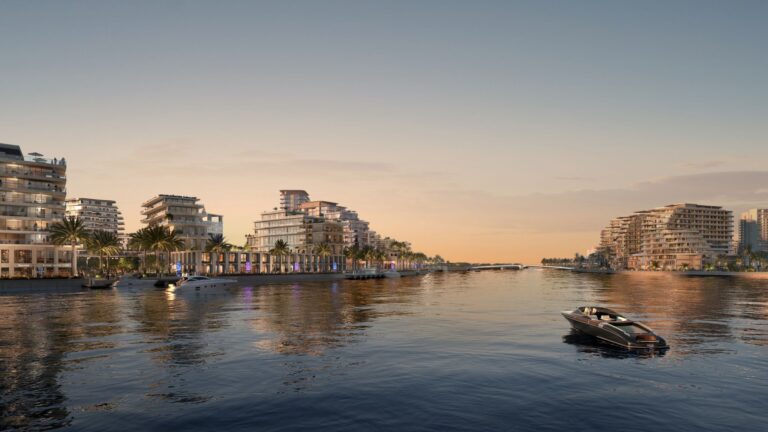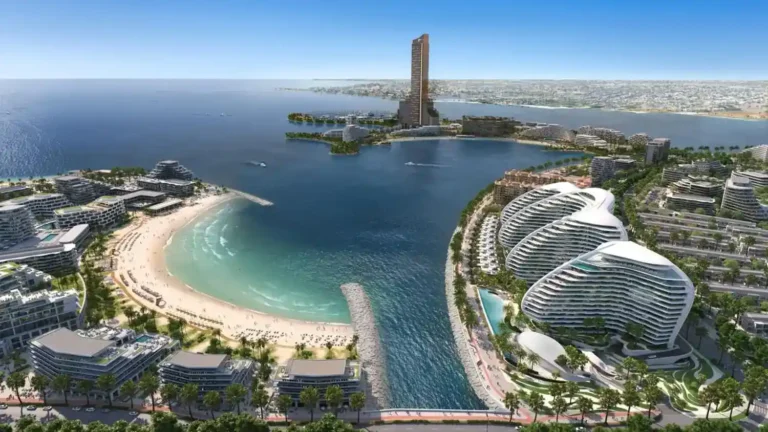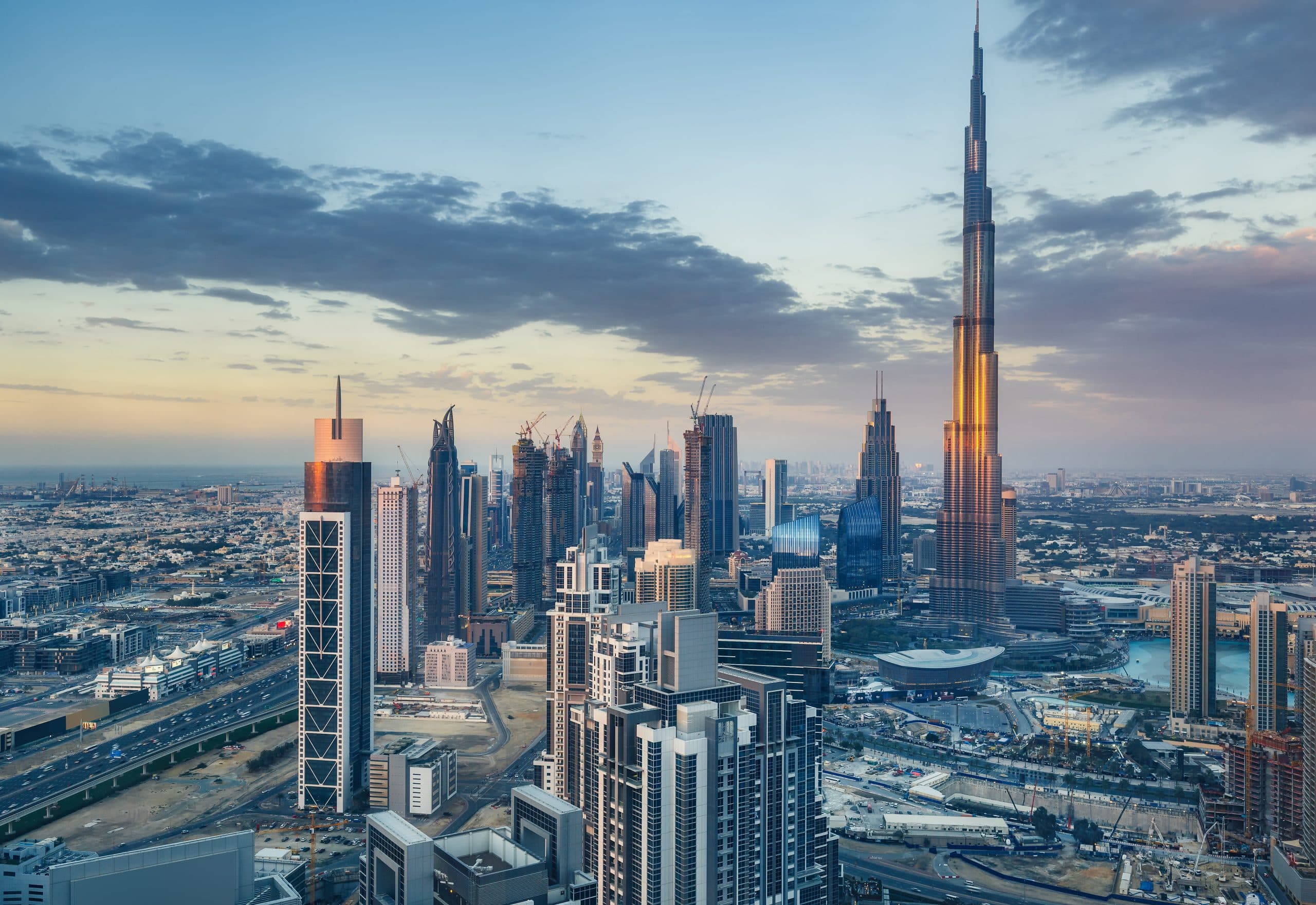
Dubai’s off-plan property market is booming as the new engine of the emirate’s growth. Off-plan deals have come to dominate transactions – about 63% of all residential sales in 2024 were pre-completion purchases – and 2025 looks even stronger. The city recorded over 35,000 off-plan sales in H1 2024 (a 15% rise from 2023) worth AED 45 billion. Leading consultancies note that off-plan transaction volumes jumped roughly 60% year-on-year in 2024, with values up about 43%. In raw terms, Q2 2024 alone saw 25,400 off-plan units sold (AED 52 bn). This explosive growth has been driven by global demand: roughly 65% of off-plan buyers are foreign investors (from India, the UK, China, and Europe), drawn by Dubai’s tax-free environment, strong rental yields, and long-term residency prospects.

International Investors Reshape the Buyer Pool
Dubai’s global appeal means its off-plan buyer pool is extraordinarily diverse. According to a 2025 market analysis, the top five foreign nationalities in Dubai’s residential (off-plan) market are: Indians (22% share), British (17%), Chinese (14%), Saudis (11%), and Russians (9%). These five groups together make up over 70% of international investment. Below are the headline figures:
- India – 22% share in 2025 (up from 21% in 2024). India leads foreign investment in Dubai’s property sector. Indian buyers – including large expatriate communities and wealthy investors – have steadily increased their presence in Dubai’s off-plan market.
- United Kingdom – 17% (up from 16%). British nationals remain major off-plan investors, attracted by Dubai’s stable economy and high yields. (Notably, some reports show UK share at about 6% in early 2025, suggesting a possible shift from speculative purchases to longer-term holdings.)
- China – 14% (vs 13%). Chinese investors, buoyed by Belt & Road ties and Dubai’s Golden Visa, continue to expand their footprint in new developments.
- Saudi Arabia – 11% (vs 10%). Gulf buyers – especially from Saudi Arabia – have grown their stake. The ease of travel and cultural ties mean many Saudi buyers favor prime off-plan projects (e.g. Downtown, Palm Jumeirah).
- Russia – 9% (vs 8%). Russian interest (often in luxury off-plan launches) remains strong. Geopolitical uncertainty and visa-friendly policies have pushed more Russian capital into Dubai property.
Beyond these top five, many other nationalities each account for smaller (but notable) shares of the off-plan market. For example, recent data show Jordanian, Canadian, Lebanese, Moroccan, Egyptian, Austrian, Albanian and Italian buyers each capturing roughly 6% of early-2025 off-plan sales. In total, over 40 nationalities were active investors. This means Dubai’s off-plan buyers now span Asia, Europe, the Middle East, and even the Americas. The chart below (from DXB Interact research) highlights the shifting share of major foreign investors in 2024–2025:
- 2024–25 Foreign Investor Shares: Indians 22%, British 17%, Chinese 14%, Saudis 11%, Russians 9%.
Emerging Buyer Markets in 2025
Dubai’s off-plan demand is broadening into new regions. A striking example is Latin America: in early 2025 Mexican buyers – virtually absent a year earlier – accounted for about 11% of transactions. This sudden entry of Mexicans signals growing interest from Latin America. Similarly, Pakistani investors have maintained a ~11% share (up slightly from 10%), reflecting strong diaspora ties and easy connectivity. Even smaller markets are notable: for instance, Canadian nationals made up ~6% of off-plan purchases in early 2025. Traditional European players (e.g. Italy and Austria) and Middle Eastern markets (Egypt, Morocco) are similarly active at ~6% each.
In short, Dubai’s 2025 off-plan buyers represent a truly global mix. South Asian and Gulf investors still lead the way, but new geographies are emerging. Market analysts note that the proportion of Indian off-plan buyers jumped from 19% in Jan-Feb 2024 to 28% in Jan-Feb 2025, while Pakistani buyers held steady (10% to 11%) and Mexican buyers moved in at 11%. This “globalization” of the buyer pool is further evidenced by the presence of nationalities from Jordan, Lebanon, Canada, Egypt, Morocco, the UK, and even Albania and Austria, each securing multi-percent shares. These shifts suggest that the off-plan boom is Beyond Borders: investors from across continents now vie for Dubai projects.
Why Dubai? Investor Drivers & Government Incentives
Several factors explain these nationality trends. Dubai’s investment incentives are a major draw. The UAE’s Golden Visa program, for example, now grants 10-year residency to anyone investing AED 2 million+ in property – including off-plan purchases – with fewer payment hurdles than before. (Previously, off-plan buyers needed to put down 50%; that requirement was lifted in late 2023.) Such policies make Dubai especially attractive to long-term investors (from China, India, etc.) seeking stable residency and wealth preservation. The tax-free environment, world-class infrastructure, and high rental yields (~6–8% in many areas) also lure foreign capital.
On the developer side, a new wave of projects caters to this international demand. Luxury community launches (e.g. Nakheel’s Palm Jebel Ali resort, Emaar’s high-end villa developments) target affluent buyers from the Gulf, Russia, and Europe. More affordable off-plan communities (JVC, Dubai South, etc.) appeal to Asian and Middle Eastern buyers looking for strong rental returns. Meanwhile, Dubai’s expanding freehold zones and global marketing roadshows (often in India, Pakistan, China, and Saudi Arabia) keep awareness high in key origin markets. In fact, industry reports highlight that competitive payment plans and price offers are actively luring the next generation of international investors in 2025.

Residential vs. Commercial Off-Plan Demand
While most attention goes to homes, commercial off-plan projects are also drawing international buyers. Dubai’s global business hub status means firms and investment funds from around the world (including the UK, USA, and GCC) are snapping up pre-launch offices, retail, and logistics spaces. Recent data show Dubai’s commercial property market remains robust – for example, November 2024 saw 931 commercial transactions totaling AED 9.2 billion. These deals are often led by institutional or corporate investors from a variety of countries (though nationality breakdowns are less public). In short, the trend of foreign investors fueling development applies across residential and commercial segments in 2025.
Looking Ahead: A More Global Off-Plan Market
The upshot is clear: Dubai’s off-plan buyer demographics are more international than ever. Traditional powerhouse nationalities (India, UK, etc.) still dominate overall share, but their relative weight is changing as new buyers from Latin America, Africa, and Eastern Europe emerge. This diversification has important implications. Projects and marketing campaigns are now targeting far-flung countries; developers emphasize features (like family-friendly amenities or sustainable design) that appeal to these varied audiences. Moreover, the shift toward “family buyer” segments (noted in Q1 2025 reports) seems tied to more stable, end-user demand versus pure speculation.
Overall, Dubai’s 2025 off-plan market is truly beyond borders. It is being shaped by global flows of capital and people. According to analysts, the continued influx of diverse nationalities underpins the sector’s resilience: even as the Dubai economy grows ~4–5% in 2025, off-plan real estate remains a top global investment magnet. For buyers and brokers, understanding who is buying from where is now critical. These nationality trends – drawn from the latest DLD and market reports – paint a picture of an off-plan ecosystem where no single country rules, and new markets regularly spring up on the map.
For personalized guidance on navigating Dubai’s international off-plan market, fill out the contact form on our website (prelaunch.ae/new-home) and an off-plan expert will get in touch with you.