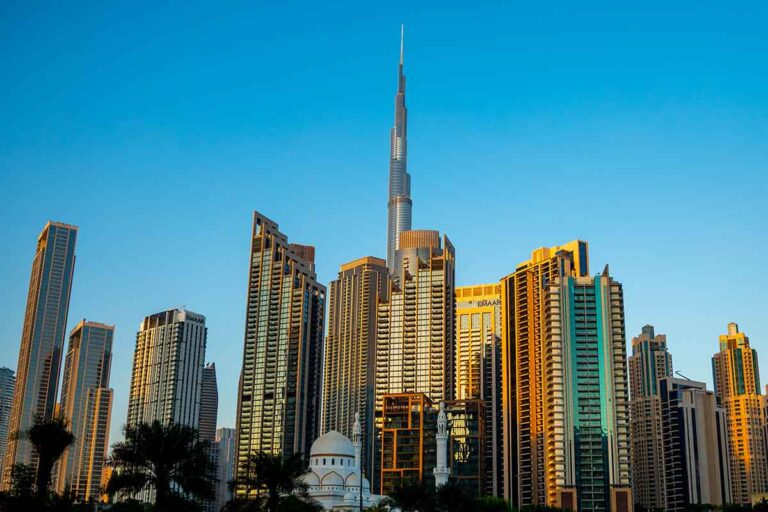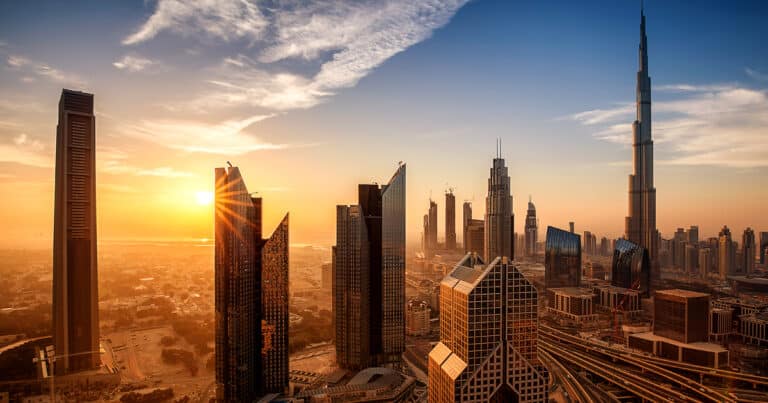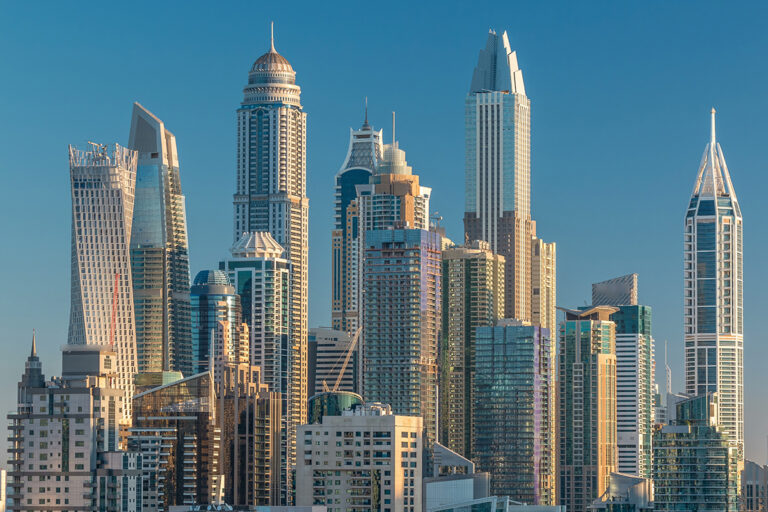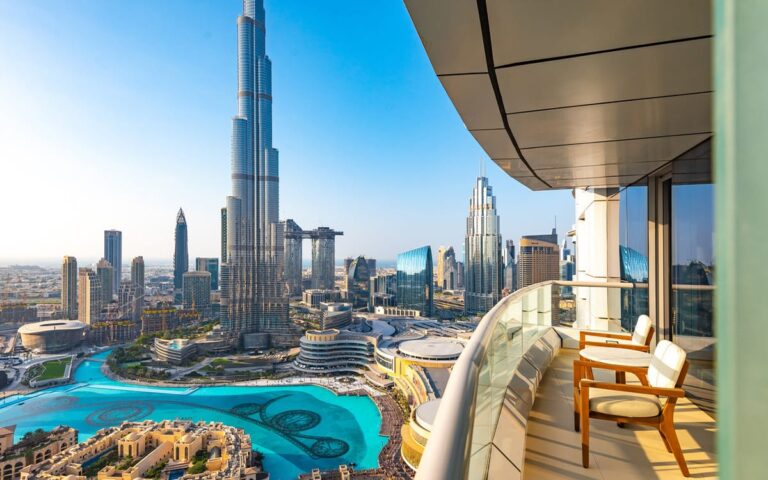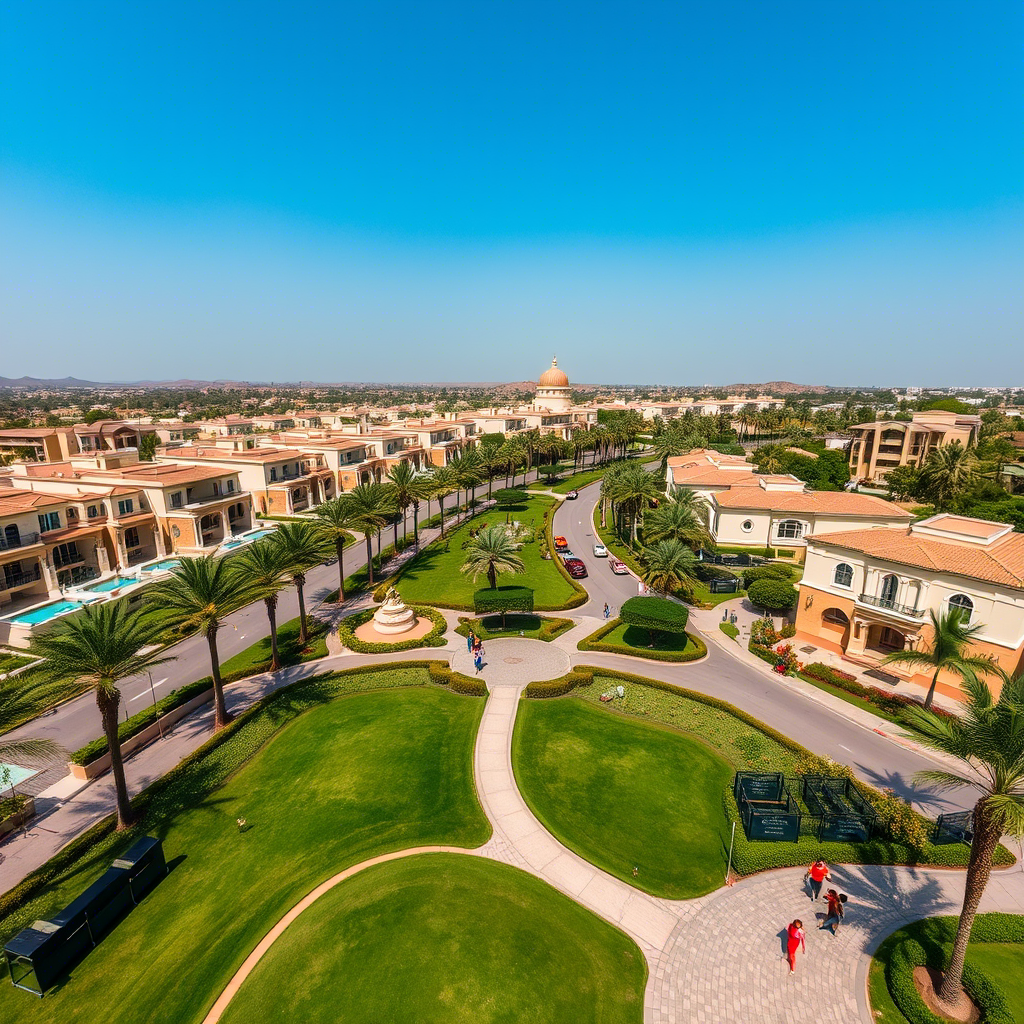
There is a quiet revolution happening in Dubai’s real estate landscape, and it has nothing to do with another record-breaking tower. It is about how people choose to live. The tenant of 2027 does not just want four walls and a key card — they want a coffee shop downstairs, a coworking lounge around the corner, a supermarket within walking distance, and their office ten minutes on foot. That combination has a name: mixed-use communities. And right now, they are the single most in-demand category of real estate in Dubai.
This is not a lifestyle trend. It is a structural shift in tenant behaviour backed by hard data — and for investors, it represents one of the most reliable paths to superior rental yields and long-term capital growth in the Dubai market heading into 2027.
The Numbers Behind the Trend
| Metric | Figure (2025–2026) |
| Dubai prime retail rent growth (YoY) | +13.5% |
| CBD office occupancy rate | 90%+ |
| Average office rent in community hubs (Dubai Hills, JVC) | AED 280/sq ft |
| Dubai gross rental yield — highest in GCC | 6.66% |
| UAE population (2025) | 11 million+ |
| Dubai population (2025) | 4 million+ (6.13% growth) |
| GCC office space stock by 2030 | 42.4 million sq m (+27%) |
| UAE e-commerce market forecast by 2028 | AED 48.5 billion+ |
What Is a Mixed-Use Community — and Why Does It Matter Now?
A mixed-use community in Dubai integrates residential towers or villas with ground-floor retail, F&B, offices, coworking spaces, wellness facilities, and green pedestrian corridors — all within a self-contained master plan. Think Business Bay’s waterfront promenade, Dubai Hills Estate’s lifestyle boulevard, or Expo City’s innovation campus. The goal is simple: reduce the distance between where you sleep, work, eat, and socialise to under 15 minutes on foot.
The Dubai 2040 Urban Master Plan has codified this shift through its “20-minute city” concept — a planning framework that ensures residents can access most daily necessities within a short walk or bike ride. As off-plan commercial properties in Dubai evolve, this framework is no longer aspirational; it is the baseline expectation for new master community approvals.
Why It Matters for Tenants: A 2025 BlackBrick analysis found that tenants in walkable community business hubs are converting a 45-minute cross-Dubai commute into a 10-minute walk — a quality-of-life gain that commands a premium and dramatically improves tenant retention for landlords.
The Three Pillars That Drive Tenant Demand
1. Walkable Retail That Serves Real Needs
Dubai’s prime retail rents rose 13.5% year-on-year in 2025 — the sharpest growth among all commercial asset classes. But the winners are not the mega-malls. They are neighbourhood retail strips inside residential communities: the curated grocery, the boutique gym, the specialty coffee roaster, the pharmacy. These are experiential retail anchors that create daily foot traffic and keep tenants loyal. According to commercial market analysis, experiential retail, restaurants, and service-based outlets are now driving leasing activity far more than pure shopping spaces.
2. Flexible Offices and Coworking Integrated Into Living Spaces
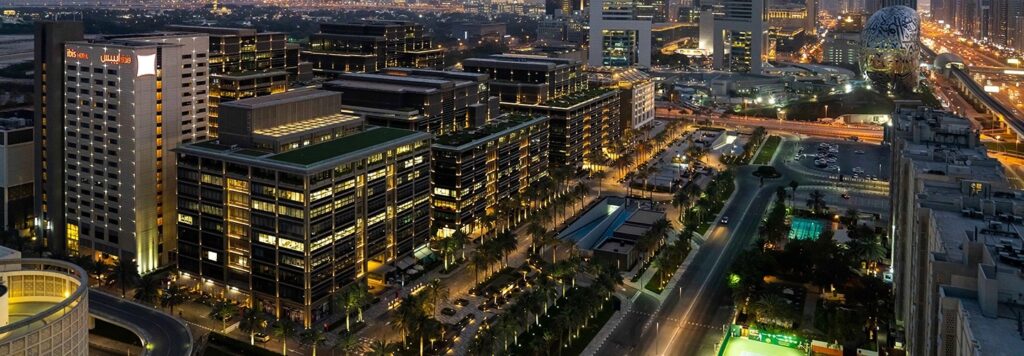
Dubai’s licensing reality means most professional activities still require a physical office or flex-desk. Combined office inventory in Dubai and Abu Dhabi stood at 13.4 million sq m in 2025, with leasing inquiries from regional companies growing faster than those from multinationals — a trend that directly benefits well-located community offices. Tenants are trading legacy arrangements for Grade A offices inside residential communities where parking, efficient layouts, and proximity to home eliminate the traditional work-life divide. Understanding where these community offices are emerging is one of the most important steps any investor can take right now.
3. Pedestrian Infrastructure and Green Corridors
The third pillar is the physical design of the community itself. Residents do not choose walkable communities just because of proximity — they choose them because the walking experience is pleasant. Shaded paths, cycling lanes, weekend markets, waterfront promenades, and parks that serve as social hubs are now pre-qualifying criteria for premium tenants in Dubai. Communities that lack these elements are losing tenants to those that have them, regardless of price.
Top Mixed-Use Communities in Dubai: How They Compare
| Community | Walkability Score | Key Mixed-Use Features | Avg. Gross Yield |
| Business Bay | High | Offices, luxury retail, waterfront F&B, hotel-branded living | 6.0–7.5% |
| Dubai Hills Estate | High | Community mall, clinics, schools, coworking, AED 280/sq ft offices | 5.5–6.5% |
| Jumeirah Village Circle (JVC) | Medium–High | Retail strips, SME offices, parks, high tenant absorption | 7.0–8.0% |
| Expo City Dubai | Very High | Innovation campus, conference facilities, F&B, hotel clusters | 6.5–7.5% |
| Dubai South | High | Airport proximity, business zones, retail clusters, residential | 6.0–7.0% |
| Motor City | High | Business Park, SME offices, F&B strip, 5–10 min commutes | 5.8–6.8% |
Investor Note: JVC consistently ranks as one of the top preferred communities for apartment leases in Dubai, according to Q3 2025 Property Monitor data, driven precisely by its blend of affordability and mixed-use lifestyle appeal.
Why Tenants Pay More to Live Inside These Communities
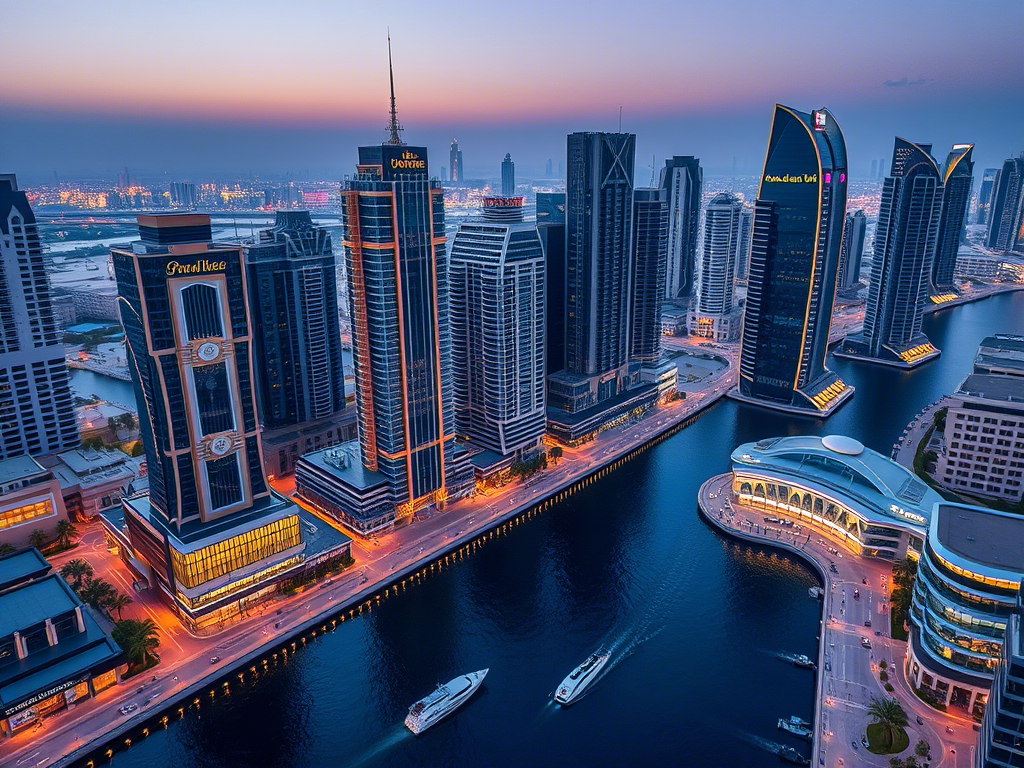
The rental premium commanded by well-designed mixed-use communities is not anecdotal — it is measurable. Tenants who can walk to work, shop, and socialise are consistently willing to pay 10–20% above comparable standalone residential units in isolated towers. This premium is driven by three calculable benefits:
Time savings: Converting a 45-minute daily commute into a 10-minute walk saves approximately 260 hours per year — more than ten working days. Dubai’s busy professional class assigns a significant financial value to that time.
Reduced transport costs: Residents in walkable communities spend significantly less on fuel, parking, and ride-hailing. For a dual-income household, annual savings can exceed AED 15,000–25,000.
Community premium: Tenants in these districts report higher satisfaction, lower turnover intentions, and greater willingness to sign longer leases — all translating into more stable, predictable income for landlords.
For investors, this is the most important implication: lower vacancy rates and longer average tenancies mean your asset earns more per year with less management friction. Exploring the hottest off-plan developments in these corridors is a direct path to capturing this premium.
Mixed-Use vs Standalone: The Yield and Retention Comparison
| Factor | Mixed-Use Community Unit | Standalone Residential Tower |
| Average Gross Yield | 6.5–8.0% | 5.0–6.5% |
| Average Tenancy Length | 18–24 months | 12 months |
| Rental Premium vs. Comparable Unit | +10–20% | Base rate |
| Vacancy Rate (prime communities) | 3–6% | 8–14% |
| Tenant Renewal Rate | 65–75% | 40–55% |
| Capital Appreciation (5-yr outlook) | Strong — driven by scarcity | Moderate — supply-dependent |
The 2027 Investment Thesis: Why Buying Now Still Makes Sense
With Dubai’s population projected to grow at a CAGR of 3.0–3.5% and apartment-focused mixed-use communities driving the majority of new launches, the pipeline of genuinely walkable, well-integrated communities remains tight relative to demand. The Alpen Capital GCC Real Estate 2026 report projects housing stock to grow from 1.08 million to 1.47 million units by 2030 — but mixed-use master communities with established retail, offices, and pedestrian infrastructure represent only a fraction of that supply, and they are the fraction that is selling out fastest.
For off-plan investors, this scarcity is an opportunity. A wide range of off-plan choices in Dubai now includes purpose-built mixed-use projects from Tier-1 developers where the retail and office components are pre-leased before the residential handover — meaning your investment enters a functioning ecosystem from day one.
Buyers who purchase into these communities at pre-launch pricing are not just securing a residential unit. They are securing a position inside a self-sustaining urban engine whose daily footfall, F&B activity, and office occupancy all support and reinforce the rental demand for their apartment, villa, or townhouse above.
Who Should Be Targeting Mixed-Use Communities in 2027?
Long-term buy-to-let investors seeking yields above 6.5% with low vacancy and reliable tenant renewal.
First-time Dubai property buyers who want a community with built-in lifestyle appeal to attract quality tenants from day one.
Golden Visa investors who plan to reside in Dubai and want a property that serves both as a home and an income asset with minimal management overhead.
Corporate relocators looking to house teams near their offices in community business hubs, reducing commute stress and improving staff retention.
For any of these profiles, understanding what to look for in an off-plan property in Dubai — especially the quality of the retail and office component in the master plan — is a non-negotiable part of the due diligence.
Find Your Position in Dubai’s Best Mixed-Use Communities
Our team at Prelaunch.ae specialises in matching investors and end-users with the right pre-launch opportunities inside Dubai’s highest-demand mixed-use master communities — before prices reflect the full lifestyle premium.
Fill out the enquiry form on prelaunch.ae and a specialist will be in touch within 24 hours.
📞 (+971) 52 341 7272 | ✉ [email protected]
Frequently Asked Questions
What makes a community truly mixed-use in Dubai’s 2027 market?
A genuinely mixed-use community integrates residential units with ground-floor retail, professional offices or coworking spaces, F&B outlets, wellness facilities, and pedestrian-friendly public spaces within a single master plan. The key differentiator is walkability — residents should be able to meet most daily needs without a car.
Do mixed-use communities in Dubai really command higher rental yields?
Yes. Well-designed mixed-use communities consistently deliver gross yields of 6.5–8.0% in Dubai, compared to 5.0–6.5% for standalone towers. They also benefit from lower vacancy rates (3–6% vs 8–14%) and longer average tenancies, improving net income significantly.
Which walkable mixed-use communities in Dubai are best for investors in 2027?
Business Bay, Dubai Hills Estate, JVC, Expo City Dubai, Dubai South, and Motor City are the strongest performers based on yield, tenant demand, and infrastructure quality. Each offers a distinct profile — JVC for affordability and yield, Dubai Hills for premium family tenants, Expo City for innovation-sector professionals.
How does the Dubai 2040 Master Plan support mixed-use community investment?
The Dubai 2040 Urban Master Plan mandates the development of walkable, mixed-use neighbourhoods under the ’20-minute city’ concept. This regulatory framework ensures new master communities must integrate retail, office, and public space — providing long-term planning certainty for investors in compliant developments.
Is buying off-plan in a mixed-use community riskier than buying a ready unit?
Not significantly — provided you buy from a Tier-1 developer in a community where the retail and office components are pre-planned and pre-leased. RERA escrow protections apply to all off-plan sales in Dubai, and mixed-use communities with pre-leased commercial anchors carry substantially lower completion risk than speculative residential-only towers.