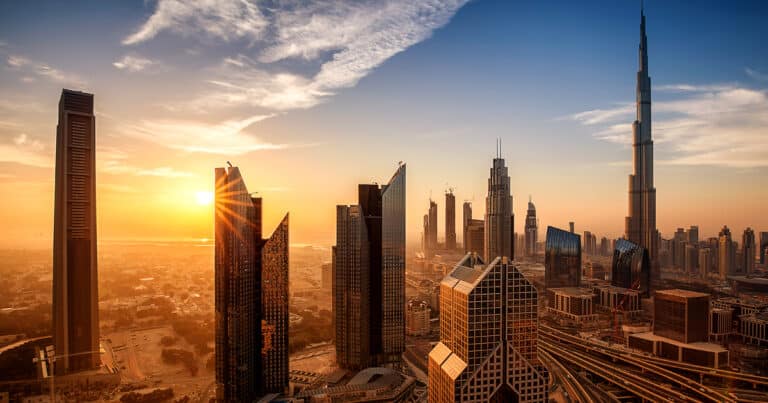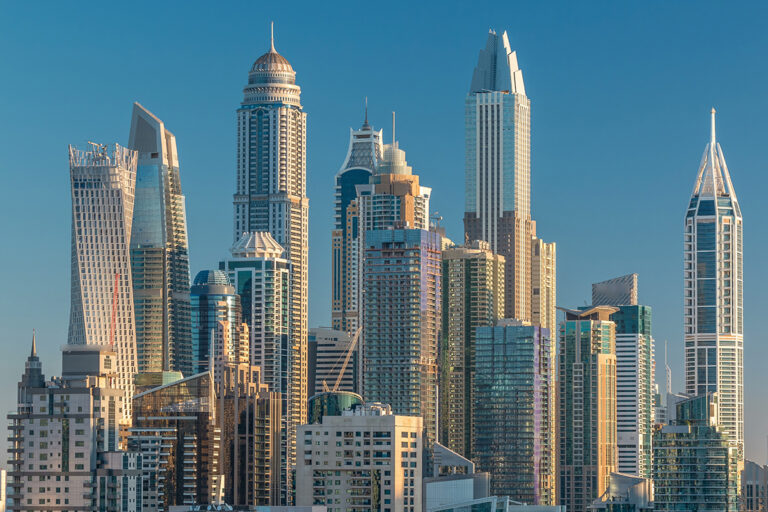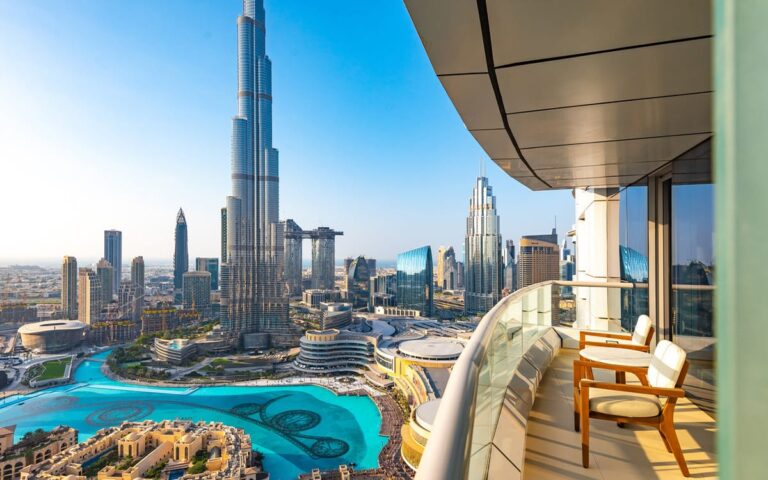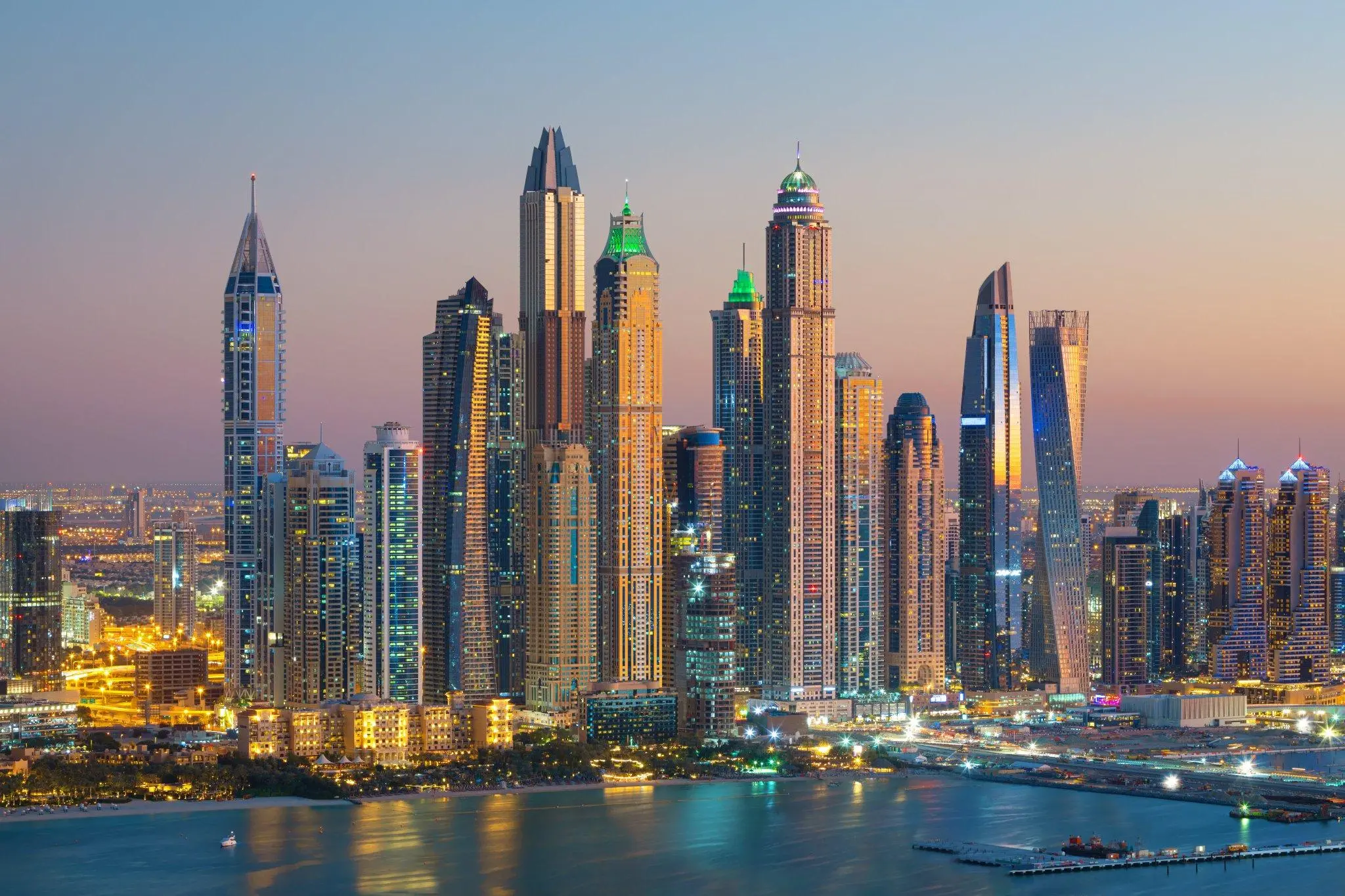
In Q4 2025, Binghatti Developers did something no single developer in Dubai had done in a comparable timeframe: it unleashed a pipeline of approximately 13,000 units across multiple simultaneous launches, concentrated in mid-market zones including JVC, JVT, Business Bay, Arjan, and Downtown Dubai. Twelve new projects, over AED 12 billion in gross development value, and a declared ambition to capture 15% of Dubai’s entire off-plan market in a single year.
For investors watching Dubai’s off-plan landscape, this is not just a headline. It is a structural event that is reshaping developer competition, zone-level supply dynamics, and — critically — the location of undervalued launches that will outperform in 2026. This guide decodes what Binghatti’s volume strategy means for buyers, how it stacks up against DAMAC and Emaar’s competing pipelines, and where the real opportunity sits for investors who know what signals to follow.
The Scale of Binghatti’s 2025–2026 Launch Offensive
To understand the scale, consider the context. In a market where the average mid-tier developer launches two to four projects per year, Binghatti brought twelve new Dubai projects to market in 2025 — a rate that no comparable developer has matched. The portfolio ranged from entry-level studios in Dubai Production City starting at AED 550,000, to the ultra-luxury Binghatti Skyblade in Downtown Dubai targeting buyers above AED 2 million.
The strategic logic is deliberate: Binghatti is deploying a volume-and-velocity model — launch fast, price competitively, sell in 48 hours, move to the next zone. Their track record supports the approach. With over 25,000 units delivered across 60+ projects and branded collaborations including Bugatti Residences and Mercedes-Benz Places, Binghatti has the delivery credibility to back the ambition.
But volume at this scale always creates a secondary question for buyers: where does the supply concentration create risk, and where does it create opportunity? For the full picture of how Binghatti’s expansion compares against the broader developer landscape, see our Binghatti 2025 expansion strategy and 12 new projects overview.
Developer Pipeline Wars: Binghatti vs DAMAC vs Emaar in 2026
Binghatti’s blitz does not exist in isolation. DAMAC and Emaar are simultaneously running their own aggressive pipelines, and the combined supply trajectory across these three developers will define Dubai’s off-plan market dynamics for the next 18 months. The table below maps the competitive landscape.
Table 1: Developer Pipeline Comparison — Q4 2025 Launch Volume & 2026 Outlook
| Developer | Q4 2025 Units | 2026 Pipeline | Key Zones | Avg Entry (AED/sqft) | Gross Yield |
| Binghatti | ~13,000 | 10,000+ | JVC, JVT, Business Bay, Arjan, Downtown | AED 1,100–1,600 | 7–9% |
| DAMAC | ~8,500 | 12,000+ | DAMAC Hills, Dubai Islands, Lagoons | AED 1,200–1,700 | 6–8% |
| Emaar | ~6,200 | 15,000+ | Dubai Hills, Creek Harbour, Emaar South | AED 1,500–2,200 | 6–7.5% |
| Sobha | ~2,800 | 4,500+ | Hartland II, Sobha One, Siniya Island | AED 1,600–2,400 | 6–7% |
| Danube | ~3,100 | 5,000+ | Arjan, JVC, Sports City | AED 850–1,200 | 7–8.5% |
Source: DLD project registrations, developer announcements, and prelaunch.ae market intelligence (Q1 2026).
The key distinction between these three developer strategies is geographic concentration versus diversification. Emaar builds master communities with controlled phased supply — its 15,000+ unit 2026 pipeline is spread across distinct master plans, each with its own demand ecosystem. DAMAC’s strategy blends lifestyle-themed communities with urban towers. Binghatti’s model is tower-dense and zone-concentrated, meaning its competitive pressure hits hardest in specific micro-markets.
For a deep dive on how Emaar and DAMAC compare on ROI, community maturity, and resale liquidity, our Emaar vs DAMAC investor comparison — who delivers better Dubai property ROI is essential reading before committing capital to either pipeline.

Zone Saturation Risk: Where Binghatti’s Volume Creates Headwinds
Developer competition creates a zone-level supply equation that every off-plan buyer needs to understand. When three or four developers are simultaneously delivering units in the same community within the same 12-to-18-month window, rental yields compress and resale timelines lengthen. This is not theoretical — it is the documented outcome of oversupply cycles in JVC, International City, and Discovery Gardens over the past decade.
The table below applies a saturation risk rating to the key zones where Binghatti’s 2025–2026 pipeline is most concentrated, mapped against total community supply and current rental demand indicators.
Table 2: Zone Saturation Risk Assessment — Binghatti’s Core Launch Markets (2026)
| Zone | Binghatti Projects | 2026 Supply (Est.) | Rental Demand | Saturation Risk | Investor Verdict |
| JVC | 6 active | 4,500+ units | ★★★★☆ | HIGH | Selective — 1-bed only |
| JVT | 4 active | 2,200+ units | ★★★★☆ | MEDIUM | Viable — fewer rivals |
| Business Bay | 3 active | 2,800+ units | ★★★★★ | MEDIUM | Strong — tourism buffer |
| Arjan | 3 active | 3,100+ units | ★★★☆☆ | HIGH | Caution — oversupply risk |
| Downtown | 2 active | 1,200+ units | ★★★★★ | LOW | Strong — scarcity premium |
| Dubai Production City | 2 active | 1,800+ units | ★★★☆☆ | MEDIUM | Watch — emerging zone |
Risk ratings based on DLD supply pipeline, rental demand data, and developer concentration analysis. prelaunch.ae, Q1 2026.
The JVC saturation risk is the most significant flag. With six active Binghatti projects in the zone and over 4,500 total units anticipated across all developers through 2026, the studio and sub-600 sqft apartment market in JVC is the most exposed segment in Dubai’s mid-market. Investors who already hold JVC units or are considering entry should reference the 2026 Dubai oversupply risk map and safe investment zones analysis for a community-by-community risk breakdown.
Key risk principle: The danger in a high-volume developer launch is not the developer — it is the zone density. Binghatti projects in Downtown Dubai and Business Bay carry materially different risk profiles than those in JVC or Arjan, because the underlying demand architecture — tourism, corporate tenancy, premium rental appetite — is structurally deeper and less supply-sensitive.
The Flip Side: How Developer Competition Creates Undervalued Launches
Here is the contrarian read that cautious investors often miss: intense developer competition is also the primary engine of undervalued launches. When Binghatti, DAMAC, and smaller developers are competing for buyer attention in the same period, the pricing discipline that exists in low-competition environments breaks down. Developers in competitive zones offer cash discounts of 5–8%, more flexible payment structures, and occasionally below-market pricing on slow-moving unit types — creating genuine value for buyers who know how to identify it.
Binghatti has explicitly offered cash discounts of 5–8% on select projects, PDC-free booking processes for international buyers, and payment plans structured at 70/30 — all signals that the developer is actively competing for capital in a crowded market. The investor who reads these signals correctly and acts on the right zone and the right unit type is effectively accessing below-market pricing generated by the competitive dynamic.
For a worked example of how Binghatti’s competitive pricing has historically generated superior yield outcomes versus comparable mid-market developers, see the ROI calculation on Binghatti Flare studios and 1-bedrooms in Dubai’s high-demand rental market.
How to Spot an Undervalued Launch Before the Crowd: A 6-Signal Framework
The difference between a crowded mid-market launch that softens and an undervalued launch that outperforms is rarely obvious at the time of release. The following six signals are the most reliable early indicators of genuine undervaluation — applicable to Binghatti, DAMAC, Emaar, and emerging developers alike.
Table 3: Undervalued Off-Plan Launch Spotter — Signal Checklist
| Undervalued Launch Signal | Binghatti | DAMAC | Emaar | What to Verify |
| Sub-market price vs comparable zone average | Often YES | Sometimes | Rarely | Check AED/sqft vs community resale average |
| New micro-zone with infrastructure catalyst | YES (JVT) | YES | YES | Airport, metro, school, or retail anchor nearby |
| Limited competing units in same handover window | Sometimes | Sometimes | Often | Check DLD pipeline by area and Q |
| Post-handover payment plan available | Selective | YES | Rarely | Extends your capital efficiency runway |
| Developer first launch in that zone | YES — JVT, Arjan | YES | YES | First launch = price discovery phase = lowest floor |
| Cash discount offered (5–8%) | YES (Binghatti) | Some | No | Signals developer flexibility and unit availability |
Use this checklist before committing to any off-plan unit. One signal is a hint; three or more is a thesis.
The most powerful of these signals — a developer’s first launch in a new zone — deserves special emphasis. When Binghatti entered JVT with Binghatti Flare after years of concentrating in JVC, the initial price discovery phase meant units were priced below the community’s emerging trajectory. Buyers who entered at JVT’s phase-one pricing floor captured an entry point that subsequent phases have already repriced above. This is the pattern to identify before the crowd arrives — not after.
Binghatti’s Competitive Moat: Fast Delivery in a Market That Rewards Speed
One of Binghatti’s most underappreciated investor advantages is delivery velocity. In a market where the average developer delivers 48–55% of announced units on schedule, Binghatti has built a reputation for ahead-of-schedule completions — a function of their in-house construction management model and aggressive milestone tracking. Fast delivery is not just operationally impressive; it has direct financial consequences for investors.
An off-plan unit that delivers six months early means rental income begins six months earlier. On an AED 1 million apartment yielding 7.5%, that is approximately AED 37,500 in additional income that a delayed project’s investor forfeits. When comparing Binghatti against DAMAC and Emaar on a total-return basis, delivery timeline — not just headline yield — is a critical variable.
For context on which developers’ delivery timelines hold up under scrutiny in the current pipeline, see our Dubai property handover schedule 2025–2027 and completion timeline analysis.
Binghatti vs Emaar vs DAMAC: Which Developer Profile Fits Your 2026 Strategy?
No developer is universally superior — each maps to a specific investor profile. Understanding the strategic fit is as important as understanding the project.
- Binghatti 2026: Best suited to yield-focused investors with a 2–4 year hold horizon, comfortable with mid-market zones and fast deployment. Entry prices of AED 1,100–1,600 per sqft and yields of 7–9% make Binghatti competitive on income return. The saturation risk in JVC and Arjan requires careful unit-type selection — one-bedrooms over studios, and Business Bay or Downtown over the suburban corridor.
- DAMAC 2026: Best suited to lifestyle and branded-asset investors targeting higher-end rental demographics, tourism-adjacent communities, and the post-handover payment plan flexibility that DAMAC uniquely offers. DAMAC Islands and DAMAC Lagoons extension phases offer waterfront or community premiums that reduce the studio-concentration risk present in tower-heavy zones.
- Emaar 2026: Best suited to long-horizon capital appreciation investors who prioritise master-community scarcity, resale liquidity, and end-user demand depth over maximum yield. Emaar’s payment structures are less flexible, entry prices higher, but the long-term price floor in communities like Dubai Hills and Creek Harbour is the most defensible in any market softening scenario.
For a neutral comparison of all three developer strategies with worked investment profiles, see our DAMAC vs Emaar vs Sobha — which developer offers the best prelaunch deals.

The Bottom Line: Scale Creates Both Risk and Opportunity — Know the Difference
Binghatti’s 13,000-unit Q4 2025 blitz is the single most significant developer supply event in Dubai’s mid-market off-plan segment in recent memory. For passive observers, it looks like one story: more supply, more risk. For active investors who understand the zone-level dynamics, the developer competition signals, and the six-point undervalued launch framework, it is a different story entirely — one about concentrated pricing pressure creating specific windows of genuine value.
The investors who will outperform in 2026 are not the ones who avoid Binghatti’s pipeline — they are the ones who navigate it precisely: right zone, right unit type, right phase, right developer comparison. Binghatti’s Downtown and Business Bay assets in a supply-disciplined window are a materially different proposition from their sixth JVC studio launch of the year.
To understand how Binghatti’s launch volume interacts with the broader 2026 delivery wave across all developers, our analysis of how Dubai’s 2026 supply wave will impact off-plan prices provides the macro context to complete the picture.
Find the Undervalued Launch Before It Sells Out
Fill up the form on our website at prelaunch.ae to get early access to Binghatti, DAMAC, and Emaar launches before they go public — with zone risk and yield data included.
📞 (+971) 52 341 7272 | ✉ [email protected] | 🌐 prelaunch.ae
Our specialists track every major developer pipeline in real time — so your capital goes into the right launch, not the loudest one.
Frequently Asked Questions
Is Binghatti a safe developer for off-plan investment in 2026?
Yes. Binghatti is RERA-registered, DLD-compliant, and operates fully escrowed buyer funds on all projects. With over 25,000 units delivered across 60+ projects, they have one of the strongest delivery track records in Dubai’s mid-market developer category. The investment risk is not developer credibility — it is zone and unit-type selection within their large portfolio.
Which Binghatti zones carry the highest oversupply risk in 2026?
JVC and Arjan carry the highest saturation risk, driven by concentrated pipeline supply across multiple developers. Business Bay and Downtown Dubai carry materially lower risk due to stronger tourism and corporate demand buffers. Investors should cross-reference the DLD pipeline by community and handover quarter before committing to any JVC studio.
How does Binghatti’s yield compare to Emaar and DAMAC?
Binghatti typically leads on gross rental yield at 7–9%, compared to DAMAC’s 6–8% and Emaar’s 6–7.5%. This reflects Binghatti’s lower entry pricing rather than superior rental income — net yield differentials narrow when service charges and management fees are factored in. Emaar’s lower gross yield is partially offset by stronger capital appreciation in its master communities.
What payment plan should I expect on Binghatti off-plan projects in 2026?
Binghatti typically structures plans at 70/30 (70% during construction, 30% at handover), with some projects offering post-handover options. Cash buyers can access 5–8% discounts on select launches. For the full payment plan comparison across the major developers, see our guide on the smartest payment plan structures investors should demand in Dubai in 2026.
How do I identify an undervalued Binghatti launch before it sells out?
The most reliable signals are: a first launch by Binghatti in a new zone, sub-market pricing vs community resale averages, an infrastructure catalyst within 12–18 months, and a cash discount offer. Units that exhibit three or more of these signals simultaneously represent the strongest undervaluation thesis. Registering on prelaunch.ae’s EOI list gives you access to these launches before they reach the general market.