There is a particular kind of confidence that has nothing to do with war headlines or safe-haven clichés. It is the confidence that comes from looking at a 145-square-kilometre masterplanned city where roads are already laid, utility networks are already live, an airport is already operating, and a $544.6 million construction contract was signed in March 2026 — mid-conflict, mid-noise, without hesitation. That is Dubai South in 2026. And that is the story worth telling.
The large masterplan Dubai South 2026 narrative is not about reassurance through rhetoric. It is about reassurance through irreversibility. When a project is embedded in a government-backed district spanning the scale of a European city, with a decade of infrastructure spend already sunk into the ground, the war in the region is not its primary risk variable. Construction schedules are. Absorption rates are. Delivery milestones are. And on all three, Dubai South’s data is compelling.
What Separates a Masterplan From a Project and Why It Matters Right Now
Most buyers think in projects: a tower, a block, a cluster of units. That frame makes sense for single-asset purchases in established communities. But during periods of geopolitical uncertainty in the Gulf, the question shifts. It is no longer just about whether a specific unit is fairly priced — it is about whether the ecosystem around that unit will materialise.
An isolated tower can be cancelled. A developer in financial difficulty can walk away. A project without surrounding infrastructure can sit in a desert for years, fully built, with no tenants. A master plan cannot be cancelled in the same way. Once government land has been allocated, utilities laid, and roads paved, the political and financial cost of abandonment is so high that the project becomes, in practical terms, permanent. As we explored why Dubai’s property engine is still running despite sa afe-haven image being tested, the structural underpinnings of Dubai’s largest communities have not shifted an inch despite the external noise.
| Risk Factor | Isolated Tower / Project | Large Masterplan Community |
| Cancellation risk | Moderate — single developer bet | Very low — multi-party commitment |
| Infrastructure dependency | Relies on the surrounding area | Self-contained — built in |
| Government alignment | Optional | Core requirement — often state-backed |
| Phased capital exposure | Full exposure on a single asset | Spread across phases and units |
| Resale liquidity | Smaller buyer pool | Larger pool — community buyers |
| Rental yield trajectory | Dependent on local supply | Sustained by community demand |
| Exit strategy strength | Moderate | Strong — established name value |
Dubai South by the Numbers: What 145 Square Kilometres of Conviction Looks Like
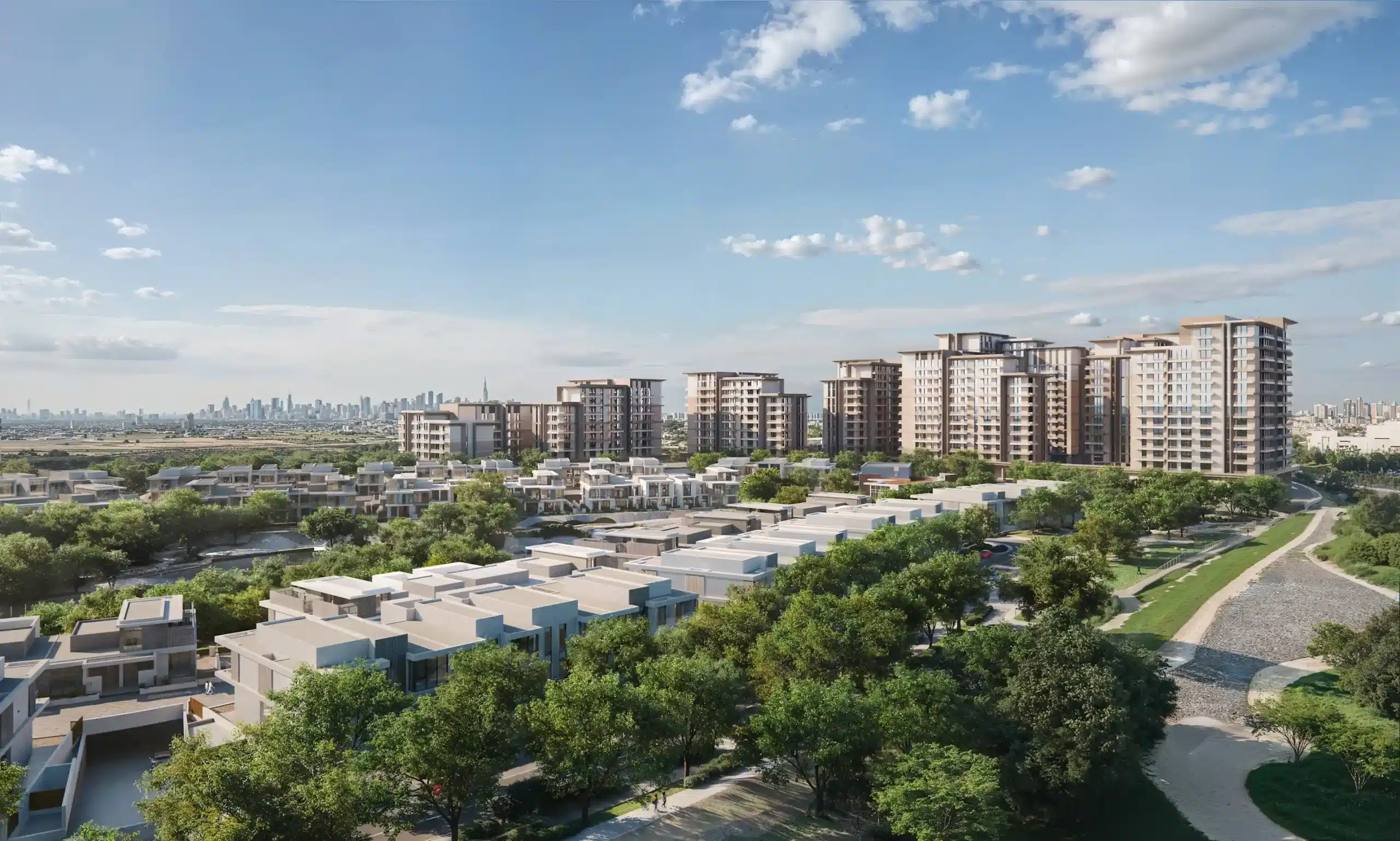
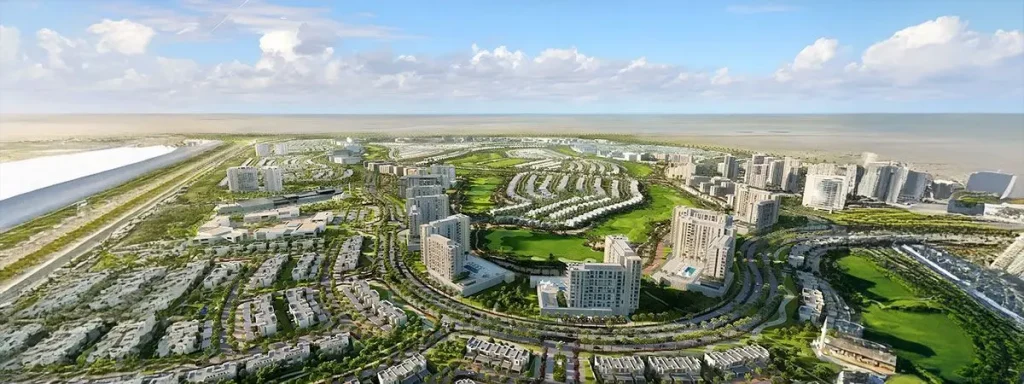
Dubai South is not a marketing concept. It is a government-designated urban district covering 145 square kilometres — comparable in area to a mid-size European city. It has its own free zone with 100% foreign ownership. It has an operational aviation city. It has a logistics hub that handles billions of dollars in trade annually. And at its core sits Al Maktoum International Airport, which, upon full completion, will be the largest airport in the world, handling a projected five billion passengers per year.
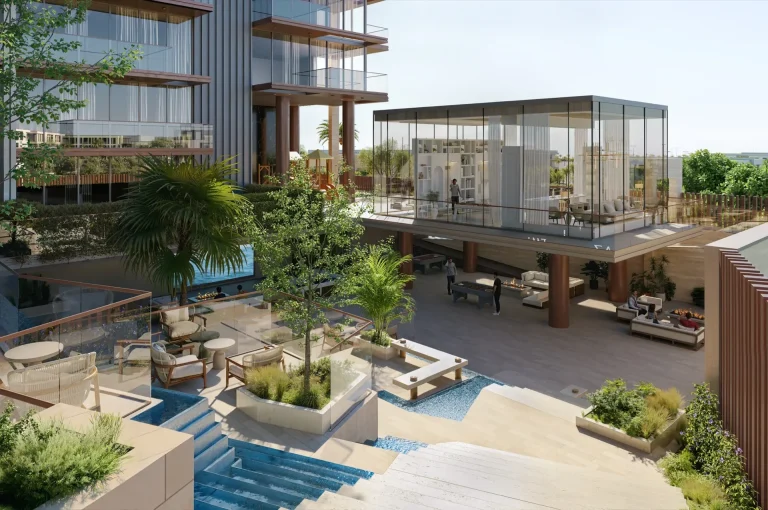
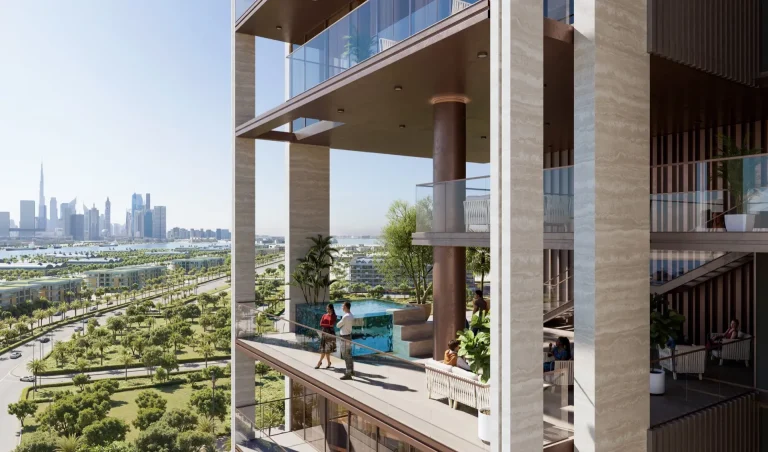
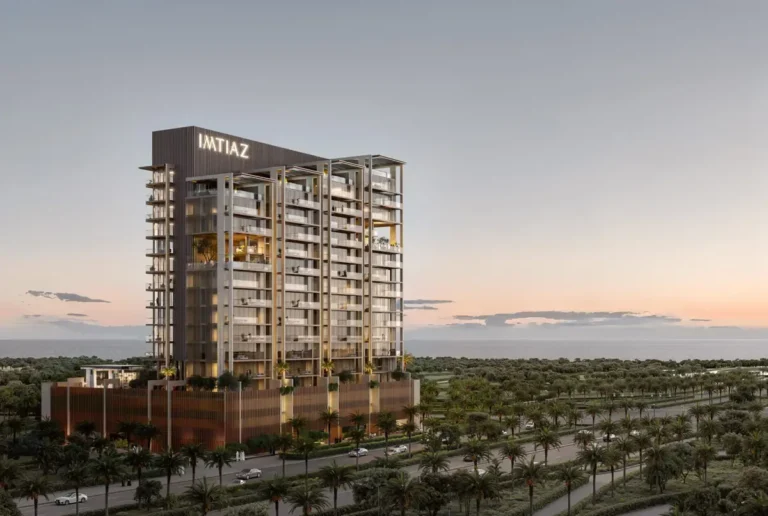
These are not aspirational bullet points. They are sunk-cost commitments made by multiple institutional actors — the UAE government, Dubai Airports, and a cluster of private developers — whose financial exposure to the district runs into hundreds of billions of dirhams. When Dubai South Properties signed a $544.6 million construction contract for the Hayat luxury community in March 2026, that decision was made against this backdrop. The war did not pause the signing. The pipeline did not pause the signing. The institutional conviction driving Dubai South 2026 is operating on a different timescale than geopolitical news cycles.
Our earlier coverage on the $544.6M Hayat contract and what it signals for Al Maktoum Airport-area buyers goes deeper on the specific delivery implications for prelaunch unit buyers in that community.
| Infrastructure Zone | Scale / Capacity | Investor Significance |
| Al Maktoum Airport | 26 sq km — world’s largest when complete | 5 billion passengers/yr long-term capacity |
| Dubai South total area | 145 sq km | Equivalent to a mid-size European city |
| Planned resident capacity | 1 million people | Sustained long-term rental base |
| Hayat Luxury Community | $544.6M construction contract signed Mar 2026 | Binding delivery commitment mid-conflict |
| Logistics & aviation city | Free zone — 100% foreign ownership | Employment-based drives housing demand |
| Road & utility network | Already operational — multi-phase | Sunk cost creates irreversibility |
| Retail & hospitality corridor | Under active development | Live-work-play ecosystem forming |
Why Scale Implies Land-Use Conviction During a War
The Iran-US-Israel war introduced a new layer of psychological complexity into the Dubai off-plan market in 2026. Buyers began asking questions they had not previously needed to ask: What if the conflict escalates? What if capital controls tighten elsewhere? What if my target developer pauses operations? These are not unreasonable questions. But they are the wrong questions to ask about a 145 sq km government masterplan.
The right question is this: how many institutional actors would need to simultaneously walk away from their committed capital for this project to fail? In Dubai South, that number includes the UAE federal government, the Dubai government, the GCAA (General Civil Aviation Authority), Dubai Airports, and a grid of private developers with RERA-registered projects and signed construction contracts. That level of multi-party commitment creates what analysts call institutional irreversibility — a condition where the cost of stopping exceeds the cost of continuing, regardless of external events.
This is precisely why smart investors in 2026 are not selling — they are studying whether their specific project sits within an institutionally irreversible ecosystem. As our analysis shows in why Dubai property market 2026 smart investors are not selling, the distinction between projects worth holding and projects worth exiting comes down to exactly this question of structural depth.
What 10 Million Sq Ft Actually Means for a Prelaunch Buyer
When developers quote 10 million square feet of masterplanned community space, the figure sounds impressive but abstract. Here is what it means in practical terms for a buyer. It means there is a school catchment area already planned within walking distance of your unit. It means a retail corridor with anchor tenants is budgeted and partially completed. It means a medical facility is within the community footprint. It means a network of parks, cycling paths, and community centres will exist before your first tenant moves in.
That ecosystem is what drives sustained rental demand in Dubai’s masterplanned communities versus the more volatile absorption patterns seen in standalone towers. The comparison is stark. A freehold townhouse inside a masterplan benefits from a captive rental market — families and professionals who specifically want the community rather than just the unit. You can compare some of the best current off-plan townhouse options across Dubai’s active masterplan communities to understand how the price-to-yield ratio stacks up across different districts.
| Community Type | Avg Gross Yield | 5-Yr Capital Growth | Vacancy Rate | Resale Speed |
| Dubai South (masterplan) | 7.2% | +34% | 4.1% | Fast |
| Dubai Hills Estate (masterplan) | 6.8% | +41% | 3.6% | Very fast |
| JVC (structured masterplan) | 8.1% | +28% | 5.2% | Fast |
| Standalone Business Bay tower | 5.9% | +19% | 8.7% | Moderate |
| Standalone JLT tower | 6.1% | +17% | 9.3% | Moderate |
The data is consistent: masterplanned communities in Dubai outperform isolated towers on every metric that matters for long-term investors — yield, capital growth, vacancy, and resale speed. Dubai South is positioned to repeat this pattern as its population base crosses critical density thresholds over the next five to seven years.
The Investor Psychology of Scale: Why Bigger Projects Attract Calmer Buyers
There is a reason institutional investors rarely buy single towers. It is not just about diversification — it is about the quality of the demand base that surrounds a large project. When a community reaches a critical mass of residents, it becomes self-sustaining: the school fills, the supermarket opens, the restaurant follows, and the second school opens. Each amenity addition increases the pull factor for new residents, which tightens vacancy and strengthens yield.
For prelaunch buyers, the psychology works similarly. When you commit to a unit inside a masterplan of Dubai South’s scale, you are not betting on one developer’s ability to fill one building. You are betting on a city-scale absorption process that is already underway. UAE market data confirms this resilience: even as transaction volumes softened slightly during peak conflict reporting in early 2026, enquiry volumes surged — suggesting that buyer interest in large-scale community investments in Dubai held firm while speculation in smaller standalone assets paused. Our full breakdown of UAE market recovery data, confirming investor confidence returning post-Iran tensions, documents this divergence clearly.
What Buyers Should Actually Be Assessing – A Practical Checklist
Stop asking whether Dubai is safe enough. Start asking whether your specific project meets the criteria that determine long-term resilience. Here is the checklist that separates a smart Dubai South prelaunch investment in 2026 from a speculative one:
- Is the developer RERA-registered with a verified delivery track record?
- Is the project within a government-designated master plan with existing infrastructure?
- Has a construction contract been signed with a verified contractor?
- Is there a multi-phased payment plan that does not require full upfront capital?
- Does the surrounding community have an operating employment base — airport, free zone, logistics hub?
- Is the projected rental yield supported by existing comparable transactions in the same community?
If the answer to all six is yes, the conflict in the region is not your primary risk variable. Your primary risk variable is the time between now and handover — and that is exactly what phased payment plans are designed to manage. Buyers on the fence about timing should read our analysis of whether Dubai off-plan buyers in 2026 should wait, negotiate, or move now, and our contextualising piece on what March 2026 activity tells us about cautious buyers who haven’t left the market.
Get First Access to Dubai South Prelaunch Pricing
The large masterplan Dubai South 2026 pipeline is moving — contracts are signed, construction is active, and prelaunch pricing is still available across several upcoming community phases. The buyers locking in now are doing so based on scale conviction, not sentiment optimism.
Fill in the enquiry form at prelaunch.ae and a RERA-registered off-plan specialist will respond within two hours with a curated breakdown of current Dubai South prelaunch opportunities, complete with payment plan structures, projected yields, and handover timelines.
Call or WhatsApp us directly:
(+971) 52 341 7272
Scale is the signal. The question is whether you act before the prelaunch window closes.
Frequently Asked Questions
What makes a large masterplan in Dubai South 2026 more resilient than an isolated project?
A large masterplan community involves multi-party institutional commitment — government land allocation, infrastructure investment, RERA oversight, and private developer capital all aligned simultaneously. The sunk costs already committed make abandonment prohibitively expensive, creating what analysts call institutional irreversibility. An isolated tower does not carry these same structural guarantees.
How large is the Dubai South masterplan, and what does it include?
Dubai South covers 145 square kilometres and incorporates Al Maktoum International Airport (projected to be the world’s largest), an aviation city, a logistics hub, a free zone with 100% foreign ownership, residential communities, retail corridors, and a planned resident capacity of one million people. The Hayat luxury residential community within it secured a $544.6 million construction contract in March 2026.
Do masterplanned communities in Dubai deliver better yields than isolated towers?
Historically, yes. Dubai’s established masterplanned communities consistently outperform standalone towers on gross rental yield (averaging 6.8–8.1% vs 5.9–6.1%), five-year capital growth, vacancy rates, and resale speed. The self-contained ecosystem of schools, retail, and employment draws a wider and more stable tenant base.
Has the Iran-US-Israel war affected construction or delivery timelines in Dubai South?
No publicly confirmed construction delays in Dubai South are attributable to the current conflict. The $544.6 million Hayat contract was signed during the peak conflict period in March 2026, confirming that institutional delivery commitments are running on operational rather than geopolitical timelines.
Is Dubai South a good area for a UAE Golden Visa property purchase?
Yes. Properties purchased at AED 2 million or above in Dubai South qualify for the 10-year UAE Golden Visa. Given the area’s projected long-term appreciation trajectory — driven by Al Maktoum Airport’s phased expansion — entry at current prelaunch pricing aligns both the visa threshold and the capital growth story simultaneously.