$860 Billion. That is the current value of active and ongoing construction projects in the UAE — advancing on schedule even as conflict headlines have briefly paused buyer decision-making. The gap between what is being built and what the market fears is the opportunity.
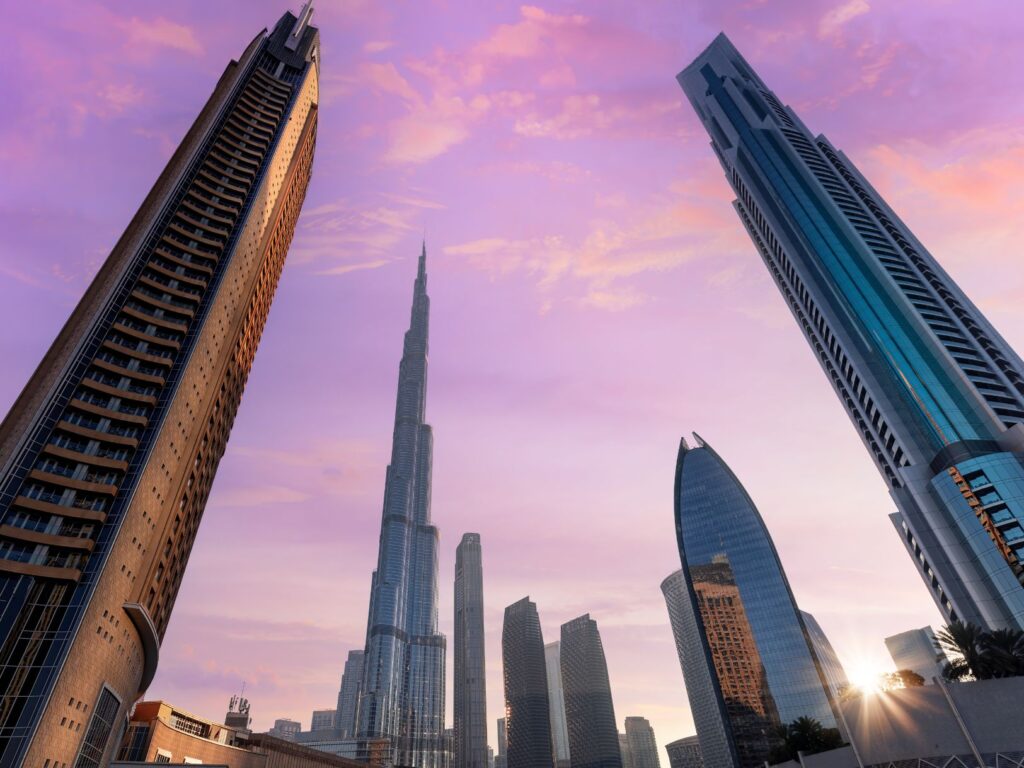
Look up at Dubai’s skyline right now and count the cranes. Despite the Iran–Israel–US conflict escalation of late February 2026, despite airspace disruptions, despite a 20% dip in the Dubai Financial Market Real Estate Index across five trading sessions — the cranes are still there. Construction activity across the UAE’s $860 billion active project pipeline has not stopped. In many corridors, it has accelerated. The UAE construction sector is projected to grow by more than 6% in 2026 following years of sustained expansion, with a CAGR of 3.8% forecast through 2028 (Blackridge Research / Ventures Onsite). That is the structural reality.
The market sentiment reality is different — and the gap between the two is precisely where Dubai prelaunch opportunity lives right now. When buyers pause while buildings rise, the investor who understands that the asset being built is not affected by the sentiment that temporarily froze the buyer making the decision about it is the investor who enters at the best possible point in the cycle. This article is the evidence behind that conviction.
What Construction Continues Actually Means on the Ground
There was a brief, government-directed construction pause in the days immediately following the conflict escalation. It was precautionary, compliance-driven, and temporary — not a structural halt. Tauseef Khan, Chairman and Founder of Dugasta Properties, confirmed:
“Construction activities have been fully halted in compliance with government directives and legal requirements.” — Tauseef Khan, Chairman, Dugasta Properties, The Gulf Pulse, March 2026
Note the precision of that statement: compliance with government directives — not market failure, not developer distress, not financial emergency. Rizwan Sajan, Founder and Chairman of Danube Group, was equally specific about the distinction between activity and fundamentals:
“As for the real estate market, at this stage the impact appears to be driven more by sentiment than by any fundamental structural shift. It would be premature to draw any long-term conclusions at this point. The underlying fundamentals remain resilient.” — Rizwan Sajan, Founder and Chairman, Danube Group, The Gulf Pulse, March 2026
Within days of the directive being lifted, remote operations across acquisition, development planning, sales, financing and post-handover management resumed in full at all major developers. Construction crews re-mobilised. Material deliveries continued. Escrow milestone inspections remained on schedule. The physical process of building Dubai did not stop — it took a breath, then exhaled and continued.
The $860 Billion Pipeline: What Is Actually Being Built Right Now
To understand why buyer hesitation does not affect the value case for Dubai prelaunch investment, you need to understand the scale and sovereign commitment behind what is currently under construction. This is not a market of speculative private developers building on hope. It is a state-backed, masterplan-driven, multi-decade urban construction programme that exists entirely independently of any four-to-ten-week sentiment window.
Table 1: Major Dubai / UAE Construction Projects Active or Launching in 2026
| Project | Value | Status (March 2026) | Completion | Property Uplift Driver |
| Dubai Metro Blue Line (14 stations) | AED 18–20.5B | Active construction | 2029 | 15–25% appreciation along corridor |
| Al Maktoum Intl Airport expansion | AED 128B (Phase 1) | Phase 1 underway | 2030+ | Dubai South entire community uplift |
| Dubai Loop (Boring Company) | TBA | Technical review stage | Phase 1: Q2–Q3 2026* | Urban transit premium — early corridors |
| Etihad Rail passenger service | AED 50B+ (national) | Stations activating 2026 | 2026–2028 phases | 11 city connectivity; inter-emirate uplift |
| DWTC Exhibition Centre expansion | USD 2.7B | Phase 1 completing 2026 | Phase 1: 2026 | Al Jaddaf / Zabeel corridor demand |
| Dubai Creek Tower | AED 3.67B+ | Foundation & core active | Post-2027 | Creek Harbour community anchor |
| Palm Jebel Ali (Nakheel) | AED 100B+ | Infrastructure phase | 2026–2030 | Ultra-luxury scarcity premium |
| Burj Binghatti (Jacob & Co.) | Undisclosed | Active — Business Bay | 2026 | Business Bay luxury corridor uplift |
| Dubai Islands (Deira Islands) | AED 60B+ | Phase completions 2026 | 2026–2028 | North Dubai coastal premium creation |
Sources: Provident Estate, Time Out Dubai, Newsweek, The Gulf Pulse, prelaunch.ae infrastructure analysis, March 2026. *Dubai Loop: RTA technical review ongoing.
Every project on this list is advancing. None has been suspended due to the conflict. And every project on this list is a value creator for surrounding residential communities — communities where prelaunch buyers are currently entering with reduced competition, improved payment terms, and preferred unit access, precisely because buyer hesitation has temporarily suppressed the crowd. The full analysis of how Dubai’s infrastructure mega-projects are driving off-plan hotspots across the city maps each project’s radius of residential price impact with granular precision.
The Emaar Signal: When the Largest Developer Doesn’t Blink
The most powerful single indicator of construction confidence in Dubai is not a government statistic — it is Emaar’s behaviour. Emaar Properties, which controls the majority of Dubai’s most prime master communities, reported record sales of $12.5 billion in the first half of 2025 alone, with a development backlog of $27 billion across ongoing projects. Emaar’s September 2025 pipeline introduced 25 new project launches across Dubai Hills Estate, Dubai Creek Harbour, Emaar Beachfront, and Emaar South, with 0.5% monthly installment plans, 20/80 splits, and post-handover structures.
That backlog does not pause because headlines are uncomfortable. A $27 billion committed development pipeline means construction teams, material contracts, contractor obligations, and escrow milestone schedules are legally and financially in motion. Emaar does not halt construction because buyer sentiment dips for six weeks. It accelerates, because it knows — from 25 years of building Dubai — that the buyers will return and that the premium for early entry in its communities is measured not in percentage points but in decades of compounding value. The complete breakdown of Emaar’s active 2025–2026 project pipeline and what each launch means for investors covers which specific launches are currently accessible at hesitation-phase terms.
The Metro Blue Line: The Infrastructure Story Buyers Are Ignoring Right Now
Of all the construction narratives that buyer hesitation is causing investors to miss, the Dubai Metro Blue Line may be the most consequential. The AED 18–20.5 billion, 30-kilometre, 14-station extension — approved by HH Sheikh Mohammed bin Rashid Al Maktoum and scheduled for completion in 2029 — is advancing through design and procurement phases entirely independently of sentiment cycles. It is the first Dubai transport project to achieve Platinum Category green building certification. Its flagship station at Dubai Creek Harbour will be the world’s tallest metro station at 74 metres, designed by Skidmore, Owings and Merrill — the firm behind the Burj Khalifa.
The value arithmetic of metro proximity is one of the most well-documented patterns in global real estate. In Dubai specifically, the Red Line’s 2009 opening drove 15–40% appreciation in adjacent communities within three years of operational launch. The Blue Line corridor — connecting Ras Al Khor, Al Warqaa, Mirdif, Dubai Creek Harbour, Dubai Silicon Oasis, Dubai Academic City, and Dubai South — is expected to deliver 15–25% property value uplift within 500 metres of each station by 2029 (ValuStrat / prelaunch.ae analysis). Studios near Academic City have already jumped from AED 42,000 to AED 60,000 annually — a 43% rental increase — since the line’s announcement.
Prelaunch buyers who enter Blue Line corridor communities right now — during the hesitation phase — are buying into confirmed infrastructure appreciation with a 3–4 year compounding runway, at terms that will not be available once the sentiment recovers and the Blue Line nears completion. The full investment case for Metro Blue Line corridor properties across Silicon Oasis, Mirdif and Dubai Creek Harbour shows exactly which communities and unit types are positioned for the strongest corridor appreciation.
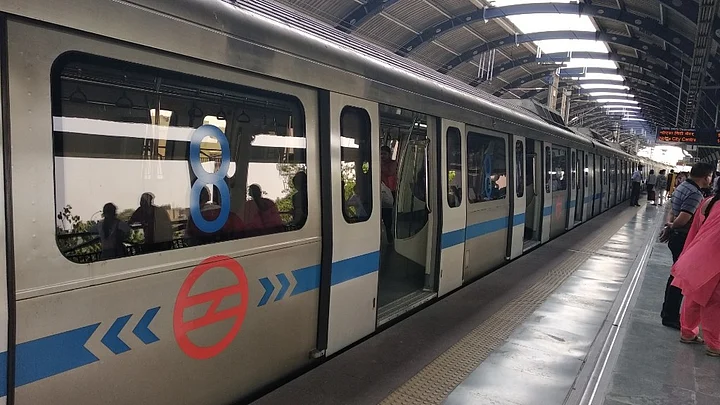
Table 2: Dubai Metro Blue Line Corridor — Property Value Impact by Station Area
| Station Area | Current Avg. Yield | Rent Growth Since Announcement | Projected Uplift by 2029 | Buyer Hesitation Effect |
| Dubai Creek Harbour | 6.5–7.5% | 30% YoY | 20–25% | Extended unit selection window |
| Dubai Silicon Oasis | 6–9% | 18–22% | 15–20% | Reduced competition at launch |
| Mirdif / Al Warqaa | 6–8% | 15–20% | 15–18% | DLD waiver availability |
| Dubai Academic City | 7–9% | 43% (studios) | 15–20% | Improved payment plan terms |
| Dubai South (extension) | 7–9% | 12–15% | 20–30%* | Best incentive menu available |
*Dubai South uplift includes Al Maktoum Airport expansion compounding. Sources: prelaunch.ae, ValuStrat, DLD, March 2026.
The Handover Reality: Why Construction Progress Protects Prelaunch Buyers
One of the most common concerns raised by buyers hesitating over conflict headlines is delivery risk: “What if the developer can’t complete the project?” This concern — legitimate in other markets — is structurally addressed in Dubai by three protections that operate completely independently of buyer sentiment and geopolitical noise:
- RERA-mandated escrow accounts: Every dirham paid by a prelaunch buyer flows into a DLD-monitored escrow account. Release to the developer occurs only upon verified construction milestone completion — independently certified by approved inspection firms. The conflict cannot touch these accounts. They are legally ring-fenced from both the developer’s operations and any external market disruption.
- Construction materialisation data: Of the approximately 45,000 units scheduled for 2026 delivery, only 48% are expected to be completed on schedule (prelaunch.ae / Morgan’s International Realty handover analysis). This is not a negative statistic — it is a supply protection. It means the market’s real new inventory is approximately half of headline forecasts, consistently preventing the oversupply correction that bears predict. The detailed Dubai property handover schedule analysis for 2025–2027 breaks down which specific communities face the sharpest delivery shortfall — and why that benefits prelaunch buyers in those corridors.
- Tier-1 developer construction finance independence: Emaar, DAMAC, Nakheel, Sobha, and Binghatti hold construction finance facilities entirely separate from individual project escrow accounts. A sentiment-driven sales slowdown of 4–10 weeks does not affect their ability to fund and continue construction. Their balance sheets are sufficiently capitalised to carry project completion through any short-term market pause. For prelaunch buyers in these developers’ projects, the cranes do not stop because buyers are temporarily hesitating.
The Precise Gap That Prelaunch Buyers Are Exploiting Right Now
The gap between Dubai construction activity and buyer sentiment is not just a reassurance narrative — it is a measurable, time-bounded pricing inefficiency. Construction milestones advance on schedule. Infrastructure is being delivered. Communities are maturing. The physical asset that a prelaunch buyer is purchasing is progressing entirely according to plan. But the price at which that asset is currently accessible — the developer incentive package, the unit selection flexibility, the payment plan structure — is set by sentiment, not by construction progress.
That inefficiency means that a buyer who enters a Creek Harbour prelaunch in March 2026 — when buyer hesitation is suppressing competition — is accessing an asset that will be delivered in 2028–2029 into a fully operational, Metro Blue Line-connected, Emaar-managed waterfront community, at pricing set by the discomfort of a six-week sentiment pause rather than the value of the completed community. That is the gap. And it is the same gap that COVID-era buyers exploited in 2020 — entering a market whose assets were entirely under construction, at pricing set by maximum fear, to collect 60–75% appreciation by 2023. The detailed history of how Dubai’s off-plan market absorbed and overcame every crisis since 2008 demonstrates this pattern with granular precision across six separate dislocation events.
Table 3: Construction Progress vs Buyer Sentiment — The Divergence Opportunity
| Market Variable | Status — March 2026 | Buyer Impact (Negative / Positive) | Opportunity Created |
| UAE construction sector growth | +6% projected 2026 |  Positive — assets advancing Positive — assets advancing | Assets delivered on plan |
| Emaar development backlog | $27 billion committed | Positive — Tier-1 certainty | Delivery confidence maximum |
| Metro Blue Line progress | Active — completion 2029 | Positive — corridor value building | Entry before transit premium peaks |
| Off-plan mortgage availability | LTV 50% at 40% completion | ⚠ Neutral — conditional | Cash buyer advantage amplified |
| Buyer competition level | Suppressed — hesitation phase | Positive for new entrants | Preferred unit selection available |
| Developer incentive menu | Maximum — DLD waivers, ext. plans | Positive — best terms since 2020 | Value-add package at peak |
| DLD weekly transaction vol. | Moderating — pause phase | ⚠ Neutral — temporary | Entry before volume recovers |
| Construction escrow releases | On schedule — all Tier-1 devs. | Positive — buyer protection intact | Capital structurally ring-fenced |
Sources: The Gulf Pulse, prelaunch.ae specialist analysis, DLD, Engel & Völkers, Morgan’s International Realty, March 2026.
The Communities Where the Gap Is Widest Right Now
Not all corridors reflect the construction-vs-sentiment gap equally. The prelaunch opportunities where construction advancement is most pronounced and buyer hesitation is most suppressing competition are:
- Dubai Creek Harbour: With the world’s tallest metro station confirmed, the Creek Tower advancing, and Emaar’s active handover programme maturing the community in real time, Creek Harbour is the clearest expression of infrastructure advancing while buyers pause. The 9 Blue Line investment hotspots positioned for 25–30% growth by 2029 include Creek Harbour analysis at the project level.
- Dubai South: The Metro Blue Line extension to Dubai South — combined with the Al Maktoum International Airport Phase 1 delivery and Expo City community maturation — makes this the single highest-infrastructure-density growth corridor in Dubai. The Metro Blue Line extension to Dubai South and its direct property value impact on communities like SAMANA Hills South 2 provides the full infrastructure-to-appreciation timeline for this corridor.
- Palm Jebel Ali and Dubai Islands: Both mega-island developments are in active infrastructure phases — the physical foundations of what will become some of Dubai’s most valuable beachfront communities. Prelaunch access during construction is the only way to enter these communities below their operational market pricing. The complete guide to Dubai’s top off-plan communities, developers and investment hotspots for 2025 covers both developments in the context of the broader opportunity landscape.
- Projects with fastest handover timelines: For buyers who want the security of near-term delivery combined with current hesitation-phase pricing, the Dubai off-plan projects with the fastest handover dates in 2025–2026 identify which specific launches are 12–24 months from key delivery — meaning buyers entering now will receive keys in a fully sentiment-recovered market.
The Cranes Are Still Running So Are We.
At prelaunch.ae, we track construction milestones, Metro Blue Line station activation timelines, Emaar project pipeline releases, and developer incentive schedules in real time. When the headlines say pause, our data says the builds continue — and we know exactly which prelaunch entries align the strongest infrastructure tailwinds with the most favourable current terms.
Fill out the enquiry form at prelaunch.ae today. Tell us your preferred corridor and budget, and we will match you with the off-plan projects where construction is most advanced, infrastructure value is most confirmed, and current sentiment is most suppressing your competition.
 (+971) 52 341 7272 | ✉ sales@mbrproperties.ae
Frequently Asked Questions
1. Has the war actually stopped construction in Dubai?
No. There was a brief, government-directed precautionary pause following the February 2026 escalation, which all developers complied with as a legal and civic obligation. Construction activity, remote operations, transaction pipelines, and escrow milestone inspections resumed in full within days. The UAE’s $860 billion active construction pipeline is advancing, and the sector is projected to grow more than 6% in 2026.
2. Does buyer hesitation affect the progress of off-plan projects I have already purchased?
No. RERA’s mandatory escrow framework means your capital is held in a DLD-monitored account and released only upon verified construction milestone completion — completely independent of market sentiment or buyer activity levels. Developers with existing escrow-protected projects continue construction according to their approved schedules, funded through their own construction finance facilities, not new buyer deposits.
3. Which construction projects are driving the most property value growth right now?
The Dubai Metro Blue Line (AED 18–20.5 billion, 14 stations, completion 2029) is the most significant property value driver across Dubai Creek Harbour, Silicon Oasis, Mirdif, Academic City, and Dubai South — with 15–25% corridor appreciation forecast. Al Maktoum International Airport Phase 1, the Etihad Rail passenger network (activating 2026), and Palm Jebel Ali’s infrastructure phase are the next tier of value creation.
4. Why do buyers pause even when construction continues?
Buyer hesitation in a conflict news cycle is a psychological response to headlines, not a rational response to asset fundamentals. The mechanism is well-documented: a 48-to-72-hour transaction freeze following escalation, extending into a 4-to-10-week general hesitation phase in mid-market segments. The buildings continue advancing during this period. The only thing that changes is competition — and for new buyers, reduced competition is an advantage, not a risk.
5. How does prelaunch.ae ensure construction and developer risk is managed for its clients?
prelaunch.ae conducts developer due diligence on every project before recommending it: RERA registration verification, escrow account confirmation, milestone payment structure review, and delivery track record analysis across prior completed projects. We only introduce clients to projects where developer credentials are independently verifiable. Our team also monitors construction progress reports and DLD milestone release records so clients receive ongoing updates between booking and handover.
6. Is now the best time to buy prelaunch in infrastructure-led communities like Creek Harbour and Dubai South?
Based on current data — advanced construction progress, confirmed Metro Blue Line delivery, active Emaar master-plan execution, and hesitation-phase pricing with DLD waivers and expanded payment plans — the combination of construction-led value creation and sentiment-suppressed entry pricing is as strong as any point since COVID-era entry in 2020. The window is defined by the hesitation phase; when sentiment fully recovers, both the incentive packages and the preferred unit access will retract.