That statement used to be a marketing tagline. In 2027, it is a data-backed investment thesis. The UAE’s residential wellness real estate market is projected to surge from AED 503 million in 2024 to AED 31 billion by 2027 — a sevenfold increase in three years. Global research shows biophilic properties command 10–25% price premiums, sell up to 20% faster, and achieve stronger tenant retention than conventional equivalents.
For Dubai investors navigating a high-supply 2027 market — where thousands of near-identical off-plan units will compete for the same tenants — wellness features are no longer a lifestyle bonus. They are a competitive moat. The buyer or landlord whose property offers certified air quality, biophilic design, and spa-grade recovery amenities is not playing the same game as the one with a standard gym and rooftop pool. They are playing a different, higher-margin game entirely.
This article defines exactly what qualifies, who pays more, how much more they pay, and what it means for your resale and rental strategy in 2027.
The Market Size: Why This Is Not a Niche Trend
The numbers behind Dubai’s wellness real estate surge are not projections built on optimism — they are anchored in transaction data and structural demographic shifts.
| Metric | Data Point | Source / Context |
| UAE wellness property market 2024 | AED 503 million | Baseline pre-surge valuation |
| UAE wellness property market 2027 | AED 31 billion (projected) | 7x growth in 3 years |
| Biophilic property price premium | 10–25% above market | Global studies, Terrapin Bright Green 2022 |
| Speed-of-sale advantage | Up to 20% faster | Green Zen UAE research, August 2025 |
| Dubai property value uplift | 15–20% in wellness projects | Green Zen UAE, 2025 |
| UAE residents willing to pay more | 80%+ | 2025 YouGov survey, R.Evolution |
| Wellness-premium penthouse record | AED 125M (Arada Akala) | July 2025 transaction |
| UAE green-standard buildings | 72,000+ certified | Dubai Municipality, 2025 |
The key insight: this market is growing from both ends of the price spectrum simultaneously. At the ultra-prime level, liveability has overtaken badge value as the primary luxury signal. At the mid-market level, developers including Danube, Samana, and Pantheon are integrating wellness features into JVC and Arjan projects from AED 600,000, democratising a category that was once exclusively ultra-premium.
For a broader look at how Dubai’s investment landscape is evolving, read our analysis of why investors are flocking to off-plan properties in Dubai, RAK, and Abu Dhabi.
What Qualifies: The Wellness Home Spectrum
Not every apartment with a pool and a yoga mat qualifies as a wellness home. The following framework separates genuine wellness infrastructure from wellness marketing.
| Wellness Tier | Qualifying Features | Market Segment | Typical Premium |
| Entry Level | Green spaces, cycling tracks, a standard gym, pool | Mid-market (AED 600K–1.5M) | 3–8% above comps |
| Certified Wellness | Air/water filtration, biophilic design, meditation rooms, circadian lighting | Upper-mid (AED 1.5M–4M) | 10–18% above market |
| Spa-Grade | Full spa, hydrotherapy, cryotherapy, salt rooms, wellness concierge | Premium (AED 4M–10M) | 18–25% above market |
| Ultra-Wellness | WELL-certified building, biometric integration, branded wellness (Six Senses, Aman) | Ultra-prime (AED 10M+) | 25–40%+ above market |
Air Quality Systems
Indoor air quality is the single most impactful wellness feature for human health — and one of the most frequently misrepresented. A genuine wellness-grade air system includes HEPA H13 or H14 filtration, VOC monitoring, CO₂ sensors with automated fresh-air exchange, and real-time resident-facing dashboards. Dubai’s desert climate — with PM10 dust particles and heavy air-conditioning use — makes certified air quality infrastructure particularly valuable compared to temperate markets.
Biophilic Design
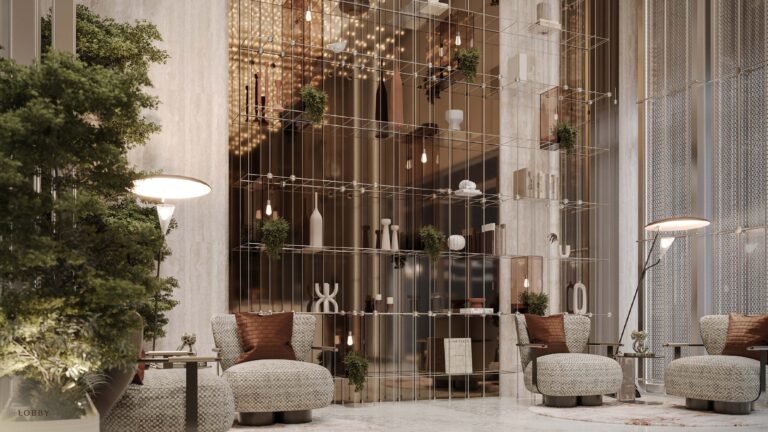
Biophilic design is the architectural integration of natural elements — living walls, water features, natural ventilation, maximised light penetration, organic materials (timber, stone, bamboo), and views onto greenery — in a way that demonstrably reduces cortisol levels and improves cognitive performance. Research shows biophilic spaces reduce stress by up to 37% and improve cognitive function by 26% — metrics that translate directly into tenant retention and renewal rates.
Spa-Grade Amenities
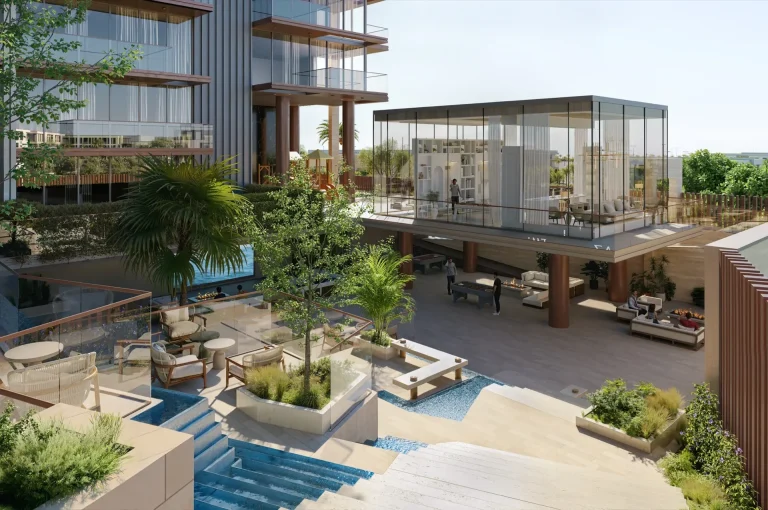
The amenity bar has been fundamentally reset. A standard gym is table stakes. What differentiates a wellness-premium building in 2027 is recovery infrastructure: hydrotherapy pools, contrast therapy, infrared saunas, salt therapy rooms, oxygen bars, and dedicated mobility zones. Branded wellness residences — Six Senses at Dubai Marina, the incoming Aman Dubai — command 35–50% premiums over unbranded luxury comparables and maintain them through market cycles because the brand creates a global captive buyer pool.
Mental Wellness Infrastructure
The newest wellness category is cognitive wellness design: dedicated meditation rooms, circadian (tunable) lighting, tech-free zones, acoustic insulation design, and community programming, including guided breathwork and digital detox events. Research increasingly links built environment quality to measurable health and productivity outcomes — a correlation that is changing buyer decision frameworks at every price point.
Data point: A 2025 YouGov survey found that over 90% of UAE residents consider a healthy home environment essential, and more than 80% are willing to pay a premium specifically for improved air quality, purified water, and natural design elements.
Which Buyer Segments Pay the Wellness Premium and How Much
Different segments are motivated by different dimensions of the wellness proposition — and price at different intensities.
| Buyer / Tenant Segment | Primary Wellness Driver | Premium Paid | Hold / Tenancy Length |
| UHNWIs and HNWIs | Branded wellness, liveability, longevity design | 25–40%+ | Own — long-term/permanent |
| Wellness-conscious expats (50+) | Air quality, cognitive design, mobility-friendly layout | 15–25% | 3–5 year tenancy or purchase |
| Young families (30–45) | Non-toxic materials, green spaces, and school proximity | 10–18% | 2–4 year tenancy |
| Corporate professionals | Sleep quality, cognitive performance, mental wellness amenities | 10–15% | 1–2 year (often company-leased) |
| Health-conscious millennials | Fitness infrastructure, biophilic aesthetics, and sustainability | 8–15% | 1–2 year tenancy |
| Medical / wellness tourists | Spa recovery, branded programming, and healthcare proximity | Nightly premium | Short-term / serviced |
The most important segment for 2027 investors is the senior wellness-conscious expat — a category growing rapidly as Dubai attracts retirees and semi-retirees under the retirement visa programme. These buyers and long-term tenants have high disposable income, pay promptly, and renew consistently — the ideal landlord profile in a high-supply market where tenant quality matters as much as occupancy rate.
Young families are the second key segment. Their wellness priorities — non-toxic materials, green play spaces, noise insulation, clean water — overlap significantly with certified wellness infrastructure, and they sign multi-year tenancy agreements that eliminate re-leasing costs and vacancy risk.
Dubai Communities Leading the Wellness Premium
| Community | Wellness Positioning | vs. Market Avg. | Handover / Maturity |
| Keturah Reserve (MBR City) | Bio-living flagship; AED 3B development; full spa, biophilic architecture | +20–30% | Q2–Q4 2027 |
| The Sustainable City | Net-zero, solar energy, organic farming, EV-only transport | +15–20% | Established / mature |
| Six Senses Dubai Marina | Branded spa residences; wellness concierge, meditation, nutrition | +35–50% | Premium branded segment |
| Eden Hills, MBR City | Wadi-inspired biophilic villas, central water feature, and trail network | +18–25% | 2026–2027 delivery |
| The Wilds, Dubailand (Aldar) | Organic farms, wellness centres, nature trails, 740 biophilic apts | +12–18% | 2027 handover |
| The Valley by Emaar | Green haven, active trails, town centre wellness facilities | +10–15% | Phased 2025–2027 |
| JVC Wellness Projects | Mid-market biophilic; Sereno Residences, Weybridge Gardens 4 (LEOS) | +5–10% | Various 2026–2027 |
The entry of Aldar Properties — Abu Dhabi’s largest developer — into Dubai’s wellness segment with The Wilds confirms the category’s long-term commercial viability. For context on this launch, see the Aldar Wilds Residences launch coverage.
The Resale Premium in Practice: Numbers That Matter
How does the wellness premium translate into actual AED at resale? The following model uses conservative, evidence-based inputs from 2024–2025 transaction data.
| Property Type | Conventional Unit | Wellness-Certified Unit | Premium |
| 1BR Apartment (JVC, mid-market) | AED 1,100,000 | AED 1,165,000–1,210,000 | +6–10% |
| 2BR Apartment (MBR City) | AED 2,200,000 | AED 2,530,000–2,640,000 | +15–20% |
| Villa (Dubai Hills / The Valley) | AED 5,500,000 | AED 6,325,000–6,875,000 | +15–25% |
| Branded Wellness Residence | AED 4,000,000 | AED 5,400,000–5,600,000 | +35–40% |
Annual rental yield differential: Tenants willing to pay a 10–25% premium means that on an AED 80,000/year one-bedroom, a certified wellness unit commands AED 88,000–100,000. Over a 5-year hold, that compounds to AED 40,000–100,000 in additional rental income before any capital appreciation uplift is applied.
The most defensible outcome in 2027 is not the highest paper valuation — it is the lowest vacancy rate. In a market where thousands of standard units compete for the same tenants, a wellness-certified property creates a different category of demand that insulates it from commodity price pressure. That insulation is worth more than any short-term yield premium.
How to Verify Genuine Wellness Features vs. Marketing Language
As the category grows, so does “wellness-washing” — labelling standard apartments with wellness language without the underlying infrastructure. Here is how to cut through it.
- Ask for third-party certification. WELL Building Standard, LEED Gold/Platinum, Fitwel, or BREEAM. Any developer claiming wellness credentials should produce a certification reference number or a committed application timeline.
- Request the air filtration specification. Ask for the HEPA grade, brand, and whether a VOC and CO₂ monitoring system is installed. Vague answers mean the system is marketing, not infrastructure.
- Check the landscape architect credentials. Genuine biophilic design requires a qualified specialist. A living wall installed by a generic fit-out contractor is not a biophilic design.
- Read the SPA for wellness commitments. Features listed in marketing brochures that are absent from the Sale and Purchase Agreement carry no legal weight.
- Visit a completed project by the same developer. Check if living walls are maintained. Check if the air quality dashboard is live. Marketing renders and delivered reality frequently diverge.
For guidance on evaluating off-plan developers with the rigour this category demands, read what you need to know about buying off-plan properties in Dubai. And for investors comparing wellness community locations, our top locations for off-plan property investment in Dubai map the opportunity geography.
Wellness Is the New Luxury: The Investor Thesis for 2027
Traditional luxury in Dubai was defined by location (Palm Jumeirah, Downtown), brand (Armani, Cavalli), and material opulence. Liveability has replaced badge value as the primary value driver for the buyers with the most spending power — per Keturah Reserve’s CEO, the No.1 concern of wealthy Dubai buyers is now liveability and wellbeing, not square footage or postcode.
For investors, this creates a premium that is structurally different from other premiums in Dubai real estate. A view premium erodes when a taller building rises next door. A location premium compresses as an area develops. A wellness premium deepens over time — because the demographic paying for it (health-conscious, globally mobile, financially secure) is growing, and because certified wellness infrastructure ages better than decorative luxury finishes.
The 2027 thesis: In a high-supply market where thousands of near-identical units compete simultaneously, wellness certification is the single most durable differentiator available to an investor. It does not compete on price. It competes on category, and in 2027, cthe ategory wins.
For investors exploring pre-launch projects that incorporate genuine wellness design, our complete guide to off-plan apartments for sale in Dubai is the ideal starting point. And for the full macro investment context, our analysis of the future of off-plan real estate in Dubai frames the landscape in detail.
Invest in Wellness. Invest in What Lasts.Prelaunch.ae gives you exclusive access to Dubai’s most forward-thinking wellness-integrated off-plan projects — before they reach the open market. Whether you are targeting long-term capital growth, premium rental yields, or the UAE Golden Visa, our team will help you find the right property at the right price. (+971) 52 341 7272 (+971) 52 341 7272 ✉ sales@mbrproperties.ae Fill out the form at prelaunch.ae and speak with our team about wellness-focused investment in Dubai. |
Frequently Asked Questions
Q: What makes a home a ‘wellness home’ in Dubai’s market?
A: A wellness home goes beyond standard amenities. Qualifying features include certified air and water filtration, biophilic design (natural light, indoor greenery, water features), spa-grade fitness and recovery amenities, circadian lighting, non-toxic building materials, and mental wellness spaces such as meditation rooms. The key distinction is whether these features are structural and certified — not just marketing language.
Q: How much of a rental premium do wellness homes command in Dubai?
A: According to 2025 surveys, tenants are willing to pay a 10–25% rental premium for properties with advanced wellness features. Research from global firms, including Terrapin Bright Green, shows biophilic properties sell up to 20% faster and achieve stronger tenant retention — directly improving net yield for landlords.
Q: Is wellness real estate only for ultra-high-net-worth buyers?
A: No — and this is one of the most important shifts in Dubai’s 2025–2027 market. While wellness originated as an ultra-luxury differentiator, developers including Danube, Samana, and Pantheon are now incorporating wellness features into mid-market JVC and Arjan projects priced from AED 600,000. The wellness premium is no longer exclusive to AED 5M+ properties.
Q: Which Dubai communities lead in wellness-focused developments?
A: Mohammed Bin Rashid City (MBR City), The Valley by Emaar, Dubailand, and Dubai Hills Estate are the most advanced in wellness community design. For mid-market wellness, JVC and Arjan offer growing options. The Sustainable City and Keturah Reserve are benchmark developments that have redefined market expectations.
Q: Will wellness features hold their value in 2027 as supply increases?
A: Yes — and this is their key advantage in a high-supply environment. In a market where thousands of similar units compete simultaneously, wellness-certified properties create genuine differentiation. Research consistently shows that biophilic and wellness-integrated properties experience lower vacancy rates and stronger price retention during supply peaks than conventional comparable units.
Q: How do I verify that a property’s wellness features are genuine and not just marketing?
A: Ask for third-party certifications: WELL Building Standard, LEED, Fitwel, or BREEAM. Request the air quality monitoring specification, water filtration brand, and system specs, and the building materials datasheet. If the developer cannot provide documentation, the features are marketing, not infrastructure.