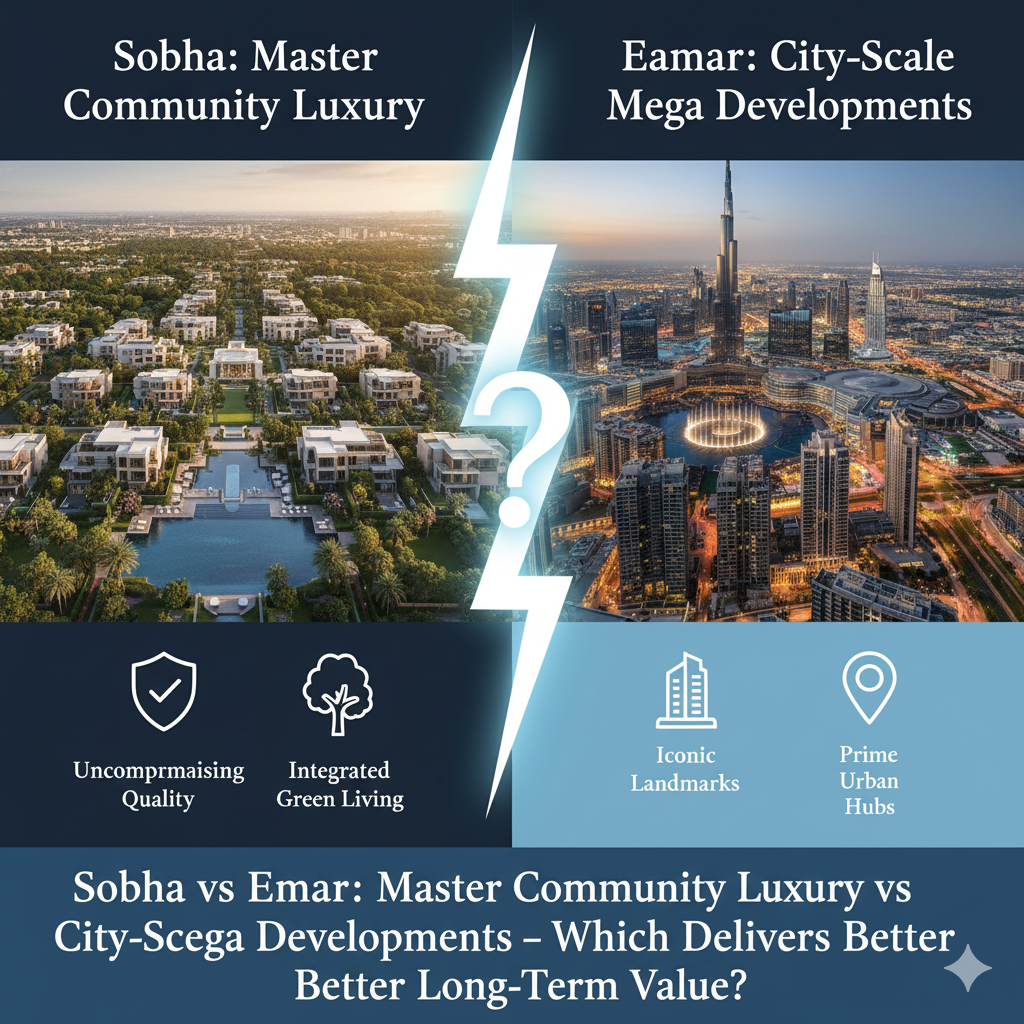
In today’s Dubai real estate market, two names dominate high-intent investor conversations: Sobha and Emaar. Both are seen as premium developers, but they play different roles:
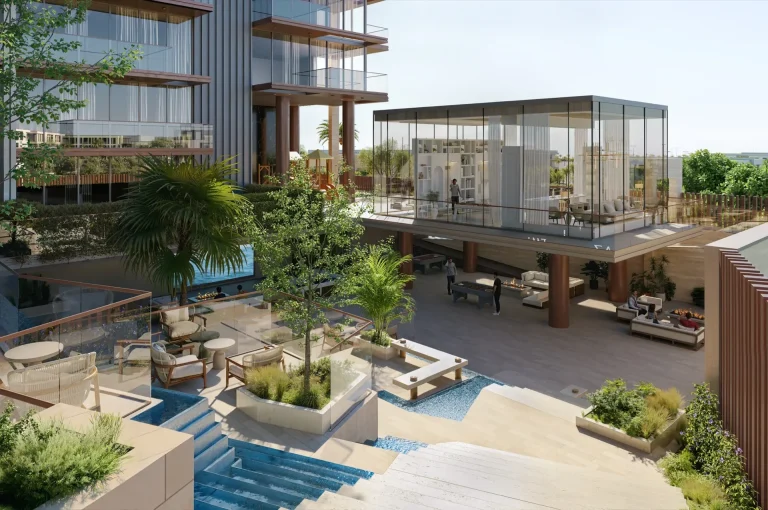
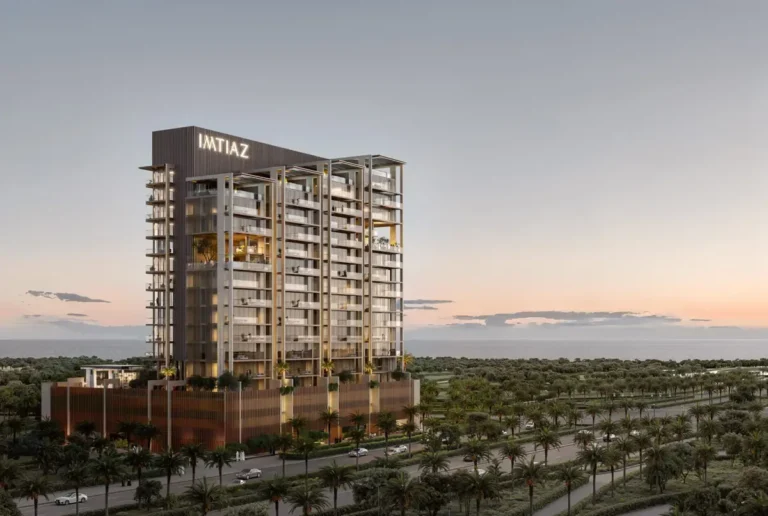
- Sobha Realty is known for master community luxury with meticulous construction and finish quality, especially in Sobha Hartland.
- Emaar Properties is the city’s flagship developer, behind city-scale mega developments such as Downtown Dubai and Dubai Hills Estate.
For investors asking, “Sobha vs Emaar – which delivers better long-term value?”, the answer depends on your priorities: craftsmanship, yield, liquidity, risk tolerance, and time horizon.
1. Developer overview: scale and positioning
| Aspect | Sobha Realty | Emaar Properties |
| Core identity | Quality-first, master community luxury developer | City-scale mega-developer and global brand |
| Flagship Dubai communities | Sobha Hartland, Sobha Reserve, upcoming Siniya Island | Downtown Dubai, Dubai Hills Estate, Dubai Marina, Creek |
| 2024–2025 performance | ~AED 23B sales in 2024, ~50% YoY growth | Property sales > AED 60B in 2025 YTD, strong revenue & profit |
| Brand focus | In-house construction, craftsmanship, gated greenery | Scale, placemaking, landmark destinations, global investor base |
| Typical buyer | End-users & HNWIs seeking build quality and serenity | Global investors, end-users, institutions seeking liquidity & brand |
Sobha’s 2024 sales of around AED 23 billion highlight strong demand for its premium communities and underline its positioning as a luxury master developer in Dubai.
Emaar, meanwhile, reports multi-year record sales and profits, with property sales exceeding AED 60 billion across 2024–YTD 2025 and revenue and profit growing strongly. This reinforces Emaar as the dominant blue-chip developer in Dubai.
2. Community comparison: Sobha Hartland vs Dubai Hills & Downtown
For a practical comparison, investors usually look at Sobha Hartland against Dubai Hills Estate and Downtown Dubai.
2.1 Price and yield snapshot
| Community | Developer | Product type | Avg price / sq ft (approx) | Typical yield (gross) | Positioning |
| Sobha Hartland (apartments) | Sobha | Mid–high-rise apartments | ~AED 1,850–2,100 | ~5–6.2% | Gated, green, close to Downtown |
| Dubai Hills Estate (apartments) | Emaar | Mid–high-rise apartments | ~AED 2,300–2,450 | ~5–6.5% | Golf community, central suburb |
| Downtown Dubai (apartments) | Emaar | High-rise luxury apartments | ~AED 3,200–3,500+ | ~5–7% (prime STR higher) | Global CBD with Burj Khalifa |
Indicative inputs:
- Sobha Hartland Q3 2024 resale report shows an average of about AED 1,889 per sq ft, with studios around AED 2,100 per sq ft and resale 1–2BR units supporting yields in the 5–6.2% band for sensibly priced stock.
- Dubai Hills Estate apartments average around AED 2,390–2,440 per sq ft, with Q1–Q2 2025 averages roughly AED 2,428 per sq ft and typical yields around 5–6.5% depending on unit type.
- Downtown Dubai apartment rents and prices translate into yields typically 5–7%, with short-stay focused units achieving more in prime towers.
Against an average UAE gross rental yield of about 5.45% in Q4 2025, all three communities sit in the “above-average / prime” bracket.
This makes phrases such as “Sobha Hartland apartments for sale”, “Dubai Hills Estate apartments for sale” and “Downtown Dubai property investment” highly relevant short- and long-tail search terms for investors benchmarking value.
3. Long-term value drivers: what really matters?
When you compare Sobha vs Emaar for long-term value, five main drivers stand out.
3.1 Location and land strategy
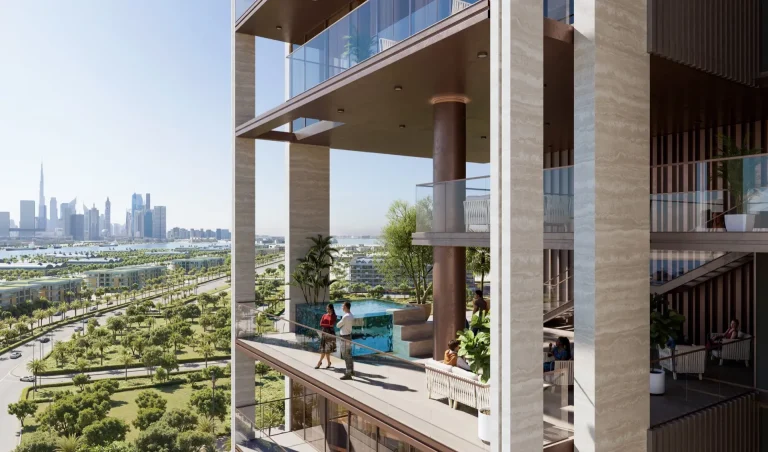
- Sobha Hartland sits in Mohammed Bin Rashid City (MBR), minutes from Business Bay and Downtown via key roads. Its appeal is proximity to the core without being in the density of Downtown – ideal for families wanting a quieter, green environment.
- Dubai Hills Estate offers a similar “central suburb” narrative, with a large park, golf course, mall, schools, and hospitals, and fast access to Downtown, Marina, and the airport.
- Downtown Dubai remains the global flagship – home to Burj Khalifa and Dubai Mall – and one of the city’s most liquid and visible real estate micro-markets.
Over a 10–15-year horizon, Emaar’s city-scale locations have slightly stronger brand pull and international recognition, but Sobha Hartland’s “inner suburb” positioning can deliver competitive appreciation if the wider MBR area continues to mature.
3.2 Build quality and community feel
Sobha is widely associated with in-house construction, joinery, and meticulous finishing. Many end-users and agents position Sobha Hartland as one of the city’s higher-quality large communities in terms of:
- Interior fit-out (kitchens, wardrobes, bathrooms).
- Common areas and landscaping.
- Acoustic performance and attention to detail.
Emaar has improved finish levels significantly across newer projects, but because it operates at a much larger scale, the perceived quality can vary more by project and price band. At the very top end (e.g., certain Emaar-branded Downtown and Dubai Hills projects), finishes rival or exceed boutique developers, but mid-market towers may not feel as “crafted” as Sobha’s core buildings.
For long-term value, strong construction quality and resident satisfaction reduce maintenance issues and support pricing over time – an area where Sobha often scores highly.
3.3 Financial strength and resilience
Both Sobha and Emaar are showing robust growth:
- Sobha’s 2024 sales of around AED 23B reflect strong demand for its pipeline and provide capital for infrastructure and new phases.
- Emaar’s property sales above AED 60B and rising revenue, profit, and backlog provide significant financial resilience and investment capacity across Dubai and international projects.
From a “too big to ignore” perspective, Emaar clearly leads on scale and diversification. From a focused luxury master developer perspective, Sobha looks strong and increasingly influential within Dubai’s premium segment.
3.4 Rental and resale liquidity
- Downtown Dubai and Dubai Hills Estate enjoy deep liquidity, high transaction volumes, and year-round rental demand from professionals, families, and tourists. This is a key strength for Emaar.
- Sobha Hartland has rapidly climbed Dubai transaction rankings, but it is still younger than Emaar’s legacy communities. Liquidity is improving, but not yet as broad-based as Downtown.
If your strategy is to trade in and out of assets or keep exit flexibility high, Emaar’s flagship areas are hard to beat. If you are a long-term holder focused on end-user appeal, Hartland’s depth is steadily increasing.
3.5 Risk profile
- Emaar: lower perceived risk due to scale, diversified revenue streams, and global recognition. However, some sub-markets may be more exposed to cyclical oversupply.
- Sobha: narrower but focused exposure; concentration risk is offset by premium positioning and strong demand in its core communities.
4. Which delivers better long-term value?
There is no single winner; the answer depends on your profile and objectives.
If you prioritise master community, luxury, and craftsmanship
You may lean towards:
- Sobha Hartland apartments and villas if you value:
- Gated, green living.
- Strong internal specifications.
- A slightly quieter, family-centric environment close to Downtown.
Relevant long-tail searches: “Sobha Hartland investment for families”, “Sobha luxury apartments in MBR City”, “best quality developer in Dubai”.
Here, you are effectively betting on quality and community feel to underpin capital values and rental resilience over time.
If you prioritise city-scale mega developments and global liquidity
You may favour:
- Dubai Hills Estate for long-term family living, plus capital appreciation, and
- Downtown Dubai for maximum brand value and resale liquidity.
Relevant long- and short-tail keywords: “Emaar properties Dubai”, “Dubai Hills Estate apartments for sale”, “Downtown Dubai investment property”, “best areas in Dubai for long-term capital growth”.
With Emaar, you are leaning on global recognition, depth of demand, and scale to support values through economic cycles.
A balanced portfolio could easily include both: for example, one Sobha Hartland unit for quality-led end-user demand and one Emaar unit in Dubai Hills or Downtown for liquidity and brand diversification.
Conclusion & next steps
In the Sobha vs Emaar debate, both developers are strong long-term candidates, but for different reasons:
- Sobha offers master community luxury, meticulous finishing, and a focused footprint in high-potential areas like Sobha Hartland.
- Emaar offers city-scale mega developments, deep liquidity, and global brand power in communities such as Dubai Hills Estate and Downtown Dubai.
For investors with a 10+ year horizon, the key is aligning the developer and community with your strategy:
- If your priority is quality of life and build quality, a Sobha Hartland asset may be the right core holding.
- If your priority is resale options, international appeal, and diversified demand, Emaar’s flagship communities are compelling.
To identify which specific buildings, unit types, and price points fit your budget and risk profile:
- Visit prelaunch.ae and fill up the form so our team can send you a tailored list of Sobha and Emaar options with updated prices, payment plans, and projected ROI.
- Or contact us directly at:
Phone: (+971) 52 341 7272
Email: [email protected]
Our advisors can walk you through exact projects in Sobha Hartland, Dubai Hills Estate, and Downtown Dubai, comparing finish levels, service charges, rental demand, and exit strategies so you can make a data-led long-term decision.
Frequently Asked Questions (FAQs)
1. Is Sobha better than Emaar for end-users who plan to live in the property?
If you value gated, green master communities and very strong internal finishing, Sobha Hartland is often more attractive for end-users. If you prefer being close to major business districts, malls and large community amenities, Dubai Hills Estate or Downtown Dubai under Emaar may be better.
2. Which offers higher rental yields: Sobha Hartland or Dubai Hills Estate?
Both generally sit around the 5–6.5% gross yield range, depending on unit type and purchase price. Yields are competitive in both, so the decision is typically driven more by quality vs location rather than yield alone.
3. Is Downtown Dubai still a good long-term investment given how mature it is?
Yes, Downtown Dubai remains one of Dubai’s most liquid and globally recognised districts. While percentage growth may be lower than early-stage communities, its brand value, depth of demand and strong rentability make it a solid long-term core holding.
4. Are Sobha’s off-plan projects considered safe from a delivery perspective?
Sobha has built a track record for timely delivery and high construction standards, reflected in strong sales and market share. As with any off-plan purchase, investors should still review project-specific timelines, escrow arrangements and developer documentation.
5. How should a new investor split a portfolio between Sobha and Emaar?
A common neutral approach is:
- One quality-focused unit in Sobha Hartland for end-user-led demand, and
- One liquidity-focused unit in Dubai Hills Estate or Downtown Dubai under Emaar.
This gives exposure to both master community luxury and city-scale mega developments, hedging your long-term position in Dubai real estate.