Most real estate headlines treat transaction volume and transaction value as interchangeable. They are not. When a market posts Dh176.7 billion in Q1 2026 value while deal count grew by a more modest margin, something specific is being communicated: buyers are not simply buying more — they are buying better. That asymmetry between Dubai property value growth Q1 2026 and volume growth is the most important signal in this market, and almost no one is talking about it.
When value growth outpaces volume growth, it means the average deal size is climbing. Buyers are moving up the quality ladder. Discounting is not driving activity. The market is not being propped up by desperation-priced units being cleared at volume. It is being led by confident capital choosing premium assets — and that is precisely the environment in which prelaunch Dubai property investment delivers its strongest long-term returns.
Value vs Volume: Understanding the Asymmetry
In Q1 2025, Dubai recorded approximately 39,000 deals totalling around Dh143.2 billion. In Q1 2026, the deal count rose to approximately 48,000 — an increase of roughly 23%. Transaction value, meanwhile, jumped 23.4% — meaningfully outpacing a straightforward volume increase. The per-deal average held firm and nudged higher. That is the asymmetry investors should pay attention to.
| Metric | Q1 2025 | Q1 2026 | Growth Rate |
|---|---|---|---|
| Total Transaction Value | ~Dh143.2 billion | Dh176.7 billion | +23.4% |
| Total Deals | ~39,000 | ~48,000 | ~+23% |
| Implied Avg. Deal Size | ~Dh3.67M | ~Dh3.68M+ | Stable / rising |
| Off-Plan Share of Market | ~68% | ~71%+ | Growing |
| Luxury / Ultra-Luxury Deals (>AED 10M) | ~870/month | ~990/month | +~14% |
What this table illustrates is a market in which higher-value assets are absorbing a disproportionate share of growth. The luxury and ultra-luxury segment — properties above AED 10 million — saw approximately 990 monthly closings in early 2026, up from around 870 in early 2025. That premium end is accelerating faster than the broad market.
Why Value Outrunning Volume Is a Fundamental Signal – Not a Noise Signal
When volume leads and value trails, it usually indicates a discount-driven market. Developers cut prices to move units. Buyers buy more because things are cheaper. Value per deal falls. That is a market under stress.
The opposite pattern — value leading volume — is structurally bullish. It signals:
- Buyer confidence: Capital is committing to higher-ticket assets, not retreating to the cheapest available options.
- Quality upgrading: End-users and investors are selecting premium projects — larger units, better developers, superior locations.
- Absence of fire sales: No distressed seller is dumping inventory at a discount to inflate volume metrics.
- Market maturity: The buyer base is becoming more sophisticated, not more speculative.
For prelaunch property in Dubai, this context is transformative. Pre-launch buyers enter before the market fully prices in this quality-upgrading trend. As average deal values rise, the embedded appreciation between launch pricing and handover pricing grows wider. The prelaunch discount — typically 10 to 30% below equivalent ready-unit pricing — compounds in a value-led market far more powerfully than in a volume-led one.
The War Context: Why Buyers Chose Quality, Not Exit
A particularly striking element of the Q1 2026 story is when this value growth happened. The Iran-US-Israel conflict was running through the entire quarter. Regional risk was elevated. A different market — one with fragile fundamentals — might have seen buyers hesitate, downgrade their choices, or exit entirely.
Dubai saw buyers upgrade instead.
This tells us something important about the nature of Dubai’s buyer base in 2026. The capital flowing into the emirate is not speculative or sentiment-driven in the short-term sense. It is structural. Families, institutions, and high-net-worth individuals choosing Dubai property during an active regional conflict are not gambling on market timing. They are making a deliberate allocation to a jurisdiction they view as a long-term safe store of value — and they are buying quality because quality holds value through cycles.
Our analysis of Dubai prelaunch absorption after the war shock found that Israeli investors, conflict-adjacent families, and globally mobile high-net-worth buyers were actively increasing Dubai allocations in March 2026, with Dubai property priced at roughly half of Tel Aviv equivalents while delivering superior yields.
What Choosing Higher-Quality Assets Looks Like in Practice
The quality-upgrading trend shows up in several data points beyond headline value figures:
| Quality Indicator | Signal in Q1 2026 | What It Means |
|---|---|---|
| Ultra-luxury closings (>AED 10M) | ~990/month — multi-year high | Top-tier capital is actively deploying |
| Off-plan share of the residential market | 71%+ of total transactions | Buyers choosing future-priced premium assets |
| Master-planned community premiums | Maintained and widening | Location and amenity quality command persistent premiums |
| Developer-tier divergence | Tier 1 projects oversubscribed vs. fringe projects | Quality discrimination is sharpening |
| Payment plan structure preference | Front-loaded post-handover plans in demand | Buyers optimising for quality, not cheapest entry |
This quality-discrimination pattern is exactly what makes off-plan prelaunch investment at the premium end — in master-planned communities from established developers — the optimal play right now. For a broader look at how developer track records affect asset quality and returns, our guide to 2026 handover projects and on-time delivery records is essential reading before selecting a project.
The Prelaunch Case: Why Value-Led Markets Reward Early Movers Most
In a volume-led market, timing matters but not decisively. In a value-led market, timing compounds. Here is why:
When average deal values are rising — as they demonstrably are in Dubai in 2026 — the gap between the price you locked in at pre-launch and the price the same asset commands at handover is actively widening. The prelaunch discount is not static. It expands as the surrounding market appreciates.
Consider the math. An off-plan unit secured at AED 1.8 million at pre-launch in a market where comparable ready units were transacting at AED 2.1 million represents a 14.3% embedded discount. If that ready-unit benchmark rises to AED 2.35 million by handover — consistent with a value-led market growing at 10–12% annually — the same pre-launch buyer now holds an embedded gain of 30.6% before a single month of rental income is collected.
| Scenario | Pre-Launch Price | Ready-Unit at Handover | Embedded Gain |
|---|---|---|---|
| Base Case (10% annual appreciation) | AED 1.8M | AED 2.2M | +22.2% |
| Mid Case (15% annual appreciation) | AED 1.8M | AED 2.45M | +36.1% |
| High Case (20% annual appreciation) | AED 1.8M | AED 2.7M | +50.0% |
For context on what expert forecasts say about the appreciation trajectory, see our analysis of why prelaunch buyers are forecast to see 25% gains. The value-led Q1 2026 data only strengthens that thesis.
Value Growth Across Asset Classes: Where Quality Upgrading Is Strongest
Not all segments of the Dubai market are upgrading equally. The quality-upgrading trend is most pronounced in three asset types:
| Asset Type | Value Growth Driver | Prelaunch Entry Advantage |
|---|---|---|
| Ultra-prime villas & mansions | Land scarcity in central locations; lifestyle migration | Irreplaceable plots — later unavailable at any price |
| Waterfront & view-premium apartments | Finite coastline; strong expat and short-term rental demand | Best floors and orientations secured before public launch |
| Master-community mid-luxury apartments | Infrastructure completion is driving demand, compounding | Early pricing beforethe community premium is priced in |
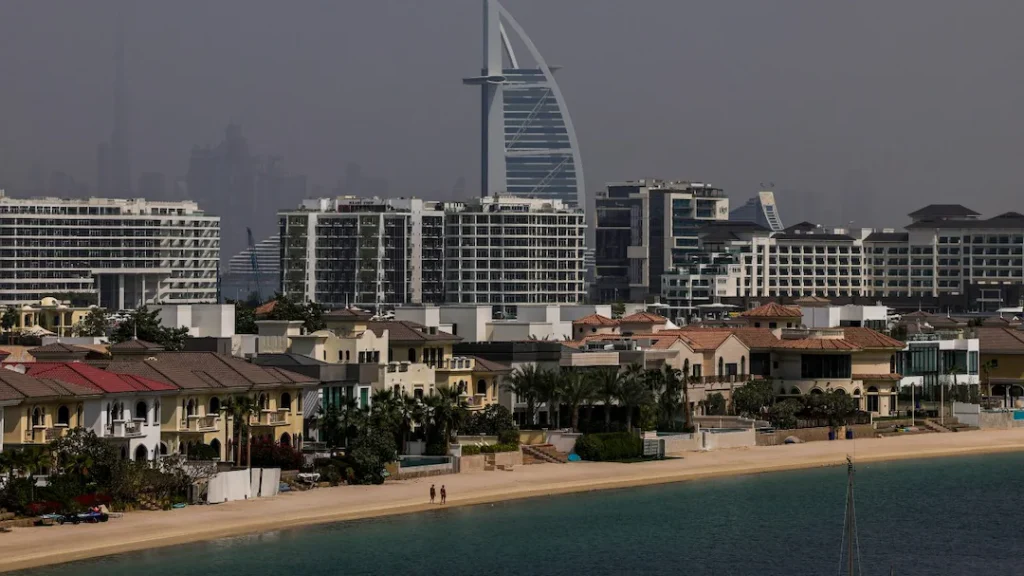
Waterfront assets in particular embody the value-over-volume principle. Our guide on Dubai’s 2026 off-plan and waterfront investment strategies explains how a limited coastline combined with unlimited demand creates the most resilient value appreciation in any market cycle.
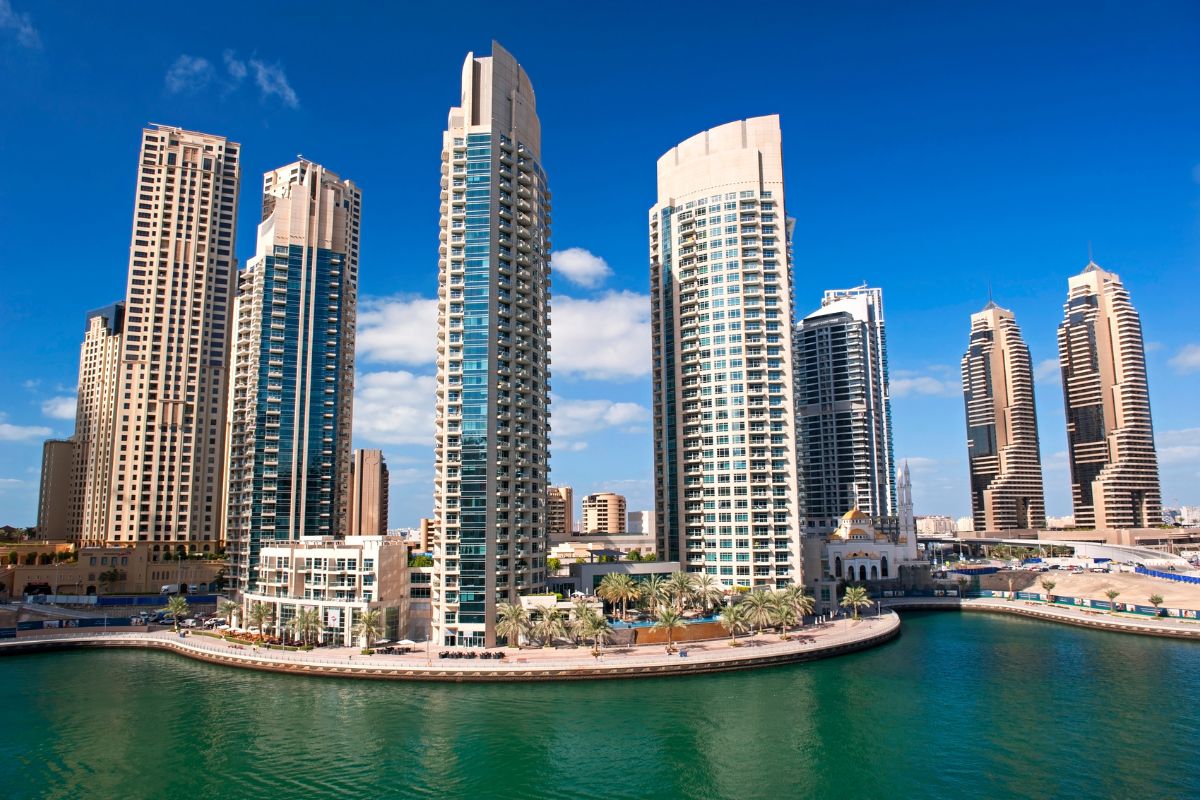
For investors specifically focused on yield alongside capital growth, Dubai Marina off-plan properties delivering 6–7% rental yield represent a strong illustration of how value-led segments retain income characteristics even as prices climb.
Why This Is Not Speculative Froth – And How to Tell the Difference
Sceptics of Dubai’s run will ask: is this value growth sustainable or speculative? The distinction matters enormously for prelaunch investors because speculative froth leads to corrections, while fundamental value growth compounds.
The indicators distinguishing the two:
| Indicator | Speculative Froth | Fundamental Growth (Dubai 2026) |
|---|---|---|
| Buyer type | Predominantly flippers, short-horizon speculators | End-users and long-horizon investors dominate |
| Value vs volume relationship | Volume leads, value trails (discounting) | Value leads — buyers upgrading, not discounting |
| Developer pipeline stress | Delays, cancellations, distress sales | Tier 1 developers on schedule, oversubscribed at launch |
| Foreign capital behaviour | Hot money, easily reversible | Structural allocation — residency-linked, multi-year holds |
| Rental yield trajectory | Falling as prices overshoot | Stable to rising — 6–9% maintained across prime zones |
Every indicator points to fundamental rather than speculative growth. For a rigorous risk-adjusted treatment of the oversupply debate and where the market’s real vulnerabilities lie, see our Dubai off-plan market 2026: boom, bubble, or maturity? analysis.
Maximising Returns: How to Position for a Value-Led Cycle
A value-led cycle rewards specific positioning strategies. For prelaunch investors, that means:
- Tier 1 developers only: In a quality-discrimination market, developer brand and delivery history are priced in. Emaar, Sobha, Aldar — these names command and sustain premiums.
- Genuine scarcity: Waterfront plots, golf-course adjacency, landmark views — assets whose supply is permanently constrained outperform in value-led cycles.
- Infrastructure adjacency: The compounding effect of a community maturing around your asset drives value appreciation that has nothing to do with market sentiment.
- Early-phase entry: The widest spread between pre-launch and handover pricing belongs to the earliest buyers in a given project. Late launch buyers capture less of the cycle.
For investors comparing off-plan entry now against waiting for ready properties, the arithmetic is clearly laid out in our detailed off-plan vs ready properties in Dubai: when pre-launch discounts win analysis, which works through actual 2025–2026 per-square-foot data.
For the broader UAE picture — including Abu Dhabi and Ras Al Khaimah value dynamics — our ultimate guide to maximising returns with pre-launch properties in the UAE covers cross-emirate positioning strategies for 2026.
Secure Your Prelaunch Position Before the Market Prices It In
The Q1 2026 data has spoken clearly: Dubai buyers are upgrading, not discounting. Value is outrunning volume. The prelaunch window — the gap between pre-launch pricing and the market’s rising benchmark — is widening with every quarter of value-led growth.
Fill in the enquiry form on prelaunch.ae today to access exclusive pre-launch listings curated by our advisors before they reach the public market. The investors who move during value-led cycles — not after — capture the returns that matter.
Phone: (+971) 52 341 7272
Email: [email protected]
Website: www.prelaunch.ae
Frequently Asked Questions
What does it mean when Dubai property value growth outpaces volume growth?
It means buyers are choosing higher-quality, higher-priced assets rather than responding to discounts. Average deal sizes rise, premium segments outperform, and the market signals structural confidence rather than volume-driven clearance activity.
Why does value-led growth strengthen the prelaunch investment case?
Pre-launch buyers lock in prices before the value appreciation cycle fully plays out. In a value-led market, the gap between pre-launch pricing and the ready-unit benchmark at handover widens over time — compounding embedded gains for early entrants.
Was Dubai property value growth in Q1 2026 sustainable?
All key indicators — buyer profile, yield stability, developer pipeline health, and the ratio of end-users to flippers — point to fundamental rather than speculative growth. Oversupply remains a risk in mid-market apartment segments, but premium and waterfront assets are structurally supported.
Which property types benefit most from a quality-upgrading buyer trend?
Ultra-prime villas, waterfront apartments, and well-located master-community residences benefit most. These asset types have constrained supply and persistent demand drivers that sustain premium pricing through market cycles.
How should prelaunch investors position themselves during a value-led market cycle?
Focus on Tier 1 developers with proven delivery records, genuine scarcity assets (waterfront, landmark views, golf-course adjacency), and early-phase project entry. The widest prelaunch-to-handover spread belongs to the first buyers into the right projects.
Does regional geopolitical uncertainty affect Dubai’s value growth trajectory?
Q1 2026 answered this definitively: Dubai’s value growth accelerated during the regional conflict. The structurally safe-haven positioning of the UAE, combined with residency-linked investment and a tax-free environment, means geopolitical noise tends to redirect capital towards Dubai rather than away from it.