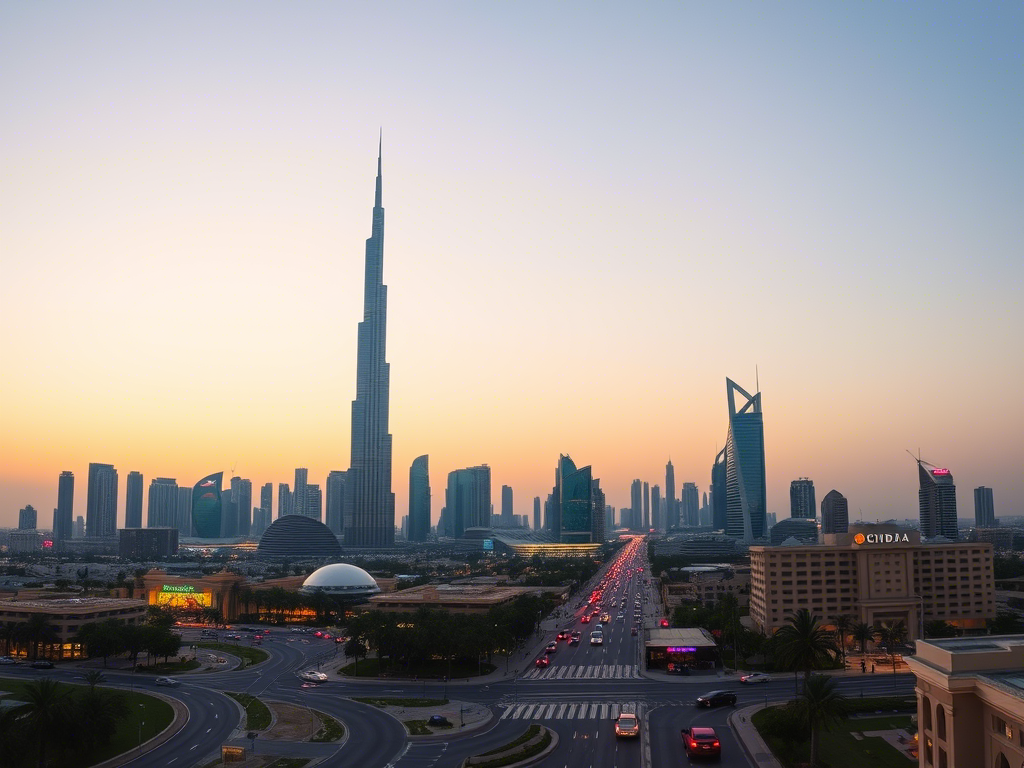
Sellers Are the Stability Layer the Panic Posts Are Not Telling You About
There is a specific type of market crash that investors should genuinely fear: one built on forced selling. When overleveraged owners cannot service their debt, when margin calls force liquidation, when fear overrides strategy, a cascade of below-market transactions resets price benchmarks, destroys equity, and takes years to reverse. This is what happened in Dubai in 2008. This is what the current US-Iran-Israel war coverage is, implicitly or explicitly, warning investors about.
Here is why that fear is misplaced in March 2026 – and why the data directly disproves it. In a landmark report, Khaleej Times confirmed that the broader market remains stable and that most property owners are not rushing to sell. The publication quoted a senior broker who articulated the price-break threshold with rare precision: For significant price changes to happen, a large number of people would need to move in the same direction. Right now, the majority still believe in the UAE and its government, so the market remains stable.
That single observation contains the most important structural insight available to any off-plan investor right now. Prices do not break without volume, and volume requires mass coordinated seller movement. That movement is not happening. Firas Al Msaddi, CEO of fam Properties – Dubai’s largest brokerage by transaction count – confirmed the same finding directly: The majority of sellers are holding firm. Every property owner in Dubai who bought during a period of uncertainty has experienced significant upside. That is not a talking point – that is the lived experience of this market.
For Dubai pre-launch and off-plan investors, the seller’s decision to hold is the most powerful price floor signal available. This article unpacks every layer of that signal. Understanding Dubai’s off-plan market maturity through 2026 and beyond is essential context for reading this seller behaviour correctly.
| Verified Market Signals – Seller Behaviour, March 2026 * Khaleej Times: Most property owners are not rushing to sell – confirmed by a senior broker.* Khaleej Times: For significant price changes, a large number of people would need to move in the same direction. The majority still believe in the UAE.* Fam Properties CEO Firas Al Msaddi: We are not seeing a significant number of sellers accepting prices below pre-conflict levels.* Fam Properties: Investors who entered before 2022 have seen returns double or even triple – they have no financial pressure to sell at a discount.* Firas Al Msaddi: A pause is not a collapse. Once this phase closes, I expect sellers’ tone to shift upward, not down.* Fam Properties February 2026 report: 69% of resale transactions settled in cash – sellers are dealing with financially strong buyers.* Over 70% of Dubai transactions are end-user driven – structural long-term commitment, not speculative flipping positions.* AED 422 million off-plan deal closed 4 days into active conflict – UHNW holders not liquidating, they are doubling down. |
Why Dubai Property Owners Are Not Selling in 2026: Six Structural Reasons
Seller behaviour in any market is ultimately a function of financial necessity and conviction. When neither is present, sellers hold. In Dubai’s March 2026 market, both conditions are overwhelmingly tilted toward holding.
1. The Equity Position Is Too Strong to Abandon
Investors who bought between 2020 and 2022 are sitting on returns that have doubled or tripled in value, according to industry executives cited in Khaleej Times. Dubai residential prices have risen approximately 60-75% since 2021, with prime villa communities recording even larger gains. A seller who purchased in Dubai Hills Estate for AED 1.2M in 2021 holds an asset worth AED 1.9-2M today. This is not a leveraged position that margin calls can unwind. It is a cash-built equity mountain that no short news cycle will erode.
2. The Cash-Heavy Buyer Base Eliminates Leverage-Driven Forced Sales
The structural driver of the 2008 crash was leveraged sellers who could not service their debt. Today’s landscape is categorically different. Fam Properties’ February 2026 data confirms 69% of all resale transactions were settled in cash, and approximately 60% of Dubai’s total market is cash-dominated. Cash buyers do not face margin calls. Cash sellers are not servicing interest payments that market stress can threaten. As explored in our analysis of why the 2026 investor shift favours off-plan over rentals, this structural feature is one of the market’s most durable price-support mechanisms.
3. End-User Dominance Creates Long-Term Ownership Commitment
Firas Al Msaddi confirmed that over 70% of Dubai’s current transactions are end-user driven – families buying homes to live in, professionals securing their primary residence, long-term residents committing to Dubai as their permanent base. End-users do not sell because a conflict makes the news. They sell when they need to – when they upsize, relocate, or change lifestyle. None of those triggers is activated by a regional geopolitical event that UAE air defences are actively containing.
4. The Conflict Itself Strengthens Dubai’s Safe-Haven Demand
When regional instability intensifies, capital from conflict-affected countries does not leave Dubai – it arrives in Dubai. This pattern has repeated through the Arab Spring (2011), the Syrian crisis (2013-2015), the Russia-Ukraine war (2022), and now the current conflict. High-net-worth families from conflict-adjacent countries are actively securing Dubai property as a contingency asset. Dubai properties are priced at roughly half the equivalent Tel Aviv property while delivering superior yields. This inbound safe-haven capital puts a demand floor under Dubai’s market even as some resident sellers pause.
5. The Government Framework Makes Holding the Rational Choice
Dubai’s property regulatory environment – RERA escrow protection, Golden Visa linkage to property ownership, 100% foreign ownership rights, zero capital gains tax, zero inheritance tax – means holding a Dubai property costs an owner almost nothing beyond service charges. In this framework, the rational hold period is indefinite. As Fam Properties’ CEO noted, once the conflict phase closes, sellers’ tone is expected to shift upward, not down – built on the observation that every Dubai owner who bought during uncertainty has experienced significant upside in the years that followed.
6. Where Selling Is Happening – It Is Profit-Taking, Not Panic
Khaleej Times was precise about the category of seller that is transacting: investors who entered between 2020 and 2022 and have seen returns double or triple, who are choosing to capitalise on those profits now. Firas Al Msaddi clarified: there is a category of investors who entered between 2020 and 2022 and have seen their properties appreciate dramatically. They are not selling out of panic – they are selling because they see an opportunity to lock in exceptional gains. This is strategic profit realisation by winners, not distressed exit by losers. A seller exiting with a 100% gain is setting a strong price benchmark, not breaking one.
| Seller Category | Motivation | Price Impact |
|---|---|---|
| 2020-2022 buyers – profit-taking | Lock in 100%+ gains; strategic exit at peak | Sets high price benchmarks – positive for market |
| Long-term end-users | No trigger; living in a property | Zero supply pressure |
| Over-leveraged sellers (rare) | Individual financial situation – not systemic | Localised; does not create a broad price break |
| Panic sellers | Essentially absent in March 2026 | Khaleej Times and Fam Properties: not materialising |
| Inbound safe-haven buyers | Conflict-adjacent capital seeking Dubai stability | Net adds demand while seller supply stays flat |
Sources: Khaleej Times, Fam Properties, March 2026.

What Sellers Holding Means for Off-Plan Investors: The Price Floor Mechanism
The connection between resale seller behaviour and off-plan investor confidence is not obvious – but it is one of the most important market dynamics to understand right now.
The Resale Price Floor Is Your Handover Value Floor
When you buy an off-plan property, your exit value at handover is ultimately set by the resale market – what a buyer will pay for your completed unit. If resale prices collapsed because sellers flooded the market with distressed assets, your off-plan property would be worth less at handover, regardless of what you paid at launch. Conversely, when sellers hold firm and resale benchmarks remain at or above pre-conflict levels – as Khaleej Times and Fam Properties have confirmed – your handover value is protected. The seller’s decision to hold is the off-plan investor’s value guarantee.
Asking Prices in Prime Areas Are Holding – or Rising
One of the most significant data points from the March 2026 analysis is that listing prices in most prime and luxury developments are matching – and at times exceeding – pre-conflict levels. In high-demand communities such as Dubai Hills Estate, Palm Jumeirah, Downtown Dubai, and Mohammed Bin Rashid City, sellers have either withdrawn listings rather than accept below-benchmark offers or maintained prices justified by the fundamentals. The AED 422 million off-plan transaction completed four days into active conflict – and the $100M+ individual deal confirmed by Khaleej Times – both set market reference points that casual sellers must now compete with, not undercut.
Dubai’s Five-Year Track Record: Sellers Holding Always Led to Higher Prices
| Period | Market Event | Seller Behaviour | Price Outcome 12-24 Months Later |
|---|---|---|---|
| 2020 COVID lockdown | Transaction volumes fell sharply | The majority held – rental demand sustained values | Prices rose 30-50% by 2022; holders captured full gain |
| 2022 Ukraine war/rate hikes | Global sentiment shock; DFM wobbled | Cash-heavy holders maintained positions | Prices rose further by 20-25% through 2023 |
| 2023 regional tensions | Periodic risk flare-ups; cautious buyers | Sellers stood firm; prime locations saw no markdown | 2024 became a record year: AED 917B in annual transactions |
| Feb-Mar 2026 US-Iran-Israel war | DFM index -21%; transaction slowdown | Majority holding – Khaleej Times and Fam Properties confirmed | Recovery underway: +51% WoW in week of Mar 9-15 |
Sources: DLD, Fam Properties, Khaleej Times, Anarock Research. Historical price outcomes verified; 2026 forward projection based on current trajectory, not a guaranteed return.
The pattern is consistent across every market shock of the past five years. Sellers who held captured the subsequent upside. Off-plan buyers who entered during periods of seller conviction achieved the strongest capital growth at handover. Our analysis of why 2026 pre-launch buyers are positioned for 25% gains maps this cycle in full detail.
The Off-Plan Investor’s Action Framework: Turning Seller Conviction Into Entry Confidence
The seller hold signal gives off-plan investors a rare combination: validated price floors in the resale market at the same moment that developer payment plans are at their most flexible and pre-launch pricing is available. These three conditions rarely align. They are aligned now.
Read the Signals, Not the Sentiment
The Dubai property market operates on a three-signal framework that serious investors track above all else. Signal one: seller supply pressure – is there a wave of distressed listings? Signal two: cash participation – are buyers deploying their own capital or relying on debt? Signal three: developer behaviour – are launches proceeding or being pulled? In March 2026, all three signals are green: sellers are not listing en masse, 69% of resale buyers are paying cash, and developers are proceeding with launches at pre-conflict prices. These are buy signals for buyers entering via off-plan and pre-launch channels at below-resale pricing.
Focus on Communities Where Seller Conviction Is Strongest
Not every Dubai postcode is equal in seller conviction. The communities where owners are most firmly declining to sell below pre-conflict benchmarks are also where off-plan investment carries the strongest floor. Dubai Hills Estate, Palm Jumeirah, Downtown Dubai, Dubai Marina, and Mohammed Bin Rashid City are consistently identified in broker reports as holding the firmest asking prices. Targeting off-plan projects in or adjacent to these zones gives your investment the strongest resale-backed floor. Explore Dubai’s infrastructure-driven hotspots and off-plan price resilience for complete geographic analysis.
Use the Flexible Payment Terms Window Before It Closes
The same conflict that has caused sellers to hold their prices has caused developers to improve payment terms temporarily – shifting from standard 50/50 plans toward 35/65 or 40/60 structures. This dual dynamic – firm resale prices plus better payment terms – creates the optimal entry window for off-plan buyers. You enter at the same asset quality, same launch price, with less capital committed pre-handover, into a market where the resale floor is being actively defended. This window closes the moment confidence fully returns. Our guide to the best payment plan structures for investors in 2026 explains how to structure your entry for maximum advantage.
| Investor Action | Why Now | Validation |
|---|---|---|
| Enter off-plan at current launch pricing | Resale prices are holding – your handover value floor is intact | Khaleej Times, fam Properties March 2026 |
| Request 35/65 or post-handover payment plan | Developer flexibility at peak during conflict caution window | Khaleej Times broker confirmation |
| Focus on communities with the firmest seller conviction | These zones carry the strongest resale benchmarks at handover | Broker reports: Hills, Palm, Downtown, Marina, MBR City |
| Verify developer escrow and RERA registration | Protects capital regardless of market conditions | RERA regulation; S&P Global March 2026 |
| Track days-on-market in the target zone | Rising days-on-market signals sellers holding firm | Fam Properties CEO framework, Khaleej Times 2026 |
| Commit before conflict resolution prices in | Post-resolution demand surge closes flexible terms window | Every prior Dubai crisis recovery: 2020, 2022, 2023 |
For investors wanting to understand the supply picture, our 2026 Dubai delivery wave and off-plan price impact analysis explains why actual delivery rates (historically 41-62% of forecast) ensure supply does not overwhelm the hold-and-wait stance of Dubai’s current seller base.
| The Sellers Are Holding. The Question Is – Are You Moving? Dubai’s owners are not panicking. The resale floor is intact. Payment plans are at their most flexible. Pre-launch pricing is live. These three conditions rarely align – and they will not stay aligned once the conflict resolves. Fill in the enquiry form on our website, and our team will match you with verified pre-launch opportunities in the communities where seller conviction is strongest – backed by developer track records and RERA escrow protection. Visit prelaunch.ae and fill in the form today. (+971) 52 341 7272 | [email protected] |
Frequently Asked Questions
Q1: Are Dubai property owners really not selling despite the war?
Correct. Khaleej Times confirmed in March 2026 that most property owners are not rushing to sell. A senior broker stated directly: For significant price changes to happen, a large number of people would need to move in the same direction. Right now, the majority still believe in the UAE and its government, so the market remains stable. Fam Properties CEO Firas Al Msaddi corroborated: We are not seeing a significant number of sellers accepting prices below pre-conflict levels.
Q2: Why are Dubai property owners not selling even during active conflict?
Six structural reasons: investors who bought before 2022 hold double or triple returns with no financial pressure to exit at a discount; 69% of resale transactions are cash-settled with no debt servicing pressure; over 70% of buyers are end-users committed to the city long-term; conflict-driven safe-haven capital inflows from conflict-adjacent countries offset resident hesitancy; zero property and capital gains tax make holding costs negligible; and where selling is happening, it is strategic profit-taking by winners, not distressed exit by over-leveraged owners.
Q3: Could a prolonged conflict cause Dubai sellers to eventually discount prices?
A prolonged conflict – particularly one affecting UAE infrastructure or the Strait of Hormuz – would introduce additional pressure. Fitch Ratings noted that effects will depend on the conflict’s scope and duration, and had flagged the possibility of a 10-15% correction in a downside scenario. However, the structural conditions required for a broad price break – mass simultaneous seller movement accepting below-benchmark pricing – are not present in March 2026. S&P Global confirmed developer balance sheets can sustain a 4-6 week slowdown without forcing construction stops or distressed sales. The risk is real but requires sustained escalation well beyond current conditions.
Q4: Is the Dubai DFM index crash of 20% the same as a property price crash?
No – and this is one of the most important distinctions in the market. The DFM Real Estate Index fell approximately 21% from its February 2026 peak, but this tracks listed developer equities (Emaar shares, DAMAC shares), not physical property transaction prices. As confirmed by multiple analyses, actual property transaction prices have not materially fallen as of mid-March 2026. Asking prices in prime communities are holding at or above pre-conflict levels. The index is a sentiment barometer for equity investors – not a guide to what your apartment in Dubai Hills Estate is actually worth today.
Q5: Who is selling in Dubai right now, and what does that mean for pricing?
The sellers currently transacting are predominantly 2020-2022 buyers, realising double or triple returns, which Fam Properties CEO described as strategic profit-takers, not panic sellers. These transactions set strong price benchmarks rather than breaking them. A small minority of over-leveraged investors feel payment plan pressure, but Firas Al Msaddi characterised this as a personal financial situation, not a market trend. The overwhelming majority of Dubai property owners are simply holding, exactly as market price stability requires.
Q6: How does seller behaviour in the resale market affect my off-plan investment?
Your off-plan property’s exit value at handover is determined by the resale market at completion. When resale sellers hold firm – refusing to accept below-benchmark offers – they are actively defending the price floor your off-plan investment will be valued against at handover. If you buy an off-plan unit today for AED 1.5M and resale benchmarks for equivalent completed units hold at AED 1.8-2M through the construction period, you realise the gain the moment you receive your keys. The seller’s hold decision is your off-plan investor’s safety net. Explore the full guide to maximising pre-launch returns in the UAE for the complete investor framework.