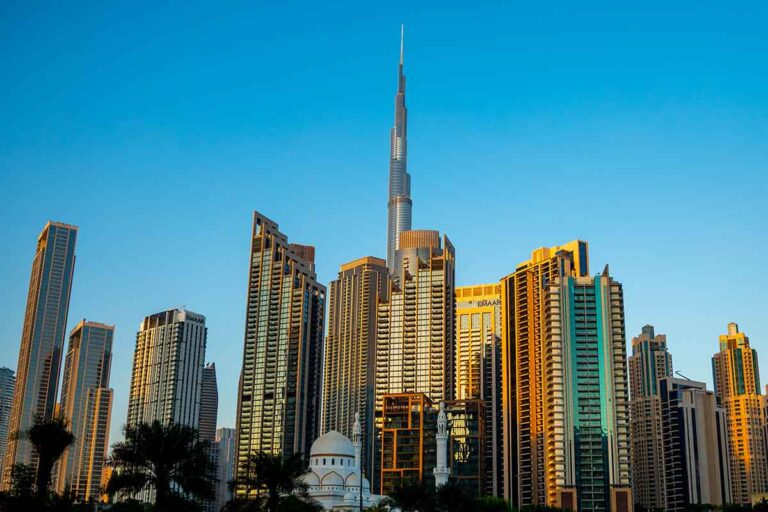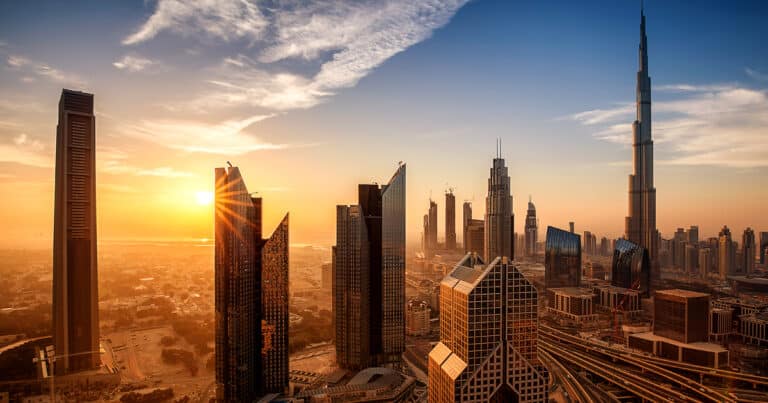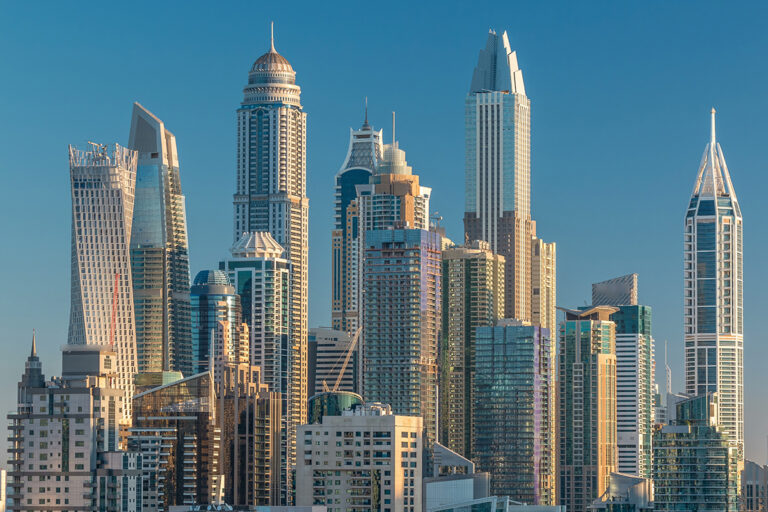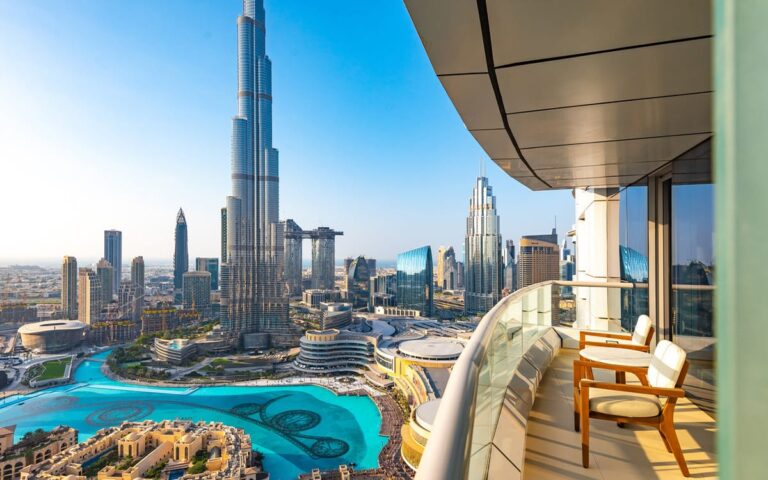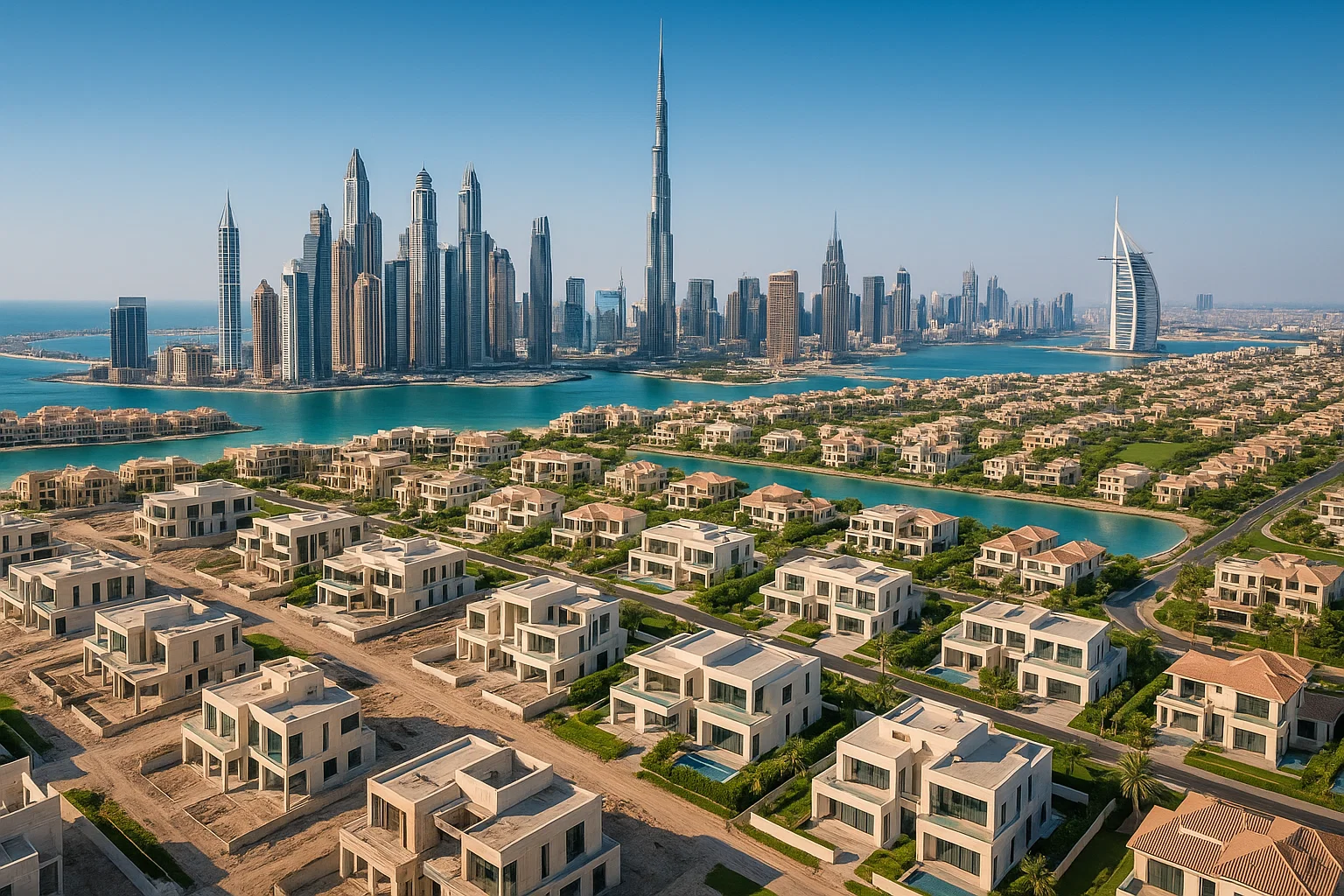
Most investors buying Dubai off-plan in 2025 are chasing the same handful of communities — the ones generating headlines today. That is not a strategy. That is momentum-following, and momentum, by definition, has already priced in most of the upside. The smarter question the one that separates genuinely long-range investors from short-cycle speculators is this: where will a million people need to live ten years from now?
Dubai’s answer to that question is codified in the Dubai 2040 Urban Master Plan: a government-mandated structural blueprint that divides the emirate into five urban centres, each designed to house 1 to 1.5 million residents as Dubai’s population scales from 4 million today to 5.8 million by 2040. Three of those centres are established. Two are embryonic — and those two represent the most compelling off-plan corridor investment opportunity Dubai has produced in a generation. This article explains the thesis, maps the corridors, and shows you how to invest with population growth — not just today’s hype — as your guide.
For the full context of how infrastructure investment is already creating hotspots across these corridors, explore our dedicated guide on Infrastructure Mega-Projects Driving Off-Plan Hotspots in Dubai 2025.
The Dubai 2040 Blueprint: A Population Corridor Framework
The Dubai 2040 Urban Master Plan, launched in March 2021 and now moving through its first major delivery phase, is not a vague vision document. It is a legally enforceable spatial plan — underpinned by Law No. 16 of 2023 — that directs infrastructure spending, zoning approvals, metro routes, school allocations, and green space requirements along five specific geographic corridors. Every major government-linked developer (Emaar, Nakheel, Meraas, Dubai South Properties) is building inside these corridors by design, not coincidence.
The scale of the population shift being engineered is enormous. Dubai’s residential population must nearly double — from 3.3 million in 2020 to 5.8 million by 2040. Its daytime population (including workers) rises from 4.5 million to 7.8 million. To accommodate this without creating sprawl or congestion collapse, the master plan distributes growth across five urban centres, each functioning as a largely self-contained city-within-a-city with its own employment nodes, schools, retail, green space, and transport connections. Within each centre, multi-sectors of 300,000–400,000 residents are planned — the equivalent of a mid-sized European city appearing inside Dubai’s geography.
| Urban Centre | Status | 2040 Target Population | Key Anchor Infrastructure | Off-Plan Maturity |
| Deira & Bur Dubai | Established | 1.0–1.3M | Deira Islands, Gold Souk Metro, Shindagha Tunnel | Mature — limited new off-plan |
| Downtown & Business Bay | Established | 1.0–1.2M | Burj Khalifa District, Creek Tower, Dubai Canal | Premium — high entry prices |
| Dubai Marina & JBR | Established | 0.8–1.1M | JBR Waterfront, Marina Metro, Bluewaters | Saturated — low yield new entry |
| Expo City Dubai Centre | Emerging ★ | 1.0–1.5M | Expo City, Al Maktoum Airport, Etihad Rail | Early-stage — high upside |
| Dubai Silicon Oasis Centre | Emerging ★ | 1.0–1.4M | Metro Blue Line, Dubai Creek Harbour, tech zones | Early-to-mid — strong pipeline |
The two-starred emerging centres the Expo City / Dubai South corridor and the Silicon Oasis / Creek Harbour corridor are where the best future corridor Dubai off-plan thesis is most powerful. Established centres are already priced for their status. Emerging centres are not yet.
Corridor One: The Aerotropolis Expo City to Al Maktoum Airport
This is the single largest population-growth bet in the Middle East right now. Dubai South — the 145 sq km master-planned city anchored by Al Maktoum International Airport — is formally targeted to house one million residents and 500,000 jobs by 2030. The catalyst is unmistakable: the AED 128 billion ($35 billion) airport expansion that will make Al Maktoum the world’s largest airport by passenger volume — 260 million passengers annually, five times the current capacity of Dubai International. The terminal expansion alone is projected to create housing and employment demand for over one million people, with the aviation sector contributing over 30% of Dubai’s GDP by 2030.
The market is already moving. Property transactions in Dubai South exceeded AED 15 billion in the first five months of 2025 alone. Rental rates rose 20% year-to-date in 2025. Prices are forecast to appreciate a further 15%–20% in the near term (Betterhomes, 2025), before the airport’s Phase 1 terminal even opens. Early investors who entered Dubai Marina when Terminal 3 at DXB was announced in 2005 doubled their capital by 2008, and Al Maktoum represents a project five times that scale. The opportunity in this corridor is detailed in our analysis of The Aerotropolis Effect: How Dubai South Property is Soaring on the Wings of Airport Expansion.
| Metric | Dubai South / Expo City Corridor (2025) |
| Master plan area | 145 sq km (40% of Dubai’s land area) |
| Population target | 1 million residents + 500,000 jobs by 2030 |
| Airport investment | AED 128 billion — world’s largest airport |
| Avg. apartment price | AED 784,631 (studio to 2-bed) |
| Current rental yield | 7.6% avg; up to 9% as infrastructure completes |
| Rental growth (2025 YTD) | +20% (Betterhomes) |
| Price appreciation forecast | +15%–20% near term; +40–60% by 2030 (est.) |
| Key developers active | Emaar, DAMAC, Dubai South Properties, MAG |
| Metro connectivity | Blue Line extension + Etihad Rail (2029–2032) |
For a comprehensive breakdown of the best off-plan projects currently launching in this corridor, see our guide to Dubai South Off-Plan Projects 2025: Expo Legacy and Emerging Districts.
Corridor Two: The Knowledge & Creek Corridor — Silicon Oasis to Creek Harbour
The second emerging urban centre is geographically distinct but equally compelling. It links Dubai Silicon Oasis — the emirate’s dedicated technology and knowledge free zone — with Dubai Creek Harbour, Emaar’s 6 sq km waterfront master city designed for 200,000 residents and set to host the world’s next tallest tower. The connective tissue joining these two nodes is the Dubai Metro Blue Line: a 30km, 14-station metro expansion due for completion in 2029 that will link Mirdif, Silicon Oasis, Ras Al Khor, and Creek Harbour in a single continuous corridor. Properties near Blue Line stations are already projected to appreciate 10%–15% faster than the broader market (Waves Real Estate Research, 2025).
Dubai Creek Harbour has already provided a blueprint for corridor-driven appreciation. Early investors who entered at AED 1,350 per sq ft in 2022 are sitting on valuations of AED 1,900–2,200 per sq ft in mid-2025 — a 41%–63% gain in under three years, driven not by speculative sentiment but by infrastructure delivery and community maturation. As the metro link completes and the Creek Tower approaches its 2025–2026 scheduled milestone, the second leg of this appreciation cycle is still ahead.
| Metric | Silicon Oasis / Creek Harbour Corridor (2025) |
| Population target (Dubai 2040) | 1.0–1.4M across the urban centre |
| Creek Harbour planned residents | 200,000 (Emaar master plan) |
| Metro Blue Line stations | 14 stations, 30km — opening 2029 |
| Price growth near metro stations | +10%–15% faster than city avg. (est.) |
| Creek Harbour price/sq ft (2025) | AED 1,900–2,200 (from AED 1,350 in 2022) |
| Creek Harbour 3-yr appreciation | +41%–63% (2022–mid-2025) |
| Rental yield (Creek Harbour) | 6.0%–7.8% |
| Key technology/employment anchor | Dubai Silicon Oasis — 5,000+ companies, 100,000+ workers |
| Key developers | Emaar, Sobha, Binghatti, Azizi |
How to Apply the Corridor Thesis: An Investor Framework
Knowing a corridor is targeted for a million residents is only the first analytical step. The investment insight comes from understanding where you sit in the corridor’s maturation cycle and choosing entry points that balance today’s pricing with tomorrow’s population-driven demand.
| Corridor Stage | What It Looks Like | Risk Level | Typical Return Profile | Dubai Example (2025) |
| Stage 1: Blueprint | Government plan approved; limited infrastructure on the ground; few launches | Moderate-High | Highest appreciation potential; 5–10yr horizon | Dubai Islands North; Palm Jebel Ali fronds |
| Stage 2: Infrastructure Break-Ground | Airport/metro contracts awarded; road works visible; first master-community launches | Moderate | Strong 3–7yr capital gain; rental income builds at handover | Dubai South (now); Silicon Oasis Metro zone |
| Stage 3: First Residents | Initial handovers, retail and schools opening, rental market activities | Low-Moderate | Solid 2–5yr appreciation; reliable rental yield | Dubai Creek Harbour (now); Expo City Dubai |
| Stage 4: Community Maturity | 85%+ occupied; amenities fully live; established rental benchmark | Low | Steady yield + inflation-matching capital growth | Dubai Hills Estate; Downtown Business Bay |
The corridor thesis delivers its maximum risk-adjusted return at Stage 2: when infrastructure is visibly underway (reducing project risk), off-plan prices have not yet fully repriced for future demand, and the population wave is still 5–8 years ahead of its peak. Both the Dubai South corridor and the Silicon Oasis / Creek Harbour corridor are firmly in Stage 2 in 2025.
For a curated selection of the best off-plan projects within these emerging corridors — across price points and payment structures — see our roundup of Top 5 Off-Plan Projects to Watch in Dubai 2025, and our complete guide to Maximising Returns with Pre-Launch Properties in the UAE.
Position Yourself in Dubai’s Next One-Million-Resident Corridor
The investors who will look back on 2025 as a defining year are not the ones who chased the most talked-about communities — they are the ones who read the best future corridor Dubai off-plan data, understood the Dubai 2040 population mandate, and secured their position before the million residents arrived. At Prelaunch.ae, we have exclusive pre-launch access to the most strategically positioned projects inside Dubai’s emerging urban centres — before they reach public listings, and at pricing that still reflects today’s early-stage reality, not tomorrow’s maturity premium.
Fill in the enquiry form at prelaunch.ae today and let our corridor specialists match you with the right project, at the right stage, in the right population corridor.
📞 Call / WhatsApp: (+971) 52 341 7272
📧 Email: [email protected]
🌐 Website: www.prelaunch.ae
Frequently Asked Questions (FAQs)
1. What is the best future corridor in Dubai for off-plan investment?
Based on the Dubai 2040 Urban Master Plan and current infrastructure data, the Dubai South / Expo City corridor and the Silicon Oasis / Dubai Creek Harbour corridor offer the strongest long-term, population-driven investment case. Both are designated emerging urban centres targeting 1–1.5 million residents, both have confirmed anchor infrastructure in delivery, and both are still in early pricing stages relative to their future population mandate.
2. How reliable is the Dubai 2040 Urban Master Plan as an investment framework?
Highly reliable. The plan is legally enforceable under Dubai Law No. 16 of 2023, administered by Dubai Municipality under the Supreme Committee for Urban Planning, and directly governs where government capital expenditure — metro lines, school zones, healthcare, and green space — is allocated. Developers building in designated centres receive faster approvals and infrastructure co-investment. The plan’s prior version (2020 Urban Masterplan) accurately predicted the rise of Business Bay and JBR, lending it strong credibility.
3. What does the Al Maktoum Airport expansion mean for off-plan property values?
The AED 128 billion airport expansion is the single largest demand catalyst in Dubai South’s history. It creates employment and housing demand for over one million people, with rental rates already up 20% in 2025 and prices forecast to rise 15%–20% near term. The historical precedent — Terminal 3 at DXB doubling surrounding property values between 2005 and 2008 — applies here at five times the scale.
4. How does the Dubai Metro Blue Line affect corridor off-plan values?
The 30km, 14-station Dubai Metro Blue Line, due to open in 2029, links Dubai Silicon Oasis, Ras Al Khor, and Dubai Creek Harbour. Research projects properties near Blue Line stations to appreciate 10%–15% faster than the broader market average, driven by improved accessibility, reduced commute times, and the associated population draw into previously under-connected zones. Early off-plan entry near confirmed station sites is a well-evidenced value-accretive strategy.
5. When is the best time to buy off-plan in a future growth corridor?
The optimal entry point is Stage 2 of corridor maturation: when anchor infrastructure (airport, metro, road network) is under active construction, the first master-community off-plan launches are arriving, and pricing has not yet repriced fully for the anticipated population surge. This window typically lasts three to five years before Stage 3 arrivals close the discount gap. For Dubai South and the Blue Line corridor, that window is open right now — and narrowing. For a full look at upcoming handover timelines across these corridors, see our Dubai Property Handover Schedule 2025–2027.