When geopolitical noise rises — trade tensions, regional conflicts, currency volatility — speculative real estate takes the first hit. Investors chasing quick flips exit fast, and prices in overheated pockets correct sharply. Abu Dhabi has largely avoided that script. The reason is structural: a growing portion of the capital’s property demand comes from people who actually live and work there. That distinction matters enormously in 2026.
This year, the launches worth watching are not necessarily the flashiest or the most aggressively priced. They are the ones aligned with resident demand — communities designed for families, professionals, and long-term occupiers who generate stable rental income, drive repeat transactions, and keep occupancy rates high regardless of what is happening in the wider world. If you are evaluating the best off-plan projects in Abu Dhabi, the resident-first lens is where analysis should start.
A Market That Earned Its Momentum
Abu Dhabi closed 2025 with 21,279 residential sales transactions — a 47.43% year-on-year increase, according to the Abu Dhabi Real Estate Centre (ADREC). Total property sales surpassed AED 164 billion. These are not speculative spikes. They reflect a market supported by genuine population growth, economic diversification, and an expanding base of owner-occupiers. The UAE’s IMF-projected GDP growth of 6% for Abu Dhabi provides real economic underpinning for this demand.
Apartment prices rose over 15.5% year-on-year, with Yas Island recording 18% growth. Villa prices climbed 12.2%. Off-plan transactions accounted for 71% of all residential deals, driven by flexible payment structures and disciplined developer launches. Critically, the ready property market strengthened simultaneously — a signal that buyers are converting to owners, not just speculating on paper.
Table 1: Abu Dhabi Residential Market Snapshot (2024–2026)
| Metric | 2024 | 2025 | 2026 (Forecast) |
|---|---|---|---|
| Residential transactions | ~14,400 | 21,279 (+47.4% YoY) | Elevated; off-plan dominant |
| Apartment price growth | 10.9% | ~15.5% YoY | 8–12% (forecast) |
| Villa price growth | ~8% | 12.2% YoY | Stable to moderate |
| Off-plan share of transactions | 55% | 71% | Remains majority |
| Total property sales value | ~AED 111B | AED 164B+ | Continued growth |
| Gross rental yields | 5–7% | 6–9% | 6–9% (sustained) |
Sources: ADREC, Cavendish Maxwell, REIDIN, IMF (2025–2026).
Why Resident-Led Demand Weathers Geopolitical Storms
The relationship between geopolitical stress and real estate is well-documented: when global uncertainty rises, speculative capital retreats to cash or safe-haven assets. Projects bought purely for resale upside in six months become illiquid liabilities. But projects bought to house a family, collect steady rent from a working professional, or anchor a long-term residency plan behave differently.
Abu Dhabi’s market has historically shown price movements of 10–15%, compared to Dubai’s 20–30% swings in either direction across cycles. That relative stability is not a sign of underperformance. It is a feature, reflecting a deeper ratio of end-user demand to speculative activity. In 2026, with Abu Dhabi’s population expected to surpass 1.8 million, fuelled by a 4.2% annual growth rate and consistent inflows of skilled professionals, the structural demand driver is demographic — not sentiment-driven.
For investors considering Abu Dhabi pre-launch properties for long-term investment, this demographic anchor is precisely the variable that protects value when external shocks hit. A project near a school, a hospital, or an employment cluster does not lose its occupant because bond yields shift in New York.
The Zones Delivering on Both Counts
Not all Abu Dhabi locations carry equal weight. The zones that combine resident demand with launch strength share common characteristics: integrated master-planning, access to employment hubs, strong school and healthcare catchments, and liquid secondary markets. These are the locations where Abu Dhabi off-plan property 2026 is generating the most durable returns.
Table 2: Key Abu Dhabi Investment Zones — 2026 Resident Demand Profile
| Zone | Apt Price Growth (2025) | Rental Yield | Primary Buyer Profile | Geopolitical Resilience |
|---|---|---|---|---|
| Yas Island | 18% YoY | 6–8% | Families & residents | High |
| Saadiyat Island | ~15% YoY | 5–7% | HNW end-users | High |
| Al Reem Island | ~14% YoY | 7–9% | Professionals & tenants | High |
| Zayed City | ~10% YoY | 6–8% | First-time owners | Moderate–High |
| Al Reef / Masdar City | ~9% YoY | 7–9% | Mid-income residents | Moderate–High |
Sources: Cavendish Maxwell, Gravity Real Estate, ADREC Q3 2025 Report.
Yas Island remains a standout. Its world-class entertainment and lifestyle infrastructure generate relentless occupancy demand from residents who choose it as a permanent base, not a short-term trade. Al Reem Island, Abu Dhabi’s high-density apartment hub, consistently delivers gross rental yields in the 7–9% range — making it one of the most compelling income plays in the capital. Explore more on high-yield investment zones in Abu Dhabi to understand the full zone-by-zone breakdown.
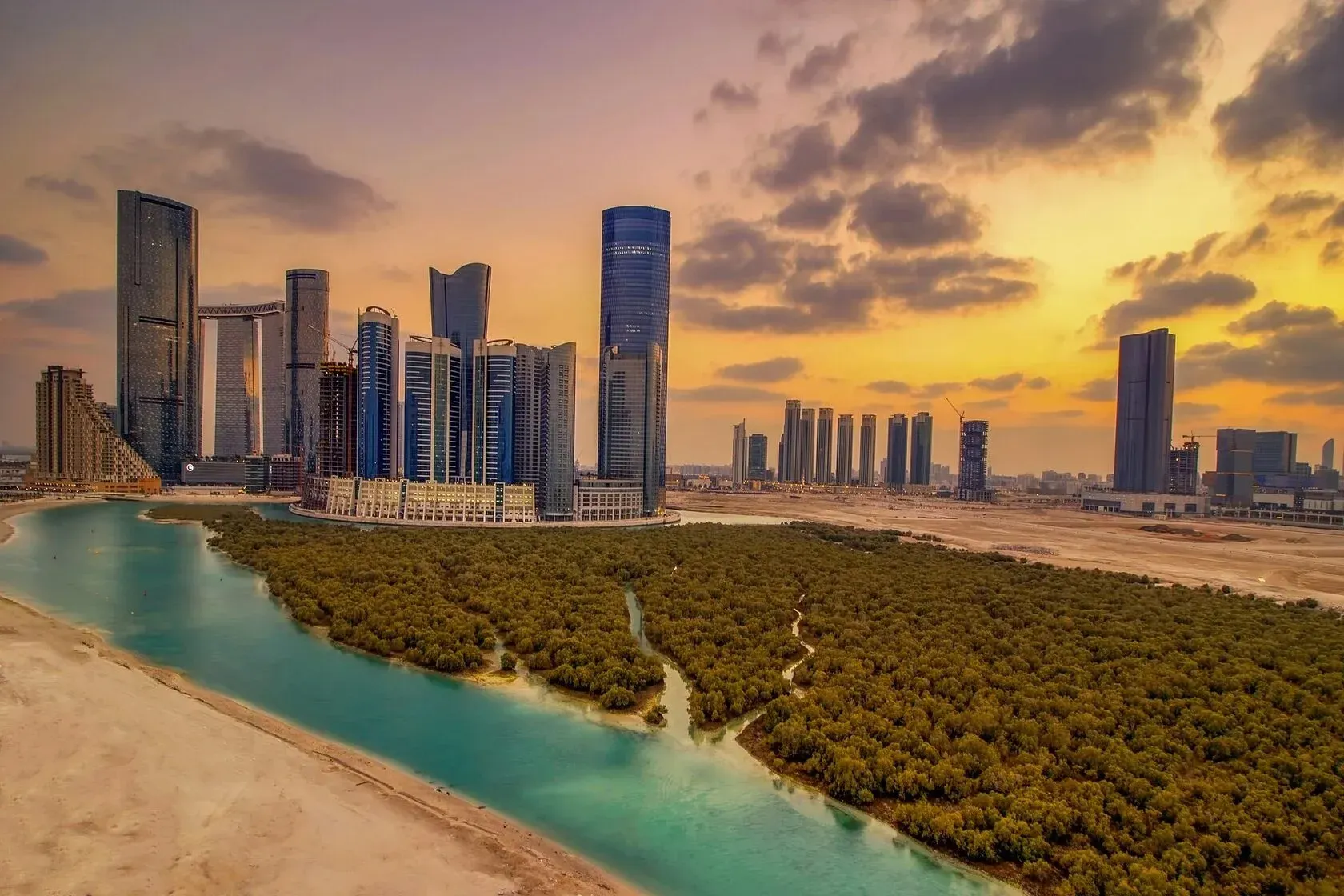
What Developers Are Actually Launching – And Why It Signals Confidence
Supply is entering the market carefully. Approximately 15,900 units are projected for completion in 2026, but based on historical delivery patterns, actual handovers will likely land between 6,500 and 9,000 units. This measured supply — less than half of the theoretical pipeline — prevents absorption pressure and sustains pricing momentum.
The mix of what is being launched also reflects shifting buyer behaviour. Within the villa segment, four-bedroom and larger homes now account for 62% of all villa transactions, up sharply from 38% just three years ago. Families are moving to Abu Dhabi with settlement intent, not six-month horizons. Developers are reading this correctly: master-planned communities with parks, pools, schools, and healthcare within walkable distance are dominating the Abu Dhabi property launches 2026 pipeline.
This is also why first-time buyers choosing off-plan over rentals is becoming one of 2026’s defining real estate themes. Post-handover payment plans effectively convert a monthly rent cheque into an ownership payment — a shift reinforced by persistently rising rental costs and a growing preference for long-term residency stability.
The Numbers That Tell the Real Story
Three data points define the investment thesis heading into the second half of 2026:
First, off-plan sales in Abu Dhabi surged 106.5% year-on-year in Q3 2025 alone — not because speculative appetite spiked, but because developers launched the right product in the right locations. Second, properties in Abu Dhabi average just 42 days on the market, with 70–80% closing at or near the asking price. Third, non-oil GDP grew 6.1% in Q1 2025, reflecting an economy that creates genuine employment demand and, by extension, genuine housing demand.
For those weighing how to maximise returns with UAE pre-launch properties, the answer in Abu Dhabi’s current cycle is straightforward: prioritise resident-oriented communities with proven occupancy histories, strong transport links, and developer track records. The upside is patient but durable, which is exactly the kind of return profile that holds when global sentiment turns.
Rental yields averaging 6–9%, price appreciation forecast at 8–12% for 2026, and a regulatory environment strengthened by Abu Dhabi Law No. (2) of 2025 — which adds triple protection for developers, purchasers, and financiers — create a stack of fundamentals that speculative markets simply cannot replicate.
The Takeaway for 2026
The best off-plan launches in Abu Dhabi 2026 will not be the ones with the loudest marketing budgets or the most aggressive price-per-square-foot projections. They will be the ones where a professional family can picture themselves living for five years, where rental occupancy has a waiting list, and where the nearest school is a ten-minute walk rather than a forty-minute commute. In a world where geopolitical risk is a constant variable, that is not a compromise. It is the strategy.
Ready to Explore Abu Dhabi Off-Plan Properties Built for the Long Term?
Fill out the form on prelaunch.ae, and our team will match you with the right project based on your investment goals, budget, and preferred zone. No guesswork. Just data-backed guidance from specialists who track every Abu Dhabi launch as it happens.
Contact us directly at (+971) 52 341 7272 or write to us at sales@mbrproperties.ae. The right launch is already in the pipeline — let’s find yours.
Frequently Asked Questions
Q: What makes resident-driven off-plan projects safer during geopolitical uncertainty?
A: Properties designed for long-term occupiers — families, professionals on multi-year contracts, Golden Visa holders — maintain occupancy even when sentiment-driven investors exit. Rental income continues, and prices are supported by real housing need rather than speculative momentum.
Q: Which zones in Abu Dhabi offer the strongest resident demand in 2026?
A: Yas Island, Saadiyat Island, Al Reem Island, and Zayed City lead the market in resident demand. Each offers integrated lifestyle infrastructure, strong school catchments, and consistent rental absorption. Masdar City and Al Reef are compelling for mid-income professionals seeking high yields.
Q: Are Abu Dhabi off-plan properties in 2026 protected by law?
A: Yes. Abu Dhabi Law No. (2) of 2025 introduces layered protections for buyers, developers, and financiers — including escrow fund requirements and project registration obligations. The Abu Dhabi off-plan investment landscape is among the most regulated in the region.
Q: What rental yields can I realistically expect from Abu Dhabi off-plan purchases in 2026?
A: Gross rental yields range from 6% to 9%, depending on zone and unit type. Al Reem Island, Masdar City, and Al Reef consistently perform in the 7–9% band. Saadiyat and Yas Island deliver slightly lower yields but compensate with stronger capital appreciation and lower vacancy risk.
Q: How do I identify the right off-plan project in Abu Dhabi for resident-driven demand?
A: Prioritise master-planned communities with access to employment hubs, schools, healthcare, and public transport. Verify the developer’s delivery track record via ADREC or the TAMM portal. Check average days-on-market and secondary market liquidity in the target zone before committing capital.