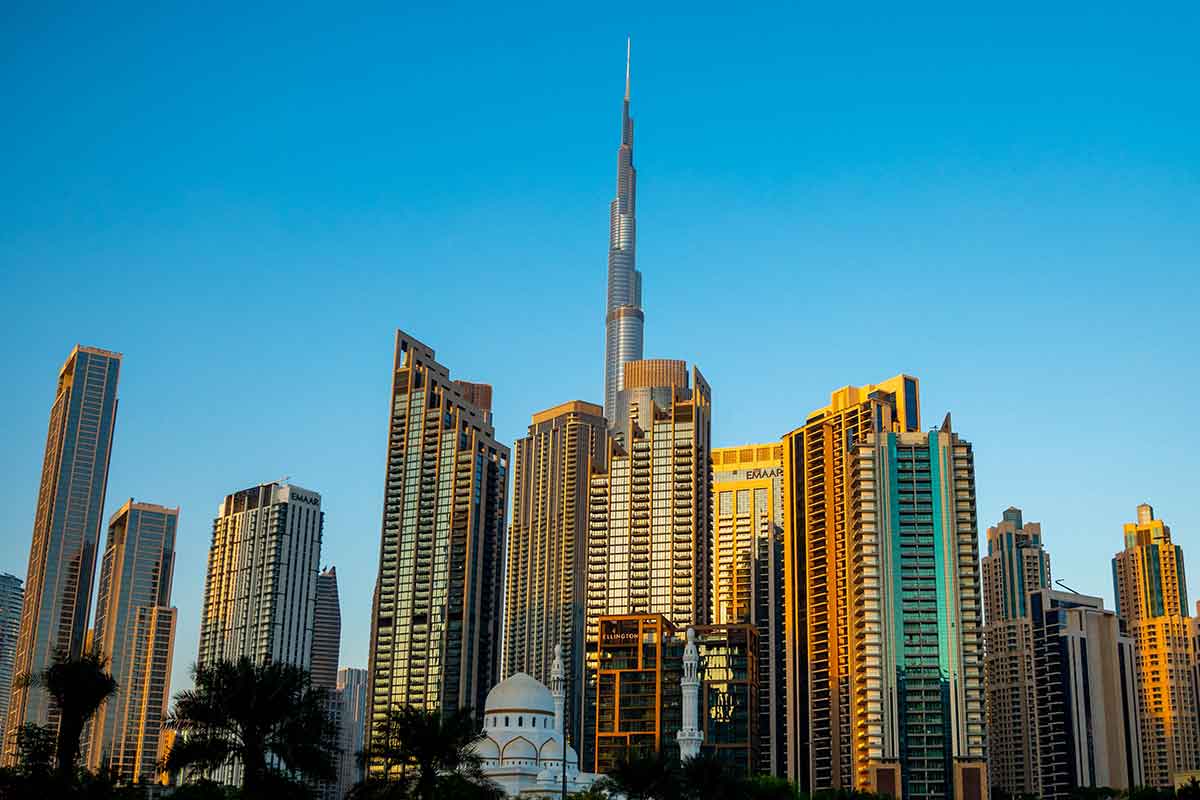
In January 2026, the Khaleej Times — one of the UAE’s most authoritative financial publications — published a statement that deserves to sit at the top of every serious investor’s reading list. Citing data from the Dubai Land Department, global analyst commentary, and on-the-ground market signals, the newspaper concluded that Dubai’s property market is “entering a new phase defined by structural demand rather than short-term speculation.” That sentence is not marketing language. It is the considered summary of multiple expert sources, published against the backdrop of AED 917 billion in 2025 transaction value, record December and Q4 figures, and a buyer profile that had fundamentally changed character since the last cycle peak.
But what does structural demand actually mean — and why does it matter specifically for investors committed to the long-hold prelaunch strategy? Those are the two questions this article answers in full. Not with reassurance, but with the data, the expert commentary, the regulatory architecture, and the comparative evidence that defines what is genuinely different about Dubai’s property market in 2026 compared to every prior cycle. Because the difference is real, it is measurable, and it changes the risk calculation for prelaunch investors in ways that are profoundly positive.
What Structural Demand Actually Means and What It Replaced
To understand why structural demand is the phrase analysts keep reaching for in 2026, it helps to be precise about what the alternative was — and what dangers it carried.
The speculative demand cycle — which defined Dubai’s first major property boom (2003–2008) and contributed to the painful correction that followed — was characterised by buyers purchasing assets they had no intention of occupying or holding, using leverage to amplify returns on properties they expected to flip before completion. Transaction volumes were high, but the underlying demand was largely circular: investors buying from investors, with end-user occupation as an afterthought. When credit tightened and sentiment reversed in 2008–2009, the market had no demand floor to land on.
The structural demand cycle — which the Khaleej Times, Allsopp & Allsopp, Betterhomes, Bayut, CBRE, Cushman & Wakefield, Knight Frank, and Savills all independently confirmed is now defining Dubai in 2025–2026 — is categorically different. It is anchored in population growth, employment creation, rental pressure, family relocation, and long-term residency reform. Buyers are purchasing homes to live in, or to rent to people who are living in them. The demand driver is demographic reality, not the expectation of reselling to a greater fool.
“Growth is not speculative; it is supported by population inflows, long-term residency initiatives, infrastructure development, and strong economic fundamentals. The market has evolved into a more transparent and regulated ecosystem.”
— Leading Real Estate Executive, cited in Khaleej Times, January 2026
| Dimension | Speculative Demand Cycle (2003–2008) | Structural Demand Cycle (2022–2026+) |
|---|---|---|
| Primary buyer profile | Investors flipping pre-completion | End-users, long-term investors, residents |
| Demand driver | Price momentum expectation | Population growth, employment, visa reform |
| Leverage profile | High — leveraged off-plan flipping dominant | Low — 86% cash purchases in prime segments (CBRE) |
| Regulatory framework | Minimal escrow; no RERA oversight until 2007 | Mandatory escrow (Law No.8/2007); full RERA regime |
| Vacancy intention | High — many units purchased never occupied | Low — 90%+ occupancy in key communities |
| Rental market linkage | Weak — many units left vacant | Strong — rising rents (+10% YoY) driving ownership |
| Geographic demand breadth | Concentrated in marina/downtown | Distributed: 150+ nationalities, all price segments |
| Market correction risk | Very high (proved 2008–2009) | Structurally cushioned; no equivalent leverage exists |
Source: Khaleej Times January 2026 / CBRE H2 2025 / Betterhomes Q3 2025 / Cavendish Maxwell Annual Report / DLD 2025 Annual Review.
The Five Structural Pillars That Make 2026 Different
When Khaleej Times applied the phrase “structural demand” to Dubai’s current market, they were referencing a specific set of interlocking fundamentals — not a single metric, but a five-pillar architecture that makes this cycle durable in ways that prior cycles were not. Each pillar is independently verifiable. Together, they form the foundation on which long-hold prelaunch investing is built.
Pillar One: Population-Driven Housing Need
Dubai added over 208,000 net new residents in 2025 (Dubai Statistics Centre), crossing the four million population milestone. Projected to reach 4.7 million by end-2026, the city is adding the equivalent of a mid-sized city’s population every 18 months. Khaleej Times cited Cushman & Wakefield confirming 22 consecutive quarters of residential price growth — a streak extending back to 2021 and driven in each quarter by genuine occupational demand, not speculative momentum. This is not a cyclical uptick. It is a city growing at a pace that outstrips housing supply.
Pillar Two: End-User Dominance — 85%+ of All Transactions
Betterhomes Q3 2025 data confirmed that end-users — residents buying primary homes, not investors flipping assets — represented approximately 85% of all residential transactions in the period. Rental registrations rose 7% year-on-year (Bayut, Khaleej Times Dec 2025), with renewals outpacing new contracts — confirming residents are committing to longer tenures and increasingly converting from renting to owning. As Haider Ali Khan, CEO of Bayut, confirmed to Khaleej Times: “Dubai’s real estate sector is entering a more mature phase, with new supply increasingly aligned to genuine end-user demand rather than short-term speculation.”
Pillar Three: The Golden Visa Residency Anchor
Since 2021, the UAE has issued more than 250,000 Golden Visas — 10-year renewable residency permits that eliminate employer sponsorship dependency. The 9,800 millionaires projected to relocate to the UAE in 2025 (Savills / Knight Frank) did so within this visa architecture. Each one has made a committed, legally anchored life decision. Combined with the AED 2 million threshold that ties property ownership to residency rights, this policy has permanently enlarged the pool of committed, long-horizon buyers at prelaunch-eligible price points. Louis Harding, CEO of Betterhomes, confirmed to Khaleej Times: “These are committed residents choosing Dubai as a primary base.”
Pillar Four: Regulatory Architecture — RERA, Escrow, and the 2008 Lesson
In 2008, Dubai’s speculative crash was partly caused by what the market did not have: escrow protection, mortgage caps, RERA oversight, and developer deposit requirements. The reforms that followed — Law No. 8 of 2007 (escrow), Law No. 9 of 2007 (developer deposit: 20% of construction cost before sales launch), RERA registration, the Oqood off-plan registry, and the 2020 establishment of the Special Tribunal for Cancelled Project Liquidations — built a regulatory wall around buyer capital that simply did not exist in the previous boom. In 2026, RERA introduced enhanced escrow monitoring, AI-powered DLD valuation tools, and digital blockchain title deeds. The regulatory architecture is not static — it is actively hardening.
Pillar Five: Economic Diversification Beyond Oil
The UAE’s GDP expanded an estimated 4.8% in 2025 (IMF), with a 5.0% forecast for 2026 — among the fastest rates in the world. Critically, this growth is non-oil led: financial services grew 5.9% in H1 2025 (13.4% of GDP), tourism generated 13.95 million international visitors in nine months, and technology, logistics, and professional services sectors all expanded. An economy generating new jobs across diverse sectors creates new residents — and new residents create housing demand. The cycle is self-reinforcing and is structurally independent of oil price volatility, which historically was Dubai’s most significant macro vulnerability.
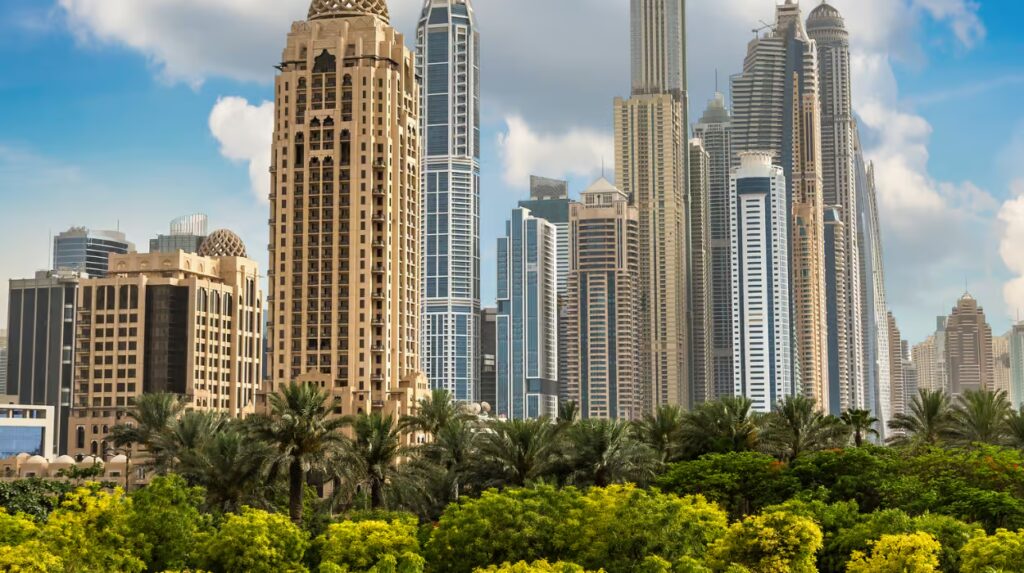
Why Long-Hold Prelaunch Is the Natural Strategy for a Structural Market
If structural demand is the engine of the market, then long-hold prelaunch investing is the strategy most precisely calibrated to extract its returns. Understanding why requires mapping the timeline of a prelaunch investment against the timeline of structural demand forces.
A typical Dubai prelaunch project purchased in 2026 will be completed in 2028–2029. Over that horizon, Dubai’s population will have added approximately 500,000–800,000 new residents (based on 2025 growth trajectories). The city’s First-Time Buyer Programme, which registered over 41,000 residents and facilitated 2,000+ purchases in its first weeks, will have processed thousands more conversions. The renter-to-buyer conversion pipeline — with an average 4.8-year cycle — will have produced a fresh cohort of purchasing residents from the 2021–2022 arrivals. The unit the investor purchases today at prelaunch pricing will hand over into a demand environment that is structurally denser than the one it was purchased in. That is not an optimistic projection. It is the arithmetic of demographic momentum.
“Dubai approaches 2026 from a foundation of real, underlying demand rather than speculative momentum.”
— Louis Harding, CEO, Betterhomes — quoted in Khaleej Times, January 2026
The prelaunch advantage is specifically powerful in a structural demand environment because of what is not true in that environment: there is no artificial price ceiling created by speculative excess that will snap back on handover. In a speculative market, prelaunch investors risk buying at a price inflated by sentiment that will not be present at completion. In a structural demand market, the buyer who arrives at handover is a resident who needs the home, and their willingness to pay is anchored in genuine occupational need and long-term rental comparables, not borrowed market confidence.
For investors exploring the smart strategies specifically designed for pre-launch property investors navigating Dubai’s 2025–2026 market shift, the structural demand context transforms the risk calculus from “will there be a buyer at handover?” to “what is the best exit strategy from a deep, active market?” — a profoundly different and more productive question.
The Numbers That Confirm the Shift: 2025–2026 Data Snapshot
The thesis of structural demand is not asserted — it is confirmed by multiple independent datasets, each pointing in the same direction. The table below assembles the most important metrics, sourced from Khaleej Times, DLD, Savills, CBRE, Cushman & Wakefield, Bayut, and Betterhomes.
| Metric | Figure | What It Confirms |
|---|---|---|
| Total 2025 transaction value | AED 916–917 billion (+20% YoY) | Market depth: Khaleej Times confirmed this represents structural, not speculative, growth |
| 22 consecutive quarters of price growth | Through Q4 2025 (Cushman & Wakefield) | Sustained structural appreciation, not a single-quarter spike |
| End-user share of transactions | ~85% (Betterhomes Q3 2025) | Demand is occupation-led, not speculative |
| Rental registrations growth | +7% YoY (Bayut / Khaleej Times) | Residents are embedding a long-term owner-conversion pipeline building |
| Golden Visas issued since 2021 | 250,000+ (Khaleej Times Jan 2026) | Long-term residency anchors wealth and demand permanently |
| Cash purchases (prime segment) | ~60% of residential transactions, Jan 2026 (Binayah) | Low leverage = low crash risk; structural resilience confirmed |
| January 2026 total transactions | AED 111 billion (+88% YoY, DLD) | Demand entered 2026 from a position of historic strength |
| H1 2026 total transactions | AED 431 billion — 125,538 deals (RERA Jan 2026 report) | Structural demand sustained into H1 2026 |
| Average rent increase 2025 | ~6–10% (Cavendish Maxwell / Bayut) | Supply-demand imbalance actively converting renters to buyers |
| Private school enrolment growth | +6% YoY 2025 (Khaleej Times / C&W) | Family settlement deepening; 6–12 year housing commitment signal |
| Off-plan share of Q1 2025 transactions | ~58.9% of all residential (Khaleej Times) | Prelaunch is normalised structural behaviour, not speculative fringe |
| Only 46% of the 2025 pipeline was delivered on time | Knight Frank / Khaleej Times Nov 2025 | Supply significantly less than headline figures; demand cushioned |
Source: Khaleej Times (multiple editions, Nov 2025 – Jan 2026) / DLD Annual Report 2025 / Cushman & Wakefield H2 2025 / Betterhomes Q3 2025 / Bayut 2025 Report / CBRE / Knight Frank / RERA H1 2026.
The Regulatory Architecture: Why RERA and Escrow Change the Risk Equation
No discussion of why Dubai’s prelaunch market is “built differently in 2026” is complete without a precise understanding of the regulatory infrastructure that protects buyer capital. This is perhaps the least glamorous and most important factor distinguishing today’s market from the 2003–2008 cycle — and from many competing global markets where prelaunch investment remains genuinely risky.
Under Dubai Law No. 8 of 2007, every dirham paid by a buyer into an off-plan project must be deposited into a RERA-approved escrow account held by an independent bank. The developer cannot access these funds freely. The escrow trustee releases payments to the developer only after specific, independently verified construction milestones are reached. This mechanism directly addresses the primary failure mode of the 2003–2008 cycle, where developers collected buyer capital and, in some cases, failed to build. Under the current system, buyer funds are tied to tangible construction progress — not developer promises.
Under Dubai Law No. 9 of 2007, developers must deposit a minimum of 20% of the total project construction cost — in cash or a bank guarantee — before they are permitted to launch sales. This requirement eliminates purely speculative developers who have no financial commitment of their own and prevents the land-banking with buyer money that characterised the previous cycle. Before a prelaunch project reaches investors, the developer has already committed significant capital, and that capital is at risk if the project fails.
In 2026, RERA upgraded these protections further with enhanced escrow account monitoring, AI-powered valuation tools integrated into the Dubai REST app, blockchain-based title deed registration (piloted by the Dubai Land Department in 2025), and stricter transparency requirements for off-plan advertising and project marketing. The direction of regulation is consistently toward greater investor protection — not away from it.
| Regulatory Protection | Law / Framework | What It Protects Against | 2026 Status |
|---|---|---|---|
| Escrow account mandate | Law No. 8 of 2007 | Developer misuse of buyer funds | Active; RERA monitoring enhanced in 2026 |
| Developer deposit (20% construction cost) | Law No. 9 of 2007 | Purely speculative/undercapitalised developers | Active; enforced at project registration |
| Off-plan project registration (Oqood) | DLD registry system | Double-selling; phantom project fraud | Active; blockchain integration launched in 2025 |
| Cancelled project tribunal | Dubai Decree No. 33 of 2020 | Buyer recourse if the project fails | Active; escrow funds primary recovery vehicle |
| RERA broker/developer licensing | RERA Act 2007 (as amended) | Unqualified agents; misleading marketing | Active; stricter advertising rules Jan 2026 |
| Mortgage LTV caps | UAE Central Bank regulations | Over-leverage; 2008-style speculative crash | Active; 75% LTV cap for non-residents |
| DLD blockchain title deeds | DLD pilot 2025 / full rollout 2026 | Title fraud; transaction opacity | Rolling out 2026; first UAE market globally |
Source: RERA Dubai 2026 / Law No. 8 & 9 of 2007 / DLD 2025 Digital Transformation Report / Dubai Decree No. 33 of 2020 / Tesla Properties RERA/Escrow Analysis Nov 2025 / MAK Developers / Driven Properties.
For investors considering the top developers and communities driving Dubai’s off-plan pipeline in 2025–2026, understanding which developers have a verified escrow compliance history and RERA registration is not optional due diligence — it is the baseline entry requirement for any capital committed at the prelaunch stage.
Structural vs Speculative: The Investor Behaviour Comparison
The practical implications of a structural demand market — versus a speculative one — show up most clearly in how investors should think about entry, hold period, and exit. The table below draws that comparison explicitly, using the Khaleej Times framing as the analytical lens.
| Dimension | Structural Demand Investor (Long-Hold Prelaunch, 2026) | Speculative Investor (Pre-2008 Dubai / Over-Leveraged Cycles) |
|---|---|---|
| Entry point | Prelaunch — 20–30% below anticipated completion value | At or near market peak, post-sentiment surge |
| Motivation | Population-driven rental yield and gradual capital appreciation | Rapid pre-completion price flip; exit before handover |
| Hold period | 3–7 years; through construction and initial occupancy | Weeks to months; seeking pre-handover assignment |
| Leverage | Minimal to zero — post-handover payment plans reduce capital deployed | High leverage; borrowed against unbuilt asset |
| Income during hold | Rental yield post-handover (6–9% avg for Dubai apartments) | No income during hold; dependent on price rise |
| Risk if the market softens | Buffer: bought at discount; occupational yield sustains | No buffer; leveraged position at full market price |
| Regulatory protection | Full RERA escrow; 20% developer deposit; Oqood registration | Minimal pre-2008; no equivalent escrow existed |
| Demand at handover | Structural: 4M+ residents, 500K more by handover | Sentiment-dependent: buyer needed who also expects gains |
| Exit strategy | Resale to end-user (resident buyer) or hold for yield | Resale to another speculative investor |
| 2026 market alignment | Perfectly aligned: market characterised by end-user dominance | Misaligned: this profile has largely exited the market |
Source: Compiled from Khaleej Times Jan 2026 / Betterhomes / CBRE / Allsopp & Allsopp / Driven Properties / MAK Developers / Proact Luxury Real Estate.
As Faisal Durrani, Partner and Head of Research for MENA at Knight Frank, stated in the Khaleej Times: “Record-high sales volumes, robust price appreciation and resilient rental performance all point to a market operating from a position of strength rather than exuberance. While moderation in house price growth rates is inevitable, the structural drivers of demand — population expansion, wealth migration and economic diversification — remain firmly intact.” For the long-hold prelaunch investor, that is not a cautionary statement — it is a green light. Moderated growth in a structural market is sustainable, compoundable, and not subject to a sentiment cliff.
Where Long-Hold Prelaunch Capital Is Finding Structural Demand in 2026
Not every Dubai postcode benefits equally from structural demand. The communities where long-hold prelaunch capital is most intelligently deployed are those that combine constrained future supply, strong employment catchment, school access, and infrastructure commitment from master developers or government-backed entities. The Khaleej Times 2026 outlook series — citing Driven Properties CEO Abdullah Alajaji — specifically recommended: “leaning into scarcity and institutional quality — prime waterfronts and central districts with limited new land.” Alajaji’s caution was equally pointed: “Scale kills scarcity, and scarcity is what protects value.”
| Community | Structural Demand Driver | Supply Constraint | Long-Hold Prelaunch Case | Avg. Entry (AED) |
|---|---|---|---|---|
| Dubai Hills Estate | King’s College Hospital; GEMS / Repton schools; golf community | Very limited — master plan nearly complete | Family relocation demand 5–10yr horizon; villa scarcity | 2.2M–5.5M (villas) |
| Dubai Creek Harbour | Emaar’s AED 20B+ master plan; Downtown 2.0 positioning | Only Emaar delivers here; phased launch control | Capital appreciation play; 30%+ discount to Downtown | 1.3M–3.2M (apts) |
| Business Bay | DIFC adjacency; professional employment density; Burj views | Central location; no new land parcels | Professional renter-to-buyer pipeline; 7–8% rental yield | 950K–2.6M (apts) |
| Dubai South | Al Maktoum International Airport expansion (world’s largest) | Government-controlled master plan; phased | 10-year infrastructure-led appreciation; logistics & residential | 650K–1.5M (apts) |
| Mohammed Bin Rashid City | Private lagoon, luxury community; proximity to Downtown | Single master developer; limited villa plots | HNWI / Golden Visa buyer; ultra-low supply premium | 2.8M–9M (villas) |
| Palm Jebel Ali (new) | Nakheel expansion; Dubai’s second iconic palm | Nakheel-only supply; entirely prelaunch as of 2025–26 | Generational scarcity premium; off-plan appreciation documented | 2M–8M+ (villas / apts) |
Source: Khaleej Times Dec 2025 / Driven Properties 2026 Outlook / Bayut Q4 2025 / DLD Area Data 2025 / Knight Frank MENA Research.
The deep comparison of the two most professionally populated and highest-liquidity communities — in the Business Bay vs Downtown Dubai off-plan prelaunch debate — illustrates exactly how structural demand factors (employment, transit, liveability) differentiate performance at a community level, even within the same city.
For investors specifically examining how Dubai’s accelerating 2026 delivery wave will affect off-plan values on a segment-by-segment basis, the key insight is that communities with constrained supply and genuine liveability premiums — the ones listed above — are precisely the communities most insulated from any delivery-driven softening in over-supplied mid-market segments.
The Honest Assessment: Four Real Risks and How Structural Demand Mitigates Each
No article grounded in intellectual honesty can present only the positive case. Khaleej Times itself acknowledged in its January 2026 Outlook series that selective cooling is possible in over-supplied segments, and that supply monitoring is the key variable to watch. Here are the four risks that deserve honest treatment — alongside how structural demand specifically mitigates each.
| Risk | Honest Assessment | How Structural Demand Mitigates It |
|---|---|---|
| Oversupply in mid-market | ~55,000 units expected in 2026; ~75,000 in 2027 (DLD). 66% are studios/1-beds. JVC, Dubailand, and Business Bay most affected. | Only 46% of pipeline delivers on time (Knight Frank). Population absorbing 208,000+ new residents/yr. Prelaunch in constrained-supply communities (Hills, Creek, MBR) is unaffected. |
| Price correction in affected segments | Fitch projected 10–15% softening in the over-supplied mid-market. This is real for commoditised apartment stock. | Prelaunch at 20–30% discount creates a natural buffer. End-user demand prevents full correction. Structural buyers hold; speculative sellers have largely exited. |
| Geopolitical sentiment disruption | Regional tensions cause 30–45% short-term enquiry drops at some brokerages (March 2026 pattern). Sentiment is genuinely affected. | Structural demand (family relocation, lease expiry, school enrollment) does not pause for news cycles. Jan 2026 posted AED 111B despite tensions. H1 2026 hit AED 431B. |
| Developer delivery delays | Average 54% of the 2025 pipeline did not complete on time (Knight Frank). Construction capacity constraints are real. | Escrow protects capital through delays. RERA monitors milestones. Select developers (Emaar, Sobha) have verified on-time delivery records. Due diligence is the mitigation. |
Source: Knight Frank Nov 2025 / Fitch Ratings 2025 / Khaleej Times Jan 2026 / DLD 2025–2026 / RERA 2026 / Binayah March 2026.
The Bottom Line: Why 2026 Is the Year to Build the Long-Hold Position
There is a specific reason why Khaleej Times, Allsopp & Allsopp, Betterhomes, Bayut, CBRE, Cushman & Wakefield, Knight Frank, and Savills — independent organisations with no shared commercial interest — all arrived at the same conclusion about Dubai’s 2025–2026 market: the evidence compels it. The data is not ambiguous. Twenty-two consecutive quarters of price growth. AED 917 billion in annual transactions. 250,000 Golden Visas. 85%+ end-user transaction share. 208,000 net new residents in one year. RERA escrow protects every dirham. A First-Time Buyer Programme converting 41,000 renters. AED 431 billion in H1 2026 alone.
This is not a market operating on borrowed confidence. It is a market operating on structural foundations — population growth, employment creation, visa-anchored residency, and regulatory protection — that have never been more comprehensively in place than they are right now. And within this market, the long-hold prelaunch strategy — purchasing at a 20–30% discount to projected completion value, protected by RERA escrow, with a 3–5 year horizon aligned to the population-driven demand cycle — is the approach most precisely calibrated to extract the returns that structural demand makes possible.
The question is not whether Dubai’s prelaunch market is built on solid ground in 2026. The data has already answered that. The question is whether you are positioned on it before the next wave of structural demand lifts prices to their next level. Based on everything Khaleej Times, Savills, CBRE, and five years of regulatory reform are telling us, that window — measured in months, not years — remains open.
Build Your Long-Hold Prelaunch Position in Dubai’s Structural Market
Fill out the enquiry form on prelaunch.ae and our investment advisory team will match you with curated prelaunch projects — in the right communities, with the right developers, at the right entry point for a 3–7 year structural demand hold.
📞 Call / WhatsApp: (+971) 52 341 7272
✉ Email: [email protected]
The structural demand window is open. 250,000 Golden Visa holders, 4 million residents, and AED 431 billion in H1 2026 alone confirm it. Position before the next cohort arrives.
Frequently Asked Questions
Q: What specifically did Khaleej Times mean by ‘structural demand rather than short-term speculation’?
In their January 2026 reporting — specifically the article headlined “Dubai property boom hits record Dh916 billion amid population growth” — Khaleej Times cited expert commentary from Savills, Allsopp & Allsopp, Betterhomes, Bayut, and CBRE to conclude that Dubai’s 2025 record was not driven by speculative buying or leverage-fuelled momentum, but by population inflows, long-term residency initiatives, infrastructure development, and strong economic fundamentals. The phrase captures a specific transition: from a market where buyers purchase expecting to sell to another speculator, to a market where buyers purchase because they or a tenant will occupy the property for years.
Q: How does the long-hold prelaunch strategy specifically benefit from structural demand?
In a speculative market, a prelaunch investor faces execution risk at handover — finding a buyer who also expects to make a gain. In a structural demand market, the handover buyer is a resident who needs the home — their motivation is occupational, not speculative. This means the exit opportunity is demand-driven rather than sentiment-driven, which makes it more reliable and more predictable. Additionally, structural demand keeps rental yields high (6–9% in Dubai’s mid-market), providing income during the hold period if the investor chooses to let rather than sell on handover.
Q: Is Dubai’s off-plan market still growing in 2026, or has it peaked?
RERA data confirmed that H1 2026 recorded 125,538 transactions worth AED 431 billion — confirming that the market entered 2026 at, or near, peak pace. Khaleej Times cited the expectation of 10% residential price growth in 2026 (following ~20% in 2025), and Knight Frank projected 3% growth in prime segments. The trajectory is moderating, which analysts describe as healthy normalisation — not a peak-and-reverse. A market growing 10% annually on a structural demand base is a better investment environment than one growing 22% on speculative heat. Moderated, structural growth is compoundable and sustainable.
Q: How do I identify which prelaunch projects are backed by structural demand vs speculative hype?
The four questions to ask are: (1) Who is the end-user? Does this community attract families, professionals, or genuine occupiers — not just investor buyers? (2) Is supply constrained? Is this a community with limited future land parcels, or one of many identical developments in a high-pipeline corridor? (3) What is the developer’s escrow compliance and delivery record? (4) What are the comparable rental yields? A project where the yield on completion covers a meaningful proportion of the purchase price, and where there is genuine tenant demand, is structurally anchored. For a comprehensive guide to navigating prelaunch exit strategies and resale timing in Dubai’s 2025–2026 cycle, prelaunch.ae covers the decision framework in detail.
Q: What is the minimum viable holding period for a prelaunch investment in Dubai in 2026?
Analysts at GoDubai.Estate’s 2026–2031 strategy guide recommends a minimum of 3–5 years, with optimal exits timed for 2028–2029 based on the current capital appreciation cycle analysis. This timeline allows: the construction period to complete, the community to establish occupancy and liveability, the renter-to-buyer conversion pipeline to deliver its next cohort of purchasers, and any short-term sentiment disruptions to resolve. Investors who purchased Dubai prelaunch units in 2020 and held through 2023–2024 captured some of the highest returns in the city’s history — precisely because they held through the sentiment disruptions of a global pandemic to the structural demand recovery that followed. For guidance on flexible payment plan structures that make the prelaunch hold period more manageable, the 50/50 and post-handover models now available significantly reduce capital deployed during the construction window.
Q: Does the Golden Visa directly affect prelaunch demand, and how?
Yes, in two reinforcing ways. First, the Golden Visa (10-year renewable residency for AED 2M+ property investment) directly incentivises prelaunch entry at the AED 2M threshold — the buyer secures both an appreciating asset and long-term residency rights simultaneously. Second, the 250,000+ Golden Visas already issued since 2021 have created a permanent cohort of property-anchored residents whose residency status is tied to their Dubai property. They are structurally incentivised to maintain, upgrade, and add to their property holdings — creating repeat prelaunch demand from an established, committed buyer base. Explore how the UAE-wide off-plan and prelaunch landscape benefits from the Golden Visa demand layer across Dubai, Abu Dhabi, and Ras Al Khaimah.