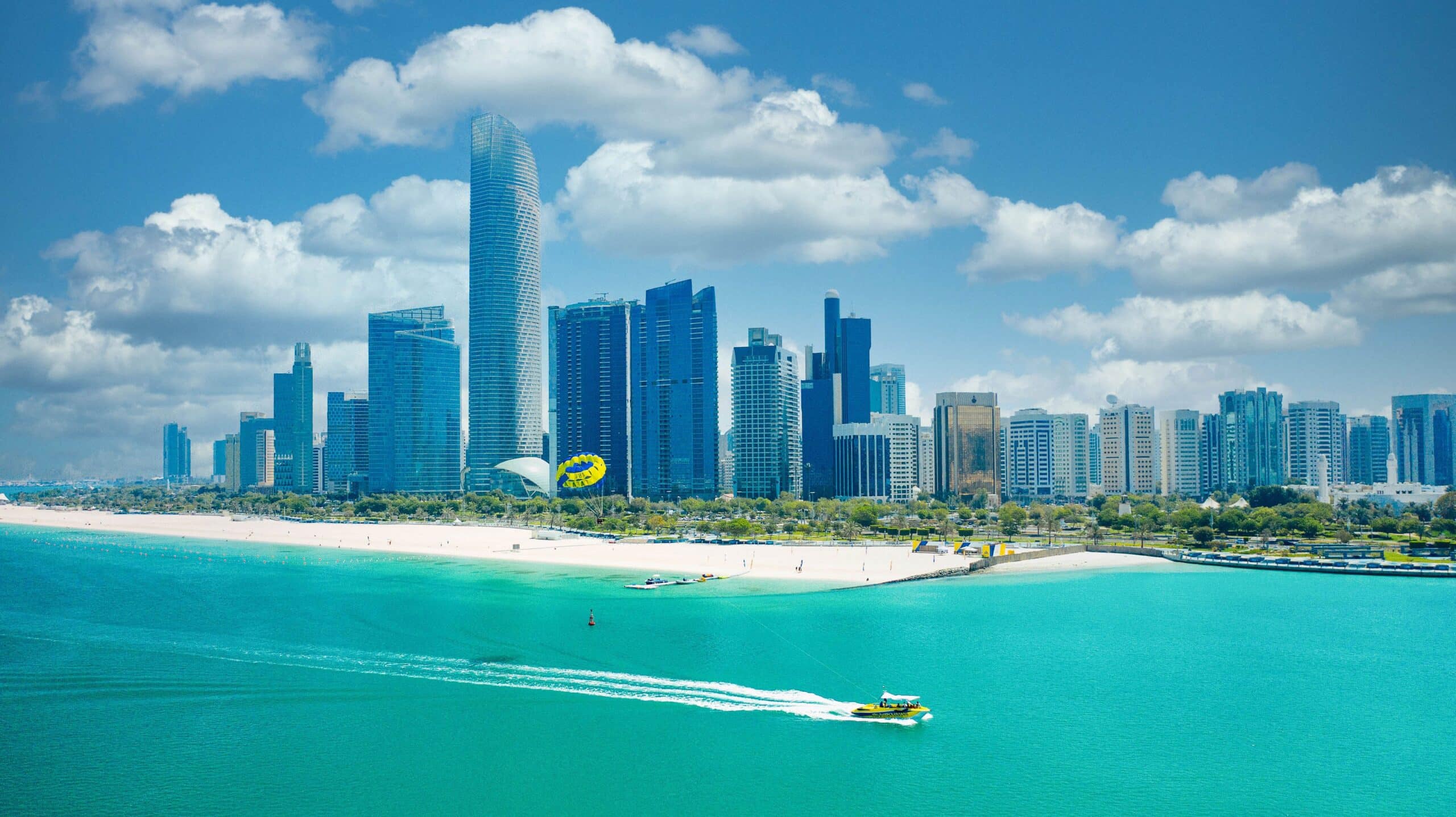
Not every investor chases the loudest number. For every buyer drawn to the headline of 16% capital value growth or a 47% transaction surge, there is another, equally important profile: the cautious, research-driven investor who wants to understand the economy beneath the statistics before committing a single dirham.
For that investor, Abu Dhabi in 2026 offers something more reassuring than dramatic growth metrics alone. It offers a precise phrase that ValuStrat’s Managing Director, Haider Tuaima, used to frame the emirate’s entire market outlook: “stable macroeconomic foundations and positive market sentiment.” Those six words are not marketing language. They are the distilled conclusion of a consultancy that has tracked Abu Dhabi’s real estate cycle across multiple boom and correction phases since the early 2000s.
This article unpacks what those foundations actually are, why they matter specifically to buyers of off-plan and prelaunch property in Abu Dhabi, and why the emirate’s measured-growth story may be the most durable investment thesis available in the Gulf today — precisely because it is steady rather than spectacular.
What Stable Macroeconomic Foundation Actually Means for Property Buyers
When economists and market researchers describe a property market as macroeconomically stable, they are typically pointing to a specific cluster of conditions that, together, reduce the probability of a correction and increase the sustainability of current growth. In Abu Dhabi’s case for 2026, those conditions are unusually well-aligned.
| Macroeconomic Indicator | 2026 Figure / Status | Property Market Implication |
| UAE Real GDP Growth (forecast) | ~5.0% (UAE Central Bank); 5.8% Abu Dhabi (IMF) | Rising incomes, jobs, and corporate presence drive residential demand |
| Headline Inflation | ~1.8% forecast (UAE Central Bank); 0.7% mid-2025 actual | Low inflation preserves real purchasing power; stable mortgage costs |
| Central Bank Interest Rate | 3.65% (Dec 2025 cut) | Mortgage affordability improved; mid-market buyer base expands |
| Non-Oil Sector GDP Contribution | ~60% of GDP (up from 55% in 2020) | Demand base is diversified; not oil-price-dependent |
| Abu Dhabi Population (2024) | 4.14 million; +7.5% YoY | Household formation and rental demand are running at multi-year highs |
| Population Projection (2026) | 4.5 million (ValuStrat) | Sustained demand runway extending well past the 2026 handover cycle |
| Grade A Office Occupancy | 96% (early 2026); rents +35% YoY in CBD late 2025 | Workforce concentration; residential demand near employment hubs |
| Zero Tax Environment | No income tax, no capital gains tax, no property tax | Full return on rental income and capital appreciation retained by the buyer |
What this table conveys collectively is a macroeconomic environment that property investors rarely encounter simultaneously: strong growth, low inflation, falling interest rates, diversifying economic foundations, and rising population. Each of these conditions is independently constructive for real estate. Together, they form the structural base that ValuStrat described as the backdrop for Abu Dhabi’s “resilient and measured growth” in 2026.
“Strong non-oil activity and continued population growth underpin demand, while measured levels of upcoming supply position Abu Dhabi for another year of steady market performance and sustained investor interest.” — Haider Tuaima, Managing Director & Head of Real Estate Research, ValuStrat
The Non-Oil GDP Story: Why This Matters More Than Oil Prices
For investors who remember Abu Dhabi’s 2014–2019 correction — when oil prices collapsed and property values fell 25–35% from peak — the most important macroeconomic development in the emirate is not the 2026 GDP growth forecast. It is the composition of that growth.
The non-oil sector now contributes approximately 60% of Abu Dhabi’s GDP, compared to 55% in 2020 and significantly less in 2014. This structural shift means that the demand base underpinning residential property transactions is no longer primarily a function of hydrocarbon revenues. Jobs are being created in finance (ADGM expansion), technology (AI investment across healthcare and media), tourism, logistics, and manufacturing. These sectors generate payroll income, attract international talent, and create the kind of sustained household formation that supports property demand across multiple years, regardless of where oil trades.
For cautious buyers, this is the single most reassuring indicator in the entire Abu Dhabi macro story. A real estate market whose demand is diversified across ten sectors is structurally more resilient than one dependent on two. And for buyers considering off-plan investment in Abu Dhabi and the wider UAE, that resilience is not a theoretical construct — it is visible in the 2025 transaction data: AED 142 billion in total property transactions, 47% growth year-on-year, and buyers from 97 nationalities entering the market.
Low Inflation + Rate Cuts: The Buyer’s Double Tailwind
Two macroeconomic developments that arrived simultaneously in late 2025 deserve their own analysis: inflation fell to 0.7% by mid-2025, and the UAE Central Bank cut interest rates to 3.65% in December 2025. For a property buyer, these two events arriving in the same six-month window is unusual good fortune.
What Low Inflation Means for Buyers
Inflation below 2% in a property market growing at 16% per year means that the real return on Abu Dhabi property is approximately 14% — the growth rate minus inflation. In most of the world’s advanced property markets, buyers are fortunate to achieve a real return of 2–3%. Abu Dhabi’s current combination is not common. Low inflation also preserves the purchasing power of rental income: a landlord receiving AED 80,000 in annual rent with 1.8% inflation retains more real income than one operating in a 5% inflation environment.
What Rate Cuts Mean for Off-Plan Buyers Specifically
The rate cut to 3.65% has immediate implications across two buyer types. For mortgage-funded buyers, affordability improved materially in mid-market areas, including Al Reef and Masdar City, opening the buyer pool in these segments. For cash buyers, the lower rate environment reduces the opportunity cost of committing capital to off-plan deposits rather than holding it in fixed-income instruments.
Both effects point in the same direction: more buyers can enter the market, and the financial case for entering is stronger than it was 12 months ago. For sellers of off-plan inventory — which is to say, for developers — this is the ideal backdrop against which to price new launches. For buyers, it is the ideal backdrop against which to lock in a price before that expanded buyer pool pushes developer pricing further north.
The Population Story: 4.5 Million by the end of 2026
Property markets run on people. The single most important long-term driver of housing demand in any city is population growth, and Abu Dhabi’s demographic trajectory in 2026 is among the most compelling of any city its size globally.
| Year | Abu Dhabi Population | YoY Growth | New Residents (approx.) | Housing Units Required |
| 2022 | ~3.5 million | Baseline | — | — |
| 2023 | ~3.75 million | +7.1% | ~250,000 | ~50,000–60,000 |
| 2024 | 4.14 million | +7.5% | ~390,000 | ~78,000–90,000 |
| 2025 | ~4.3 million (est.) | +3.9% | ~160,000 | ~32,000–40,000 |
| 2026 | 4.5 million (proj.) | +4.7% | ~200,000 | ~40,000–50,000 |
The housing units required column is constructed on the assumption of 2.5 to 3.0 persons per residential unit, consistent with Abu Dhabi’s household composition data from SCAD. The conclusion it yields is stark: Abu Dhabi needs 40,000 to 50,000 additional housing units in 2026 to accommodate its projected population growth, against a realistic supply of only 6,500 to 9,000 actual handovers. The structural housing gap is not closing — it is widening. For prelaunch buyers, this is the most fundamental demand argument available: the city literally needs more homes than it is building.
Investors interested in understanding how population-driven demand is reshaping specific communities should read about how UAE Golden Visa demand is accelerating among globally mobile buyers. The surge in Golden Visa applications from 97 nationalities is the clearest indicator that Abu Dhabi’s population growth is not casual in-migration — it is a strategic, long-term commitment from buyers who intend to stay.
Abu Dhabi’s Business Environment: Infrastructure as a Value Catalyst
Stable macroeconomic foundations are reinforced and extended by infrastructure investment. Abu Dhabi’s 2026 planning context is distinguished by several major infrastructure programmes that will directly increase property values in the communities they serve.
| Infrastructure Project | Timeline | Direct Impact on Property Values |
| Etihad Rail (Passenger Services) | Phased from 2026 | Abu Dhabi–Dubai connectivity premium; demand in Khalifa City, Al Raha |
| Light Rail & Tram Line 4 | Completion by 2030 | Zayed Airport → Yas Island → Al Raha → Khalifa City corridor: strong appreciation expected |
| Disney Abu Dhabi (Yas Island) | Opens 2027 | Pre-opening workforce housing surge; international tourist hospitality demand |
| ADGM Expansion (Al Reem Island) | Ongoing 2026 | Office demand → residential demand in 10-minute-radius communities |
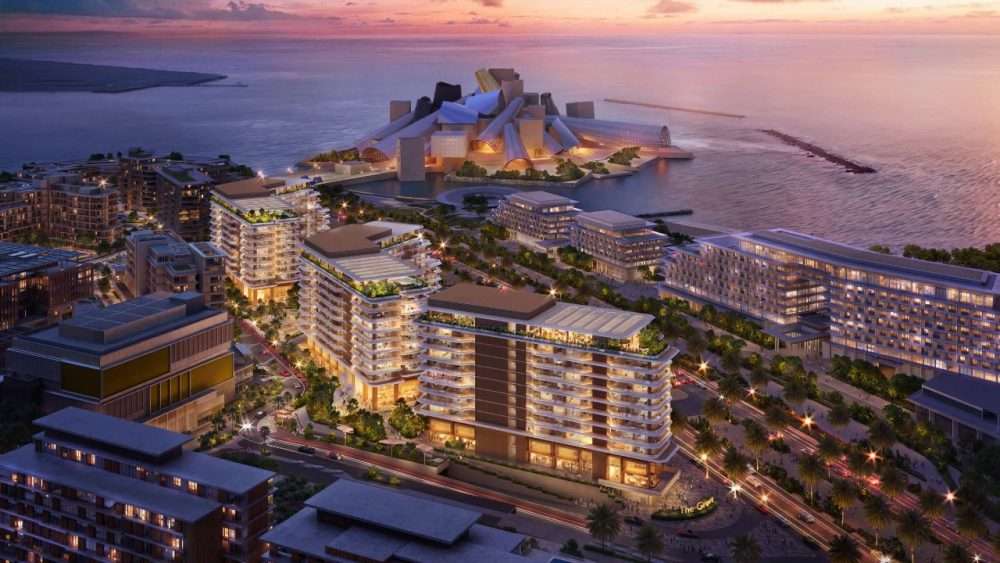
| Saadiyat Cultural District Buildout | 2026–2028 | Louvre, Guggenheim, Natural History Museum completion; premium on cultural proximity |
| One Maryah Place (Grade A Offices) | Late 2027 | Pre-leasing driving workforce arrival; residential demand building now |
| Abu Dhabi Tourism Strategy 2030 | Rolling | 39.3M visitors target; hospitality workforce housing demand across Yas, Saadiyat, CBD |
Each item in this table is a value catalyst that is already priced into the market’s direction but has not yet been fully delivered. The infrastructure is coming; the question for an off-plan buyer is simply whether they are in the ground before or after it arrives. Buyers who enter prelaunch positions on Yas Island today are pricing in the Disney effect before it materialises. Those who wait for the theme park to open will be buying after the catalytic appreciation has run.
Positive Market Sentiment: What the Transaction Data Is Telling Us
ValuStrat’s phrase “positive market sentiment” is not a vague claim. It has a precise empirical backing in Abu Dhabi’s 2025–2026 transaction data. Cavendish Maxwell’s Q1 2026 report confirms:
- AED 142 billion in total Abu Dhabi property transactions in 2025, a year-on-year surge of 47%
- 29,400+ residential transactions recorded in the first nine months of 2025 alone, up 48% YoY (ADREC)
- 83% of transactions were off-plan in peak months, reflecting deep buyer confidence in developer delivery
- 35% surge in foreign direct investment into Abu Dhabi real estate, from buyers across 97 nationalities
- 15.1% apartment price growth in 2025 (Cavendish Maxwell); 12.2% villa price growth in the same period
- 90% residential occupancy rate entering 2026, confirming that demand absorption is running ahead of supply delivery
These are not sentiment indicators. These are hard transaction metrics, and they describe a market in which buyers and sellers are pricing confidence into every transaction. Sentiment in this context is not optimism — it is a conclusion derived from repeated, data-backed confirmation that Abu Dhabi’s property market delivers. To understand how global capital is interpreting this signal, read our analysis of why investors worldwide are moving strategically into UAE real estate in 2026.
The Cautious Investor’s Case: Why Measured Growth Is the Right Story
There is a specific investor for whom Abu Dhabi’s 2026 profile is ideal: the buyer who wants real, structural, data-supported growth rather than momentum-driven speculation. This investor has watched Dubai’s cycle with interest but also with caution, noting the larger supply pipeline and faster price acceleration. They have observed other Gulf markets with a healthy scepticism about whether headline numbers reflect genuine fundamentals.
For this buyer, Abu Dhabi’s measured growth narrative is a feature, not a limitation. Here is the case in direct terms:
| Buyer Concern | Abu Dhabi’s Measured-Growth Answer |
| Is this growth speculative? | No. It is supported by 7.5% population growth, 60% non-oil GDP, and 90% occupancy — demand exceeds supply at every turn |
| Could inflation erode my returns? | Inflation at 1.8% against 16% capital growth yields a ~14% real return — among the highest of any G20-adjacent market |
| Are interest rates a risk? | UAE Central Bank cut to 3.65% in Dec 2025; further cuts anticipated as US Fed continues easing through 2026 |
| Is the supply pipeline a threat? | Pipeline of 16,362 units will deliver only ~6,500–9,000 — a 40% delivery rate historically sustained across multiple years |
| What happens if oil prices fall? | Non-oil sectors now drive 60% of GDP; Abu Dhabi’s 2014 correction (-25-35%) was oil-driven; that dependency has structurally declined |
| Is Abu Dhabi safer than Dubai? | Abu Dhabi has shallower historic cycle volatility; it declined 25–35% in 2014–2019 vs Dubai’s 40–50% in 2008–2009 |
| Is there an exit market? | 47% transaction growth; buyers from 97 nationalities; AED 142B in 2025 sales confirm a deep, liquid market at every price tier |
The final row — exit market depth — deserves particular emphasis. A cautious investor’s biggest concern is not whether a market goes up; it is whether there will be a buyer when they want to sell. Abu Dhabi’s transaction data answers that question definitively: buyers from 97 nationalities and AED 142 billion in annual transactions describe a market where exit options are deep, and liquidity is structural rather than cyclical. Those comparing how Abu Dhabi’s property fundamentals compare to Dubai’s in 2025–2026 will find Abu Dhabi’s per-unit entry price remains 30–40% below comparable Dubai neighbourhoods, offering relative value alongside higher forecast capital appreciation.
The Hospitality Economy: A Supporting Signal for Residential
One of ValuStrat’s most compelling supporting arguments for Abu Dhabi’s macroeconomic stability is the convergence of its hospitality sector performance with its residential outlook. In October 2025, Abu Dhabi recorded its highest-ever RevPAR (revenue per available room) and ADR (average daily rate), with hotel occupancy reaching 86.2% during peak events.
Why does this matter for residential buyers? Because a thriving hospitality sector is a leading indicator of three things that directly support housing demand: population of visiting professionals who become residents, workforce growth in the tourism, events, and hospitality sectors, and infrastructural investment in connectivity and lifestyle amenity. Abu Dhabi’s Tourism Strategy 2030 targets 39.3 million annual visitors, 50,000 hotel rooms, and a GDP contribution of AED 90 billion from the sector. Every milestone on that roadmap adds workers, residents, and renters to the housing equation.
For investors exploring Abu Dhabi’s high-demand off-plan developments across Yas Island and Saadiyat Island, the hospitality data is not background noise. It is a direct signal that the communities adjacent to Abu Dhabi’s event and entertainment economy will experience sustained demand for residential units at every price tier.
Abu Dhabi’s Foundations Are Built for Buyers Like You
ValuStrat called it precisely: “stable macroeconomic foundations and positive market sentiment.” Behind that phrase sits a 5–5.8% GDP growth forecast, inflation at 1.8%, interest rates at 3.65%, a population heading to 4.5 million, non-oil GDP at 60%, a hospitality sector at record highs, and a residential market posting 16% capital value growth with 90% occupancy.
For the cautious, data-driven buyer, this is not a market to watch from a distance. It is the measured-growth, low-volatility, well-governed market they have been looking for. And the prelaunch window — the point at which entry pricing precedes the appreciation curve — is open right now, before the 2027–2028 supply cycle begins to moderate the pace of gains.
At Prelaunch.ae, we work with exactly this kind of investor. Our advisory team will help you identify the right off-plan project, submarket, and payment structure to enter Abu Dhabi’s growth story with confidence, not speculation. Every project we offer is assessed against the macroeconomic and supply-demand criteria outlined in this article.
The foundations are solid. The window is open. The only decision left is whether you step through it.
Fill out the enquiry form at prelaunch.ae today and receive your personalised Abu Dhabi investment brief from our specialist advisors.
Contact us directly:
📞 (+971) 52 341 7272
Stable foundations. Positive sentiment. Proven returns. Abu Dhabi is ready for your investment.
Frequently Asked Questions (FAQs)
Q1: What does ValuStrat mean by “stable macroeconomic foundations” in Abu Dhabi?
ValuStrat’s phrase refers to a cluster of simultaneous conditions: 5%+ GDP growth, ~1.8% inflation, a 3.65% central bank rate, non-oil sectors driving 60% of GDP, and a population growing at 7.5% annually. Together, these create a low-volatility economic environment that reduces the risk of a property market correction and sustains the structural demand base for residential real estate.
Q2: Is Abu Dhabi’s property growth driven by speculation or real demand?
Real demand. Abu Dhabi’s 2025 transaction data — AED 142 billion in sales, 47% growth, buyers from 97 nationalities, 90% residential occupancy — reflects genuine occupier demand from a growing population and expanding workforce, not speculative flipping. Cavendish Maxwell and ValuStrat both describe the market as “measured” rather than speculative, with Cavendish Maxwell explicitly noting a “relatively low likelihood of a broad market correction.”
Q3: How does Abu Dhabi’s macroeconomic stability compare to Dubai’s?
Abu Dhabi has historically experienced shallower property market cycles than Dubai, declining roughly 25–35% from its 2014 peak compared to Dubai’s 40–50% decline in 2008–2009. Abu Dhabi’s larger share of cash transactions, more conservative supply pipeline, and diversified non-oil economic base contribute to lower volatility. It also offers a 30–40% lower average entry price per square foot than comparable Dubai neighbourhoods, with a higher 2026 capital appreciation forecast.
Q4: How does the UAE’s zero-tax environment affect my property return?
There is no income tax, capital gains tax, or property tax in the UAE. This means that 100% of your rental income and 100% of your capital appreciation is yours to keep. In a market forecasting 16% capital value growth and 6% rental income growth, the absence of any tax drag on these returns makes the effective yield considerably higher than comparable returns in markets with 20–40% tax on capital gains.
Q5: Does geopolitical uncertainty in the region affect Abu Dhabi’s property market?
Historically, Abu Dhabi has demonstrated strong insulation from regional geopolitical cycles. Its transaction volumes in February 2026 remained robust, its Golden Visa applications accelerated during periods of regional tension (as confirmed by visa service centre data in March 2026), and buyer nationalities actually broadened during uncertainty periods as global capital sought a safe-haven anchor. ValuStrat’s own characterisation of Abu Dhabi’s 2026 prospects explicitly frames the market as resilient amid external uncertainty.
Q6: What is the best strategy for a cautious investor entering Abu Dhabi’s prelaunch market?
For cautious investors, the recommended approach combines: entry in mid-market, well-connected submarkets (Al Reem Island, Masdar City, Al Raha Beach) where rental demand is proven, and occupancy is high; post-handover payment plans to spread capital commitment and use rental income to service instalments; and GCC-regulated developer selection (Aldar Properties being the benchmark) to minimise delivery risk. The macroeconomic foundations described in this article make the timing case clear — a structured entry now, ahead of the 2027–2028 supply widening, captures the tightest point in the supply-demand cycle.