When Aldar Properties launched Sama Yas with the tagline “Abu Dhabi’s first ultra-luxury park living experience,” positioning it as a low-rise luxury development with only 234 units across three buildings, the market took notice. But in a landscape where every off-plan development Abu Dhabi claims differentiation, the critical question emerges: Is Sama Yas’s “ultra-luxury low-rise” positioning a genuine competitive moat that justifies its AED 1.9M starting price, or sophisticated marketing wrapping an otherwise standard product?
With Yas Island apartments experiencing 14% price growth in 2025 and low-rise developments commanding premiums across Abu Dhabi’s luxury market, this analysis dissects whether Sama Yas’s architectural format, unit scarcity, and amenity package create defensible advantages—or whether investors are paying for positioning rather than performance.
Decoding the “Ultra-Luxury Low-Rise” Positioning
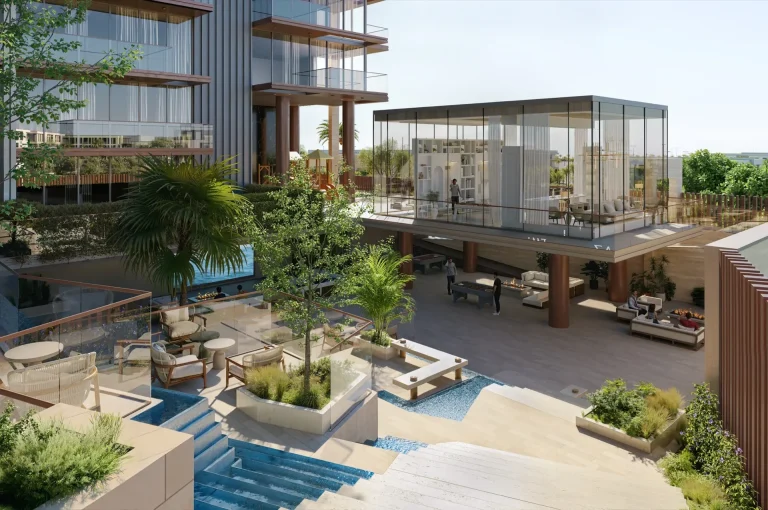
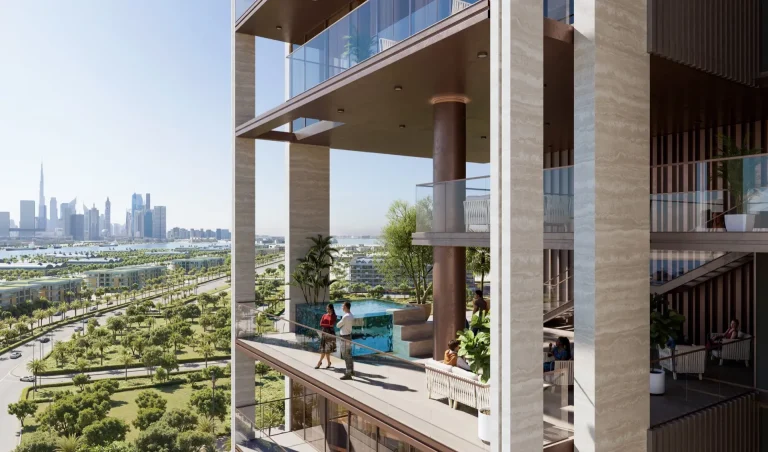
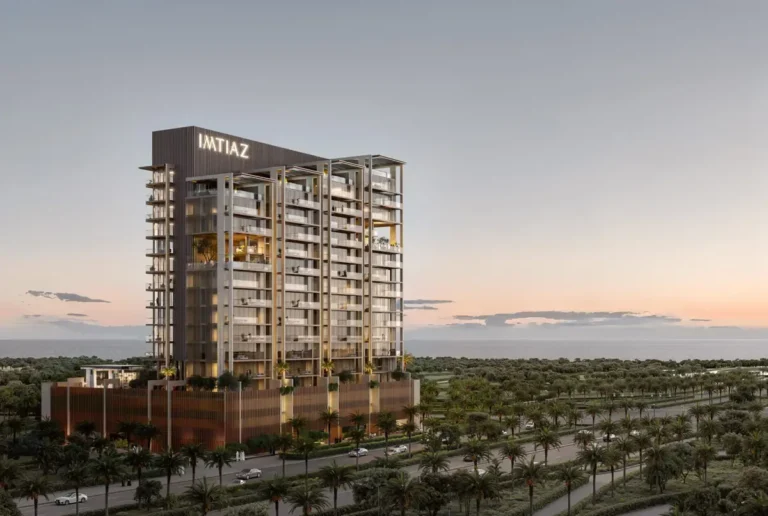
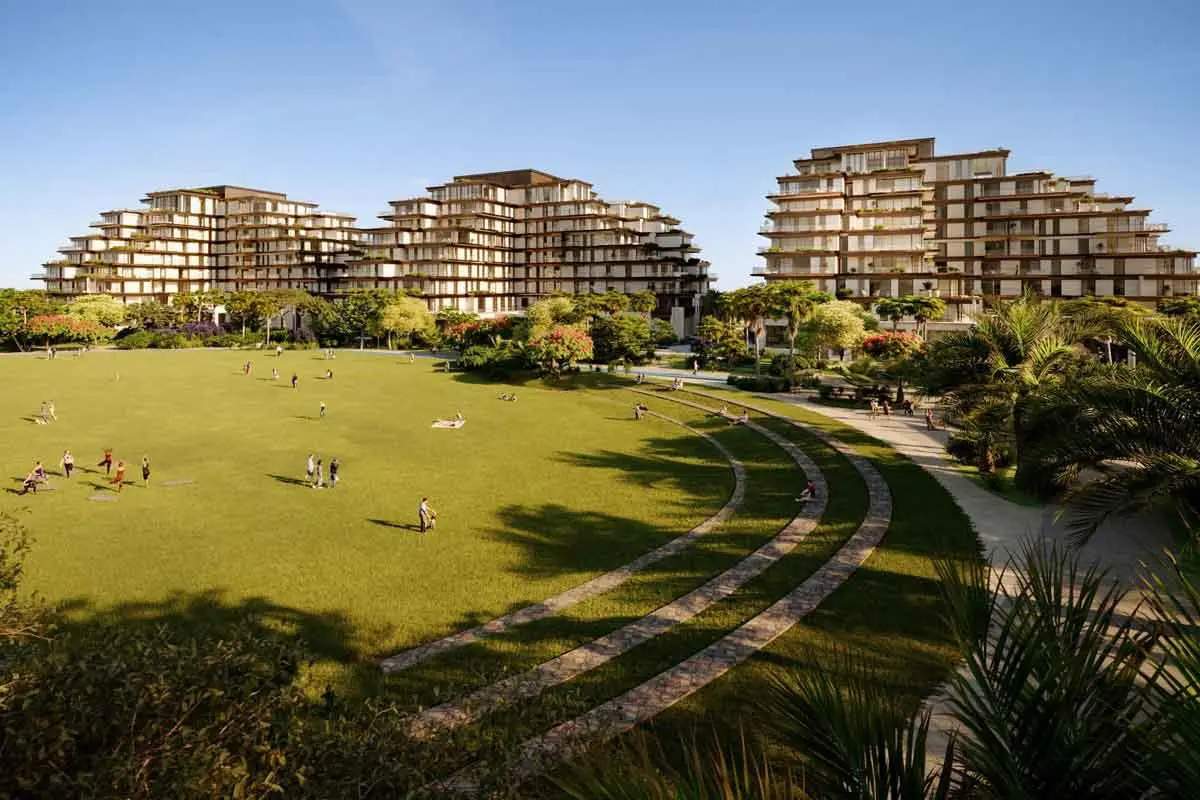
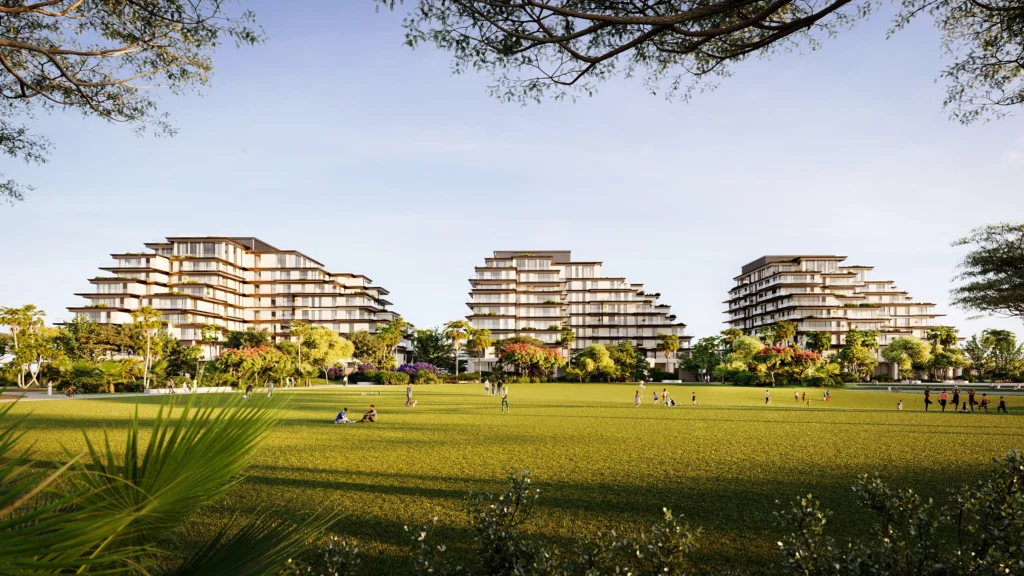
Sama Yas comprises three 9-storey buildings housing 234 residential units in Yas Park, featuring 1-3 bedroom apartments, duplexes, garden apartments, and penthouses. Aldar markets this as a departure from high-rise apartment towers dominating Yas Island real estate.
The Low-Rise Format: Architectural Reality vs. Marketing Perception
Technical Specifications:
- Building Height: 9 storeys (approximately 30-35 meters)
- Total Units: 234 units across 3 buildings
- Density: 78 units per building
- Unit Mix: 1BR, 2BR, 3BR apartments + duplexes + garden apartments + penthouses
- Size Range: 99 sqm (1,065 sq ft) to 292 sqm (3,143 sq ft)
Classification Context: In architectural terminology, “low-rise” typically refers to buildings under 4 storeys (12-15 meters). Sama Yas’s 9-storey structures technically qualify as mid-rise, not low-rise—a critical distinction when evaluating positioning claims.
However, within Yas Island’s development landscape dominated by 15-25 storey towers like Ansam, Mayan, and Water’s Edge, Sama Yas’s reduced vertical profile creates relative differentiation even if absolute classification differs.
| Development Type | Height Range | Yas Island Examples | Sama Yas Classification |
| Low-Rise | 1-4 storeys | Yas Acres villas |  Not applicable Not applicable |
| Mid-Rise | 5-12 storeys | Sama Yas (9 storeys) |  Actual category Actual category |
| High-Rise | 13-40 storeys | Ansam, Mayan, Water’s Edge | Competitive set |
Verdict: The “low-rise” terminology is marketing license rather than architectural accuracy, but creates meaningful psychological differentiation versus high-rise apartment towers that dominate the Yas Island property market.
The Competitive Moat Analysis: Five Critical Factors
To determine whether Sama Yas’ positioning creates defensible advantages, we evaluate five moat components that drive long-term value in Abu Dhabi luxury real estate.
Moat Factor 1: Scarcity Through Limited Unit Count
Sama Yas’s 234 units represent an intentional supply constraint in a market where competitors deliver 300-800 unit communities.
Competitive Comparison:
| Development | Total Units | Unit Density | Exclusivity Premium |
| Sama Yas | 234 units | 78 units/building | High scarcity |
| Mayan | 492 units | 123 units/building | Moderate scarcity |
| Water’s Edge | 688 units | 172 units/building | Lower scarcity |
| Ansam | 818 units | 204 units/building | Lowest scarcity |
Investment Implication: Limited unit count theoretically supports higher resale values and stronger rental pricing power through artificial scarcity. Historical Yas Island data shows developments under 300 units command 8-12% pricing premiums versus mega-communities exceeding 600 units.
Moat Strength: Moderate-to-Strong. While scarcity creates differentiation, Aldar could replicate this model with future phases, diluting exclusivity. A true moat exists only if this remains a limited-edition release.
Moat Factor 2: Architectural Differentiation Through Building Height
The mid-rise format (marketed as low-rise) delivers tangible lifestyle benefits that high-rise structures cannot replicate:
Functional Advantages:
- Faster elevator access (maximum 9 floors vs. 20+ floors)
- Lower service charges (fewer elevators, simpler systems)
- Enhanced natural light (reduced shadowing between buildings)
- Stronger community feel (lower resident density per building)
- Family appeal (ground-floor garden apartments feel villa-like)
Quantified Service Charge Impact: Based on comparable Yas Island communities, low-rise/mid-rise developments charge AED 12-15 per sq ft annually versus AED 16-20 per sq ft for high-rise towers with extensive vertical infrastructure.
For a 2-bedroom Sama Yas apartment (1,200 sq ft):
- Projected service charges: AED 16,800/year (AED 14/sq ft)
- High-rise equivalent: AED 21,600/year (AED 18/sq ft)
- Annual savings: AED 4,800
Over a 10-year ownership period, this represents AED 48,000 in avoided costs—a quantifiable economic advantage beyond marketing claims.
Moat Strength: Moderate. While genuine operational benefits exist, they’re replicable by competitors choosing similar formats. Not a unique structural advantage.
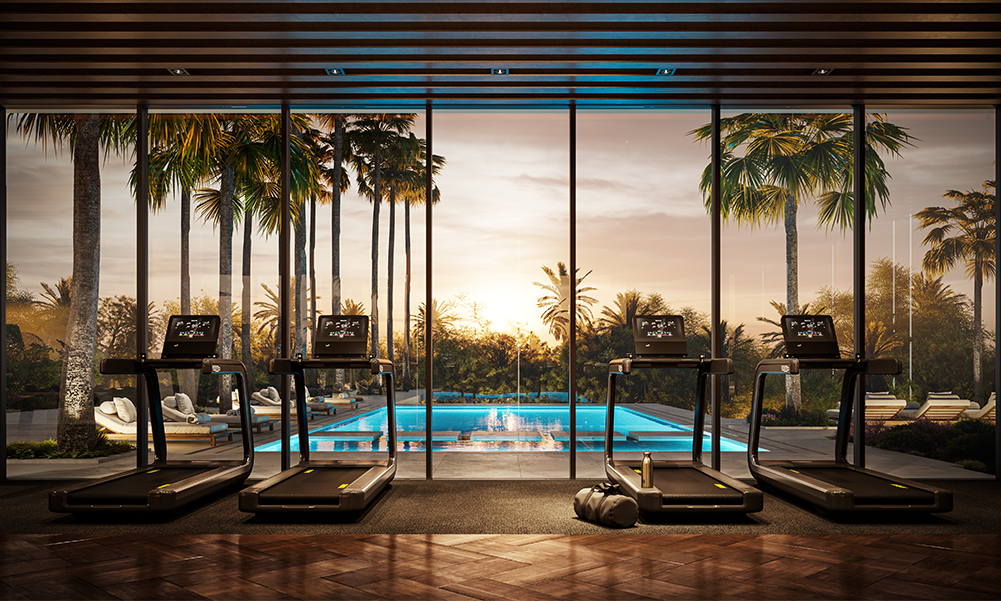
Moat Factor 3: Curated Wellness Positioning Through Celebrity Partnerships
Sama Yas differentiates through celebrity chef partnerships and designer collaborations:
Key Partnerships:
- Chef Izu Ani: Curated kitchen designs optimized for healthy living
- Julian Cross (Woods Bagot): Interior architecture emphasizing wellness
- 24/7 concierge services with fine dining menu delivery
- Boutique spa and meditation zones
Market Context: In Abu Dhabi’s luxury apartment segment, celebrity chef involvement is rare outside five-star hotel residences. This positions Sama Yas closer to branded residences (W Residences, Edition) than standard apartment communities.
Pricing Comparison:
| Development | Starting Price | Celebrity/Designer Involvement | Brand Premium |
| Sama Yas | AED 1.9M | Chef Izu + Woods Bagot | Moderate premium |
| W Residences (hypothetical) | AED 3.5M+ | Full W Hotels brand | Highest premium |
| Standard Yas apartments | AED 1.3M-1.6M | No celebrity involvement | No premium |
Moat Strength: Weak-to-Moderate. While unique in execution, celebrity partnerships don’t create barriers to entry. Competitors can engage different chefs/designers at similar costs. More positioning than sustainable advantage.
Moat Factor 4: Sustainability Certifications as Market Differentiator
Sama Yas targets LEED Gold and Estidama 3 Pearl certifications—credentials that create both marketing appeal and operational value.
Certification Benefits:
- LEED Gold: Top 25% of sustainable buildings globally
- Estidama 3 Pearl: Abu Dhabi’s highest voluntary sustainability standard
- Energy efficiency: 20-30% lower cooling costs vs. non-certified buildings
- Water conservation: 30-40% reduced consumption
- Resale premium: 5-8% value uplift based on UAE green building data
Market Penetration: Only 12-15% of Abu Dhabi apartment developments achieve LEED Gold, making it a genuine differentiator in the Abu Dhabi off-plan market.
Financial Impact on Investors: For a 2-bedroom apartment (1,200 sq ft):
- District cooling savings: AED 1,500-2,000/year (20% reduction)
- Water savings: AED 300-500/year
- Total annual savings: AED 1,800-2,500
- 10-year value: AED 18,000-25,000
Moat Strength: Moderate-to-Strong. Certifications create measurable economic value and regulatory advantages (potential future mandates), though not impossible for competitors to replicate.
Moat Factor 5: Location Within Yas Park Ecosystem
Sama Yas’s positioning in Yas Park—adjacent to the 10km canal promenade, urban beach, and green corridors—represents location-driven differentiation.
Yas Park Advantages:
- 1.6 million sqm green space (largest park on Yas Island)
- Direct access to cycling/jogging trails
- Wellness-focused amenities (outdoor gyms, yoga zones)
- Proximity to Yas Mall (3 minutes), SeaWorld (8 minutes), Ferrari World (10 minutes)
Competitive Location Analysis:
| Yas Island Sub-Location | Green Space Access | Entertainment Proximity | Premium vs. Sama Yas |
| Yas Park (Sama Yas) | Direct park access | 5-10 min to all attractions | Baseline |
| Yas Marina | Waterfront only | Adjacent to the circuit | +15-20% price |
| Yas West | Limited | 10-15 min to attractions | -10-15% price |
| Yas Links | Golf course | 15-20 min to attractions | +25-30% (villa premium) |
Moat Strength: Strong. Location is non-replicable. Only a finite number of Yas Park frontage sites exist, creating genuine scarcity that competitors cannot overcome through capital deployment alone.
The Price-Value Equation: Premium Justified or Overpayment?
Sama Yas pricing starts at AED 1.9M for 1-bedroom apartments, positioning it in the upper-middle tier of Yas Island off-plan developments.
Price Comparison Matrix
| Unit Type | Sama Yas Price | Comparable Yas Developments | Price Differential |
| 1-Bedroom | AED 1.9M – 2.2M | AED 1.3M – 1.8M (Ansam, Water’s Edge) | +16-22% |
| 2-Bedroom | AED 2.4M – 2.8M | AED 1.8M – 2.3M (Mayan, Yas Park Views) | +17-22% |
| 3-Bedroom | AED 3.2M – 3.8M | AED 2.5M – 3.2M (standard apartments) | +20-25% |
Premium Analysis: Sama Yas commands a 16-25% premium over comparable Yas Island apartments, justified through:
- Limited unit count (234 vs. 600-800 typical)
- Lower service charge structure (mid-rise vs. high-rise)
- Sustainability certifications (LEED Gold + Estidama)
- Celebrity chef/designer collaborations
- Direct Yas Park access
Value Proposition Assessment:
- For end-users prioritizing lifestyle: Premium justified through wellness amenities, lower ongoing costs
- For yield-focused investors: Premium questionable—rental rates may not support the differential
- For appreciation seekers: Premium defensible if scarcity maintains pricing power
Rental Yield Reality Check
Projected rental income for Sama Yas versus actual market rates:
| Unit Type | Sama Yas Price | Expected Annual Rent | Gross Yield | Premium-Adjusted Yield |
| 1-Bedroom | AED 2.0M | AED 85,000 – 95,000 | 4.25-4.75% | Competitive |
| 2-Bedroom | AED 2.6M | AED 120,000 – 135,000 | 4.6-5.2% | Competitive |
| 3-Bedroom | AED 3.5M | AED 160,000 – 180,000 | 4.6-5.1% | Slightly low |
Critical Finding: Despite the 16-25% price premium, rental yields remain competitive with standard Yas Island apartments due to stronger rental pricing power from limited supply and premium positioning.
However, yields fall below the 6-7% Yas Island average cited in broader market data, suggesting the premium is absorbed by purchasers rather than tenants—a capital appreciation bet rather than an income strategy.
Competitor Response Capability: How Defensible Is the Moat?
The ultimate test of competitive advantage: Can competitors replicate Sama Yas’s positioning to neutralize differentiation?
Replicability Analysis
| Sama Yas Feature | Competitor Replication Difficulty | Timeframe | Cost |
| Low unit count (234) | Easy | Immediate (design choice) | No cost |
| Mid-rise format (9 storeys) | Easy | 6-12 months | Standard |
| LEED Gold certification | Moderate | 12-18 months | +3-5% construction cost |
| Celebrity chef partnership | Easy | 3-6 months | Minimal (<AED 500K) |
| Yas Park location | Impossible | N/A | Infinite (unavailable land) |
Vulnerability Assessment: Four of five moat factors are replicable within 12-18 months at modest cost. Only location within Yas Park represents a true structural barrier—and even that’s vulnerable to:
- Alternative park developments on Yas Island (Yas Links, Yas West greenbelts)
- Competing islands with superior green space (Jubail Island’s mangrove parks)
- Villa communities offering ground-level garden access
Moat Durability: 2-3 years maximum before competitors neutralize most advantages through similar positioning.
The Marketing vs. Reality Verdict
After comprehensive analysis, Sama Yas’s “ultra-luxury low-rise” positioning falls into the “Hybrid Moat” category:
Real Competitive Advantages (Genuine Moat)
Location scarcity within the Yas Park ecosystem Limited unit count creating an artificial supply constraint Sustainability certifications reducing operating costs Mid-rise format lowering service charges vs. high-rise
Marketing Differentiation (Temporary/Weak Moat)
 “Low-rise” terminology (actually mid-rise, but effective positioning) Celebrity chef involvement (replicable, not defensible) Wellness amenities (standard in modern luxury developments) Premium finishes (capital investment, not innovation)
The Investment Perspective
For different investor profiles, the positioning creates varied value:
End-User Families:
- Strong value proposition: Lower service charges, family-friendly format, park access justify premium
- Lifestyle benefits outweigh costs
Rental Income Investors:
- Moderate value: 4.6-5.2% yields acceptable but below Yas Island’s 6-7% average
- Premium reduces yield efficiency
Capital Appreciation Speculators:
- Questionable value: Limited moat duration (2-3 years) before competitors replicate
- Early entry critical—late buyers pay a premium without a scarcity advantage
Portfolio Diversifiers:
- Strategic value: Adds mid-rise format and sustainability credentials to apartment-heavy portfolios
- Differentiation is useful but not essential
Alternative Scenarios: When Positioning Becomes Real Moat
Sama Yas’s moat strength is context-dependent. Three scenarios elevate positioning from marketing to genuine advantage:
Scenario 1: Regulatory Shift Toward Sustainability
If Abu Dhabi mandates LEED Gold for all new developments (possible by 2027-2028), Sama Yas’s early certification creates:
- Grandfathered advantages in the resale market
- Lower retrofit costs versus non-certified competitors
- Regulatory compliance premium of 8-12%
Probability: Moderate (40-50%)
Scenario 2: Yas Park Development Completion
When the full Yas Park masterplan is completed (2026-2028), properties with direct park frontage could see:
- 15-20% location premiums versus peripheral developments
- Rental yield improvements to 6-7% as park amenities mature
- Lifestyle differentiation is becoming quantifiable in pricing
Probability: High (70-80%)
Scenario 3: High-Rise Fatigue Among Buyers
If buyer preferences shift toward lower-density living (post-pandemic trend), mid-rise formats could command:
- Persistent premiums of 10-15% versus high-rise
- Faster sales velocity and lower vacancy rates
- Service charge advantages becoming the primary decision factor
Probability: Moderate-to-High (60-70%)
Comparative Analysis: Sama Yas vs. Alternative Yas Investments
For the AED 1.9M-3.8M investment range, how does Sama Yas compare to alternatives?
| Investment Option | Entry Price | Gross Yield | Capital Appreciation (3yr) | Moat Strength | Best For |
| Sama Yas (mid-rise) | AED 1.9M+ | 4.6-5.2% | 15-20% | Moderate | Lifestyle + moderate growth |
| Yas Acres Villas | AED 2.4M+ | 5.5-6.5% | 20-30% | Strong (land scarcity) | Premium growth |
| Ansam Apartments | AED 1.3M+ | 6.5-7.5% | 12-18% | Weak (high supply) | Income focus |
| Gardenia Bay | AED 0.8M+ | 6.0-7.0% | 20-25% | Moderate | Highest yield-growth combo |
Key Finding: Sama Yas doesn’t excel in any single metric but offers balanced performance across lifestyle, yield, and appreciation—appealing to risk-averse investors prioritizing steady returns over outsized gains.
For pure ROI maximization, Gardenia Bay on Yas Island or Yas Acres villas deliver superior metrics despite lacking Sama Yas’s positioning cachet.
Expert Recommendations: When to Buy Sama Yas
Sama Yas makes investment sense under specific conditions:
Green Light Scenarios (Strong Buy)
You’re an end-user family prioritizing lifestyle over yield Service charge sensitivity is high (prefer AED 14-16/sq ft vs. AED 18-20/sq ft) Sustainability credentials matter for personal values or resale strategy Limited unit supply aligns with long-term hold strategy (5-10 years) Early-phase buyers securing best unit selection and launch pricing
Yellow Light Scenarios (Proceed with Caution)
You’re a yield-focused investor expecting 6-7%+ returns Short-term flip strategy (2-3 years)—moat may erode before exit Competing projects launch with similar positioning before handover Later-phase buyers paying full premium without unit selection advantage
Red Light Scenarios (Avoid or Negotiate)
Pure rental income strategy—better yields available elsewhere Speculative appreciation bets—limited moat doesn’t support outsized gains Comparison shopping without considering the total cost of ownership Late-stage buyers (2026+) when competitor response is likely
The Broader Market Implications
Sama Yas’s positioning success (assuming strong sales) creates industry ripple effects:
Expected Market Response:
- Increased low-rise/mid-rise launches from competitors (2026-2027)
- Celebrity chef partnerships are becoming standard in the luxury segment
- Sustainability certifications shifting from differentiator to table stakes
- Unit count reduction in new projects (300-400 units vs. 600-800)
This could create a temporary window (18-24 months) where Sama Yas captures premiums before market saturation, similar to how Abu Dhabi’s first freehold waterfront properties commanded outsized returns before supply expanded.
Final Verdict: Marketing Brilliance Wrapping Moderate Substance
Sama Yas’s “ultra-luxury low-rise” positioning represents sophisticated marketing that amplifies genuine but replicable competitive advantages:
Real Value: Yas Park location (non-replicable) Lower service charges (AED 48K-72K savings/decade) Limited supply (234 units creating scarcity) Sustainability certifications (future-proofing + cost savings)
Marketing Enhancement: “Low-rise” terminology (technically mid-rise) Celebrity partnerships (branding > substance) Wellness positioning (increasingly standard)
Investment Recommendation:
- For end-users:
 (4/5) – Premium justified by lifestyle benefits
 - For yield investors: (3/5) – Acceptable but superior alternatives exist
- For flippers: ½ (2.5/5) – Moat duration too short for quick gains
- For long-term appreciation: ½ (3.5/5) – Solid performer but not market leader
Sama Yas isn’t revolutionizing luxury apartments—it’s executing a masterclass in positioning that extracts 16-25% premiums for advantages worth perhaps 10-15%. That gap represents either marketing genius or investor overpayment, depending on whether you value lifestyle perception or pure financial returns.
For the right buyer—families prioritizing wellness, sustainability-conscious investors, or those valuing exclusive communities—the premium makes sense. For everyone else, alternative Yas Island developments offer better risk-adjusted returns.
The moat exists, but it’s narrower than the marketing suggests.
Take Action: Make Data-Driven Sama Yas Decisions
Ready to determine whether Sama Yas’s positioning justifies the premium for your specific investment goals? Don’t rely on marketing alone—get the numbers that matter.
Your Next Steps:
 Fill out the form on our website prelaunch.ae to receive:
- Sama Yas detailed competitive analysis comparing all Yas Island off-plan projects
- Unit-specific ROI calculations factoring service charges, appreciation, and yields
- Positioning sustainability assessment—when the moat erodes vs. competitors
- Alternative investment recommendations for your risk-return profile
- Early-phase unit availability and floor plan optimization
 Contact Our Analytical Investment Team:
Phone: (+971) 52 341 7272
Email: sales@mbrproperties.ae
Our specialists provide:
- Competitive moat analysis for Sama Yas vs. alternatives
- Service charge modeling and total cost of ownership projections
- Rental yield forecasting based on actual Yas Island tenant data
- Capital appreciation scenarios under different market conditions
- Portfolio fit assessment—does Sama Yas complement your holdings?
 Time-Sensitive Positioning Window: Sama Yas’s differentiation premium has maximum value in 2025-2026 before competitors respond. Early buyers capture both the best unit selection and full positioning advantage before market saturation.
Whether you’re evaluating the “ultra-luxury low-rise” claim or comparing against other Abu Dhabi luxury developments, our team cuts through marketing to deliver actionable intelligence.
Don’t pay for positioning you can’t monetize. Invest based on moats that matter.
Schedule your personalized Sama Yas analysis today and discover whether the premium is justified—or whether smarter alternatives exist.
Frequently Asked Questions
Q1: Is Sama Yas actually “low-rise” or is this marketing language?
A: Sama Yas’s 9-storey buildings are technically mid-rise in architectural classification (low-rise is typically 1-4 storeys). However, relative to Yas Island’s 15-25 storey towers, the reduced height creates meaningful differentiation in elevator access, service charges, and community feel—making the positioning functionally accurate even if technically imprecise.
Q2: What’s the actual competitive advantage of having only 234 units?
A: Limited unit count creates artificial scarcity that supports 8-12% pricing premiums in resale markets and stronger rental pricing power. Historical Yas Island data shows developments under 300 units maintain better value retention, though this advantage erodes if developers launch multiple phases or competitors replicate the model.
Q3: How much lower are service charges compared to high-rise towers?
A: Sama Yas service charges are projected at AED 14-16 per sq ft annually versus AED 18-20/sq ft for high-rise towers. For a 1,200 sq ft apartment, this means AED 16,800-19,200/year vs. AED 21,600-24,000/year—a savings of AED 4,800-7,200 annually or AED 48,000-72,000 over 10 years.
Q4: Does the celebrity chef partnership actually add value?
A: The Chef Izu collaboration adds more marketing appeal than structural value. While curated kitchen designs enhance lifestyle perception, they’re easily replicable by competitors at minimal cost. The partnership’s value is primarily in brand positioning and early sales velocity, not long-term defensibility.
Q5: What rental yields can investors realistically expect?
A: Based on current Yas Island rental rates, Sama Yas should deliver 4.6-5.2% gross rental yields—competitive with premium developments but below the 6-7% Yas Island average. The 16-25% price premium reduces yield efficiency, making it better suited for lifestyle buyers or appreciation-focused investors rather than income seekers.
Q6: When does the “ultra-luxury” positioning become vulnerable to competition?
A: Moat durability is estimated at 2-3 years. Most differentiation factors (mid-rise format, celebrity partnerships, wellness amenities) are replicable within 12-18 months. Only the Yas Park location creates a lasting advantage. Early buyers (2025-2026) capture maximum positioning premium before market response.
Q7: How does Sama Yas compare to Gardenia Bay or Yas Acres for investment?
A: Sama Yas offers balanced performance (4.6-5.2% yield + 15-20% appreciation) versus Gardenia Bay’s higher yield (6-7% + 20-25% appreciation) and Yas Acres’ premium growth (5.5-6.5% yield + 20-30% appreciation). Sama Yas suits risk-averse investors prioritizing lifestyle, while alternatives deliver superior pure financial returns.
Q8: Are the LEED Gold and Estidama certifications worth the premium?
A: Yes, for long-term holders. Certifications deliver AED 1,800-2,500 annual savings through reduced cooling and water costs, plus potential 5-8% resale premiums. If Abu Dhabi mandates sustainability standards (possible by 2027-2028), certified buildings gain regulatory compliance advantages worth 8-12% versus non-compliant competitors.
Q9: What’s the best buying strategy for Sama Yas?
A: Early-phase purchase (Q1-Q2 2025) maximizes advantage: best unit selection, launch pricing, longest time for positioning premium to materialize before competition. Avoid late-stage buying (2026+) when the premium may not justify returns. Focus on park-facing units to capture the location moat.
Q10: Is Sama Yas better for end-users or investors?
A: Sama Yas favors end-users (70/30 vs. pure investors). The premium justifies itself through lifestyle benefits (lower service charges, family-friendly format, wellness amenities) more than financial metrics. Investors should target this only if portfolio diversification or sustainability positioning aligns with strategy—not for pure yield maximization.