Dubai South is undergoing the most dramatic transformation of any Dubai district, evolving from an ambitious aviation-focused concept into a fully-fledged residential, commercial, and logistics mega-city. As we approach 2026, the convergence of Al Maktoum International Airport expansion, Expo City maturation, comprehensive infrastructure completion, and massive residential project deliveries positions Dubai South as one of the emirate’s most compelling investment opportunities. This complete analysis examines how the aviation city transformation creates unprecedented value for strategic investors who understand the timing and positioning required to capitalize on this evolution.
With experts forecasting 35-45% price growth by 2030 and the world’s largest airport triggering a $35 billion Dubai South ecosystem, understanding the 2026 Dubai South transformation timeline becomes critical for maximizing returns in what many analysts consider the next generation’s Downtown Dubai.
The Grand Vision: From Concept to Reality
Dubai South, officially known as Dubai World Central (DWC), spans 145 square kilometers—larger than Manhattan—and represents Dubai’s most ambitious urban planning initiative. Conceived as an aerotropolis (a city designed around an airport), the district integrates residential communities, commercial zones, logistics hubs, educational institutions, and recreational facilities into a cohesive, self-sustaining ecosystem.
The original vision, launched in 2006, positioned Dubai South as a complement to Dubai’s established northern corridors. However, the 2020 Expo catalyzed acceleration, transforming theoretical planning into tangible infrastructure. Now, as 2026 approaches, the convergence of multiple mega-projects reaches critical mass, fundamentally altering the district’s investment profile.
The Three Pillars of 2026 Transformation
Pillar 1: Al Maktoum International Airport Expansion
Phase 1 completion scheduled for 2030 will create capacity for 260 million passengers, making it the world’s largest aviation hub. However, the 2026 milestone marks completion of critical supporting infrastructure:
- Cargo village expansion: Doubling freight handling capacity to 12 million tons annually
- Free zone facilities: 20,000+ logistics and distribution companies establishing operations
- Employment surge: Projected 500,000 aviation-related jobs by 2030, with 200,000+ arriving by 2026
- Connectivity infrastructure: Direct highway expansions, dedicated logistics corridors, and planned Blue Line metro extension connecting Dubai South to central Dubai
This aviation-centric employment growth creates the fundamental residential demand driver that distinguishes Dubai South from speculative developments lacking economic anchors.
Pillar 2: Expo City Legacy Maturation
Dubai’s master planners have repurposed the Expo 2020 site into District 2020 (now Expo City Dubai), creating a 15-minute city with offices, R&D labs, schools, and homes. By 2026, Expo City transitions from event venue to permanent economic zone:
- Corporate relocations: 150+ companies establishing Middle East headquarters
- Educational institutions: Multiple universities and research centers are opening permanent campuses
- Entertainment and culture: Museum district, performing arts center, and year-round event programming
- Residential integration: 10,000+ residential units within Expo City itself, creating a live-work-play ecosystem
The symbiotic relationship between Expo City’s white-collar employment and Dubai South’s broader residential offerings creates demand diversity that insulates the area from single-industry volatility.
Pillar 3: Infrastructure Completion and Connectivity
2026 marks the completion of foundational infrastructure that transforms Dubai South from a construction zone to a livable community:
Road Networks: Completion of Dubai-Al Ain Road expansion, Emirates Road improvements, and internal road networks connecting all Dubai South districts
Utilities: Full water, electricity, cooling, and telecommunications infrastructure supporting 1 million+ residents
Community Amenities: Shopping malls, medical facilities, international schools, parks, and recreational facilities reaching operational status
Public Transport: While the metro extension remains a future-phase, direct metro links planning and bus rapid transit systems provide immediate connectivity solutions
Understanding how connectivity via metro extensions and highways positions Dubai South as a gateway for business and leisure helps investors appreciate the infrastructure transformation’s value impact.
Residential Supply Surge: The 2026 Delivery Wave
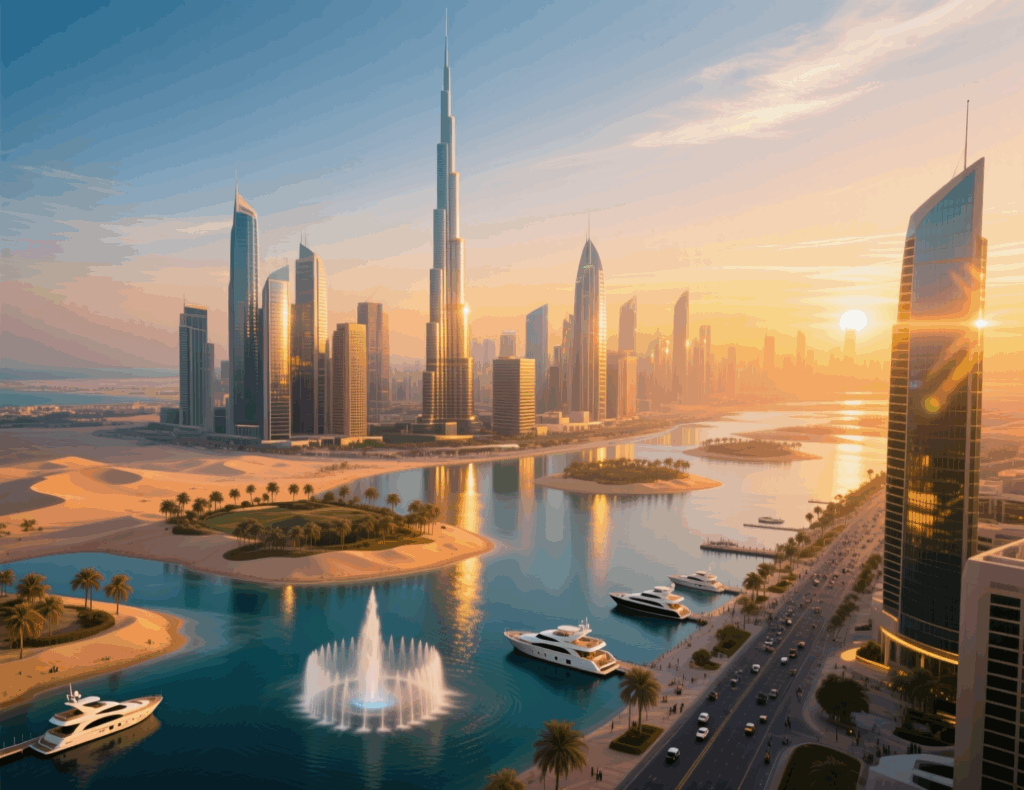
Dubai South’s residential transformation accelerates dramatically in 2026, with multiple major developers delivering thousands of units simultaneously. This supply surge requires strategic navigation, as understanding how to avoid oversupplied areas while identifying undersupplied segments becomes crucial.
Major Developer Projects Completing in 2026
Emaar South: The Anchor Development
Emaar South’s phases (e.g., Golf Views, Golf Links, Parkside) offer off-plan villas in Dubai South ranging from 2-3 bedroom townhouses to premium 4-6 bedroom villas. The 2026 completions include:
- Golf Links Phase 3: 800+ townhouses surrounding the championship golf course
- Parkside Residences: 500+ family-oriented villas with extensive green spaces
- Urbana III: Mid-rise apartment buildings targeting young professionals
Pricing Trajectory: Emaar South villas bought at 2023 pre-launch prices have appreciated 38%, demonstrating the value creation from early positioning. However, 2026 represents a critical inflection—will supply overwhelm demand, or will infrastructure completion drive absorption?
The Pulse Beachfront by Dubai South Properties
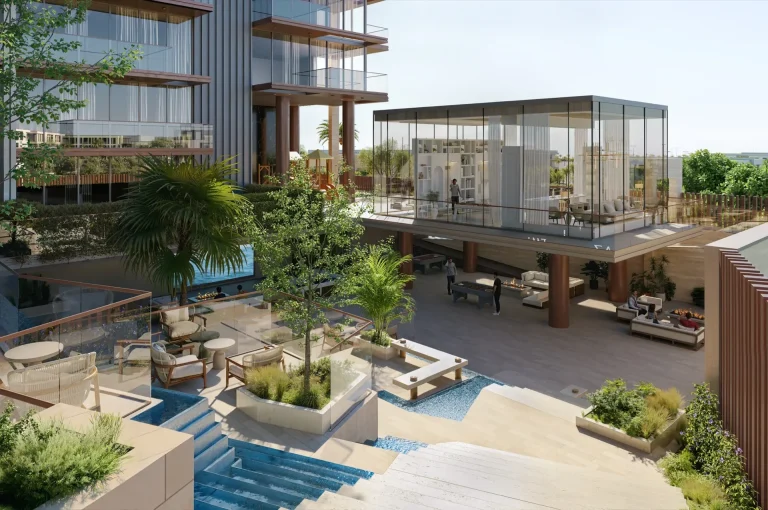
Off-plan villas in Dubai South, like The Pulse Beachfront, offer resort-style living with water sports amenities including a half-Olympic pool, lagoon, beachfront promenade, tennis, and kids’ play areas. This unique beachfront positioning within an aviation city creates differentiation that commands premium pricing despite increased supply.
Strategic Investment Insight: Properties with unique value propositions (beachfront, golf course, branded) maintain pricing power even during supply surges, while generic apartments face compression.
MAG and Azizi Developments
MAG 5 includes residential towers like MAG 505 and MAG 560, targeting the affordable-to-mid market segment. These developments completed in 2026, testing absorption capacity for smaller units.
Risk Assessment: Mid-market apartments face the highest oversupply risk. Investors should focus on differentiated products or wait for post-delivery corrections before accumulating inventory in this segment.
Employment-Driven Demand: The Economic Foundation
Unlike speculative master communities, Dubai South’s residential demand is anchored in tangible employment growth. The 2026 transformation marks the tipping point where employment reaches critical mass to support a substantial residential population.
Job Creation Milestones
| Sector | 2026 Employment Target | Average Salary Range (AED/month) | Preferred Housing Type |
| Aviation Operations | 75,000 | 8,000-25,000 | Apartments (1-2BR) |
| Logistics & Warehousing | 60,000 | 5,000-15,000 | Affordable apartments/labor accommodation |
| Corporate (Expo City) | 40,000 | 15,000-45,000 | Townhouses/villas (2-3BR) |
| Retail & Hospitality | 25,000 | 4,000-12,000 | Studio/1BR apartments |
| Education & Healthcare | 15,000 | 10,000-30,000 | Family villas (3-4BR) |
| Total Employment | 215,000 | Mixed | Diversified demand |
This employment mix creates demand across all property types, but particularly favors affordable-to-mid-market inventory matching the salary ranges of 60% of the workforce.
Investment Implication: Rental yields for villas and townhouses range from 6-8%, among the highest in the city, with apartments potentially delivering even higher yields (8-10%) as employment-driven rental demand materializes.
Price Trajectory Analysis: From Pre-Launch to 2030
Understanding Dubai South property price evolution requires examining the complete cycle from early pre-launch through infrastructure maturity.
Historical Performance (2020-2025)
2020-2021 (Pre-Expo): Average villa prices: AED 900K-1.2M | Average apartment prices: AED 450K-650K
2022-2023 (Post-Expo Launch): Villa appreciation: +25% | Apartment appreciation: +15-18%
2024-2025 (Infrastructure Build-Out): Villa prices: AED 1.4M-1.8M | Apartment prices: AED 600K-850K
Key Insight: Prices are very competitive with 2-bedroom townhouses starting around AED 0.8M, 3-beds around AED 1.1M, and 4-bedroom homes around AED 1.4M, representing exceptional value relative to established Dubai communities where comparable properties cost 40-60% more.
2026 Price Outlook: The Correction vs Growth Debate
The 2026 supply surge creates competing forces:
Downward Pressure Factors:
- 8,000-10,000 residential units are delivered simultaneously
- Broader Dubai market correction impacting all areas
- Infrastructure still maturing (metro not yet operational)
- A limited established population is creating initial rental challenges
Upward Pressure Factors:
- 215,000+ employment additions creating organic demand
- Infrastructure completion is transforming liveability perception
- Significant value gap vs established communities narrowing
- Investor recognition of long-term fundamentals
Projected 2026 Performance: Expect 5-10% softening in generic apartment inventory (oversupply pressure) while differentiated products maintain pricing or experience modest 0-5% corrections. This represents a strategic accumulation opportunity for patient investors with 3-5 year horizons.
Understanding how to capitalize on the 2026 market correction becomes particularly relevant for Dubai South positioning.
2027-2030 Growth Acceleration
Post-correction, experts forecast 35-45% price growth by 2030, driven by:
- Supply normalization: 2026-2027 delivery surge absorbed, new supply constrained
- Population maturity: Resident population reaching 400,000+, creating self-sustaining demand
- Infrastructure enhancement: Metro extension completion, additional school capacity, expanded retail
- Market recognition: Dubai South transitions from “emerging” to “established” in buyer perception
ROI Projection: Investors entering during the 2026 correction window can reasonably expect total returns of 50-65% (capital appreciation plus rental income) over the 2026-2030 period.
Investment Strategy Matrix: Positioning for Maximum Returns
Successfully navigating Dubai South’s transformation requires differentiated strategies based on investor profile and timeline.
Strategy 1: Conservative Long-Term (5-10 Year Horizon)
Target Properties: Emaar South villas, branded developments, Expo City residences
Entry Timing: Immediate to Q2 2026 (before infrastructure completion drives pricing)
Rationale: Established developer projects with strong fundamentals provide capital preservation plus moderate appreciation. Investors are particularly drawn to Emaar South villas for steady returns, with estimates showing 1-bed apartments yielding approximately 6.8% ROI, 2-bed approximately 5.1%, while 3-4 bedroom units average approximately 4%-5% ROI.
Risk Level: Low—these properties will recover quickly from any temporary corrections
Strategy 2: Opportunistic Value (3-5 Year Horizon)
Target Properties: Mid-market apartments from quality developers, The Pulse beachfront units, MAG developments during the correction
Entry Timing: Q3-Q4 2026 (maximum correction depth)
Rationale: Capture 10-15% discount during supply-driven correction, benefit from employment-driven rental demand immediately, and achieve 35-45% capital appreciation by 2030
Risk Level: Moderate—requires tolerance for 6-12 months of negative carrying costs before rental absorption
Strategy 3: Aggressive Accumulation (3-7 Year Horizon)
Target Properties: Multiple smaller units for rental portfolio, land plots for development, distressed sales
Entry Timing: Throughout 2026-2027, deploying capital opportunistically
Rationale: Build a diversified rental portfolio generating 8-10% gross yields while benefiting from long-term area appreciation. Understanding high-yield opportunities in mid-market properties like the nearby Dubai Investment Park provides context for Dubai South’s rental potential.
Risk Level: Higher—requires active management, market knowledge, and financial reserves
Critical Success Factors: What Separates Winners from Losers
Developer Selection
During supply surges, evaluating developer credibility and financial stability becomes paramount. Prioritize:
Tier-1 Safe: Emaar, Dubai South Properties (government-backed)
Tier-2 Acceptable: MAG, Azizi (proven track records, sufficient scale)
Avoid: New developers without a Dubai delivery history
Location Micro-Analysis
Not all Dubai South locations are equal. Premium positioning includes:
- Within 2km of Expo City: Benefits from economic activity and cultural amenities
- Golf course frontage: Commands 15-20% premiums, limited supply
- Near planned metro stations: Future connectivity value
- Established neighborhoods: Avoid isolated developments lacking community critical mass
Unit Type Selection
Match unit types to employment-driven demand:
Highest Demand: 1-2BR apartments (aviation/logistics workers), 3BR townhouses (corporate families)
Moderate Demand: Studios (entry-level workers), 4BR villas (senior executives)
Lower Demand: 5BR+ luxury villas (limited target market in employment-focused city)
Conclusion: Dubai South’s Defining Decade Begins in 2026
The 2026 transformation represents Dubai South’s graduation from ambitious concept to functioning city—a critical inflection point that forward-thinking investors recognize as a generational wealth-building opportunity. The convergence of Al Maktoum Airport expansion, Expo City maturation, infrastructure completion, and massive residential deliveries creates complexity that separates sophisticated investors from speculative gamblers.
Dubai South’s evolution parallels Downtown Dubai’s transformation two decades earlier—initial skepticism, supply challenges, infrastructure delays, followed by explosive growth as economic fundamentals overwhelm temporary oversupply concerns. The difference? Dubai South offers 3-4x the scale at 60% lower entry prices, with employment growth anchored in aviation, logistics, and technology rather than tourism-dependent hospitality.
The strategic imperative is clear: position during the 2026 supply-driven correction, benefit from immediate employment-driven rental yields, and capitalize on long-term appreciation as Dubai South matures into one of the emirate’s premier residential destinations. This isn’t speculation—it’s calculated positioning based on tangible infrastructure, employment growth, and Dubai’s proven track record of transforming ambitious visions into valuable reality.
At Prelaunch.ae, we maintain the most comprehensive Dubai South intelligence platform available, tracking every project, monitoring infrastructure completion timelines, analyzing employment data, and maintaining direct relationships with all major developers active in the district. Our expert team has guided hundreds of clients through similar transformative investment opportunities, from early Downtown Dubai positioning to Dubai Hills Estate accumulation.
We understand that successful Dubai South investing requires granular knowledge unavailable through generic market reports—which specific sub-communities offer the best value, which developers deliver on schedule, how to structure purchases for optimal payment flexibility, and precisely when maximum correction depths occur. Our institutional-grade intelligence, combined with exclusive developer access providing pre-launch opportunities, positions our clients for exceptional returns while competitors struggle with information asymmetry.
Whether you’re seeking conservative villa investments with established developers, opportunistic apartment accumulation during corrections, or aggressive portfolio building for maximum rental yield, professional guidance through Dubai South’s transformation is essential. The difference between mediocre and exceptional returns won’t be luck—it’ll be intelligence, timing, and execution expertise.
Ready to position yourself in Dubai South’s transformation before infrastructure completion drives prices higher? Fill out the form on our website prelaunch.ae to receive personalized Dubai South investment strategies, exclusive pre-launch project access, and comprehensive area intelligence unavailable through public sources.
Contact our Dubai South specialists for expert transformation analysis:
Phone: (+971) 52 341 7272
Email: sales@mbrproperties.ae
Let us help you transform Dubai South’s 2026 inflection point into your portfolio’s defining growth opportunity. Your path to exceptional returns in the aviation city begins with strategic positioning today—ensuring you benefit from the complete transformation through 2030 and beyond.
Frequently Asked Questions (FAQs)
Q1: Is Dubai South too far from central Dubai to attract residents and maintain property values?
Not in Dubai’s evolving urban structure. The planned Blue Line metro extension will connect Dubai South to Downtown Dubai in 25-30 minutes by 2030. More importantly, Dubai South functions as a self-contained aerotropolis—residents work, live, and access amenities locally rather than commuting to northern districts. With 215,000+ jobs arriving by 2026, proximity to employment matters more than distance to old city centers.
Q2: How does the 2026 supply surge affect investment timing for Dubai South?
The supply surge creates strategic entry opportunities. Generic apartments will face 10-15% corrections in Q3-Q4 2026, providing optimal accumulation windows. However, differentiated properties (Emaar villas, beachfront units, Expo City residences) maintain pricing and should be purchased before infrastructure completion. Strategic investors deploy capital across both timeframes, securing differentiated properties immediately while maintaining reserves for correction-period opportunities.
Q3: What are realistic rental yields in Dubai South, and when will rental demand materialize?
Current rental yields range from 6-8% for villas and townhouses, potentially reaching 8-10% for mid-market apartments as employment grows. Rental demand acceleration begins in 2026 as aviation-sector employment surges and Expo City corporations relocate staff. Properties purchased in 2026 can achieve full rental occupancy by Q4 2026-Q1 2027, generating immediate positive cash flow while appreciation builds through 2030.
Q4: Should I invest in Dubai South or established communities like JVC or Dubai Marina?
Different risk-return profiles serve different strategies. Established communities offer immediate liquidity, proven rental demand, and stable appreciation (5-8% annually). Dubai South offers higher growth potential (35-45% through 2030) but requires 3-5 year patience and tolerance for temporary volatility. Optimal portfolio strategy: 60-70% established communities (stability) + 30-40% Dubai South (growth acceleration).
Q5: How do I evaluate which Dubai South projects offer best value during the supply surge?
Prioritize projects within 2km of Expo City or Al Maktoum Airport employment centers, select established developers (Emaar, Dubai South Properties), target unit types matching employment profile (1-2BR apartments, 3BR townhouses), verify infrastructure completion timelines, and compare per-square-foot pricing against comparable Dubai communities. Properties priced 40%+ below equivalent established-area inventory with completion in 2026-2027 offer exceptional value.
Q6: What happens if Al Maktoum Airport expansion delays beyond 2030?
Airport timeline delays are unlikely given strategic national importance, but if delays occur, they primarily impact long-term appreciation velocity rather than fundamental viability. Short-term employment growth (200,000+ jobs by 2026) and Expo City maturation provide sufficient demand drivers for 2026-2028 period. Even with airport delays, Dubai South appreciates 20-30% through 2030 versus 35-45% in accelerated scenario—still exceptional returns compared to alternative investments.