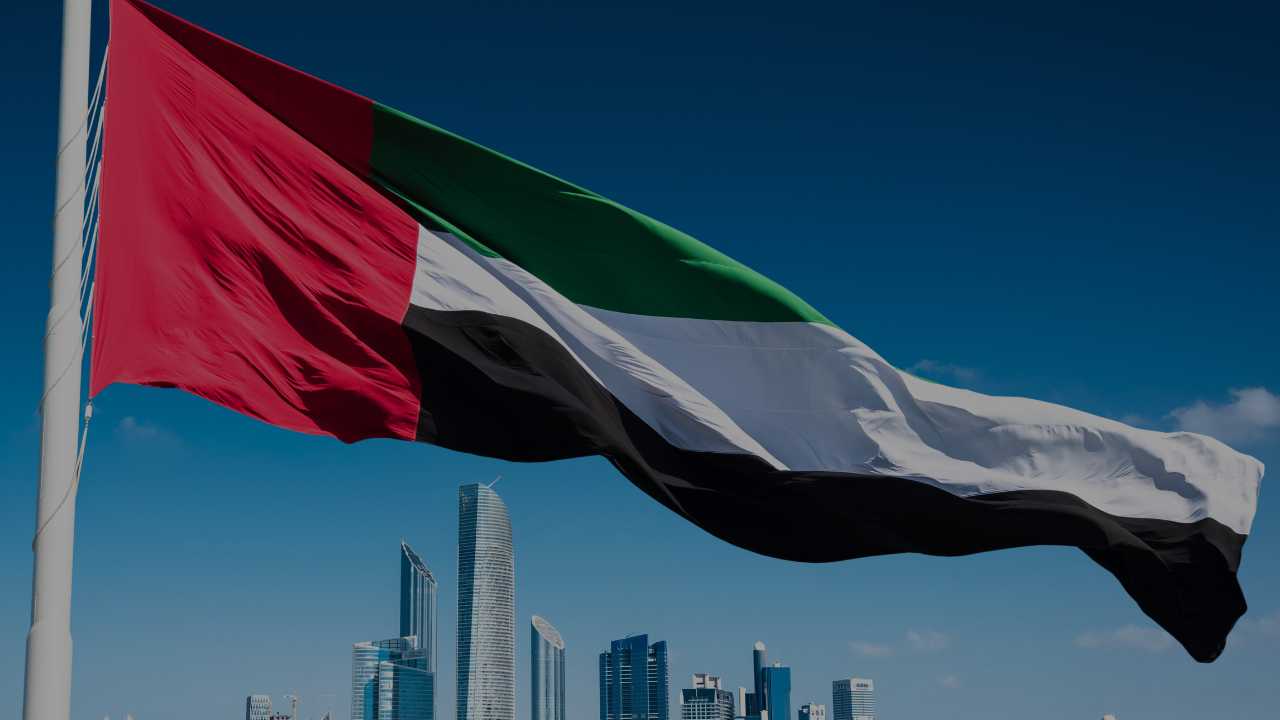
Let us start with the truth: the headlines are unsettling. Reports of Iranian missile strikes reaching parts of the UAE, regional tensions rippling across Gulf airspace, and UAE property stocks sliding as much as 5% in a single session these are not things any investor can or should dismiss. Fear in the face of genuine regional instability is not weakness. It is rational.
But fear is also a notoriously poor investment advisor. And right now, fear is distorting the view of a market that entered this period of geopolitical turbulence from a position of extraordinary structural strength one that has absorbed wars, pandemics, oil shocks, and global financial crises before, and emerged each time not merely intact, but larger, more liquid, and more globally integrated than before.
This article is for long-term buyers who feel the anxiety but want the data. We will acknowledge what is real, examine what history says, and then present the three structural pillars population-driven demand, end-user activity, and deep market liquidity that explain why disciplined investors are not running from Dubai property in March 2026. They are watching, waiting, and in some cases, preparing to step in.
Acknowledging the Fear: What Has Actually Changed
The honest starting point requires naming what is genuinely concerning, not minimising it. Reports of strikes near UAE infrastructure — including airports and port facilities have introduced a new psychological variable into Dubai’s real estate narrative: the question of physical safety. For the past decade, Dubai’s pitch to global investors included an implicit guarantee of regional insulation. That guarantee has been, at minimum, complicated.
The near-term market response is already visible. Analysts at ANAROCK describe a “wait-and-watch” sentiment among buyers, particularly in the off-plan and speculative segments. Some buyers who had already booked off-plan units are seeking to renegotiate terms. Prospective purchasers especially those based in Europe, North America, and parts of Asia are pausing decisions pending clarity. The mid-market segment (properties valued AED 1.2M–3.2M) is seeing intensified negotiations, with buyers seeking discounts and developers showing more flexibility than at any point in the past three years.
What has changed: Sentiment has softened. Transaction activity is slowing. Some speculative Western capital has paused. Off-plan developers face slower booking rates. UAE property equities sold off sharply in the immediate aftermath of strike reports. What has not changed: Population growth continues. End-user rental demand is uninterrupted. Market liquidity remains historically deep. No structural economic damage has occurred. The regulatory framework, Golden Visa programme, and zero-tax environment are unchanged.
The distinction between those two lists is everything for a long-term buyer. Sentiment slowdowns are temporary by definition — they resolve when clarity returns. Structural demand drivers, by contrast, take decades to build and cannot be switched off by a news cycle. For a grounded analysis of how supply and sentiment interact in Dubai’s current cycle, read Dubai Off-Plan Market 2026: Boom, Bubble, or Just Maturity?
The Historical Verdict: Dubai Has Done This Before
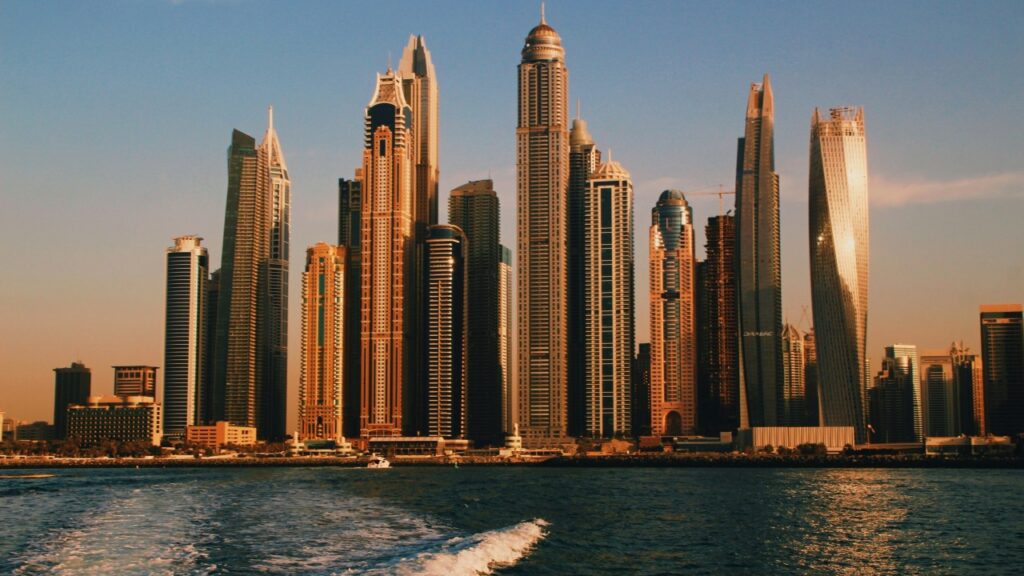
Dubai’s property market has now navigated five distinct crisis cycles in twenty years. Each one generated headlines suggesting the end of the boom. Each one was followed by a recovery that exceeded the pre-crisis peak. The pattern is not reassuring because it is optimistic — it is reassuring because it is documented and consistent.
| Crisis / Shock | Year | Immediate Market Impact | Recovery Period | Market vs Pre-Crisis Level |
| Global Financial Crisis | 2008–2009 | Property prices fell 40%–60% in some segments | 5–6 years (full); 2–3 years (partial) | +150% above 2009 trough by 2014 |
| Oil Price Crash | 2014–2016 | Prices declined 20%–25%; transactions fell sharply | 2 years moderate; recovery from 2020 | +60%+ above 2016 low by 2025 |
| COVID-19 Pandemic | 2020 | Transactions fell 39% in Q2 2020; short-term price softening | 12–18 months — fastest recovery on record | Prices 75% above pre-COVID by Q1 2025 |
| Russia-Ukraine War | 2022 | Brief global uncertainty; capital flight to safe havens | Less than 6 months | Dubai benefited — Russian capital inflows surged |
| Iran-UAE Tensions (Current) | 2026 | Stocks -5%; sentiment cautious; activity slowing | Dependent on duration — est. 3–9 months | Structural demand base intact; fundamentals unchanged |
The COVID-19 recovery is the most instructive. The pandemic was a global economic shutdown — not a regional geopolitical event — and Dubai’s property market still recovered within 12 to 18 months, driven by exactly the same structural pillars now in place: population inflows, investor-friendly policy, and end-user demand. The current geopolitical tension — serious as it is — has produced no equivalent economic shutdown. It is a sentiment event, not yet a structural one. As Mohamed Alabbar, founder of Emaar Properties, noted when asked whether he was concerned: “No, I’m not concerned at all. Smart capital understands a country like this, with stable leadership and safety.”
Pillar One: Population Growth – The Demand Floor That Does Not Disappear
Wars and geopolitical crises affect investor sentiment dramatically. They do not, in any meaningful short-term sense, affect where 4 million people need to live. Dubai’s residential population crossed 4 million in late 2025 and added 89,695 new residents in Q1 2025 alone — the equivalent of a mid-sized city arriving in three months. This growth is driven by economic migration, corporate relocations, family reunification, and Golden Visa residency uptake. None of those forces has been reversed by the current tensions.
In fact, history suggests regional instability accelerates certain population flows into Dubai, not away from it. When conflicts erupt in neighbouring geographies, displaced capital and displaced families both seek the nearest safe, high-infrastructure city with rule of law, zero income tax, and freehold property rights. Dubai has been the beneficiary of capital flight from Iraq, Syria, Lebanon, Egypt, and — most recently — Russia and Ukraine. Regional tensions are, counterintuitively, a net positive for Dubai’s safe-haven demand category, particularly in the luxury and prime residential segments.
| Population Demand Indicator | Current Figure (2025–2026) | Implication for Property |
| Dubai resident population | 4 million+ (Q4 2025) | Requires 1.4–1.6M housing units; undersupply in prime zones |
| Annual net population growth | 170,000–225,000 per year | Equivalent to 60,000–80,000 new households annually |
| Expatriate share of population | 88%–89% | Deep, structural rental market; most residents are tenants |
| Leases signed (Q3 2025) | 150,000+ apartment leases in one quarter | Rental demand is not sentiment-driven — it is necessity-driven |
| First-time home buyer activity | AED 3.25B in 6 months (DLD programme) | End-user buying as primary residence, not speculation |
| Golden Visa property investors (2025) | Over 72,000 visas issued via the property route | Long-term resident lock-in reduces capital flight risk |
The population-to-housing ratio in Dubai’s prime zones remains undersupplied relative to structural demand. Even in a scenario where international investor activity pauses for six months, the resident-occupier and long-term rental demand floor does not move. This is the fundamental distinction between a market driven by speculative sentiment — where demand can evaporate overnight — and one anchored by population necessity. Dubai is, increasingly, the latter. For a full mapping of demand by community, see our Dubai 2026 Oversupply Risk Map: Safe Zones vs Hotspots.
Pillar Two: End-User Activity – The Market Is Structurally Less Speculative Than Before
One of the most important structural changes in Dubai’s property market over the past three years is the shift from speculative-led to end-user-led demand. In 2020, speculative off-plan resales accounted for roughly 14%–18% of all transactions. By Q3 2025, that figure had fallen to just 6.1% (Cavendish Maxwell). The dominant buyer today is purchasing to occupy, to rent to a long-term tenant, or to hold through a full appreciation cycle — not to flip before handover.
This shift matters enormously during geopolitical stress. Speculative markets unwind rapidly under uncertainty because speculators have no reason to hold if sentiment turns. End-user and long-term rental markets are structurally inelastic: a family that has relocated to Dubai for a career opportunity still needs to renew their lease or complete their purchase, regardless of what is happening in the news. The Dubai Land Department’s First-Time Home Buyer Programme, which generated AED 3.25 billion in purchases in its first six months, with 70% of participants intending to buy within six months as primary residences, is direct evidence of this structural grounding.
Key insight: A market where 94% of transactions are developer-initial sales or long-term hold purchases — not speculative flips has a dramatically different stress response profile than a speculator-dominated market. Reduced speculative activity means the downside on any sentiment-driven pause is limited: there is no overleveraged speculative inventory waiting to be dumped at distressed prices.
This is why analysts at ANAROCK are forecasting a slowdown in transaction volumes, not a collapse in prices: end-users simply sit on the sidelines briefly, then return once clarity is established. The market resets at a slightly slower pace, not at a lower structural level. The strategic implication: long-term buyers who act during a sentiment-driven pause often capture the best entry prices of the entire cycle. For smart strategies to navigate the current market shift, explore Navigating Dubai’s 2025 Market Shift: Smart Strategies for Pre-Launch Investors.
Pillar Three: Deep Market Liquidity 270,000 Deals in a Single Year
Dubai’s property market entered this period of geopolitical stress with the deepest transaction liquidity in its history. In 2025, the emirate recorded approximately AED 917 billion (~$250 billion) in real estate transactions across 270,000 deals — the highest annual total ever recorded (ANAROCK). Nearly 200,000 of those were residential transactions valued at AED 538 billion, with buyers from over 150 nationalities participating. This is not a thin, sentiment-sensitive market. It is one of the most internationally diversified, deeply liquid property markets on earth.
| Market Liquidity Indicator | 2025 Figure | Context |
| Total transaction value | AED 917B (~$250B) | Highest annual total in Dubai’s history (ANAROCK) |
| Total transaction volume | 270,000+ deals | Up 18.33% year-on-year |
| Residential deal value | AED 538 billion | ~200,000 residential transactions |
| Investor nationalities active | 150+ | Most internationally diversified property market in Middle East |
| Indian buyer share | 20%–22% of foreign purchases | Largest single foreign investor group; sustained demand |
| Off-plan share of sales | ~65% | Broad developer and investor participation |
| Price appreciation since 2021 | +60%–75% | Entering corrections fromthe position of enormous structural gains |
Market depth matters because it means no single buyer group can destabilise the market by exiting. Even if speculative Western capital pauses entirely — which is the scenario most likely during a period of regional uncertainty — the market continues to function, transact, and price-discover on the back of GCC buyers, Indian investors, East Asian capital, and domestic end-users. Dubai’s investor diversification is itself a structural risk buffer that most global property markets cannot match. For context on how this positions Dubai versus a near-term price correction scenario, read Dubai Market Correction 2025: Price Decline Analysis After 51-Month Growth.
What Long-Term Buyers Should Actually Do Right Now
| Scenario | Recommended Action | Rationale |
| Already own Dubai off-plan — pre-handover | Hold your position | Structural demand drivers intact; forced selling would crystallise an unnecessary loss |
| Committed buyer — ready to purchase | Proceed with prime / master-planned assets | Sentiment pause = reduced competition; pricing concessions now available that disappear at stabilisation |
| Considering Dubai for the first time | Research now; act on clarity | Geopolitical pauses create entry windows; don’t overpay for urgency but don’t miss the window |
| Short-term speculator/flipper | Reassess immediately | Sentiment-dependent exit strategies are most exposed; mid-market flip windows have narrowed significantly |
| Long-term rental income investor | Proceed selectively in prime zones | End-user rental demand is structurally intact; rental yields 5%–9% and growing in controlled-supply areas |
The consistent signal across all long-term data is that buyers who acted during Dubai’s sentiment-driven pauses consistently outperformed those who waited for certainty. Certainty, in property markets, is always priced in. The investor who waited for COVID clarity in 2021 entered at 30%–40% above the 2020 trough. The investor who entered at the trough when fear was highest captured the full cycle. The same dynamic is at work now.
For investors who want to understand how a potential price correction in certain segments could actually represent a buying opportunity, see Dubai 2026 Off-Plan Gold Rush: How to Profit from the Coming Price Correction.
Long-Term Value Does Not Panic, Neither Should You.
Dubai property amid war headlines is not a new story — it is a story this market has written and rewritten across two decades. The ending has always been the same: structural demand wins, liquidity returns, and the investors who held their nerve were rewarded. At Prelaunch.ae, we provide exclusive pre-launch access to Dubai’s most fundamentally grounded developments — prime communities, Tier-1 developers, and locations where population-driven demand does not depend on any single news cycle to remain intact.
Fill in the enquiry form at prelaunch.ae today. Our advisors are on hand to walk you through your specific situation, timeline, and the opportunities that a moment like this genuinely creates for long-term buyers.
📞 Call / WhatsApp: (+971) 52 341 7272
📧 Email: [email protected]
🌐 Website: www.prelaunch.ae
Frequently Asked Questions (FAQs)
1. Should I cancel my Dubai off-plan purchase because of war headlines?
In almost all cases, no. Cancelling an off-plan contract typically involves losing your initial deposit and potential legal costs. More importantly, the structural case for Dubai property has not changed: population is growing, rental demand is intact, the regulatory framework is solid, and the market has recovered from every prior crisis — including the 2008–2009 crash that was far more severe than the current sentiment event.
2. How have past geopolitical events affected Dubai property prices?
Dubai’s property market has historically demonstrated rapid recovery after geopolitical and economic shocks. The COVID-19 pandemic — the most severe disruption in recent memory — caused a market dip that fully recovered within 12–18 months, with prices subsequently rising 60%–75% above pre-pandemic levels by Q1 2025. Regional geopolitical tensions have, in some cases, actually increased capital inflows into Dubai as displaced wealth from conflict zones seeks safe-haven assets.
3. Is Dubai property still a safe haven during regional instability?
Dubai’s safe-haven status is not a marketing slogan — it is built on zero income tax, zero capital gains tax, freehold foreign ownership, Golden Visa eligibility, and a regulatory framework that has proven resilient across five crisis cycles. Physical incidents near UAE infrastructure have tested — but not broken — this status. The key question, as ANAROCK’s research director noted, is not whether tensions affect activity, but how quickly confidence returns once they stabilise — and historically, that window is three to nine months.
4. Which types of Dubai property are most resilient during geopolitical uncertainty?
Prime and luxury assets in established, constrained-supply communities — Downtown Dubai, Palm Jumeirah, Dubai Hills Estate, Dubai Marina — consistently demonstrate the greatest resilience. These areas attract high-net-worth buyers whose decisions are driven by long-term wealth preservation, not short-term sentiment. Mid-market, high-supply zones like JVC face more pressure. Long-term rental income properties in prime communities are the most defensible position in the current environment.
5. Is now a good time to buy Dubai off-plan, given the current situation?
For long-term buyers with a five-plus year horizon, sentiment pauses historically represent the best entry conditions of a market cycle — reduced competition, developer flexibility on payment terms, and pricing that has not yet repriced for the full recovery. The risk of waiting for full certainty is that certainty brings back the competition and the pricing that made entry difficult in 2023–2025. For exclusive pre-launch options available right now, fill in the form at prelaunch.ae.