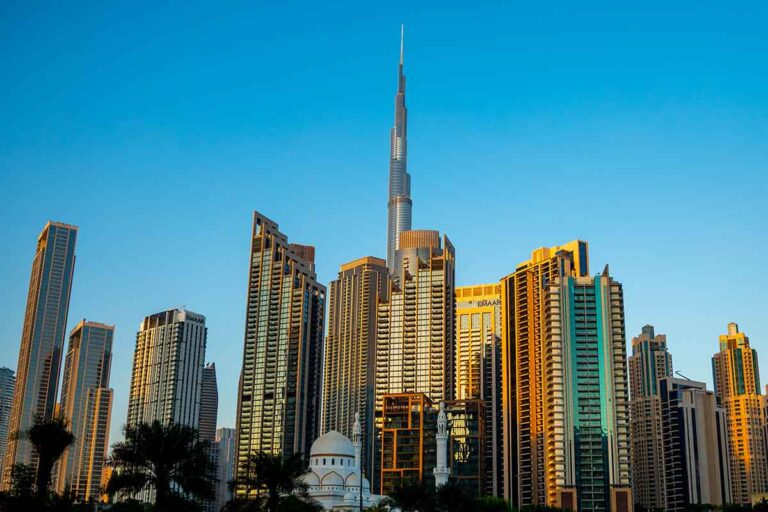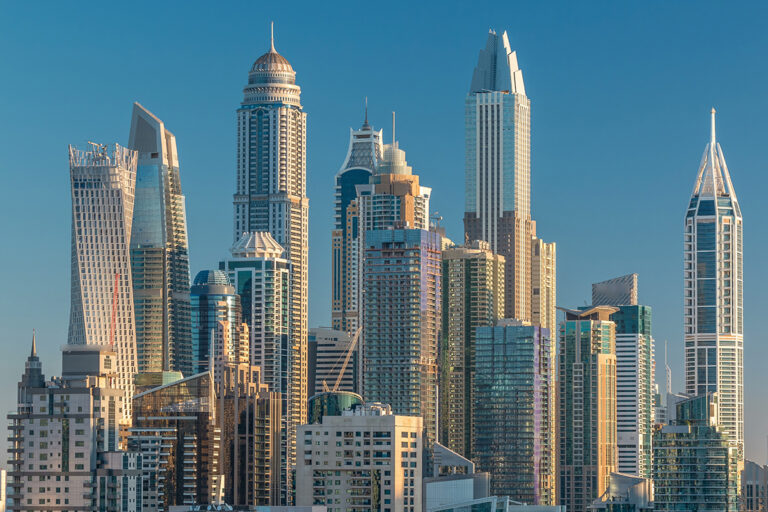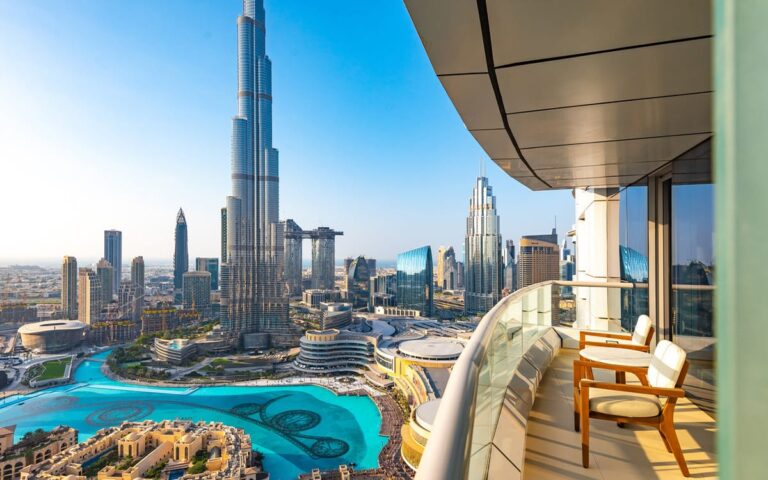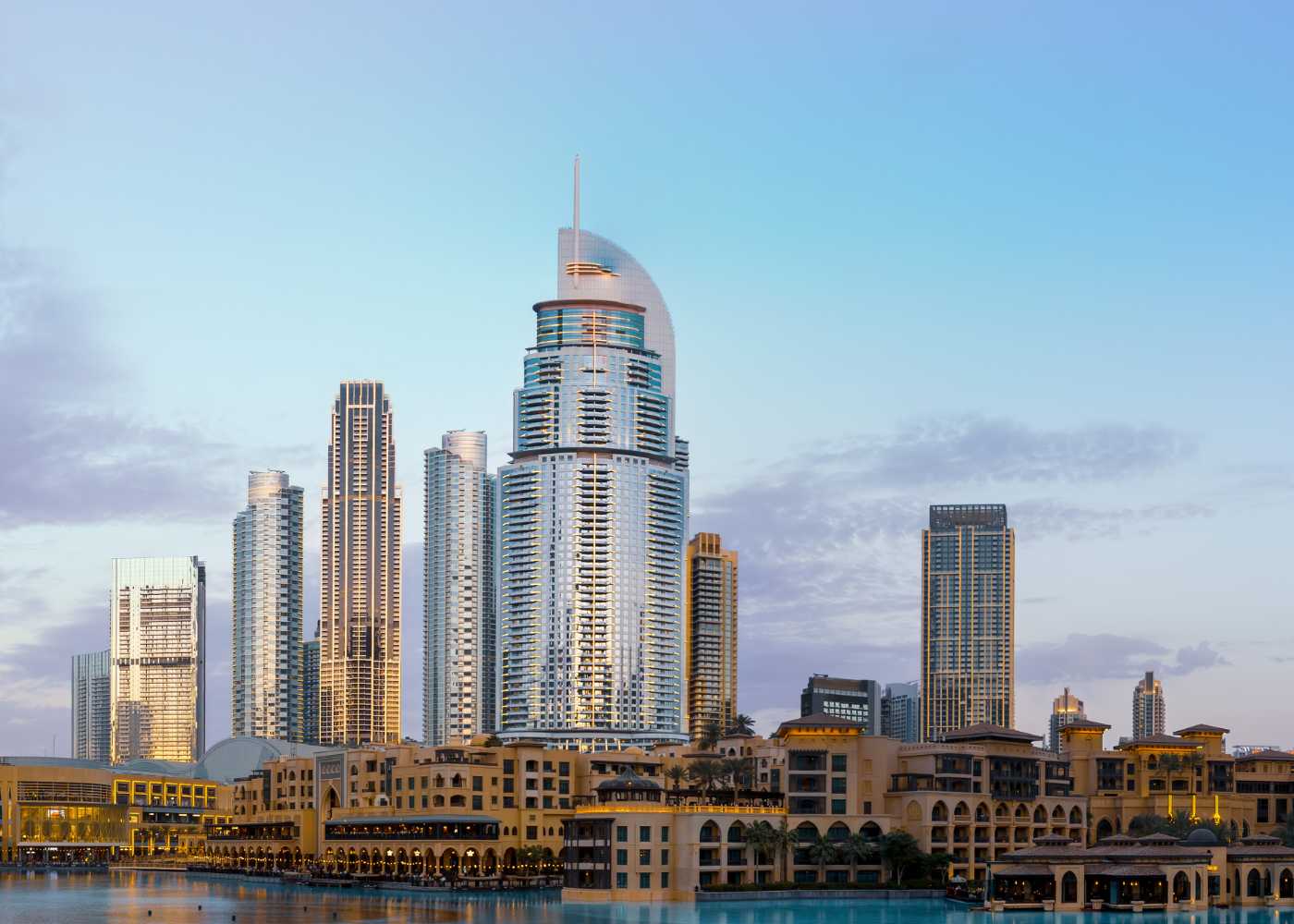
While the world’s cameras were fixed on the Gulf skies, a single transaction told a different story. On the Jumeirah Peninsula, a 31,201 sq ft apartment at Aman Residences Dubai changed hands for Dh422 million — $115 million — sold off-plan, in the middle of active regional conflict. Reported by Khaleej Times and verified by fäm Properties through DXBinteract’s DLD-linked data platform, the deal was not a rumour or a preview booking. It was a closed, registered transaction.
In real estate, capital does not lie. When the world’s wealthiest buyers — who have access to every market on earth, who face no mortgage pressure, and whose advisers include some of the most sophisticated risk analysts money can hire — choose to commit $115 million to Dubai luxury property during an active US-Israel-Iran conflict, that is a signal. Not a guarantee. Not a prediction. A signal. And for investors studying Dubai prelaunch off-plan opportunities in March 2026, learning to read that signal correctly could be the most valuable thing you do this year.
This article uses the luxury segment’s deal flow to map a confidence indicator for prelaunch buyers — showing precisely why the capital that matters most has not disappeared from Dubai, and what that means when you are evaluating a prelaunch launch in the weeks ahead.
Why Dubai Luxury Property Activity Is the Market’s Most Honest Indicator
Not all transactions carry equal informational weight. A first-time buyer purchasing an AED 900,000 studio in JVC is driven by personal necessity, payment plan affordability, and residency goals. Their purchase tells you about population demand. It does not tell you about global capital confidence.
A buyer spending $115 million on a single off-plan apartment is operating in a completely different register. They have no mortgage. They face no liquidity pressure. They can wait — indefinitely — for conditions they consider ideal. When they transact in conflict conditions, they are expressing a deliberate, fully-informed, high-conviction view that Dubai real estate is structurally sound enough to deserve a nine-figure commitment right now. That is the signal.
| Dubai Ultra-Luxury Market Benchmark | Verified Figure |
| $10M+ residential transactions (full year 2025) | 500 deals — a Dubai record; up 15% YoY by volume |
| Total value of $10M+ sales (2025) | $9.05 billion — up 27.7% year-on-year (Knight Frank) |
| $25M+ segment growth (2025) | 45% year-on-year increase in the number of sales |
| Q4 2025 ultra-prime transactions alone | 143 deals above $10M — up 39% on Q4 2024 |
| Aman Residences deal (March 2026, during conflict) | Dh422M ($115M) — off-plan, closed amid active regional tensions |
| Jan 2026 $10M+ share of total transactions | 6.39% of all Dubai residential deals |
| Prime price appreciation since Q4 2020 | ~194% — Knight Frank Prime Global Cities Index |
| 2026 prime price forecast (pre-conflict consensus) | +3% — moderation, not reversal |
Sources: Knight Frank Prime Residential Review Jan 2026, Arabian Business, DLD via DXBinteract, Khaleej Times, March 2026
The Aman Residences transaction is not a statistical outlier whisked into existence by an eccentric billionaire. It sits on top of a base of 500 confirmed $10M+ deals in 2025 alone, with 68 of those exceeding $25 million. Palm Jumeirah led Q4 with 28 ultra-prime transactions; Palm Jebel Ali added 22 more. La Mer, Emirates Hills, Tilal Al Ghaf, and Dubai Hills Estate each featured prominently.
As Will McIntosh of Knight Frank noted, Dubai has built destination communities that integrate leisure, safety and convenience — attracting the global elite at a scale never seen before. That infrastructure does not evaporate in a geopolitical storm. It is precisely why the elite are still here.
To understand the full landscape of where this ultra-prime demand is concentrating, explore our detailed look at Dubai’s prime prelaunch zones and what drives luxury off-plan demand in 2026.
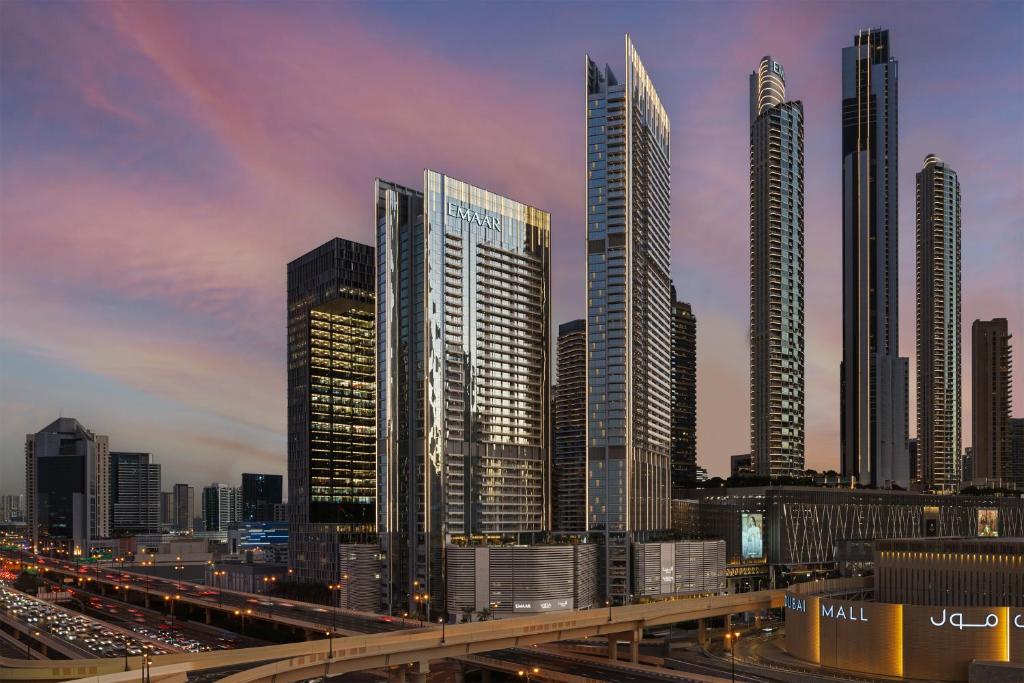
The Luxury–Prelaunch Spillover: How Top-End Deal Flow Flows Downmarket
Here is the mechanism that matters for prelaunch buyers who are not in the $10M+ bracket. Ultra-luxury activity does three things that directly affect the mid-market and prelaunch off-plan segment:
1. It anchors price psychology. When a sq ft rate of Dh13,525 is established at Aman Residences — during a war — it resets the floor for what trophy real estate in Dubai is worth. Every developer launching a premium prelaunch project in 2026 now references that benchmark. Price discovery at the top end flows down into mid-market pricing confidence.
2. It sustains developer cash reserves. S&P Global Ratings confirmed in March 2026 that, following strong sales momentum over the past three years, Dubai and UAE property developers sit on ample cash collections. Ultra-luxury closings are among the largest single contributors to those reserves. A developer with strong liquidity delivers on time. That directly protects the prelaunch buyer.
3. It attracts and retains the HNWI population, generating rental and resale demand. Dubai welcomed nearly 10,000 millionaires in 2025 (Henley & Partners), injecting more than $63 billion in private wealth into the UAE economy. Those HNWIs do not only buy ultra-prime. They rent, invest in portfolios, and create end-user demand across the spectrum — including for pre-launch developments, where absorption matters most.
| Luxury Segment Signal | Direct Effect | Prelaunch Buyer Implication |
| $115M Aman deal closes during conflict | Price floor maintained at ultra-prime level | Developer confidence to hold prelaunch pricing |
| 500+ $10M sales in 2025 (record) | HNWI population growing, the UAE as a home base | End-user demand base expanding; absorption risk lower |
| 45% jump in $25M+ sales YoY | Capital flight to Dubai, not from Dubai | Foreign buyer pipeline intact for prelaunch launches |
| 70%+ transactions now end-user driven (fäm Properties) | Market structure is more stable than in past cycles | Handover and resale liquidity are more reliable |
| S&P confirms developer cash reserves are strong | Low delivery risk from top-tier developers | Choose established developers; escrow is safer |
| Jan 2026: avg transaction value up to AED 4.15M | Buyers shifting to higher-value assets | Quality prelaunch stock has a deepening demand pool |
Sources: Khaleej Times, S&P Global Ratings, fäm Properties/DXBinteract, Henley & Partners, Knight Frank, DLD, March 2026
Firas Al Msaddi, CEO of fäm Properties, put it clearly when speaking about the Aman deal: “Over 70 per cent of transactions are now end-user driven, not speculative. The buyer base is globally diversified. Mortgage activity has doubled in four years. The regulatory environment has matured. The fundamentals haven’t changed overnight because of regional events.”
That structural shift — from speculative flipping to genuine end-user demand — is arguably the most important development in Dubai real estate over the past three years. This means demand supporting prelaunch absorption is more durable than in any previous cycle.
Seasoned investors who understand the relationship between Dubai luxury market confidence and off-plan prelaunch performance have a significant edge. See how the 2026 buyer shift from rentals to off-plan is reshaping demand patterns across the UAE.
The January 2026 Foundation: Why the Numbers Before the War Matter
Context is everything. The Dubai luxury property confidence signal in March 2026 does not exist in a vacuum — it rests on a January 2026 that was, by any measure, historic. Understanding that the baseline is critical for prelaunch buyers assessing current risk.
| January 2026 Dubai Market Metric | Verified Data |
| Total residential transactions | 17,000+ deals — a record for any January on record |
| Total transaction value | AED 72 billion (~$19.72 billion) — up 43.9% year-on-year |
| Off-plan share of all transactions | 71.27% — dominating the market |
| Off-plan value surge YoY | +67% in transaction value vs January 2025 |
| Average transaction value | AED 4.15 million — up from AED 3M average of prior 3 years |
| Cash purchase share | ~60% — low leverage, structurally resilient base |
| Mortgage transaction value | AED 32.28 billion — nearly triple January 2025’s AED 10.86B |
| Properties above AED 10M (share of total) | 6.39% — sustained HNWI participation |
Sources: DLD, Springfield Properties January 2026 Report, Economy Middle East, co-own.ae, March 2026
The key metric that most commentators miss: sales value grew 62.6% in January while volume grew only 22.2%. When value outpaces volume by that margin, it signals a decisive shift toward higher-quality, higher-price assets — exactly what you would expect from a market whose ultra-luxury segment is deepening rapidly. This is the base from which March 2026’s conflict-era transactions are being measured.
As one market analyst noted, “2025 was momentum-led. 2026 will be the year buyers operate with far more logic and discipline.” That discipline — visible in the 60% cash purchase rate and the sustained $10M+ activity — is exactly what makes the luxury signal credible, not just exciting.
The Prelaunch Buyer Takeaway: How to Read the Luxury Signal Correctly
The $115 million deal is not a permission slip to buy anything with a Dubai postcode. It is a directional indicator that must be interpreted with precision. Here is how to apply the luxury confidence signal to a specific prelaunch decision:
| What the Luxury Signal Tells You | What It Does NOT Tell You | Buyer Action |
| Global capital has not abandoned Dubai | That every prelaunch project is safe | Shortlist supply-constrained, prime-corridor projects |
| Developer cash positions remain strong (S&P) | That undercapitalised developers are equally secure | Verify escrow compliance and the developer’s track record independently |
| End-user demand is structurally deep (70%+) | That speculative mid-market projects have full absorption | Check launch absorption rate: target 60%+ in first 30 days |
| HNWIs are staying and buying in Dubai | That pricing will not moderate in high-supply areas | Avoid heavily-supplied corridors (JVC mass-market, Dubai South mid-tier) |
| Rental yields of 6–9% remain intact | That all off-plan will outperform | Match the project to end-user demand and rental yield comparables |
Source: fäm Properties, S&P Global, DLD, March 2026
Sophisticated investors, since the conflict escalation on February 28, have been doing exactly this. As one leading broker told Khaleej Times: “Since the escalation, we have started receiving calls from seasoned and well-capitalised investors looking for attractive deals. They are not speculative buyers — they are experienced market participants who understand cycles.”
Those buyers — Emirati, GCC-based, and established resident expats with strong cash positions — are hunting for quality prelaunch stock where sellers may be pricing defensively. The luxury market’s continued activity tells them what they need to know: the structural thesis is intact. The question is only which specific projects deserve conviction.
To go deeper on where premium prelaunch stock is currently delivering the strongest investment case, read our full guide to maximising returns with UAE pre-launch properties in 2026.
Branded Residences: The Luxury Subsegment Driving the Confidence Signal
The Aman Residences deal is not just a luxury transaction — it is a branded residence transaction. This matters for prelaunch buyers because branded residences are the fastest-growing prelaunch category in Dubai, and they are the segment most insulated from the supply pressure affecting mass-market off-plan.
Aman, Bugatti, Lamborghini, Mercedes-Benz, and similar brand collaborations carry three structural advantages that a generic off-plan cannot replicate:
Brand premium pricing floor. The Bugatti Residences penthouse in Business Bay sold for approximately AED 550 million ($150M) — the most expensive penthouse ever sold in the Middle East. That ceiling creates an aspirational price discovery ladder below it that protects branded tier pricing even in soft sentiment environments.
International recognisability. A buyer in Singapore, London, or Mumbai understands immediately what Aman or Bugatti represents. This global brand literacy dramatically broadens the buyer pool, reducing the absorption risk that prelaunch investors most fear.
Low leverage, high-commitment buyer profile. As Knight Frank noted, branded residence buyers in Dubai have “materially lower leverage and average holding assumptions shifted toward medium- to long-term ownership.” That means less forced selling and greater price stability at handover — directly protecting the off-plan buyer who purchased at launch.
For prelaunch buyers seeking Dubai off-plan luxury investments with strong absorption fundamentals, branded and ultra-prime projects offer the most defensible position in a sentiment-stressed environment. Explore prelaunch penthouse and ultra-luxury inventory currently available across Dubai’s prime corridors.
The Conclusion: Capital Votes With Itself And It Has Not Left Dubai
The world can argue about headlines. Capital cannot argue with itself. A $115 million off-plan apartment at Aman Residences was registered with the Dubai Land Department while US and Israeli strikes on Iran were still active. Five hundred transactions above $10 million were completed in 2025 — the busiest ultra-prime year in Dubai’s history. January 2026 delivered AED 72 billion in transactions, with values outpacing volume by more than three to one.
This is what the luxury signal tells the prelaunch buyer: the thesis has not broken. The city that earned its safe-haven status through zero tax, Golden Visa residency, RERA-regulated escrow, and world-class infrastructure — continues to earn it, in the most adverse conditions it has faced. The buyers who ignored that signal after the Russia-Ukraine war, after COVID, after the 2008 crash, all missed recoveries that reached new all-time highs.
The right response to luxury deal flow in a conflict is not euphoria. It is calibrated confidence: choose supply-constrained locations, verify developer quality and cash reserves, check prelaunch absorption rates, and confirm escrow compliance. Do that work, and the luxury market’s signal becomes actionable intelligence rather than just a reassuring headline.
Read our analysis of how the 2026 off-plan delivery wave will affect Dubai property prices and prelaunch opportunities, and explore smart investor strategies for navigating Dubai’s shifting prelaunch market in 2025–2026 for the complete decision framework.
Access Exclusive Prelaunch Properties in Dubai’s Prime Corridors
Our experts are monitoring every new prelaunch launch in Dubai’s most supply-constrained, HNWI-demand-backed locations — so you don’t have to.
Fill in the form at prelaunch.ae/contact-us for a free consultation tailored to your budget and goals.
📞 (+971) 52 341 7272 | ✉ [email protected]
Frequently Asked Questions
Q1: Does the $115M Aman Residences deal mean Dubai property is safe to buy right now?
It means global capital has not withdrawn from Dubai’s prime market, which is a meaningful signal. However, “safe” depends on the specific project, location, developer quality, and your investment horizon. The luxury deal confirms the structural thesis; due diligence on the specific prelaunch confirms the individual opportunity. Treat the luxury signal as directional intelligence, not a blanket green light.
Q2: What is the connection between Dubai luxury property confidence and prelaunch off-plan performance?
The luxury segment anchors price psychology, sustains developer cash reserves, and retains the HNWI population that generates rental and resale demand across all price tiers. When $10M+ deals are still closing during a conflict, it tells developers, banks, and mid-market buyers that the city’s core value proposition — safety, infrastructure, tax efficiency, lifestyle — has not been fundamentally compromised.
Q3: Which areas are driving Dubai’s ultra-luxury demand in 2026?
Palm Jumeirah led Q4 2025 ultra-prime sales with 28 transactions above $10M, followed by Palm Jebel Ali (22 deals). La Mer, Emirates Hills, Tilal Al Ghaf, Dubai Hills Estate, and Mohammed Bin Rashid City also featured prominently. For prelaunch buyers, these corridors represent the most resilient segments given constrained supply and deep HNWI demand.
Q4: Should I be looking at branded residence prelaunch projects specifically?
Branded residences carry structural advantages — globally recognised price floors, broader international buyer pools, and low-leverage, long-term holder profiles — that make them among the most defensible prelaunch categories in a volatile sentiment environment. They typically require a higher entry price point, but the absorption risk at launch is generally lower, and the handover and resale liquidity is stronger.
Q5: How does January 2026’s record data affect the risk assessment for March 2026 prelaunch buying?
January 2026 established a historic baseline: 17,000+ transactions, AED 72 billion in value, 71% off-plan share, and 60% cash purchases. That structural depth means the market entered the war shock from a position of unusual strength. The shock hit a well-capitalised, end-user-driven market, not a leveraged, speculative one — and that distinction is critical when assessing how deep and durable any correction might be.
Q6: Is Dubai’s luxury market purely driven by foreign buyers — and what happens if they leave?
Foreign buyers dominate the ultra-prime segment, but the structure has diversified significantly. Over 70% of all Dubai transactions are now end-user driven (fäm Properties), and the January 2026 data shows robust participation from Emirati buyers, GCC long-term investors, and established resident expats. The UAE Golden Visa programme has also converted transient investors into long-term residents who buy for genuine occupancy, not just capital parking.