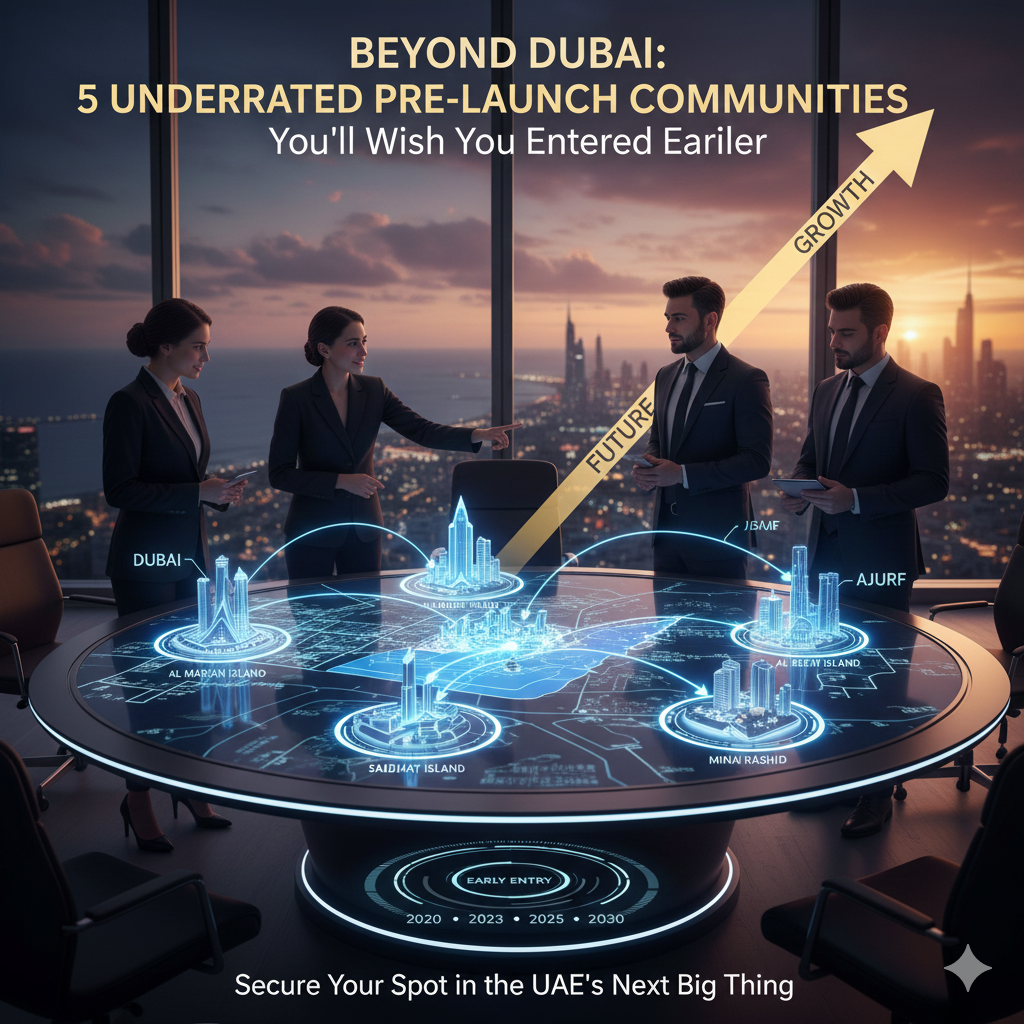
While Dubai Marina, Downtown Dubai, and Palm Jumeirah dominate investor conversations and command premium prices, a handful of underrated pre-launch communities across the UAE are quietly building compelling investment narratives backed by transformative infrastructure, cultural projects, and tourism catalysts. These are the locations where entry prices remain 30-50% below Dubai’s prime areas despite comparable—or superior—growth stories unfolding around them.
The opportunity lies in the disconnect between current pricing and future potential. Five years ago, investors who recognized Business Bay’s transformation or Dubai Hills Estate’s potential captured exceptional returns by entering before the crowd. Today’s equivalent opportunities exist in communities where massive catalysts are already funded and under construction, but pre-launch pricing hasn’t yet reflected the magnitude of change coming by 2027-2030.
This article profiles five genuinely underrated communities where pre-launch properties offer the rare combination of accessible entry points, concrete development catalysts, and appreciation potential that could rival—or exceed—Dubai’s established investment zones. These aren’t speculative land releases in unproven locations; they’re infrastructure-backed, government-supported communities with clear paths to transformation.
1. Al Marjan Island, Ras Al Khaimah: The Wynn-Powered Tourism Revolution
Current Reality vs. 2027 Vision
Al Marjan Island today is a pleasant coastal community offering affordable waterfront living approximately 45 minutes from Dubai. Al Marjan Island in 2027-2030 will be the UAE’s first integrated casino resort destination, anchored by the $3.9 billion Wynn Al Marjan Island Resort, bringing 1,542 luxury rooms, conference facilities, beach clubs, and most importantly, gaming operations that will attract international visitors year-round.
The Investment Case
Al Marjan Island properties currently trade at AED 1,200-1,800 per square foot—approximately 60% below Dubai Marina’s AED 3,500-5,500 per square foot—despite waterfront positioning and comparable building quality. This pricing gap exists because the transformation story hasn’t fully materialized yet. However, with Wynn’s opening confirmed for early 2027 and RAK targeting 3.5 million annual visitors (up from 1.3 million in 2024), the fundamental drivers are solidifying rapidly.
Rental yields tell a compelling story: annual lease apartments generate 7.5-8.2% yields, while properties optimized for short-term rentals are already achieving 10-18% returns from weekend tourists and Dubai residents seeking staycations. Post-Wynn opening, these yields could compress as property values appreciate, but the combination of yield plus capital appreciation creates exceptional total return potential, as documented in comprehensive analyses of RAK’s casino and tourism-driven investment boom delivering 8-10% yields.
| Metric | Current (2025) | Projected (2030) |
| Avg. Property Price/sq ft | AED 1,200-1,800 | AED 2,400-3,200 |
| Annual Rental Yield | 7.8-8.5% | 6.5-7.5% (as prices appreciate) |
| STR Rental Yield | 10-18% | 12-20% (tourism surge) |
| Transaction Volume (Annual) | AED 15B (2024) | AED 35-40B (projected) |
| Tourist Arrivals (RAK) | 1.3M | 3.5M+ |
Pre-Launch Opportunities
Current pre-launch projects within 2 kilometers of the Wynn Resort include waterfront apartments starting from AED 750,000 for studios and AED 1.2 million for one-bedroom units. Developers are offering flexible payment plans with 10-20% down payments and construction-linked installments extending to 2027-2028 completion dates—perfectly timed for Wynn’s opening.
Risk Factors
The Al Marjan thesis is binary: if Wynn succeeds and attracts projected visitor volumes, early investors capture Dubai Marina-like appreciation compressed into 3-5 years. If gaming reception disappoints or tourism growth stalls, the area faces oversupply risk from an aggressive development pipeline. This high-risk, high-reward profile makes Al Marjan suitable for 15-20% portfolio allocations rather than core holdings.
2. Saadiyat Island, Abu Dhabi: The Cultural District Finally Completes
Current Reality vs. 2027 Vision
Saadiyat Island has been Abu Dhabi’s “next big thing” for over a decade, with the Louvre Abu Dhabi opening in 2017 generating significant buzz but an incomplete transformation. Saadiyat Island in 2027-2030 finally realizes its cultural district vision as the Guggenheim Abu Dhabi, Zayed National Museum, and Natural History Museum completed, creating the Middle East’s premier art and culture destination.
The Investment Case
While Saadiyat has appreciated significantly (villa prices up 21% year-on-year), the island remains fundamentally underpriced relative to its cultural positioning. Properties on Saadiyat trade at 40% discounts to Dubai’s Palm Jumeirah despite comparable waterfront quality, superior cultural amenities, and dramatically lower supply levels. The disconnect reflects skepticism about whether cultural projects would actually be completed—skepticism that’s evaporating as construction milestones are achieved.
Saadiyat’s investment appeal combines moderate annual rental yields (6-7% for apartments, 5-6% for villas) with strong capital appreciation driven by severe supply constraints. Only 189 luxury villas delivered in Q1 2025 against demand from 13,941 registered high-net-worth buyers creates a 17:1 imbalance that underpins pricing power. For investors exploring opportunities in this unique cultural hub, understanding Saadiyat Island’s villa surge and Golden Visa luxury home incentives becomes essential to capitalizing on this undersupply dynamic.
Pre-Launch Opportunities
Current pre-launch villa projects on Saadiyat start from AED 4.5 million for three-bedroom configurations in communities like Mamsha Gardens and Saadiyat Lagoons. Apartment opportunities begin around AED 1.8 million for two-bedroom units with museum views. These entry points provide access to Abu Dhabi’s premier address at pricing that will seem impossibly low once all cultural institutions operate simultaneously.
Risk Factors
Saadiyat faces potential oversupply with 11,000+ units scheduled for delivery through 2030. However, the island’s positioning as Abu Dhabi’s cultural flagship and stringent development standards suggest demand will absorb supply, particularly from international buyers seeking Golden Visa-eligible properties in tax-free environments.
3. Al Reem Island, Abu Dhabi: The Business District Transformation
Current Reality vs. 2030 Vision
Al Reem Island is already a successful residential community with 200,000+ residents, but the current wave of development is transforming it into a self-contained business district combining residential, commercial, and lifestyle amenities. Al Reem Island by 2030 will function as a true live-work-play ecosystem with expanded office space, international schools, healthcare facilities, enhanced public transportation, and vibrant retail/F&B options.
The Investment Case
Al Reem Island currently delivers the highest rental yields in Abu Dhabi, with studios generating 8.5-9.2% and one-bedroom apartments achieving 7.8-8.5% yields—performance that exceeds Dubai Marina by 200+ basis points. Property prices surged 38% year-on-year in Q2 2025, but remain below AED 1,900 per square foot for premium waterfront units, creating ongoing value relative to Dubai equivalents.
The island’s advantage lies in its maturity paradox: it’s established enough to have proven rental demand and infrastructure, but young enough to still offer growth upside as the business district vision completes. The cluster of pre-launch towers arriving in 2025-2026 (Renad, Marlin 2, Radiant Marina, The District, Radiant Atrium) addresses historical gaps in retail and commercial infrastructure while maintaining supply discipline that prevents oversaturation, dynamics explored in depth when examining Al Reem Island’s waterfront pre-launch apartments and 2025 transformation.
| Al Reem Island Metrics | Studios | 1-Bedroom | 2-Bedroom |
| Gross Rental Yield | 8.5-9.2% | 7.8-8.5% | 7.2-7.8% |
| Average Price/sq ft | AED 1,600-1,900 | AED 1,700-2,000 | AED 1,800-2,100 |
| Projected Appreciation (2025-2030) | 40-55% | 40-55% | 35-50% |
| Current Occupancy Rates | 90-95% | 90-95% | 88-93% |
Pre-Launch Opportunities
Pre-launch apartments on Al Reem Island range from AED 650,000 for studios in projects like Radiant Atrium to AED 1.8 million for premium two-bedroom waterfront units. Payment plans typically follow 60/40 or 70/30 structures with handover in 2027-2028, allowing investors to secure today’s pricing before the business district transformation completes.
Risk Factors
Al Reem Island’s main risk is that its transformation is incremental rather than revolutionary. Unlike Al Marjan’s single mega-catalyst (Wynn) or Saadiyat’s cultural institutions, Al Reem’s value creation comes from steady infrastructure improvements that could take longer to materialize than projected. However, this gradual approach also reduces downside risk compared to more speculative opportunities.
4. Masdar City, Abu Dhabi: The Sustainable Future Arrives
Current Reality vs. 2030 Vision
Masdar City began as Abu Dhabi’s bold sustainable urban experiment in 2008, progressing slowly for years with limited residential development. Masdar City in 2027-2030 accelerates dramatically as residential communities are completed alongside expanded IRENA headquarters, research facilities, and commercial zones, creating a genuine sustainable smart city rather than a concept.
The Investment Case
Masdar City represents the most contrarian opportunity on this list because it lacks the obvious appeal of waterfront locations or entertainment destinations. However, its sustainability credentials, government backing, and connection to Abu Dhabi’s innovation economy create unique demand from environmentally conscious professionals and companies prioritizing ESG commitments.
Properties in Masdar City offer 7-8% rental yields with entry prices from AED 900,000 for one-bedroom apartments—approximately 30-40% below comparable Al Reem Island properties. This discount reflects Masdar’s distance from Abu Dhabi’s city center (approximately 17 kilometers) and its still-developing commercial infrastructure. However, as remote work normalizes and sustainability becomes a genuine purchasing criterion rather than marketing fluff, Masdar’s positioning could shift from niche to mainstream, particularly for international companies relocating regional headquarters to Abu Dhabi.
Pre-Launch Opportunities
Pre-launch residential projects in Masdar City include eco-certified apartments and townhouses with integrated smart home technology, solar capabilities, and LEED/Estidama certifications. Entry points start from AED 800,000 for one-bedroom units with green building features that command rental premiums from sustainability-focused tenants.
Risk Factors
Masdar City’s absorption depends on commercial development keeping pace with residential supply. If office and research facilities don’t materialize as planned, the area could face extended commuter-driven rental demand rather than evolving into a true live-work community. However, government commitment remains strong, with infrastructure investment continuing regardless of private sector timing.
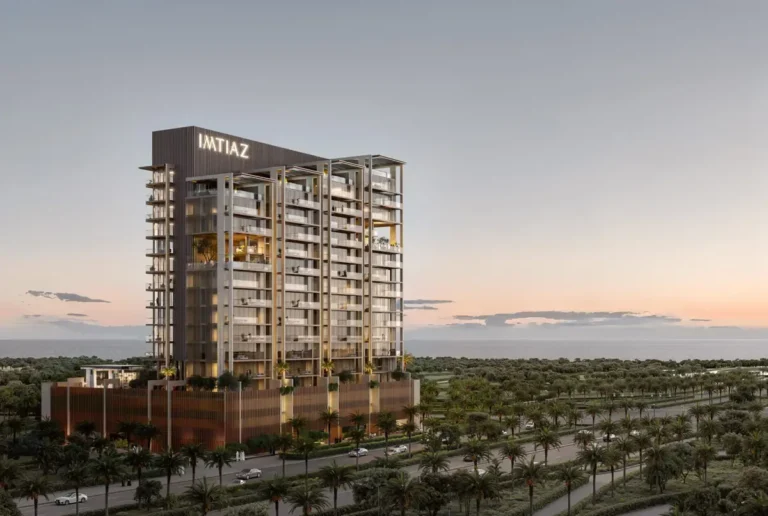
5. Mina Al Arab, Ras Al Khaimah: The Family-Friendly Beach Alternative
Current Reality vs. 2030 Vision
Mina Al Arab is RAK’s established waterfront community offering beach access, lagoons, and family-oriented amenities at pricing well below Dubai equivalents. Mina Al Arab by 2030 becomes RAK’s premier family destination as additional phases completed, retail infrastructure expands, and proximity to Wynn Al Marjan Island (just 8 kilometers) drives demand from casino resort employees and visitors seeking nearby accommodations.
The Investment Case
Mina Al Arab offers the best value-for-money waterfront living in the UAE, with villas starting from AED 1.5 million and apartments from AED 600,000—pricing that’s 50-60% below comparable Dubai communities. Rental yields range from 7-8.5% for apartments and 6-7% for villas, supported by occupancy from Dubai commuters and RAK-based professionals.
The community benefits from Wynn’s proximity without the speculative pricing premiums concentrated on Al Marjan Island itself. Families and long-term residents prefer Mina Al Arab’s quieter, more community-oriented environment over Al Marjan’s tourist-heavy positioning, creating stable rental demand less dependent on short-term rental success. This dynamic creates lower-risk exposure to RAK’s tourism transformation while still capturing appreciation spillover, trends that align with broader patterns discussed in analyses of Abu Dhabi’s high-yield investment zones, where similar family-friendly communities outperform tourist-heavy areas.
Pre-Launch Opportunities
Current pre-launch developments in Mina Al Arab include beachfront apartments starting from AED 550,000 for studios and townhouses from AED 1.3 million. Payment plans often extend to 5-7 years with minimal down payments (10-15%), making them accessible entry points for investors building RAK exposure without betting exclusively on Al Marjan’s high-risk, high-reward thesis.
Risk Factors
Mina Al Arab’s success depends on RAK’s overall tourism transformation succeeding. If visitor growth stalls or Wynn underperforms, Mina Al Arab’s positioning as a secondary location could limit appreciation potential. However, the community’s lower entry prices and family-oriented positioning provide more downside protection than speculative Al Marjan investments.
Comparative Analysis: How These Communities Stack Up
To understand how these underrated communities compare against each other and established Dubai locations, consider this comprehensive comparison:
| Community | Entry Price (1BR) | Rental Yield | 5-Yr Appreciation Forecast | Risk Level | Best For |
| Al Marjan Island | AED 1.2M | 7.5-8.2% (annual), 10-18% (STR) | 80-120% | High | Aggressive growth investors |
| Saadiyat Island | AED 1.8M | 6-7% | 50-70% | Medium | Conservative growth investors |
| Al Reem Island | AED 1.4M | 7.8-8.5% | 40-55% | Low-Medium | Income-focused investors |
| Masdar City | AED 900K | 7-8% | 35-50% | Medium | Contrarian/sustainability investors |
| Mina Al Arab | AED 650K | 7-8.5% | 50-70% | Medium-High | Value investors |
| Dubai Marina | AED 1.8M | 5.8-6.5% | 25-35% | Low | Liquidity-focused investors |
| Downtown Dubai | AED 2.2M | 5.2-6% | 20-30% | Low | Premium brand investors |
The data reveals that all five underrated communities offer superior yield and appreciation potential compared to Dubai’s established areas, but with varying risk profiles. Al Marjan Island and Mina Al Arab deliver the highest potential returns but require accepting execution risk on RAK’s tourism transformation. Saadiyat and Al Reem Island offer more moderate returns with substantially lower risk, backed by proven demand and government support. Masdar City sits in between, offering contrarian positioning for investors who believe sustainability will drive meaningful demand.
Implementation Strategy: Building Exposure to Underrated Communities
For investors convinced by these communities’ potential, strategic implementation matters as much as location selection:
Phased Entry Approach
Rather than concentrating capital in a single community, consider phased deployment:
Phase 1 (40% of capital): Establish core position in the lowest-risk option (Al Reem Island) to capture high yields with minimal correction vulnerability
Phase 2 (30% of capital): Add moderate-risk exposure (Saadiyat Island) to capture cultural district completion upside
Phase 3 (20% of capital): Include a higher-risk, higher-reward position (Al Marjan Island) for portfolio turbocharging if the RAK transformation succeeds
Phase 4 (10% of capital): Optional contrarian allocation (Masdar City or Mina Al Arab) for diversification and niche exposure
This structure ensures you’re not overly dependent on any single narrative succeeding while maintaining exposure to multiple growth catalysts, an approach that mirrors the diversification strategies outlined when exploring pre-launch properties as smart investments in Abu Dhabi’s growth.
Developer Selection Criteria
In underrated communities still establishing their track records, developer quality becomes paramount. Prioritize:
- Established developers with 10+ year operating histories (Aldar Properties, Modon Properties, RAK Properties)
- Proven delivery records in similar projects (check completion timelines for the last 5 projects)
- Financial stability confirmed through public financial statements or credit ratings
- Escrow compliance is mandated by RERA regulations, protecting buyer funds
Avoid newer developers offering aggressively low pricing without established track records—the savings rarely justify the execution risk in less-proven markets.
Timing Considerations
Pre-launch timing in underrated communities follows different dynamics than established markets:
Earliest Pre-Launch Phase (6-12 months before official launch): Maximum discount (15-25% below launch pricing) but highest uncertainty about unit selection, final specifications, and completion timelines
Launch Phase (first 30-60 days of sales): Best unit selection while still capturing 10-15% discounts versus post-launch pricing
Post-Launch Phase (3-6 months after launch): Reduced discounts (5-10%), but clarity on sales velocity and project reception
For genuinely underrated communities with strong fundamentals, the earliest pre-launch entry maximizes returns but requires high conviction. More conservative investors should wait for the launch phase to confirm market reception while still capturing meaningful discounts.
Why These Communities Remain Underrated
Given the compelling fundamentals outlined above, why do these communities remain relatively undiscovered? Several factors explain the pricing inefficiency:
Dubai Bias: International investors default to Dubai due to familiarity, brand recognition, and liquidity concerns. Abu Dhabi and RAK require additional research that many time-constrained investors skip, creating information asymmetries that benefit those willing to conduct deeper due diligence.
Catalyst Timing Uncertainty: Many investors recognize Saadiyat’s cultural district potential or RAK’s tourism transformation but remain skeptical about completion timelines. This skepticism keeps pricing moderate even as projects visibly progress, creating entry opportunities for investors who track construction milestones rather than waiting for completed infrastructure.
Liquidity Concerns: Abu Dhabi and RAK’s smaller transaction volumes create perceived liquidity risk that depresses pricing relative to fundamentals. However, for buy-and-hold investors planning 5-10 year horizons, liquidity concerns are largely irrelevant—you’re capturing yield and appreciation, not flipping properties.
Marketing Limitations: Smaller emirates and developers lack Dubai’s massive marketing budgets and international presence. Pre-launch projects in underrated communities often rely on local brokers and word-of-mouth rather than global advertising campaigns, limiting awareness among international investor pools.
These inefficiencies won’t last forever. As catalysts materialize and early investors report strong returns, pricing will adjust upward to reflect fundamentals. The opportunity exists precisely because the gap between current pricing and future potential hasn’t yet closed—but that gap narrows with each completed milestone.
Conclusion: Positioning for Tomorrow’s Hotspots Today
The UAE’s most compelling pre-launch investment opportunities increasingly exist beyond Dubai’s established neighborhoods in communities where transformative infrastructure, cultural projects, and tourism catalysts are under construction but not yet reflected in pricing. Al Marjan Island’s Wynn Resort, Saadiyat Island’s cultural district completion, Al Reem Island’s business district evolution, Masdar City’s sustainable future, and Mina Al Arab’s family-friendly beach living all represent genuine transformation stories backed by billions in committed investment.
The pattern is clear: Dubai Marina wasn’t always Dubai Marina—early investors who entered when the community was emerging rather than established captured the steepest appreciation curves. Business Bay, Dubai Hills Estate, and Jumeirah Village Circle followed similar trajectories, rewarding investors who recognized potential before the crowd. Today’s equivalent opportunities exist in these five underrated communities, where entry prices remain 30-60% below Dubai equivalents despite comparable or superior growth catalysts.
The key difference between successful early investors and those who miss opportunities isn’t luck or insider knowledge—it’s willingness to conduct research beyond familiar narratives, accept moderate liquidity constraints in exchange for superior fundamentals, and commit capital when catalysts are funded but not yet visible. These five communities check all three boxes, offering accessible entry points to transformation stories that will seem obvious in hindsight by 2030.
At Prelaunch.ae, we specialize in identifying and providing access to genuinely underrated pre-launch communities before they reach mainstream investor awareness. Unlike brokers focused solely on high-commission Dubai transactions, our pan-UAE expertise enables us to surface opportunities in Abu Dhabi and RAK where fundamentals justify investment despite lower marketing visibility.
Our team maintains direct relationships with leading developers across all five profiled communities, providing privileged access to pre-launch allocations, exclusive payment terms, and premium unit selection before public sales campaigns begin. We conduct rigorous due diligence on infrastructure timelines, supply pipelines, and demand catalysts, ensuring every recommendation is backed by verifiable data rather than speculative projections.
Whether you’re establishing your first UAE position or optimizing an existing portfolio concentrated in established Dubai areas, our expertise in underrated communities enables strategic diversification that enhances returns while managing risk. We help you navigate the complexity of cross-emirate investing, from understanding regulatory frameworks to structuring payment plans to managing multi-location portfolios.
Ready to explore pre-launch opportunities in the UAE’s most underrated but highest-potential communities? Fill up the form on our website at prelaunch.ae to receive comprehensive community analysis, exclusive pre-launch access to Al Marjan Island, Saadiyat Island, Al Reem Island, Masdar City, and Mina Al Arab projects, and personalized investment recommendations aligned with your growth objectives and risk tolerance.
Our property specialists will work with you to model realistic scenarios, compare opportunities across communities, verify infrastructure timelines, and structure balanced allocations that capture underrated community upside while maintaining portfolio diversification. Don’t wait until these communities become obvious—position yourself ahead of the curve.
Contact us today:
Phone: (+971) 52 341 7272
Email: sales@mbrproperties.ae

Frequently Asked Questions
Q: Why should I invest outside Dubai when it has proven track record?
A: Dubai offers proven stability and liquidity, but the most significant returns typically come from emerging communities in their growth acceleration phases—when Dubai Marina emerged in 2005-2008, early investors captured 150-200% appreciation that mature-market buyers missed. Today’s Al Marjan Island, Saadiyat Island, and Al Reem Island offer similar early-phase positioning with concrete catalysts (Wynn Resort, cultural museums, business district development) rather than speculative land releases. The five underrated communities profiled offer 40-120% projected appreciation through 2030 versus 20-35% for established Dubai areas, with yields 150-300 basis points higher.
Q: Is Al Marjan Island too risky given it depends on Wynn Casino success?
A: Yes, Al Marjan Island carries execution risk tied to Wynn’s performance and RAK’s tourism transformation succeeding. This makes it suitable for 15-20% portfolio allocations rather than core holdings. However, the risk is partially mitigated by Wynn’s $3.9 billion investment, their proven track record operating integrated resorts globally, and UAE government support for RAK’s tourism sector. Properties currently priced 60% below Dubai Marina equivalents provide significant margin of safety—even if appreciation is half projected levels, returns would still exceed Dubai’s established markets. For investors who can accept volatility, the risk-reward profile is compelling.
Q: How liquid are properties in Abu Dhabi and RAK compared to Dubai?
A: Abu Dhabi and RAK have smaller transaction volumes than Dubai, typically requiring 90-180 days to complete sales versus 30-90 days in Dubai Marina or Downtown Dubai. However, liquidity concerns are overstated for buy-and-hold investors planning 5-10 year horizons—you’re holding for appreciation and yield, not frequent trading. Additionally, liquidity is improving rapidly in both emirates as transaction volumes grow (RAK up 118% in 2024, Abu Dhabi up 24%). By 2030, liquidity gaps will likely narrow substantially as these communities mature and attract larger investor pools.
Q: Which underrated community is best for conservative investors?
A: Al Reem Island offers the best combination of high current yields (7.8-8.5% for one-bedroom apartments), moderate appreciation potential (40-55% through 2030), and lowest risk profile. The community is already established with 200,000+ residents, proven rental demand, existing infrastructure, and supply discipline that prevents oversupply. It lacks Al Marjan’s explosive upside potential or Saadiyat’s cultural prestige, but delivers predictable returns with minimal correction vulnerability—ideal for conservative capital prioritizing stability over spectacular gains. Saadiyat Island is the second-best option for conservatives willing to accept slightly higher entry prices for cultural positioning and severe supply constraints.
Q: Can I finance properties in these underrated communities?
A: Yes, UAE banks offer mortgages for properties in all five profiled communities, though terms vary by emirate and property type. Abu Dhabi properties (Saadiyat, Al Reem, Masdar) typically qualify for 75-80% LTV for UAE residents and 60-65% for non-residents at rates of 4.5-6.5%. RAK properties (Al Marjan, Mina Al Arab) may face slightly stricter terms (65-70% LTV for residents, 55-60% for non-residents) as banks assess the emirate’s market maturity. Developer payment plans offer alternative leverage—10-20% down payments with construction-linked installments effectively provide 80-90% financing during build periods without interest costs.
Q: What’s the minimum investment required for these communities?
A: Minimum investments vary significantly by community. Mina Al Arab offers the lowest entry point with studios from AED 550,000 and one-bedroom apartments from AED 650,000. Al Reem Island starts around AED 650,000 for studios and AED 1.4 million for one-bedroom units. Al Marjan Island ranges from AED 750,000-1.2 million depending on proximity to Wynn. Masdar City begins around AED 800,000-900,000 for one-bedroom apartments. Saadiyat Island has the highest entry threshold with one-bedroom apartments from AED 1.8 million and villas from AED 4.5 million+. All communities offer Golden Visa eligibility for properties valued at AED 2 million or more.
Q: How do I verify that infrastructure projects will actually complete?
A: Verify infrastructure completion through multiple sources: (1) Check government announcements and budget allocations on official Abu Dhabi and RAK government websites, (2) Track construction progress through site visits or contractor reports for major projects like Wynn Resort or Guggenheim Abu Dhabi, (3) Review developer financial statements to confirm funding for promised amenities, (4) Consult independent real estate research firms publishing market reports with infrastructure timelines. For highest-confidence investments, prioritize communities where major catalysts are already under physical construction rather than concept stage—Wynn’s visible construction progress makes Al Marjan’s transformation more certain than purely planned projects.