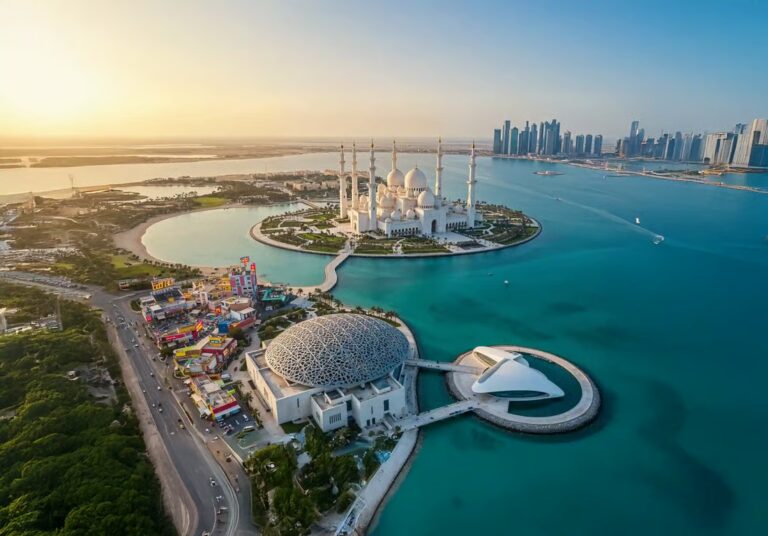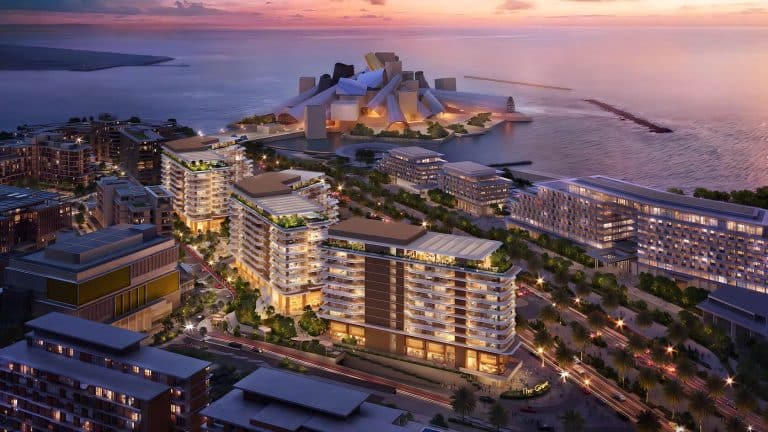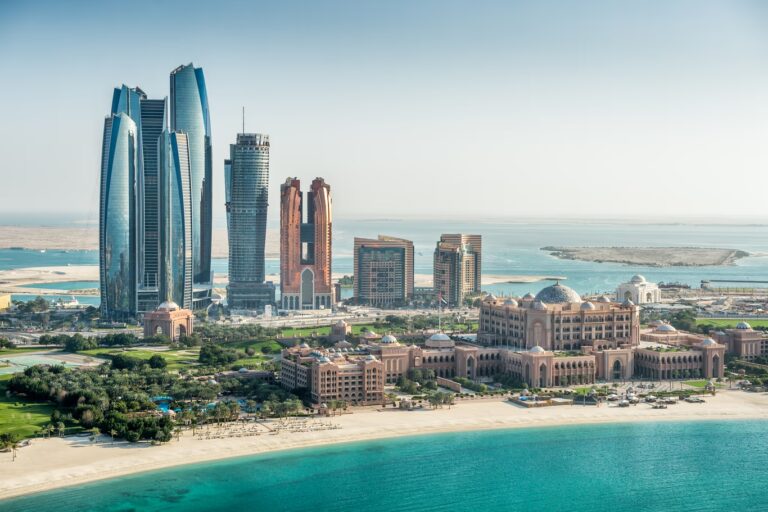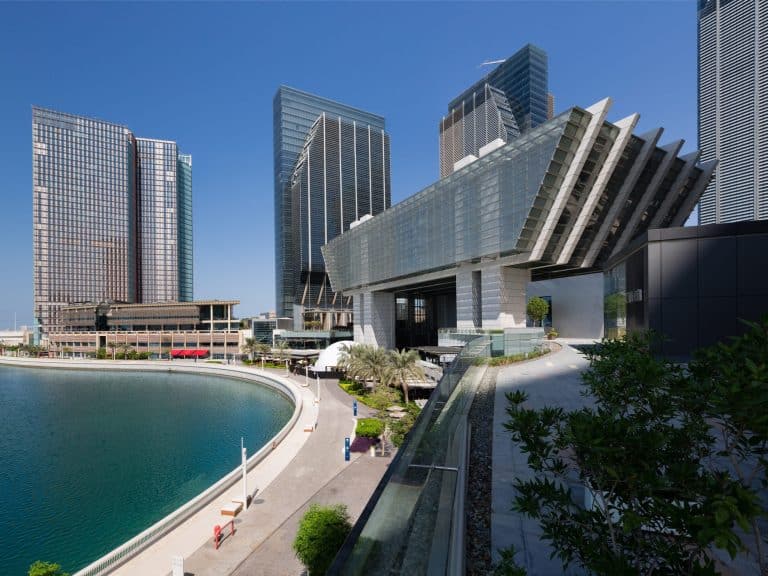
On the morning of 28 February 2026, the world woke up to a different Middle East. US and Israeli forces launched coordinated airstrikes on Iran, killing Supreme Leader Ali Khamenei and targeting nuclear and military infrastructure across 26 of the country’s 31 provinces. Iran responded within hours with a barrage of drones and ballistic missiles aimed at US bases and GCC capitals — including Abu Dhabi’s Al Dhafra Air Base. Global markets shuddered. Oil spiked 9–14%. Airlines began suspending routes. The headlines arrived in waves, each one more alarming than the last.
And yet, at the very moment the region was absorbing its most significant military shock in decades, something quietly revealing was happening in Abu Dhabi’s property market: it did not panic. ADGM — the Abu Dhabi Global Market financial free zone that now governs both Al Maryah and Al Reem Island — kept its doors open. The professionals, fund managers, and financial institutions anchored within its 14.38 million square metres of jurisdiction did not exit. Leases did not break. And developers with projects along the ADGM corridor did not pull their launches. That tells you something no headline will.
The War Scenario: What the Data Says Happened
The 2026 Iran war represents the most direct confrontation between the US-Israel alliance and Iran in modern history. Following joint airstrikes on 28 February, Iran launched what analysts at ACLED described as the largest combined missile and drone barrage ever directed at Gulf states. For the first time in history, Iran struck all six GCC nations simultaneously — Bahrain, Kuwait, Oman, Qatar, Saudi Arabia, and the UAE — in retaliation.
In the UAE, strikes targeted Al Dhafra Air Base and radar infrastructure. Reports emerged of debris near Abu Dhabi’s Zayed International Airport. The Dubai Financial Market temporarily closed for two sessions — the Abu Dhabi Securities Exchange opened briefly and saw volatility before stabilising. Over 90% of incoming projectiles were intercepted by the UAE’s air defence systems, according to the Ministry of Defence. Markets wobbled. Some investors paused. And a small number of international buyers adopted what analysts called a “wait-and-watch” stance.
Here is the critical context: the UAE entered this crisis from the strongest possible structural position. Abu Dhabi’s 2025 residential sales hit AED 73.2 billion — a 55% year-on-year increase. Off-plan deals accounted for 71% of transactions. And ADREC recorded 21,279 residential sales in 2025 alone, up 47.43% on the prior year. A market built on those numbers does not evaporate because of short-term geopolitical noise. History confirms this: the 2008 crash, COVID-19, and the Russia-Ukraine war all preceded record-breaking recovery cycles in UAE real estate.
Why ADGM Proximity Creates a Defensibility Floor
When investors evaluate which properties to hold, buy, or sell during uncertainty, the rational test is simple: what is the irreducible demand for this location? For a resort development, the answer depends on tourism flows — volatile during conflict. For a speculative luxury tower, the answer depends on wealth migration sentiment — also volatile. But for a property within or immediately adjacent to ADGM — the UAE’s largest financial free zone — the answer is structural.
ADGM is not a lifestyle amenity. It is an operating jurisdiction. As of January 2025, every business on Al Reem Island is legally required to hold an ADGM commercial licence. That means over 40,000 working professionals — asset managers, fintech founders, financial services firms, legal advisors, international banking institutions — are anchored to this geography not by preference but by regulatory requirement. Abu Dhabi accounts for 60% of the UAE’s investable wealth and 75% of total assets under management nationally. The capital’s economy does not pause because missiles are fired at a military base 20 kilometres away. The contracts, AUMs, and regulatory obligations that make ADGM function do not pause either.
That creates a defensibility floor for ADGM-proximate property that no tourism corridor or lifestyle district can replicate. When the economy’s institutional spine is operating normally, so is the demand for the housing that serves it. The comprehensive investment profile of Al Reem Island and its ADGM free zone status demonstrates exactly how this regulatory anchor translates into occupancy, yield, and capital performance.
Reem Island: The Numbers That Make the Case
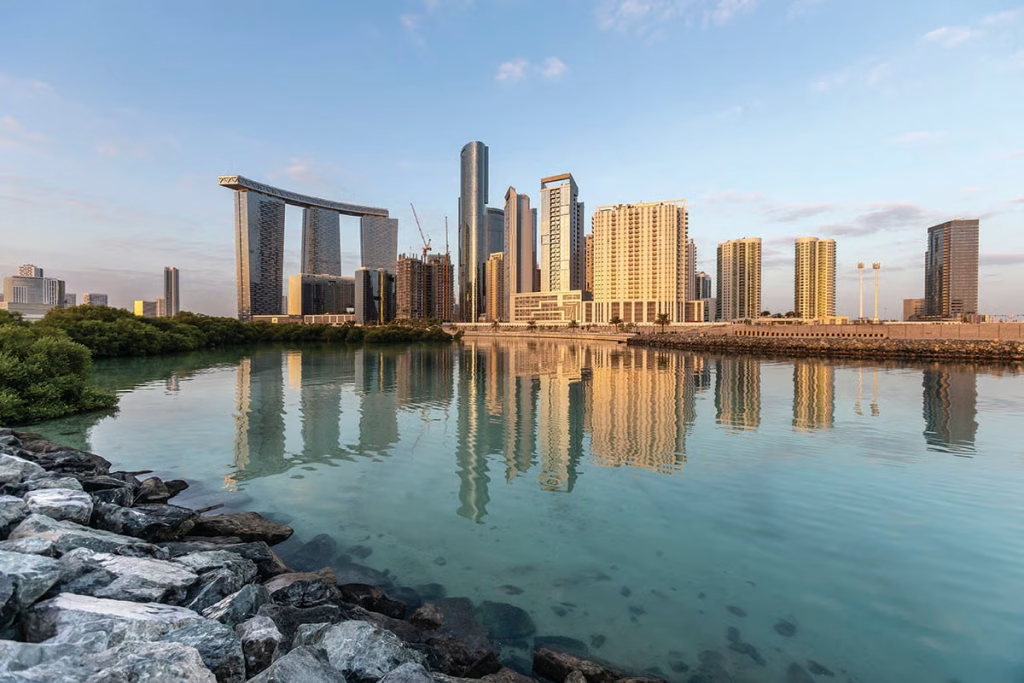
The performance metrics for Al Reem Island property investment in 2026 do not read like a market on the edge. They read like a market with an institutional spine.
Table 1: Al Reem Island Property Investment Snapshot — 2026
| Metric | Figure (2026) |
| Occupancy rate | > 90% |
| Gross rental yield (apartments) | 5.5%–9.2% depending on size/zone |
| Median home price | AED 1.4 million (+4.2% YoY) |
| Apartment price growth (2025) | +17% YoY — highest in Abu Dhabi |
| ADGM-registered businesses on the island | All commercial entities (since Jan 2025) |
| Professionals based on the island | > 40,000 |
| Days on market (1BR apartments) | 15–25 days (vs. 30-day city average) |
| 1BR annual rent | AED 66,000–AED 68,000 (projected 2026) |
| Vacancy rate | 2%–3% in Al Reem (vs. 7-8% in older districts) |
These figures are not theoretical. They represent a mature, fully let, institutionally-backed residential market where vacancy sits at 2–3% even during regional conflict. By contrast, districts further from major employment zones are tracking 7–8% vacancy — a gap that widens precisely during uncertainty, as tenants and buyers prioritise proximity to stable employment above everything else.
For investors who want to understand why rising rents are accelerating the shift from tenancy to ownership in Abu Dhabi, our analysis of how rising rents are fuelling Abu Dhabi’s 2026 property boom explains the compounding logic that is driving first-time buyers and seasoned investors toward the same districts.
What Launch Logic Means Near ADGM in a War Environment
The instinctive assumption during a regional conflict is that new property launches will pause. The data from Abu Dhabi suggests a more nuanced reality: launches near established economic zones with verifiable demand anchors do not simply pause — because the developers executing them understand that the demand driver they are selling against is not sentiment. It is institutional permanence.
Table 2: Selected ADGM-Corridor Off-Plan Launches and Active Projects — 2026
| Project | Developer | Location | Starting Price (AED) | Yield Est. |
| Reem Hills | Q Properties | Al Reem Island | 1.4M (2BR) | 5.5–6% |
| Elie Saab Waterfront | RAK Properties | Mangrove Village (Al Reem adj.) | TBA (2026–27 delivery) | 6–7% |
| St. Regis The Residences | Aldar | Al Maryah Island (ADGM core) | From AED 3.5M | 5–6% |
| Saadiyat Lagoons Villas | Aldar | Saadiyat Island | From AED 5.5M | 4–5% |
| Bashayer Residences | Modon | Hudayriyat Island | Starts AED 1.5M | 6–8% |
The St. Regis Residences on Al Maryah Island — the beating heart of ADGM itself — began presales in 2024 and has maintained buyer interest through the conflict. Reem Hills by Q Properties continues to attract buyers at AED 1.4 million for two-bedroom units, supported by an occupancy rate that does not fluctuate with global news cycles because its tenants are not transient: they are licensed professionals with regulatory obligations keeping them on the island.
Investors seeking the full range of high-ROI Abu Dhabi properties delivering 7–9% rental returns will find that the corridors generating those returns share one characteristic — proximity to the institutions, employment zones, and infrastructure that create non-negotiable, structurally resilient demand.
Abu Dhabi vs Dubai: Why the Capital Feels Calmer
This is not an argument that Dubai is failing or that Abu Dhabi is immune. It is an argument about structural defensibility versus sentiment dependence. Dubai’s extraordinary growth story — AED 917 billion in 2025 transactions, 270,000 deals, the most liquid residential market in the MENA region — is built, in part, on confidence from international capital. When that confidence wobbles, as it did after February 28, the market feels it faster.
Abu Dhabi’s market is different. Its primary demand anchor is not tourism or expat lifestyle appeal — it is sovereign wealth, government institutions, and ADGM’s financial ecosystem. Over 70% of companies within ADGM plan to expand their workforce over the next 12 months. Abu Dhabi’s non-oil sectors contribute approximately 75% of the emirate’s GDP. The UAE’s sovereign credit rating — AA/A-1+ — remains affirmed with a stable outlook even as the conflict continues.
Table 3: Abu Dhabi (ADGM Corridor) vs. Dubai — Defensibility Comparison During Regional Uncertainty
| Characteristic | Abu Dhabi (ADGM corridor) | Dubai (broad market) |
| Demand anchor | Sovereign wealth, ADGM IFC, government district | Tourism, commerce, expat population |
| Off-plan share of transactions (2025) | 71% of deals | ~63–71% |
| 2025 total transaction value | AED 73.2 billion (55% YoY) | AED 686.8 billion |
| Non-oil GDP contribution | ~75% of the Abu Dhabi economy | >99% non-oil (trade, tourism, finance) |
| War impact — direct strikes | Al Dhafra Air Base targeted; city centre unaffected | Drone debris near the airport, the Burj Al Arab area |
| Market closures (post-Feb 28) | ADX brief: ADGM operations maintained | DFM closed 2 sessions |
| Price forecast 2026 | +3% to +5% residential (consensus) | Potential 0–15% correction in some segments |
| Golden Visa threshold | AED 2 million freehold | AED 2 million freehold |
For context on how Abu Dhabi’s supply pipeline interacts with pricing during uncertainty — and why 15,900 new units do not automatically mean a price correction — our dedicated analysis of why Abu Dhabi’s 2026 supply pipeline can still lead to higher prices unpacks the segmentation logic that separates premium ADGM-corridor supply from the broader market.
The Structural Reasons Abu Dhabi Bounces Back First
Every regional conflict that has touched the UAE in modern memory has been followed by a recovery in real estate that surpassed the pre-crisis level. The 2022 Houthi strikes on Abu Dhabi — which hit a fuel tanker near Musaffah and a construction site near Zayed International Airport — were met with a calm that surprised many observers. Abu Dhabi’s property market registered no material price disruption in the months that followed. The 2026 conflict has been far more serious, but the structural logic is the same.
Three factors make Abu Dhabi disproportionately resilient. First, ADGM’s legal framework — based on English common law, with independent courts, and internationally recognised regulatory structures — gives institutional businesses a continuity guarantee that no geopolitical event can remove. Second, Abu Dhabi’s fiscal position is unmatched globally: the emirate controls roughly $1.7 trillion in sovereign wealth through ADIA, ADQ, and Mubadala. That capital does not flee its home jurisdiction during a regional conflict — it stays, and it continues to underpin demand. Third, the new property law framework — specifically Law No. 3 and Law No. 5 — has created an investor protection environment robust enough to weather sentiment shocks.
Investors who want to understand exactly what those new Abu Dhabi property laws mean for off-plan investment security will find that the regulatory architecture built in 2023–2025 was, in effect, preparing the market for precisely the kind of stress test it is now experiencing.
For investors comparing the full UAE opportunity set — Abu Dhabi against Dubai, and both against Ras Al Khaimah — our overview of why 2026 positions RAK and Abu Dhabi as the UAE’s two most compelling investment frontiers outlines the distinct risk-return profiles of each. And for those evaluating whether to buy off-plan or remain in a rental cycle, our piece on why first-time buyers in 2026 are choosing off-plan over rentals across Dubai and Abu Dhabi provides the full financial arithmetic that is accelerating the ownership shift even during war.
The Verdict: Proximity to Permanence Is the Correct Strategy
The Israel-Iran-USA war is a genuine stress test for Gulf real estate. It would be dishonest to pretend otherwise. Some buyers have paused. Some transaction timelines have been extended. And the Strait of Hormuz — through which 20–25% of global oil supply passes — carries real risk if the conflict escalates further. These are not small caveats.
But the logic of proximity-driven investment — buying properties whose demand is anchored by something institutional, permanent, and non-sentimental — has never been more clearly vindicated than by what ADGM-adjacent real estate is doing right now. The professionals are still in their offices. The AUMs are still under management. The leases are still active. Reem Island’s vacancy rate is 2–3% in the middle of a regional war.
That is not luck. That is location thesis playing out under pressure, exactly as it should. Investors who understand the difference between buying a postcode and buying a demand driver will look back at March 2026 as the moment the distinction became undeniable.
For the most comprehensive guide to building a portfolio around these principles, our ultimate guide to maximising returns with pre-launch properties across the UAE maps the full strategy framework used by the region’s most disciplined investors.
Ready to Invest in an ADGM-Proximate Property? Fill out the Form on Our Website
Do not let regional headlines make a decision that your data should be making. If you want to explore the best off-plan and pre-launch property opportunities in Abu Dhabi — including ADGM-corridor projects on Al Reem and Al Maryah Island — fill up the enquiry form at prelaunch.ae today. Our advisors will identify the right project, at the right location, with the right defensibility profile for your investment horizon.
Phone: (+971) 52 341 7272
Email: [email protected]
Frequently Asked Questions (FAQs)
Table 4: FAQs — ADGM Proximity, Reem Island, and Investing During Regional Conflict
| Question | Answer |
| Is it still safe to invest in Abu Dhabi property during the Iran-Israel-USA war? | Abu Dhabi has maintained market stability and social order throughout the conflict. ADGM operations were not disrupted, and Al Reem Island continued to transact normally. Long-term fundamentals remain strong. |
| What makes ADGM proximity valuable for property investors? | ADGM hosts over 40,000 professionals, and all Al Reem Island businesses operate under its commercial licenses, creating a sustained, high-income tenant and buyer base that underpins demand regardless of market conditions. |
| What rental yield can I expect on Reem Island in 2026? | Gross rental yields range from 5.5% to 9.2%, depending on property type and location within the island, with studios and 1-bedroom apartments in well-located towers consistently outperforming. |
| What is the off-plan entry price on Al Reem Island in 2026? | Studios start from approximately AED 650,000, 1-bedroom units from AED 1 million to AED 1.5 million, and 2-bedroom units from AED 1.4 million in projects like Reem Hills. |
| Does the Israel-Iran-USA war affect Abu Dhabi property prices? | Short-term sentiment has been cautious, but Abu Dhabi property prices are still forecast to grow 3–5% in 2026. Historically, every regional conflict has been followed by a stronger rebound in UAE real estate fundamentals. |
| Can foreign nationals buy freehold property in Abu Dhabi? | Yes. Al Reem Island and Al Maryah Island are designated freehold zones open to all nationalities. Since January 2025, both fall under ADGM’s Registration Authority, providing English common law protections for all registered property transactions. |