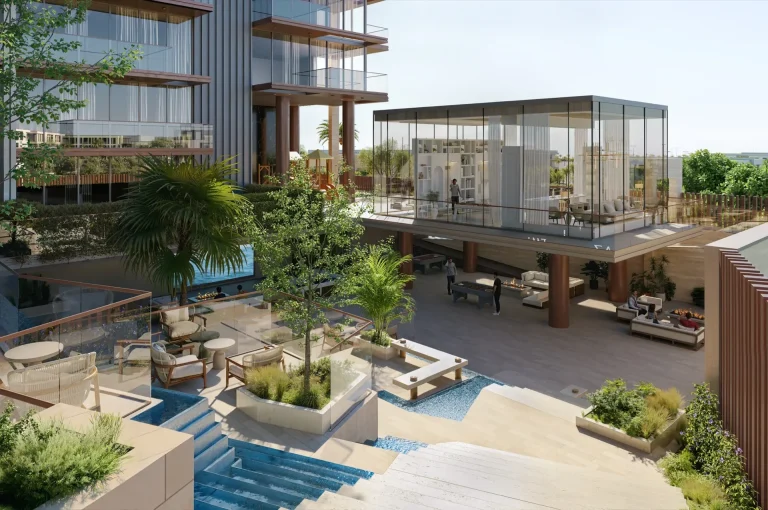
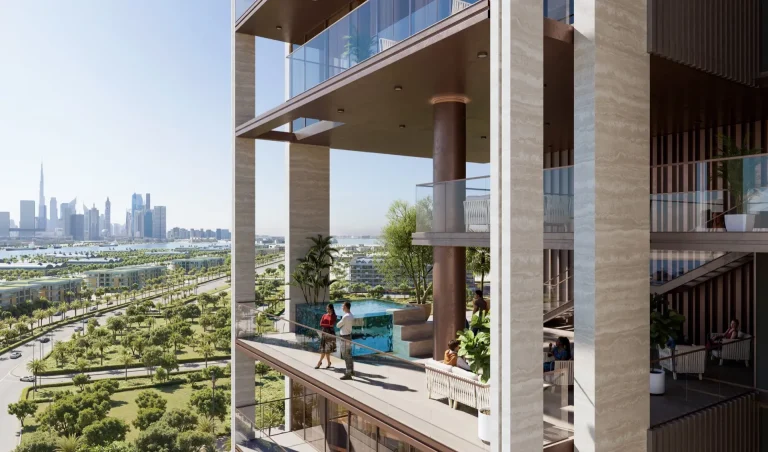
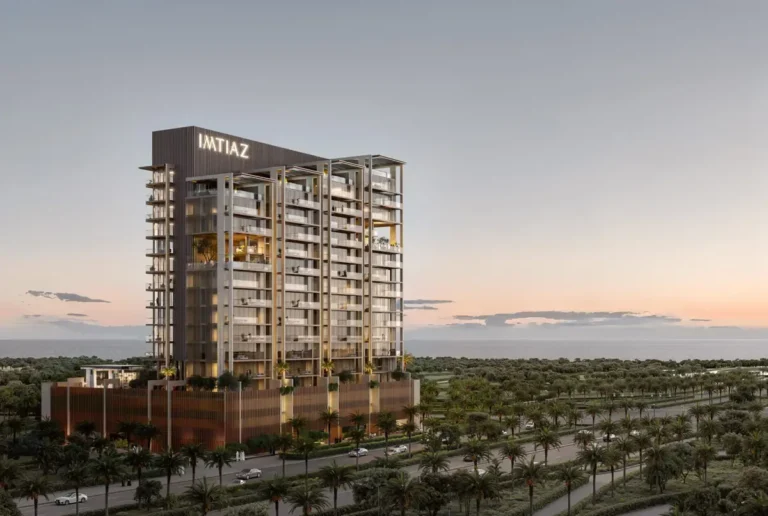
While Dubai off-plan properties dominate headlines with massive launches and aggressive marketing, the Abu Dhabi real estate market operates under fundamentally different mechanics—characterized by moderate supply, state-linked capital drivers, and what industry insiders call “institutional gravity.” Understanding these structural differences is critical for investors evaluating off-plan developments in Abu Dhabi versus Dubai’s more speculative environment.
Abu Dhabi’s residential supply delivery remains deliberately measured compared to Dubai’s high-volume approach. With 12,800 new units scheduled for 2026 and 12,400 units for 2027, followed by a supply surge of 21,400 units in 2028, the capital’s development pipeline reflects strategic planning rather than speculative construction. This controlled approach, combined with ADNOC’s $150 billion capital expenditure program for 2026-2030, creates a unique investment landscape where government spending, energy sector expansion, and sovereign capital flows stabilize demand in ways that pure market forces cannot replicate.
Understanding Abu Dhabi’s Institutional Gravity
The ADNOC Effect: $150 Billion in Economic Momentum
ADNOC’s Board of Directors approved capital expenditure of $150 billion for 2026-2030 to maintain operations and drive smart growth. This multi-year spending program represents more than just energy sector investment—it creates cascading demand for housing, contractors, jobs, and professional services that ripple through Abu Dhabi’s entire economy.
The magnitude of this capital deployment dwarfs typical real estate development cycles. ADNOC aims to increase crude production to 5 million barrels per day by 2027, requiring thousands of additional engineers, technicians, contractors, and support personnel. Each wave of hiring creates corresponding residential demand that supports the Abu Dhabi property market fundamentals.
ADNOC’s Economic Impact on Real Estate:
| Investment Category | 2026-2030 Allocation | Real Estate Impact |
| Upstream Operations | $90B+ | Direct employment of 15,000+ professionals |
| Gas Projects (Ghasha) | $25B+ | Housing demand for contractors & engineers |
| In-Country Value (ICV) | $60B to the UAE economy | Local business growth = residential demand |
| Local Manufacturing | $21.8B committed | Industrial workforce housing requirements |
ADNOC’s In-Country Value programme returned $17.7 billion to the UAE economy in 2024, bringing the total contribution since 2018 to $83.7 billion, with 23,000 UAE Nationals employed through its inception. This sustained economic injection creates stable, long-term housing demand that supports off-plan villa projects and apartment developments across the emirate.
State-Linked Capital Creates Stability
Beyond ADNOC, Abu Dhabi benefits from multiple sovereign wealth funds and state entities that provide institutional gravity to the real estate market:
1. Mubadala Investment Company: Mubadala and Aldar announced a landmark joint venture exceeding AED 60 billion to expand Al Maryah Island, comprising 1.5 million square meters of new office, residential, retail, and hospitality space. These mega-projects aren’t speculative—they’re backed by sovereign capital with decades-long investment horizons.
2. ADQ Infrastructure Investments: As Abu Dhabi’s strategic partner, ADQ channels billions into infrastructure that directly supports real estate development and property values. Their cluster investment approach creates interconnected ecosystems where residential, commercial, and industrial projects reinforce each other.
3. Government Employment Base: Abu Dhabi’s economy relies heavily on government employment, creating stable tenant pools less susceptible to market volatility. This employment stability translates to consistent rental demand and lower vacancy risks for Abu Dhabi off-plan investments.
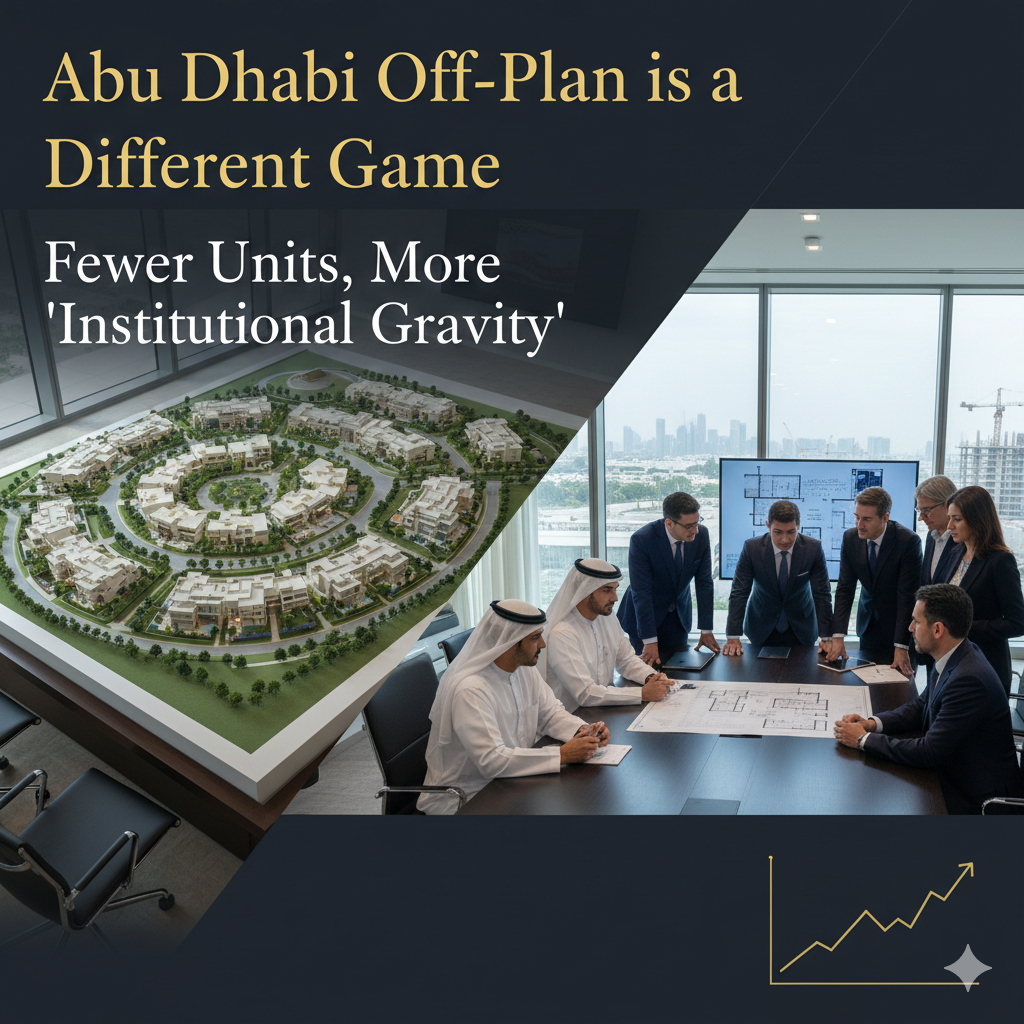
Moderate Supply: The Strategic Advantage
2026-2028 Delivery Schedule Analysis
Unlike Dubai’s projected 120,000 units in 2026, Abu Dhabi’s more conservative approach creates distinct investment characteristics:
Abu Dhabi Residential Supply Pipeline:
| Year | Projected Units | Market Characteristics | Investment Implication |
| 2026 | 12,800 units | Moderate supply, strong absorption | Price stability + appreciation |
| 2027 | 12,400 units | Balanced delivery | Continued growth momentum |
| 2028 | 21,400 units | Supply surge flagged | Potential oversupply risk in certain segments |
| Post-2028 | Tapering delivery | Supply normalization | Market rebalancing period |
Actual deliveries may fall short of initial predictions, with this staggered approach allowing the market to absorb new supply gradually and prevent sudden increases in available stock. Abu Dhabi’s historical pattern shows actual completions typically run 20-30% below initial projections, providing additional buffer against oversupply.
The 2027 Surge Risk: Strategic Planning Required
Market analysts have explicitly flagged 2027 as a potential inflection point where accelerated deliveries could test absorption capacity. However, several factors mitigate this risk:
Demand Stabilizers Through 2028:
- Population growth to 4+ million residents, creating baseline housing needs
- ADNOC workforce expansion requiring 10,000+ professional housing units
- Golden Visa program attracting high-net-worth investors
- Master-planned community completions draw end-users from older developments
The key difference from Dubai’s supply dynamics: Abu Dhabi’s fewer, thicker bets on established communities rather than scattered developments across emerging areas.
Master-Planned Communities: Where Institutional Capital Concentrates
Why “Thicker Bets” Outperform Scattered Developments
Abu Dhabi’s investment thesis centers on integrated master-planned communities with long-term infrastructure logic, not just launch buzz. Master-planned projects have significantly influenced the Abu Dhabi real estate market’s performance, with the top 10 developments contributing approximately half of the total residential unit sales value in H1 2025.
Top-Performing Master Communities (H1 2025):
| Community | H1 2025 Sales Value | Infrastructure Advantage | Investment Grade |
| Al Hudayriat Island | AED 2.4B | Mangrove preservation, 11km coastline | Premium institutional |
| Bal Ghaiylam (Yas) | AED 1.8B+ | Entertainment hub integration | High-growth family |
| Mamsha Gardens | AED 1.5B+ | Cultural district proximity | Ultra-luxury |
| Saadiyat Lagoons | AED 1.3B+ | Beach access, museum district | Trophy assets |
These aren’t speculative land plots—they represent multi-decade government commitments with infrastructure investments that extend beyond individual developer capabilities.
Saadiyat Island: Cultural Capital Drives Value
Saadiyat Island emerged as the attraction for luxury buyers, representing 57 percent of apartment sales value in H1 2025. The island’s transformation into a cultural destination creates permanent value beyond typical real estate cycles.
Saadiyat’s Institutional Backing:
- Louvre Abu Dhabi (completed): Cultural anchor attracting global visitors
- Guggenheim Abu Dhabi (planned): Additional cultural gravitas
- Protected ecological zones: Environmental preservation ensuring long-term livability
- Limited ultra-luxury inventory: Supply constraints support premium pricing
Unlike Dubai communities that compete primarily on amenities and location, Saadiyat integrates world-class culture, pristine ecology, and sovereign wealth-backed infrastructure—a combination that commands sustained premiums.
Yas Island: Entertainment & Family Integration
Yas Island alone recorded 46% of its year-to-date transactions between June and August 2025, demonstrating exceptional market concentration. The island benefits from Ferrari World, Warner Bros., Yas Marina Circuit, and comprehensive educational facilities that create family-oriented demand stability.
Yas Island Investment Characteristics:
- Theme park integration: Tourism drives short-term rental demand
- International schools: Families commit long-term, reducing turnover
- Golf & marina facilities: Lifestyle amenities attracting high-earners
- Aldar dominance: Single master developer ensures cohesive planning
Off-Plan Villa Sales: The Hidden Market Driver
ADREC Data Reveals Villa Strength
While apartment developments attract headlines, off-plan villa sales play a surprisingly significant role in Abu Dhabi’s value appreciation. Ready villa transactions increased 72.2% year-on-year in H1 2025, indicating strong end-user demand.
Villa Market Dynamics:
| Metric | Performance | Investment Signal |
| Villa Price Growth | +17.19% YoY | Stable long-term appreciation |
| Off-Plan Villa Share | 40% of new supply | Developer confidence in the segment |
| Khalifa City Villas | +30% annual growth | Location-specific outperformance |
| Luxury Villa Sales | Only 6% >AED 25K/sqm | Concentrated demand in the mid-tier |
The villa segment demonstrates institutional preferences more clearly than apartments. Only 6% of villa/townhouse off-plan sales were luxury (over AED 25,000 per square meter), indicating demand concentrates in the AED 2.5M-8M range where government employees, mid-level executives, and family buyers operate.
Why Villa Off-Plans Absorb Effectively
1. Limited Supply Discipline: Developers release villa phases strategically, avoiding inventory gluts that plague apartment markets
2. End-User Focus: 80% of residential deals were cash transactions, with over 70% of 2024-25 sales being off-plan, showing genuine buyer commitment rather than speculative flipping
3. Family Permanence: Villa buyers typically plan 5-10 year residencies, creating absorption stability that short-term apartment investors cannot provide
4. Land Value Component: Villas include land ownership, providing an inflation hedge that apartments cannot match
Delivery Schedule Intelligence: 2026 Moderate, 2027 Surge Risk
Critical Timing Considerations for Investors
The 2026-2028 delivery schedule requires nuanced interpretation:
2026: The Sweet Spot
- 12,800 units represent a manageable supply
- ADNOC hiring cycles peak as major projects advance
- Population growth momentum maintains strong absorption
- Pre-2027 surge positioning allows exit before potential oversupply
2027: Increased Vigilance Required
- 12,400 units, plus potential 2026 delay,s could concentrate deliveries
- Watch for early 2027 inventory buildup signaling absorption challenges
- Off-plan launches may slow if developers sense saturation
- Strategic investors should secure positions in 2026 before surge concerns affect pricing
2028: The Reckoning Year
- 21,400 units explicitly flagged by major market reporting as surge risk
- ADNOC capex projects mature, potentially reducing new hiring velocity
- Supply-demand rebalancing likely requires 12-18 months
- Selective opportunities in proven communities, avoid experimental developments
Using Delivery Data Strategically
Based on recent handover trends, actual deliveries may fall short of initial predictions, with this staggered approach allowing the market to absorb new supply gradually. Historical data shows Abu Dhabi typically delivers 20-30% fewer units than initially projected.
Adjusted Realistic Supply:
- 2026 actual: ~9,000-10,000 units (vs. 12,800 projected)
- 2027 actual: ~8,700-10,000 units (vs. 12,400 projected)
- 2028 actual: ~15,000-17,000 units (vs. 21,400 projected)
Even with these adjustments, 2028 represents significant supply expansion that warrants conservative positioning by late 2027.
How to Invest Using the “Institutional Gravity” Framework
Treat Abu Dhabi as Fewer, Thicker Bets
Unlike Dubai, where diversification across 5-10 projects might be prudent, Abu Dhabi’s market structure favors concentrated positions in proven master communities:
Investment Allocation Strategy:
70% Core Holdings – Institutional-Grade Communities:
- Saadiyat Island: Cultural district proximity, ecological premium
- Yas Island: Entertainment integration, family stability
- Al Reem Island: Business district connectivity, expatriate demand
- Al Maryah Island: Financial center employees, sovereign backing
20% Growth Positions – Emerging Masters:
- Al Hudayriat Island: Environmental focus, limited supply
- Bloom Living Communities: Affordable family segment, government workforce
- Reem Hills: New development with established developer (Aldar)
10% Opportunistic – 2026 Pre-Launches:
- Monitor ADNOC contractor housing needs
- Government employee housing initiatives
- Waterfront plot releases in established islands
Focus on Long-Term Infrastructure Logic
Three new bridges are proposed to connect the north side of Al Maryah Island to Reem Island and the Abu Dhabi mainland, ensuring that Saadiyat Island is less than a 10-minute drive, with enabling works scheduled to commence in 2026.
Infrastructure commitments reveal government priorities more reliably than developer marketing:
Infrastructure Signals to Watch:
- Bridge & road connections: Physical integration indicates long-term commitment
- School & hospital announcements: Family infrastructure = sustained demand
- Cultural institution progress: Saadiyat museums create permanent value drivers
- Metro/transportation expansions: Accessibility improvements support appreciation
Projects announced with sovereign-backed infrastructure carry far less execution risk than purely private developer promises.
The ADNOC Workforce Housing Multiplier
Translating $150B Capex into Housing Demand
ADNOC established a new operating company, ADNOC Ghasha, for the Ghasha Concession, which is set to produce 1.8 billion standard cubic feet of gas and 150,000 barrels per day of oil and condensates. Major energy projects create direct housing requirements that investors can anticipate.
ADNOC Project-to-Housing Translation:
| ADNOC Initiative | Employment Impact | Housing Requirement | Prime Locations |
| Ghasha Gas Project | 5,000+ construction workers | Temporary workforce camps | Minimal direct impact |
| Upstream Expansion | 8,000+ engineers/technicians | 6,000+ professional units | Al Reem, Yas, Saadiyat |
| Local Manufacturing | 12,000+ industrial workers | 9,000+ affordable units | Bloom Living, Khalifa City |
| ICV Program Growth | 15,000+ service sector | 11,000+ mid-tier units | Al Raha, Reem Island |
The professional/technical cohort (engineers, project managers, senior technicians) earning AED 25,000-50,000 monthly represents the sweet spot for 2-3 bedroom apartments in Yas Island, Al Reem Island, and Saadiyat Island.
Contractor Demand Cycles
Major construction phases create temporary but predictable demand:
2026-2027: Peak Construction Phase
- Ghasha mega project progresses at a pace
- Al Maryah Island expansion commences, enabling works
- Multiple master community infrastructure reaches peak activity
- Result: Strong demand for short-term furnished units and serviced apartments
2028-2030: Operational Phase Transition
- Construction workforce declines 30-40%
- Permanent operational staff increases 20-25%
- Shift from temporary to long-term housing demand
- Result: Villa and family apartment demand strengthens as workers transition to permanent roles
Comparing Abu Dhabi vs Dubai Off-Plan Dynamics
Fundamental Structural Differences
| Factor | Abu Dhabi | Dubai | Investment Implication |
| Annual Supply | 12,000-21,000 units | 120,000+ units | Lower competition, better absorption |
| Demand Drivers | Government, ADNOC, sovereign capital | Private sector, tourism, speculation | More stable, less volatile |
| Developer Profile | Aldar, Modon (government-backed) | 100+ private developers | Higher execution certainty |
| Payment Plans | Conservative (20-30% down) | Aggressive (5-10% down) | Better buyer quality, lower default |
| Speculation Level | 25-30% investor share | 60-70% investor share | End-user focus = stability |
| Price Volatility | ±5-8% annual variance | ±15-25% annual variance | Predictable appreciation |
When to Choose Abu Dhabi Over Dubai
Abu Dhabi Makes Sense For:
- Long-term buy-and-hold strategies (5-10 years)
- Rental income focus over capital gains speculation
- Lower risk tolerance investors seeking stability
- Institutional-grade assets for wealth preservation
- Golden Visa investors requiring AED 2M+ properties
Dubai Makes Sense For:
- Short-term flipping strategies (1-3 years)
- Capital gains focus on accepting higher volatility
- Higher risk tolerance chasing 20-30% annual returns
- A diverse portfolio spreads risk across many small bets
- Emerging community speculation before infrastructure proves out

The Golden Visa Advantage in Abu Dhabi
Premium Properties Qualify More Easily
The UAE Golden Visa program offers 5-10-year residency options for property investors meeting minimum purchase thresholds. In Abu Dhabi’s market structure, qualifying properties offer superior fundamentals compared to Dubai’s entry-level Golden Visa offerings.
Golden Visa Property Comparison:
| Emirate | Qualifying Threshold | Typical Property Type | Market Positioning |
| Abu Dhabi | AED 2M+ | 2-bed apartment (premium locations) / 3-bed villa | Prime communities, strong appreciation |
| Dubai | AED 2M+ | 1-bed apartment (emerging areas) / 2-bed townhouse | Secondary locations, higher speculation |
Abu Dhabi’s higher base prices mean AED 2M qualifies for better locations with stronger fundamentals. A 2-bedroom apartment on Saadiyat Island or Yas Island at AED 2.5M carries far less risk than a 1-bedroom in Dubai’s emerging district at the same price.
Institutional Tenant Pool for Golden Visa Properties
Properties purchased for Golden Visa qualification in Abu Dhabi benefit from superior tenant quality:
Abu Dhabi Golden Visa Tenant Profile:
- Government employees on long-term contracts
- ADNOC professionals with stable employment
- Financial sector executives (ADGM expansion)
- International company regional managers
- Academic professionals (NYU, Sorbonne campuses)
These tenants sign longer leases (2-3 years), pay on-time, and maintain properties well—characteristics that maximize rental yields and minimize vacancy periods.
Investment Strategy: Positioning for 2026-2030
The Three-Phase Approach
Phase 1: 2026 Accumulation (Now-Q4 2026)
- Target: Secure 2-3 positions in institutional-grade communities
- Focus: Yas Island apartments, Saadiyat villas, Al Reem towers with Q4 2027-Q1 2028 handover
- Rationale: Pre-2027 surge positioning, benefit from ADNOC hiring peak
Phase 2: 2027 Selective Activity (2027)
- Target: Monitor market absorption carefully
- Focus: Only proven communities showing strong take-up rates
- Rationale: Early indicators of 2028 surge impact, avoid overexposed segments
Phase 3: 2028-2030 Rebalancing (2028+)
- Target: Evaluate supply absorption post-surge
- Focus: Opportunistic purchases if a surge creates a temporary oversupply
- Rationale: Long-term ADNOC capex extends through 2030, and fundamental demand remains
Red Flags to Avoid
Developer Warning Signs:
- Unknown developers without government backing
- Locations without infrastructure commitments
- Payment plans below 10% down (attracts speculators)
- Communities lacking schools/hospitals in the master plan
- Projects not registered with ADREC
Market Warning Signs:
- Absorption rates are dropping below 60% in the target community
- Off-plan launches are accelerating beyond delivery capacity
- Rental yields are compressing below 5% in prime locations
- ADNOC hiring announcements slowing in late 2027-2028
- Government spending cuts signaling economic headwinds
Conclusion: Playing the Long Game with Institutional Backing
Abu Dhabi’s off-plan investment landscape rewards patience, selectivity, and understanding of institutional dynamics that Dubai’s market doesn’t replicate. While Dubai offers higher short-term returns through speculation, Abu Dhabi provides superior risk-adjusted performance through government spending, sovereign capital, and demographic fundamentals.
The $150 billion ADNOC capital expenditure program alone creates housing demand equivalent to 25,000-30,000 professional units over the 2026-2030 period. Combined with population growth to 4+ million, continued Golden Visa inflows, and state-backed infrastructure development, Abu Dhabi’s fundamentals support continued appreciation even as supply increases moderately.
The critical insight: treat Abu Dhabi as fewer, thicker bets in master-planned communities with long-term infrastructure logic, not scattered positions chasing launch buzz. Focus on Saadiyat Island, Yas Island, Al Reem Island, and Al Maryah Island, where sovereign backing, completed infrastructure, and institutional tenant pools create durable value beyond typical market cycles.
Watch the 2026 moderate delivery carefully, position strategically before the 2027-2028 surge, and maintain exposure to communities wherethe ADNOC workforce, government employment, and international institutions concentrate. This approach captures Abu Dhabi’s unique institutional gravity advantage while managing delivery schedule risks intelligently.
Secure Your Position in Abu Dhabi’s Institutional-Grade Communities
Ready to invest in Abu Dhabi’s most strategic off-plan opportunities backed by $150 billion in government capital expenditure and sovereign wealth? Our specialized team at MBR Properties provides exclusive access to master-planned communities with proven institutional demand, comprehensive market analysis, and strategic timing guidance.
Fill up the form on our website prelaunch.ae to receive:
- Exclusive access to ADNOC-adjacent community launches
- Delivery schedule risk analysis for 2026-2028 pipeline
- Institutional demand mapping by location and property type
- Master-planned community infrastructure timeline tracking
- Complimentary consultation on Golden Visa qualifying properties
Contact us today:  Call: (+971) 52 341 7272
  Email: sales@mbrproperties.ae
Don’t miss the 2026 strategic window in Abu Dhabi’s institutional-grade market—where sovereign capital, energy sector expansion, and master-planned excellence create unmatched investment stability.
Frequently Asked Questions
Q1: How does Abu Dhabi’s off-plan market differ from Dubai’s?
Abu Dhabi operates with fewer units (12,000-21,000 annually vs. Dubai’s 120,000+) and stronger institutional demand drivers, including ADNOC’s $150 billion capital expenditure program, government employment, and sovereign wealth investments. This creates more stable appreciation (5-8% annually) versus Dubai’s higher volatility (15-25% swings).
Q2: What is “institutional gravity” and why does it matter for investors?
Institutional gravity refers to demand stability created by government spending, state-owned enterprises, and sovereign capital flows rather than pure market speculation. ADNOC’s workforce expansion, government employment growth, and state-backed infrastructure projects create predictable housing demand that supports property values even during market corrections.
Q3: Should I be concerned about the 2028 supply surge of 21,400 units?
The 2028 surge warrants attention but not panic. Historical delivery patterns show actual completions run 20-30% below projections, suggesting 15,000-17,000 realistic deliveries. Additionally, ADNOC’s capex program extends through 2030, maintaining employment-driven demand. Focus investments on proven master communities rather than experimental developments to mitigate surge risk.
Q4: Which master-planned communities offer the best risk-adjusted returns?
Yas Island and Saadiyat Island provide an optimal balance of institutional backing, infrastructure completeness, and demand stability. Yas benefits from entertainment integration and family-oriented facilities, while Saadiyat leverages cultural institutions and ecological premiums. Both communities show consistent 12-15% annual appreciation with rental yields of 6-8%.
Q5: How do I translate ADNOC’s $150B spending into investment opportunities?
Monitor ADNOC’s hiring announcements and project phases. The Ghasha mega project, progressing at pace, will require 8,000+ professional housing units in 2026-2028. Target 2-3 bedroom apartments in Al Reem Island, Yas Island, and Saadiyat Island priced AED 1.5M-3M, where ADNOC professionals typically rent. These segments show the strongest correlation with energy sector employment growth.
Q6: Is 2026 or 2027 a better entry point for Abu Dhabi off-plan?
2026 represents the strategic window. With 12,800 units scheduled (likely 9,000-10,000 actual) and ADNOC hiring at peak, absorption should remain strong. 2027’s delivery coincides with early signals of the 2028 surge—better to secure positions before market sentiment shifts. Properties delivered in Q4 2027-Q1 2028 capture appreciation while avoiding post-surge inventory buildup.