There is a very specific type of anxiety that grips property investors during geopolitical crises. It is not quite panic, and it is not quite calm. It is the quiet, relentless question: what am I actually buying?
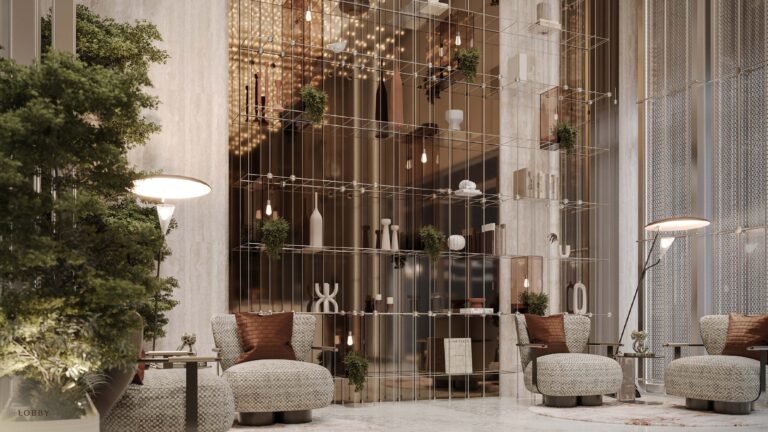
When a region is unsettled — when headlines carry words like conflict, escalation, and caution — the brochure becomes almost meaningless. A glossy render of a lobby that does not yet exist, a rooftop pool illustrated in sunlit blue, a lifestyle promise printed in sans-serif font. None of it answers the real question, which is: will this asset hold its value, attract tenants, and mean something to the people who live inside it when the world is louder than expected?
That question is what makes HAYAT townhouse clusters Dubai worth examining closely. Not because it is the only prelaunch in Dubai South. But because of what its design is actually arguing — and why that argument carries unusual weight in 2026.
The Difference Between a Brochure Launch and a Lifestyle Launch
Most off-plan projects in Dubai sell a promise. The promise is typically framed around location, yield projections, and a payment plan. These are legitimate anchors, and they have driven enormous transaction volumes across the city’s prelaunch market for the past decade.
But a brochure launch and a lifestyle launch are fundamentally different products. A brochure launch offers a unit. A lifestyle launch offers a world. The distinction matters enormously when markets are under pressure, because lifestyle-backed assets retain demand from a buyer category that brochure assets cannot access: the end-user.
End-users — families relocating to Dubai, professionals seeking long-term residency, Golden Visa holders building a permanent base — do not respond to yield projections the way short-term investors do. They respond to daily lived experience. They want to know: where will my children play? Where will I walk in the morning? Is this a place that will still feel like a community in five years?
This is precisely the question that HAYAT’s cluster design answers — and answers in concrete, plannable terms rather than illustrated promises. Buyers exploring townhouses for sale in Dubai’s master-planned communities increasingly understand this distinction.
What a Cluster Actually Is — and Why It Changes Everything
The cluster model is not new in urban planning. It is the principle of organising homes around shared, human-scale spaces rather than lining them along roads. What makes it powerful in a prelaunch context is that it transforms a collection of units into a neighbourhood — and neighbourhoods have something individual units do not: social stickiness.
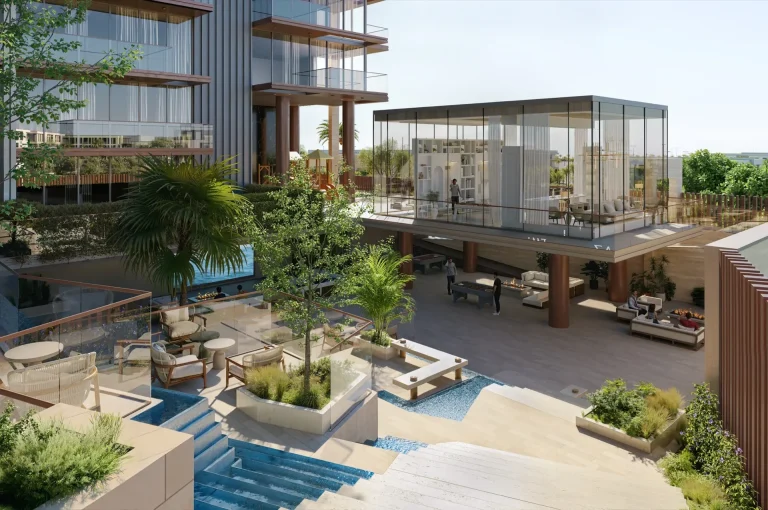
At HAYAT, each townhouse enclave is built around shared swimming pools and landscaped gardens. This is not a single amenity block located at the edge of the community, accessible to everyone in theory and used by almost no one in practice. The cluster model places the shared amenity at the centre of a small group of homes, creating an immediate social geography.
Think about what this means in daily life. The shared pool is not a fifteen-minute walk away. It is the thing you look out at from your kitchen. Your neighbours are the same eight or twelve families who share that same green space. Children play together not because a playground was marketed to them but because the design makes it happen organically.
This is what urban designers call proximity-driven community formation. It is the reason that cluster-designed communities consistently outperform tower-and-lobby developments on resident satisfaction metrics, on rental renewal rates, and on the informal but powerful measure of whether people actually talk to each other.
For investors, resident satisfaction is not a soft metric. It is the single strongest predictor of low vacancy rates, long tenancy periods, and word-of-mouth demand — the kind that does not require advertising spend to sustain itself.
Cluster Design vs. Standard Tower-and-Block: What the Numbers Suggest
| Metric | Standard Tower / Block | Cluster Design (e.g. HAYAT) |
| Shared amenity accessibility | High walk time, low daily use | Low walk time, high daily use |
| Community formation speed | Slow — anonymous corridors | Fast — shared garden proximity |
| Tenant renewal likelihood | Moderate | High — social ties make leaving costly |
| Child-friendliness perception | Marketed, rarely felt | Experienced daily |
| Investor holding confidence | Yield-driven only | Yield plus lifestyle premium |
| Vacancy risk in slow markets | Higher — no differentiated demand | Lower — end-user demand anchors supply |
What Landscaped Gardens Signal That Cannot
Every off-plan project in Dubai has landscaped gardens in its brochure. This is not a differentiator; it is a baseline marketing convention. The question is not whether gardens are shown — it is whether the master plan is designed in a way that makes those gardens functional, accessible, and socially useful.
At HAYAT, the landscaped gardens are designed into the cluster structure itself rather than being placed as decorative buffers between roads or as a single park at the community perimeter. Each enclave has its own green space. Shaded walking trails run through and between clusters. The landscape is the connective tissue of the community, not an afterthought.
Why does this matter during a period of geopolitical uncertainty? Because when buyers and tenants are choosing between assets, the ones that offer tangible, immediate lifestyle value become dramatically easier to commit to. The garden you can picture yourself sitting in tomorrow morning is a more powerful decision driver than the yield projection you might see in four years.
This is the core argument behind what we have been tracking across Dubai’s most resilient off-plan assets during the current regional tension: lifestyle anchors reduce the perceived risk of commitment. They make the asset feel real before it is real.
The Wellness Framework: Why HAYAT Is Built for a Post-Crisis Mindset
There is a broader shift happening in how Dubai’s highest-value buyers think about property. It accelerated during the pandemic and has not reversed. The question has shifted from how close am I to the business district to how well does this place support daily life?
Wellness-focused community design — shaded walking paths, fitness facilities integrated into the green landscape, water features, play zones designed for multiple age groups — responds to this shift directly. It is not a luxury add-on. It has become a baseline expectation for the demographic that Dubai’s prelaunch market most needs: long-hold buyers who will occupy, rent long-term, and generate the stable demand that protects asset values through volatile periods.
HAYAT’s wellness infrastructure includes lush parks and shaded walking trails, family play zones, outdoor recreation areas, community fitness and wellness facilities, a retail boulevard with cafes and essential services, a community mall, lagoons, and a scenic community lake. Every element of this list is designed to answer the question that matters most in 2026: is this a place I can build a daily life in?
HAYAT Lifestyle Amenity Map: What Is Built Into the Cluster Design
| Amenity Category | What HAYAT Delivers |
| Water and leisure | Shared cluster pools, community lake, lagoons |
| Green space | Landscaped cluster gardens, lush parks, and shaded walking trails |
| Family and children | Family play zones, outdoor recreation areas |
| Health and fitness | Fitness centres, wellness facilities integrated into the landscape |
| Retail and dining | Retail boulevard, cafes, community mall, essential services |
| Education | GEMS Founders School within the broader Dubai South ecosystem |
| Connectivity | Sheikh Mohammed bin Zayed Road, Emirates Road, Expo Metro link, Al Maktoum Airport access |
War Anxiety and the Prelaunch Decision: What Buyers Are Actually Weighing
It would be naive to suggest that regional conflict has no psychological effect on prelaunch decisions. It does. The question is what kind of effect, and which assets it favours.
Uncertainty does not cause buyers to stop buying. It causes them to buy differently. When risk feels elevated, buyers become more conservative in one specific way: they gravitate toward assets that feel tangible, purposeful, and immediate. Abstract value propositions — yields, capital appreciation curves, floor plan differentials — become harder to commit to. Lived experience becomes easier.
A cluster of twelve townhouses sharing a pool and a garden in Dubai South is not abstract. It is a neighbourhood. It is the kind of thing that feels real even before the first wall is poured. And that feeling of reality — of having bought into something with shape and human scale — is exactly what the prelaunch market needs to offer buyers during a period of elevated caution.
As we explored in our piece on why smart Dubai buyers are studying developer strength more than war noise, the investors holding their position in 2026 are those who are buying assets with fundamental, lifestyle-anchored demand — not speculative plays on a number.
The Prelaunch Pricing Window: What the Cluster Model Means for Entry Strategy
HAYAT launched its first two phases in 2025. Both sold out within hours, generating over AED 1 billion in sales. A construction contract worth AED 2 billion was signed in March 2026. The project’s early phases are now closed.
For buyers still exploring entry, the relevant question is not whether HAYAT is a good project — the market has already answered that decisively. The question is what remaining inventory looks like, at what price points, and whether the cluster design that made early phases so immediately compelling applies equally to units that are still accessible.
The answer, based on the community’s master plan, is yes. The cluster structure is embedded into the community’s entire footprint, not limited to a single phase. Shared pools and landscaped garden enclaves are distributed throughout the 10 million square foot site, meaning that buyers entering later phases are buying into the same design logic that drove early phase demand.
Three-bedroom townhouses start from AED 3.2 million, with a payment plan structured as 5% on booking, 55% during construction, 20% at handover, and 20% post-handover — a structure designed to match cash flow to delivery milestones. For investors exploring off-plan villas and townhouses with post-handover payment plans, this is among the most accessible structures in the current Dubai South pipeline.
HAYAT Townhouse Pricing and Payment Plan at a Glance
| Unit Type | Size Range | Starting Price |
| 3-Bedroom Townhouse | 3,217 sq ft | From AED 3.2 million |
| 4-Bedroom Townhouse | Up to 4,953 sq ft | From AED 4 million |
| 5-Bedroom Townhouse | Up to 4,953 sq ft | From AED 5.4 million |
| Payment Stage | Percentage | Timing |
| Booking deposit | 5% | On reservation |
| Construction phase | 55% | Across milestones |
| Handover payment | 20% | Q2 2028 |
| Post-handover payment | 20% | After handover |
Why This Design Philosophy Matters Beyond HAYAT
The cluster-and-garden model that HAYAT has executed is not unique to this single development. It represents a broader design philosophy that Dubai’s most enduring residential communities have applied consistently: Emaar’s Arabian Ranches, Nakheel’s Jumeirah Park, Meraas’s Bluewaters Island. Every one of these communities placed shared, human-scale spaces at the heart of their planning rather than treating amenities as peripheral attractions.
The pattern is instructive. Communities built this way do not experience the same vacancy spikes as tower developments during slow market periods. They do not see the same discount pressures in secondary sales. The lifestyle infrastructure creates a floor — not a guaranteed price floor, but a demand floor — because the people living there have reasons to stay that extend beyond square footage and rental yield.
For investors tracking how Dubai real estate is holding its value amid regional conflict, this is the design category worth watching. Not towers. Not single-building launches. Communities with social architecture built into their DNA.
The Defensibility Argument in Plain Terms
Let us be direct about what lifestyle-backed prelaunch defensibility actually means in the context of 2026.
It does not mean the asset is immune to price movements. No real estate asset anywhere on earth is immune to price movements.
What it means is this: when a buyer looks at a HAYAT townhouse cluster and sees a shared pool surrounded by landscaped gardens, with twelve or so homes arranged around it, walking distance to a fitness centre, a children’s play zone, a retail boulevard with morning coffee options, and a GEMS school within the broader district — that buyer can picture a life. And a buyer who can picture a life is less likely to pause, less likely to wait for conditions that feel perfectly safe, and less likely to walk away when headlines feel louder than normal.
That is the real value of design in an anxious market. It converts abstract certainty about the future into concrete clarity about the present. And the present, at HAYAT, looks like a 3 to 5-bedroom cluster townhouse in a wellness-anchored community in one of Dubai’s fastest-growing districts, backed by a Dh2 billion construction contract and a developer with a track record of delivering communities that hold their value.
For a deeper look at how luxury and lifestyle-anchored real estate is holding firm across Dubai, see our coverage of why global investors continue to move into Dubai’s lifestyle property segment amid regional tensions.
Ready to Secure Your Position in HAYAT?
The cluster design is set. The construction contract is signed. The payment plan is structured to match your cash flow to delivery. What is left is selecting the right unit, in the right phase, before the next pricing move makes that conversation more expensive.
Fill out the enquiry form at prelaunch.ae, and our team will contact you within two hours with full floor plans, available units, current pricing, and payment plan details for HAYAT by Dubai South.
Call / WhatsApp: (+971) 52 341 7272
Email: sales@mbrproperties.ae
Frequently Asked Questions
What are the HAYAT townhouse clusters in Dubai South?
HAYAT townhouse clusters are groups of 3, 4, and 5-bedroom homes within the HAYAT by Dubai South master-planned community, each enclave organised around a shared swimming pool and landscaped garden. The cluster model creates a neighbourhood-scale social geography rather than an anonymous apartment block or isolated villa, which contributes to stronger community bonds and higher resident retention.
How does the cluster design affect the investment case?
Cluster-designed communities generate higher resident satisfaction, longer tenancy periods, and lower vacancy rates than tower or standard block developments. For investors, this translates into more stable rental income, reduced re-letting costs, and a lifestyle premium that supports secondary market pricing during slow periods.
What is included in each HAYAT townhouse cluster?
Each enclave within HAYAT features shared swimming pools, landscaped gardens, and is connected to the community’s broader amenity network: shaded walking trails, fitness and wellness facilities, family play zones, outdoor recreation areas, a retail boulevard, a community mall, lagoons, and a scenic lake.
Are HAYAT townhouses a good investment during the Iran-US-Israel war?
Lifestyle-backed prelaunch assets in master-planned communities are historically among the most resilient categories during periods of regional uncertainty. End-user demand — from families, long-term residents, and Golden Visa holders — does not evaporate during geopolitical events the way speculative investor demand can. HAYAT’s cluster design targets precisely this category of buyer. For context on broader market resilience, read our analysis of why Dubai property enquiries are rising even as some volume metrics soften.
What is the starting price for HAYAT townhouses in 2026?
Three-bedroom townhouses at HAYAT by Dubai South start from AED 3.2 million, with a buyer-friendly payment plan requiring 5% on booking, 55% during construction, 20% at handover in Q2 2028, and 20% post-handover.
Does buying at HAYAT qualify for the UAE Golden Visa?
Units meeting the AED 2 million minimum investment threshold qualify for UAE Golden Visa eligibility, providing 10-year renewable residency for investors and immediate family members.