The phrase “Dubai is booming” has been uttered so many times that it has lost its weight. Sophisticated buyers in 2026 have stopped listening to the headline and started asking a sharper question: booming where, exactly, and why? That shift in thinking — from broad-market optimism to corridor-specific conviction — is reshaping how developments are launched, how capital is deployed, and which projects actually sell out at launch while others quietly extend their booking windows. The buyers who are moving fastest are not gambling on the whole city. They are backing specific corridors where the demand drivers are not promises on a brochure — they are cranes in the ground, signed contracts, and published metro maps.
The Death of the Broad-Brush Sale
For most of the 2021–2024 cycle, selling Dubai off-plan property was relatively straightforward. Transaction volumes were climbing. Headlines were uniformly positive. Almost any project in any location found buyers if it carried a reasonable payment plan. That era is closing. Property Monitor’s data for Q3 2025 recorded approximately 42,000 off-plan transactions — the highest quarterly figure ever — yet the same period saw construction materialisation rates of just 41.3%, meaning buyers have become acutely aware that not all projects, and not all locations, perform equally. Today’s buyer reads the supply map. They identify which corridors have real demand anchors and which are running on residual enthusiasm.
Firas Al Msaddi, CEO of fäm Properties, captured it precisely: “The winners in 2026 will not be defined by hype. They will be defined by data, fundamentals, infrastructure, and brand credibility. Logic-based buying is back.” That logic is corridor-based. Buyers are trusting specific districts with verifiable demand drivers — metro lines, airport expansions, freehold conversions — far more than they trust any city-wide narrative.
Table 1: Dubai’s Key Investment Corridors at a Glance — 2026 Data
| Corridor | Lead Demand Driver | Key Metric | 2026 Off-Plan Entry From |
| Al Jaddaf | Blue Line Metro + Freehold conversion (329 plots) | 6% rental yield; prices 30% below peak | AED 650,000 (studio) |
| Emaar South / Dubai South | Al Maktoum Airport AED 128 bn expansion | 7–9% rental yield; +75% price growth in 3 yrs | AED 850,000 (1BR, Golf Vale) |
| Dubai Creek Harbour | World’s tallest metro station; Emaar master plan | 15–20% price uplift forecast 2026–2029 | AED 1,600,000 (1BR off-plan) |
| Festival City Corridor | Blue Line Station + retail/IKEA mega-hub | 15–20% residential uplift projected | AED 1,200,000 (1BR) |
| Academic City / Silicon Oasis | Blue Line + student demand + E311/E611 access | Studio rents up 43% since Nov 2023 | AED 650,000 (1BR) |
For a fuller picture of which corridors represent safe off-plan zones and which carry supply risk, read our 2026 Dubai risk map covering oversupply hotspots versus safe prelaunch zones.

Al Jaddaf: The Corridor That Earned Its Comeback
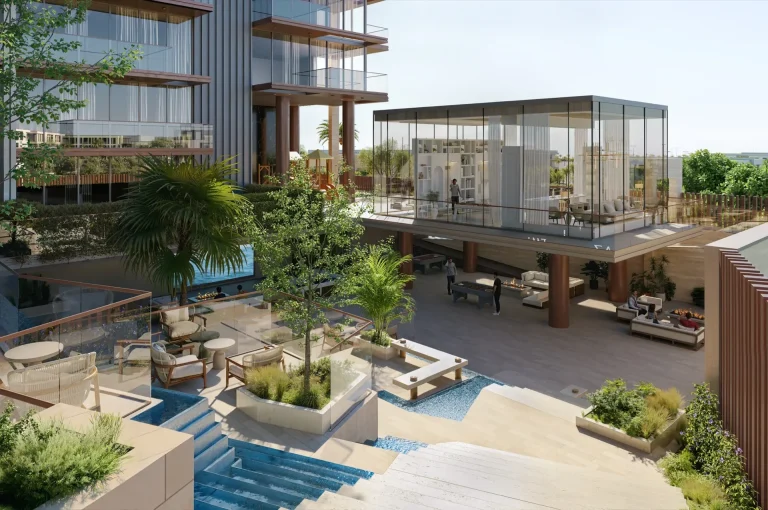
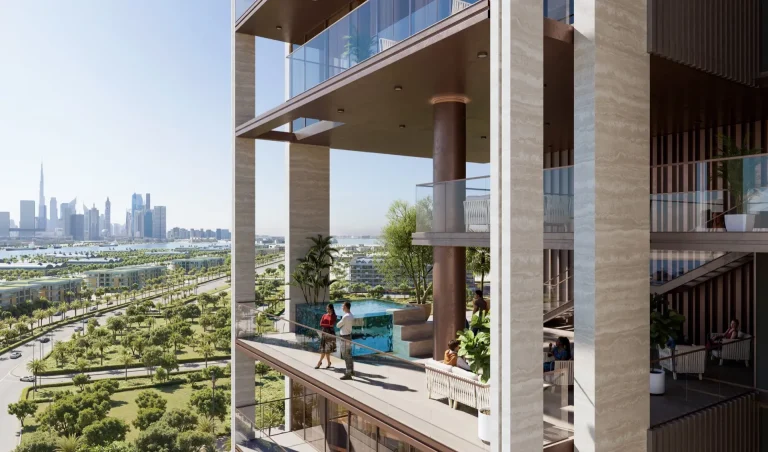
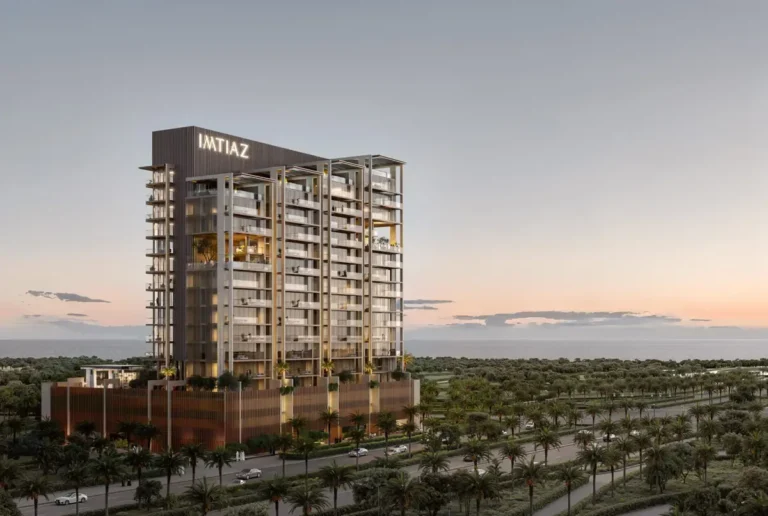
Al Jaddaf is the clearest example of corridor-specific demand logic at work. Historically known as Dubai’s dhow-building waterfront, the area sat in the shadow of Business Bay and Downtown for years — priced lower, overlooked more, but quietly accumulating the infrastructure credentials that matter most. Two developments in 2025 changed the conversation permanently.
First, the Dubai Government opened 329 Al Jaddaf plots to freehold conversion for all nationalities, eliminating the GCC-only ownership restriction that had capped international demand for years. Second, the Dubai Metro Blue Line confirmed Al Jaddaf as a key interchange node, connecting the existing Green Line to the new 30-kilometre, 14-station route due for completion in 2029. Properties near announced metro stations in Dubai have historically seen station premiums of 5–15% on announcement, with additional gains of up to 25% in the 18–36 months before opening — a pattern established by the Red Line in 2009 that the Blue Line is already beginning to replicate.
Table 2: Al Jaddaf Property Investment Snapshot — 2026
| Data Point | Figure |
| Studio asking price (wider Al Jaddaf) | From AED 650,000 |
| 1BR asking price | AED 1 million – AED 1.5 million |
| Median price per sq.ft. | AED 1,550 – AED 1,620 |
| Rental yield | 6% gross |
| Price vs. peak | Up to 30% below the previous peak |
| Forecast price growth (freehold conversion) | 15% – 30% over the coming years |
| Freehold plots converted (Al Jaddaf) | 329 plots — all nationalities eligible |
| Blue Line station | Al Jaddaf (Green Line interchange node) |
Current entry prices for studios in Al Jaddaf start from AED 650,000, up to 30% below previous cycle peaks. Rental yields sit at a solid 6% gross, with analysts from RiseUp forecasting 15–30% capital appreciation over the coming years as freehold conversions and the Blue Line both materialise. Azizi’s Creek Views 4 launched in Al Jaddaf in March 2026, complementing Creek Views 1 and 2 ,which have already been delivered — a signal of developer confidence from one of Dubai’s most active builders.
For those evaluating off-plan versus ready in corridors like Al Jaddaf, the decision framework in our piece on when pre-launch discounts beat ready properties in Dubai provides the clearest breakdown of where the financial advantage actually sits.
Emaar South and the Aerotropolis Effect
If Al Jaddaf is the metro corridor play, Emaar South is the aviation corridor play — and the numbers behind it are on a different scale entirely. The AED 128 billion expansion of Al Maktoum International Airport, designed to make it the world’s largest hub with capacity for 260 million passengers annually, is the single most significant demand generator in Dubai’s current property cycle. The project will create employment and housing needs for over one million people. For context: when employment hubs of this size are constructed, residential markets within proximity do not ask permission before responding.
Table 3: Emaar South / Dubai South Investment Snapshot — 2026
| Data Point | Figure |
| Apartment price range | AED 1 million – AED 2.5 million |
| Rental yield (Emaar South) | 6–7% projected |
| Rental yield (Dubai South broader) | 7–9% gross |
| Price growth since 2022 | ~75% |
| DIP / Dubai South rents (YoY growth) | +20% in 2025 |
| Airport project size | AED 128 billion (USD 35 billion) |
| Eventual passenger capacity | 260 million per annum |
| Employment creation | Over 1 million jobs projected |
| Price vs. Downtown Dubai (per sq.ft.) | ~50% lower |
| Golf Vale starting price (March 2026) | AED 850,000 (1BR, 80/20 plan) |
The corridor effect is already measurable. Dubai Investment Park and Dubai South have recorded 20% annual rent hikes over the past 12 months, driven by the relocation of 12,000 Emirates cabin crew and thousands of ground staff who need housing within shuttle distance of the new hub. Emaar’s Golf Vale, launched in March 2026, puts 262 residential units surrounding an 18-hole championship golf course on the market from AED 850,000 with an 80/20 payment plan. Property prices across Emaar South have already climbed approximately 75% over the past three years — yet they remain roughly 50% cheaper per sq ft. than comparable Downtown Dubai stock. That gap is the opportunity.
Anyone who remembers when Dubai Hills Estate was selling at a discount to mature central communities understands the pattern. Emaar South is at the same stage of its development arc. Investors who want to understand how Dubai’s new wave of off-plan and waterfront strategies intersect in 2026 will find the full strategic context in our dedicated analysis.
Why the Blue Line Is Dubai’s Defining Corridor Catalyst
The Dubai Metro Blue Line does not serve one corridor — it anchors five. Running 30 kilometres across two branches through Al Jaddaf, Dubai Festival City, Creek Harbour, Ras Al Khor, International City, Silicon Oasis, and Academic City, it represents the single largest infrastructure-led demand shift since the Red Line transformed western Dubai in 2009. Properties near the Red Line within 15 minutes’ walk saw more than 25% price increases after its 2009 opening. The Blue Line is already replicating that pattern while still only 10% constructed.
Academic City studios have seen rental prices rise 43% since November 2023 on Blue Line anticipation alone. Silicon Oasis one-bedroom units are priced from AED 700,000 — still representing genuine commuter-arbitrage value for professionals who will be able to reach central employment zones directly from 2029. Creek Harbour, anchored by what will be the world’s tallest metro station at 74 metres, is Emaar’s most ambitious master plan and is priced from AED 1.6 million for a one-bedroom off-plan — the premium play on the entire corridor.
For investors building a view on how infrastructure mega-projects have consistently driven off-plan hotspots in Dubai, our detailed analysis of infrastructure projects and Dubai’s off-plan investment hotspots maps the full historical and forward-looking picture.
What Corridor-Based Conviction Actually Looks Like
Buyers who understand corridor logic are not simply looking at a map. They are asking a structured set of questions: What is the primary demand anchor? When does it become operational? What is the current entry price relative to comparable mature corridors? What is the freehold status? And — critically — which developer is launching here and what is their delivery record? That last question matters enormously because corridor conviction is only as good as the developer executing within it.
In Al Jaddaf, Azizi’s delivery of Creek Views 1 and 2 provides the proof of concept. In Emaar South, Emaar’s track record across every major corridor it has entered — from Dubai Hills Estate to Creek Harbour — gives investors confidence that Golf Vale will reach handover in March 2030 as scheduled. Understanding how developers’ on-time delivery records affect off-plan investment outcomes in 2026 is the analytical step that separates corridor conviction from corridor speculation.
The 2026 off-plan market has also seen a fundamental shift in buyer composition. As detailed in our analysis of why first-time buyers in 2026 are choosing off-plan over rentals, off-plan now accounts for over 71% of all residential transactions by value — driven not by speculators but by end-users who have done the maths on rent-versus-own and concluded that corridor-specific off-plan is the rational choice.
The Verdict: The Market Has Become Smarter, Not Smaller
The shift from broad-brush optimism to corridor-specific investment in Dubai is not a sign that the market is cooling — it is a sign that the market is maturing. Buyers who once needed a rising tide to lift all boats now have the data to pick the right vessel for the right current. The corridors with genuine demand drivers — Al Jaddaf’s freehold conversion and metro access, Emaar South’s aerotropolis trajectory, Creek Harbour’s skyline ambition — are not running on hype. They are running on contracts, cranes, and committed capital.
The projects launching along these corridors in 2026 are doing so precisely because demand is legible and verifiable, not because the broader market is simply “good”. Buyers who have accepted that distinction are the ones transacting with confidence. Buyers still waiting for a uniform market signal may be waiting for something that no longer exists — because Dubai real estate in 2026 is not one market. It is five or six distinct corridor markets, each moving to its own fundamentals.
To understand whether the overall delivery pipeline creates risk or opportunity for off-plan buyers in specific corridors, our analysis of how Dubai’s 2026 delivery wave will impact off-plan prices provides the most granular breakdown available.
Ready to Back the Right Corridor? Fill Up the Form on Our Website
Stop evaluating Dubai as a single market. Start identifying the corridor that matches your investment horizon, risk profile, and return expectations. Our team at prelaunch.ae specialises in connecting buyers with the best off-plan opportunities in Dubai’s highest-conviction corridors — before they hit the open market. Fill up the enquiry form at prelaunch.ae today, and our advisors will match you with the right project, at the right corridor, at the right price.
Phone: (+971) 52 341 7272
Email: sales@mbrproperties.ae
Frequently Asked Questions (FAQs)
Table 4: FAQs — Corridor-Based Property Investment in Dubai
| Question | Answer |
| What is corridor-based property investment? | It means choosing areas based on specific, verifiable demand drivers — transport upgrades, employment hubs, or freehold conversions — rather than relying on city-wide market narratives. |
| Why is Al Jaddaf a good investment in 2026? | Al Jaddaf offers 6% rental yields, entry prices up to 30% below previous peaks, freehold eligibility for all nationalities across 329 plots, and Blue Line metro access due by 2029. |
| What makes Emaar South different from central Dubai? | It sits adjacent to Al Maktoum International Airport, which is undergoing a USD 35 billion expansion to become the world’s largest. Property here is roughly 50% cheaper per sq.ft. than Downtown Dubai. |
| Is the Dubai Metro Blue Line a reliable investment driver? | Yes. Properties near the Red Line saw 25%+ price increases post-launch in 2009. The Blue Line follows the same logic at far larger scale, with 14 new stations across eastern and north-eastern Dubai by 2029. |
| When is the right time to buy in a corridor? | Historically, the window 3–4 years before infrastructure completion delivers the best return. For the Blue Line (2029) and Airport Phase 1 (2030–2032), that window is open now. |
| Are these corridors open to foreign buyers? | Yes. All highlighted corridors — Al Jaddaf, Emaar South, Dubai Creek Harbour, Festival City, and Academic City — sit in freehold zones where all nationalities can own property outright. |