Not every Dubai property launch in March 2026 came with a rooftop event, a celebrity endorsement, and a queue of buyers fighting over launch-day allocations. Some of them arrived quietly. They did not trend. They were not the subject of breathless coverage in financial media. And that, paradoxically, is precisely what makes them worth understanding.
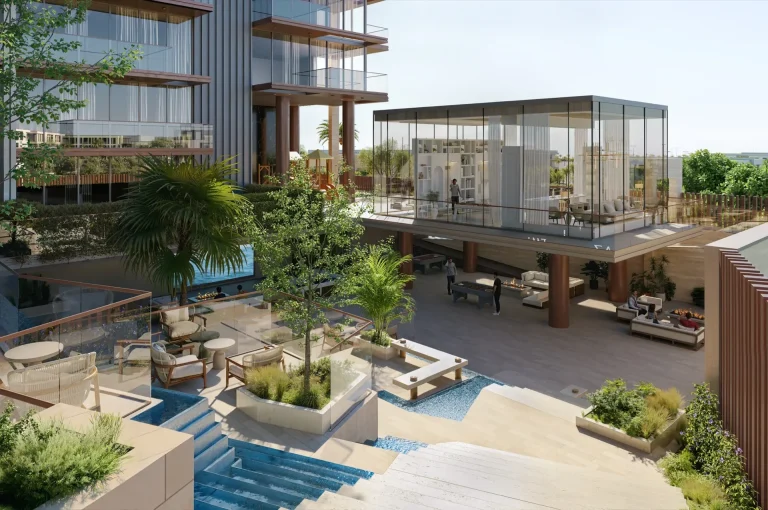
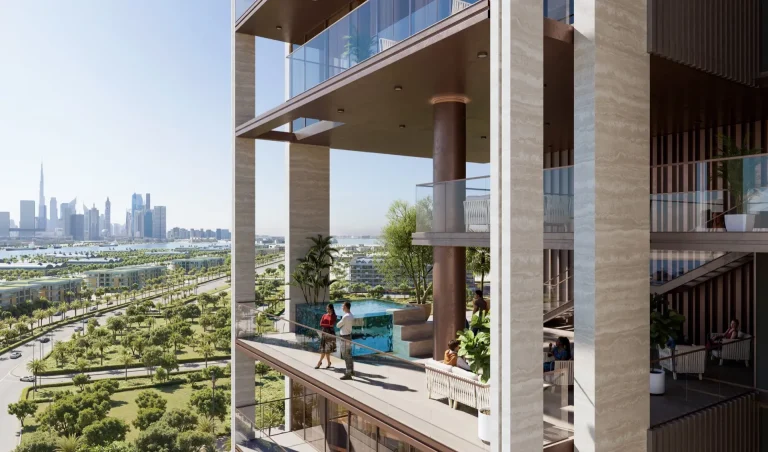
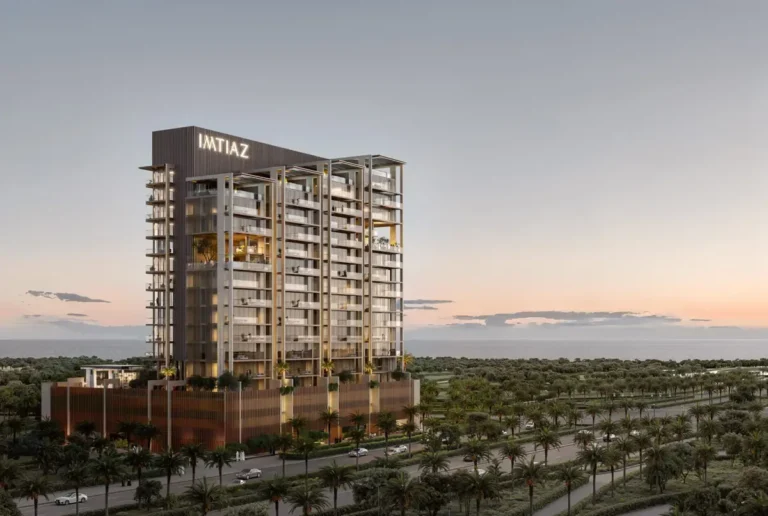
Rise Residences Warsan 2026 — launched by OAM Real Estate Development in late March and confirmed in official WAM reports alongside a sweep of other active UAE project activity — belongs to a category of launches that rarely command headlines but consistently perform when sentiment-driven markets wobble. Alongside it, AUM Development launched Ryze Residences in the same Warsan district on March 11, with 93 units, prices from AED 599,000, and a 40/60 payment plan targeted squarely at Dubai’s academic and professional workforce. Neither project is selling a fantasy. Both are selling a functional answer to a real housing problem. That distinction is the whole argument.
In a period when geopolitical uncertainty was suppressing transaction sentiment and some off-plan sellers were fielding 12–15% discount requests on premium units, launches like these offer a different value proposition. They are not trying to survive a sentiment shock. Their underlying demand does not require sentiment to be positive. People will still attend university. Healthcare workers will still need affordable housing near their hospital. Young professionals will still need a studio within a reasonable commute of central Dubai. That is not market-cycle dependent demand. It is structural demand, and it is the safest foundation a mid-market launch can sit on.
What Warsan Actually Is — And Why It Is No Longer Peripheral
The narrative around Warsan has been changing for several years, but the conflict period has crystallised something important: districts that solve a housing problem are more resilient than districts that sell a lifestyle aspiration, because aspiration is one of the first things that gets shelved when confidence dips.
Warsan sits at the intersection of three genuine demand anchors. The first is Dubai Academic City, which hosts over 30 international universities and generates a perpetual pipeline of students, faculty members, and support staff who need affordable, well-connected housing within a reasonable distance of their campus. The second is proximity to International City, one of Dubai’s most established affordable residential communities, which means the district sits within an already-functioning mid-market rental ecosystem with an established tenant profile. The third is arterial road connectivity to Dubai International Airport and central Dubai — a practical advantage that will compound as the area’s planned metro expansion materialises.
Deepak Batra, Founder and CEO of AUM Development, described the shift directly when launching Ryze Residences: “Warsan is no longer a peripheral location — it is becoming a functional residential hub that is witnessing sustained rental demand driven by education, healthcare, location and support services in and around the area.” That description applies equally to the broader district story that Rise Residences by OAM is tapping into. Two separate developers chose the same location in the same month. That is not a coincidence. It is a demand for confirmation.
The Investment Case That Does Not Depend on Momentum
The fundamental problem with hype-driven launches during uncertain periods is that their pricing is built on momentum assumptions: the next buyer will pay more than the last, capital will keep flowing, and the brand premium will hold. When geopolitical stress compresses transaction volumes by 37–49% in a single fortnight — as Goldman Sachs documented for early March 2026 in Dubai — momentum assumptions collapse first. The buyer who paid AED 2 million for a launch-day unit expecting resale within six months has no natural exit if the buyer pool has retreated.
A mid-market launch in Warsan, starting at AED 599,000, does not have that problem. Its investment case does not require a buyer in six months. It requires a tenant in 12 months. That tenant — a master’s student, a hospital administrator, a junior professional at a Dubai Academic City firm — exists irrespective of whether the DFM Real Estate Index is up or down. Gross rental yields on AED 599,000 entry-level studio units in the broader Warsan–International City corridor imply a 6–9% annual return, depending on unit size and tenant quality. That yield is not dependent on price appreciation. It is dependent on occupancy, and in a district anchored by a university cluster and an established mid-market rental community, occupancy is the one variable most likely to stay stable through a shock period.
This logic is not new. The data from Dubai’s fastest-growing mid-market communities in 2025 is consistent on this point: communities with structural demand anchors — schools, universities, employment hubs, transport links — deliver yield resilience that pure lifestyle or luxury-aspiration locations cannot match during sentiment contractions. JVC’s rental yields of 7–8.5% for studio and one-bedroom units have held through multiple market cycles for exactly this reason. Warsan is building the same profile.
Table 1: Warsan Mid-Market Launches — March 2026 Overview
| Detail | Rise Residences (OAM Real Estate) | Ryze Residences (AUM Development) | Rise by Blanco Thornton |
|---|---|---|---|
| Location | Warsan, Dubai | Warsan, Dubai | Al Warsan 1, Dubai |
| Launch date | Late March 2026 | March 11, 2026 | Active (completion Dec 2026) |
| Unit types | Residential apartments | Studios, 1BR, 2BR | Studios, 1BR, 2BR, 3BR |
| Starting price | Not publicly disclosed | AED 599,000 | AED 815,000 |
| Payment plan | Not publicly disclosed | 40/60 | Flexible |
| Primary target tenant | Professionals and families | Students, faculty, young professionals | Mid-income residents and investors |
| Infrastructure anchor | Warsan district road network | Dubai Academic City (30+ universities) | International City proximity, DXB access |
Sources: Zawya, GCC Business News, Trade Arabia, Blanco Thornton project data, Gulf News WAM report (March 29, 2026).

Mid-Market vs Hype-Driven: The Risk Profile in a Conflict Period
The difference between a practical mid-market launch and a hype-driven one is not simply about price. It is about the composition of demand that supports the unit after sale. Hype-driven launches attract a buyer pool with a meaningful proportion of short-horizon speculators and sentiment-driven capital. When sentiment turns, that buyer pool shrinks and often reverses, generating resale pressure and bidding wars among sellers rather than buyers.
Mid-market launches in location-driven districts attract a different buyer: the end-user who needs a place to live, the landlord investor who is underwriting rental yield rather than a six-month flip, and the long-term professional who is making a five-year commitment to Dubai. None of these buyers disappears when a regional conflict generates headlines. They pause. They negotiate. They apply more scrutiny to payment plan terms. But they do not abandon the thesis, because the thesis is not sentiment-dependent.
This is the core insight behind the 2026 investor shift from off-plan speculation toward occupancy-backed yield: buyers who are converting rental payments into mortgage payments have a completely different risk calculus than buyers chasing launch-day appreciation. A studio in Warsan at AED 599,000 on a 40/60 plan is, for the right buyer, a rental payment substitute that also builds equity. That motivation does not evaporate under geopolitical pressure. If anything, it strengthens it — because uncertainty about where to live makes ownership more, not less, attractive.
Table 2: Mid-Market vs. Hype-Driven Launches — Risk Profile During Conflict Period
| Variable | Mid-Market Warsan-Type Launch | Hype-Driven Prime Launch | Risk in Conflict Period |
|---|---|---|---|
| Demand driver | Structural: jobs, education, population | Sentiment: brand, exclusivity, FOMO | Structural demand holds; sentiment craters |
| Entry price | AED 599K–815K | AED 2M–10M+ | Lower price = wider buyer pool = faster absorption |
| Buyer profile | End-users + yield investors | Speculators + HNW capital | End-users stay; speculators exit first |
| Rental occupancy risk | Low — near university & employment hubs | Higher — lifestyle-dependent | Mid-market fills faster in stress periods |
| Price correction exposure | Limited — not at speculative peak | 10–15% in some segments | Mid-market enters from a defensible base |
| Payment plan pressure | 40/60 — distributed over the build period | Varies; often front-loaded | Phased plans reduce buyer risk at entry |
Sources: Goldman Sachs (March 2026 market note), Betterhomes (March 27 2026 update), Mitchell’s Commercial Realty, DLD data.
The Warsan District Fundamentals Behind the Thesis
To evaluate whether Rise Residences Warsan 2026 and its neighbouring launches represent genuine value or simply opportunistic positioning during a low-competition window, the right question is: what happens to rental demand in Warsan if the geopolitical situation remains unresolved for 12 months?
The answer, based on the district’s demand structure, is: very little. Dubai Academic City’s enrolment is not a function of regional geopolitics. Its 30+ universities operate on academic calendars, research contracts, and institutional mandates that are insulated from month-to-month market sentiment. Faculty and support staff need housing. Students need accommodation. The healthcare and logistics workforce anchored in the broader Warsan–International City corridor is similarly non-discretionary: those workers do not leave Dubai because of a conflict. They continue needing somewhere affordable to live that is within a reasonable commute of their workplace.
For investors and buyers who understand the difference between structural demand and momentum demand, these are the fundamentals worth tracking, not the DFM index or the weekly transaction volume figures that measure sentiment rather than underlying need.
Table 3: Warsan District — Structural Demand Pillars and Investment Implications
| Demand Pillar | Detail | Investment Implication |
|---|---|---|
| Dubai Academic City | 30+ international universities; growing faculty and student population | Persistent sub-AED 1M rental demand; low vacancy in the studio and 1BR segment |
| International City proximity | One of Dubai’s largest affordable residential clusters; established tenant base | Spillover demand from price-sensitive residents priced out of ICity |
| Road infrastructure | Improving arterial road links to DXB Airport and central Dubai | Connectivity premium building as infrastructure matures |
| Planned metro expansion | Future metro connectivity earmarked for the wider Warsan corridor | Structural price uplift expected as connectivity milestone approaches |
| Mid-market rental ceiling | Studios and 1BR in the area average AED 35K–55K per annum | Rental yield on AED 599K entry: implied 6–9% gross, depending on unit size |
| Conflict-period occupancy | Education and healthcare workers are non-discretionary tenants | Occupancy remains stable even when speculative buyer sentiment retreats |
Sources: AUM Development launch release (March 2026), Dubai Academic City institutional data, International City rental market benchmarks.
How This Fits Into the Broader Dubai Launch Landscape of March 2026
Rise Residences and Ryze Residences were not the only mid-market launches active in March 2026. They were part of a pattern of launches that demonstrated market continuity across multiple price points and district types during the same period that headlines were reporting early weakness signals. This is important context.
Golf Vale by Emaar in Emaar South launched with units from AED 1.1 million. Sea Cliff and Flora Bay launched on the Dubai Islands. National Properties launched a AED 500 million Grade A commercial tower in Barsha Heights. Zoya Developments launched the Nové project in Dubailand with investments exceeding AED 200 million. Deyaar confirmed it was completing its Jannat project three months ahead of schedule. Binghatti reported average weekly sales of AED 500 million since late February. The launches were not confined to the ultra-luxury segment or to locations carrying speculative heat. They ran across commercial, mid-market, and premium residential — and Warsan was part of that picture.
What this distribution tells a careful reader is that the March 2026 weakness Reuters and Goldman Sachs documented was real but selective. It affected transaction velocity and speculative resale intent. It did not affect the decision-making of developers who had underwritten their projects on structural demand. Those developers launched. That is its own signal, and it belongs alongside the broader market narrative, not in a footnote to it.
For readers who want to understand where Warsan-type mid-market zones sit in the broader 2026 risk map — what to avoid and what to lean into — the analysis at Dubai’s 2026 oversupply risk map and safe zones identifies the specific district-level variables that differentiate durable yield plays from oversupply risk zones. The lesson is consistent: the safest mid-market investment is one supported by an employment or education anchor, not by a sentiment wave.
For investors who want to understand the full opportunity set across Dubai’s mid-market and value segments in 2026, the guide to how 2026 became the ultimate off-plan buyer’s market in Dubai maps the correction-driven entry points, the segments with the most negotiation room, and the districts where structural fundamentals make the case regardless of sentiment.
Looking for the Right Mid-Market Dubai Launch for 2026?
The projects that perform best through uncertain periods are rarely the loudest. They are the ones with the strongest structural demand case and the most honest pricing. Fill up the form on prelaunch.ae and our team will identify the mid-market Dubai launches in 2026 that match your investment profile, yield expectations, and timeline — with full verification against DLD records and developer track data.
Reach us at (+971) 52 341 7272 or email sales@mbrproperties.ae. The calm entry point in this market is not the one making the most noise. It is the one solving a real problem — and those projects are already live.
Frequently Asked Questions
Q: What is Rise Residences Warsan 2026, and who is the developer?
A: Rise Residences Warsan 2026 is a residential development launched in late March 2026 by OAM Real Estate Development in Dubai’s Warsan district. It was officially reported as part of the UAE’s March 2026 real estate activity in WAM-sourced coverage by Gulf News and Khaleej Times, alongside other active launches during the same period. Full project specifications have not been publicly disclosed. For detailed information, prospective buyers should contact the developer or a registered broker.
Q: Why did multiple developers choose Warsan in March 2026 for mid-market launches?
A: Warsan sits at the intersection of three structural demand anchors: Dubai Academic City, with over 30 international universities; proximity to International City, one of Dubai’s most established affordable residential communities; and improving arterial road links to Dubai International Airport and central Dubai. Two developers — OAM (Rise Residences) and AUM Development (Ryze Residences) — chose the same district in the same month precisely because its rental demand is not sentiment-driven. Students, faculty, and professionals in the wider Warsan ecosystem need housing regardless of the market cycle.
Q: How does a mid-market launch in Warsan perform during geopolitical uncertainty compared to a hype-driven project?
A: Mid-market launches in districts with structural demand anchors are fundamentally more resilient during uncertainty because their occupancy is tied to non-discretionary need — education, employment, healthcare — rather than lifestyle aspiration or speculative appreciation. When sentiment-driven buyers retreat, the tenant pool for a Warsan studio does not shrink. It remains stable, supported by a university district and a mid-income professional workforce. Hype-driven projects that priced momentum assumptions into their valuations face the steeper challenge in the same environment.
Q: What rental yields can investors expect from Warsan-area mid-market units?
A: Based on the pricing of comparable Warsan and International City-adjacent units, gross rental yields on studio and one-bedroom apartments in the AED 599,000–815,000 entry range are estimated at 6–9% per annum, depending on unit size, exact location, and tenant quality. These are gross figures; net yields after service charges and vacancy allowance will be approximately 1–2 percentage points lower. Dubai’s mid-market communities with established university or employment catchments have historically sustained yields in this range through multiple market cycles.
Q: How should buyers verify Rise Residences Warsan 2026 before committing?
A: Prospective buyers should verify the project’s registration with the Dubai Land Department (DLD) to confirm that escrow protections are in place. They should review the developer’s delivery track record across previous projects, examine the payment plan structure in full — including any post-handover terms — and assess the secondary market liquidity in Warsan by reviewing active listings and recent transaction prices on DLD’s transaction portal. Given that detailed specifications are not yet publicly released for Rise Residences, speaking directly with the developer or a RERA-registered broker is the recommended first step.