Every property market experiences fear cycles. The triggers change — a geopolitical shock here, a rate decision there, a supply headline that catches the wrong kind of attention — but the pattern is consistent: sentiment shifts, speculative buyers pull back, and the launches built on promise rather than product feel the pressure first. In Dubai, the question that separates anxious buyers from confident ones in 2026 is not whether a fear cycle will arrive, but whether the launch you are committing to can withstand one when it does.
The answer lies in a concept that has quietly become the defining lens of the Dubai off-plan market in 2026: end-user logic. Launches designed around the actual housing needs of the people who will live in them — not just investors who intend to flip before completion — are demonstrating a structural resilience that speculative inventory simply cannot match. This article explains why Dubai end-user off-plan launches in 2026 are the category most likely to outperform when the market gets nervous, and how to identify them before you commit.
What a Fear Cycle Actually Does to a Property Market
A fear cycle in real estate is not a crash. It is a period of hesitation: buyers who were ready to commit pause, bullish investors become cautious, and the launches that relied on a continuously optimistic buyer pool begin to show strain. In Dubai’s off-plan market, this strain typically shows up in three ways: slower absorption rates at new launches, a rise in SPA cancellations from speculative buyers who purchased at launch, intending to resell, and a widening gap between headline enquiry numbers and actual paid bookings.
The 2026 context adds a specific set of pressures. Global economic uncertainty, currency movements affecting European and Asian buyer appetite, and a significant supply pipeline — with approximately 100,000 new residential units projected for delivery across Dubai between 2026 and 2027 — have created an environment where buyer selectivity is rising. Knight Frank noted the market’s own evolution pointedly: the city is transitioning from a speculative market to one defined by genuine end-user demand, structural depth, and long-term investor confidence. That transition is the central story of 2026.
For a broader read on where the Dubai off-plan market sits in its current cycle, this analysis of whether the market represents a boom, a bubble, or simply a maturing phase is a useful foundation before evaluating any specific launch.
The Structural Difference Between Speculative and End-User Demand
Not all buyers are the same, and not all launches attract the same buyer. The distinction between a speculative launch and an end-user-oriented launch runs deeper than marketing language or brochure positioning. It is embedded in the unit types offered, the ticket size, the layout design, the location’s existing infrastructure, and the developer’s understanding of who will actually live in these homes.
A speculative off-plan launch is one where the majority of buyers are purchasing with a short time horizon: they plan to resell before completion, or to exit shortly after handover if prices have moved in their favour. Their decision is driven by price trajectory and launch discount, not liveability. This buyer type performs well in a bullish market and exits quickly in a nervous one.
An end-user-oriented off-plan launch is one where the majority of buyers are purchasing because they intend to live in the property, or because they are long-term yield investors who have selected the unit based on genuine rental demand in the location. Their decision is anchored in housing need, not market sentiment. This buyer type is significantly more durable through a fear cycle because their reason to purchase does not evaporate when headlines turn negative.
Table 1: Speculative vs End-User Launches — Key Structural Differences
| Characteristic | Speculative Launch | End-User-Oriented Launch |
| Primary buyer | Short-term investor/flipper | Long-term resident or yield investor |
| Holding period | Pre-completion resale (0–2 yrs) | Post-handover occupancy or rental (3–10 yrs) |
| Sensitivity to fear cycles | High — exits fast under uncertainty | Low — demand driven by housing need |
| Cancellation risk after SPA | Elevated (10–25%+) | Low (typically below 8%) |
| Rental absorption at handover | Variable — depends on investor intent | Strong — tenant pool pre-formed |
| Price resilience in downturns | Weak in oversupplied zones | Durable — backed by occupancy demand |
| Oqood registration speed | Can lag if speculative interest cools | Typically fast — committed buyers |
Why Dubai’s Population Story Underpins End-User Demand
The most compelling reason to trust end-user oriented off plan launches in Dubai 2026 is not a sentiment argument. It is a demographic one. Dubai’s population crossed 4 million residents in 2025 — with approximately 470 new residents arriving every single day — and projections from the Dubai Statistics Centre point to continued growth toward 4.2 million by end-2026 and beyond 5 million by 2030. These are not tourists or short-term visitors. They are professionals, families, entrepreneurs, and high-net-worth individuals relocating with long-term intent, driven by the UAE’s Golden Visa program, zero income tax, and a quality of life infrastructure that is increasingly hard to match globally.
That population base creates a structural floor under housing demand that does not disappear when global sentiment shifts. Analysts estimate Dubai requires approximately 40,000 new residential units annually to maintain a balanced market at current growth rates. The approximately 100,000 units due for delivery between 2026 and 2027 will need to be absorbed against that continuing inflow. In communities where end-user demand is deep — JVC, Business Bay, Dubai South, Dubai Hills Estate — that absorption will happen. In speculative pockets where the buyer base was primarily flip-oriented, it will not.
Table 2: Dubai Population Growth and Housing Demand Drivers — 2025–2026
| Demand Driver | 2025 Baseline | 2026 Projection | Housing Impact |
| Dubai population | ~4.03 million (mid-2025) | ~4.2 million (end-2026) | ~40,000 new units needed annually |
| Daily net arrivals | ~470 new residents/day | ~500+ new residents/day | Consistent mid-market rental demand |
| New company registrations | ~40,000 in 2025 | Projected ~15–20% growth | Professional housing demand rises |
| HNWI relocations | ~10,000 in 2025 | Continued inflow projected | Luxury and mid-market mix |
| Completed units (Jan 2026) | 31,437 of 152,402 launched | ~100,000 due 2026–2027 | Absorption is dependent on end-user depth |
| Gross rental yield (mid-market) | 6–9% (JVC, Business Bay) | Stable to modest growth | Reinforces buy-to-let case |
Sources: Dubai Statistics Centre; Excel Properties population analysis, January 2026; Provident Estate population and demand report, 2026; DLD transaction data
This population dynamic explains why the best Dubai off-plan property for end users in 2026 is concentrated in mid-market corridors where professional and family demand is deepest. A one-bedroom apartment in JVC or Business Bay, priced in the AED 1M–1.5M range and designed around the actual needs of a resident rather than the preferences of a brochure photographer, will find a tenant within weeks of handover — regardless of what the broader market sentiment is doing at that moment.
For buyers looking at which specific locations are capturing the strongest end-user inflows in 2026, this breakdown of how infrastructure investment is shaping Dubai’s off-plan hotspots maps the corridors where population-driven demand is most reliably translating into rental and sales activity.
Fear Cycle Resilience: Which Asset Types Hold and Which Ones Break
Not all property types respond the same way when market anxiety rises. The table below maps the fear cycle vulnerability of different asset types in Dubai’s off plan market, drawing on historical market behaviour patterns from the 2020 Covid correction, the 2018–2019 oversupply period, and more recent analyst commentary on the 2026 supply cycle.
Table 3: Fear Cycle Resilience by Asset Type and Buyer Profile — Dubai Off Plan 2026
| Asset Type | Buyer Profile | Fear Cycle Vulnerability | Recovery Speed | Why |
| Studio apartments | Short-term investor | High | Slow | First exits in uncertainty; oversupplied quickly |
| 1-bed end-user launch | Mixed investor + renter | Low-moderate | Fast | Rental demand buffers price softness |
| 2-bed family apartment | End-user / family | Low | Fast | Structural housing need insulates demand |
| Branded luxury | UHNW / institutional | Moderate | Variable | Niche pool — durable but thin |
| Promise-led oversized units | Speculative investor | Very high | Slow to very slow | No occupancy safety net |
| Mid-market community launch | Long-term resident buyer | Low | Fast | Infrastructure and lifestyle lock-in |
Source: Better Homes 2026 forecast; St Host investment thesis, February 2026; DLD historical absorption data; Prelaunch.ae advisory analysis
The pattern is consistent across market cycles: assets anchored to genuine occupancy demand recover faster and fall less far than those built on speculative buyer intent. The reason is straightforward: a tenant paying rent every month is a more reliable price anchor than a future buyer who may or may not materialise at the moment of resale. When fear enters the market, the speculative buyer disappears first and returns last. The end-user, by contrast, is driven by a housing need that does not evaporate with sentiment.
This logic is directly applicable to how investors should evaluate the Dubai off-plan vs ready property decision in 2026. End-user-oriented off-plan launches occupy a middle ground: they capture the price advantage of early entry while building their durability on the same occupancy demand that gives ready properties their resilience. To explore where off-plan and ready formats each make the stronger case, this guide on off-plan versus ready property investment in Dubai walks through the framework in practical terms.
The Product Characteristics of a Genuinely End-User-Oriented Launch
Identifying a real end user off plan launch in Dubai requires looking beyond the marketing narrative. Developers who understand their end-user will build that understanding into the product: the unit types, the layouts, the amenity selection, and the ticket pricing. Here is what that looks like in practice.
- One and two-bedroom dominance. A launch weighted toward one-bed and two-bed units is signalling that it understands its buyer. These formats serve the professional and young-family segments that are driving Dubai’s population growth. Launches heavy with studios or large three-bedroom-plus units are either targeting speculative investors or a narrow end-user niche — neither of which provides the same resilience.
- Practical, liveable layouts. End users care whether the kitchen works, whether there is enough storage, and whether the bedroom can accommodate a wardrobe and a desk. A layout optimised for a floor plan render is not the same as a layout optimised for a life. The best end-user off-plan apartments in Dubai 2026 pass a simple test: a professional moving in on handover day could unpack and function without structural complaints.
- Realistic ticket size within the AED 1M–2M band. The mid-market sweet spot is not accidental. It is where the deepest pool of genuine buyers — both owner-occupiers and long-term yield investors — can comfortably commit. Launches priced above this band narrow their buyer pool and increase their dependence on speculative or ultra-high-net-worth demand.
- Existing infrastructure in the location. Schools, retail, transport links, and healthcare that exist now rather than on a master plan promise. End users making long-term housing decisions need confidence that the community will function from day one of occupancy, not from year five of delivery.
- A developer with a delivery track record. End users are buying a home, not a financial instrument. They need to know the building will be delivered, to specification, on or near schedule. The best off-plan developers in Dubai for end-user buyers are those with multiple completed communities in their portfolio, verifiable handover data, and satisfied residents — not just impressive render catalogues.
Table 4: End-User Quality Indicators — What to Check Before You Commit
| Indicator | What to Look For | Green Flag | Red Flag |
| Unit type split | % of 1-bed and 2-bed vs studios and 3-bed+ | 1-bed/2-bed >60% of total | Studio >50% or 3-bed+ >40% |
| Layout quality | Practical workspace, storage, usable balcony | Functional, liveable design | Statement aesthetics, unusable spaces |
| Ticket size band | Price per sq ft vs. submarket average | Within 5–10% of comparable ready units | >20% premium vs. ready stock |
| Surrounding rental market | Current achieved rents and vacancy rates | Vacancy <7%, rents rising YoY | Vacancy >10%, flat or falling rents |
| School and amenity proximity | Rated schools, retail, transport within 2km | Multiple options within 2km | Isolated location with future-only amenity promises |
| Developer delivery record | % of projects delivered on time, on spec | >80% on-time delivery history | First project or unconfirmed track record |
Source: Prelaunch.ae advisory framework; Better Homes 2026 market forecast; DLD and RERA guidelines
The Communities Getting End-User Logic Right in 2026
Across Dubai’s active off-plan landscape in 2026, certain corridors are consistently attracting end-user buyers in a way that insulates them from speculative sentiment shifts.
- Jumeirah Village Circle (JVC). Gross rental yields of 8–9% backed by consistent occupancy from young professionals and couples. A mature community with retail, clinics, and green space already operational. One-bed in the AED 950K–1.3M range is the clearest example of end-user logic working in the off-plan format.
- Dubai Hills Estate. Emaar’s master community, anchored by Dubai Hills Mall, a championship golf course, and rated schools. Families choosing to relocate to Dubai are increasingly drawn here, creating a deep end-user pool for both apartments and townhouses. Speculative buyers exist but are balanced by genuine long-term residents.
- Dubai South. The Al Maktoum International Airport expansion is transforming this corridor from a future promise into a present reality. Logistics and aviation professionals are forming an organic end-user base, while entry pricing in the AED 1M range for a one-bedroom makes it accessible to a wide professional demographic.
- Business Bay. Proximity to DIFC and Downtown creates a continuous executive rental demand that makes mid-sized apartments here as close to recession-proof as residential property gets in Dubai. Rental vacancy rates remain tight. End-user appeal is structural rather than trend-driven.
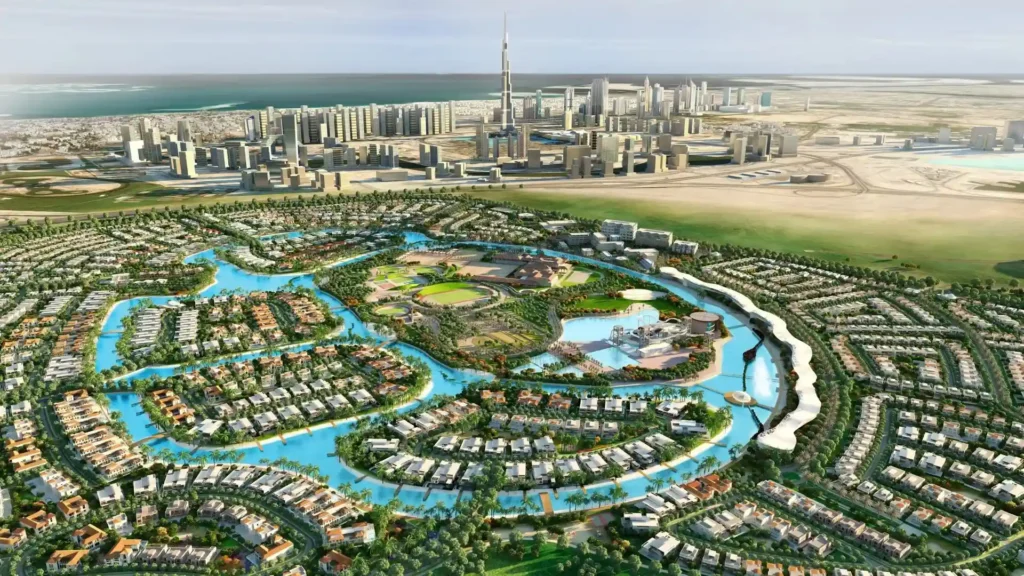
- Mohammed Bin Rashid City (MBR City). Recorded a 20% increase in off plan sales in 2024, driven by families and long-term residents seeking lifestyle integration within a master-planned framework. The blend of greenery, schools, and retail creates genuine community appeal that sustains end-user demand across market cycles.
For buyers building a portfolio across multiple corridors, the curated overview of top upcoming off-plan projects delivering the strongest pre-launch returns in Dubai identifies which specific launches in these corridors are currently worth tracking before they open to wider market access.
Payment Structures That Signal End-User Orientation
One of the less obvious but highly reliable signals of an end-user-oriented launch is its payment plan structure. Speculative launches often use aggressive post-handover payment plans — 60/40 or 70/30 structures where the majority of payment is deferred until or after completion — to attract buyers who are planning to resell before those payments fall due. The plan works for the speculative buyer; it creates risk for the developer if resale markets slow and buyers cannot exit.
End-user-oriented developers tend to offer payment plans calibrated to affordability rather than an exit strategy. A 40/60 or 50/50 construction-linked plan where payments are tied to construction milestones appeals to a buyer who is actually planning to take possession and occupy. These buyers are more committed at the SPA stage, have lower cancellation rates, and create a more predictable revenue stream for the developer, which in turn supports construction continuity and on-time delivery.
For buyers evaluating how different payment structures align with genuine occupancy intent versus speculative positioning, this detailed breakdown of Dubai off-plan payment plan options and how to choose the right structure covers the mechanics and buyer implications of each format in the current market.
What the Data Says: End-User Demand Is Already the Dominant Force in 2026
The data from the first quarter of 2026 is consistent with everything the market’s structural logic would predict. Dubai recorded AED 55.18 billion in residential transactions in January 2026 alone — a 43.9% year-on-year surge in value. Off-plan accounted for 71.27% of total residential activity. Analyst consensus from Better Homes, Cushman & Wakefield, and Knight Frank points to price growth of 5–8% for mainstream segments and 8–12% for prime areas through 2026, with the outperformance concentrated in communities with genuine end-user depth.
More revealingly, the research collective behind the UAE residential market analysis published in early 2026 noted that what makes the 2025–2026 cycle unique is that the growth is driven more by real demand than speculation, with a significant share of buyers now categorised as end users or long-term investors rather than short-term flippers. This is not a marginal shift; it is a structural realignment of who is buying in Dubai and why. Launches that are designed for speculative buyers are increasingly out of step with the market’s actual direction of travel.
For international buyers considering accessing this market through mortgage financing rather than cash, the practical guide to Dubai off-plan mortgages for international investors in 2026 covers how end-user purchase intent affects financing conditions, LTV ratios, and the bank approval process in the current lending environment.
Reassurance Over Hype: The Case for Buying With Logic, Not Optimism
The broader point of this article is not to suggest that Dubai is immune to fear cycles. No market is. The point is that the buyer who enters a genuine end-user off-plan launch in Dubai in 2026 is not depending on optimism to protect their investment. They are depending on something far more durable: the housing needs of the person who will live in or rent that unit. That need does not disappear when geopolitical headlines turn negative or when a central bank surprises with a rate decision. It persists because it is structural.
The difference between a nervous buyer and a confident one in 2026 is not bravado or risk tolerance. It is the quality of the product logic behind the launch they have chosen. A one-bedroom apartment in JVC at AED 1.1M, with a practical layout, a developer with five completed communities, and a location that already has schools and retail within walking distance, does not need a bull market to perform. It needs tenants. And in a city gaining 470 residents a day, tenants are not a challenge — they are a given.
For buyers who want to understand what comprehensive due diligence looks like before signing any off-plan contract — including the legal framework, RERA protections, and the steps from EOI to Oqood — this full purchase guide on what you need to know when buying off-plan property in Dubai covers every stage of the process in practical detail.
Ready to Invest in a Launch Built on Real Logic?
The Dubai off-plan launches that will outperform fear cycles are already in the market. They are the ones with practical layouts, mid-market ticket sizes, genuine population-backed rental demand, and developers who have delivered before. At Prelaunch.ae, we track exactly these projects — filtering by end-user alignment, conversion data, developer track record, and location fundamentals — so that the opportunities we present to clients are built on substance, not optimism.
Fill in the enquiry form at prelaunch.ae, and our advisory team will match you to the most relevant end-user-oriented launches in Dubai based on your budget, timeline, and investment goals.
Contact us:
 (+971) 52 341 7272
 sales@mbrproperties.ae
Frequently Asked Questions
What makes a Dubai off-plan launch ‘end-user oriented’?
An end-user-oriented launch is one where the product design, unit types, pricing, and location are calibrated for the people who will actually live in the property — not just investors planning to flip before completion. The key indicators are: one and two-bedroom unit dominance in the AED 1M–2M band, practical liveable layouts, existing infrastructure in the location, and a developer with a verified delivery track record.
Why do end-user off-plan launches outperform during fear cycles?
Because their demand is driven by housing need, not market sentiment. When a fear cycle hits, speculative buyers exit quickly and do not return until conditions improve. End users and long-term yield investors continue to purchase because their reason to buy — a home to live in or a reliably rented asset — does not change with headlines. This creates price floor resilience and faster post-correction recovery in end-user-oriented communities.
Which Dubai communities have the strongest end-user demand in 2026?
JVC, Business Bay, Dubai Hills Estate, Dubai South, and Mohammed Bin Rashid City are consistently generating the deepest end-user demand in 2026. Each offers a combination of existing infrastructure, mid-market ticket sizes, strong rental yields, and demographic alignment with the professional and family segments driving Dubai’s population growth.
Is speculative buying in Dubai’s off-plan market still happening in 2026?
Yes, but its share is declining relative to end-user and long-term investor activity. Knight Frank, Cushman & Wakefield, and multiple analyst reports published in late 2025 and early 2026 all note the same structural shift: the market is transitioning from a speculative cycle to one characterised by genuine end-user demand. Launches designed for the previous cycle’s speculative buyer are increasingly finding it harder to absorb inventory at launch.
How can I tell if a launch has been designed for end users or for speculative investors?
Check the unit type split (end-user launches are one and two-bedroom dominant), the ticket size (within the AED 1M–2M band for mainstream communities), the layout quality (liveable over aesthetic), the payment plan structure (construction-linked rather than exit-strategy-calibrated), and the location’s existing infrastructure. A launch that passes all five checks is most likely designed for people who intend to occupy or long-term hold, which is exactly where you want to be when the market gets nervous.