The Statistic That Changes Everything
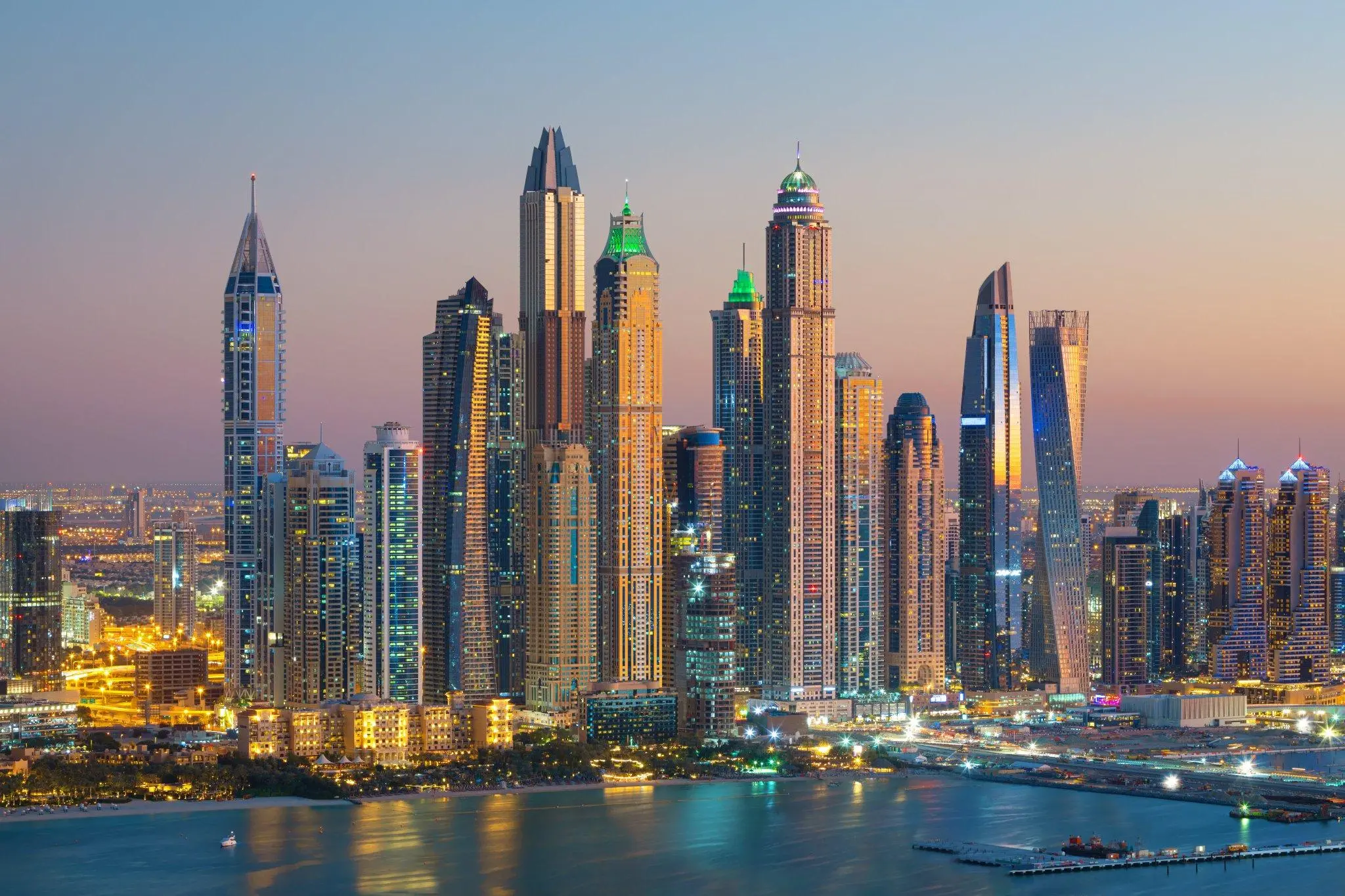
On any given Tuesday morning in Dubai, before a single social media post about geopolitical risk has loaded on your screen, approximately 6.5 million people are already moving through the city. They are on Sheikh Zayed Road. They are in the metro. They are crossing the Garhoud Bridge on the way in from Sharjah. They are dropping children at international schools, queuing at hospital registration desks, and opening laptops in glass towers from DIFC to Dubai South.
Not one of them is reading panic posts. They are living — and in doing so, they are creating the most durable form of real estate demand that exists: daily, recurring, structural need for housing, infrastructure, and services.
This is what the concept of Dubai peak-hour population housing 2026 actually means for investors. Not a number on a government slide. Not a statistic footnoted in an analyst report. It is the daily proof that Dubai’s housing demand is not built on speculative sentiment — it is built on six and a half million people needing somewhere to be. Every single day.
While commentators debate what the latest conflict headline means for property prices, the RTA is managing the logistics of moving those millions. Developers are delivering to them. Schools are educating their children. And the housing market is absorbing their needs — albeit, as the data confirms, not fast enough.
Three Populations – One Market
Most housing market analysis focuses on the resident population figure. In Dubai’s case, this is approximately 4.7 million permanent residents by end-2026 — growing at around 7% annually according to RTA Director-General Mattar Al Tayer, who addressed the figure directly at the World Government Summit 2026. That alone would make Dubai one of the fastest-growing major cities on earth.
But residents are only one part of the story. Dubai operates with three distinct population layers — and understanding all three is what separates a superficial analysis from a structural investment thesis.
Table 1: The Three Population Layers That Drive Dubai’s Housing Market
| Population Layer | Size (2026 est.) | Primary Activity | Impact on Housing |
| Permanent Residents | ~4.7 million | Live, work, raise families | Primary driver of housing demand; need long-term accommodation |
| Cross-Emirate Commuters | ~1.68 million daily | Enter Dubai from Sharjah, Ajman, RAK for work | Latent converters — proportion transitioning to Dubai residents each year supports absorption |
| Tourist / Business Visitors | 17M+ per year | Short-stay; hotels, serviced apts | Drives short-term rental demand; reduces vacancy in furnished stock; supports hospitality investment |
| Peak-Hour Total (all layers) | ~6.5 million | Full economic and civic activity | Determines pressure on roads, transit, utilities, retail — all of which anchor residential values |
Sources: Dubai Data & Statistics Establishment, RTA Director-General address at World Government Summit 2026, Khaleej Times, Dubai Statistics Centre | March 2026
The most important figure for investors to internalise is the 1.68 million cross-emirate commuters entering Dubai daily — a figure that rose 10% year-on-year in 2024 alone, according to the Dubai Statistics Centre. These are not tourists. They are working professionals with jobs in Dubai who have not yet made the move to live here. Each one of them is a potential long-term resident, a potential tenant, and eventually a potential buyer.
The conversion of even a fraction of this pool each year is sufficient to sustain housing absorption at a pace that outstrips delivery. 470 new permanent residents arrive in Dubai every single day — a rate that has not been interrupted by the current geopolitical situation and shows no sign of decelerating.
The Supply Gap the Headlines Are Not Telling You
The conversation about Dubai’s housing market in 2026 has been dominated by two competing narratives: the bull case (record transactions, population surge, infrastructure boom) and the bear case (131,000 units in the pipeline, potential oversupply, war risk premium). Both are engaging. Neither is complete without understanding the structural supply-demand gap that sits beneath them.
Table 2: Dubai Housing Supply vs. Demand — The Numbers Behind the Headlines
| Metric | Figure | What It Means |
| New residents per day (2025) | ~470 daily | Sustained, not spiked — structural rather than cyclical demand |
| New households added in 2024 | 59,610 | Each household requires a housing unit — net new demand, regardless of resale or rental |
| Units needed per day to match the population | ~150 homes/day | Completed deliveries in Jan 2026 equate to ~100/day — a 33% structural shortfall |
| Projected 2026 unit completions | ~100,000 (headline) | Actual deliveries expected at 41–62% of this — ~41,000–62,000 units, per historical materialisation |
| Villa/townhouse share of pipeline | Under 20% | 80%+ of pipeline is apartments; villas face severe structural undersupply |
| Population forecast by 2030 | 5 million+ | Five-year absorption pressure on housing stock exceeds current launch pace |
Sources: Dubai Statistics Centre, Dubai Land Department, Knight Frank, CBRE, Excel Properties Market Report Jan 2026, Khaleej Times Oversupply Analysis Feb 2026
The most revealing figure in the table above is the materialisation rate: only 41–62% of projected units have historically been delivered on time in Dubai. Of a headline pipeline of 131,000 units in 2026, the realistic delivery range is 53,000–81,000 units. Against a population adding 150 households-worth of demand every single day, that gap is not theoretical — it is structural.
CBRE, in its 2025 market review, explicitly called this out: the scale of new supply “should be viewed in the context of sustained population growth and economic expansion,” noting that delivery delays and phased launches would moderate supply shock. Knight Frank similarly identified prime and family housing as likely to remain “undersupplied despite a broader increase in deliveries.”
The villa and townhouse segment illustrates this most sharply. With over 80% of the entire pipeline comprised of apartments, villas and townhouses face a structural constraint that no short-term delivery surge can resolve. Families — who make up a rising proportion of Dubai’s permanent resident base — consistently prefer lower-density living. And lower-density living is consistently undersupplied.
For investors calibrating which segments and communities offer the strongest structural demand support, this breakdown of Dubai’s fastest-growing communities and off-plan ROI by zone maps current demand by community against yield and capital appreciation data.
Infrastructure Is Not a Lagging Indicator – It Is a Leading One
Here is the insight that separates experienced property investors from reactive ones: infrastructure spend is not a response to housing demand. It is the precursor to it.
When a new metro line is announced, property values in the corridor it serves begin to rise before the first shovel of earth is moved. When road capacity expands, commuter zones that were previously too distant become viable residential addresses. When air connectivity grows, new worker pools can reach Dubai. Every piece of infrastructure the UAE government commits to is a forward commitment to the housing demand that will follow.
Dubai’s 2026 infrastructure programme is extraordinary in both scale and specificity. The RTA is not incrementally adding lanes — it is systematically rebuilding the city’s mobility architecture to accommodate a population it knows is coming.
Table 3: Dubai’s Infrastructure Expansion Programme 2026–2030 and Its Direct Impact on Housing
| Project | Investment | Timeline | Impact on Housing Demand |
| 45+ RTA Traffic Interventions | N/A (programme) | Active — 2026 | 15–30% congestion reduction on key routes; supports residential zones on affected corridors |
| Dubai Metro Blue Line | Dh20.5 billion | Opens 2029 | Unlocks 21km of new residential corridor; properties near stations see proven 15–25% value uplift |
| Metro Gold Line (confirmed) | ~$5.5 billion | Under planning | Bur Dubai to Dubailand via Meydan creates fa resh off-plan investment corridor |
| Etihad Rail (Passenger) | Dh170bn federal network | 2026 launch | Dubai–Abu Dhabi in 57 min; expands commuter pool; converts Abu Dhabi workers to Dubai residents |
| Emirates Road Widening | Dh750 million | 2026–2027 | Expands to 10 lanes; 65% capacity increase on the key artery connecting Sharjah commuters |
| eVTOL Air Taxis (Joby Aviation) | Exclusive 6-yr deal | 2026 launch | Dubai–Abu Dhabi under 30 min; decouples location from proximity constraint; supports fringe residential |
| RTA 72 Major Projects by 2027 | Part of Dh170bn plan | 2026–2027 | 226km of new roads, 115 bridges/tunnels; network expansion directly catalyses community property values |
Sources: RTA, Gulf News Transport, Khaleej Times, Time Out Dubai, Gulf Business | March 2026. *Property value uplift near metro stations based on historical analysis across Red and Green Line corridors.
The single most important line in the table above for off-plan investors is the Dubai Metro Blue Line. Spanning a 30km route from Creek Interchange through Dubai Festival City, Dubai Creek Harbour, Ras Al Khor, International City, and Dubai Silicon Oasis to Dubai Academic City — opening in 2029 — it will create an entirely new investment corridor for pre-launch buyers. Properties within 800 metres of confirmed metro stations on new lines have historically appreciated 15–25% by the time the line opens. Pre-launch buyers entering now are positioned exactly where they should be.
Equally significant is the Etihad Rail passenger service, launching in 2026 and cutting the Dubai–Abu Dhabi journey to 57 minutes. For the first time, a professional based in Abu Dhabi can realistically commute to Dubai — or a Dubai professional can consider Abu Dhabi employment — without the two-hour road grind. This fundamentally expands the commuter pool in both directions, adding latent demand to Dubai’s residential base from a new geographic catchment.
Understanding which communities sit within these future infrastructure corridors is essential for off-plan selection. This guide on Dubai’s 2026 risk map — oversupply hotspots vs. safe pre-launch zones maps exactly where infrastructure spend is backing residential demand — and where it is absent.
The Commuter Conversion Engine
Every large city has a commuter belt — but Dubai’s is unusual in that it sits across sovereign borders. The 1.68 million people commuting daily into Dubai from Sharjah, Ajman, and other emirates represent one of the most underappreciated demand engines in the entire market analysis.
The conversion logic is straightforward. As Sharjah and Ajman rents rise in response to their own population pressures, the cost gap between living in those emirates and living in Dubai narrows. Simultaneously, the daily toll of a 45–90 minute commute in increasingly congested conditions, despite the RTA’s interventions, builds family pressure to relocate closer to employment. Schools, healthcare, and lifestyle infrastructure further tilt the calculus.
Table 4: The Commuter Conversion Logic — How Cross-Emirate Workers Become Dubai Residents and Buyers
| Commuter’s Current Situation | Why They Eventually Buy or Rent in Dubai |
| Rents in Sharjah; commutes 45–90 min each way to the Dubai employment hub | As Sharjah rents rise and Dubai rental yields stabilise, the cost gap narrows; the proximity premium justifies the Dubai move |
| Works in DIFC or Downtown; cannot afford current prime pricing | Off-plan units in mid-communities (JVC, Dubai South, Business Bay periphery) offer accessible entry with metro connectivity |
| Family grows; Sharjah schooling options become insufficient | Dubai’s international school network and master-planned communities attract families relocating permanently |
| Etihad Rail connects Abu Dhabi and RAK | Expanded rail reach grows the pool of workers who can live in Dubai and commute outward — or vice versa, feeding absorption |
Analysis: Prelaunch.ae Research, based on commuter data from Dubai Statistics Centre and RTA 2024–2026 | March 2026
This conversion dynamic is a self-renewing demand engine. As some commuters transition to Dubai residency, they receive free housing in Sharjah — which draws new commuters from Ajman or RAK — who then begin their own conversion cycle. The pool does not deplete; it refills from the broader regional labour market that continues to gravitate toward the UAE’s economic core.
The RTA Director-General acknowledged this reality explicitly at the World Government Summit 2026, noting that vehicle registrations in Dubai are growing at 10% annually — compared to a global average of 2–3%. This is not congestion as a problem. This is economic vitality expressed as mobility pressure, and it is the most honest leading indicator of sustained housing demand that the data provides.
For investors considering the first-mover logic of off-plan — particularly those transitioning from renting — this analysis of why Dubai’s 2026 buyers are choosing off-plan over rentals quantifies the financial arithmetic against the commuter and resident context outlined here.
What Peak-Hour Pressure Means for Off-Plan Logic
The case for off-plan investment has never been about betting on a short-term price surge. The structural logic of pre-launch buying rests on a simple sequence: identify a location with genuine long-term demand, enter at the lowest possible pricing point before the wider market prices in that demand, and hold through the delivery timeline as the city’s population growth validates the thesis.
Dubai’s peak-hour population figure is the proof point for step one. When 6.5 million people are actively using a city at full capacity every working day, the demand for housing in that city is not a projection or a forecast — it is happening in real time. Every bed, every apartment, every villa in the established residential zones of this city is occupied by someone who has to be somewhere.
Where the Pre-Launch Opportunity Concentrates in 2026
- Metro corridor communities: Properties within 800m of confirmed Blue Line and Gold Line stations. Infrastructure value uplift is pre-priced before opening — buy now, benefit on delivery.
- Etihad Rail catchment zones: Communities accessible from Dubai’s rail stations; expanded commuter geography increases addressable tenant pool.
- Master-planned family communities: Villa and townhouse product in established green communities. Structural undersupply — only 20% of pipeline — versus outsized family-buyer demand.
- Dubai South and logistics corridors: Al Maktoum International Airport expansion drives a parallel worker population requiring proximate housing; long-term employment anchor.
- Lifestyle and wellness assets: The rising professional class choosing Dubai for long-term residence demands quality-of-life infrastructure — a segment that consistently commands yield and capital premium.
For a full portfolio of pre-launch communities across Dubai ranked by infrastructure alignment, demand, and yield profile, this comprehensive guide to maximising UAE pre-launch returns in 2026 covers all three emirates with granular community-level analysis.
And for investors looking specifically at lifestyle-anchored communities — the fastest-growing segment of Dubai’s 2026 buyer profile — this deep-dive into the rise of lifestyle assets vs. standard homes in Dubai’s 2026 market explains why wellness-driven developments are commanding a structural premium over standard housing stock.
The Panic Post vs The Population Chart
Every week, social media surfaces a new reason to hesitate about Dubai property. A stock index drops. A conflict headline spikes. An analyst warns of oversupply. Each of these inputs is real, relevant, and temporary.
The Dubai peak-hour population data is also real, relevant, and permanent. A city that wakes up with 6.5 million people needing to get somewhere does not pause because of a conflict headline. Its housing demand does not recalibrate based on a three-week stock market move. The structural pressure on housing, roads, schools, and services is non-negotiable — and it compounds every year as 470 more permanent residents arrive.
The investors who will look back on 2026 as their most significant entry point are not the ones reading panic posts. They are the ones reading population charts, infrastructure programmes, and commuter conversion data — and recognising that the underlying story has not changed at all.
For investors approaching Dubai real estate strategy with a full market view — including how to position across Dubai, Abu Dhabi, and Ras Al Khaimah simultaneously — this 2026 investor strategy guide on Dubai real estate growth trends provides the most current strategic framework.
6.5 Million People Can’t Be Wrong And Neither Can Your Investment.
While others are watching screens, the city is moving. The demand for housing in Dubai is not a forecast — it is 6.5 million people showing up every day. The pre-launch window for entering infrastructure-backed, demand-supported communities at the lowest possible pricing is open right now, and it will not stay open indefinitely.
Fill in the enquiry form on prelaunch.ae and our pre-launch specialists will match you with the right community, the right payment structure, and the right entry strategy — tailored to your investment goals. No obligation, no pressure.
 (+971) 52 341 7272 ✉ sales@mbrproperties.ae
Frequently Asked Questions
| Question | Answer |
| What is Dubai’s peak-hour population in 2026? | Approximately 6.5 million people are present in Dubai during peak hours (6:30 am–8:30 pm, Sat–Thu), comprising 4.7 million residents and around 1.68 million cross-emirate commuters and daily visitors. |
| Does the commuter population drive housing demand? | Yes — indirectly and directly. Commuters are a pool of latent long-term residents. As transport costs rise and family needs evolve, a meaningful portion transitions to Dubai residency annually, sustaining absorption. |
| How does infrastructure investment affect off-plan values? | Proximity to metro stations is a proven driver of 15–25% property value uplift. Each new line or road expansion creates a fresh investment corridor for pre-launch properties priced before infrastructure opens. |
| Is the housing supply sufficient for Dubai’s population? | No. The city requires approximately 150 new homes daily to align with population growth. Actual completions in early 2026 equated to roughly 100 per day — a persistent structural shortfall, especially in villas. |
| Why do panic headlines not reflect true demand? | Panic narratives focus on short-term sentiment and stock market moves. Population data, commuter flows, and infrastructure spend reflect the structural demand that drives long-term housing value — and these are all rising. |