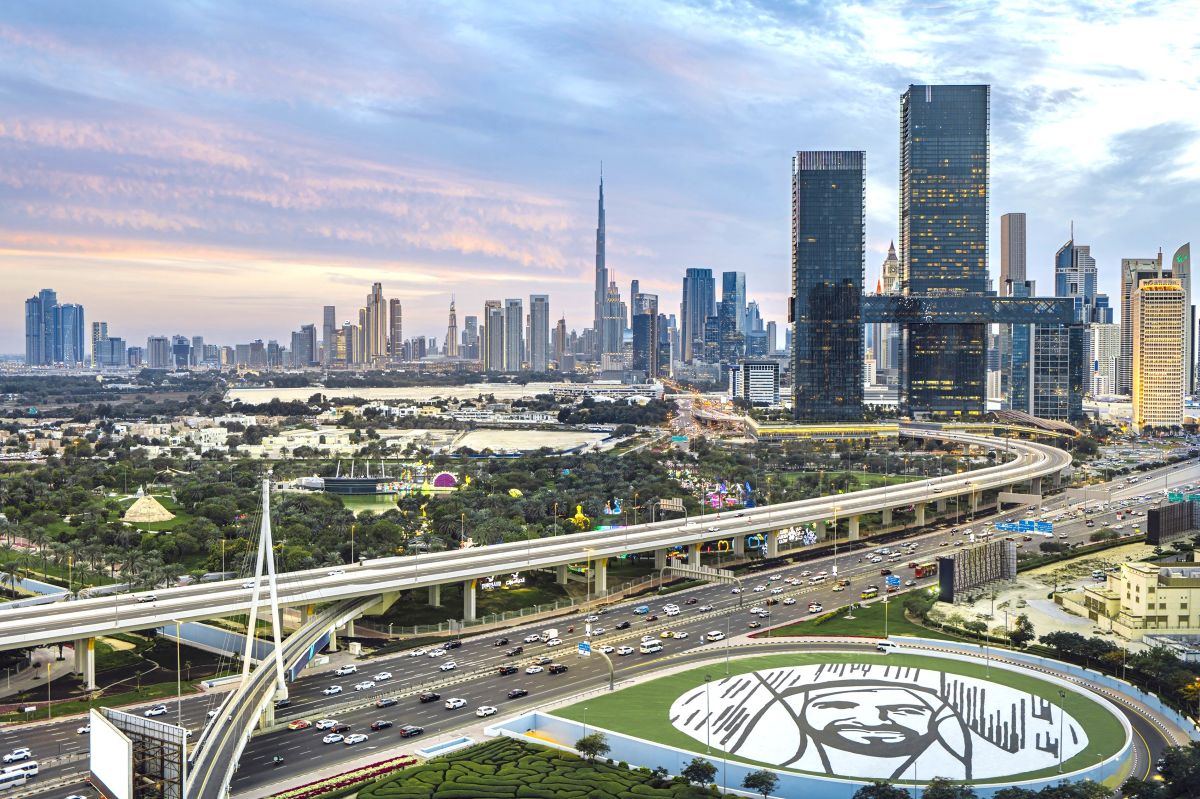
On November 13, 2025, a quiet but seismic number appeared on Dubai’s real-time Population Clock: 4,044,273 residents. Dubai had crossed the four-million mark — and it did not pause to celebrate. It kept growing. By the end of 2025, the city had added 208,030 net new residents in a single year — the highest annual expansion ever recorded in its demographic history, averaging 567 new arrivals every single day.
Now read those numbers alongside a global news cycle full of conflict escalation, regional tensions, and shipping disruptions. Notice something? The people kept coming. And with every new resident comes something a geopolitical headline can never cancel: the need for a roof over one’s head. That is the structural engine behind Dubai’s population growth, pre-launch demand — and it is why the off-plan market is more insulated from war noise than most investors realise.
The 4 Million Milestone: What the Numbers Actually Say
Dubai’s population trajectory is not a straight line — it is an acceleration curve. The city took decades to reach 1 million, another decade to reach 2 million, and then growth accelerated. Here is the headline data from official sources:
Table 1: Dubai Population Growth — Historical and Projected
| Year | Population | Annual Growth | Notable Driver |
| 2020 | 2.88 million | Baseline | Post-pandemic recovery begins |
| 2022 | ~3.0 million | +2.5% | Expo 2020 legacy; visa reforms |
| 2024 | 3.84 million (Jan) | +8% YoY | Golden Visa + HNW inflows |
| Nov 2025 | 4.04 million | +208,030 in 12 months | Highest ever annual expansion |
| 2026 (GMI est.) | 4.47 million | ~10.7% projected | Al Maktoum Airport; D33 Agenda |
| 2040 (Dubai Plan) | 7.8 million | Long-term target | Dubai 2040 Urban Master Plan |
Sources: Dubai Data and Statistics Establishment, GMI Research, Dubai Statistics Centre, Gulf News Population Clock
What is most telling is the composition of that growth. Expatriates comprise 92% of Dubai’s population, almost all of whom are economically active professionals, entrepreneurs, and skilled workers. Unlike natural population growth, each of these residents arrives already employed or investment-ready — which means their housing need is immediate, not deferred. As explored in our analysis of why Dubai’s population boom makes off-plan properties the last affordable option before 2040, this demographic reality is fundamentally reshaping supply and demand dynamics across every price segment.
How New Residents Directly Fuel Prelaunch Absorption
Every new resident in Dubai becomes either a tenant or a potential buyer — and often, both over time. At the population growth rate of 2025, Dubai was absorbing the equivalent of a mid-sized town’s population every two months. The housing implications are direct and arithmetic:
Rental demand: Population inflows drove rental registrations up 7% year-on-year in 2025, with renewals outpacing new contracts as tenants settled long-term. Average residential rents climbed 6% to approximately AED 122 per sq ft annually, and average sale prices reached AED 1,911 per sq ft — the highest ever recorded.
Off-plan absorption: With over 150,000 new units launched in 2025 and the market recording 202,349 residential sales transactions — a figure 464% higher than 2021 — the absorption engine is population-powered. Off-plan alone accounted for 72% of total residential deals, with volumes rising 30% year-on-year.
End-user shift: Private school enrolments climbed 6% in 2025, a leading indicator that families are settling — not just visiting. This end-user deepening is the most durable demand floor a prelaunch investor can rely on, because families do not leave when a conflict headline runs. They are already rooted.
Table 2: Population Growth vs Prelaunch Activity — Dubai 2025 at a Glance
| Metric | 2025 Figure | Significance for Prelaunch Buyers |
| New residents added (12 months) | 208,030 | Direct housing demand floor |
| Daily population inflow | ~567 people/day | Continuous tenant/buyer supply |
| Residential sales transactions | 202,349 | Market absorption confirmation |
| Off-plan share of transactions | 72% | Prelaunch market dominance |
| Average gross rental yield | 7% (apartments) | Investor return benchmark |
| Private school enrolments growth | +6% YoY | Family settlement signal |
| Rental registrations growth | +7% YoY | Sustained occupancy demand |
Sources: Dubai Data & Statistics Establishment; Cushman & Wakefield Core; Khaleej Times, 2025
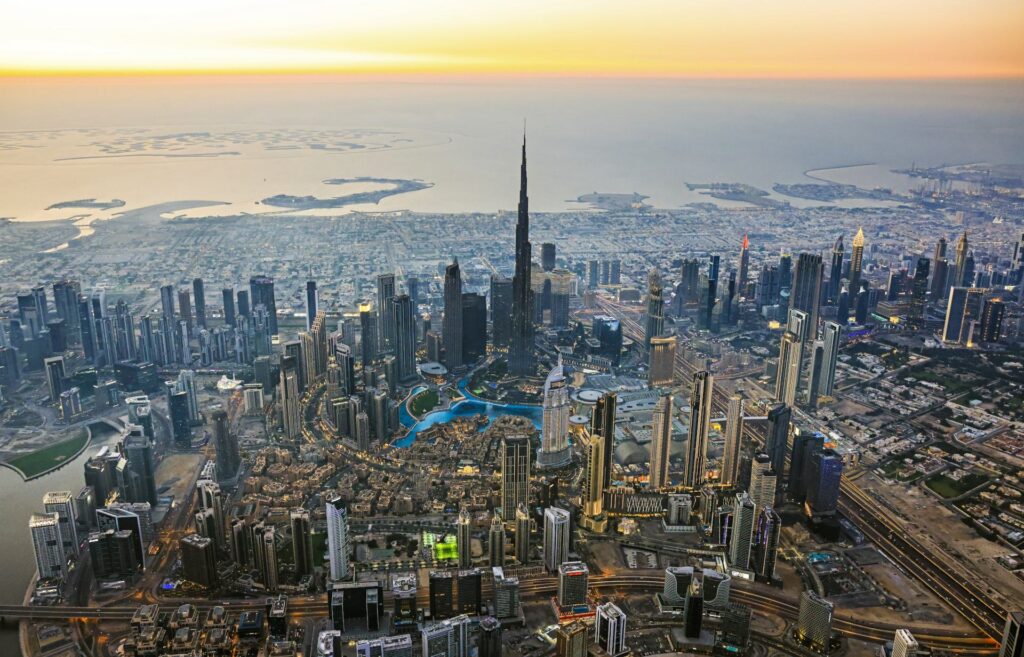
Conflict Headlines vs Demographic Inevitability
Here is the fundamental asymmetry investors need to understand: conflicts are episodic; population growth is structural. A missile strike in another region can move markets for 72 hours. But it cannot un-house 567 people who arrived in Dubai that same day. Their need for accommodation does not pause for the news cycle.
Dubai’s geopolitical positioning reinforces this dynamic. As a politically neutral, non-combatant global hub, the emirate has historically attracted more capital during regional instability, not less. In Q2 2025, international buyers drove 58% of all Dubai property transactions — from India, the UK, Russia, and China. Many of these buyers were, in part, motivated by the stability that Dubai offers relative to their home markets.
The Moody’s base case as of Q1 2026 is instructive: analysts expect a sizeable supply wave that slows price growth, but the analyst note explicitly states that “steady population growth will absorb the surplus relatively quickly.” That is institutional-grade analysis confirming what the demographic data already shows: human volume beats headline volatility.
Where Population Growth Hits Hardest for Prelaunch Buyers
Not all areas absorb population growth equally. Understanding where new residents concentrate is the key to identifying which prelaunch projects carry the lowest demand risk. Here is the geographic breakdown that matters:
Table 3: Population Concentration and Prelaunch Opportunity by District
| District | Population Driver | Prelaunch Demand Signal | Risk Level |
| Dubai South / Al Maktoum | Logistics & aviation workforce | Very high; mega-airport expansion | Low |
| Dubai Hills Estate | Family relocations; schools | High; villa undersupply continues | Low |
| Dubai Marina / JBR | Professionals; tourism adjacency | Steady; branded residences lead | Low–Medium |
| MBR City | HNWIs; expat executives | High in the luxury segment | Low |
| JVC / Arjan | Mid-income workforce | Moderate; watch supply levels | Medium |
| Business Bay | Corporate relocations | Stable; mixed-use demand | Medium |
| Downtown Dubai | Tourism + expat professionals | Premium pricing; tight supply | Low |
The villa and townhouse segment is where population pressure is most acute and most rewarding for prelaunch buyers. According to industry data, only 15,284 new villas are expected across all of Dubai in 2026, against a growing population of family-stage residents who specifically want space, schools, and community. That structural undersupply is precisely why villa communities like Dubai Hills Estate, Al Furjan, and DAMAC Hills 2 continue to post rental yields above 7% and appreciate faster than the market average.
For a detailed infrastructure-driven map of where new residents are concentrating, our guide to off-plan hotspots in Dubai, fuelled by infrastructure mega-projects in 202,5 walks through each district’s growth logic in depth.
The 2026 Supply Wave: Does It Cancel the Population Cushion?
The most common pushback on the population-demand argument is the supply wave: approximately 83,000 to 120,000 units forecast to complete in 2026. Is that not enough to overwhelm even a four-million-strong population?
The data says no — with important nuance. Here is why:
Delivery delays are structural. Historical patterns show only 48–62% of projected Dubai completions actually arrive on schedule. Major developers — Emaar, Ellington, Azizi — are increasingly internalising construction to manage timelines, but delays persist. Real supply is consistently lower than announced supply.
Population outpaced supply in 2025. Dubai added 175,000 to 225,000 new residents in 2025 against approximately 42,000 actual completions — a supply-to-new-resident ratio of roughly 1 unit per 5 new residents. Even with the 2026 wave, that structural gap does not flip overnight.
Risk concentrates in specific segments. Nearly 45% of under-construction stock sits across just five districts — JVC/JVT, Dubai South, MBR City, Business Bay, and Dubailand. About 66% of upcoming units are studios and one-bedrooms. Family villas, branded residences, and large apartments in prime locations face no comparable oversupply pressure.
For a granular breakdown of which zones carry the highest supply risk versus the safest prelaunch absorption rates, see our detailed analysis of Dubai’s 2025 oversupply versus demand dynamics.
Table 4: Supply vs Population Absorption — 2026 Forecast
| Scenario | Units Completing | New Residents Added | Net Demand Surplus |
| Base case (Moody’s) | ~60,000 | 175,000–225,000 | Demand positive |
| Bull case (population 6% growth) | ~83,000 | 250,000+ | Strongly demand positive |
| Bear case (max deliveries) | ~120,000 | 175,000 | Segment-specific pressure |
| Historical average (2019–2024) | ~30,000–40,000 | ~100,000–150,000 | Chronically demand positive |
Sources: Moody’s Ratings Q1 2026, Dubai Data & Statistics Establishment, CBRE MENA
The Golden Visa Effect: Turning Residents into Prelaunch Buyers
Population growth is not just about renters. The UAE’s Golden Visa programme has systematically converted long-term residents into property owners — and off-plan buyers specifically. In 2024, the UAE welcomed 7,200 new millionaires, building on 4,700 in 2023 and 5,200 in 2022. The total number of dollar millionaires in the UAE stood at 130,500 at end-2024, ranking it as the 14th-largest wealth market globally.
For these individuals, the AED 2 million property threshold for a 10-year Golden Visa creates a direct financial incentive to buy off-plan, where the same budget buys 15–30% more property than in the ready market. This converts population growth into structured prelaunch demand at a very specific — and very high-value — price band.
The result is a two-tier demand picture: new residents at the lower end create rental demand, which drives investor yields; and high-net-worth arrivals at the top end drive direct ownership demand, which sustains prelaunch pricing. Both layers run simultaneously, creating the kind of market resilience that geopolitical noise cannot easily disrupt.
For investors targeting this high-net-worth resident segment, our breakdown of why Dubai’s Q4 2025 property launches represent the best prelaunch pipeline in years maps the most relevant prelaunch projects to this buyer profile.
Economic Tailwinds That Sustain Population-Driven Demand
Population growth does not happen in a vacuum. It is a downstream effect of economic conditions — and Dubai’s economic fundamentals in 2026 are as strong as they have been in a decade:
UAE GDP growth: The IMF forecasts 5.0% GDP growth for the UAE in 2026, exceeding global averages. The UAE Central Bank projects 4.5% growth driven by non-hydrocarbon sectors, including tourism, finance, construction, and technology.
Inflation control: The UAE’s annual inflation rate decelerated to 2.3% in 2025, following a drop in fuel prices. The Central Bank projects 1.8% inflation in 2026 and 1.9% in 2027 — historically low levels that protect purchasing power and sustain residency attractiveness.
Employment magnet: Dubai’s 92% office occupancy rate — one of the highest of any global city — is a direct signal of employment density. Full offices mean professional arrivals. Professional arrivals mean housing demand. The residential occupancy rate in Dubai consistently exceeds 90%, confirming that supply, as fast as it arrives, is being absorbed.
For investors wanting to understand how these macro tailwinds translate to off-plan ROI, our comprehensive guide to maximising returns with UAE pre-launch properties covers yield optimisation strategies district by district.
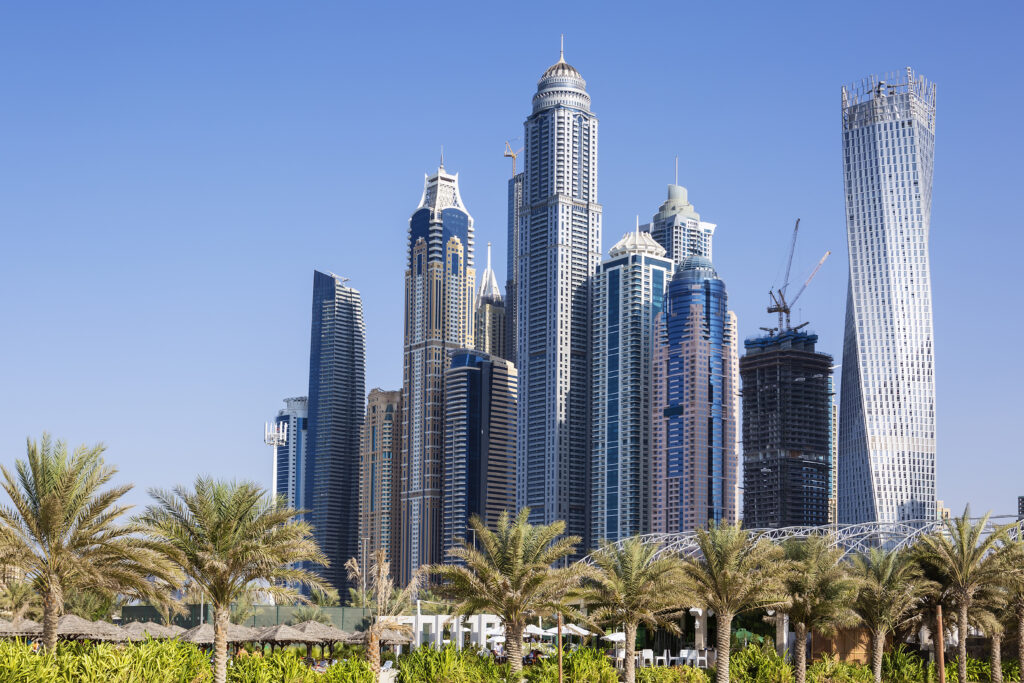
What 4 Million Residents Means for Your Prelaunch Decision Right Now
The case for Dubai population growth pre-launch demand is not theoretical. It is happening in real time, in real numbers, with real consequences for off-plan buyers:
On rental yield safety: A growing tenant base — adding 175,000 to 225,000 people in 2026 — means completed off-plan units face structurally low vacancy risk. Average gross yields of 7% for apartments and 5% for villas are sustained by this population floor, not by speculation.
On capital appreciation timing: Buying prelaunch today means your unit completes into a market with a larger population, a tighter supply-to-resident ratio, and higher replacement cost than the day you signed. That asymmetry is the return engine.
On conflict resilience: When 567 people arrive in Dubai every day, a geopolitical headline does not empty the city. It may slow investor sentiment for a week, but it does not slow the demographic inevitability that underpins absorption. That is the cushion this article is built on.
For a forward-looking view of how prelaunch gains will compound as the population marches toward 7.8 million by 2040, read our analysis of why prelaunch buyers are expected to see 25% gains by 2026.
| Ready to Invest in Dubai’s Population-Powered Prelaunch Market? A city growing by 567 residents every day does not need a perfect news cycle to sustain property demand. It just needs people — and they keep arriving. Whether you are a first-time prelaunch buyer or adding to an existing portfolio, our specialists are ready to match you to the right project, the right location, and the right payment structure. Fill out the form on our website at prelaunch.ae today for a personalised consultation. ☎ (+971) 52 341 7272 ✉ sales@mbrproperties.ae |
Disclaimer: Population figures are sourced from the Dubai Data and Statistics Establishment, Dubai Statistics Centre, GMI Research, and Gulf News Population Clock. Real estate data is drawn from Dubai Land Department (DLD), Cushman & Wakefield Core, CBRE MENA, Moody’s Ratings, and Betterhomes, current as of Q1 2026. This article does not constitute financial or investment advice.
Frequently Asked Questions
Q1: When exactly did Dubai cross 4 million residents?
The Dubai Population Clock recorded 4,044,273 residents on November 13, 2025, according to data from the Dubai Data and Statistics Establishment monitored by Emarat Al Youm. This marked the highest single-year population expansion in the city’s recorded history, with 208,030 net new residents added in the preceding 12 months.
Q2: How does population growth directly affect prelaunch absorption?
New residents need housing on arrival. Each wave of arrivals creates immediate rental demand, which drives up occupancy rates, sustains and grows yields, and attracts further investor capital into prelaunch projects. When 72% of all 2025 transactions were off-plan, the population engine was a key reason developers could sell at that velocity.
Q3: Does the 2026 supply wave overwhelm the population cushion?
Not in the base case. Even at 120,000 projected completions, Dubai is expected to add 175,000 to 225,000 new residents in 2026 — maintaining a structural demand surplus across the market. Risk concentrates in mid-market studio and one-bedroom apartments in five specific districts, not across the broader prelaunch market.
Q4: Which prelaunch areas benefit most from population-driven demand in 2026?
Dubai South and Al Maktoum Airport corridor, Dubai Hills Estate, MBR City, and Dubai Marina show the strongest population-to-supply alignment for prelaunch buyers. Villa communities remain structurally undersupplied relative to family-stage residents seeking space, making them the highest-conviction prelaunch category for 2026.
Q5: Can I get a Golden Visa through a prelaunch property purchase?Yes. Prelaunch properties valued at AED 2 million or more qualify for the 10-year UAE Golden Visa. Since prelaunch pricing is typically 15–30% below the ready market rate, it is often the most capital-efficient route to Visa eligibility — securing the same visa at a meaningfully lower entry cost than buying ready.