In 2021, the blueprint was simple: get in early, ride the construction wave, flip before handover, repeat. For two years, it worked brilliantly. Then the UAE off-plan property market evolved and it left behind every investor still running the 2021 playbook. Today, end-user buyers and long-term investors are commanding the conversation at pre-launch events from Dubai to Abu Dhabi. They are asking entirely different questions about livability, layouts, community services, and holding costs. If you have not updated your strategy, you are not just behind — you are buying the wrong properties entirely.
The Numbers That Confirm the Shift
The data is unambiguous. Off-plan transactions in Abu Dhabi reached 68% of all residential sales in H1 2025, totalling AED 61.1 billion but the composition of that buyer pool has fundamentally changed. International buyers now account for 42% of transactions, up from 35% in 2024. These are not short-hold flippers. These are globally mobile professionals and families seeking a primary or secondary residence, drawn by Golden Visa eligibility, zero property tax, and rental yields of 6–9% across Abu Dhabi’s prime zones.
Meanwhile, Dubai’s off-plan market — which logged over 70% of total sales in off-plan deals through 2025 is showing the same pattern: investors becoming selective around fundamentals rather than speculation. Understand how Dubai’s off-plan market is maturing and what it signals for 2026–2027 investors.
| Metric | 2021 Market | 2027 Market |
| Primary buyer profile | Short-term speculator | End-user / long-term investor |
| Average holding period | 12–24 months (flip) | 5–10 years (hold) |
| Top purchase driver | Price appreciation | Livability + yield |
| Off-plan share of market | ~55% | 68–78% (UAE-wide) |
| Golden Visa purchases (AED 2M+) | Marginal | Major demand driver |
| Layout priority | Sellable fast | Functional for living |
What End-Users Actually Want And Why It Changes Everything
When a long-term buyer evaluates a pre-launch project in 2027, their checklist looks nothing like a speculator’s. This is not a subtle shift — it rewrites which projects win and which developers succeed. Here is exactly what the new dominant buyer profile prioritises:
1. Livability Over Location Labels
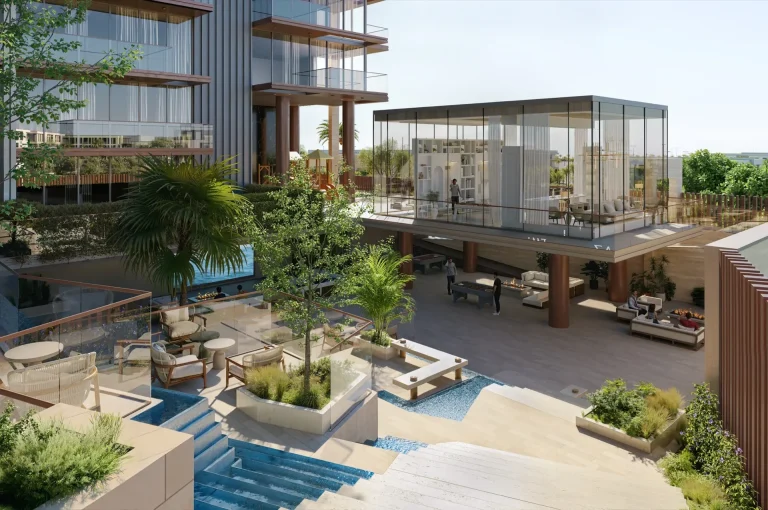
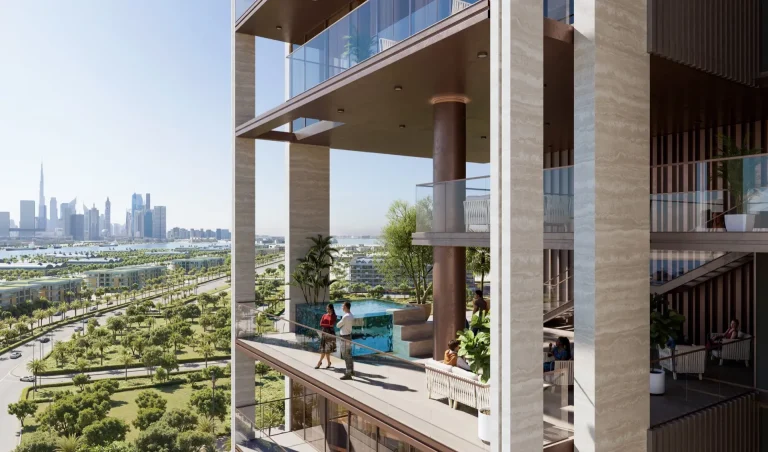
End-users are not satisfied with ‘waterfront’ or ‘island address’ alone. They want walkable communities — schools within the development or within a 5-minute drive, healthcare, retail, and parks that are already operational at handover, not ‘coming soon.’ Projects in Saadiyat Island and Yas Island that deliver against this standard have seen 25%+ annual rental growth and near-zero vacancy. Projects that sold on lifestyle branding but underdelivered on daily infrastructure are sitting with higher vacancy rates.
2. Layouts That Work for Families
In the 2021 speculator era, studios and 1-bedroom units dominated pre-launch sales because they were the lowest-cost entry and easiest to flip. The 2027 end-user is a family or a professional couple with a different need: functional 2- and 3-bedroom layouts with proper storage, maid’s rooms, and bedroom sizes that reflect how people actually live. Developers who invested in ergonomic planning — wider corridors, utility rooms, dual-aspect layouts — are commanding 12–18% price premiums over comparable towers built to speculator-era minimums.
3. Community Services as a Hard Requirement
The shift from speculator to end-user has elevated community services from a ‘nice to have’ to a hard purchase requirement. Swimming pools are table stakes. What end-users now interrogate is the quality of the beach club, the fitness centre’s operating hours, the pet policy, and — critically — the service charge per square foot. Abu Dhabi’s service charges range from AED 12 to AED 28 per sq ft, depending on the development. End-users do the maths. Developers who kept service charges below AED 18/sq ft while delivering premium community infrastructure are finding the strongest demand.
Compare the top-performing investment zones in Abu Dhabi and their community infrastructure rankings.

Why Flipping Is Getting Harder in 2027
The mechanics that made off-plan flipping profitable in 2021 have been systematically eroded. Understanding why is not just interesting — it is essential if you are still entering pre-launch with a short-term exit in mind.
| Flipping Condition | 2021 Status | 2027 Status |
| Entry price vs. market value | Often 20–30% below market | Tighter — developers pricing to market from launch |
| Resale demand at handover | Strong — speculators buying from speculators | Weaker — end-users want to move in, not buy off-plan |
| Capital gains opportunity | Significant (15–25% in 12 months) | Compressed — 7–12% in most markets |
| Transfer fees/exit costs | 4% DLD + agent (negligible to total gain) | Same costs, now significant vs. compressed gain |
| Off-plan resale market | Active secondary market | Thinning — fewer buyers at inflated off-plan prices |
| Competition from ready stock | Limited | High — record handovers in 2026–2027 |
Dubai’s supply pipeline alone projects 70,537 residential units delivered in 2027 — nearly double the five-year average. When ready properties flood the market, the gap between off-plan asking prices and ready property prices narrows. The speculator’s margin evaporates. See the full supply-versus-population analysis that explains why Abu Dhabi is outperforming Dubai for long-term holders.
The Market Changed — Are You Still Using 2021 Strategies? A Self-Audit
Answer these five questions honestly. If more than two answers are ‘yes,’ your strategy needs updating before your next pre-launch purchase.
| Question | 2021 Thinking | 2027 Red Flag |
| Are you prioritising the lowest price per sq ft over community quality? | Yes — entry point is everything | Low PSF often signals poor infrastructure |
| Is your target unit a studio or small 1BR? | Yes — fastest flip | Weakest long-term demand from end-users |
| Are you planning to exit before the handover? | Yes — avoid running costs | The secondary off-plan market has thinned significantly |
| Are you ignoring service charges in your ROI calc? | Yes — marginal to flip profit | Now material — AED 18–28/sqft annually |
| Is developer’s track record not in your top 3 criteria? | Yes — the project is the play | Developer delivery risk now higher; track record critical |
What the New Winning Pre-Launch Formula Looks Like in 2027
The pre-launch property strategy that wins in 2027 is built around one core insight: buy what end-users want to rent or live in — and you will always have demand on both sides of the market. Here is what that translates to in practice:
- Choose master-planned communities over standalone towers. Communities with phased amenity delivery — where the beach club, retail, and school open alongside residents — consistently outperform isolated high-rise launches in both rental performance and capital appreciation.
- Prioritise 2-bedroom and 3-bedroom units. The end-user market is family-driven. Occupancy rates for 2BRs in Abu Dhabi’s prime areas are running at 91–96%, versus 82% for studios. Build your pre-launch selection around what keeps tenants longest.
- Factor in the Golden Visa threshold. Properties priced at AED 2 million or above unlock 10-year UAE residency. End-users buying for lifestyle and residency are clustering at this price point — creating a structural floor for values at the AED 2M level in freehold zones.
- Stress-test service charges before you commit. An AED 1.8M apartment at AED 25/sq ft in service charges on 900 sq ft costs AED 22,500 per year before any mortgage or PHPP installment. Net yield erodes fast. Know the number before launch day.
- Use payment plans to maximise holding power, not leverage. Long-term buyers use post-handover plans to extend cashflow runway, not to stretch purchasing power beyond their means. The plan is a management tool, not a loan substitute.
Which Property Types Win in the End-User Era?
| Property Type | End-User Appeal (2027) | Rental Demand | Appreciation Potential | Flipping Viability |
| Family villa in master-planned community | Very High | High — long tenancies | Strong (10–15% pa in prime zones) | Low — high entry cost, thin flip market |
| 2–3 BR apartment, livable community | Very High | Very High — 91–96% occupancy | Strong | Moderate — if bought at launch price |
| Studio / 1BR, standalone tower | Low | Moderate — high turnover | Weak in oversupplied zones | Very Low in 2027 |
| Branded residence (hotel-managed) | High — turnkey lifestyle | High — short-term rental pool | Premium 40% over non-branded | Moderate — premium exit value |
Branded residences deserve a special mention: internationally mobile buyers who want turnkey luxury without management headaches are driving this segment hard. Discover why branded residences and waterfront properties are delivering some of the strongest UAE returns in 2025–2027.
Abu Dhabi vs Dubai: Where Long-Term Buyers Are Placing Capital in 2027
Abu Dhabi’s measured supply — approximately 12,400 units in 2027 versus Dubai’s 70,537 — creates a fundamentally different demand-supply dynamic. With rental growth reaching 27.3% annually in Abu Dhabi by mid-2025 and apartment prices up 15% year-on-year, long-term buyers see a market where end-user demand structurally exceeds new supply. That is the opposite of a speculative trade — it is a fundamental hold.
For expat buyers specifically, Abu Dhabi’s freehold zone expansion now allows 100% foreign ownership with zero property tax, zero capital gains tax, and Golden Visa eligibility — a combination unmatched in most global markets. Read the complete guide to expat property ownership and tax advantages in Abu Dhabi.
Ready to Build a 2027-Ready Pre-Launch Strategy?
The investors winning in 2027 are not smarter — they are simply working with the current market, not the 2021 one. At Prelaunch.ae, we analyse pre-launch projects through an end-user lens: community infrastructure, layout quality, service charges, yield potential, and long-term absorption — before we ever recommend a development to our clients.
Fill out the form on our website at prelaunch.ae to receive a curated shortlist of 2027 pre-launch opportunities matched to a long-term investment strategy.
 (+971) 52 341 7272
 sales@mbrproperties.ae
Frequently Asked Questions
Is off-plan property still a good investment in 2027 if I’m not planning to flip?
Absolutely — in fact, the market now rewards long-term holders more than ever. With Abu Dhabi yields between 6–9% and capital appreciation of 15%+ annually in prime zones, the fundamentals strongly favour a 5–10 year hold strategy over any short-term exit play.
What layouts should I prioritise in a pre-launch purchase for end-user demand?
Focus on 2-bedroom and 3-bedroom units in master-planned communities with operating schools and retail. These unit types deliver the highest occupancy rates (91–96%) and the lowest tenant turnover — key metrics for long-term yield stability.
Can I still make money flipping off-plan in 2027?
It is possible, but significantly harder than in 2021. Compressed margins, thinning secondary off-plan markets, and rising ready-property competition have reduced flip profitability materially. If you do flip, buy at the earliest pre-launch pricing and exit before construction peaks — the window for profit is narrower, and timing is more critical than before.
Which Abu Dhabi communities best reflect the end-user shift?
Saadiyat Island, Yas Island, and Al Reem Island lead in end-user demand metrics — high occupancy, strong rental growth, and infrastructure that already operates at handover. See the full breakdown of Abu Dhabi’s highest-ROI investment zones for 2025 and beyond.
How does the Golden Visa connect to the long-term buyer shift?
The UAE’s 10-year Golden Visa — available to property investors at AED 2M+ — is one of the strongest structural drivers of the end-user shift. Buyers are not just purchasing an asset; they are establishing long-term UAE residency. This changes holding behaviour entirely: Golden Visa holders cannot afford to flip because their residency status is tied to their property ownership threshold.