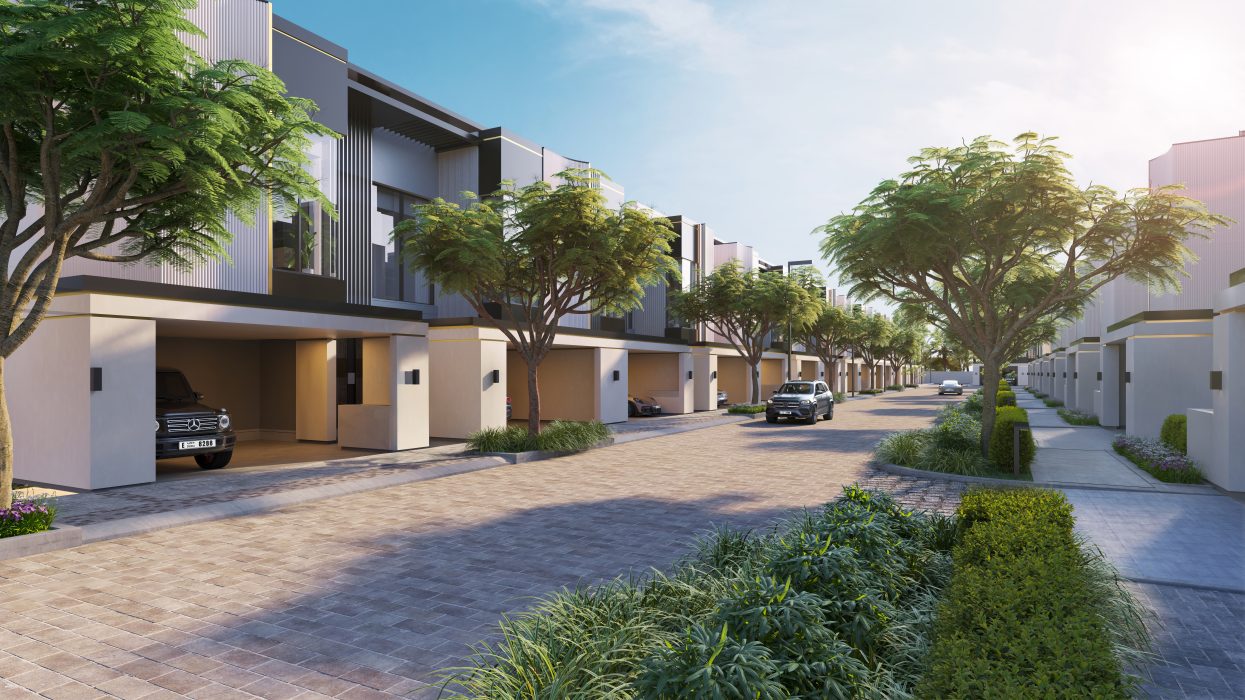
Something fundamental has changed in how Dubai’s residents choose to live. For years, the tower apartment was the default: a compact unit in a high-rise, close to the metro, with shared amenities and a manageable service charge. That model still works — but a growing segment of Dubai’s population is decisively walking away from it. They are choosing townhouses. And in 2027, that shift is no longer a post-pandemic blip. It is a structural trend backed by demographic data, supply scarcity, and a tenant profile that is settling in Dubai for the long haul.
The numbers are unambiguous. Villas and townhouses account for just 20% of Dubai’s residential stock, yet they are consistently absorbing the strongest end-user demand. With 86% of the new supply pipeline composed of apartments, the scarcity dynamics pushing townhouse prices and rents higher are not easing anytime soon. For investors and end-users alike, understanding why this shift is happening — and which communities are positioned to benefit most — is the most important decision framework heading into 2027.
Key Market Figures: Dubai Townhouse Segment 2025–2026
| Metric | Figure |
| Townhouses + villas as share of total Dubai stock | ~20% |
| Apartments as share of new supply pipeline (2026–2027) | 86%+ |
| Villa and townhouse price growth vs apartments (2025) | +15.16% vs +12.52% YoY |
| Average gross rental yield — townhouse communities | 5.5 – 7.5% |
| Top townhouse community by leasing activity (2025) | Damac Hills 2, Mirdif, Emirates Living |
| Dubai population growth (2025) | +208,000 residents — 5.2% rise |
| Private school enrolment growth (demand indicator) | +6% YoY — families settling long-term |
| End-user share of new buyers (H1 2025) | 45% of new investors were UAE residents |
| Residential price per sq ft — Dubai average (2025) | AED 1,911 |
| Off-plan sales share of total transactions (2025) | 72% |
| Dubai total residential transactions (2025) | 202,349 — up 464% since 2021 |
The Tower Exodus: What Is Driving End-Users to Townhouses?
The story of Dubai’s townhouse demand surge begins with who is now living in the city. The buyer profile that defined Dubai’s market through the 2010s — the short-term expat treating the emirate as a three-year career stop — has been replaced by a fundamentally different resident: families committing to Dubai as a permanent home. Private school enrolments rose 6% year-on-year in 2025, a number that correlates directly with families making multi-year commitments to the city. That family profile does not want a two-bedroom apartment on the 25th floor. They want a garden, a parking bay, a spare bedroom for guests, and a postcode that places them within a short walk of a school.
The math of shared living has also shifted. In established apartment towers, service charges have crept up as buildings age, elevators require maintenance, and shared amenities become liabilities rather than attractions. A townhouse in a well-managed community offers lower per-square-foot service charges, private outdoor space, direct street access, and a sense of ownership over your immediate environment that a high-rise unit fundamentally cannot replicate. The emotional calculus — space, privacy, a patch of grass — has become a purchasing decision driver in a way it never was when Dubai was primarily a transit city for global professionals.
Key Insight: 45% of new property investors in H1 2025 were existing UAE residents — tenants converting to buyers. This is the clearest signal yet that Dubai’s market is maturing from speculation-driven to genuine end-user demand, and townhouses are the primary beneficiary of that conversion.
Supply Scarcity: Why Townhouse Stock Will Stay Tight Through 2027
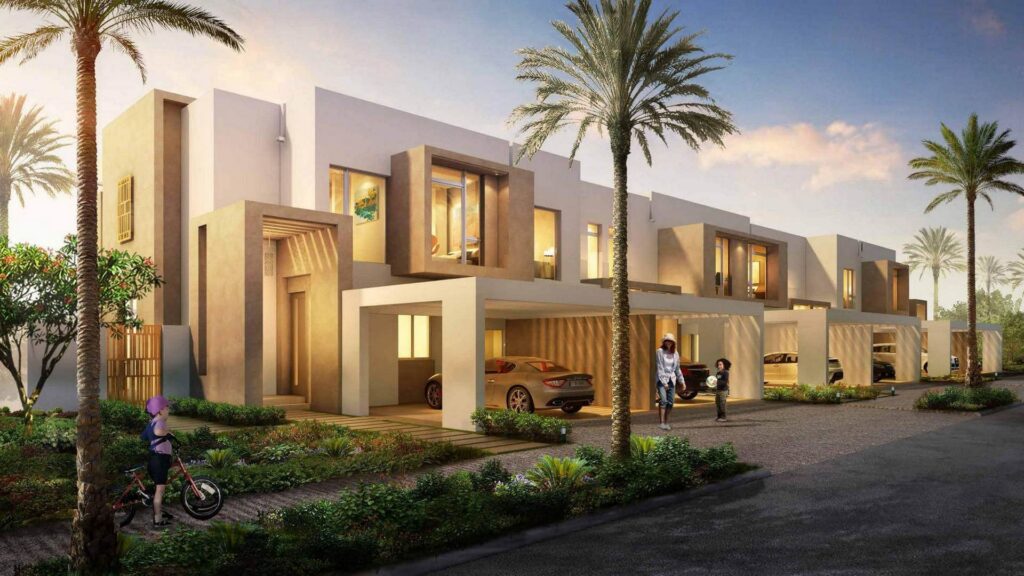
The supply story for townhouses is, simply put, very favourable for owners. Of the nearly 366,000 residential units projected for delivery by 2028, apartments account for over 86% of the pipeline. Townhouses and villas combined represent just 11% of new launches — a figure that has been consistent for several years and shows no sign of accelerating. When you account for the 20–22% actual completion rate of launched projects in 2024–2025, the realised townhouse supply entering the market is even thinner than the headline numbers suggest.
This scarcity is structural, not temporary. Land parcels suitable for low-density townhouse development within established master communities are finite. Once communities like Arabian Ranches, Damac Hills, and Dubai Hills Estate are fully built out, replicating that product type in equivalent locations becomes impossible. New townhouse communities — like Damac Lagoons, Emaar South, and Tilal Al Ghaf — are being absorbed almost as fast as they launch, with secondary market premiums appearing before handover in the most sought-after phases. Understanding the full range of off-plan townhouse choices available today is the starting point for any investor who wants to secure a position before this window narrows.
Top Townhouse Communities in Dubai 2027: The Full Comparison
| Community | Price Range (AED) | Gross Yield | Best For | Standout Feature |
| Damac Hills 2 | 1.2M – 3.5M | 6.5 – 8.0% | Investors, first-time buyers | Affordable entry, massive amenity park, high absorption |
| Damac Lagoons | 1.8M – 4.5M | 6.0 – 7.5% | Lifestyle buyers, off-plan investors | Mediterranean waterfront theme, flexible payment plans |
| Dubai Hills Estate | 3.5M – 8.0M | 5.5 – 6.5% | Premium families, long-term tenants | Golf course, mall, top-tier schools within community |
| Arabian Ranches 3 | 2.2M – 5.5M | 5.5 – 7.0% | Established family communities | Equestrian, parks, Emaar quality, strong resale history |
| Tilal Al Ghaf | 2.8M – 6.0M | 5.8 – 7.0% | Lagoon lifestyle, premium mid-market | Crystal lagoon, beach club, walkable promenade |
| Emaar South | 1.5M – 3.8M | 6.0 – 7.5% | Expo City proximity, long-term growth | Golf course, Expo legacy infrastructure, airport access |
| Mirdif / Shorooq | 1.8M – 3.2M | 6.5 – 8.0% | Established community, high tenant renewal | Mature trees, schools, City Centre Mirdif, family culture |
Rental Yields and Tenant Retention: The Numbers That Matter to Investors
For investors, the townhouse rental yield story in Dubai is one of the most compelling in the GCC. While apartments in prime zones are generating 6–7% gross yields, well-located townhouse communities are delivering 6.5–8.0% — with one critical additional advantage: tenant retention. Families who rent townhouses in gated communities with schools, parks, and retail within walking distance do not leave willingly. Average tenancy lengths in townhouse communities run to 24–36 months, compared to 12 months for typical apartment leases. That means fewer void periods, lower re-letting costs, and a more predictable income stream for the landlord.
Damac Hills 2 and Mirdif, in particular, rank among the highest leasing activity zones for townhouse and villa-style units in Dubai, according to Q3 2025 Property Monitor data compiled by Engel & Volkers. The profile of the tenant is consistent: a dual-income expatriate family with school-age children, a long-term UAE residency plan, and a preference for a private garden and garage over a shared pool and gym on the 8th floor.
For investors assessing entry points, understanding how off-plan townhouse payment plans work in Dubai is essential — many of the best-performing communities are only accessible at competitive pricing through pre-launch and off-plan purchase structures, with post-handover payment options that allow capital to be deployed over 2–3 years.
Townhouse vs Apartment: Investment Profile Comparison
| Factor | Townhouse Community | High-Rise Apartment |
| Average Gross Yield | 6.5 – 8.0% | 5.5 – 7.0% |
| Average Tenancy Length | 24 – 36 months | 12 months |
| Vacancy Rate (prime communities) | 3 – 6% | 8 – 14% |
| Tenant Renewal Rate | 65 – 75% | 40 – 55% |
| Service Charge (AED/sq ft/yr) | AED 3 – 8 | AED 12 – 25 |
| Private Outdoor Space | Yes — garden / courtyard | No (shared amenities only) |
| Supply Pipeline Pressure | Low — only 11% of new launches | High — 86%+ of new launches |
| 5-Year Capital Appreciation | Strong — scarcity-driven | Moderate — volume supply risk |
Investor Note: The lower service charge on townhouses is a significant advantage that is frequently overlooked. At AED 3–8 per sq ft annually versus AED 12–25 for high-rise apartments, a 2,500 sq ft townhouse owner saves AED 10,000–55,000 per year in running costs — a direct uplift to net yield.
Off-Plan Townhouses: Capturing the Pre-Launch Price Advantage
The most significant returns in Dubai’s townhouse segment over the past three years have been generated by off-plan buyers who entered at pre-launch pricing in communities that subsequently appreciated 20–35% before handover. Damac Lagoons, Tilal Al Ghaf, and Arabian Ranches 3 all followed this pattern — secondary market premiums emerged within 18 months of launch as demand absorbed supply faster than developers could release new phases.
For 2027, the playbook is the same: identify master communities from Tier-1 developers in high-demand corridors, enter at pre-launch pricing with a flexible payment plan, and hold through to handover. The hottest off-plan developments entering the market now include several townhouse-focused community phases across Dubai South, MBR City, and the extended Damac Hills corridor, where this pattern is already visible in secondary market transaction data.
RERA’s mandatory escrow framework protects every dirham paid into an off-plan purchase — construction milestone releases are independently verified before any developer’s access to buyer funds. This regulatory structure, combined with Dubai’s 72% off-plan dominance of total transactions in 2025, confirms that the market has absorbed and institutionalised this purchase mechanism. Getting a personalised off-plan investment consultation is the fastest way to match the right community to your budget and timeline.
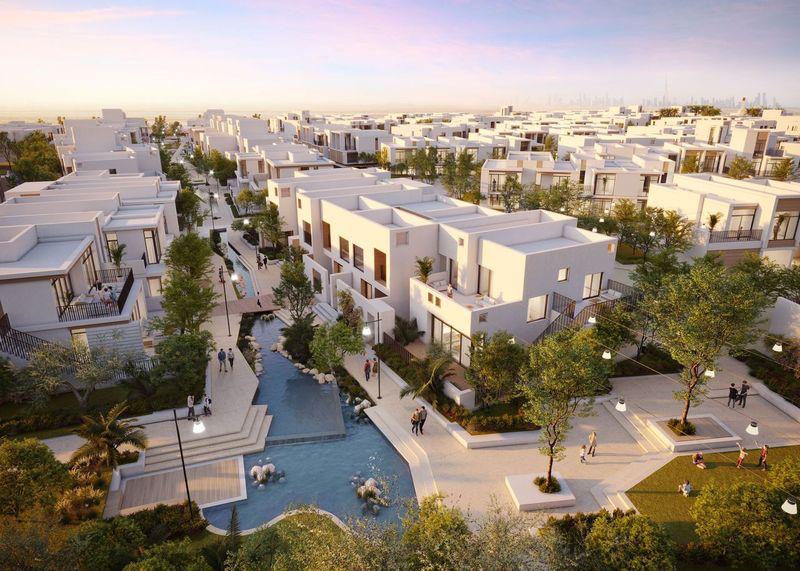
Who Should Be Buying Townhouses in Dubai in 2027?
End-user families relocating to Dubai long-term — couples with children who want private outdoor space, proximity to top schools, and a community identity that a high-rise tower simply cannot offer.
Buy-to-let investors seeking 6.5–8% gross yield — with long tenancies, low vacancy, and below-average service charges, townhouses outperform apartments on net yield in the current cycle.
Off-plan pre-launch buyers with a 2–4 year horizon — entering community townhouse phases at launch pricing and selling or renting at handover delivers the dual benefit of capital appreciation and strong rental demand from day one.
Golden Visa investors — properties above AED 2 million qualify for the 10-year UAE Golden Visa. Townhouses in mid-to-premium communities like Dubai Hills, Tilal Al Ghaf, and Damac Lagoons sit at or above this threshold and provide the residency anchor with the lifestyle quality to match.
Across all profiles, knowing what to look for before committing to an off-plan townhouse in Dubai — from master plan quality to developer track record to school proximity — separates the best-performing assets from the rest.
Secure Your Townhouse Before the Market Catches Up
Our team at Prelaunch.ae gives you exclusive access to the best townhouse launches across Dubai’s most in-demand master communities — at pre-launch pricing, before units hit the open market.
Fill out the enquiry form on prelaunch.ae, and a specialist will match you with the right community within 24 hours.
 (+971) 52 341 7272 | ✉ sales@mbrproperties.ae
Frequently Asked Questions
Why are townhouses in Dubai outperforming apartments in 2025 and 2026?
Townhouses benefit from a fundamental supply imbalance — they represent just 20% of Dubai’s residential stock while over 86% of new supply is apartments. Combined with rising demand from families settling in Dubai long-term, this scarcity is driving both price growth (15.16% YoY vs 12.52% for apartments) and rental outperformance across the segment.
What is the average price of a townhouse in Dubai in 2026?
Entry-level townhouses in communities like Damac Hills 2 and Emaar South start from AED 1.2–1.5 million. Mid-range options in Arabian Ranches 3 and Damac Lagoons range from AED 2–5 million. Premium townhouses in Dubai Hills Estate and Tilal Al Ghaf typically run AED 3.5–8 million, depending on plot size, finish quality, and community positioning.
Which Dubai townhouse community offers the best rental yield in 2027?
Damac Hills 2 and Mirdif consistently deliver the highest gross yields at 6.5–8.0%, driven by affordability, strong family tenant demand, and high lease renewal rates. Tilal Al Ghaf and Emaar South offer a strong balance of yield (6–7.5%) with capital appreciation upside. Dubai Hills Estate yields slightly less (5.5–6.5%) but commands the strongest tenant quality and longest average tenancies.
Can I buy a Dubai townhouse off-plan with a flexible payment plan?
Yes. The majority of active townhouse launches from Tier-1 developers — including Damac, Emaar, Nakheel, and Sobha — offer flexible off-plan payment structures such as 60/40, 70/30, or 1% monthly instalments. RERA escrow protections apply to all off-plan purchases, ensuring funds are safeguarded against construction risk.
Is the townhouse market in Dubai at risk from the 2026–2027 supply wave?
No — not significantly. The supply wave is overwhelmingly concentrated in apartments, which account for over 86% of the pipeline. Townhouse and villa supply represents just 11% of new launches. Even with construction delays factored in, demand for family-sized land-based homes in established communities far outstrips the pace of new townhouse completions.