Abu Dhabi’s real estate market is experiencing an unprecedented transformation as the emirate prepares to deliver 12,800 new residential units in 2026, according to leading property consultancy Cavendish Maxwell. This surge in off-plan properties in Abu Dhabi represents one of the most significant supply injections in the capital’s recent history, raising critical questions for investors: which communities in Abu Dhabi will thrive with this new inventory, and which areas risk becoming oversaturated?
The Abu Dhabi property market 2026 stands at a fascinating crossroads where substantial supply meets robust demand, creating both exceptional opportunities and potential pitfalls for discerning investors. Understanding the nuanced dynamics of how these 12,800 units will impact different neighborhoods is essential for making informed investment decisions in what many experts predict will be a transformative year for the emirate’s residential real estate Abu Dhabi sector.
Understanding Abu Dhabi’s 2026 Supply Pipeline
The capital’s off-plan market, Abu Dhabi, has demonstrated remarkable resilience throughout 2025, with apartment prices rising nearly fifteen percent year-over-year in premium locations. This growth trajectory occurs even as developers prepare to deliver 8,000 units by the end of 2025, followed by the substantial 12,800-unit wave scheduled for 2026. What makes this supply surge particularly interesting is its composition and strategic distribution across the emirate’s key residential zones.
According to market research from Cavendish Maxwell, Abu Dhabi off-plan transactions dominated the third quarter of this year, with off-plan purchases accounting for approximately eighty percent of total sales values, reaching 16.3 billion dirhams out of the total 20.5 billion dirham market. This overwhelming preference for pre-construction properties signals strong investor confidence in the emirate’s development trajectory and regulatory framework protecting buyers.
The planned deliveries extend well beyond 2026, with an additional 12,400 units scheduled for 2027 and over 21,400 units projected for 2028. However, industry analysts suggest actual handovers may lag behind initial projections, as Abu Dhabi historically follows a staggered delivery approach that allows the market to absorb new supply gradually without creating sudden inventory shocks.
Communities Positioned to Benefit from New Supply
Yas Island: Entertainment Capital Amplifies Demand
Yas Island emerges as perhaps the biggest beneficiary of the 2026 supply expansion, primarily due to the game-changing announcement of Disneyland Abu Dhabi, scheduled to open on the island. This transformative development positions Yas as not merely a leisure destination but a globally recognized entertainment hub that will drive sustained residential demand from both end-users and investors seeking high-yield properties.
The island’s existing infrastructure, including Ferrari World, Yas Waterworld, Warner Bros. World, SeaWorld Abu Dhabi, and the Yas Marina Circuit, creates a diversified attraction portfolio that generates consistent tourism traffic. New off-plan developmentson Yas Island scheduled for 2026 will benefit from this entertainment ecosystem, particularly family-oriented residential projects that cater to the growing demand for resort-style urban living.
Current property prices on Yas Island show two-bedroom apartments averaging around 110,000 dirhams annually in rental yields, while purchase prices for apartments on Yas Island range from 1.5 to 3 million dirhams, depending on specifications and waterfront access. The additional supply coming in 2026 is unlikely to create oversaturation, given the island’s expanding tourism infrastructure and the new employment opportunities that Disneyland will generate.
Investment opportunities in Dubai prelaunch properties demonstrate similar dynamics where infrastructure catalysts drive appreciation, making Yas Island’s upcoming supply absorption highly favorable compared to areas without comparable demand drivers.
Saadiyat Island: Cultural Prestige Meets Limited Inventory
Saadiyat Island represents Abu Dhabi’s cultural crown jewel, housing the Louvre Abu Dhabi, with the Guggenheim Abu Dhabi and Zayed National Museum scheduled to be completed soon. The island’s positioning as a luxury real estate Abu Dhabi destination means new supply scheduled for 2026 will likely be absorbed by high-net-worth individuals seeking proximity to world-class cultural institutions and pristine beachfront access.
The Saadiyat Island developments planned for 2026 include premium branded residences and villa communities that cater to diplomatic, executive, and ultra-high-net-worth buyer segments. With villa rental rates exceeding 300,000 dirhams annually and purchase prices for luxury units starting from 6 million dirhams, this community operates in a rarefied market segment where supply constraints rather than oversupply remain the primary concern.
Market analysis indicates that Saadiyat Island property maintains exceptional price resilience due to its unique value proposition combining cultural infrastructure, educational institutions like Cranleigh Abu Dhabi and NYU Abu Dhabi, plus carefully controlled development density that preserves the island’s exclusivity. The 2026 supply additions represent measured expansion rather than speculative overbuilding.
Investors examining the broader UAE market through resources like our analysis of branded residences and waterfront living will recognize that Saadiyat’s positioning aligns with premium segment dynamics, showing continued strength across the region.
Al Hudayriyat Island: Emerging Destination Welcomes Growth
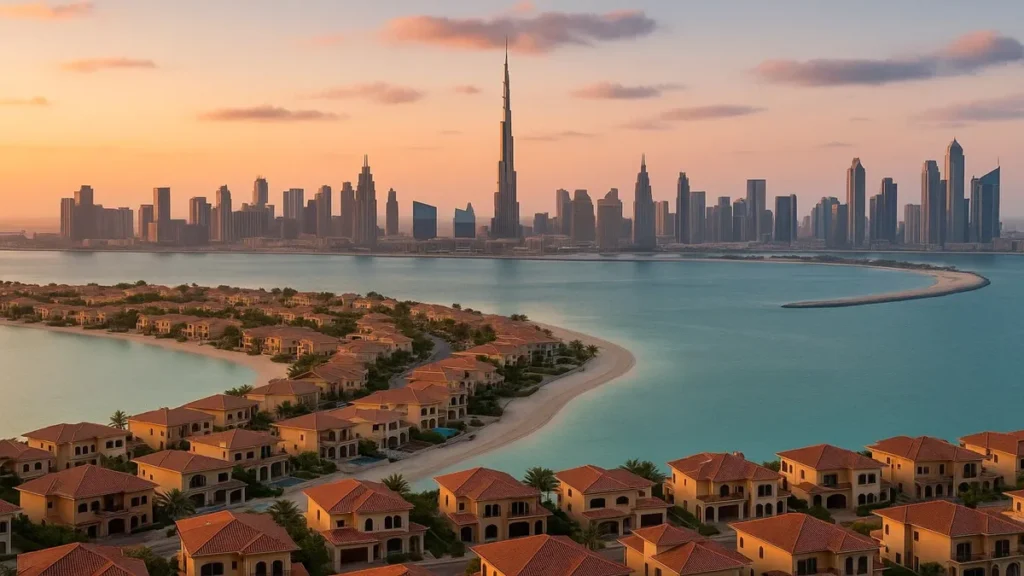
Al Hudayriyat Island represents one of Abu Dhabi’s newest master-planned communities, developed by Modon Properties with a focus on coastal living and family-oriented amenities. The island’s relatively early development stage means the 2026 supply injection will help establish critical mass rather than create oversupply, building the community density necessary to support retail, dining, and service infrastructure.
With launch prices for villas Al Hudayriyat starting from 4.1 million dirhams and featuring attractive 10/40/50 payment plans, the island targets the upper-middle segment of Abu Dhabi’s market. The planned off-plan villas in Abu Dhabi scheduled for delivery in 2026 will benefit from the island’s comprehensive master planning, including Hudayriat Beach, cycling tracks, and family recreation facilities.
Market fundamentals suggest Al Hudayriyat Island property will absorb new supply effectively due to limited competition in the affordable waterfront villa segment and the island’s strategic positioning between established areas and emerging development corridors. The community’s focus on outdoor lifestyle and wellness amenities aligns with post-pandemic buyer preferences for spacious, nature-connected living environments.
Masdar City: Sustainability Premium Attracts Conscious Buyers
Masdar City occupies a unique niche in Abu Dhabi’s residential communities as the world’s first carbon-neutral city powered entirely by renewable energy. This sustainability positioning creates dedicated demand from environmentally conscious professionals and organizations, making it resilient to supply fluctuations that might affect conventional developments.
The Masdar City Freezone hosts over 1,000 companies focused on clean technology, creating built-in employment demand that supports residential absorption. Apartments in Masdar City typically range from 1 to 2.5 million dirhams, offering relatively affordable entry points compared to waterfront communities while delivering some of the emirate’s highest gross rental yields, averaging eight to ten percent.
New off-plan projects, Masdar City scheduled for 2026, will benefit from the community’s established reputation, completed infrastructure, including the iconic personal rapid transit system, and growing recognition as Abu Dhabi’s innovation hub. The supply additions represent organic growth supporting the expanding professional population rather than speculative overbuilding.
Communities Facing Potential Oversupply Challenges
Al Reem Island: High-Rise Saturation Risks
Al Reem Island faces the most significant absorption challenges among Abu Dhabi’s established communities due to the concentration of high-rise apartment buildings targeting similar buyer demographics. The island has experienced rapid development over the past decade, and the 2026 supply wave includes multiple residential towers competing for essentially the same pool of young professionals, small families, and investors seeking affordable apartments in Abu Dhabi.
Current Al Reem Island apartments range from 1,400 to 2,000 dirhams per square foot, with one-bedroom units averaging 70,000 dirhams in annual rental yields. While these metrics remain healthy, the substantial volume of new supply scheduled for 2026 could create temporary pricing pressure, particularly in the mid-market apartment segment, where product differentiation is minimal.
The island’s recent jurisdictional expansion under Abu Dhabi Global Market regulations enhances its investment appeal by removing certain municipal restrictions, potentially offsetting some oversupply concerns. However, investors should carefully evaluate specific project locations, developer reputation, and unique value propositions when considering Al Reem Island off-plan opportunities scheduled for 2026 delivery.
Understanding broader market dynamics through our Dubai 2026 off-plan market analysis provides useful context for evaluating similar high-density apartment market conditions and identifying differentiation strategies.
Khalifa City: Suburban Expansion Timing Questions
Khalifa City represents Abu Dhabi’s suburban residential expansion, offering more affordable townhouses Abu Dhabi and villa options compared to waterfront communities. The area has seen significant development activity with projects like Reportage Village and Bloom Living targeting budget-conscious families and first-time buyers.
The challenge for Khalifa City developments scheduled for 2026 lies in market timing relative to infrastructure completion and employment corridor development. While the area offers good value propositions with villa starting prices from 1.75 to 3.8 million dirhams, absorption rates depend heavily on the pace of amenity completion and the community’s ability to attract sustainable resident populations rather than purely investor demand.
Market observers note that Khalifa City property benefits from proximity to Abu Dhabi International Airport and the Sheikh Zayed Grand Mosque, plus established educational infrastructure. However, the 2026 supply additions must compete not only with other suburban developments but also with increasingly affordable options in waterfront communities offering superior lifestyle amenities.
Investors considering Khalifa City off-plan projects should carefully evaluate payment plan flexibility, developer track records, and specific micro-location advantages that differentiate individual projects within this growing but competitive suburban landscape.
Al Reef: Conversion Opportunity Meets Volume Concerns
Al Reef presents a unique market dynamic as the community transitions from leasehold to freehold ownership, opening previously restricted inventory to international buyers. This regulatory change creates genuine demand expansion, but the 2026 supply additions arrive simultaneously with this ownership structure transition, creating uncertainty about absorption capacity.
The community’s affordability positioning with studio apartments starting from 500,000 to 600,000 dirhams attracts first-time buyers and budget investors, a segment that may be sensitive to oversupply conditions and financing cost fluctuations. Al Reef developments scheduled for 2026 compete directly with other affordable options in Khalifa City, Al Ghadeer, and emerging communities offering similar value propositions.
Market fundamentals supporting Al Reef property include family-friendly infrastructure, good connectivity to Abu Dhabi International Airport, and established commercial amenities. However, investors should carefully assess whether specific 2026 projects offer sufficient differentiation to stand out in what may become a crowded affordable housing segment experiencing simultaneous supply expansion and regulatory evolution.
Strategic Investment Approaches for 2026 Supply
Micro-Location Analysis Over Broad Community Selection
The 12,800-unit supply injection demands granular analysis at the project and street level rather than relying on community-wide generalizations. Even in communities facing potential oversupply, superior micro-locations near metro stations, waterfront promenades, or completed amenity hubs will demonstrate stronger absorption and value retention compared to less advantaged sites within the same neighborhood.
Investors should evaluate specific off-plan projects in Abu Dhabi based on developer reputation, precise location advantages, unique design elements, and realistic delivery timelines rather than assuming community-level dynamics guarantee project success. The bifurcation between premium, well-located developments and generic offerings will likely accelerate as supply peaks in 2026.
Timing Considerations and Payment Plan Optimization
Understanding construction timelines and delivery schedules within the 2026 supply wave creates strategic advantages for investors who can time purchases to maximize appreciation potential while minimizing holding costs and market exposure during peak delivery periods. Projects delivering in early 2026 may face different competitive dynamics than those completing in late 2026 after significant inventory absorption.
Flexible payment plans offered by developers provide opportunities to structure investments that align with individual financial strategies and market outlook. For example, extended post-handover payment schedules may offer advantages for investors anticipating rental income to support later installments, while front-loaded payment structures might secure better pricing and unit selection.
Exploring successful timing strategies through our guide on how prelaunch buyers achieve gains demonstrates the importance of entering markets before major infrastructure completions and supply peaks to capture maximum appreciation potential.
Diversification Across Community Types and Price Segments
Spreading investments across different community types, price segments, and delivery timelines reduces concentration risk while capturing varied market dynamics. A portfolio approach combining luxury villas on Saadiyat Island with affordable apartments in Masdar City and family townhouses on Yas Island creates exposure to different demand drivers and buyer demographics.
This diversification strategy acknowledges that market performance in 2026 will likely vary significantly across price tiers, with premium segments potentially demonstrating resilience while mid-market segments experience temporary adjustments. Understanding these segmentation dynamics is crucial for constructing resilient real estate portfolios positioned to weather varied market conditions.
| Community | Supply Level 2026 | Demand Drivers | Investment Outlook | Price Range (AED) |
| Yas Island | Moderate | Disneyland, Entertainment | Highly Positive | 1.5M – 20M |
| Saadiyat Island | Controlled | Culture, Luxury | Very Positive | 6M – 50M |
| Al Hudayriyat | Growth Phase | Coastal Living | Positive | 4M – 50M |
| Masdar City | Moderate | Sustainability | Stable | 1M – 2.5M |
| Al Reem Island | High | Urban Convenience | Neutral/Watch | 850K – 3M |
| Khalifa City | High | Affordability | Cautious | 500K – 4M |
| Al Reef | Moderate-High | Freehold Conversion | Cautious | 500K – 2M |
Infrastructure Catalysts Influencing 2026 Absorption
Abu Dhabi Metro Delivery and Connectivity Impact
The scheduled completion of Abu Dhabi Metro’s first phase in 2026 represents perhaps the single most significant infrastructure catalyst influencing property absorption patterns across the emirate. Developments located near confirmed metro stations will benefit from enhanced connectivity and reduced reliance on private vehicle ownership, creating locational premiums that persist long after the supply wave subsides.
Transit-oriented developments scheduled for 2026 delivery should demonstrate superior absorption compared to car-dependent locations, particularly among younger professionals and expatriate populations accustomed to metro connectivity in their home markets. Investors should prioritize projects with confirmed proximity to operational metro stations over those relying on future connectivity promises.
Etihad Rail Integration and Regional Accessibility
The expansion of Etihad Rail connecting Abu Dhabi to Dubai and other emirates creates new accessibility dynamics for certain communities, potentially expanding their addressable markets beyond residents working exclusively within Abu Dhabi. Communities positioned near future rail stations may experience demand spillover from buyers seeking affordable Abu Dhabi residences while maintaining employment flexibility across the UAE.
This regional integration represents a structural shift in how investors should evaluate Abu Dhabi real estate investment, moving beyond emirate-specific employment and lifestyle considerations toward broader UAE accessibility and cross-emirate lifestyle possibilities. The 2026 supply absorption will partly depend on how effectively communities leverage this enhanced regional connectivity.
Developer Reputation and Delivery Track Records
Established Players vs Emerging Developers
The 2026 supply includes projects from both established developers like Aldar Properties and emerging players entering Abu Dhabi’s market, attracted by strong fundamentals. While established developers typically command premium pricing, their track records for timely delivery and quality construction provide risk mitigation that becomes increasingly valuable in high-supply environments.
Investors should carefully evaluate developer histories, financial stability, and past project handover records when assessing off-plan investment Abu Dhabi opportunities. The temptation to chase the lowest entry prices from unproven developers may backfire if construction delays or quality compromises create long-term value destruction exceeding initial savings.
Our analysis of how off-plan properties survived global crises emphasizes the importance of developer selection and regulatory frameworks in protecting investor interests during market stress periods.
Branded Residence Partnerships and Quality Signals
The proliferation of branded residences in Abu Dhabi from hospitality operators like Mandarin Oriental, W Hotels, Nobu, and Waldorf Astoria creates quality differentiation in an increasingly crowded market. These partnerships typically impose stringent design, construction, and operational standards that can justify premium pricing while providing buyers with credible quality assurances.
Projects scheduled for 2026 delivery featuring established brand partnerships may demonstrate superior absorption in competitive market segments by leveraging brand recognition and associated service expectations. However, investors should verify that brand involvement extends beyond naming rights to include meaningful operational participation and quality oversight.
Financing Conditions and Affordability Dynamics
Interest Rate Environment and Mortgage Accessibility
The broader interest rate environment heading into 2026 will significantly influence absorption capacity for the 12,800-unit supply wave, particularly for end-user buyers relying on mortgage financing. Potential interest rate reductions could expand the pool of qualified buyers and improve affordability ratios, while sustained high rates might constrain demand and favor all-cash investors.
Mortgage rates in Abu Dhabi and lending conditions should be monitored as critical demand indicators, with changing financing costs potentially shifting buyer preferences between purchase versus rental decisions and influencing which price segments demonstrate the strongest absorption capacity.
Developer Financing Innovations and Payment Flexibility
Many developers offering 2026 handover properties have introduced creative payment structures, including extended post-handover installments, reduced down payments, and equity participation schemes designed to maintain sales momentum despite potential market headwinds. These financing innovations effectively expand the addressable buyer universe while creating different risk-return profiles for investors.
Evaluating payment plan structures alongside traditional property fundamentals becomes essential when comparing competing Abu Dhabi off-plan opportunities scheduled for 2026 delivery. More aggressive payment terms may signal developer concerns about absorption capacity or reflect confidence in long-term value appreciation, justifying buyer-friendly financing.
Rental Market Dynamics and Investment Returns
Yield Compression Risks in Oversupplied Segments
The apartment rental market, which has shown robust growth with some areas experiencing annual increases exceeding fourteen percent, faces potential yield compression if 2026 supply deliveries significantly outpace tenant demand growth. Areas experiencing concentrated apartment deliveries without corresponding employment expansion may see rental rate softening that reduces rental yields Abu Dhabi and extends breakeven timelines for investors.
Conversely, villa and townhouse segments with more controlled supply pipelines may maintain stronger rental performance, particularly in family-oriented communities with established school infrastructure and lifestyle amenities. Investors should carefully project realistic rental scenarios based on local supply-demand dynamics rather than extrapolating recent growth rates indefinitely into the future.
Occupancy Rate Considerations and Void Period Planning
Understanding likely occupancy rates and void periods becomes crucial for cash flow planning when investing in income-generating properties in Abu Dhabi amid significant supply injections. Even communities with healthy fundamentals may experience temporary tenant finding challenges immediately following large-scale project deliveries as multiple landlords simultaneously seek tenants.
Conservative financial modeling should incorporate realistic void assumptions, potential rental incentives needed to secure quality tenants, and higher tenant turnover in oversupplied segments. These factors may not prevent attractive returns but require proper planning to ensure adequate liquidity for holding properties through initial lease-up periods.
Regulatory Environment and Buyer Protections
Escrow Framework and Construction Monitoring
Abu Dhabi’s regulatory framework provides substantial buyer protections through escrow account requirements, fixed handover dates, and transparent fee structures that distinguish the emirate’s off-plan market from less regulated jurisdictions. The so-called triple protection rules implemented in 2025 offer additional security for buyers investing in the 2026 supply wave.
Understanding these regulatory safeguards provides confidence for investors navigating the substantial supply expansion, as properly enforced regulations reduce completion risks and ensure funds are released only upon construction milestone completion. This framework has contributed significantly to Abu Dhabi’s reputation as an investor-friendly jurisdiction.
Foreign Ownership Expansion and Market Accessibility
Ongoing expansions of freehold and long-term leasehold zones increase market accessibility for international investors, expanding the potential buyer base for freehold properties Abu Dhabi included in the 2026 supply. Recent conversions of leasehold communities to freehold status demonstrate the government’s commitment to enhancing investor appeal and market liquidity.
These regulatory evolutions create genuine demand expansion that helps absorb new supply rather than merely recycling existing buyer interest across different communities. Investors should prioritize freehold opportunities when available, as these typically command premium valuations and enjoy deeper liquidity for eventual exit strategies.
Economic Fundamentals Supporting Demand
GDP Growth and Non-Oil Diversification
Abu Dhabi’s broader economic fundamentals provide crucial context for evaluating the 2026 supply absorption capacity. The International Monetary Fund projects a six percent GDP expansion for Abu Dhabi in 2025, driven by non-oil sector growth and substantial government-led investment through entities like ADQ and Mubadala.
This economic diversification creates employment opportunities across technology, finance, tourism, and renewable energy sectors, generating organic housing demand beyond speculative investor activity. The Abu Dhabi economy demonstrates a structural transformation that should support sustained residential demand even as supply expands significantly.
Population Growth and Demographic Trends
Steady population growth, reflecting approximately two to three percent annual increase,s creates baseline housing demand that absorbs a portion of new supply regardless of investor activity levels. The demographic mix favoring younger professionals and growing expatriate populations aligns well with apartment and townhouse product types dominating the 2026 delivery schedule.
Understanding population dynamics and household formation rates provides essential context for realistic absorption projections, helping investors distinguish between temporary supply-demand imbalances and fundamental market weaknesses requiring caution.
Take Action: Secure Your Abu Dhabi Off-Plan Investment Today
Abu Dhabi’s 2026 supply wave of 12,800 residential units creates a defining moment for investors who understand which communities will thrive and which face challenges from the expanding inventory. The strategic opportunities lie in markets benefiting from infrastructure catalysts like the Abu Dhabi Metro and Disneyland Abu Dhabi, premium segments with quality differentiation, and emerging communities building critical mass rather than facing saturation.
The capital’s strong economic fundamentals, including six percent projected GDP growth, substantial government investment, and ongoing non-oil diversification, provide the demand foundation necessary to absorb significant supply expansion while maintaining positive price momentum in well-selected projects. However, success requires moving beyond community-level generalizations toward granular analysis of specific projects, micro-locations, developer reputations, and timing considerations.
Investors who combine thorough due diligence with strategic positioning in demand-advantaged communities can leverage the 2026 supply wave to build substantial portfolios capturing both near-term appreciation and long-term income generation. The window for optimal entry points typically closes twelve to eighteen months before major infrastructure completions, making early 2026 potentially the last opportunity to capture maximum upside before the Abu Dhabi Metro reshapes location valuations across the emirate.
For investors seeking similar opportunities in the broader UAE market, explore our comprehensive analysis of Dubai’s most searched off-plan communities and understand regional market dynamics through our UAE property strategy guide. Additionally, examining commercial property opportunities provides portfolio diversification beyond residential markets.
Ready to invest in Abu Dhabi’s best-positioned 2026 off-plan opportunities? Our specialized advisory team at prelaunch.ae provides comprehensive market analysis, exclusive access to prime developments, and strategic guidance tailored to your investment objectives. Whether you’re targeting luxury villas on Saadiyat Island, family townhouses on Yas Island, or high-yield apartments in emerging communities, we connect you with the opportunities that align with your goals.
Don’t wait until the best units are sold out. Fill out the inquiry form on our website prelaunch.ae today to receive personalized investment recommendations and early access to Abu Dhabi’s most promising 2026 off-plan projects. Our team monitors daily market developments, developer launches, and regulatory changes to ensure you stay ahead of the competition.
Contact our Abu Dhabi specialists directly:  Phone: (+971) 52 341 7272
  Email: sales@mbrproperties.ae
Let us help you navigate Abu Dhabi’s transformative 2026 supply expansion and secure properties positioned for maximum appreciation and rental returns in the UAE’s most resilient real estate market.
FAQ: Abu Dhabi Off-Plan Supply 2026
Q: Will the 12,800 new units cause property prices to crash in Abu Dhabi?
No, market analysis suggests prices will continue rising in 2026 despite substantial supply, though growth rates will moderate compared to recent double-digit appreciation. Approximately sixty-eight percent of new supply targets affordable segments experiencing demand deficits, while premium segments benefit from quality differentiation and international capital flows. Expect selective appreciation averaging three to eight percent, depending on community and price segment, rather than across-the-board declines.
Q: Which communities offer the best investment opportunities amid the 2026 supply wave?
Yas Island presents exceptional opportunities due to Disneyland Abu Dhabi’s opening, creating sustained tourism and employment demand. Saadiyat Island maintains luxury segment resilience with limited supply and cultural infrastructure. Al Hudayriyat Island offers affordable waterfront exposure with limited competition. Masdar City provides a sustainability premium and employment-driven demand. These communities feature demand catalysts beyond speculative investor interest.
Q: Should I wait for prices to drop in 2026 before investing in Abu Dhabi off-plan?
Waiting for price declines may mean missing optimal entry points, as the strongest appreciation typically occurs twelve to eighteen months before infrastructure completions rather than after, particularly around the Abu Dhabi Metro delivery. Current entry points likely represent better value than post-completion pricing, especially for properties near confirmed transit stations or major infrastructure. Strategic early positioning captures maximum appreciation potential.
Q: How does Abu Dhabi’s 2026 supply compare to Dubai’s market conditions?
Abu Dhabi’s 12,800 units represent a more controlled supply expansion compared to Dubai’s approximately 105,000 units scheduled across 2025-2026. Abu Dhabi maintains tighter planning controls, stronger end-user demand fundamentals, and less speculative investor activity. The capital’s supply is more targeted toward segments with demonstrated demand deficits rather than speculative luxury oversupply. For comparison, see our detailed Dubai 2026 market forecast.
Q: What payment plans are available for Abu Dhabi off-plan properties in 2026?
Typical structures include 10/40/50 plans requiring ten percent down payment, forty percent during construction, and fifty percent upon handover, though variations exist, including extended post-handover installments. Some developers offer 5/45/50 or even 100/0 structures for certain projects. Payment flexibility has increased as developers compete for buyers, with some offering installments extending two to three years post-completion.
Q: Which property types offer better investment returns in Abu Dhabi’s 2026 market?
Villa and townhouse segments with controlled supply typically demonstrate more stable returns, averaging six to eight percent rental yields with stronger capital appreciation potential. Apartments face more supply pressure but offer lower entry costs and higher tenant liquidity. Premium branded residences maintain pricing power through quality differentiation. The optimal choice depends on individual budget, risk tolerance, and investment horizon.
Q: How important is developer selection when investing in 2026 deliveries?
Developer reputation is critical in high-supply environments where construction quality and delivery timelines differentiate projects. Established developers like Aldar Properties typically deliver on schedule and meet quality standards, while emerging developers may offer lower pricing but carry execution risks. Verify developer track records, financial stability, and past project completions before committing to any off-plan purchase.
Q: What risks should investors watch for in Abu Dhabi’s 2026 market?
Primary risks include micro-location oversupply in specific apartment segments, potential rental yield compression in saturated areas, construction delays affecting holding costs, and broader economic changes affecting employment demand. Mitigation strategies include diversification across communities and property types, conservative financial modeling, and prioritizing established developers in proven locations.