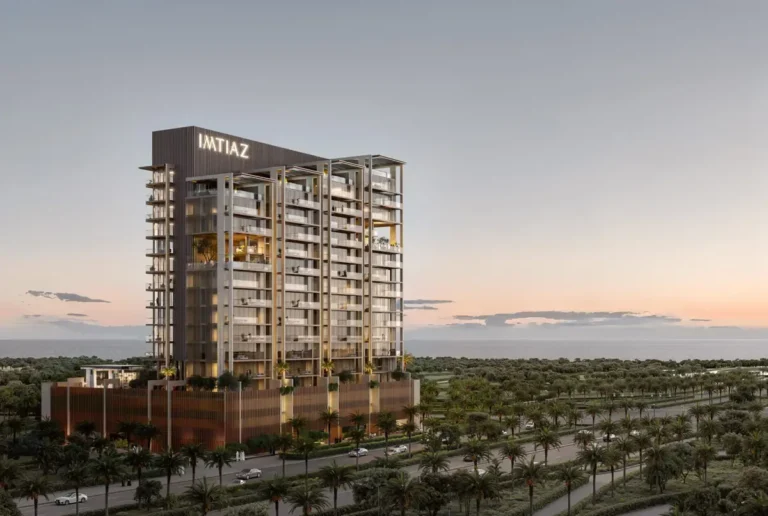
While most retail investors in Abu Dhabi select off-plan properties based on location, price, and amenities, institutional investors and family offices deploy sophisticated completion risk scoring systems to evaluate projects before committing capital. These methodologies assess developer track records, financial stability, construction milestones, escrow protections, and market absorption capacity—creating quantifiable risk profiles that separate high-probability completions from potential disasters.
Understanding and replicating these institutional frameworks provides retail investors with a decisive edge in Abu Dhabi’s off-plan market, where Aldar Properties maintains a 95% on-time delivery rate while lesser-known developers struggle with delays and quality issues. With 12,800 residential units scheduled for 2026 and 21,400 units for 2028, the ability to identify completion certainty becomes critical as supply accelerates.
This comprehensive guide deconstructs the completion risk scoring methodology used by pension funds, sovereign wealth investors, and real estate investment trusts (REITs)—translating institutional-grade analysis into actionable frameworks that individual investors can implement immediately.
Understanding Completion Risk: Beyond Marketing Promises
What Institutional Investors Actually Assess
Completion risk encompasses far more than whether a project finishes on schedule. Institutional frameworks evaluate five core risk categories that determine investment viability:
1. Developer Financial Stability Risk (30% weighting)
- Balance sheet strength: Cash reserves vs. construction commitments
- Debt-to-equity ratios: Leverage levels indicating financial stress
- Credit facility access: Banking relationships for construction financing
- Parent company backing: Sovereign or state-linked support structures
2. Construction Execution Risk (25% weighting)
- Track record analysis: Historical on-time completion rates
- Current project pipeline: Capacity vs. simultaneous commitments
- Contractor relationships: Quality of construction partners
- Supply chain resilience: Material procurement stability
3. Market Absorption Risk (20% weighting)
- Pre-sales velocity: Percentage sold before construction start
- Competitive supply: Overlapping inventory in the target segment
- Demographic demand: End-user vs. investor buyer profiles
- Economic fundamentals: Employment growth, population expansion
4. Regulatory & Legal Risk (15% weighting)
- Escrow account structure: Fund protection mechanisms
- DARI registration status: Government platform compliance
- Building permit progression: Authority approval milestones
- Land title clarity: Ownership documentation verification
5. Location & Infrastructure Risk (10% weighting)
- Government infrastructure commitments: Roads, bridges, utilities
- Community development stage: Established vs. speculative areas
- Accessibility timeline: Transportation connections delivery
- Amenity proximity: Schools, hospitals, retail completion
The 100-Point Completion Risk Score Framework
Institutional investors aggregate these categories into standardized 100-point risk scores, where higher scores indicate lower risk (greater completion certainty):
| Score Range | Risk Classification | Investment Action | Abu Dhabi Example |
| 85-100 points | Minimal Risk | Core portfolio allocation | Aldar Saadiyat projects |
| 70-84 points | Low Risk | Growth portfolio suitable | Bloom Living communities |
| 55-69 points | Moderate Risk | Selective exposure | Modon mixed projects |
| 40-54 points | Elevated Risk | Speculative only | New developer launches |
| Below 40 | High Risk | Avoid or minimal allocation | Unknown developers |
This quantitative approach removes emotional decision-making, replacing subjective assessments with data-driven risk evaluation that institutional committees can defend to stakeholders and regulators.
Component 1: Developer Financial Stability Assessment (30 Points)
How to Evaluate Developer Financial Health
The most critical completion risk factor centers on developer’s financial capacity. Even spectacular locations with strong demand collapse if developers cannot fund construction through completion.
Step 1: Research Developer Background
Government-Backed Developers (25-30 points):
- Aldar Properties: Over 20 years of experience, AED 33.8 billion sales (2024-2025), 95% on-time delivery
- Modon Properties: Q Holding subsidiary, AED 9.5 billion sales, government infrastructure support
- Bloom Holding: National Holding subsidiary, AED 15.1 billion sales, 15+ years, family-focused
Private Developers with Proven Track (20-25 points):
- Reportage Properties: Multiple completed projects, diversified emirate presence
- SAAS Properties: Established track record on Al Reem Island developments
New or Unproven Developers (5-15 points):
- Limited completion history
- No visible parent company support
- Minimal public financial disclosure
Scoring Criteria:
| Factor | Maximum Points | Assessment Method |
| Years Active | 8 points | 1 point per 3+ years, max 8 |
| Completed Projects | 10 points | 2 points per successfully delivered project |
| Financial Backing | 7 points | 7=government, 5=listed company, 3=private |
| Credit Rating | 5 points | Official rating if available |
Step 2: Analyze Sales Volume & Portfolio Scale
Strong sales performance indicates market confidence and provides cash flow for construction:
- AED 20B+ annual sales: 10 points (Aldar tier)
- AED 10-20B annual sales: 8 points (Bloom Holding tier)
- AED 5-10B annual sales: 6 points (Modon tier)
- AED 2-5B annual sales: 4 points (mid-tier developers)
- Below AED 2B: 2 points (emerging developers)
Step 3: Evaluate Simultaneous Project Load
Developers managing excessive concurrent projects face capacity constraints:
Capacity Assessment Formula:
Risk Factor = (Active Projects × Average Unit Count) / (Years in Business × 1000)
- Risk Factor <5: Low capacity stress (5 points)
- Risk Factor 5-10: Moderate stress (3 points)
- Risk Factor >10: High capacity stress (1 point)
Practical Example: Aldar Properties
- Active Projects: ~15 major developments
- Average Unit Count: ~500 units per project
- Years in Business: 20+ years
- Risk Factor: (15 × 500) / (20 × 1000) = 0.375 → 5 points (excellent capacity)
Real-World Application: Scoring Three Abu Dhabi Developers
| Developer | Background | Sales Volume | Capacity | Total Score |
| Aldar Properties | 8 pts (20+ yrs) | 10 pts (AED 33.8B) | 5 pts (low stress) | 28/30 pts |
| Bloom Holding | 7 pts (15+ yrs) | 9 pts (AED 15.1B) | 5 pts (focused portfolio) | 26/30 pts |
| New Developer X | 2 pts (<3 yrs) | 3 pts (AED 800M) | 1 pt (high stress) | 9/30 pts |
Component 2: Construction Execution Risk Analysis (25 Points)
Measuring Historical Delivery Performance
Track record analysis provides the strongest predictor of future completion probability. Institutional investors maintain databases tracking developer completion rates across multiple cycles.
Step 1: Calculate On-Time Delivery Rate
On-Time Rate = (Projects Delivered Within 6 Months of Promise) / (Total Completed Projects)
Scoring Criteria:
- 95%+ on-time: 10 points (Aldar standard)
- 85-94% on-time: 8 points (Excellent)
- 75-84% on-time: 6 points (Good)
- 65-74% on-time: 4 points (Acceptable)
- Below 65%: 2 points (Poor)
Step 2: Assess Quality Consistency
Review snagging reports and buyer satisfaction from completed projects:
Quality Assessment Table:
| Quality Factor | Points Available | Evaluation Method |
| Build Quality | 5 points | Check forums and buyer groups for defect reports |
| Finishes Standard | 3 points | Visit show units, compare to competitors |
| Community Facilities | 2 points | Verify promised amenities delivered |
Major developers consistently delivering quality:
- Aldar Properties: Known for premium finishes, complete amenity delivery
- Bloom Holding: Community-focused execution with family amenities
- SOBHA Realty: Ultra-luxury segment expertise from Dubai
Step 3: Evaluate Construction Partner Network
Strong contractor relationships reduce execution risk:
- Tier 1 contractors (Arabtec, Al Habtoor): 5 points
- Established regional contractors: 3 points
- Unproven or unknown contractors: 1 point
Research Method:
- Check project signage for contractor names
- Google search contractor + “Abu Dhabi projects”
- Verify contractor completion history on similar-scale developments
Step 4: Analyze Construction Progress vs. Timeline
For projects under construction, compare actual progress against scheduled milestones:
Progress Assessment:
- Ahead of schedule: 5 points
- On schedule: 4 points
- 1-3 months behind: 2 points
- 3+ months behind: 0 points
How to Check Progress:
- Visit the construction site if accessible
- Request progress photos from the sales agent
- Check recent drone footage on YouTube/Instagram
- Compare foundation/structure completion to the stated timeline
Practical Scoring: The Source by Aldar (Saadiyat Island)
Developer: Aldar Properties
- On-Time Rate: 95%+ historical → 10 points
- Build Quality: Premium standard, Louvre proximity → 5 points
- Contractor: Tier 1 (undisclosed but Aldar standard) → 5 points
- Current Progress: Foundation complete, on Q1 2027 schedule → 4 points
Construction Execution Score: 24/25 points (Minimal execution risk)

Component 3: Market Absorption Risk Evaluation (20 Points)
Assessing Demand vs. Supply Dynamics
Even perfectly executed projects face value erosion if market absorption cannot match supply and delivery. Institutional investors model absorption capacity before committing capital.
Step 1: Calculate Pre-Sales Velocity
Monthly Absorption Rate = Units Sold / Months Since Launch
Strong Absorption Indicators:
- 50%+ sold within 6 months of launch: 8 points
- 30-49% sold within 6 months: 6 points
- 15-29% sold within 6 months: 4 points
- Below 15% sold within 6 months: 2 points
Example: Saadiyat Lagoons by Aldar
- Launched: Q1 2024
- Units Sold: 70% (as of Q4 2025)
- Monthly Absorption: 70% / 18 months = 3.9% monthly → 8 points (excellent velocity)
Step 2: Analyze Competitive Supply Overlap
Count competing projects delivering similar units within 12 months of the target project:
Competitive Density Assessment:
| Competing Units | Risk Level | Points |
| <1,000 units | Low competition | 6 points |
| 1,000-2,500 units | Moderate competition | 4 points |
| 2,500-5,000 units | High competition | 2 points |
| >5,000 units | Severe competition | 0 points |
Research Method:
- List all projects in the same community/island
- Check expected handover dates ±6 months
- Total unit count in the same bedroom category
- Compared to the historical absorption rates for the area
Step 3: Evaluate Buyer Profile Mix
End-user dominance provides absorption stability that investor speculation cannot:
- 70%+ end-user buyers: 6 points (villa communities, family apartments)
- 50-69% end-user: 4 points (mixed usage)
- 30-49% end-user: 2 points (investor-heavy)
- <30% end-user: 0 points (speculative risk)
How to Assess:
- Ask sales agents for a buyer profile breakdown
- Check cash transaction percentage (higher = more end-users)
- Review payment plans (aggressive plans attract speculators)
Abu Dhabi Market Reality: According to recent data, 80% of residential deals were cash transactions, indicating strong end-user commitment compared to Dubai’s investor-heavy market.
Practical Example: Yas Island vs. Experimental Location
Yas Island Apartment Project:
- Pre-Sales Velocity: 55% in 6 months → 8 points
- Competitive Supply: 1,200 competing units → 6 points
- Buyer Profile: 65% end-users → 4 points
- Market Absorption Score: 18/20 points
New Experimental Community:
- Pre-Sales Velocity: 12% in 6 months → 2 points
- Competitive Supply: 3,800 competing units → 2 points
- Buyer Profile: 35% end-users → 2 points
- Market Absorption Score: 6/20 points
Component 4: Regulatory & Legal Risk Assessment (15 Points)
Escrow Protection & Compliance Verification
Abu Dhabi’s regulatory framework provides stronger buyer protections than most global markets, but compliance varies by developer.
Step 1: Verify DARI Registration
All legitimate off-plan projects must register with the Department of Municipalities and Transport (DMT) on the DARI platform:
- Fully registered with DARI: 5 points
- Registration pending: 2 points
- Not registered: 0 points (avoid completely)
How to Verify:
- Request the DARI registration number from the developer
- Check the DMT website for project listing
- Confirm sales contract references DARI
Step 2: Confirm Escrow Account Structure
UAE law mandates escrow accounts for off-plan projects, protecting funds until construction milestones:
Escrow Assessment:
| Protection Level | Description | Points |
| Project Bank Account | Most secure, government-audited | 5 points |
| Escrow Account | Standard protection, milestone releases | 4 points |
| Developer Trust Account | Weaker protection | 2 points |
| No Clear Escrow | Avoid completely | 0 points |
Verification Method:
- Request escrow account details in the sales contract
- Confirm bank name and account structure
- Verify milestone release schedule
Step 3: Analyze Building Permit Status
Construction permits validate project legitimacy and timeline realism:
- Building permit issued: 3 points
- Permit pending but infrastructure approved: 2 points
- No permit information: 0 points
Step 4: Verify Land Title Clarity
Ensure the developer owns freehold land for the project:
- Clear freehold title: 2 points
- Leasehold with government entity: 1 point
- Unclear ownership: 0 points (red flag)
Aldar vs. Unknown Developer: Regulatory Comparison
Aldar Properties Project:
- DARI Registration: Complete → 5 points
- Escrow: Project bank account → 5 points
- Building Permit: Issued → 3 points
- Land Title: Government-backed freehold → 2 points
- Regulatory Risk Score: 15/15 points
Unknown Developer Project:
- DARI Registration: Pending → 2 points
- Escrow: Unclear structure → 2 points
- Building Permit: Not disclosed → 0 points
- Land Title: Uncertain → 0 points
- Regulatory Risk Score: 4/15 points (high risk)
Component 5: Location & Infrastructure Risk (10 Points)
Government Commitment Validation
Infrastructure delivery determines whether master communities achieve promised lifestyles or become isolated developments.
Step 1: Assess Government Infrastructure Investment
Verify official government commitments to infrastructure supporting the community:
Infrastructure Validation Table:
| Infrastructure Type | Maximum Points | Verification Source |
| Bridge/Road Connections | 3 points | DMT announcements, budget allocations |
| Public Transportation | 2 points | Metro/bus route plans |
| Educational Facilities | 2 points | Ministry of Education school approvals |
| Healthcare Facilities | 2 points | Department of Health clinic/hospital plans |
| Cultural/Retail | 1 point | Tourism/culture authority announcements |
Example: Al Maryah Island Infrastructure
According to project announcements, three new bridges are proposed to connect the north side of Al Maryah Island to Reem Island and the Abu Dhabi mainland, with enabling works scheduled to commence in 2026. This represents a clear government infrastructure commitment → 3 points for connectivity.
Step 2: Evaluate Community Development Stage
Established communities carry less infrastructure risk than greenfield developments:
- Mature community (Yas Island, Saadiyat): 4 points
- Developing community (Al Hudayriat): 3 points
- New master plan (established developer): 2 points
- Speculative new area: 1 point
Step 3: Verify Accessibility Timeline
Confirm physical access exists or has a funded delivery schedule:
- Roads operational: 3 points
- Roads under construction with completion date: 2 points
- Roads planned but no funding: 1 point
Saadiyat Island vs. Emerging Location: Infrastructure Comparison
Saadiyat Island Project:
- Government Investment: Louvre, Guggenheim, bridges → 3 points
- Development Stage: Mature cultural district → 4 points
- Accessibility: Multiple operational bridges → 3 points
- Infrastructure Risk Score: 10/10 points (minimal risk)
Emerging Remote Location:
- Government Investment: Vague promises only → 1 point
- Development Stage: Greenfield with renders → 1 point
- Accessibility: Proposed road, no funding → 1 point
- Infrastructure Risk Score: 3/10 points (high risk)
Complete Scoring Examples: Three Abu Dhabi Projects
Project A: The Source by Aldar (Saadiyat Island)
| Risk Category | Score | Rationale |
| Developer Financial Stability | 28/30 | Aldar: 20+ yrs, AED 33.8B sales, government backing |
| Construction Execution | 24/25 | 95% on-time rate, premium quality, progress on schedule |
| Market Absorption | 18/20 | Saadiyat demands strong, limited competition, 60% end-users |
| Regulatory & Legal | 15/15 | Full DARI registration, project bank account, and clear permits |
| Location & Infrastructure | 10/10 | Saadiyat is mature, Louvre proximity, excellent connectivity |
| TOTAL COMPLETION RISK SCORE | 95/100 | MINIMAL RISK – Core portfolio suitable |
Investment Recommendation: Institutional-grade asset suitable for conservative portfolios, pension funds, and wealth preservation strategies.
Project B: Bloom Living Seville (Townhouses)
| Risk Category | Score | Rationale |
| Developer Financial Stability | 26/30 | Bloom: 15+ yrs, AED 15.1B sales, National Holding backing |
| Construction Execution | 22/25 | Consistent delivery, good quality, family-focused amenities |
| Market Absorption | 16/20 | Strong family demand, moderate competition, 70% end-users |
| Regulatory & Legal | 14/15 | DARI registered, escrow account, permits confirmed |
| Location & Infrastructure | 8/10 | Established Bloom Living area, schools operating |
| TOTAL COMPLETION RISK SCORE | 86/100 | MINIMAL RISK – Core to growth portfolio |
Investment Recommendation: Excellent family-oriented investment with strong rental yield potential and moderate capital appreciation.
Project C: Unknown Developer (Speculative Location)
| Risk Category | Score | Rationale |
| Developer Financial Stability | 9/30 | <3 yrs active, AED 800M sales, no visible backing |
| Construction Execution | 8/25 | No completion history, unknown contractors, slow progress |
| Market Absorption | 6/20 | Weak pre-sales, heavy competition, investor-driven |
| Regulatory & Legal | 4/15 | DARI pending, unclear escrow, no permit info |
| Location & Infrastructure | 3/10 | Greenfield location, no funded infrastructure |
| TOTAL COMPLETION RISK SCORE | 30/100 | HIGH RISK – Avoid or minimal speculative allocation |
Investment Recommendation: Avoid for conservative portfolios. Only suitable for highly speculative investors accepting significant completion default risk.
Building Your Personal Completion Risk Database
Creating a Reusable Evaluation System
Step 1: Build Developer Profile Database
Create a spreadsheet tracking Abu Dhabi developers:
| Developer | Years Active | Completed Projects | Sales Volume | On-Time Rate | Financial Score |
| Aldar | 20+ | 50+ | AED 33.8B | 95% | 28/30 |
| Bloom | 15+ | 30+ | AED 15.1B | 90% | 26/30 |
| Modon | 5+ | 15+ | AED 9.5B | 88% | 23/30 |
Step 2: Monitor Market Absorption Trends
Track quarterly data for key communities:
| Community | Q1 2025 Sales | Q2 2025 Sales | Q3 2025 Sales | Trend |
| Saadiyat Island | 320 units | 285 units | 310 units | Stable strong |
| Yas Island | 410 units | 445 units | 380 units | Healthy |
| Al Hudayriat | 95 units | 110 units | 125 units | Growing |
Step 3: Track Infrastructure Announcements
Maintain a timeline of government infrastructure commitments:
- Al Maryah Island bridges: Enabling works 2026 → Completion 2028
- Saadiyat cultural district: Phase 2 museum construction 2026-2029
- Yas Island entertainment: Theme park expansions 2026-2027

Red Flags: When to Walk Away Immediately
Critical Warning Signs Institutional Investors Avoid
Developer Red Flags:
- No verifiable completion history in the Abu Dhabi market
- Sales volume is declining year-over-year despite market growth
- Multiple simultaneous launches by a small/unknown developer
- Unclear parent company or financial backing structure
- Negative buyer reviews on completed projects
Project Red Flags:
- DARI registration is missing or delayed beyond the launch date
- Escrow account structure not clearly disclosed in the contract
- Building permits not issued 6+ months after launch
- Pre-sales velocity below 10% within the first 3 months
- Location with no government infrastructure announcements
Market Red Flags:
- >5,000 competing units delivering simultaneously in the area
- Developer offering exceptionally aggressive payment plans (2% down)
- Completion date beyond 36 months (longer = higher risk)
- Prices significantly below comparable completed inventory
- Sales agents are unable to answer basic financial/legal questions
Conclusion: From Guesswork to Systematic Risk Management
The difference between successful Abu Dhabi off-plan investing and capital loss often reduces to systematic completion risk assessment. While marketing brochures showcase aspirational lifestyles and impressive renderings, institutional investors ground decisions in quantifiable metrics measuring developer financial stability, construction execution capability, market absorption capacity, regulatory compliance, and infrastructure delivery certainty.
By replicating the 100-point completion risk scoring framework outlined in this guide, retail investors access the same analytical rigor that pension funds and sovereign wealth managers deploy when evaluating billions in real estate commitments. This methodology removes emotional decision-making, replacing subjective impressions with data-driven risk profiles that withstand scrutiny.
The Abu Dhabi market’s current dynamics favor investors who recognize completion certainty differentials: Aldar Properties commanding 95/100 risk scores versus speculative developers scoring below 40/100. With 12,800 units delivering in 2026 and 21,400 units scheduled for 2028, the ability to separate high-probability completions from potential disasters becomes increasingly critical.
Apply this framework systematically—build your developer database, track market absorption trends, verify regulatory compliance, and monitor infrastructure commitments. The hours invested in completion risk analysis protect against default scenarios that erase entire investment capital while positioning portfolios in institutional-grade projects delivering on-time with quality execution.
Protect Your Investment with Institutional-Grade Due Diligence
Ready to invest in Abu Dhabi off-plan properties with the same risk management rigor that institutional investors and family offices deploy? Our specialized team at MBR Properties provides comprehensive completion risk assessment services, developer track record analysis, regulatory compliance verification, and strategic project selection aligned with your risk tolerance.
Fill up the form on our website prelaunch.ae to receive:
- Proprietary completion risk scores for current Abu Dhabi launches
- Developer financial stability analysis with historical performance data
- Market absorption modeling for target communities and segments
- Regulatory compliance verification, including DARI and escrow confirmation
- Infrastructure timeline tracking for government commitment validation
- Complimentary consultation on risk-adjusted portfolio construction
Contact us today:  Call: (+971) 52 341 7272
  Email: sales@mbrproperties.ae
Don’t gamble with off-plan investments based on marketing promises alone. Leverage institutional-grade completion risk methodology to identify Abu Dhabi’s highest-probability projects—where developer credibility, financial stability, and execution certainty converge to protect and grow your capital.
Frequently Asked Questions
Q1: Can retail investors really replicate institutional scoring methods?
Yes, with publicly available information. While institutions access proprietary databases, 80% of completion risk assessment relies on publicly disclosed data: developer financial reports, DARI registration, construction progress, and market absorption statistics. The methodology requires research discipline but no specialized credentials or expensive data subscriptions.
Q2: Which developer scores highest for completion certainty in Abu Dhabi?
Aldar Properties consistently scores 90+ on 100-point completion risk scales, with government backing, 20+ years of experience, AED 33.8B annual sales, 95% on-time delivery rate, and full regulatory compliance. Bloom Holding and Modon Properties follow as strong secondary choices with scores of 82-88.
Q3: How much time should investors spend on completion risk analysis?
Allocate 8-12 hours per project for thorough completion risk assessment: 2-3 hours researching developer background, 2-3 hours analyzing market absorption, 2 hours verifying regulatory compliance, 1-2 hours checking infrastructure commitments, and 1-2 hours comparing to alternative investments. This time investment protects against completion default risks that could erase entire capital.
Q4: What completion risk score threshold should guide investment decisions?
85+ points: Core portfolio allocation suitable for conservative investors. 70-84 points: Growth portfolio appropriate for moderate risk tolerance. 55-69 points: Speculative allocation only, maximum 10-15% of portfolio. Below 55: Avoid unless exceptional circumstances with comprehensive due diligence
Q5: Do payment plans correlate with completion risk?
Yes, aggressive payment plans often signal elevated completion risk. Developers offering 5% down payments or post-handover payment schedules may face cash flow constraints requiring rapid sales velocity to fund construction. Conservative 20-30% down payments with milestone-linked installments indicate stronger financial positioning and lower completion risk.
Q6: How often should investors update completion risk scores?Quarterly re-assessment recommended for projects under construction, reviewing: construction progress vs. timeline, pre-sales velocity changes, competing supply announcements, and developer financial developments. Annual review sufficient for projects in early planning stages (24+ months from handover).