Dubai’s real estate market is surging in 2025, fueled by record sales and a tech-driven revolution. In May 2025 alone the emirate saw 66.8 billion dirhams (~$18.2 billion) in property sales across 18,700 transactions, a 44% year-on-year jump. In Q1 2025 the market tallied 42,000 transactions worth AED114.4 billion (about $31 billion). Notably, off-plan developments dominate: in Q1 off-plan sales accounted for roughly 70% of deals (29,000 transactions totaling AED77.5B). This unprecedented growth comes as Dubai real estate embraces blockchain innovation. Analysts say high sales volumes signal that Dubai is primed for real estate tokenization, which digitizes property ownership on the blockchain. By making ownership fractions tradable, tokenization opens Dubai’s booming market to more investors than ever before.
Dubai’s Tech Transformation in Property Market
Regulators and industry leaders are racing to harness blockchain in real estate to meet this demand. In early 2025 Dubai Land Department (DLD) piloted a blockchain registry to tokenize title deeds. On May 26, 2025 DLD launched Prypco Mint, the city’s first official tokenization platform (built with fintech firm Prypco and blockchain provider Ctrl Alt). This system “digitizes property title deeds into ‘tokens’” so investors can buy, sell or trade property shares easily. Tokenized ownership can be bought with as little as 2,000 AED (about $540), democratizing access. The project aims to convert roughly 7% of Dubai’s market (≈$16 billion) into blockchain tokens by 2033. It is governed under Dubai’s Real Estate Evolution Space (REES) innovation initiative, backed by the Dubai Future Foundation and Virtual Asset Regulatory Authority (VARA).
Dubai’s regulators are building the framework for these developments. On April 6, 2025 DLD and VARA signed an MOU to link the real estate registry with tokenization. In mid-May, VARA updated its issuance rulebook to explicitly cover real-world asset (RWA) tokens. Now “issuing real-world asset tokens and listing them on secondary markets is no longer theoretical” in Dubai. These new guidelines, along with oversight by the UAE Central Bank and Dubai’s Real Estate Sandbox, ensure tokenized properties are traded securely under regulation. The result is a clear compliance path for token offerings, a first in the region.

Major Developers & Tokenization Projects
Top developers and fintech firms are launching tokenized property ventures. MAG (MAJID AL FUTTAIM) – a leading luxury developer – signed a landmark $3 billion RWA deal with MultiBank and Mavryk (a blockchain innovator) to put properties like The Ritz-Carlton Residences Dubai Creekside and the Keturah Reserve onto a regulated token platform. Once tokenized, these ultra-luxury assets will be available to global investors on MultiBank.io’s RWA marketplace, even earning daily yield for token holders. MultiBank’s new MBG token will underlie the ecosystem. Similarly, DAMAC Group – Dubai’s prominent development firm – partnered with blockchain platform Mantra ($1B tokenization deal) to bring its broad asset portfolio on-chain. Damac’s projects (from villas to data centers) will be “exclusively available on the Mantra chain”.
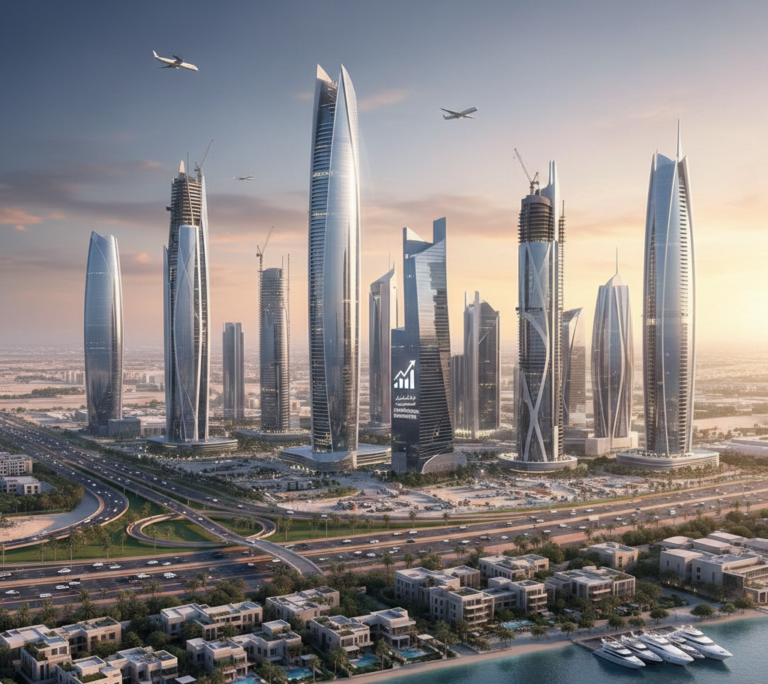
Business Bay’s skyline highlights one of Dubai’s hot markets. High-demand areas like Business Bay and Dubai Marina continue to attract investors due to prime locations and strong rental performance. These communities are now blending tradition with innovation: for instance, Emaar’s large waterfront developments (Dubai Marina, Business Bay towers) and Nakheel’s Palm Jumeirah projects are expected to benefit from fractional investment models. Dubai-based fintech startups – beyond the giants – are also active. Platforms like SmartCrowd (an early fractional real estate platform) demonstrate accessible entry (sometimes as low as 500 AED) and hint at a future where anyone can own a slice of an off-plan Dubai real estate project.
Other notable players include Sobha (Sobha Hartland), Nshama (LOFT community coins), and even Dubai Holding ventures, all monitoring tokenization’s potential. The common theme: leading developers (Emaar, Nakheel, DAMAC, Sobha, Ellington, Meraas, Nshama, etc.) recognize that blockchain can modernize off-plan property Dubai projects. By partnering with tokenization platforms (like Prypco, Mavryk, Mantra) or launching their own initiatives, these firms aim to tap global capital and liquidity.
Investor Benefits: Fractional Ownership & Liquidity
For buyers, tokenization transforms the investment proposition. Instead of a single all-cash payment, properties are divided into digital fractions. This fractional ownership allows investors to invest in Dubai property with much smaller sums. By breaking a property into thousands of tokens, a buyer can pay only for the slice they want, lowering entry barriers. Investors can also freely buy and sell tokens on approved exchanges, bringing stock-like liquidity to an illiquid market. Lexology’s legal analysis notes that tokenization “brings stock-like liquidity to property investments,” letting owners exit without months of red tape.
Blockchain also enhances transparency and trust. Every token transfer is recorded on a tamper-proof ledger, providing a clear audit trail. Smart contracts automate payments, so rental income or sale proceeds flow automatically to token holders proportionally. This cuts out many middlemen: brokers, escrow agents, even notaries can be replaced by code. The outcome is lower fees and faster closings. For example, Dubai’s Prypco Mint platform integrates with official registries so that blockchain records stay synced with government titles. Investors gain confidence knowing regulators (VARA, Central Bank, DLD) oversee transactions.
Additional perks include accessibility for overseas buyers and diversification. Blockchain “removes geographic barriers”, so a buyer in Tokyo or London can own part of a Dubai apartment without setting foot in the UAE. Combined with incentives like the UAE Golden Visa, Dubai real estate tokenization is attracting significant foreign capital. Experts note that with yields around 7–10% even for apartments, Dubai’s properties remain a strong draw. Tokenization simply amplifies this by letting smaller investors tap into prime zones (Downtown, Palm Jumeirah, etc.) that used to require millions in cash.
Traditional vs Tokenized Investing
How does blockchain compare to conventional off-plan investment? Traditionally, buyers put 20–30% down, lock in a future delivery, and wait years while paying periodic installments. Liquidity is nearly zero – you can’t easily sell before handover – and transactions involve lawyers, brokers, bank guarantees, escrow, and transfer fees. Tokenization streamlines the process. On a blockchain platform, compliance checks (KYC/AML) are built in, and transfers happen instantly once buyer and seller match. The cost of each transaction tends to be much lower, since the need for manual intervention is minimized.
- Lower capital requirement. Rather than raising 20–30% of a property’s full price, investors can buy a small number of tokens (each worth a fraction of the unit price).
- Higher liquidity. Tokens can be listed on secondary markets, letting owners trade anytime, unlike traditional sales which require a buyer, listing, and legal transfer.
- Increased transparency. Blockchain’s public ledger makes it easy to verify ownership and history of a tokenized asset.
- Speed and security. Smart contracts automate escrow, title transfer and payment, cutting delays and fraud risks.
These benefits are baked into blockchain in real estate. As Dubai’s officials note, the “playbook for Real Estate 2.0” is on-chain. The enhanced efficiency and openness promise to accelerate price discovery and could even improve returns. Indeed, experts expect tokenization not just to follow market growth but to drive new record sales.

How to Invest: Buying Tokenized Dubai Property
Investors curious how to buy tokenized property in Dubai can follow these general steps:
- Find Authorized Offerings: Look for projects on approved platforms. For example, Prypco Mint (DLD’s platform) and MultiBank.io are regulated channels for Dubai real-estate tokens. Avoid unlicensed schemes.
- Create an Account: Register with the chosen platform or exchange. You’ll need to complete UAE-mandated KYC/AML checks (VARA issues virtual asset licenses). Some platforms currently require a UAE ID, though expansion to foreign investors is planned.
- Fund Your Wallet: Deposit the accepted currency. Prypco Mint, for instance, currently only takes UAE dirhams through its banking partner (Zand Bank). Other marketplaces may allow stablecoins or cryptocurrencies under VARA supervision.
- Select and Buy Tokens: Choose a property or portfolio to invest in. Each token represents a share in a specific off-plan unit. Place your order — many platforms let you buy even a single token to start. Remember entry points can be as low as AED 500–2000.
- Monitor and Trade: Once purchased, tokens are held in your digital wallet. You can trade them on secondary markets if you wish, or hold until the property is completed and generates income or sale proceeds.
By following these steps, investors can seamlessly transition from traditional Dubai real estate deals to the blockchain era. Of course, due diligence is still crucial: study the developer’s reputation, project viability and regulatory compliance. Many advisers recommend consulting specialized legal and financial experts as this new landscape evolves.
Conclusion and Next Steps
Dubai’s off-plan market in 2025 is at a turning point. Robust sales figures and government backing show the emirate embracing a tech-driven off-plan revolution. Blockchain and tokenization are no longer theoretical concepts – they are unlocking fractional ownership, transparency, liquidity and lower fees for property investors. These innovations do not replace real estate’s fundamentals, but they make participation easier and potentially more rewarding.
Investors eager to invest in Dubai property now have powerful new tools at their disposal. Whether seeking a stake in a Downtown skyscraper or a villa on a Palm promenade, token platforms offer a user-friendly entry. As the market matures under clear UAE regulations, early participants stand to benefit from both capital gains and rental incomes in one of the world’s most dynamic cities.
Fill the contact form on our website and an off-plan expert will get in touch with you. This will connect you with specialists who can guide you through how to buy tokenized property in Dubai, tailoring solutions to your investment goals.