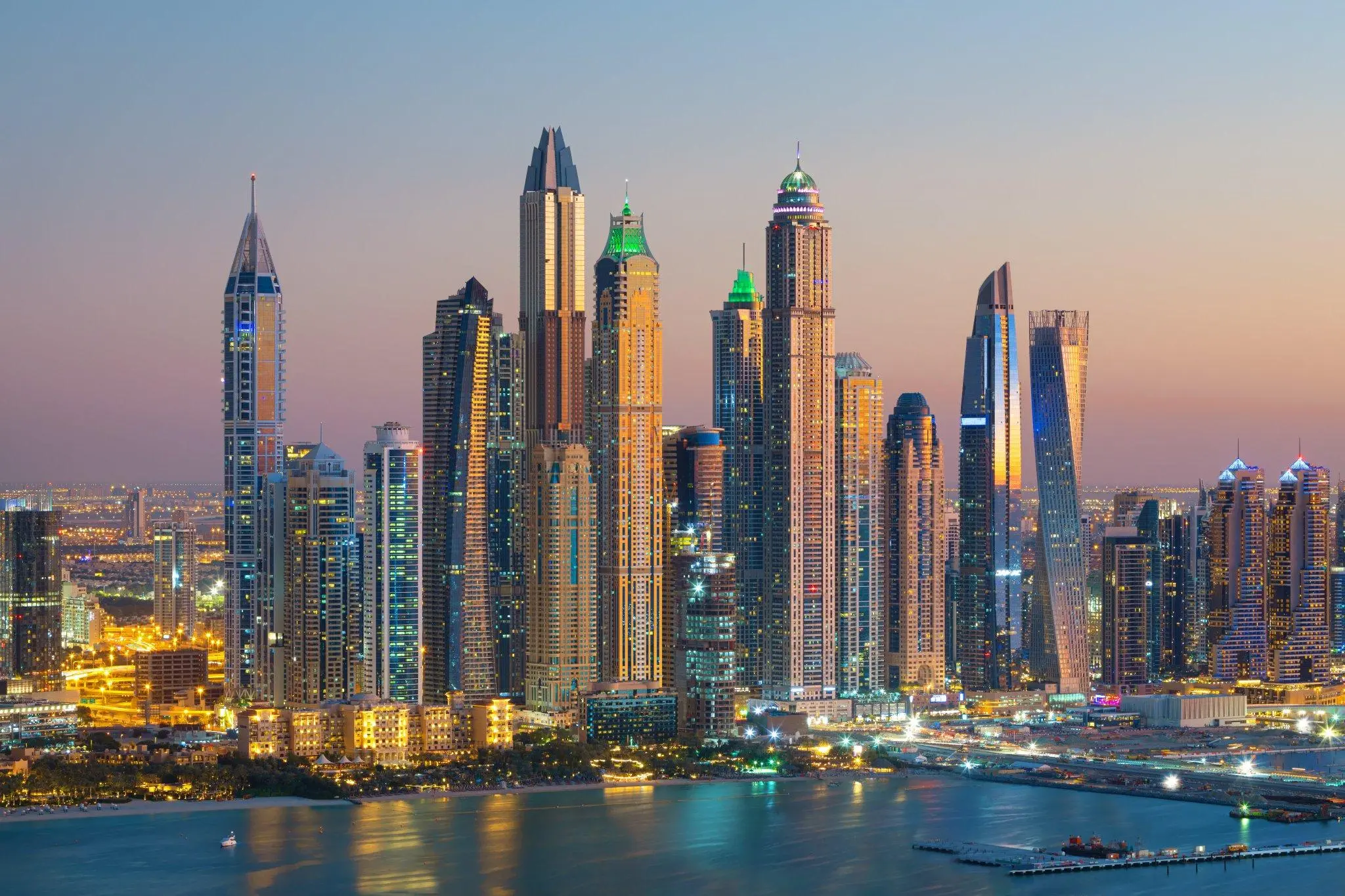
Here is a number that deserves to stop you mid-scroll: close to 18,000 new residents arrived in Dubai in a single month by the end of August 2025. That is not an annual figure, not a quarterly estimate — that is one calendar month. The source is Savills Middle East, one of the world’s most credible real estate research houses, and the figure sits at the centre of the firmest argument you can make for Dubai housing demand 2026: that underlying occupancy need does not vanish because of one geopolitical shock.
Conflict headlines move markets for 72 hours. Human beings moving to a city need somewhere to live for years. That asymmetry is the core thesis of this article — and every number in it, sourced from DLD records, Savills research, and live market data, backs it up.
| ~18,000New residents in one month (Aug 2025, Savills) | 4.04MDubai population milestone crossed (Sep 2025) | AED 919BTotal real estate transactions in 2025 (DLD) | 72%Off-plan share of all 2025 transactions |
The Savills Figure Everyone Should Know
In its latest market analysis, Savills Middle East placed a precise and powerful number into the Dubai property conversation. The firm confirmed that Dubai added close to 18,000 residents in a single month by the end of August 2025, and that this milestone directly triggered the city’s population crossing the four-million mark for the first time in its recorded history.
Alec James Smith, Head of Residential Sales and Leasing at Savills Middle East, articulated exactly what that figure means on the ground:
| “When Dubai adds close to 18,000 residents in a single month, it has an immediate impact on market activity. We see it in enquiry levels, viewing volumes, and the pace at which well-priced homes transact. This is demand driven by people relocating for work and lifestyle, alongside investors targeting resilient rental income.”— Alec James Smith, Head of Residential Sales & Leasing, Savills Middle East |
That quote is not marketing language. It is a real-time observation from the professionals sitting across the desk from buyers and tenants every day. Enquiry levels, viewing volumes, and transaction pace are the three earliest-warning signals of housing market health — and all three moved in response to that single month of population inflow. This is what structural Dubai housing demand 2026 looks like from inside the market, not from a spreadsheet.
From Arrival to Absorption: How 18,000 Residents Become Housing Demand
A new resident arriving in Dubai does not live in the airport. Within days or weeks, they require accommodation, and that need generates a cascade of market activity. Here is the mechanics of how 18,000 monthly arrivals translate into prelaunch demand:
Step 1 — Immediate rental demand: The majority of new arrivals enter the rental market first, pushing occupancy rates higher and rental prices upward. Dubai’s residential occupancy rate consistently exceeds 90%, and rental registrations climbed 7% year-on-year in 2025. Average annual rents reached AED 91,052 for a two-bedroom unit in Q3 2025, according to Engel & Völkers, citing Property Monitor data.
Step 2 — Rising yields attract investor capital: Higher occupancy and rising rents improve rental yields, which drives investor demand for income-producing property. Dubai apartment yields averaged 7.03% in 2025, with mid-market areas recording 8% to 9.5% — figures that comfortably outperform comparable assets in London, Paris, or Singapore, pulling in international capital that ultimately flows into prelaunch projects.
Step 3 — Tenants become buyers: Long-term residents — those staying three or more years — increasingly convert from tenants to owners, especially when Golden Visa eligibility and ownership-linked residency incentivise the switch. Dubai’s First-Time Home Buyer programme alone enabled over 2,000 residents to purchase their first homes in a six-month window, generating over AED 3.25 billion in sales.
Step 4 — Off-plan absorbs the conversion: When residents-turned-buyers enter the ownership market, off-plan prelaunch properties are disproportionately chosen — because they offer 10–20% below-market entry pricing, staged payment plans, and Golden Visa eligibility at AED 2 million+. In January 2026 alone, off-plan accounted for 71.27% of all residential transactions worth AED 39.33 billion.
Table 1: The Residency-to-Prelaunch Pipeline — Dubai 2025 Data Points
| Stage | Metric | 2025 Figure | Prelaunch Relevance |
| Arrival | Monthly population inflow (Aug 2025) | ~18,000 (Savills) | Continuous occupancy demand feed |
| Rental | Residential occupancy rate | 90%+ consistently | Yield floor for investors |
| Rental | Rental registration growth YoY | +7% | Sustained tenant demand signal |
| Rental | Avg. gross apartment yield | 7.03% (REIDIN, Dec 2025) | Returns vs global peers |
| Ownership | Off-plan share of transactions | 72% of 202,349 sales | Dominant market channel |
| Ownership | Jan 2026 off-plan value | AED 39.33 billion | Monthly demand confirmation |
| Premium | Deals above AED 10M in 2025 | ~6,000 (Savills) | HNW demand layer intact |
Sources: Savills Middle East Q3/Q4 2025; DLD; REIDIN December 2025; Engel & Völkers / Property Monitor Q3 2025

The 72-Hour Rule: How Conflict Affects Demand and How It Recovers
To understand why 18,000 monthly arrivals protect prelaunch demand during regional tension, it helps to look at what conflict headlines actually do to the market — and what they cannot do.
According to Ritu Kant Ojha, CEO of Proact Luxury Real Estate, geopolitical events in the region create a 48 to 72-hour pause in transaction activity as buyers assess the headlines. Experienced, liquid investors use this window as an opportunity — not an exit. Market analysts confirm that Dubai’s safe-haven status means regional instability often redirects capital toward Dubai, not away from it. In Q2 2025, international buyers drove 58% of all Dubai property transactions from India, the UK, China, and Russia — many of them motivated, in part, by instability in their own markets.
Crucially, a 72-hour sentiment pause does not touch the 18,000 people who arrived in August. They still need accommodation. Their employers still need them present. The schools their children are enrolled in are still operating. Occupancy demand is structurally indifferent to geopolitical news cycles in a way that investor sentiment is not — and that is the asymmetry that protects prelaunch absorption over a 24 to 36-month construction timeline.
| “As population growth continues, well-located and high-quality stock remains consistently sought after.”— Alec James Smith, Savills Middle East |
This observation from Savills is not a hopeful projection. It is a present-tense market observation made after multiple cycles of geopolitical tension in the region. The pattern holds: short-term sentiment dips, structural demand does not. For the Dubai off-plan prelaunch buyer with a 2 to 4-year horizon, that pattern is the most important fact in the market right now.
Record 2025 Outcomes: The Proof That Demand Was Already Real
The 18,000 monthly arrivals did not just build theoretical demand — they translated into the most extraordinary set of market outcomes in Dubai’s recorded real estate history. The DLD numbers are categorical:
Table 2: Dubai Residential Market — Full-Year 2025 Record Outcomes
| Metric | 2025 Figure | Historical Context |
| Total real estate transaction value | AED 919 billion (~AED 916B sales) | Highest ever annual total (DLD) |
| Total property sales value | AED 680 billion+ | Highest in market history |
| Total residential sales transactions | 202,349+ | 464% higher than 2021 |
| Q4 2025 quarterly sales value | AED 187 billion+ | Highest single quarter ever recorded |
| Consecutive record months (Q4 2025) | 3 consecutive months | Sustained — not speculative — activity |
| Off-plan share of transactions | ~72% | Third consecutive year of dominance |
| Deals above AED 10M in 2025 | ~6,000 (Savills) | Prime segment fifth year of growth |
| Prime capital value growth in 2024 | +6.8% (Savills World Cities Index) | Dubai led the global prime markets |
Sources: Dubai Land Department; Savills Middle East Q4 2025 Report; Savills Prime Residential Report 2025
Andrew Cummings, Head of Residential Agency at Savills Middle East, put it plainly: “This expansion supports a broad base of housing demand, from first-time buyers to ultra-high-net-worth individuals.” Three consecutive record months in Q4 2025 — occurring precisely during the period of elevated regional tension — are Exhibit A that sustained end-user and investor engagement does not defer to headlines. Buyers acted. Deals closed. Records fell.
For first-time buyers navigating this environment, our analysis of why the 2026 investor shift is driving first-time buyers from rentals into off-plan explains how this structural demand translates to individual purchasing decisions.
Supply vs Population: Why the 2026 Wave Does Not Override the Cushion
The most cited counterargument to the population-demand thesis is Dubai’s 2026 supply pipeline — approximately 83,000 to 120,000 units forecast to be completed. Can that volume overwhelm even 18,000 monthly arrivals? The data says no, for three-layered reasons.
Actual deliveries fall well short of projections. Construction materialisation rates in Dubai ran at just 41.3% in Q3 2025, according to Savills data. A separate Khaleej Times analysis found only 48–62% of forecast units deliver on time. Applied to 120,000 projected completions, the realistic 2026 supply landing zone is closer to 50,000 to 74,000 actual units — a very different story.
Population arithmetic is relentless. At 18,000 arrivals per month, Dubai adds 216,000 potential new housing consumers annually at that pace — against a realistic completion count that is, at best, one-third of that. The structural demand surplus does not disappear; it may narrow, but it does not flip.
Supply is segment-concentrated. According to Savills Q3 2025 data, 97% of Q3 2025 launches were apartments. Villa supply remains critically thin — only around 15,000–18,000 villas projected for 2026 across all of Dubai — while family-stage residents arriving in the city specifically seek that format. The villa undersupply gap is actually widening, not narrowing.
Table 3: 2026 Supply vs Population Demand — Scenario Analysis
| Scenario | Projected Units | New Residents (est.) | Net Position |
| Conservative delivery (41% materialisation) | ~49,200 | 175,000–225,000 | Strongly demand-positive |
| Base case (55% materialisation) | ~66,000 | 175,000–225,000 | Demand-positive |
| Bull delivery (70% materialisation) | ~84,000 | 175,000–225,000 | Broadly balanced; villas scarce |
| Max delivery (100% — theoretical) | ~120,000 | 175,000–225,000 | Segment-specific pressure only |
| Historical average (2019–2024) | ~30,000–40,000 | ~100,000–150,000 | Chronically demand-positive |
Sources: Savills Middle East Q3 2025; Dubai Data & Statistics Establishment; Khaleej Times delivery analysis
Where Population-Driven Demand Is Strongest for Prelaunch Buyers
Not every district benefits equally from the 18,000 monthly arrivals. Understanding where new residents concentrate — and what property formats they seek — is what separates a well-timed prelaunch decision from a misjudged one.
Dubai South and Al Maktoum Airport corridor: The world’s largest airport expansion is drawing a logistics, aviation, and service workforce to the southern emirate. Population inflows into this corridor are accelerating faster than infrastructure can accommodate, creating acute prelaunch demand for mid-income apartments and townhouses.
Dubai Hills Estate and family villa communities: Private school enrolment in Dubai rose 6% in 2025, a leading indicator that families are settling long-term. These residents specifically seek villa communities with school access, green space, and established amenities. Villa values in top communities are up 24% year-on-year, per Savills, and 73% of all prime transactions above AED 10 million in Q3 2025 were villas — reflecting the scarcity premium already embedded in this segment.
Downtown Dubai, Business Bay, and Dubai Marina: Corporate relocations and financial services professionals continue to target these professional corridors. Office occupancy in Dubai consistently exceeds 92%, driving professional housing demand in areas adjacent to major employment centres. Branded residences in these zones are appreciating faster than standard inventory, with Savills projecting Dubai to lead global prime residential growth.
For a full infrastructure-led breakdown of where population growth is activating the strongest prelaunch pipeline, see our guide to Dubai off-plan hotspots in 2025 driven by infrastructure mega-projects.
The HNW Layer: Wealthy Arrivals and the Prime Prelaunch Market
The 18,000 monthly arrivals are not homogeneous. Alongside mid-income professionals, Dubai is receiving a sustained wave of high-net-worth individuals drawn by tax advantages, Golden Visa reforms, and lifestyle. The UAE welcomed 7,200 new millionaires in 2024, following 4,700 in 2023 and 5,200 in 2022. Savills projects nearly 9,800 millionaires to migrate to the UAE in 2025 — one of the highest wealth-migration figures globally.
These arrivals disproportionately impact the prime and ultra-prime prelaunch market. Savills recorded nearly 6,000 transactions above AED 10 million in 2025 — a figure that represents a tenfold increase in prime activity since 2020 (from just 469 deals in 2020 to 4,670 in 2024, then nearly 6,000 in 2025). This is not speculative fever. It is wealthy people relocating, building their lives in Dubai, and anchoring that commitment in property ownership.
Prime capital values grew 6.8% in 2024 according to the Savills World Cities Prime Residential Index, and Savills forecasts Dubai to lead global prime residential price growth in 2025 with capital values forecast to grow 8% to 9.9% — the highest among all global cities tracked. For prelaunch buyers targeting this segment, our guide to when off-plan pre-launch discounts beat ready properties in 2027 explains how the premium entry advantage compounds in a market where prime supply is deliberately restricted.
Table 4: Prime Prelaunch Demand Indicators — Dubai 2025
| Indicator | Figure | Source |
| New millionaires arriving in the UAE (2024) | 7,200 | Savills / New World Wealth |
| Projected HNW arrivals (2025) | ~9,800 | Savills Dubai Residential Q3 2025 |
| AED 10M+ transactions in 2025 | ~6,000 | Savills Prime Residential Report 2025 |
| AED 10M+ transactions Q1 2025 alone | 1,300+ (up 31% YoY) | Savills Prime Report 2025 |
| Prime capital value growth 2024 | +6.8% | Savills World Cities Index |
| Prime rental growth 2024 | +23.5% | Savills World Cities Index |
| Dubai prime price growth forecast 2025 | +8% to +9.9% (highest globally) | Savills 2025 Forecast |
Source: Savills Prime Residential Report 2025; Savills World Cities Prime Index
| 18,000 Residents a Month. One Decision That Could Change Everything.Dubai’s demographic engine does not pause for headlines. Every month, close to 18,000 new residents arrive needing homes — creating the most durable, organic demand cushion in any global real estate market. Whether you are a first-time buyer, a yield-focused investor, or a long-term wealth builder, the prelaunch window in Dubai right now is defined by exactly this: real people, real demand, real returns. Fill up the form on our website at prelaunch.ae for a personalised consultation on the best prelaunch projects available today. ☎ (+971) 52 341 7272 ✉ [email protected] |
Disclaimer: All figures are sourced from Savills Middle East Q3/Q4 2025 Reports, the Dubai Data and Statistics Establishment, Dubai Land Department (DLD), REIDIN, Engel & Völkers / Property Monitor, and Khaleej Times / Gulf News verified reporting. This article does not constitute financial or investment advice. Past market performance is not a guarantee of future returns.
Frequently Asked Questions
Q1: What is the exact Savills figure on Dubai’s monthly resident inflow?
Savills Middle East confirmed that Dubai added close to 18,000 residents in a single month by the end of August 2025, which was the trigger that pushed the city’s population past the four-million milestone. The figure of 17,669 was the precise count recorded at that date, per the Dubai Data and Statistics Establishment’s Population Clock. This data point was published in Savills’ own research and cited in Gulf News and Khaleej Times.
Q2: Does regional conflict actually reduce Dubai housing demand or only slow it temporarily?
The evidence is clear: conflict headlines create a 48 to 72-hour transaction pause, not a structural demand collapse. Q4 2025 — during a period of elevated regional tensions — produced three consecutive record-breaking months, including the highest quarterly sales value ever at AED 187 billion. Occupancy-driven demand from existing residents is structurally indifferent to geopolitical news cycles.
Q3: Which property segments benefit most from the 18,000 monthly arrival figure?
Villa and family-format housing in established communities benefits most acutely, as family-stage arrivals — confirmed by 6% school enrolment growth in 2025 — seek space and community over density. The prime segment (AED 10 million+) benefits from high-net-worth arrivals. Mid-income apartment corridors near employment hubs like Business Bay and JVC benefit from professional relocations.
Q4: How does Dubai housing demand in 2026 compare to global peers?
Dubai’s population growth rate of 5–10% annually vastly exceeds that of comparable global gateway cities. London grows at under 1% annually; Singapore at approximately 2%; New York City is largely flat. Combined with 7%+ gross rental yields against London’s 3.5% and Singapore’s 3%, and a zero-income-tax environment, Dubai’s demand-yield combination is unmatched among world-class property markets.
Q5: Is 2026 still a good time to enter a prelaunch property, given the supply wave?
Yes — with selectivity. The supply wave concentrates in mid-market studio and one-bedroom apartments in five specific districts. Villa communities, branded residences, and prime waterfront prelaunch projects face no comparable oversupply pressure, and the population cushion means that even apartment markets in well-located, amenity-rich communities will absorb supply faster than oversupplied fringe zones. For detailed risk mapping, see our analysis of the Dubai off-plan market 2026 — boom, bubble, or just maturity.