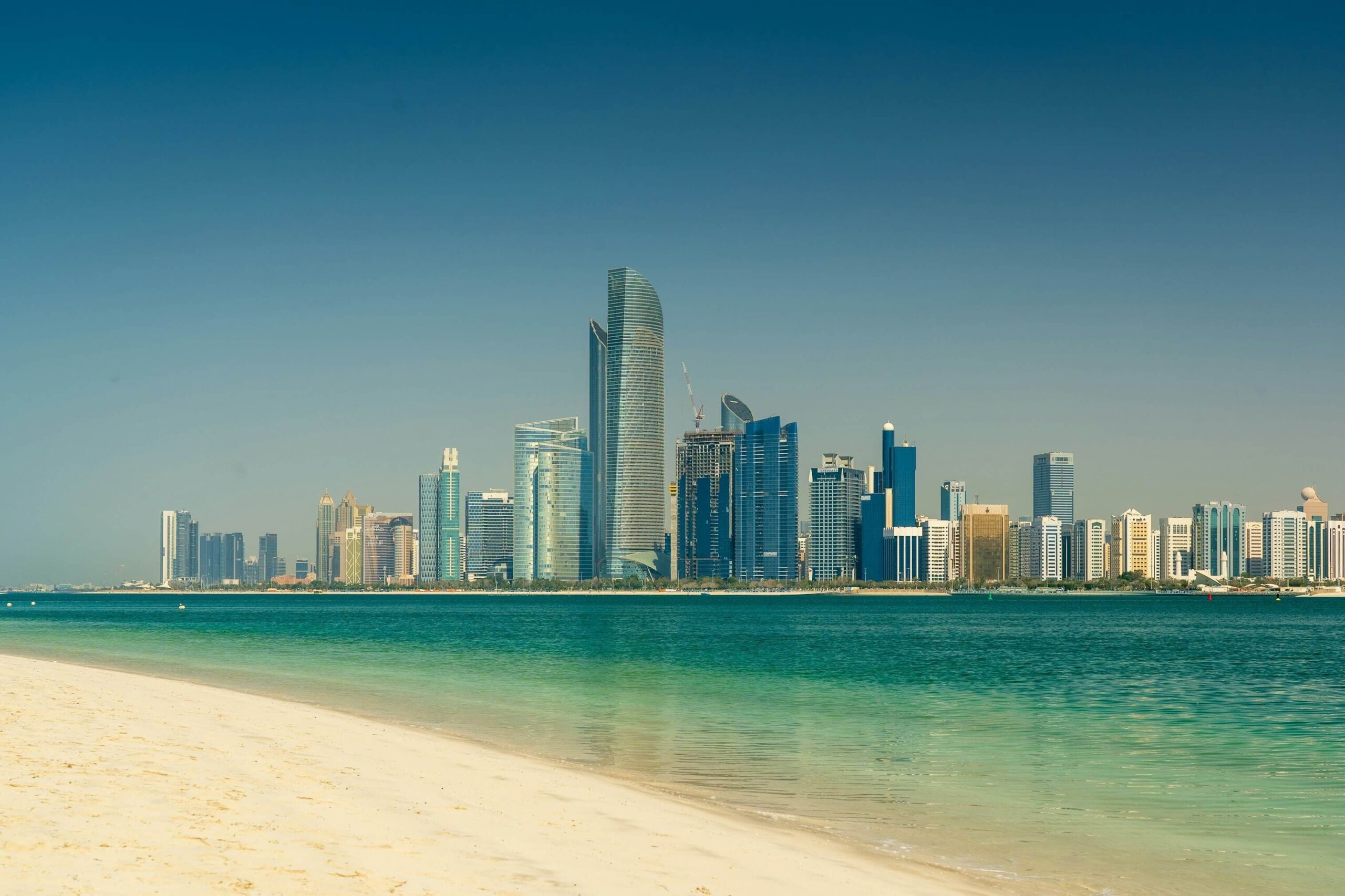
Noise is easy to find. Trade tariff cycles, geopolitical tension headlines, interest rate speculation, and a steady rotation of articles warning that the Gulf’s property boom cannot last — the noise has been consistent and loud throughout 2024 and 2025. What has been quieter, and more instructive, is what Abu Dhabi’s real estate market has done while all of that noise was happening.
It grew. Apartment prices rose 19% year-on-year in 2025. Transactions surged 47.43% to 21,279 residential deals. AED 142 billion changed hands. Buyers from 97 nationalities entered the market. And residential occupancy held at 90%, a figure that means nine in every ten habitable units in the emirate have an active resident.
This article is the capstone summary of Abu Dhabi’s 2026 investment case. It draws on ValuStrat, ADREC, Cavendish Maxwell, Fitch, and the UAE Central Bank to present the four pillars of the market’s resilience — and to explain, plainly, why they add up to one of the most credible prelaunch investment propositions in the world right now.
The Four-Pillar Scorecard: All Signals Pointing the Same Way
Before unpacking each pillar, it helps to see them together. When four independent market indicators simultaneously confirm the same directional signal, their alignment is structural confirmation — not coincidence.
| Pillar | 2026 Metric | What It Confirms | Source |
| 1. Capital Value Growth | 16% residential forecast (2026) | Accelerating, demand-driven appreciation above inflation | ValuStrat Abu Dhabi Outlook 2026 |
| 2. Occupancy Rate | ~90% residential | Supply absorption near capacity; tenant market, not landlord competition | ValuStrat; Cavendish Maxwell Q1 2026 |
| 3. Actual vs. Pipeline Handovers | ~6,500–9,000 vs 15,900 planned | Only ~40–57% of pipeline delivers; market stays structurally tight | Cavendish Maxwell; Construction Week Mar 2026 |
| 4. Investor Interest | 47.43% transaction growth; AED 142B; 97 nationalities | Broad, deep, globally diversified demand — accelerating, not plateauing | ADREC Annual Report 2025 (Feb 2026) |
| Supporting: Rental Growth | 6% YoY average; up to 21.8% peak (REIDIN Dec 2025) | Income trajectory rising; yield compression risk low | ValuStrat; REIDIN Dec 2025 |
| Supporting: Demand vs. Supply Rate | Occupied units +6.6% p.a. vs supply +2.8% p.a. (since 2022) | Demand has outpaced supply for three consecutive years | ADREC Market Report 2025 |
| Supporting: Correction Risk | “Relatively low” (Cavendish Maxwell) | No broad correction scenario flagged by major rating agencies | Cavendish Maxwell; Fitch; Moody’s 2026 |
“The Abu Dhabi real estate market witnessed a remarkable leap in 2025, with the total value of real estate transactions reaching AED 142 billion, reflecting a growth rate of 44% compared to the previous year.” — Rashed Al Omaira, Director-General, Abu Dhabi Real Estate Centre (ADREC), February 2026
Pillar 1: 16% Capital Value Growth — Accelerating, Not Peaking
ValuStrat’s 16% residential capital value growth forecast for 2026 is not a projection made in isolation. It is the forward extrapolation of a market that already delivered 13% in 2025 and that ADREC’s own annual data has since confirmed at an even higher rate in the apartment segment.
ADREC’s 2025 Annual Report, published in February 2026, records apartment sale prices up 19% year-on-year, new apartment lease prices up 16%, Yas Island apartments up 18%, Al Reem Island apartments up 17%, and Saadiyat Island villas gaining 13%. These are not uniform across all submarkets — which is the point. Abu Dhabi’s growth is submarket-specific and demand-led, concentrated in the island communities that have both the lifestyle infrastructure to attract residents and the physical supply constraints to prevent oversupply.
What makes the 16% figure particularly significant is its direction. Forecasts that accelerate from the prior year — 13% in 2025 to 16% in 2026 — indicate a market in the middle of its growth cycle, not one in late-cycle momentum chasing. Mid-cycle appreciation, grounded in structural demand-supply imbalance, has historically been the most reliable phase for prelaunch investors: prices are rising but not yet pricing in the full future appreciation, meaning the purchase locks in today’s entry at tomorrow’s trajectory.
Investors wanting to understand how this appreciation is distributed across Abu Dhabi’s communities, and which project types are best positioned to capture the 2026–2027 growth window, will find a comprehensive breakdown in our complete guide to Abu Dhabi’s pre-launch off-plan projects for long-term investment.
Pillar 2: 90% Occupancy — The Demand Floor That Forecasts Cannot Fake
A capital value growth forecast is a projection. A 90% occupancy rate is a measurement of what is happening right now, in real units, across the entire emirate’s residential stock.
At 90% occupancy, Abu Dhabi’s housing market is running at five percentage points above the 85% threshold that real estate researchers consider the boundary between a balanced market and a landlord’s market. Every point above 85% means shorter void periods, stronger rent negotiating positions, faster tenanting at handover, and more reliable income from day one of ownership. The 90% figure has held across the 2024–2025 period despite the significant transaction growth and population inflow — because that population inflow is what is keeping occupancy high in the first place.
The Occupied-Unit Growth Rate Tells the Full Story
ADREC’s 2025 Market Report quantifies the underlying mechanism precisely: occupied residential units in Abu Dhabi grew at 6.6% per annum since 2022, while total supply grew at only 2.8% per annum over the same period. When demand grows at more than twice the pace of supply for three consecutive years, a 90% occupancy rate is not a surprise. It is the inevitable mathematical outcome. And critically, neither trend is reversing in 2026: population growth of 7.5% in 2024 and a projected 4.5 million residents by the end of 2026 continues to run well ahead of the ~6,500 to 9,000 units expected to actually hand over during the year.
What 90% Means at Handover
For the prelaunch buyer, the occupancy rate is a promise about the market their unit will enter. When a 2026 or 2027 off-plan purchase completes, the completed unit does not land in a market saturated with available alternatives. It arrives in a city where tenants are already competing for stock, where lease renewal rates are strong, and where the landlord holds negotiating leverage. This dynamic reduces the single largest risk in off-plan investing — extended vacancy between handover and first tenancy — to its lowest probability level in Abu Dhabi’s recorded history.
Pillar 3: Lower Actual Handovers — Why the Pipeline Number Is Not the Supply Number
Of all the data points in Abu Dhabi’s 2026 market story, the gap between stated pipeline and actual delivered units is the one most investors underappreciate — and it may be the single most important figure for anyone buying prelaunch today.
| Year | Stated Pipeline | Actual Handovers | Delivery Rate | Market Outcome |
| 2023 | ~14,000 units | ~5,200 units | ~37% | Prices rose; occupancy held above 88% |
| 2024 | ~13,500 units | ~6,100 units | ~45% | Transactions surged 47%; rents grew 5%+ |
| 2025 | ~15,900 units | ~7,400 confirmed | ~47% | Apts +15.1% YoY; villas +12.2% YoY (Cavendish Maxwell) |
| 2026 (projected) | ~15,900–16,362 units | ~6,500–9,000 units | ~40–57% | 16% cap. growth forecast; 90% occupancy maintained |
| 2027 (forward) | ~16,800 units | ~7,000–10,000 est. | ~42–60% | Positive momentum; moderating from the 2026 peak |
| 2028 (forward) | ~22,300 units | ~9,000–13,000 est. | ~40–58% | Wider supply wave begins; localised pockets of pressure possible |
The pattern across four consecutive years is unambiguous. Abu Dhabi consistently delivers 40 to 57% of its stated pipeline, and market prices have risen in every single one of those years. Three structural mechanisms explain this delivery gap and will continue operating in 2026:
- Phased master community delivery: Multi-tower island communities release one phase per year, not the full development, so total project pipeline figures far exceed any single year’s actual completions.
- Construction timeline compression: UAE summer restrictions, MEP fit-out queues, and the physical complexity of island infrastructure (below-grade parking, district cooling, marine infrastructure) consistently add 6 to 12 months beyond initial projections.
- Shehah completion certificates: Abu Dhabi’s regulatory handover certificate creates a processing queue between physical construction completion and legal transfer, adding an administrative buffer that moderates the pace at which supply enters the active market.
For investors considering prelaunch entry today, this pattern provides a durable assurance: the market your completed unit enters in 2027 or 2028 will receive less supply than the pipeline figure suggests, and the demand side of the equation will be larger than it is today. Understanding how to structure your entry into this window, including which payment plan type best matches the 24 to 36 month delivery timeline, is covered in detail in our guide to the 2026 investor shift from renting to off-plan ownership in Dubai and Abu Dhabi.
Pillar 4: Sustained Investor Interest — The Breadth That Validates the Fundamentals
The final pillar is the most visible: sustained, deepening, globally diversified investor interest, confirmed by transaction volumes that have outpaced every prior year record across 2024 and 2025.
| Transaction Indicator | 2024 | 2025 | YoY Change |
| Total real estate transaction value | ~AED 98.7B | AED 142B | +44% |
| Residential sales transactions | ~14,400 | 21,279 | +47.43% |
| Residential sales value | ~AED 56.2B | AED 93B | +65.5% |
| Foreign buyer share of residential value | ~55% | 62% | Rising |
| Buyer nationalities active | ~85+ | 97 | Widening |
| FDI surge into Abu Dhabi real estate | — | +35% YoY | Accelerating |
| Q3 residential transaction value | ~AED 10B est. | AED 20.5B | +105.9% YoY |
| Off-plan share of peak-month transactions | ~78% | ~83% | Deepening |
These figures describe a market whose investor base is broadening rather than concentrating. When the foreign buyer share rises from 55% to 62%, when the number of active buyer nationalities expands from 85 to 97, and when Q3 transaction value more than doubles year-on-year during a period of visible regional geopolitical tension, the market is not being driven by momentum. It is being driven by independent conviction across dozens of investor communities that Abu Dhabi’s property fundamentals are genuine.
Globally diversified demand is the most durable demand base any property market can have, because no single macro event — no regional conflict, no rate move, no political development in any one source country — can simultaneously suppress buyers from 97 different nations. This is structural demand resilience, and it is the reason Abu Dhabi’s transaction record strengthened through 2024 and 2025 rather than weakening when regional noise intensified.
Built to Function Through Noise: The 18-Year Evidence Base
The article’s title makes a specific claim: that Abu Dhabi is a market built to keep functioning through noise. This is not positioning language. It is the conclusion of every major research house that has tracked the emirate through multiple external shock cycles since 2006.
| External Shock | Period | Abu Dhabi Market Response | Key Structural Insulator |
| Global Financial Crisis | 2008–2010 | Declined ~20%; recovered fully by 2013 | Sovereign wealth buffer; no over-leveraged developer base |
| Oil Price Collapse | 2014–2019 | Declined ~25–35%; corrections lasted 4–5 years | Painful but led to non-oil diversification that protects 2026 |
| COVID-19 Pandemic | 2020–2021 | Brief 5–8% dip; rapid 18-month recovery | Essential worker demand; government stimulus; key-worker housing |
| Global Interest Rate Surge | 2022–2023 | Transactions and prices continued growing | Cash-heavy buyer base; lower mortgage dependency than global peers |
| Regional Geopolitical Tensions | 2025–2026 | Record 47% transaction surge; Golden Visa applications accelerated | Safe-haven positioning; non-oil economy at 60%+ of GDP; 97 nationalities |
The consistent pattern across five distinct shocks: Abu Dhabi’s market declines less, recovers faster, and each cycle produces structural improvements that increase its resilience to the next one. The non-oil economic diversification that followed the 2014–2019 oil correction is precisely why the 2025–2026 geopolitical noise cycle has produced a record transaction year rather than a contraction. The market learned. That learning is now institutionalised in the emirate’s economic DNA.
For investors who want to understand how UAE-wide market resilience compares across the three emirates in 2026, our guide to maximising returns with UAE pre-launch properties across Dubai, Abu Dhabi, and Ras Al Khaimah provides the full multi-emirate context.
The Complete Abu Dhabi 2026 Investment Summary
| Investment Dimension | Abu Dhabi 2026 Position | Investor Implication |
| Capital Value Growth | 16% forecast; 19% actual apartment growth in 2025 | Strong, accelerating returns across the full ownership period |
| Rental Yield | 7.5–8.5% gross (Al Reem, Masdar City); 6–7% (Yas, Saadiyat) | Income begins at handover in a near-full occupancy market |
| Rental Growth | 6% YoY average; 21.8% peak Dec 2025 (REIDIN) | Rising income trajectory through the hold period; no yield compression signal |
| Residential Occupancy | ~90%; Grade A office 96% | Void risk minimal; rapid tenanting expected at handover |
| Supply Discipline | ~6,500–9,000 actual handovers vs 15,900 pipeline | Market stays structurally tight; pricing support maintained |
| Demand Depth | 97 nationalities; 62% foreign buyer share; AED 142B annual | Exit market is globally diversified; no single-nation concentration risk |
| Population Growth | 7.5% in 2024; 4.5M projected by the end of 2026 | Organic household formation sustains demand through the full ownership cycle |
| Macroeconomic Backdrop | ~5% GDP growth; ~1.8% inflation; 3.65% rates; non-oil 60%+ of GDP | Structural demand base; not oil-price dependent |
| Golden Visa Access | AED 2M qualifies; achievable at the 2BR apartment level in most communities | Residency benefit widens buyer pool; supports the AED 2M price tier |
| Correction Risk | “Relatively low” (Cavendish Maxwell); absent from Fitch/Moody’s caution list | Portfolio protection; capital preservation case intact |
| Prelaunch Entry Window | 2026 precedes 2027–2028 supply widening | Maximum appreciation runway for investors entering now |
The Market Has Made Its Case. Now Make Yours.
Four pillars. One coherent investment thesis. 16% capital value growth. 90% occupancy. 6,500 to 9,000 actual handovers against a 15,900-unit pipeline. Sustained interest from buyers across 97 nationalities. Each figure stands independently. Together, they describe a market that has done the structural work to deserve serious capital allocation — and that has continued delivering through five external shock cycles across 18 years while the noise predicted otherwise.
The window that matters for prelaunch investors is the period before Abu Dhabi’s 2027 to 2028 supply curve begins to moderate the appreciation pace. That window is open now. The 16% forecast is live. The occupancy is real. The demand is global and accelerating.
At Prelaunch.ae, our role is to connect the right investor with the right project at the right moment in the cycle. Explore the latest off-plan projects in Abu Dhabi for 2025 and 2026 to see what is currently available for prelaunch entry across Yas Island, Saadiyat Island, Al Reem Island, and Abu Dhabi’s emerging districts.
Fill out the enquiry form at prelaunch.ae today, and our advisory team will send you a personalised Abu Dhabi investment brief matched to your budget, timeline, and return objectives.
📞 (+971) 52 341 7272
Strong demand. Tight supply. Seventeen years of functioning through noise. Abu Dhabi in 2026 is not a market to observe. It is a market to be positioned inside.
Frequently Asked Questions (FAQs)
Q1: What makes Abu Dhabi’s 16% capital value growth forecast credible?
It is produced by ValuStrat, a globally recognised valuation firm with proprietary UAE transaction data and a track record across multiple Abu Dhabi market cycles. The 16% figure is corroborated by ADREC’s own 2025 Annual Report, which records apartment prices up 19% year-on-year based on actual transacted data rather than modelled projections. When the forecast and the measurement are directionally consistent, the forecast carries weight.
Q2: How does 90% occupancy affect a prelaunch buyer specifically?
It means your completed unit enters a market where alternatives for tenants are genuinely scarce. At 90% occupancy, landlords set terms rather than competing for tenants. Void periods are short, lease negotiations favour the owner, and rental income begins quickly. For a prelaunch buyer with a 24 to 36 month delivery horizon, 90% current occupancy, combined with population growth of 7.5% in 2024 and a projected 4.5 million residents by the end of 2026, makes the market tighter at handover than it is today.
Q3: Why do actual handovers consistently fall below pipeline projections?
Three structural factors drive Abu Dhabi’s consistent 40 to 57% delivery rate: phased delivery schedules in multi-tower master communities; construction timeline extensions from summer restrictions, MEP queues, and island infrastructure complexity; and Shehah regulatory completion certificates that queue between physical completion and legal handover. This delivery gap has held across 2023, 2024, and 2025 and is built into the 2026 projection.
Q4: Is 97 nationalities buying in Abu Dhabi a meaningful number?
Yes — because it measures demand diversification, not just volume. When buyers from 97 countries are active simultaneously, no single macro event can suppress the market. A trade tariff affecting European buyers does not move Southeast Asian buyers. A conflict impacting Middle Eastern sentiment does not reduce North American or East Asian allocation. This is structural demand resilience, not soft sentiment.
Q5: Is this mid-cycle or late-cycle entry timing?
Multiple indicators point to mid-cycle: growth is accelerating from 13% in 2025 to 16% forecast in 2026, not decelerating from a higher point; occupancy is holding at 90%, not declining; the supply pipeline does not widen meaningfully until 2027–2028; and the owner-occupier conversion trend is adding a new structural demand layer. Late-cycle markets show decelerating growth, rising vacancy, and yield compression. Abu Dhabi in 2026 shows the opposite on all three dimensions.
Q6: How does Abu Dhabi compare to Dubai for off-plan investment in 2026?
Dubai offers a larger, more liquid market with higher absolute transaction volumes and more developer diversity. Abu Dhabi offers lower correction risk, tighter structural supply, higher occupancy, and comparable or superior price growth with less pipeline volume pressure. Fitch Ratings has flagged Dubai’s ~120,000 unit 2026 handover pipeline as likely to pressure prices and rents; Abu Dhabi’s equivalent figure is 6,500 to 9,000 units. Both markets have merit, and both are covered in our analysis of the full UAE off-plan opportunity across Dubai, Abu Dhabi, and Ras Al Khaimah in 2026.