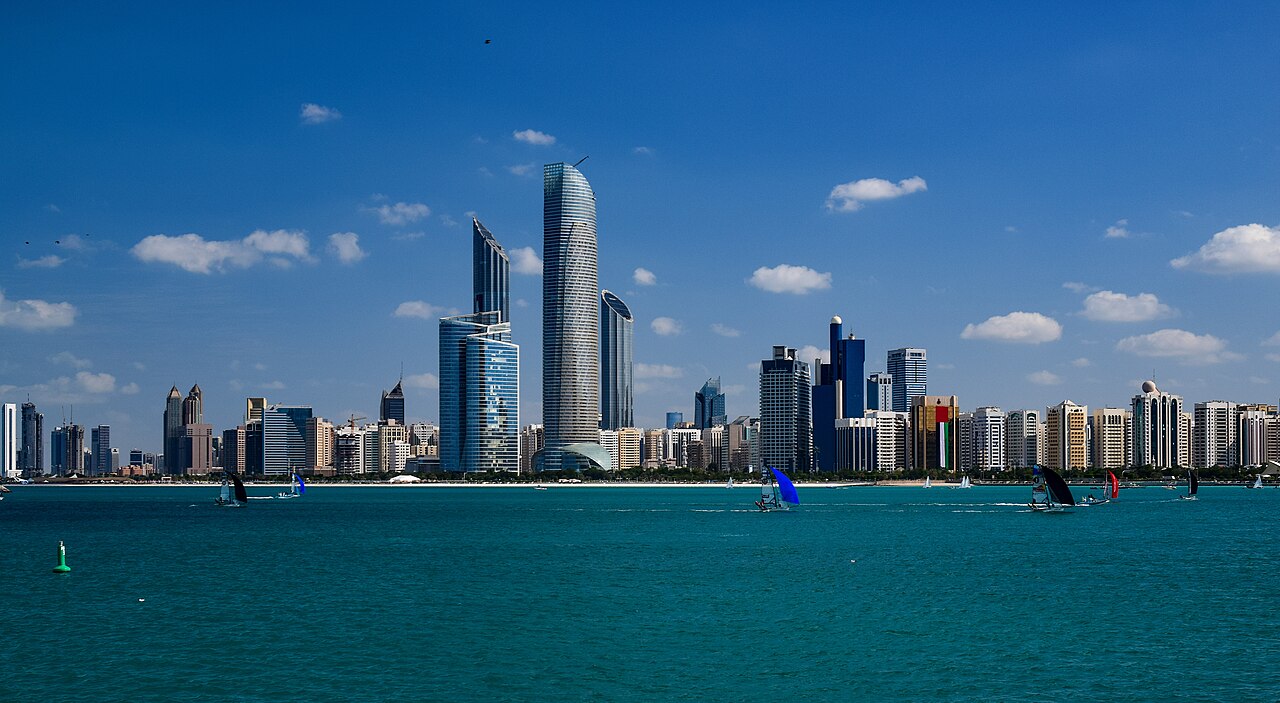
Every real estate market has a clock. In Abu Dhabi’s case, that clock is now pointing to a very specific moment — a transitional quiet period between the demand surge of 2025 and the major delivery wave arriving from 2028 to 2030. Investors who understand this cycle and act in 2026 are not buying into a hot market at the top. They are buying at precisely the point where the appreciation runway is at its maximum and competition is at its minimum.
This is what we call the “Quiet Years” strategy — entering the Abu Dhabi off-plan market in 2026 before the 2028–2030 delivery surge of 21,400+ units per year reshapes the supply landscape. Cavendish Maxwell’s own data confirms the pipeline: approximately 12,400 units are planned for 2027 and 21,400 for 2028, with actual handovers likely to fall short of both figures based on historical delivery trends. The supply clock is still on your side — but only for the next 12–24 months.
For a data-driven view of how Abu Dhabi’s supply fundamentals compare to Dubai’s, read:
Why Investors Are Rotating Capital from Dubai to Abu Dhabi in 2027
1. Understanding the Supply Clock: Abu Dhabi’s Pipeline in Plain English
To execute the Quiet Years strategy, you need to understand exactly where Abu Dhabi sits in its residential supply cycle. The table below maps the full trajectory from 2024 through 2030, showing unit volumes, pricing momentum, and the critical market phases that define each year’s investment opportunity.
| Year | Est. Deliveries | Off-Plan Share | Apt Price Growth | Rental Growth | Market Phase |
| 2024 | ~7,800 | 66% | +10.5% | +9.4% | Acceleration |
| 2025 | ~8,000 | 79–83% | +14.8% | +27.3% | Peak Demand |
| 2026 ← Enter Now | ~9,500 est. | 80–85% est. | +10–15% proj. | +15–20% proj. | ✅ QUIET YEARS ENTRY |
| 2027 | ~12,400 | 80%+ est. | +8–12% proj. | +12–18% proj. | Pre-Wave Appreciation |
| 2028 | ~21,400 proj. | 75–80% est. | +5–10% proj. | +8–14% proj. | Wave Begins |
| 2029–2030 | 25,000–30,000+ | 70%+ est. | +3–8% proj. | +6–10% proj. | Full Delivery Surge |
Delivery estimates based on Cavendish Maxwell Q3 2025 data and historical handover trends. Growth projections are analyst consensus estimates, not guarantees.
The message in that table is unambiguous: 2026 is the last year before supply volumes begin climbing steeply. From 2027 onward, the market absorbs a progressively larger volume of units. Investors who enter in 2026 at pre-wave prices lock in 4–5 years of appreciation runway before those units arrive. Those who wait until 2028 capture only the residual uptick — typically 8–16% versus the 33–65% total return available to 2026 prelaunch buyers across prime zones.
2. Why 2025’s Numbers Make 2026 Entry So Compelling
Before explaining the Quiet Years strategy in full, consider the foundation it is built on. Abu Dhabi’s 2025 residential market was the strongest on record — and these are not speculative numbers. They are published transaction data from Abu Dhabi Real Estate Centre, Cavendish Maxwell, and ValuStrat:
- 6,400+ residential transactions in Q3 2025 alone — a 76% annual surge
- Off-plan accounted for 79–83% of all Q3 2025 residential transactions
- Apartment prices rose 14.8% year-on-year in Q3, led by Yas Island and Al Reem Island
- Villa prices climbed 11.8% YoY, with Saadiyat and Yas Island leading gains
- Annual rental growth hit 27.3% in May 2025, with Yas Island recording 25% apartment rent growth in Q3
- Abu Dhabi’s population grew 7.5% in 2024, reaching 4.1 million — a 51% surge over a decade
These figures confirm that demand is structurally embedded, not speculative. When supply remains constrained — as it will through 2026 and into 2027 — the only price direction is upward. The 2026 entry window captures the demand-rich phase before supply arrives to moderate price growth
Understand how the 2026 pipeline can still drive prices higher despite new units entering the market:
How 12,800 New Units in Abu Dhabi Can Still Lead to Higher Prices
3. The Quiet Years Opportunity Zone by Zone
Not every Abu Dhabi location has the same delivery timeline. The Quiet Years strategy requires matching your target zone to its specific supply clock — entering where the 2028–2030 delivery surge is furthest from today’s pricing baseline. Here is how the three primary investment islands and key emerging zones compare:
| Zone | 2026 Supply | 2027 Delivery | Peak Delivery | 2026 Avg. Price/sqft | Quiet Years Window |
| Saadiyat Island | Very Low | Limited | 2028–2029 | AED 3,200–5,500 | ✅ Wide open — enter now |
| Yas Island | Moderate | Moderate | 2028–2030 | AED 1,500–2,800 | ✅ Strong runway to 2028 |
| Al Reem Island | Moderate | Moderate–High | 2027–2029 | AED 1,400–2,400 | ✅ Closing — act in 2026 |
| Zayed City | Low | Growing | 2028–2030 | AED 900–1,400 | ✅ Early innings |
| Al Reef / Masdar | Low–Moderate | Moderate | 2027–2028 | AED 700–1,100 | ⚡ Price still affordable |
| Hudayriyat Island | Very Low | Minimal | 2029–2031 | AED 2,500–6,000+ | ✅ Longest runway |
Supply estimates based on registered project pipeline data, developer announcements, and historical delivery-to-launch ratios. 2029–2030 figures are projections.
Saadiyat Island — The Widest Quiet Years Window
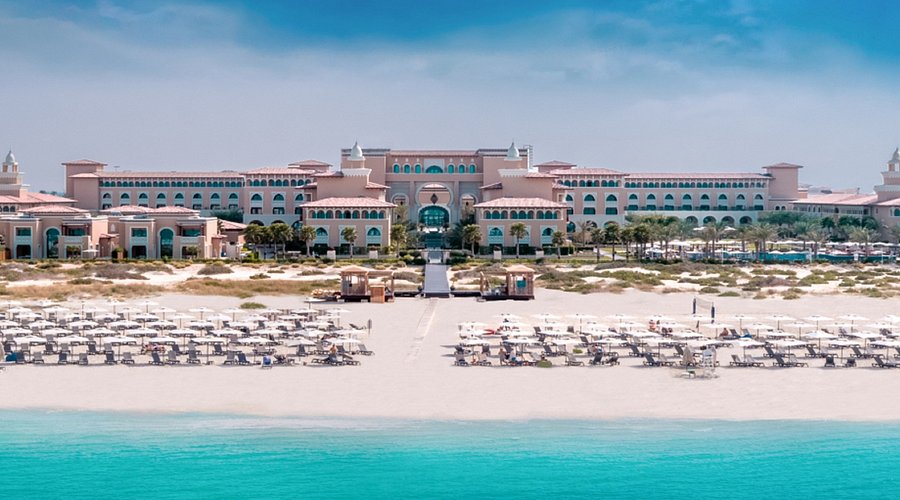
Saadiyat Island is the purest expression of the Quiet Years strategy. Its combination of cultural district scarcity, waterfront supply constraints, and a 2028–2029 delivery peak means 2026 buyers are entering at the point of maximum appreciation potential. Only 8% of Abu Dhabi’s 2025–2026 new supply offers beachfront or waterfront access, and Saadiyat’s beachfront land bank is effectively exhausted. Louvre Abu Dhabi, the upcoming Guggenheim, and Zayed National Museum create a permanent cultural premium that no inland project can replicate.
H1 2025 saw Saadiyat Island deliver 16.5% annual capital growth, with villa transactions exceeding AED 6.3 billion. The Mandarin Oriental Residences on Saadiyat, announced in April 2025, has pencilled 2028 handovers at prices that validate the appreciation trajectory. Entering in 2026 captures the full 2026–2028 pre-handover pricing escalation on top of already-strong market fundamentals.
Yas Island — Strong Runway to 2028
Yas Island’s supply clock is ticking faster than Saadiyat’s, but the 2026 window remains compelling. The Disneyland Abu Dhabi opening — confirmed for construction alongside the existing Ferrari World, Warner Bros. World, and Yas Waterworld ecosystem — is a generational demand catalyst. Yas Island properties are already projecting 30% capital appreciation by 2027, driven by this single upcoming anchor. Apartment rents recorded 25% growth in Q3 2025 — the fastest in Abu Dhabi.
Prelaunch buyers entering at 2026 launch prices — studios from AED 980,000 and 1-bedrooms from AED 1.3–1.7 million — are positioned to ride the Disneyland demand wave to handover in 2028–2030. The Waldorf Astoria Residences on Yas Island, which sold all 133 units in under 24 hours, generating AED 850 million, illustrates just how rapidly high-quality supply at this address is absorbed.
Al Reem Island — Closing Window, Still Viable
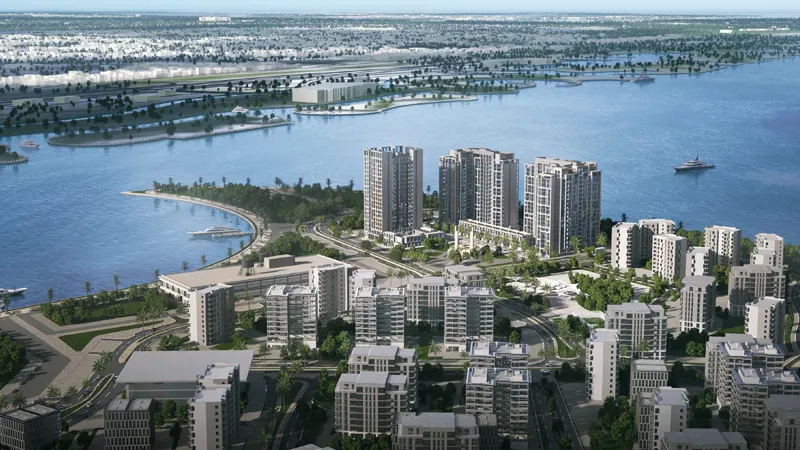
Al Reem Island is Abu Dhabi’s most active residential market by transaction volume, which means its quiet years window is narrowing faster than Saadiyat or Yas. However, 2026 still offers a viable entry point — particularly in the ADGM-adjacent financial district corridor where 40,000+ professionals create structural occupancy demand that is independent of leisure or tourism cycles.
Studios and 1-bedrooms on Al Reem Island currently deliver rental yields up to 8.69% — among the highest in Abu Dhabi’s waterfront segment. With a 2027–2029 delivery peak, 2026 buyers still capture 1–2 years of pre-wave appreciation before the full pipeline arrives. The key is selecting ADGM-linked and waterfront-adjacent units that maintain a location premium regardless of broader island supply volumes.
Read the detailed investment case for Al Reem Island’s ADGM integration and corporate tenant demand:
Al Reem Island 2026: Financial District Waterfront Living & ADGM Benefits Explained
4. The Appreciation Runway: 2026 Entry vs Waiting Until 2028
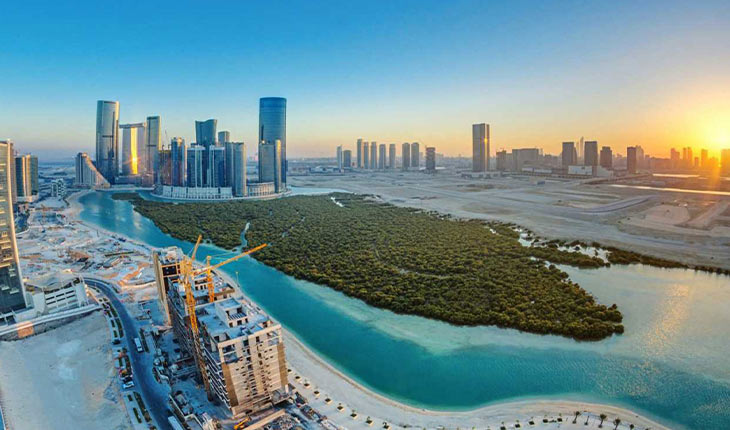
The core argument for the Quiet Years strategy is mathematical. The table below models projected returns for 2026 vs 2028 prelaunch entry across Abu Dhabi’s five primary investment zones, using conservative analyst consensus growth rates and historical launch-to-handover appreciation patterns:
| Zone | 2026 Launch Price | Est. 2028 Price | Est. 2030 Price | Gain: 2026 Entry | Gain: 2028 Entry |
| Saadiyat (1BR apt) | AED 2.2M | AED 2.8–3.0M | AED 3.2–3.6M | +45–64% | +15–20% |
| Yas Island (1BR apt) | AED 980K–1.5M | AED 1.3–1.9M | AED 1.6–2.2M | +33–47% | +10–16% |
| Al Reem (1BR apt) | AED 1.2–1.8M | AED 1.5–2.1M | AED 1.7–2.4M | +25–33% | +8–14% |
| Zayed City (1BR) | AED 700K–1.1M | AED 850K–1.3M | AED 1.0–1.5M | +25–36% | +10–15% |
| Al Reef (Studio) | AED 380K–500K | AED 460K–620K | AED 530K–700K | +30–40% | +8–13% |
Appreciation projections based on analyst consensus using the Q3 2025 trajectory extrapolated through respective delivery dates. Not a guarantee of future returns.
The spread between a 2026 and a 2028 entry is not marginal — it is generational for some zones. On Saadiyat Island, a 2026 prelaunch buyer targeting a 2030 exit is looking at 45–64% total capital appreciation, while a 2028 buyer on the same project captures only 15–20%. That 30–45 percentage point gap, on an AED 2.2M Saadiyat 1-bedroom, represents AED 660,000–AED 990,000 in unrealised profit left on the table by waiting.
5. Why Abu Dhabi’s Delivery Wave Won’t Crash the Market
A legitimate question: if 21,400 units are coming in 2028, why won’t that crash prices the way Dubai’s 70,537-unit 2027 pipeline risks doing in mid-market zones? The answer lies in four structural differences unique to Abu Dhabi’s real estate model
- Population absorption rate: Abu Dhabi’s population is growing at 7.5% annually — adding roughly 300,000 residents per year — far outpacing the 12,400–21,400 annual unit pipeline.
- Regulated escrow and staggered delivery: Abu Dhabi developers are legally required to register all off-plan sales in escrow. Cavendish Maxwell notes that actual deliveries consistently trail projected pipeline figures, meaning the 21,400-unit 2028 forecast will realistically deliver significantly fewer units.
- Freehold zone supply segregation: The investable freehold market — Saadiyat, Yas, Al Reem, Al Raha — represents only a fraction of emirate-wide supply. Non-freehold inland deliveries do not compete directly with waterfront, cultural district, or entertainment-anchored freehold products.
- Infrastructure demand pull: Every unit delivered on Yas Island from 2028 to 2030 will arrive alongside Disneyland Abu Dhabi. Every Saadiyat delivery lands next to the Guggenheim and Zayed National Museum. These are not generic apartments — they are infrastructure-anchored assets where demand grows with supply.
For a full breakdown of Abu Dhabi’s top-performing yield zones for the next investment cycle:
Abu Dhabi’s Top 10 ROI Hotspots: 8.5%+ Yields Mapped by Location
6. Executing the Quiet Years Strategy: A Practical Framework
The Quiet Years strategy is only as good as the execution behind it. Below is the investor action matrix that maps each strategy type to the optimal zone, timeline, and expected return profile in the 2026–2030 window:
| Strategy Type | Zone | 2026 Entry Price | Target Hold | Proj. Total Return | Risk Level |
| Yield + Flip (2030) | Al Reem / Yas | AED 980K–1.8M | 2026–2030 | 35–50% cap + 7–9% yield | Low–Medium |
| Capital Appreciation Pure | Saadiyat Island | AED 2.2M–5M+ | 2026–2030+ | 45–65% appreciation | Low |
| Buy-to-Let (long hold) | Al Reef / Masdar | AED 380K–800K | 2026–2032+ | 8–9% yield + 30–40% cap | Very Low |
| Golden Visa + Yield | Yas / Al Reem | AED 2M+ | 2026–2031+ | 6–8% yield + visa + cap | Low |
| Post-Handover Cash Flow | Zayed City / Masdar | AED 700K–1.4M | 2026–2029+ | 7–8.5% yield + 25% cap | Low–Medium |
Projected returns combine gross rental yield over the hold period with capital appreciation at handover. All figures are projections based on 2025 data and analyst consensus.
The most powerful variant of the Quiet Years strategy is the yield-plus-flip model on Yas Island or Al Reem Island: buy at 2026 prelaunch pricing, collect 7–9% gross rental yield from handover, and exit at 2029–2030 peak pricing for a combined total return of 35–50% on the invested capital — on a property secured with as little as a 10% down payment in a regulated escrow-protected off-plan structure.
To understand how Abu Dhabi’s property ownership laws protect off-plan investors and enable full repatriation of capital:
Abu Dhabi Property Laws and Investment Opportunities: The Complete Investor Guide
7. The Three Risks — and Why They Are Manageable in 2026
Risk 1: Developer Delay
Abu Dhabi’s mandatory escrow framework and Abu Dhabi Real Estate Centre registration protect buyers from developer default. Handover delays, while possible, do not erode the appreciation runway — they extend it. A 2026 buyer targeting a Q4 2028 handover that slips to Q2 2029 simply holds longer and exits into a more mature market at a potentially higher price.
Risk 2: Market Oversaturation Post-2030
This risk is real for investors holding past 2031–2032. The Quiet Years strategy is specifically designed for a 2026–2030 investment horizon. Exits timed to handover + 1–2 years allow investors to capture the peak post-delivery premium before the next supply cycle moderates growth. Long-hold investors should focus on Saadiyat Island’s culturally scarce product, where supply constraints are permanent.
Risk 3: Interest Rate and Global Liquidity Shifts
Abu Dhabi’s AED is USD-pegged, eliminating currency risk for dollar-denominated investors. The emirate’s zero income tax and zero capital gains tax environment also insulates returns from the fiscal headwinds affecting London, Singapore, and New York real estate. With post-handover payment plans extending to 5 years available on 2026 launches, capital commitment is staged — reducing exposure to any single rate environment.
For expat buyers wanting to understand the full legal and financial ownership framework before committing:
Can Expats Buy Property in Abu Dhabi? Complete Ownership & Wealth Guide 2025
⏱️ The Quiet Years Window Is Open — But Not for Long
Abu Dhabi’s 2026 prelaunch entry prices will not exist in 2027. Fill in the investor enquiry form at prelaunch.ae and our specialist team will send you a curated shortlist of Quiet Years opportunities across Saadiyat Island, Yas Island, and Al Reem Island — matched to your budget, yield target, and hold period.
📞 (+971) 52 341 7272 | ✉️ [email protected]
→ Secure Your 2026 Prelaunch Position at prelaunch.ae
Frequently Asked Questions (FAQs)
Q1. What is the ‘Quiet Years’ strategy in Abu Dhabi real estate?
The Quiet Years strategy refers to entering the Abu Dhabi off-plan market in 2026 — during the transitional low-supply window between the 2025 demand surge and the 2028–2030 delivery wave of 21,400+ units per year. Buying at 2026 prelaunch prices gives investors a 4–5 year appreciation runway before the delivery surge arrives to moderate price growth.
Q2. How many units are expected in Abu Dhabi’s 2028–2030 delivery wave?
According to Cavendish Maxwell, Abu Dhabi has approximately 21,400 units projected for 2028 (up from 12,400 in 2027), rising further through 2029–2030 as the full 2024–2026 launch pipeline matures. Actual deliveries will likely fall short of projections, based on historical trends — but the supply acceleration is real and material.
Q3. Which Abu Dhabi zone offers the best appreciation runway from a 2026 entry?
Saadiyat Island offers the longest and strongest appreciation runway, with projected 45–64% total capital appreciation for 2026 prelaunch buyers targeting a 2029–2030 exit, driven by cultural district scarcity and limited beachfront supply. Yas Island follows closely at 33–47%, powered by the Disneyland Abu Dhabi catalyst. Al Reem Island offers solid 25–33% appreciation with the advantage of immediate rental income from corporate tenants.
Q4. What is the minimum investment to enter Abu Dhabi off-plan in 2026?
The entry point varies by zone. Al Reef and Masdar City offer studios from AED 380,000 with 10% down payments, making them accessible to first-time investors. Al Reem Island 1-bedrooms start from AED 1.2M, Yas Island from AED 980,000, and Saadiyat Island from AED 2.2M. The Golden Visa threshold at AED 2M aligns conveniently with Yas and Al Reem Island entry pricing for 2-bedroom units.
Q5. Is 2026 already too late to enter Abu Dhabi off-plan?
No. 2026 remains a strategically sound entry window — but it is the last one before the supply clock turns. 2027 buyers will face higher launch prices, reduced developer incentives, and a shorter appreciation runway. 2028 buyers will enter after the delivery wave begins, capturing only residual upside. The Quiet Years window is open in 2026, but it will not be open indefinitely.