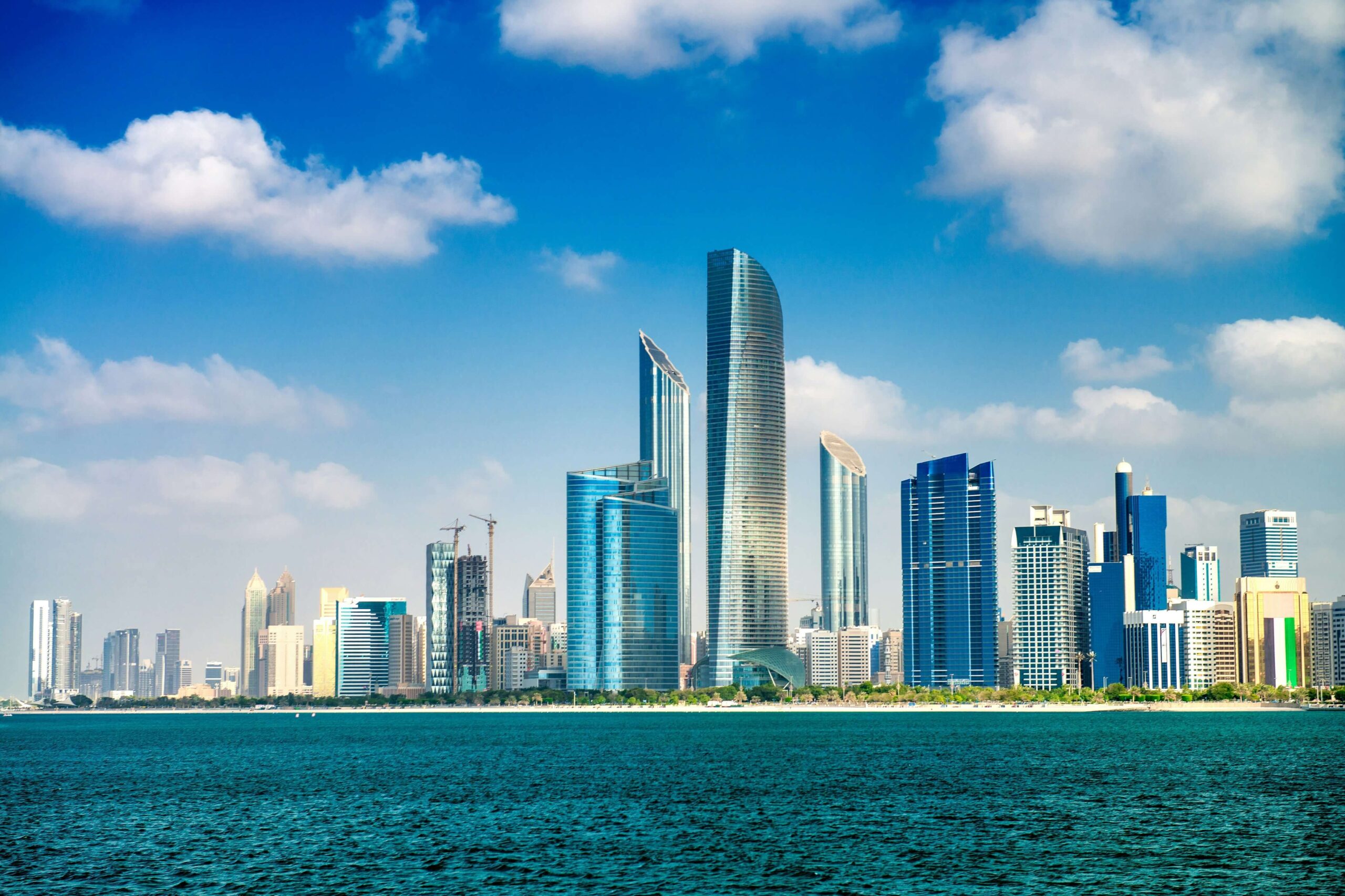
The Abu Dhabi office market in numbers — JLL, ValuStrat, Cushman & Wakefield, Q1 2026: Prime vacancy: 0.9%. Grade A vacancy: 1.5% (heading to 1.0% by 2028). City-wide vacancy: 2.3%. ADGM occupancy: 95%+. Grade A CBD rents: +35% YoY in late 2025. Forecast 2026 rental growth: +20%. New supply entering 2026: 4,200 sqm on a 3.99 million sqm total stock base. One Maryah Place — the next major delivery — not arriving until late 2027. This is not a recovering market. This is a market in structural supply deficit.
When headlines report conflict, equity declines, and geopolitical uncertainty, the instinct is to scan residential transaction data for signs of distress. That is a reasonable instinct — but in Abu Dhabi’s case, it leads investors to look at the second-most important scoreboard in the market. The most important scoreboard is the one that determines whether the businesses which employ the people who rent and buy those residential properties are still arriving, still expanding, and still competing furiously for a commodity that Abu Dhabi has almost entirely run out of: Grade A office space.
According to JLL’s Q1 2025 UAE Office Market report — the most comprehensive independent data available — Abu Dhabi’s Prime office vacancy rate stood at 0.9% and Grade A vacancy at 1.5%. JLL’s February 2026 analysis projects those figures tightening further to 0.1% Prime and 1.0% Grade A by 2028. With only 4,200 square metres of new Grade A office space scheduled to enter Abu Dhabi’s market in the entirety of 2026 — against a total existing stock of 3.99 million square metres — the arithmetic of Abu Dhabi’s office market is the most direct rebuttal of the panic narrative available: businesses are not leaving. They are fighting for space to grow.
The Near-Historic-Low Vacancy: What 0.9% Really Means
In professional commercial real estate analytics, a Prime office vacancy below 2% defines a critically undersupplied market — one in which tenants do not choose between options; they accept what is available, when it becomes available, at whatever price the landlord names. Abu Dhabi’s 0.9% Prime vacancy as of Q1 2025 is not approaching that threshold. It is well inside it — placing Abu Dhabi in the company of the world’s most constrained financial districts by pure vacancy measure. For context, New York’s Midtown Manhattan carries 17–22% overall office vacancy, London’s City district runs at 10–14%, and even Singapore — one of Asia’s tightest office markets — operates at 4–6% prime vacancy. Abu Dhabi’s 0.9% Prime figure makes it structurally tighter than virtually any comparable financial centre in the world.
David Short, Associate Director at Cushman & Wakefield Core, captured the operational reality with precision: “To find space at the moment is very challenging. When companies identify the space they like, they often have to move fast or risk losing it.” This is not the language of a market in distress. It is the language of a market where demand so comprehensively outstrips supply that the normal deliberation timeline — months for assessing long-term leases in any other global city — has compressed to days in Abu Dhabi. Companies are signing binding multi-year lease commitments, often for their most significant operational infrastructure decisions, within one week of identifying suitable space. That is extraordinary market tightness — and it does not occur in an economy that the businesses doing the leasing consider fragile or transitional.
Abu Dhabi Office Market Dashboard: Vacancy, Rents, and Supply Outlook
Sources: JLL UAE Office Market Q1 2025 | JLL MEA Outlook February 2026 | ValuStrat Abu Dhabi Outlook 2026 | Cavendish Maxwell Q1 2026
| Office Segment | Q1 2025 Vacancy | Forecast 2028 Vacancy | Key Dynamic |
|---|---|---|---|
| Prime / ADGM | 0.9% | 0.1% (JLL forecast) | Hedge funds, sovereign wealth, and global banks operate in days, not months, to secure space |
| Grade A (CBD) | 1.5% | 1.0% (JLL forecast) | Rents +35% YoY in late 2025; companies having to decide leases within one week |
| City-Wide Average | 2.3% | Tightening further | Only 4,200 sqm of new supply entering 2026 — total stock to reach 3.99M sqm |
| Office Rent Forecast 2026 | — | +20% YoY (ValuStrat) | CBD rents already +35% in late 2025; further +20% expected in 2026 as supply deficit deepens |
| Office Price Forecast 2026 | — | +10% YoY (ValuStrat) | Capital value following rental growth; institutional-grade assets commanding premium multiples |
| Projected Occupancy 2026 | — | 93% overall; 95%+ prime (ADGM) | Landlord-favourable market entrenched until One Maryah Place arrives in late 2027 |
| New Supply to 2028 | — | +7.9% total stock (JLL) | Among the most constrained office supply pipelines of any global financial hub |
The 4,200 sqm of new supply entering 2026 on a total stock base of 3.99 million sqm represents a new supply ratio of 0.1% — effectively zero. For comparison, a market that was functioning normally might expect 2–4% of its total stock to refresh annually. Abu Dhabi’s office market will receive one-fortieth of that normal refresh rate in 2026 alone. The next meaningful supply event — One Maryah Place — is not delivering until late 2027. This means the entire landlord-dominant, competition-for-space dynamic continues for at least 18–24 months from today, regardless of short-term geopolitical sentiment movements. As Haider Tuaima, Managing Director & Head of Real Estate Research at ValuStrat, confirmed: “Competitive pressure for Grade A stock is likely to remain elevated throughout the year.”
The Flight to Quality: What It Means and Why It Reinforces the Confidence Story
The phrase “flight to quality” appears in every major analysis of the Abu Dhabi office market in 2026 — ValuStrat, JLL, Cushman & Wakefield, and Cavendish Maxwell all use it. What it describes is a specific occupier behaviour: businesses that previously tolerated Grade B or Grade C space are actively relocating to Grade A or Prime buildings, even at significantly higher rent levels. The reason is not aesthetics — it is talent retention and attraction. In a competitive labour market where global professionals havea genuine choice about where they base themselves, the quality of the workplace environment directly affects the ability to recruit and retain the people companies need to grow.
The JLL MEA Occupier Survey 2026 confirmed this structural shift empirically: a majority of UAE-based occupiers expect to expand their office footprint, with investment shifting from size to quality, efficiency, and employee experience. In practical terms, this means companies that previously occupied 1,000 sqm of Grade B space are seeking 800 sqm of Grade A space — a smaller footprint but dramatically higher quality. The net effect on Abu Dhabi’s already-critical vacancy levels is a simultaneous compression of Grade A availability and a rise in Grade B vacancy — a bifurcation that is creating a landlord’s paradise in premium segments and a tenant’s nightmare for anyone seeking quality at reasonable prices.
For residential investors, the flight to quality story carries a specific implication: the companies executing Grade A upgrades are exactly the employers whose staff drive Abu Dhabi’s premium residential demand. A hedge fund manager at ADGM who has just committed to a five-year Grade A lease at AED 3,100 per sqm is not contemplating a temporary UAE presence. They are embedding their business — and their team’s housing requirements — into Abu Dhabi for the medium term. Their staff need homes in Saadiyat, Yas Island, and Al Raha Beach — the exact communities where supply is most constrained and capital appreciation forecasts are strongest.
The Commercial-to-Residential Demand Bridge: Why One Market Funds the Other
The Abu Dhabi office market and the Abu Dhabi residential market are not separate stories. They are the same story told from two different physical addresses. Every business that expands in Abu Dhabi’s commercial market — every hedge fund that takes a new ADGM suite, every technology firm that opens an Abu Dhabi hub, every multinational that consolidates its regional headquarters away from markets facing structural challenges — brings people with it. Those people need homes. And the timeline of their housing need is immediate and non-negotiable in a way that investor demand never quite is:
| Commercial Activity | What It Creates in the Office Market | What It Creates in the Residential Market |
|---|---|---|
| Hedge fund expansion to Abu Dhabi | ADGM pushed to 95%+ occupancy; expansion to Al Reem Island approved (10x space) | Senior fund managers and analysts require premium residential: Saadiyat, Yas, Al Raha — demand for AED 5M–20M homes |
| New international business entry | Companies leasing space within days — no buffer period; Grade A vacancy 1.5% | Relocated staff require immediate housing; corporate relocation packages create prime residential demand with short absorption timelines |
| Existing occupiers expanding | New headcount approved; teams growing in Abu Dhabi rather than home-market HQs | Employee housing demand: mid-market apartments in Al Reem, Al Reef, Masdar City — the 22% demand surplus segment |
| ADGM licence migration (Al Reem) | Tenants ordered to obtain ADGM licence or vacate; Al Reem becoming financial district annex | Al Reem Island residential demand amplified by commercial district designation — offices and residences converging in the same location |
| Microsoft $7.9B UAE commitment | Tech office infrastructure demand across Dubai and Abu Dhabi; Masdar City tech corridor tightening | Tech workforce — engineers, product managers, data scientists — require modern mid-market homes near Masdar City and Al Reem at 6–8% yield brackets |
| UAE Central Bank rate cut to 3.65% | Reduced corporate borrowing cost; M&A activity accelerating in ADGM | Improved mortgage affordability for mid-market buyers in Al Reef and Masdar City — first-time buyer market expanding simultaneously with corporate demand |
Sources: Arab News | Cushman & Wakefield | JLL MEA Occupier Survey 2026 | ValuStrat | UAE Central Bank | Cavendish Maxwell — Q1 2026
The UAE Central Bank’s rate reduction to 3.65% in December 2025 amplifies this dynamic on both sides of the equation. Lower borrowing costs reduce corporate expansion costs — deciding to open or grow an Abu Dhabi office financially more attractive — while simultaneously improving mortgage affordability for the mid-market residential buyers that companies’ mid-tier employees represent. The rate cut creates a simultaneous commercial and residential demand stimulus that feeds through into both markets in the same 6–12 month window.
Abu Dhabi vs Global Peers: The Office Vacancy Comparison That Changes the Story
The Abu Dhabi office market does not look extraordinary in isolation. It looks extraordinary when placed against comparable global financial centres — particularly those that have been competing with Abu Dhabi for the same pool of international business and capital:
| City / Market | Prime Office Vacancy | Grade A Vacancy | Office Rent Trend (2025–26) | Post-Pandemic Trajectory |
|---|---|---|---|---|
| Abu Dhabi (ADGM / CBD) | 0.9–1.5% | 1.5% (heading toward 1.0%) | +35% YoY late 2025; +20% forecast 2026 | Structural undersupply; landlord-dominant; flight to quality intensifying |
| Dubai (DIFC / Business Bay) | 0.2–0.3% | 3.4% Grade A | +17.3% prime YoY (Q2 2025) | City-wide 7.1% vacancy; Grade B/C surplus — quality split widening |
| London (City / Canary Wharf) | 10–14% | 6–8% Grade A | Moderate; hybrid work pressure | Structural oversupply post-pandemic; return-to-office slower than Gulf |
| New York (Midtown Manhattan) | 17–22% | 10–14% Grade A | Recovering slowly | Remote work legacy; significant sublet overhang; no comparable demand surge |
| Singapore (CBD) | 4–6% | 3–5% Grade A | +5–8% YoY | Moderate tightness; tech-driven; limited new supply but nowhere near Abu Dhabi scarcity |
| Hong Kong (Central) | 10–14% | 8–12% Grade A | Softening; outflows ongoing | Capital and business outflow since 2020; structural weakening vs Gulf |
Sources: JLL Global Office Market Report | CBRE Global Office Outlook | Cushman & Wakefield Office Trends 2025–2026 | Abu Dhabi: JLL UAE Q1 2025
The comparison with London and New York is the most instructive for international investors evaluating relative market confidence. London’s City market at 10–14% vacancy and New York’s Midtown at 17–22% are both dealing with a structural post-pandemic excess of office space that is keeping rents suppressed, reducing the financial incentive for businesses to maintain large presences in those cities, and in some cases driving capital and talent reallocation toward markets like Abu Dhabi where the employment opportunity is more concentrated. The structural divergence between Western office vacancy surplus and Gulf office vacancy deficit is not a cyclical blip. It is the consequence of a decade of deliberate investment in Abu Dhabi as a global financial and technology hub — and it is now expressing itself in the most direct possible way: companies that cannot find Grade A space in Abu Dhabi are considering building their own towers.
The ADGM Expansion: When the Most Prestigious Address in the Gulf Runs Out of Space
The Abu Dhabi Global Market (ADGM) is the clearest single expression of what near-zero vacancy looks like at the most prestigious level of the market. The four towers on Al Maryah Island that constitute ADGM’s current footprint are now operating at above 95% occupancy — effectively full. The government’s response was not to manage demand downward. It was to expand ADGM’s jurisdiction to Al Reem Island, creating a financial district ten times larger than the current footprint, stretching 14.4 million square metres and positioning Abu Dhabi to build one of the largest financial districts in the world.
ADGM’s occupancy surge was driven specifically by hedge funds — the most capital-intensive and talent-demanding operators in the financial services ecosystem. Hedge funds are attracted to Abu Dhabi by the proximity of Abu Dhabi’s sovereign wealth funds — the largest single pool of investable capital in the Gulf — combined with zero income tax on fund manager compensation and a world-class quality of life for the professionals who run them. The Arab News report confirmed that tenancy levels “have exceeded 95%” and that existing ADGM tenants face the unusual reality of competitors seeking their space before they have even decided whether to renew. For residential investors in Al Reem Island — now being designated as the ADGM expansion zone — this translates directly into a structural commercial demand anchor for the residential market that money cannot buy anywhere else in the city.
Understanding what the ADGM expansion means for Al Reem Island’s residential market — both current pricing and forward trajectory — requires reading Abu Dhabi’s new property law reforms in parallel. Our guide to Abu Dhabi’s real estate revolution: the new property laws and investment opportunities post-reform explains precisely how the August 2025 regulatory changes have expanded foreign ownership rights and escrow protections — creating the legal framework that enables international investors to capture the Al Reem Island appreciation story as the ADGM expansion physically reshapes the district.
The Rent Progression: +35% and Climbing Toward +20% More
The Abu Dhabi office rent progression since 2024 is one of the fastest recorded in any global market in the post-pandemic era. Understanding the quarterly progression explains why 2026’s forecast +20% additional growth is not an aggressive projection — it is a conservative extrapolation of a trend that has been accelerating for two consecutive years:
| Period | Prime Rents (AED/sqm) | Grade A Rents (AED/sqm) | YoY Change | Driver |
|---|---|---|---|---|
| Q1 2024 | ~AED 2,200 | ~AED 1,600 | +6.6% prime; +3.4% Grade A | Hedge fund wave begins; ADGM hits 91.3% occupancy; early scarcity signals |
| Q2 2025 | AED 2,905 | AED 1,950 (est.) | +31.5% prime YoY | ADGM surpasses 95%; expansion to Al Reem announced; supply completely exhausted in the prime segment |
| Q3–Q4 2025 | AED 3 100+ (est.) | Climbing | +35% Grade A CBD YoY late 2025 | Companies are mandated to decide within 1 week or lose space; the subletting market near-zero; landlords rejecting renewal requests in favour of new, higher rents |
| 2026 Forecast | +10% price growth | +20% rental growth | Accelerating above 2025 | Only 4,200 sqm new supply 2026; One Maryah Place not delivering until late 2027; demand-supply gap widens further before any relief |
Sources: JLL UAE Office Q1 2025 | Arab News 2024 | ValuStrat Abu Dhabi 2026 Outlook | Cavendish Maxwell | Khaleej Times January 2026
The compounding rent growth — from +6.6% Prime in Q1 2024 to +35% Grade A in late 2025 to a forecast +20% in 2026 — is not a speculative prediction. It is the mechanical consequence of a landlord market with near-zero vacancy, minimal new supply until 2027, and a tenant base that is growing faster than any comparable financial centre. Tenants facing lease renewals in this environment have no leverage — the landlord knows that the waiting list of replacement tenants is longer than the notice period. This dynamic will not change until One Maryah Place delivers in late 2027 — giving landlords an uninterrupted 18–24 month window of pricing power from today’s date.
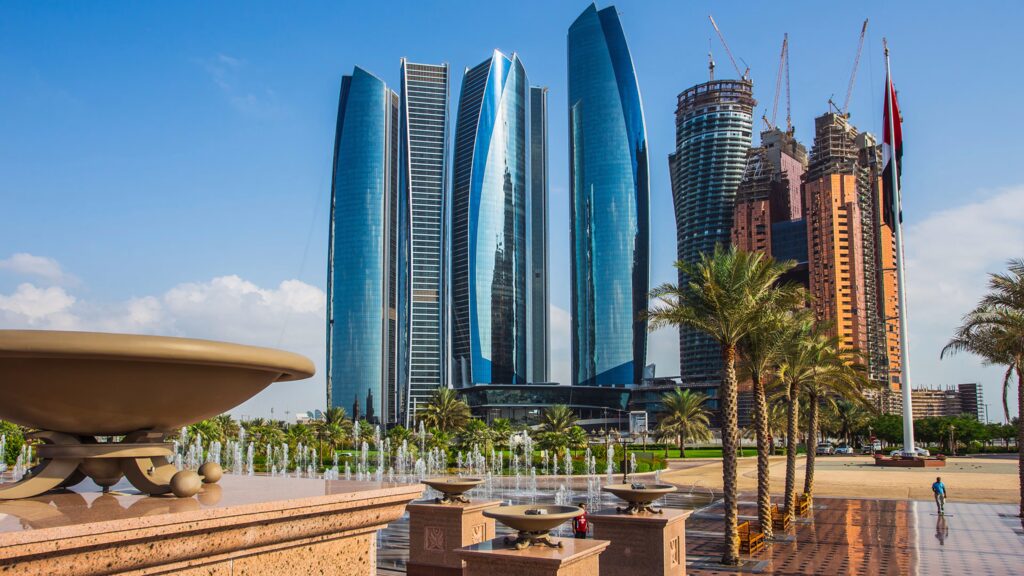
Why Tight Offices Keep Residential Prices Moving -The Mechanism
The link between commercial office market tightness and residential market performance is one of the most consistent patterns in urban real estate economics. It operates through three primary mechanisms, all of which are active in Abu Dhabi right now:
- The Employment Multiplier. Every Grade A office worker in Abu Dhabi requires housing. Every executive in ADGM supports 3–5 additional service sector employees — cleaning staff, restaurant workers, drivers, support functions — who also require housing. When office demand is structurally driven by hedge funds, multinationals, and government-linked entities, the residential demand it generates is equally structural, not speculative.
- The Confidence Transfer. When the world’s most sophisticated institutional tenants — hedge funds, sovereign wealth vehicles, global banks — make five-year lease commitments in Abu Dhabi, they are performing the most thorough due diligence available on whether the city is a viable, stable, and growing long-term business environment. Their decision to lease is a stronger confidence signal than any public statement or analyst report. And confidence transfers from commercial to residential: if a major global financial institution is committing its operations to Abu Dhabi for the next decade, residential buyers are making a proportionally lower-risk decision, committing to a 3–5 year off-plan investment in the same city.
- The Wage-Rental Anchor. The income levels of Grade A office workers in ADGM and the CBD set the ceiling for prime residential rents in the communities where they choose to live. As office workers’ compensation rises with talent competition in an undersupplied labour market — which is what zero office vacancy inevitably creates — the maximum affordable rent for prime residential communities rises in parallel. This is why Saadiyat Island’s rents command a 30% premium above inland districts, and why that premium is widening, not narrowing, as office-sector compensation increases.
Investors who want to understand precisely where Abu Dhabi’s office-driven residential demand is concentrated — and which off-plan projects are best positioned to capture it — our full guide to the latest off-plan projects in Abu Dhabi across Saadiyat, Yas, Al Reem, and Al Raha in 2025 provides the complete project-by-project breakdown with location-specific demand analysis for each district.
The Industrial Corollary: Logistics and Warehousing Reinforce the Same Signal
The Abu Dhabi office market’s tightness is not an isolated commercial real estate phenomenon. The same supply-demand dynamic plays out simultaneously in the industrial and logistics sector — specifically in Khalifa Economic Zones Abu Dhabi (KEZAD), which JLL identifies as one of the strongest-performing industrial assets in the UAE. Near-full occupancy, strong rental growth, and institutional capital actively seeking KEZAD exposure reflect the same structural undersupply that characterises the office market — and collectively create a commercial real estate confidence picture that spans both the knowledge economy (office) and the physical economy (logistics).
The JLL MEA report noted that Abu Dhabi’s industrial sector benefits from spillover demand extending from Dubai as JAFZA, Dubai South, and DIP reach near-capacity and logistics operators seek alternative UAE locations. This means Abu Dhabi’s commercial real estate confidence signal is being reinforced from Dubai’s own supply pressure — not just from organic Abu Dhabi-side demand. The emirate is becoming the overflow valve for the UAE’s entire commercial ecosystem, drawing both knowledge-economy operators from ADGM and logistics operators from Dubai’s saturated industrial districts. For investors who want to understand the full Abu Dhabi vs Dubai investment comparison — including which emirate offers better returns at this stage of each market’s cycle — our detailed analysis of Dubai vs Abu Dhabi off-plan ROI: which emirate offers better returns in 2025 and 2026 provides the head-to-head framework across residential, commercial, and yield metrics.
The Conflict-Period Test: Did Abu Dhabi’s Commercial Market Flinch?
The February 28, 2026, conflict events provide the most direct test of whether Abu Dhabi’s commercial market confidence is structural or sentiment-dependent. The evidence from the first two weeks of conflict is clear: no major lease cancellations were reported from ADGM or the CBD. No global financial institution publicly announced a revision of its Abu Dhabi operational strategy. The residential market recorded over AED 1 billion in weekly transactions during the conflict week. And critically, JLL’s MEA Occupier Survey 2026 — published in February 2026 and covering the period immediately preceding and including the conflict outbreak — maintained its finding that a majority of UAE-based occupiers expect to expand their office footprint in 2026.
This is not surprising to anyone who understands why businesses locate in Abu Dhabi. Sovereign wealth funds do not pause because of regional military exchanges. The Abu Dhabi Investment Authority, Mubadala, and ADQ — collectively managing assets estimated above USD 1.5 trillion — are permanently headquartered in Abu Dhabi and require their financial service providers and advisers to be proximate. That demand does not respond to quarterly news cycles. It responds to structural economic strategy — and Abu Dhabi’s structural strategy has not changed. As our in-depth look at why investors are increasingly viewing Abu Dhabi and Ras Al Khaimah as the next frontier confirms, the case for the capital’s disciplined market with quality assets is outlined in our guide to why 2026 is the year to invest in Ras Al Khaimah’s limited coastal supply alongside Abu Dhabi’s off-plan boom.
When Businesses Cannot Find Office Space, the City They Are Refusing to Leave Has Already Given Its Verdict
Prime office vacancy at 0.9%. Grade A CBD rents up 35% year-on-year. Companies are making five-year lease commitments within one week of finding space. Hedge funds are competing for suites in a building that is already full. A government is expanding its financial district tenfold because the existing one has run out of room to accommodate demand. The Abu Dhabi office market in 2026 is not sending a cautious signal. It is sending the most unambiguous structural confidence signal available in any real estate asset class: the businesses that employ the people who occupy this city’s residential market are committing, expanding, and paying more for the privilege of staying.
This is not a market that benefits from panic. It is a market that rewards investors who read the commercial data alongside the residential data — and who understand that 0.9% Prime office vacancy is the most powerful predictor of residential demand resilience that any market can produce. The pre-launch investor who secures a Saadiyat, Al Reem, or Yas Island off-plan asset today is not betting on sentiment recovering. They are betting on the same businesses that cannot leave Abu Dhabi, needing somewhere for their people to live. That bet has been paying out at +15% capital growth and 6–9% rental yields for two consecutive years. The office vacancy data says it will continue.
Fill out the enquiry form on prelaunch.ae today and let our specialists connect you with the vetted Abu Dhabi pre-launch opportunities best positioned to capture commercial-sector-driven residential demand — in the communities where office tightness and residential scarcity converge most powerfully.
📞 +971 52 341 7272
Frequently Asked Questions
Q1. What is Abu Dhabi’s current office vacancy rate in 2026?
According to JLL’s Q1 2025 UAE Office Market report — the most recent comprehensive data available — Abu Dhabi’s city-wide office vacancy is 2.3%, with Prime vacancy at 0.9% and Grade A vacancy at 1.5%. JLL’s February 2026 analysis forecasts those figures tightening further to 0.1% Prime and 1.0% Grade A by 2028. With only 4,200 sqm of new supply scheduled for 2026, significant relief is not expected before One Maryah Place delivers in late 2027.
Q2. Why are Abu Dhabi office rents rising so sharply in 2025 and 2026?
The combination of near-zero vacancy, minimal new supply, and accelerating demand from hedge funds, international businesses, and expanding existing occupiers has created a pure landlord’s market. Grade A CBD rents rose 35% year-on-year in late 2025, driven by the ADGM expansion dynamic and flight-to-quality relocation activity. ValuStrat forecasts a further 20% rental growth in 2026 — an acceleration, not a moderation — because the supply deficit deepens before it improves.
Q3. How does the Abu Dhabi office market signal affect residential property investors?
The commercial-to-residential demand bridge operates through three mechanisms: employment creation (office workers need homes), confidence transfer (institutional tenant commitments validate the market), and wage-rental anchoring (higher-paid office staff set the ceiling for prime residential rents). Tight offices mean more employed people, more competitive residential demand, and higher achievable rents — all of which directly support residential capital appreciation and yield levels.
Q4. What is ADGM, and why does its occupancy matter for residential investors?
The Abu Dhabi Global Market (ADGM) is the UAE capital’s premier financial free zone, housing hedge funds, sovereign wealth vehicles, global banks, and professional services firms on Al Maryah Island. With occupancy above 95% and the government expanding its jurisdiction tenfold to Al Reem Island, ADGM’s growth creates direct, sustained demand for premium and mid-market residential properties in Al Reem — the exact communities now designated as the financial district’s residential catchment area.
Q5. Is Abu Dhabi’s office market affected by the 2026 Iran conflict?
The available evidence indicates no material impact on commercial leasing commitments or business expansion plans. JLL’s MEA Occupier Survey 2026 — published at the time of the conflict — maintained that a majority of UAE occupiers expected to expand their Abu Dhabi office footprint in 2026. No major institutional tenant announced lease cancellations. The sovereign wealth fund ecosystem — which anchors ADGM demand — operates on multi-decade strategic timelines that do not respond to weeks of military activity.
Q6. How do I invest in Abu Dhabi’s residential market to capture the office-driven demand?
Focus on communities with direct commercial district proximity: Al Reem Island (ADGM expansion zone), Saadiyat Island (premium executive housing), and Yas Island (lifestyle + corporate relocation demand). All three combine disciplined residential supply with identifiable commercial demand anchors. Pre-launch entry into projects in these communities positions investors to capture both the capital appreciation from supply tightness and the rental yield from office-worker housing demand simultaneously.