Introduction: Dubai’s Real Estate Crossroads
As we approach 2025, Dubai’s property market continues to demonstrate remarkable resilience and growth, with total deal value reaching AED 306.3 billion in the first three quarters of 2024 alone – a staggering 36% increase from 2023. The city’s population has surpassed 3.8 million, reflecting a 5% year-on-year increase, while tourist arrivals have grown by 9% to 18.7 million overnight visitors. This explosive growth has created unprecedented opportunities for property investors, but it has also presented a significant dilemma: whether to invest in urban or suburban properties.
The convergence of technology integration, shifting demographics, and evolving lifestyle preferences has fundamentally transformed Dubai’s real estate landscape. For savvy investors, understanding these trends isn’t just beneficial — it’s essential for maximizing returns in one of the world’s most dynamic property markets.
The Urban Appeal: Dubai’s Concrete Jungle
- Current Urban Landscape
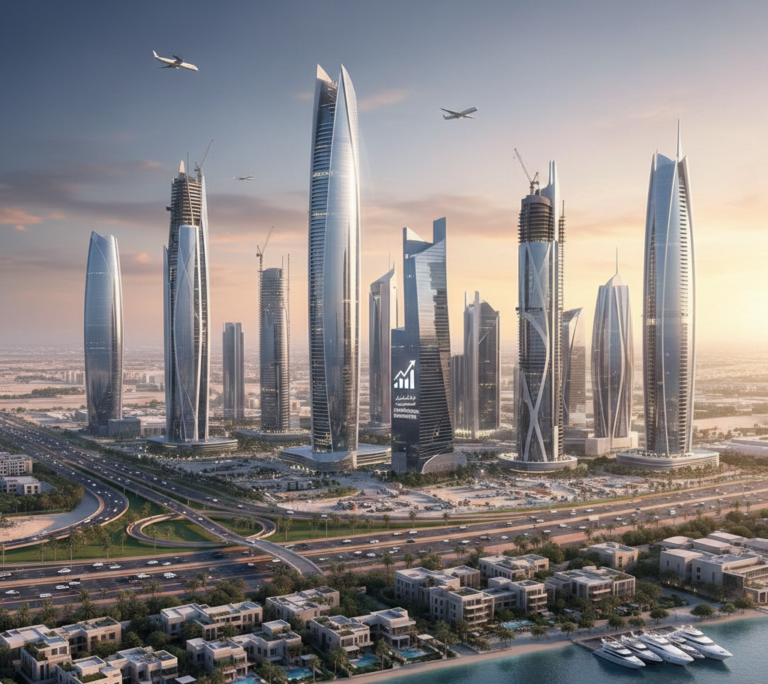
Urban living in Dubai continues to attract investors seeking premium returns in established corridors. Areas like Downtown Dubai, Dubai Marina, and Palm Jumeirah have traditionally commanded investor attention with their iconic skyline views, luxury amenities, and proximity to business hubs. The appeal is clear: urban properties generate an average of 5-9% rental yields, with prime locations often performing at the higher end of this spectrum.
The investment potential of urban centers remains strong, particularly for short-term rental strategies capitalizing on Dubai’s thriving tourism sector. The city’s tax-free environment — with no capital gains or annual property taxes — further enhances the attractiveness of urban investments.
- Technology Integration in Urban Spaces
Smart home technology has become increasingly standard in Dubai’s urban developments, with developers integrating IoT solutions, energy management systems, and advanced security features as selling points. Virtual Reality (VR) and Augmented Reality (AR) have revolutionized property viewings, allowing international investors to tour apartments remotely — a crucial advancement that has expanded Dubai’s investor pool globally.
Table: Urban vs. Suburban Investment Comparison
| Factor | Urban Areas | Suburban Areas |
|---|---|---|
| Average Rental Yield | 5-9% | 7%+ |
| Price Per Sq. Ft. (AED) | 2,000-3,000 | 1,100-1,400 |
| Target Tenant | Professionals, expats | Families, remote workers |
| Technology Adoption | High (smart homes, VR tours) | Growing (eco-tech, community apps) |
The Urban Challenge
Despite their appeal, urban investments face challenges, including higher entry costs, with premium apartments costing AED 2,000-3,000 per square foot. Additionally, inventory in prime urban locations faces constraints as available land for new development diminishes, potentially limiting supply and driving future prices, but also increasing competition for prime assets.
The Suburban Surge: Dubai’s Perimeter Growth
- Drivers of Suburban Migration
The shift toward suburban living represents one of the most significant real estate trends in Dubai for 2025. According to the Dubai Land Department, suburban communities saw villa and townhouse sales increase by 30% in the first half of 2024 compared to the previous year. This migration is driven by several factors, such as —
- Space and affordability: Suburban properties offer larger homes at significantly lower prices per square foot (typically AED 1,100-1,400 compared to urban premiums)
- Remote work flexibility: The sustained acceptance of remote work has untethered professionals from central business districts
- Family-friendly amenities: Master-planned communities with schools, parks, and recreational facilities
- Government initiatives: Long-term visas for retirees, remote workers, and investors have incentivized suburban settlement
- Emerging Suburban Hotspots
Several suburban communities have emerged as premier investment destinations —
- Dubai Hills Estate: Golf-course community with premium villas and townhouses
- Arabian Ranches: Established gated community with a strong track record
- Dubai South: Affordable options near Expo City and Al Maktoum International Airport
- Tilal Al Ghaf: Eco-friendly development with Crystal Lagoon centerpiece
- The Valley: Emaar’s master-planned community targeting family living
These areas offer rental yields exceeding 7% in some cases, combining consistent income with strong appreciation potential.
- Technology in Suburban Development
Contrary to assumptions, suburban developments are embracing technology differently but just as effectively as urban centers. Sustainable technology represents a key focus, with communities like Tilal Al Ghaf incorporating energy-efficient designs, solar panels, and water-saving systems. Community apps and integrated digital platforms provide residents with seamless access to services, while infrastructure technology, such as smart traffic management and high-speed internet connectivity, ensures suburban living doesn’t mean sacrificing convenience.
Technology: The Great Equalizer in Real Estate
- Proptech Revolution
Property technology has fundamentally transformed how investors evaluate and manage Dubai real estate across both urban and suburban markets —
- VR and AR tours enable remote property inspection, expanding investor reach globally
- Blockchain technology is increasingly used for secure, transparent transactions
- AI-powered analytics platforms provide investors with sophisticated market insights and prediction models
- Digital transaction platforms have streamlined purchasing processes, reducing paperwork and processing times
- Smart Homes and Sustainable Living
Smart home adoption has become a standard expectation rather than a luxury addition, particularly in urban centers. However, suburban developments are increasingly integrating these technologies as well, often with a greater emphasis on sustainability features. From energy management systems to water conservation technology, these features not only reduce environmental impact but also lower operating costs — a selling point that enhances rental appeal and property values.
- Data-Driven Investment Decisions
Access to real-time market data has democratized investment analysis, allowing investors to make more informed decisions about where to allocate capital. Platform analytics provide insights into rental yield trends, occupancy rates, and appreciation patterns across both urban and suburban micro-markets, enabling targeted investment strategies based on current performance rather than historical assumptions.
Investment Strategies: Urban vs. Suburban
- Short-Term vs. Long-Term Approaches
The choice between urban and suburban investment often depends on investment horizon and strategy —
Urban investments typically favor shorter-term approaches, capitalizing on Dubai’s tourism boom through short-term rentals that can generate premium daily rates during peak seasons. However, these strategies require more active management and face higher volatility.
Suburban investments generally support longer-term hold strategies, with stable tenants typically signing 1-2 year leases and providing consistent cash flow with lower turnover costs. These properties also offer greater land value appreciation potential as development expands outward from the city center.
Diversification Approaches
Sophisticated investors increasingly view the urban versus suburban decision not as either/or but as a portfolio diversification opportunity. Each market segment performs differently across economic cycles, and a blended approach can smooth overall returns while providing exposure to different demographic trends and growth drivers.
Table: Investment Property Types Comparison
| Property Type | Best For | Considerations |
|---|---|---|
| Urban Apartments | Short-term rentals, capital appreciation | Higher management requirements, premium pricing |
| Suburban Villas | Long-term rentals, family tenants | Larger units, community amenities |
| Off-Plan Properties | Entry price advantage, future appreciation | Construction timeline, delivery risk |
| Commercial Properties | Stable income, longer leases | Economic cycle sensitivity |
Timing Considerations
Dubai’s real estate market moves in cycles, and understanding where we are in that cycle is crucial for investment timing. Current projections suggest continued growth in 2025, with prime property prices expected to increase by approximately 5% due to high demand and limited supply. However, this growth is not uniform across all segments or locations, creating opportunities for investors who identify emerging trends ahead of the market.
Why Partner with Pre-Launch Properties, Dubai?
- Strategic Investment Guidance
Navigating Dubai’s complex real estate landscape requires more than just market knowledge — it demands strategic insight tailored to your specific financial goals. At Pre-Launch Properties, Dubai, we function as your strategic command center, constantly analyzing market dynamics to identify optimal investment opportunities across both urban and suburban segments.
Our team brings decades of combined experience, with deep relationships across Dubai’s premier developers, including Emaar, Sobha Realty, Danube, and Nakheel. These connections provide our clients with access to exclusive inventory and pre-release opportunities not available on the open market.
- End-to-End Service Ecosystem
Unlike traditional real estate agencies, Pre-Launch Properties, Dubai, delivers comprehensive support throughout the entire investment lifecycle —
- Pre-sales consultation: Personalized investment roadmaps based on your financial objectives, risk profile, and lifestyle preferences
- Property selection: Access to curated opportunities across both urban and suburban markets
- Transaction management: Streamlined purchasing process with complete legal compliance
- After-sales support: Comprehensive property management services, including financial optimization
- Portfolio strategy: Ongoing market evaluation and consultation to identify optimal hold, enhance, or divest timing
- Technology-Enhanced Investment Management
We leverage cutting-edge proptech solutions to provide our clients with unparalleled market visibility and investment performance transparency. Our data-driven approach identifies emerging opportunities before they become mainstream trends, giving our investors a competitive advantage in both urban and suburban markets.
Conclusion: Your Dubai Investment Journey
The urban versus suburban debate in Dubai isn’t about identifying a single superior investment strategy — it’s about understanding how each segment fits within a comprehensive wealth-building approach. Dubai’s market offers exceptional opportunities across both categories, with the potential for strong rental yields (5-9%), appreciation potential, and tax advantages unavailable in most global markets.
The key to successful investing lies in matching properties to your specific financial goals, risk tolerance, and investment horizon — whether that means an urban apartment capitalizing on tourism demand or a suburban villa catering to Dubai’s growing family population.
As we look to 2025 and beyond, technological integration will continue reshaping both urban and suburban properties, enhancing living experiences while creating new investment value propositions. The developers and communities that embrace these technologies most effectively will likely outperform the broader market.
Secure your investment opportunity today — fill out the EOI form on our website, and our sales team will contact you with full details. Register Your Interest Now
Prefer direct assistance? Call/WhatsApp: +971 52 341 7272
✉ Email: sales@mbrproperties.ae