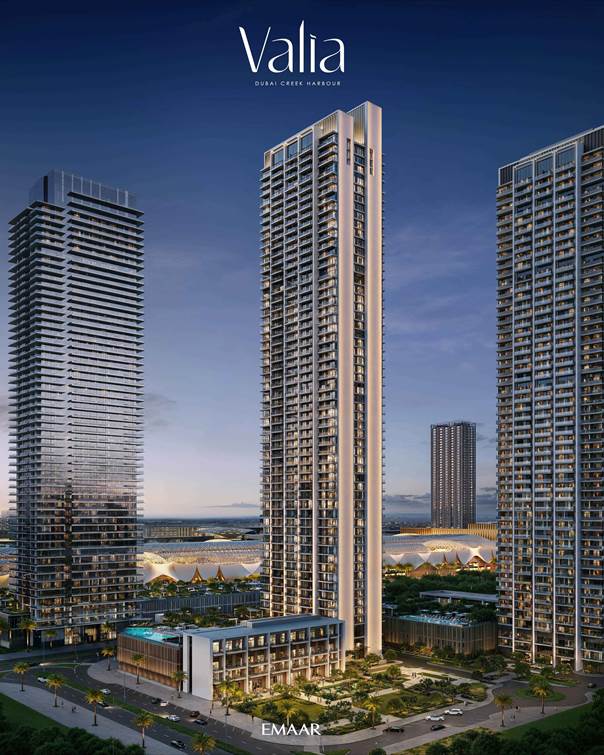
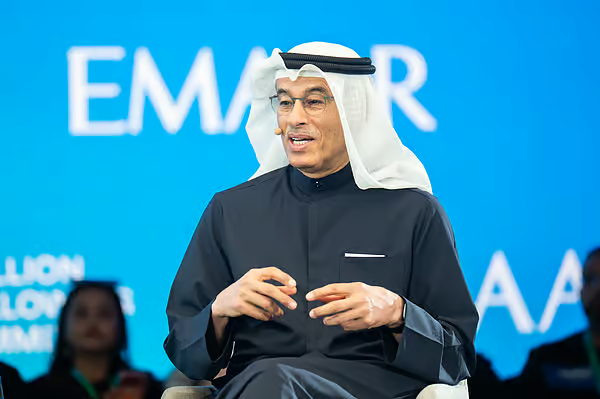
When a market records its highest-ever single month in history — and then follows that up with two more months of near-identical performance — you stop calling it a trend. You call it a structural shift. That is precisely what happened in Dubai between January and March 2026.
The Dubai property market Q1 2026 delivered figures that left most analysts revising their models upward. According to the Dubai Land Department (DLD), total real estate transactions reached AED 252 billion during the quarter — a 31% year-on-year increase in value and a 6% rise in volume, totalling 60,303 transactions. A separate, sales-focused analysis by fäm Properties pegged total sales transactions at AED 176.7 billion across 47,996 deals, up 23.4% in value and 5.5% in volume on the same period last year.
Whatever lens you use, the conclusion is the same: Dubai real estate investment is not running on hype. It is running on hard, verifiable demand — from residents who need homes, from corporations that need offices, from logistics operators who cannot find enough warehouse space, and from global investors who have decided that Dubai is where serious capital belongs in 2026.
The Q1 2026 Headline Numbers Every Investor Needs to Know
Start with the macro. In Q1 2026, Dubai real estate transactions totalled AED 252 billion across 60,303 deals, according to the DLD — that is the official figure covering sales, mortgages, gifts, and other registered transactions. Of those, 57,744 were classified as investments, with a combined value of AED 173 billion, up 22% year on year. The investor base itself expanded to 48,448 active investors, an 8% increase, with 29,312 brand-new investors entering the market — up 14% from Q1 2025.
January 2026 deserves a moment on its own. That month recorded AED 72.4 billion in sales — the highest single month in the entire history of Dubai real estate. Not the highest since the post-pandemic recovery. The highest. Ever.
Across the full quarter, average Dubai property price per square foot climbed 12.5% year on year to AED 1,759. Value growth is outpacing volume growth by more than four to one — and that ratio is the defining signal of a market that is maturing, not overheating. Buyers are spending more per transaction because the product quality and location premium are supporting higher prices. Speculation is not driving this. Fundamentals are.
Residential Sector: 45,000+ Deals, Values Up 18.8% Year on Year
Dubai’s residential market delivered over 45,000 transactions in Q1 2026, with total residential sales value exceeding AED 136 billion, according to Land Sterling’s Q1 2026 Property Watch report. On a year-on-year basis, that represents an 18.8% increase in sales value, while volumes grew by just 3.7% — again confirming the higher-value-per-deal dynamic that now characterises this market.
Breaking it down by asset class:
Apartments led transaction volume with 36,428 sales worth AED 75.2 billion, a 10.5% increase in value year on year. Apartment resale prices rose 6.3% year on year to AED 4.3 million, and more than 8,000 new residential units were delivered during the quarter, supporting steady market expansion without creating a supply glut.
Villas were the standout performer. 8,261 villa transactions were recorded, up 17.9% in volume year on year, generating AED 59.1 billion in value. In the resale market, median villa prices rose 16.2% to AED 4.3 million — and are now 35.1% above their 2014 peak. For investors who held through Dubai’s correction years (2015–2020), that is substantial compounding capital growth. In the primary market, the median off-plan villa price climbed 35.3% year on year to AED 4.1 million — a figure that signals just how competitive new launch property Dubai pricing has become.
The top-performing communities by transaction volume were Al Barsha South Fourth (Jumeirah Village Circle) with 3,162 deals worth AED 4 billion, Dubai South with 2,889 transactions valued at AED 5.4 billion, and Al Yelayiss 1 with 2,885 deals totalling AED 12.9 billion. These are not just transactional leaders — they are the communities where long-term capital appreciation Dubai is being built, one project at a time.
Off-Plan Property: 70% of All Transactions and Still Growing
If one number defined Q1 2026, it is this: off-plan transactions accounted for 70% of all sales volume and 71% of total value. That is not a quarterly anomaly — it is a structural feature of how the Dubai market now operates.
The off-plan property Dubai segment generated AED 103.4 billion across 32,608 transactions in Q1 2026. Over a three-year horizon, off-plan volumes have expanded by 80.4% — from 18,071 transactions in Q1 2023 to 32,608 in Q1 2026. Ready transactions, by comparison, grew just 9.8% over the same period.
The single largest off-plan transaction location in the quarter was The Oasis by Emaar, recording AED 9.71 billion — a figure that speaks to the scale of developer-driven product and the appetite of buyers willing to commit capital years ahead of completion. Primary (developer-to-buyer) sales accounted for AED 95.3 billion across 31,641 transactions, representing 69.4% of market value.
In March 2026 alone, the off-plan market recorded 10,303 transactions amounting to AED 31.2 billion — year-on-year increases of 5.4% in volume and 8.9% in value. Off-plan median apartment prices rose a modest 3.1% year on year to AED 1.4 million, suggesting that while the entry price for some prime developments is climbing, there remains a broad spectrum of affordable Dubai property investment opportunities for investors who know where to look.
Commercial Real Estate: A 69% Surge That Nobody’s Talking About Enough
The Dubai commercial real estate market did something in Q1 2026 that deserves far more attention than it has received: sales transaction value surged 69.1% year on year to AED 10.2 billion, across 2,048 deals. That is an extraordinary leap — and it reflects a growing trend of businesses choosing ownership over leasing to lock in long-term occupancy costs as rents continue rising.
According to CBRE Middle East’s Q1 2026 UAE Real Estate Market Review, Dubai office rents surged 14% year on year — the highest rate in the UAE — driven by a continued shortage of Grade A office space Dubai across key business districts. Land Sterling’s Q1 2026 report noted that nearly 971,000 square feet of new office space was delivered during the quarter, primarily across DIFC and Dubai Internet City. Despite that addition, the office market recorded a 75% year-on-year increase in sales transactions, with capital values rising alongside rents.
A limited development pipeline through 2027 is expected to keep Dubai office market conditions tight, particularly within regulated business zones — an environment that strongly favours investors who get in before the next wave of corporate relocations drives rents even higher. The commercial sector also recorded AED 38 billion in total commercial transaction value across 3,622 deals for the broader Q1 period, according to fäm Properties, which includes offices and shops.

Industrial and Logistics: 31,000+ Transactions and Double-Digit Rental Growth
This is the segment that surprises most first-time Dubai investors — and it shouldn’t. Dubai’s industrial real estate market is one of the most undersupplied, high-demand asset classes in the region. In Q1 2026, the sector recorded more than 31,000 transactions, with rental rates showing notable double-digit increases across both warehouse and labour accommodation segments, according to Land Sterling.
Growing logistics activity in Dubai — driven by e-commerce expansion, supply chain diversification, and expansion in construction-related sectors — is tightening available supply against structurally strong occupier demand. CBRE confirmed that the industrial and logistics sector continued to outperform all other real estate segments in Q1 2026, with investment in logistics infrastructure continuing to support the medium-term outlook.
For investors, the industrial angle is genuinely underexplored. Early-phase purchases in logistics hubs such as Jebel Ali Port and KIZAD (Dubai South) have historically delivered 15–25% capital appreciation by completion, combined with 5–6% rental yields. As global firms continue hedging their supply chains through Dubai, that appreciation window is narrowing.
Dubai Rental Market: AED 32.2B in Contracts, Yields Still Globally Unmatched
Dubai’s rental market is doing exactly what a healthy market should do: it is absorbing new population, renewing tenancies consistently, and generating income for investors at yields that no comparable global city can match at scale.
According to the DLD, the total value of Dubai rental contracts in Q1 2026 reached AED 32.2 billion. New rental contracts totalled 118,385, while renewal contracts stood at 135,607 — together representing over 254,000 active rental agreements in a single quarter. Notably, cancelled contracts declined by 25%, signalling greater rental cycle stability and lower market volatility.
The yield picture is what separates Dubai from almost every other global real estate investment destination. Gross rental yields across the city range from 6% to 9%, with mid-market communities like Jumeirah Village Circle achieving up to 8.5%. High-yield pockets such as International City and Discovery Gardens consistently deliver 7–9% gross returns. Net yields, after service charges and vacancy, typically land in the 4.5–6% range — still three to four times what equivalent stock in London, Singapore, or Paris would generate.
Retail remained solid too, with over 23,000 retail transactions recorded in Q1 2026 and prime mall occupancy in Dubai holding at 98% — a figure that supports stable rental income for investors in retail-facing assets.
Luxury Real Estate: AED 87.71 Billion and a Record AED 422M Sale
Dubai’s luxury property market in 2026 is performing at a level that was, frankly, unimaginable five years ago. Luxury real estate transactions reached AED 87.71 billion in Q1 2026, a 26% increase year on year, according to the DLD. The demand for high-end products is not softening — it is accelerating.
The most expensive property transacted in Q1 2026 sold for AED 422 million at Aman Residences Tower 2. The most expensive villa changed hands for AED 350 million in Jumeirah First. These are not outliers — they are the leading edge of a Dubai ultra-prime property segment that continues to attract UHNW buyers who see Dubai as a permanent home base, not just a tax domicile.
Palm Jumeirah, Emirates Hills, and Jumeirah Bay Island are delivering the highest price appreciation per square foot in the villa luxury segment. The concentration of AED 400 million-plus single transactions in Jumeirah Second — driven by Aman Residences — signals a new tier of ultra-premium real estate in Dubai that is redefining what ‘luxury’ means in this city.
Who Is Buying? The Q1 2026 Investor Profile
One of the most telling data points from Q1 2026 is the composition of buyers. Foreign investment in Dubai real estate rose to AED 148.35 billion — a 26% increase — with 48,445 foreign investments recorded, up 11% year on year. This is not money chasing a short-term trade. This is capital taking a long-term position in one of the few markets globally where the rule of law, tax efficiency, and genuine yield are available in the same package.
GCC nationals invested AED 12.23 billion, up 14%, across 3,228 investments — reflecting the depth of regional confidence in Dubai’s market. Arab investors outside the GCC contributed AED 12.11 billion across 6,071 investments. Women investors played a meaningful role, with 15,540 investments by women valued at AED 32 billion — a sign of both market accessibility and growing financial literacy around real estate investment opportunities in Dubai.
Mortgage activity reinforced the picture of committed, long-horizon buyers. Q1 2026 mortgage transactions totalled 11,829 — up 7.5% year on year, with total mortgage value reaching AED 59.8 billion, a 46% increase. Buyers are not just paying cash — they are leveraging, structuring deals for long-term returns, and treating Dubai property as a core portfolio asset.
The Macro Case for Dubai: IMF, Population Growth, and the D33 Agenda
None of this exists in a vacuum. Dubai’s property market is backstopped by a macro story that is, in 2026, among the strongest in the world. The IMF projects UAE GDP growth at 5.0% in 2026 — the fastest rate in the GCC. Dubai’s population surpassed 4 million in 2025 and is expected to add 225,000 new residents in 2026 alone. Every one of those people needs somewhere to live, work, and shop.
The Dubai Economic Agenda D33 and the Dubai Real Estate Strategy 2033 provide the policy backbone. These are not aspirational documents — they are funded, actively managed programmes designed to double Dubai’s economy and make it one of the world’s top three urban economies by 2033. The infrastructure investment underpinning this vision — most notably the Al Maktoum International Airport expansion at Dubai South — is one of the most ambitious infrastructure projects on earth, and it is already driving property values in its surrounding communities.
Over 139,000 rental transactions were recorded in Q1 2026 alone — a record high that directly reflects population inflows that show no sign of reversing.
What the Q1 2026 Data Actually Means for Investors
Let’s be direct about what Q1 2026 is telling investors who are considering entering or expanding in Dubai real estate.
First, the window for pre-growth pricing is closing. Average prices per square foot are up 12.5% year on year. Villa resale prices are 35.1% above their 2014 levels. If you are waiting for a dip that fundamentals do not support, you may be waiting through years of additional appreciation.
Second, off-plan remains the highest-leverage entry point. With 70–73% of all transactions in the off-plan segment, developer payment plans are giving investors access to premium assets at today’s prices with deferred capital outlay — a structure that generates outsized returns when prices continue rising between purchase and completion.
Third, rental income is real and bankable. With gross yields of 6–9% and a rental market recording over 254,000 contracts in a single quarter, investors are not relying purely on capital appreciation. The income component is strong, consistent, and growing.
Fourth, sector diversification is available within a single city. From residential apartments in JVC to Grade A offices in DIFC, from villa communities at Dubai South to logistics warehouses near Jebel Ali, Dubai allows investors to build a genuinely diversified property portfolio under one legal and tax framework.
How Pre-Launch Properties, Dubai Positions You Ahead of the Market
Finding the right investment property in Dubai is not simply a matter of picking a project from a developer’s brochure. The difference between a 6% return and a 9% return, or between a property that appreciates 20% by handover and one that stagnates, usually comes down to access — access to the right projects, at the right stage, in the right communities.
That is exactly what Pre-Launch Properties, Dubai is built to provide.
Pre-Launch Properties, Dubai is a specialist real estate platform focused exclusively on early-stage and pre-launch investment opportunities across Dubai’s residential, commercial, and emerging sectors. Before a project goes public — before prices are adjusted for general market demand — Pre-Launch Properties, Dubai works with investors to secure positions that are simply not available once a launch reaches the open market.
For investors weighing the Q1 2026 data against their own portfolio strategy, Pre-Launch Properties, Dubai offers a structured path from data to decision:
- Access to pre-launch Dubai property deals before public listing, giving investors a first-mover pricing advantage in high-demand communities.
- Curated shortlists matched to your investment goals — whether that is maximum rental yield, capital appreciation, or a blend of both across residential and commercial assets.
- In-depth due diligence on developer track records, payment plans, DLD registration status, and project completion timelines — the details that separate strong investments from costly mistakes.
- Market intelligence grounded in live transaction data — not outdated reports or developer-funded projections.
- End-to-end support from EOI through completion, including guidance on Dubai property investment for foreign investors, mortgage structuring, and resale strategy.
When 29,312 new investors entered Dubai’s market in a single quarter, the competition for the best projects became intense. Pre-Launch Properties, Dubai, ensures that its clients are not competing for what is left — they are positioned for what comes first.
Ready to Invest in Dubai’s Fastest-Moving Market? Start Here.
Dubai’s Q1 2026 data has laid out the case with numbers. The $48 billion Q1 2026 sales market, record-breaking January figures, and 48,000+ transactions all point to a market where early movers are consistently rewarded. Prices are rising. Yields are real. And the fundamentals — population growth, infrastructure investment, regulatory transparency — are not going anywhere.
The question is not whether Dubai property investment makes sense. The Q1 2026 data settled that. The question is which opportunity is right for your goals — and how quickly you can access it before the rest of the market catches up.
Secure your investment opportunity today — fill out the EOI form on our website, and our sales team will contact you with full details.
 Register Your Interest Now!
Prefer direct assistance?
 Call/WhatsApp: +971 52 341 7272
✉ Email: sales@mbrproperties.ae