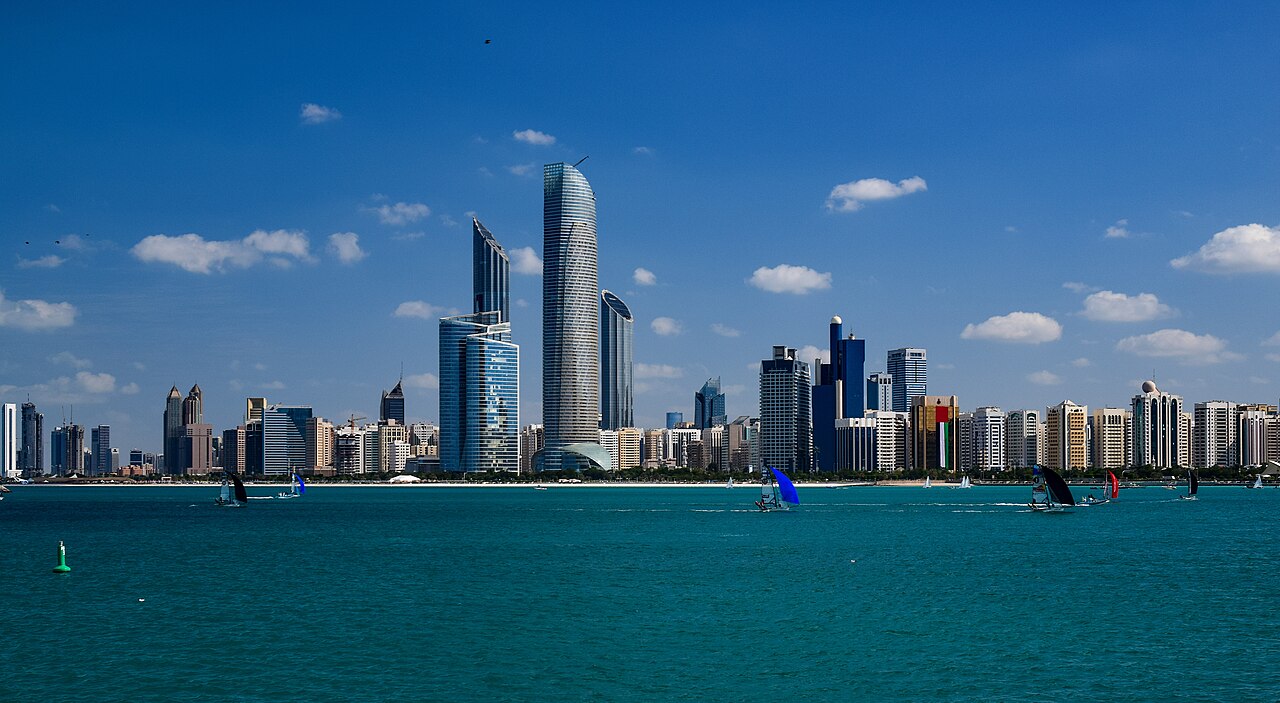
There is a particular kind of scepticism that greets any market after a record year. “It cannot possibly hold.” “The numbers will come in.” “Wait for the correction.” Abu Dhabi heard all of it entering 2026. And so far, the market has responded with the one thing sceptics find hardest to argue with: data.
Through the first quarter of 2026, Abu Dhabi’s property market has not cooled — it has continued to launch, transact, and attract capital at a pace that is starting to look less like a post-pandemic sugar rush and more like a structural gear change. The early March evidence — deal depth, developer activity, and buyer absorption — is precisely the kind of signal that separates resilience from momentum. This article unpacks what is actually happening and why it matters for anyone considering an Abu Dhabi off-plan property purchase right now.
To understand the wider context driving this activity, it helps to read our analysis of why Abu Dhabi’s branded residences are redefining pre-launch value in 2026.
What the 2025 Foundation Actually Looks Like
Before discussing 2026 momentum, it is worth anchoring to the platform it is launching from. Abu Dhabi closed 2025 with AED 142 billion in total real estate transactions — a 44% year-on-year increase and the highest figure in the emirate’s recorded history. Residential unit sales alone reached AED 73.2 billion across 22,400 transactions, up 55% from 2024, with off-plan deals accounting for 71% of all activity.
Apartment prices rose 15.1% year-on-year, villa prices climbed 12.2%, and rental growth followed: apartment rents up 12.5%, villa rents up 5.5%. At Yas Island specifically, apartment prices surged 18%, and apartment rents climbed 23% — the steepest rise in the emirate. Al Reem Island apartments rose 17%, with Saadiyat Island villas up 13%.
Critically, demand absorption kept pace. Roughly 7,400 units were completed in 2025, bringing total residential stock to around 315,000 units — but occupied units grew at 6.6% annually while supply expanded at only 2.8%. That gap is not a footnote. It is the engine of the pricing trend.
Abu Dhabi Residential Market: Key 2025 Benchmarks
| Metric | 2025 Figure | YoY Change |
| Total transactions value | AED 142 Billion | +44% |
| Residential sales value | AED 73.2 Billion | +55% |
| Total residential transactions | 22,400 units | +55% |
| Off-plan share of transactions | 71% | +68% in off-plan volume |
| Apartment price growth (avg) | AED 1,296/sqft | +15.1% |
| Villa price growth (avg) | AED 1,100/sqft | +12.2% |
| Apartment rental growth | — | +12.5% |
| Villa rental growth | — | +5.5% |
| Units completed (supply) | ~7,400 units | Stock: 315,000 total |
| Aldar market share (transactions) | 5,300+ deals | ~40% of the market |
Sources: ADREC Annual Market Report 2025; Cavendish Maxwell Q4 2025; Construction Week Abu Dhabi.
The 2026 Launches That Signal Durability, Not Desperation
A market that is truly slowing does not attract the brands it has been attracting. What Abu Dhabi is seeing in early 2026 is developer confidence expressed through product quality, not volume — a meaningfully different signal from a market that launches en masse to chase demand it hopes will materialise.
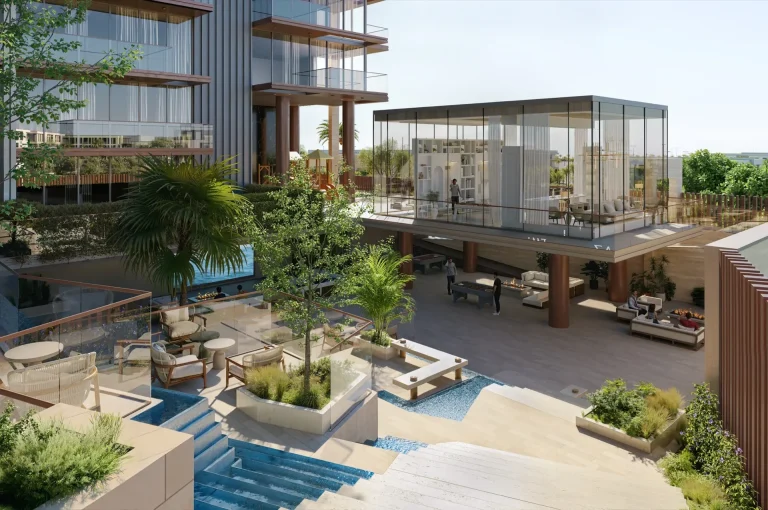
Baccarat Residences Saadiyat launched on 10 February 2026, developed by Aldar in partnership with the legendary French crystal maison. Just 77 residences — two- and three-bedroom apartments, four-bedroom sky villas, and two signature penthouses — occupy the final development slot within the Saadiyat Grove district. The project is designed by Sou Fujimoto Architects in their UAE residential debut, with interiors by StudioPCH of Los Angeles. Residents will look out at the Guggenheim Abu Dhabi and the Louvre Abu Dhabi. This is not a launch designed to shift inventory. It is a launch designed to define a market ceiling.
Manchester City Yas Residences by Ohana Development recorded approximately AED 6 billion in sales within 72 hours of launch — one of the most dramatic absorption figures in Abu Dhabi’s history for a single project. Positioned on Yas Canal and branded by one of the world’s most recognised sports clubs, the development offered apartments and townhouses that sold into a buyer pool that clearly needed no convincing.
Modon’s Tara Park on Reem Island added another data point: a freehold project targeting quality-of-life buyers in one of Abu Dhabi’s most liquid submarkets. Together, these launches tell a story of a market where developers are bringing conviction to the table — not discounts.
Major Abu Dhabi Property Launches: February–March 2026
| Project | Developer | Location | Key Stat / Signal |
| Baccarat Residences Saadiyat | Aldar | Saadiyat Island | 77 units; Sou Fujimoto design; final Saadiyat Grove slot |
| Manchester City Yas Residences | Ohana Development | Yas Island | AED 6B in sales within 72 hours of launch |
| Tara Park | Modon | Reem Island | Freehold; lifestyle positioning; integrated facilities |
| Aldar’s full operations confirmed | Aldar Group | UAE-wide | All assets at full capacity; AED 66B contracts in 2025 |
Sources: Gulf Today, Khaleej Times, AGBI — March 29, 2026.
March Deal Depth: The Proof Point That Matters Most
Launch activity is interesting. Absorption is convincing. What happened in March 2026 is both. According to Khaleej Times, Abu Dhabi’s property market recorded over AED 1 billion in weekly deals through March 2026 — sustaining the pace set in January and February without any sign of buyer fatigue.
The most telling aspect of this figure is its character: 87% of Abu Dhabi transactions in 2025 were cash-funded, a trend that has carried into 2026. This is not a market being driven by leveraged buyers chasing returns on borrowed money. It is a market where committed capital — much of it international — is deploying into a structured opportunity. That is a fundamentally different risk profile from markets that appear healthy on transaction volume alone.
Cavendish Maxwell’s assessment is unambiguous: Abu Dhabi enters 2026 “from a position of strength, supported by disciplined supply, strong investor confidence, robust demand drivers, and a supportive macroeconomic backdrop.” The consultancy projects that while approximately 15,900 units are scheduled for completion in 2026, actual deliveries will likely land in the 6,500 to 9,000 unit range — keeping supply meaningfully tight and supporting both pricing and rental momentum.
For buyers still weighing the entry decision between off-plan and ready properties, see our breakdown of why the 2026 investor shift is driving first-time buyers toward off-plan over rentals.
Supply Outlook vs Demand Indicators: Abu Dhabi 2026
| Indicator | Figure / Forecast |
| Units scheduled for 2026 delivery | ~15,900 units (scheduled) |
| Realistic handover estimate (2026) | 6,500 – 9,000 units |
| Units projected for 2027 | ~16,800 units |
| Units projected for 2028 | ~22,300 units |
| Total residential stock by 2028 | ~371,800 units |
| Average days-on-market (early 2026) | ~42 days (tighter than 50–60 in 2023) |
| Villa/townhouse days-on-market | 35–40 days (fastest segment) |
| Supply growth rate through 2030 | ~2.9% annually (disciplined) |
| Occupied unit growth rate | 6.6% annually (outpacing supply) |
Sources: Cavendish Maxwell Q4 2025; Sands of Wealth Abu Dhabi Market Analysis 2026; ADREC.
Where the Capital Is Actually Going
Abu Dhabi’s submarket performance in 2025 and early 2026 is not uniform, which is itself a sign of a maturing, segmented market rather than a single undifferentiated wave. Different districts are performing for different structural reasons.
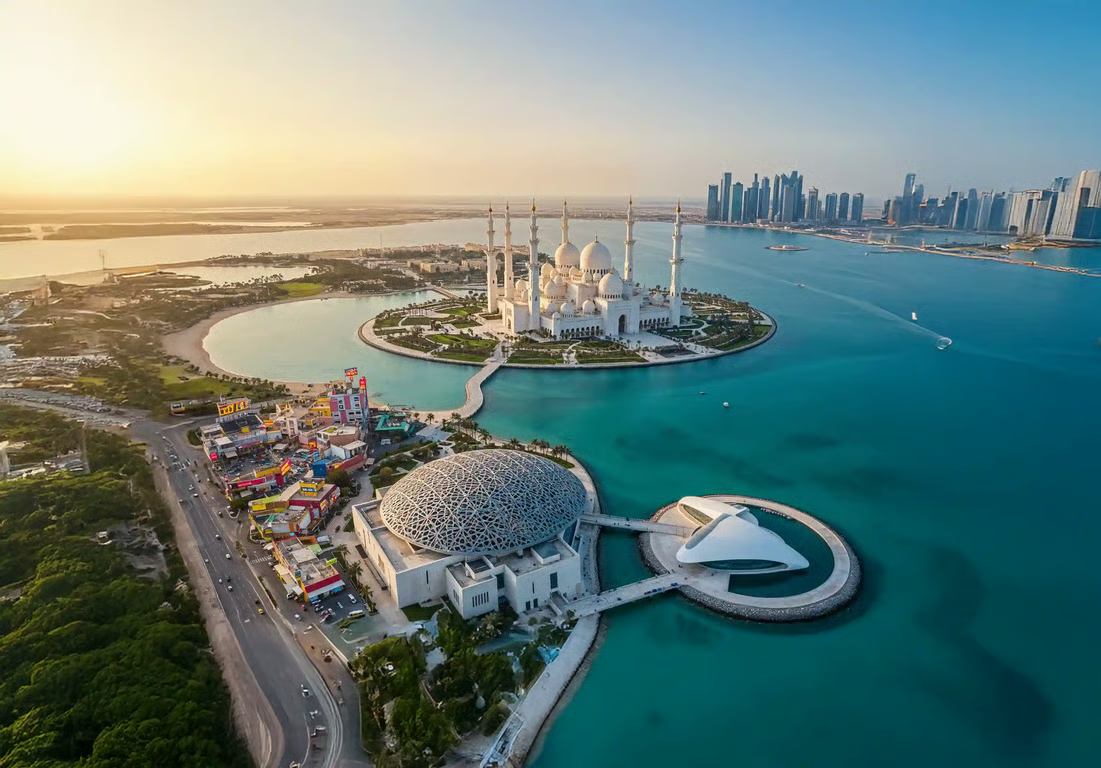
Yas Island leads on transaction volume, rental growth (23% apartment rent rise), and branded residence pipeline — with Manchester City Yas Residences confirming that sports and lifestyle-branded product has a deep buyer base. Saadiyat Island commands the highest price per square foot and continues to draw foreign high-net-worth buyers, with branded units projected to reach 18% of Saadiyat transactions by 2029 (up from 2% in 2025). Al Reem Island offers the deepest liquidity: 5,100 apartment transactions in 2025, the highest of any district, driven by a well-established freehold ecosystem and competitive entry price points. Hudayriyat Island is the most compelling emerging story — AED 12.5 billion in sales recorded in 2025 alone, driven by Emirati end-user demand and infrastructure spending at scale.
The foreign buyer signal remains strong across all districts. Foreign investors accounted for 75% of Aldar’s UAE sales in 2025, with the developer recording AED 66 billion in development contracts that year. USD 1.6 billion in private capital from high-net-worth individuals is actively targeting Abu Dhabi residential real estate — and that capital is not sitting on the sidelines in early 2026.
For a comparative lens on how Abu Dhabi’s island districts are outperforming mainland options, read our piece on the great coastal squeeze and why Abu Dhabi’s islands are pulling ahead.
The Durability Argument: Why This Is Not Just Momentum
Markets can generate launch momentum for several reasons — some structural, some speculative. The question worth asking in Abu Dhabi in 2026 is: what is the durability case? Why should this continue rather than revert?
The answer sits across several reinforcing pillars. First, population growth: Abu Dhabi’s resident base grew 7.5% in 2024 to over 4.1 million and is projected to reach 5.4 million by 2040. Housing demand is not manufactured — it is demographic. Second, economic breadth: GDP growth is forecast at 6% for Abu Dhabi, supported by the Abu Dhabi Investment Authority (ADIA) managing over USD 1 trillion in assets and the Abu Dhabi Global Market (ADGM) hosting 161 asset managers and 220 funds. The financial infrastructure creating housing demand is deep and diversifying.
Third, infrastructure commitment: Disneyland Abu Dhabi confirmed for Yas Island by 2030. New international school campuses — King’s College Wimbledon, Gordonstoun, Harrow — arriving in the emirate. These are not decorative amenity announcements. They are household relocation triggers — the kind that convert long-term renters into long-term owners. Fourth, regulatory confidence: ADREC’s escrow framework for off-plan buyers, the UAE’s zero personal income tax environment, a USD-pegged currency, and sovereign credit ratings of AA (Fitch) and Aa2 (Moody’s) combine to create a trust infrastructure that very few markets can replicate.
As the data from March 2026 confirms, buyers are reading these signals correctly. The average days-on-market for Abu Dhabi residential property is now approximately 42 days — meaningfully tighter than the 50–60 day average of two years ago. Ready villas and townhouses in family communities are generating bidding competition. Off-plan launch sell-outs are happening within hours and days rather than weeks.
For more insight into how the UAE’s broader investment landscape is evolving, our guide on why 2026 is the year to invest in Abu Dhabi’s off-plan boom goes deeper on the long-term case.
What Buyers Should Take From This
Abu Dhabi’s launch momentum in early 2026 is not noise. It is evidence. The three signals that matter most for a buyer considering entry right now are: continued developer confidence expressed through quality branded launches, sustained deal depth through March without buyer retreat, and a supply pipeline that — even at scheduled levels — will not materially change the demand-supply imbalance before 2028.
The pre-launch pricing window in Abu Dhabi remains the most defensible entry point. Off-plan buyers accessing developer pricing before public launch have historically seen significant capital appreciation by handover — and the structural conditions that supported that pattern in 2024 and 2025 remain intact. Cash-led transactions, tight ready inventory, and population-driven demand are not going to reverse in the short term.
What may reverse is access. Projects like Baccarat Residences Saadiyat — 77 units in the final slot of a completed cultural district — do not come back to market. Manchester City Yas Residences absorbed AED 6 billion in 72 hours. The window for well-priced, well-located Abu Dhabi investment property is not indefinitely open.
Secure Your Abu Dhabi Property Before the Window Closes
The data from March 2026 is clear: Abu Dhabi’s launch momentum is real, it is backed by buyers with committed capital, and it is supported by a supply pipeline that will not significantly ease pressure before 2028. If you are considering an off-plan investment in Abu Dhabi, the best time to act is before the next launch absorbs the available pricing. Fill up the form on our website at prelaunch.ae, and our team will give you direct access to the right project for your goals — with pre-launch pricing before public release.
Explore our full range of off-plan investment guides and market insight,s or browse available Aldar Properties developments directly.
Contact Us
Phone: (+971) 52 341 7272
Email: sales@mbrproperties.ae
Website: prelaunch.ae
Frequently Asked Questions
1. Is Abu Dhabi real estate still a good investment in 2026?
Yes, based on current fundamentals. Supply is growing at 2.9% annually while occupied units grow at 6.6%. Prices rose 15% (apartments) and 12% (villas) in 2025 and are trending upward through 2026, supported by population growth, a strong jobs market, and continued foreign investment. Average days-on-market have compressed to 42 days — a liquidity indicator that reflects genuine buyer demand.
2. Which Abu Dhabi areas showed the strongest performance in early 2026?
Yas Island leads on transaction volume and rental growth (23% apartment rent increase). Saadiyat Island commands the highest price points and foreign buyer interest. Al Reem Island has the deepest liquidity. Hudayriyat Island is the strongest emerging district, with AED 12.5 billion in sales recorded in 2025.
3. What does the Manchester City Yas Residences launch tell us about the market?
Ohana Development’s Manchester City Yas Residences, generating AED 6 billion in sales within 72 hours,s signals that lifestyle-branded off-plan product in Abu Dhabi has a large, ready buyer pool. This kind of absorption speed is not consistent with a cautious or uncertain market — it reflects buyers who are prepared to commit quickly to the right product at the right location.
4. How many new homes will be delivered in Abu Dhabi in 2026?
Approximately 15,900 units are scheduled for completion in 2026, but Cavendish Maxwell projects actual deliveries will land between 6,500 and 9,000 units based on historical handover trends. This supply restraint is one of the key factors supporting pricing and rental momentum.
5. Should I buy off-plan or ready property in Abu Dhabi in 2026?
Both segments are active, but off-plan offers the pricing advantage. Off-plan accounted for 71% of all 2025 transactions, and Q3 2025 off-plan volumes rose 106% year-on-year. Pre-launch buyers access developer pricing before public release, typically at the lowest point in the price curve. Ready property offers immediate occupancy and rental income, but at a premium. The choice depends on your timeline, cash position, and investment objective.