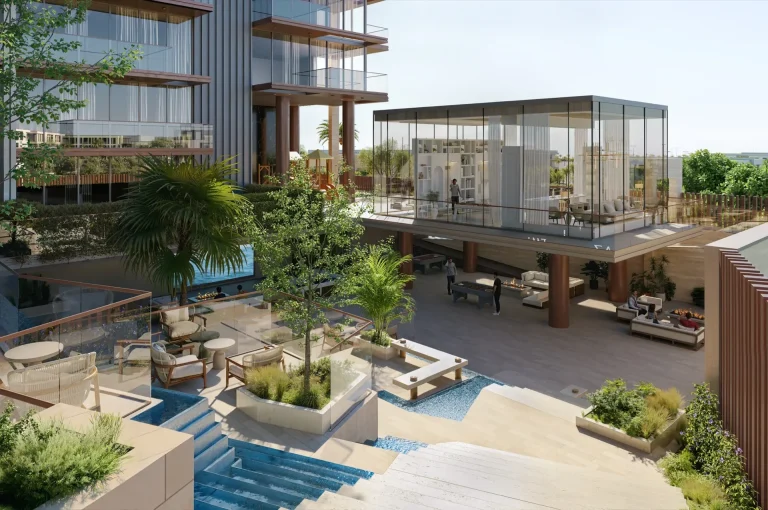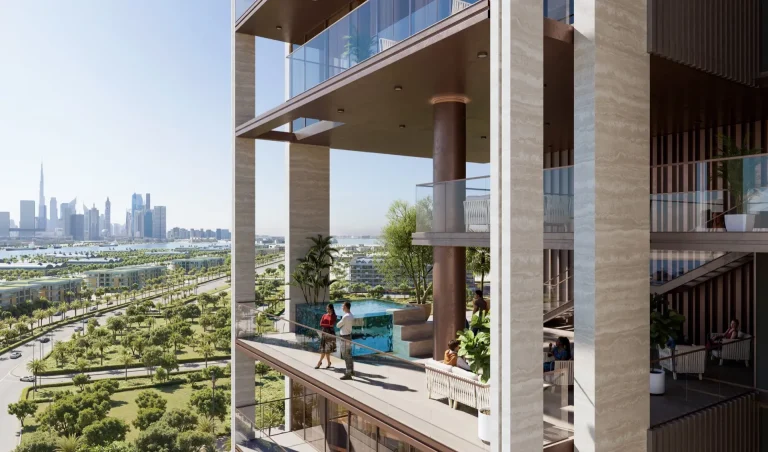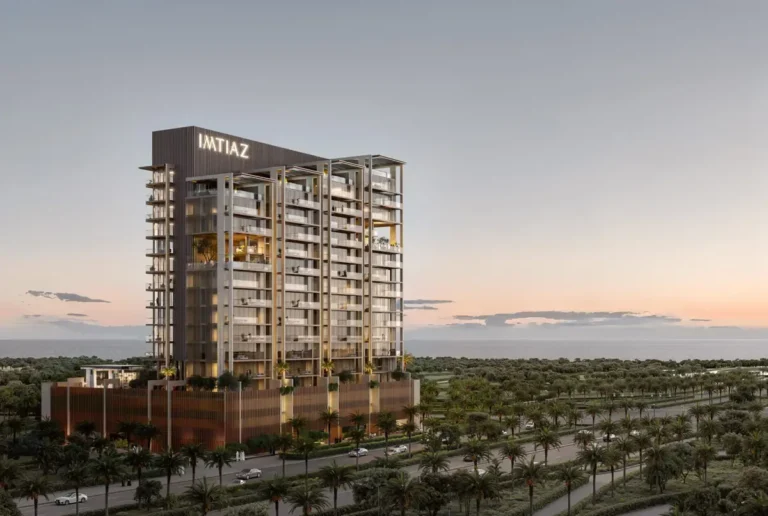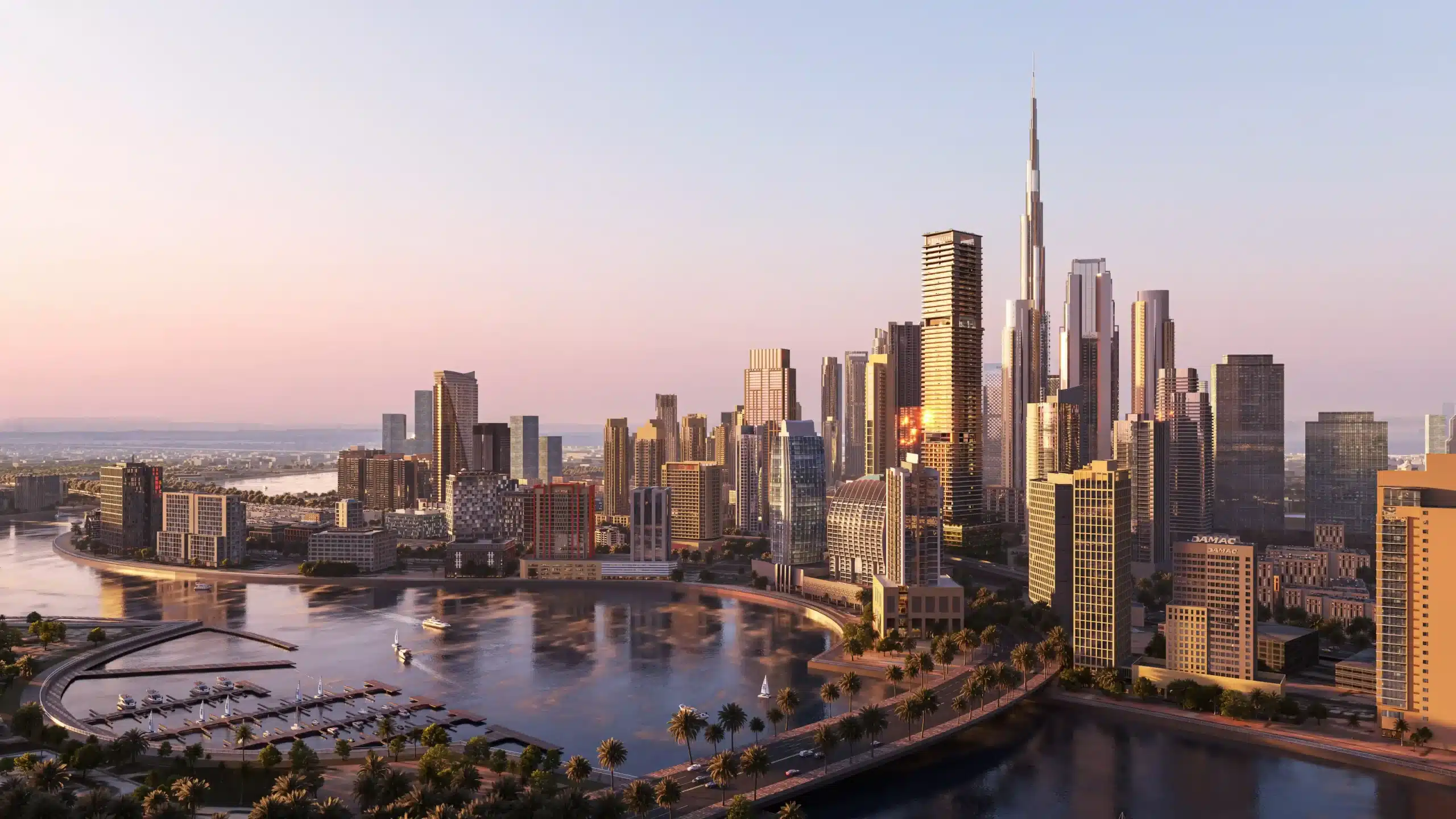
In 2024, Dubai’s branded residence sector generated $16.3 billion in sales a 43% year-on-year surge that made the city the undisputed global capital of branded residential real estate. Over 100 branded projects are now in various stages of development, co-signed by names from Aman and Armani to Bugatti and Bulgari, Franck Muller to Four Seasons. And sitting at the centre of every one of these transactions is a question that CBRE’s data makes impossible to ignore: buyers pay, on average, a 64% premium over comparable non-branded units in the same zone.
Sixty-four percent. On an AED 3 million non-branded apartment, that premium is AED 1.92 million in additional purchase price. On a AED 6 million unit, it is AED 3.84 million. The question this guide addresses is not whether branded residences are attractive the market has answered that. The question is whether the premium is financially justified in every case, or whether the branding premium in some projects is marketing value masquerading as investment value. As the branded residence pipeline deepens toward 2027, that distinction matters more than it ever has.
The 64% Premium: What CBRE’s Data Actually Says
CBRE’s global branded residence premium figure of 64% is an average across all brand categories and all markets from ultra-luxury hospitality brands in Monaco to fashion-branded towers in Dubai. Within that average, there is a wide distribution. At the premium end, operationally managed hospitality brands like Aman, Four Seasons, and Mandarin Oriental consistently command premiums of 55–100% or more. At the lower end, product-category brand affiliations watches, cars, fashion houses generate premiums of 30–55%, supported by aesthetic appeal and brand recognition but not by the hotel-management infrastructure that drives hospitality premiums.
The Dubai data is consistent with the global average and, in some categories, exceeds it. The Lana Residences by Dorchester Collection saw prices double from AED 4,000 per square foot at launch to AED 8,375 per square foot by 2024 a 109% appreciation that vastly exceeds any non-branded community in the same timeframe. Aman Residences Dubai launched at AED 13,195 per square foot, against comparable Downtown units trading at AED 4,500–6,000 an effective premium of 120–193%. These are not averages. They are the upper boundary of what brand value can add when the conditions are right.
The lower boundary is equally instructive. Automotive and jewellery-branded projects have generated genuine resale interest but thinner secondary market liquidity than their hospitality-branded counterparts, because the buyer pool for a Bugatti or Jacob & Co residence is, by definition, narrower than the buyer pool for a Mandarin Oriental or Four Seasons. Understanding which part of the 64% average applies to your target project is the foundation of any justified branded residence investment. For a full overview of the UAE branded residences and waterfront property investment landscape in 2025, the demand drivers, yield performance, and investor profiles are covered in detail.
Brand Category Matters: Hospitality vs Fashion vs Automotive vs Lifestyle
The single most important variable in evaluating any branded residence premium is brand category — because different categories create structurally different value propositions for investors. The table below maps Dubai’s active branded residence categories against premium range, yield performance, resale liquidity, and brand longevity risk.
Table 1: Dubai Branded Residence Categories — Premium, Yield & Longevity Risk (2025–2027)
| Brand Category | Active Dubai Examples | Avg. Premium vs Non-Branded | Gross Yield Range | Resale Liquidity | Brand Longevity Risk |
| Ultra-Luxury Hospitality | Aman, Four Seasons, Mandarin Oriental, Dorchester | 55–100%+ | 5.5–7.5% | ★★★★★ | VERY LOW — 100+ yr global brands; operational depth |
| Premium Hospitality | Marriott, W Hotels, Pullman, Address Hotels | 35–60% | 6–8% | ★★★★☆ | LOW — major groups; management continuity high |
| Fashion / Couture | Armani, Versace, Bulgari, Karl Lagerfeld | 40–75% | 5.5–7% | ★★★★☆ | LOW–MEDIUM — brand strong; no operational mgmt |
| Automotive | Bugatti (Binghatti), Mercedes-Benz, Porsche | 50–90% | 5–6.5% | ★★★☆☆ | MEDIUM — brand intact; no hospitality services |
| Watch / Jewellery | Franck Muller, Jacob & Co | 30–55% | 5.5–7% | ★★★☆☆ | MEDIUM — niche global recognition; collector appeal |
| Wellness / Lifestyle | Inaura (MVRDV), Six Senses, SHA Residences | 25–50% | 5–6.5% | ★★★☆☆ | MEDIUM — fast-growing; newer category; unproven cycle |
Source: CBRE branded residence premium data, DLD transaction records, prelaunch.ae analysis. Yields are gross indicative figures.
Why Hospitality Brands Command the Highest Premiums — and Justify Them
Hospitality-branded residences are not just named after a hotel group. They are operationally integrated into the hotel management ecosystem concierge services, housekeeping, F&B access, short-stay rental management, and in-building hotel amenities are available to residential unit owners as standard. This operational depth does three things for investors: it enhances rental yield by enabling premium short-stay pricing and consistent occupancy, it reduces management friction by providing turnkey letting infrastructure, and it anchors resale value by creating an end-user experience that non-branded buildings cannot replicate.
Aman, Mandarin Oriental, and the Dorchester Collection represent the apex of this model. The Mandarin Oriental Residences at Wasl Tower featuring 224 branded residences above 259 luxury hotel rooms with the city’s first MO-branded residential offering embody why operationally integrated brands generate the highest and most defensible premiums. For investors evaluating this specific launch, our analysis of the Mandarin Oriental Wasl Tower residences and their 9% yield potential provides the full investment detail.
Fashion and Automotive Brands: Premium Without Operations
Armani, Versace, Bulgari, Bugatti, and Mercedes-Benz all bring global brand equity and extraordinary aesthetic quality to their Dubai residential projects. What they do not bring is a hotel management model — and this distinction has direct financial consequences. Fashion and automotive-branded residences generate strong initial capital appreciation and collector-market demand, but their short-stay rental infrastructure typically relies on a third-party operator rather than an integrated brand system. This creates dependency on the third-party operator’s performance rather than the brand itself.
Bugatti Residences by Binghatti entering at AED 7,800 per square foot with a 105% premium over comparable Business Bay non-branded units represents the apex of automotive branding in Dubai. The collector market for this asset is genuine: there are 182 units in a building positioned as the world’s first Bugatti-branded residence, appealing to a global pool of ultra-luxury buyers. But the resale liquidity is narrower than a Marriott or Address Hotels project at the same price point, because the buyer universe for a Bugatti residence is defined by the brand’s prestige rather than a broad hospitality-management reputation.
Project-by-Project Premium Analysis: The Numbers Behind Six Active Dubai Launches
The table below applies a financial lens to six active or recently launched branded residence projects across Dubai, comparing entry pricing against zone non-branded averages, gross yield ranges, and a five-year capital growth outlook. This is not a recommendation table — it is an analytical framework for calibrating where each project sits on the premium-justification spectrum.
Table 2: Branded Residence Premium Analysis — Six Dubai Projects (2025–2027)
| Project | Brand Type | Entry (AED/sqft) | Zone Non-Branded (AED/sqft) | Premium | Gross Yield | 5-Yr Cap Growth Outlook |
| Aman Residences Dubai | Ultra-Luxury Hospitality | AED 13,195 | AED 4,500–6,000 | ~130% | 4.5–5.5% | ★★★★★ — global UHNWI demand; near-zero competing supply |
| Mandarin Oriental Residences (Wasl) | Premium Hospitality | AED 4,200 | AED 2,800–3,200 | ~40% | 6.5–8% | ★★★★☆ — first MO-branded resi in Dubai; location anchor |
| Armani Beach Residences (Palm) | Fashion / Couture | AED 5,800 | AED 3,500–4,200 | ~50% | 5.5–6.5% | ★★★★☆ — Palm scarcity + global Armani brand recognition |
| Bugatti Residences (Binghatti) | Automotive | AED 7,800 | AED 3,200–4,000 | ~105% | 5–6% | ★★★☆☆ — collector demand high; management model untested |
| Franck Muller Yachting Resi. | Watch / Jewellery | AED 2,720 | AED 1,800–2,200 | ~40% | 6.5–7.5% | ★★★☆☆ — waterfront + brand story; secondary market forming |
| W Residences Dubai Harbour | Premium Hospitality | AED 4,270 | AED 2,800–3,400 | ~42% | 6–7% | ★★★★☆ — W Hotels operational; marina-harbour liquidity |
Source: Developer pricing, DLD transaction data, prelaunch.ae market analysis. Capital growth outlook ratings reflect community fundamentals and brand demand depth, not guaranteed returns.
The data reveals a clear pattern across project types. Ultra-luxury hospitality brands — Aman, Mandarin Oriental — price at extreme premiums but command equally extreme capital growth trajectories because their buyer and tenant pool is global, their competing supply is near-zero, and their operational model generates recurring high-net-worth demand. Fashion and automotive brands at the AED 5,000–8,000 per square foot level command strong premiums with solid — but less certain — long-term liquidity, because their secondary market depends on collector and lifestyle buyers rather than the broader end-user and professional tenant pool.
The most compelling risk-adjusted opportunity in the table is the mid-range hospitality category: projects like Mandarin Oriental Wasl, W Residences Dubai Harbour, and Franck Muller Yachting Residences, where the premium sits in the 40–55% range against a verified zone average, gross yields are 6.5–8%, and the brand has genuine operational integration or strong aspirational recognition. For a view of how premium waterfront positioning amplifies branded residence returns, see our detailed breakdown of Dubai’s most coveted off-plan projects with sea and skyline views and their investment case.
Rental Yield Reality: Do Branded Residences Outperform on Income?
The marketing narrative for branded residences consistently emphasises premium rental rates and higher occupancy. The data supports this claim — selectively. Operationally managed branded residences with hotel-integrated short-stay programmes genuinely outperform on rental yield in peak and shoulder seasons, achieving occupancy rates of 75–90% versus 55–70% for comparable non-branded units in the same buildings. Mandarin Oriental properties in other global cities consistently achieve ADR (average daily rates) 35–50% above comparable non-branded luxury alternatives.
The caveat is gross versus net yield. Branded residence service charges are significantly higher than non-branded equivalents, typically ranging from AED 25–50 per square foot annually versus AED 12–20 per square foot for premium non-branded towers. On a 1,200 sq ft two-bedroom, this is an additional AED 15,600–36,000 in annual service cost. The buyer who models only the gross yield headline and ignores the service charge reality is comparing different numbers to make a worse decision.
Net yield comparison is therefore essential. A hospitality-branded two-bedroom achieving 7.5% gross at AED 5,000 per square foot with AED 35/sqft service charge will net approximately 6.8% — still compelling. A fashion-branded tower at the same price, achieving 6% gross with AED 30/sqft service charges, nets approximately 5.4% — less differentiated from a well-located non-branded competitor. The gap between gross yield headline and net yield reality is where the branded premium narrative is most frequently overstated.
Yield verification principle: Before accepting any branded residence yield projection, request: (1) the gross AED/sqft service charge, (2) confirmed short-stay rental occupancy data for the operating brand in comparable markets, and (3) the management fee percentage the operator charges on rental income. These three numbers convert a gross yield headline into a net yield reality — and occasionally reveal that a 30% lower entry price for a well-managed non-branded tower produces a superior net return.
Resale Liquidity: Where Branded Residences Win and Where They Stall
Resale liquidity is the dimension of branded residence investment that receives the least analytical attention and arguably matters most to long-horizon investors. The question is not “can I sell this in a good market?” — almost any premium Dubai asset sells in a bull cycle. The question is “how quickly and at what discount-to-asking price can I exit in a normal or softening market?”.
Operationally integrated hospitality brands have the deepest secondary market liquidity in Dubai’s branded segment, for a structural reason: the brand’s ongoing management creates a continuous flow of incoming tenants, hotel guests, and lifestyle visitors who frequently become buyers. Mandarin Oriental, Four Seasons, and Address Hotels’ branded projects consistently see secondary transactions at or above primary launch prices, with time-on-market below 30 days for well-presented units.
Fashion and automotive branded resales are more variable. Armani Beach Residences on Palm Jumeirah has demonstrated strong secondary market depth because Palm’s underlying scarcity absorbs the brand premium into the location premium — buyers are paying for the Palm address with the Armani layer on top, and both are defensible. Bugatti and Jacob & Co residences are earlier in their secondary market cycle and command collector-specific buyer pools that can thin meaningfully when global luxury sentiment softens. For a contextual view of how Dubai’s luxury off-plan boom has attracted the HNWI buyer pool that supports branded residence liquidity, see our analysis of Dubai’s ultra-luxury off-plan boom and the strategies attracting high-net-worth investors in 2025.
Brand Longevity Risk: The Question Nobody Asks at Launch
There is a risk category specific to branded residences that has no equivalent in standard off-plan investment: brand obsolescence or management change. A non-branded tower in Dubai Hills Estate will always be a non-branded tower in Dubai Hills Estate, for better or worse. A Waldorf Astoria-branded residence depends on Waldorf Astoria remaining a global prestige brand, maintaining its management contract for the building, and continuing to invest in the property to the standard that justified the original premium.
History provides cautionary examples. Hotel brand mergers, management contract disputes, and brand repositioning have all affected branded residential values in other global markets. In Dubai, this risk is mitigated — but not eliminated — by the scale and ambition of the projects being delivered: developers have invested too much reputational and financial capital to permit brand relationship failures. But the risk warrants a specific SPA clause check: confirm that the brand management agreement extends to a minimum term beyond your intended hold period, and that there is a defined process and protection for owners if the management arrangement changes.
The wellness and lifestyle branded category — Inaura by MVRDV, Six Senses, SHA Residences — is the segment carrying the most brand longevity uncertainty, not because the underlying concept is weak, but because it is the newest category with the least proven global cycle resilience. For investors drawn to this segment, the rise of lifestyle assets in Dubai’s 2026 property market and what it means for off-plan investment provides a current market analysis of the wellness-lifestyle segment’s performance and demand depth.
The Decision Framework: When the 64% Premium Is and Is Not Justified
Having examined brand categories, project-level data, yield reality, and resale liquidity, the question resolves into a structured set of conditions. The table below maps the seven factors that determine whether the 64% premium is justified for any specific branded residence purchase — and the corresponding red flags that suggest the premium is being paid without proportional value.
Table 3: The 64% Premium — When It Is and Is Not Justified (Investor Decision Framework)
 The 64% Premium IS Justified When… The 64% Premium IS Justified When… |  The 64% Premium Is NOT Justified When… The 64% Premium Is NOT Justified When… |
| Brand operates the asset (hotel mgmt model) — services, concierge, rental programme included | Brand is a licensing deal only — logo and interior styling, no operational management |
| Brand has 50+ year global track record in hospitality or lifestyle management | Brand is primarily a product category (watches, cars) with limited real estate heritage |
| Comparable completed units in the same zone are genuinely 40–60% cheaper — verifiable via DLD | The ‘comparable’ is a different zone, lower specification, or cherry-picked to inflate the premium narrative |
| Short-term rental programme is operationally integrated — keys-to-keys management available from handover | Short-stay rental infrastructure is promised but not contractually confirmed in the SPA |
| Zone has supply scarcity — fewer than 500 competing branded units within 2km | Zone has 3+ competing branded towers in the same pipeline — premium is diluted by adjacent supply |
| Global resale market exists for the brand — proven secondary transactions outside Dubai | Brand recognition is predominantly regional — resale depends on the GCC buyer pool only |
| Entry is at prelaunch / phase 1 pricing — you are buying the premium at its lowest point in the cycle | You are entering phase 2 or 3 — you are paying the premium on top of a phase markup |
A justified premium requires at least 5 of 7 green conditions. Proceed with caution if 3 or more red conditions apply simultaneously.
The most common unjustified premium scenario in Dubai’s current market is a product-category branding deal (automotive or watches) in a zone with competing branded supply, priced at phase 2 or 3 pricing, with no operational management model. The brand name is real. The premium it generates in the initial launch window is real. But the long-term financial case — yield, resale liquidity, brand longevity — is materially weaker than a hospitality-branded equivalent at a similar or even higher entry price.
Conclusion: The 64% Premium Is a Range, Not a Guarantee
CBRE’s 64% average branded residence premium is a data point, not a verdict. It describes the middle of a distribution that runs from a fully defensible 100%+ premium for operationally managed ultra-luxury hospitality brands in supply-scarce zones, to a questionable 50% premium for licensing-only automotive brands in zones with competing branded pipeline supply at phase 2 pricing.
The decision framework is clear: operational integration, brand longevity, zone scarcity, net yield reality, and secondary market depth determine whether the premium you are paying will hold, compound, or erode across your investment horizon. For buyers who apply this framework rigorously — and who access prelaunch pricing before the premium is layered onto a phase-two markup — branded residences in Dubai remain among the most compelling premium asset classes in any global real estate market.
For a broader view of how the branded residence segment interacts with Dubai’s full off-plan investment landscape heading into 2026 and 2027, our analysis of the hottest off-plan developments in Dubai for 2025 across luxury, mid-market, and branded categories provides the strategic context to complete the picture.
Access Dubai’s Best Branded Residences at Prelaunch Pricing
Fill up the form on our website at prelaunch.ae and let our specialists identify which branded residences offer genuine premium justification — with yield modelling, brand longevity assessment, and phase 1 access across Emaar, DAMAC, OMNIYAT, and boutique developer launches.
 (+971) 52 341 7272 | ✉ sales@mbrproperties.ae |
  prelaunch.ae
Premium brand. Prelaunch price. That combination only exists once per project — and our EOI network puts you there first.
Frequently Asked Questions
Do branded residences really achieve higher rental yields than non-branded in Dubai?
Gross rental yields are comparable or slightly higher for operationally managed hospitality brands (6–8%) versus premium non-branded equivalents (6–7.5%). The difference is occupancy consistency: branded residences with hotel-integrated short-stay programmes achieve 75–90% occupancy versus 55–70% for non-branded in the same period. However, higher service charges mean net yields can be similar or modestly lower than non-branded alternatives — always model net, not gross.
Is the Bugatti Residences Dubai premium justified as an investment?
Bugatti Residences at AED 7,800 per square foot represent a genuine collector-grade asset with strong initial appreciation potential, supported by the scarcity of 182 units and the global Bugatti brand. The investment risk is secondary market liquidity in a softening cycle, as the buyer pool is defined by automotive brand affinity and ultra-luxury collector appetite — narrower than a hospitality-branded equivalent at the same price point. Best suited to investors with a 7–10 year hold horizon and strong conviction in global luxury collector demand.
Which Dubai-branded residence offers the best value for money in 2027?
Value is relative to the investment objective. For yield-focused investors, Mandarin Oriental Wasl Tower residences offer the strongest combination of brand prestige, operational management, gross yield potential (6.5–9%), and first-mover scarcity in a new zone. For capital appreciation, Aman Residences has the most defensible long-term appreciation case based on competing supply scarcity and global UHNWI demand depth. For accessible branded entry, Franck Muller Yachting Residences offers brand storytelling and waterfront positioning at AED 1.12M entry.
How do I verify whether a branded residence is operationally managed or just licensed?
Ask for the Hotel Management Agreement (HMA) or Branded Residence Management Agreement and confirm it is executed — not just announced. A signed HMA means the brand is contractually committed to operating the building. A Memorandum of Understanding or letter of intent means the brand has expressed intent but made no binding commitment. Only a signed, long-term HMA delivers the operational integration that justifies the highest premium tiers.
Will the branded residence boom in Dubai last through 2027?
The structural drivers — HNWI inflows, Golden Visa demand, tourism growth targeting 45 million annual visitors, and Dubai’s positioning as a global wealth hub — support branded residence demand through and well beyond 2027. The risk is category dilution: as more developers compete for brand partnerships, the differentiation between genuinely operationally integrated branded projects and marketing-only licensing deals will widen. The buyers who perform best will be those who can distinguish between the two at the point of purchase, not after handover.