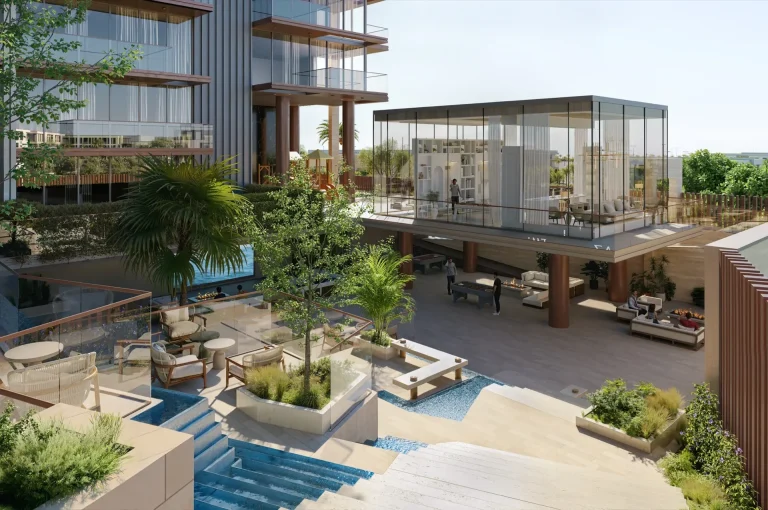
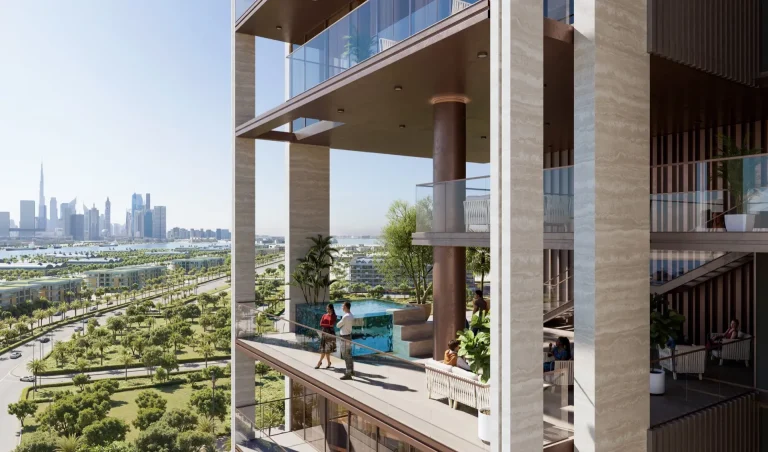
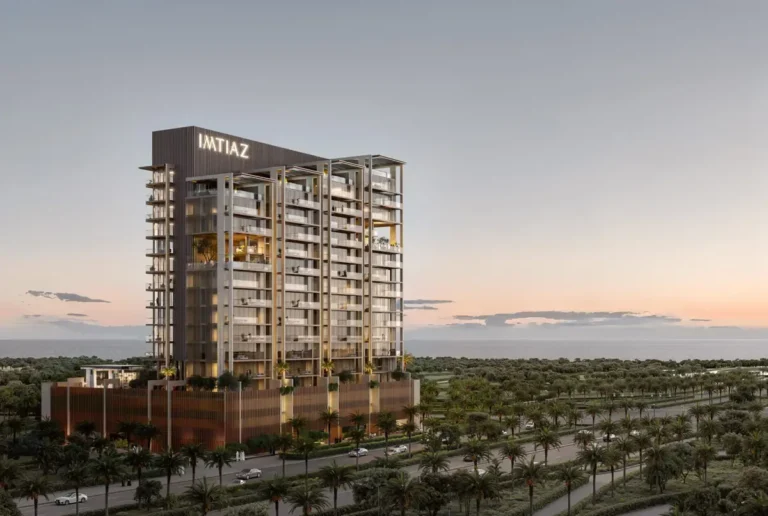
Dubai’s off-plan property market is experiencing an unprecedented construction boom heading into 2027, with over 157 projects flooding the market. However, beneath the glossy marketing campaigns and ambitious architectural renders lies a sobering truth: very few of these developments qualify as genuine investment-grade opportunities. For discerning investors navigating this landscape, understanding the critical distinction between a marketed listing and a wealth-building asset has never been more crucial.
The 2027 Supply Tsunami: Understanding the Numbers
The year 2027 represents a pivotal inflection point in Dubai’s real estate market. According to Morgan’s International Realty, the market expects approximately 70,537 residential units to be delivered in 2027—an extraordinary 98% above the five-year average of 35,531 units. This unprecedented volume positions 2027 as one of the highest single-year supply releases in Dubai’s modern history.
However, the real story lies in what’s happening before 2027. Industry data reveals that only 62% of forecasted units in 2025 will actually be delivered (22,896 out of 37,171 projected), and this completion rate plummets to just 48% in 2026 (34,740 out of 71,613 units). This massive gap between promises and deliveries should raise immediate red flags for investors evaluating off-plan projects in Dubai.
Supply Concentration: Where the Pipeline is Flooding
| Location | Units (2025-2027) | Market Type | Risk Level |
| Jumeirah Village Circle | 16,852 | Mid-Market Apartments | High |
| Business Bay | 10,127 | Mixed Luxury/Mid-Tier | Medium-High |
| Azizi Venice | 7,860 | Themed Community | Medium-High |
| Dubai South | 6,500+ | Infrastructure-Dependent | High |
| DAMAC Lagoons | 6,200+ | Family Townhouses | Medium |
| Dubai Hills Estate | 4,200+ | Premium Master-Plan | Medium-Low |
The data paints a clear picture: Dubai off-plan investment opportunities are not evenly distributed across quality tiers. While areas like JVC and Business Bay prepare to absorb thousands of units, premium enclaves maintain strategic scarcity—the foundation of true investment value.
What Separates Investment-Grade from Speculative Projects?
Not all pre-launch properties in Dubai are created equal. True investment-grade developments share specific characteristics that separate them from speculative listings marketed to uninformed buyers.
1. Developer Track Record and Financial Strength
The most critical factor determining investment-grade opportunities is developer credibility. Cavendish Maxwell’s Q3 2025 data shows that actual delivery materialisation rates have dropped to 41.3%—meaning less than half of promised units are completing on schedule.
Tier-1 Developers with Proven Delivery:
- Emaar Properties: Consistent on-time delivery across multiple market cycles
- Sobha Realty: Premium positioning with superior construction quality
- Nakheel: Government-backed strength and landmark project execution
- Aldar Properties: Abu Dhabi’s market leader with robust financial backing
When evaluating UAE off-plan property investments, prioritize developers with:
- RERA-registered projects with protected escrow accounts
- Transparent construction progress reporting
- Balance sheets capable of weathering market corrections
- Historical completion rates exceeding 80%
2. Location Scarcity vs. Volume Oversupply
Location scarcity remains the cornerstone of Dubai property investment. While mass-market zones prepare for supply floods, premium enclaves maintain controlled development—the essence of sustainable value appreciation.
Scarce, Investment-Grade Locations:
- Palm Jumeirah (limited beachfront inventory, established infrastructure)
- Downtown Dubai (mature ecosystem, restricted new supply)
- Dubai Hills Estate (master-plan complete, green-space preservation)
- Dubai Marina (waterfront saturation limits further development)
- Emirates Hills (ultra-luxury, development moratorium)
Over-Supplied, Higher-Risk Zones:
- Jumeirah Village Circle (16,852 units creating absorption pressure)
- Dubai South (infrastructure still developing, speculative demand)
- DAMAC Lagoons (high-volume themed communities)
- Motor City (mid-market saturation)
Investors focusing on Dubai Hills off-plan projects benefit from the area’s established infrastructure, quality community development, and controlled supply dynamics—factors critical for long-term value preservation.
3. Branded Residences: Quality Differentiation
According to Property Finder data, the Dubai branded residences pipeline will grow 80% by 2030, reaching nearly 250 projects. However, quality varies dramatically across this segment. Authentic branded residences from established hospitality brands command 20-30% premiums justified by:
- Guaranteed service standards and operational excellence
- Superior resale values (15-25% premium over non-branded)
- Higher rental yields (8-12% vs. 6-8% market average)
- International buyer appeal and brand recognition
Confirmed delivery timelines for investment-grade branded properties include:
- Address Residences The Bay (2026)
- St. Regis Residences Downtown (2026)
- Vida Residences Dubai Hills (2027)
- Palace Residences Dubai Hills (2028)
- Six Senses Dubai Marina (2028)
Investors interested in branded residences and waterfront properties should verify brand authenticity, operational agreements, and developer track records before committing capital.
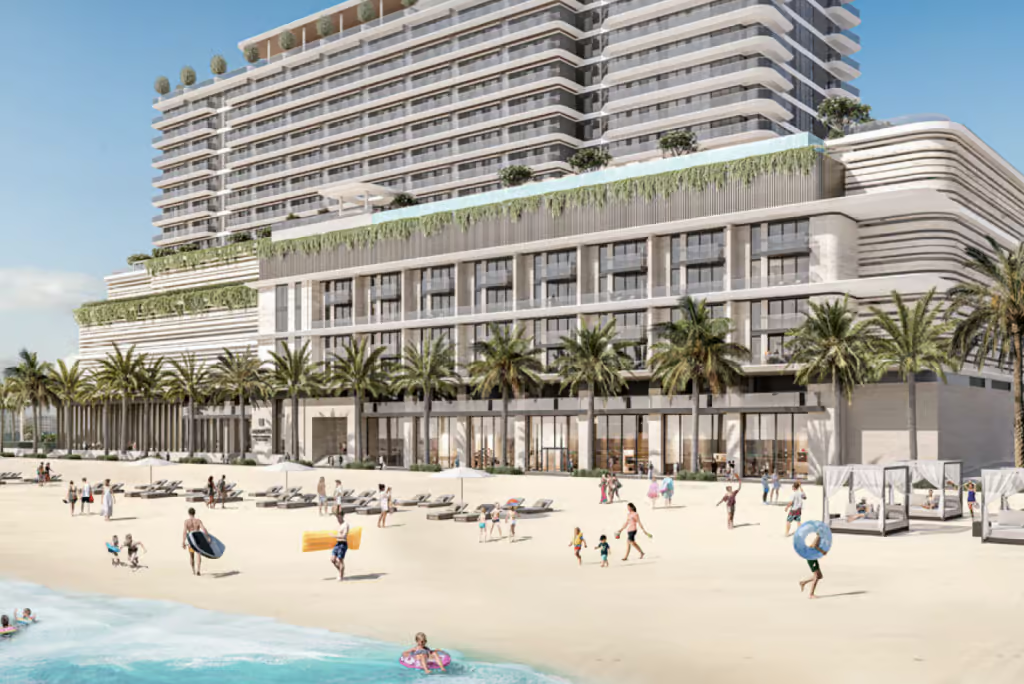
The Delivery Gap Crisis: 2025-2027 Reality Check
Understanding Completion Challenges
| Year | Forecasted Units | Expected Delivery | Completion Rate | Market Impact |
| 2025 | 37,171 | 22,896 | 62% | Temporary Supply Relief |
| 2026 | 71,613 | 34,740 | 48% | Growing Delivery Backlog |
| 2027 | 70,537 | TBD (High Risk) | Unknown | Critical Absorption Test |
This Dubai property supply pipeline data reveals systemic challenges that directly impact investor outcomes. Fitch Ratings projects potential 15% price corrections in late 2025-2026 as delayed projects eventually materialize, creating absorption pressure across over-supplied segments.
For investors, this presents dual scenarios:
Critical Risks:
- Projects from weak developers face a 50%+ delay probability
- Over-supplied zones may experience rental yield compression
- Capital locked in delayed projects generates zero returns
- Payment plan structures become financial burdens
Strategic Opportunities:
- Strong developers with proven delivery capture market share
- Early entry into quality projects before mass supply hits
- Counter-cyclical positioning in under-supplied premium segments
- Discounted acquisition opportunities during correction phases
Strategic Investment Framework for 2027
The Three-Tier Classification System
Tier 1: Investment-Grade (15-20% of Total Pipeline)
Characterized by established developers, scarce locations, proven delivery records, and transparent financial structures. Examples include select Emaar Beachfront properties, Sobha Hartland II phases, and premium Dubai Hills villas.
Key Identifiers:
- Developer completion rate >80%
- Location supply constraint (limited competing inventory)
- RERA escrow protection with milestone-linked payments
- Premium positioning with a differentiated product
Tier 2: Speculative-Growth (40-50% of Pipeline)
Mid-tier developers with partial track records operating in emerging locations. Higher execution risk balanced by growth potential if delivered successfully. Requires active monitoring and risk management.
Key Identifiers:
- Developer completion rate 60-80%
- Emerging location with infrastructure development timeline
- Competitive pricing but higher delivery uncertainty
- Payment plans requiring substantial construction-phase capital
Tier 3: High-Risk Speculative (30-40% of Pipeline)
New or untested developers, locations lacking mature infrastructure, marketing-heavy but fundamentals-light. Not recommended for risk-averse investors seeking investment-grade opportunities.
Warning Signs:
- Minimal developer track record
- Over-supplied location with absorption concerns
- Aggressive payment plans requiring minimal upfront capital
- Vague delivery timelines without construction milestones
Payment Plan Analysis: The Financial Structure Test
Investment-grade properties typically offer structured payment plans aligned with verified construction milestones:
- 10-20% down payment
- 60-70% during construction (milestone-verified)
- 10-20% on handover
- Post-handover extensions (up to 5-7 years for select premium projects)
Understanding Dubai off-plan payment plans is crucial for structuring investments that preserve capital liquidity while building equity.
Contrast this with aggressive plans requiring minimal upfront payment—often indicators of weaker developer financial positions or projects struggling to attract institutional capital.
Commercial Real Estate: An Alternative Opportunity Set
While residential dominates headlines, off-plan commercial properties in Dubai present alternative investment pathways. Key commercial metrics for 2027:
- Office vacancy rates: 0.2% (Prime), 3.4% (Grade A) in Dubai
- Commercial rental yields: 7-10% vs. 6-8% residential
- Limited new Grade A supply (only 3.5% growth through 2028)
- Abu Dhabi office supply increase: just 7.9% by 2028
Investors seeking Dubai commercial properties benefit from tighter supply dynamics and superior rental yields, though commercial assets require larger capital outlays and longer holding periods.
The 2026-2027 Market Transition: Strategic Positioning
Price Dynamics and Timing Considerations
Recent Dubai off-plan market data shows:
- Average prices: AED 1,850 per sq ft (up 8.1% YoY in 2025)
- Villa prices: 14-31% annual growth in select waterfront communities
- Rental yield compression: from 21% growth (2024) to 8.5% (mid-2025)
- Transaction volumes: Record AED 761 billion in 2024
The Dubai property forecast for 2026-2027 suggests moderate growth with possible localized corrections, particularly in over-supplied segments.
Strategic Investment Checklist:
- Front-load due diligence on developer financial health and completion history
- Prioritize locations with supply constraints and infrastructure maturity
- Target 18-24 month holding periods minimum for off-plan investments
- Monitor construction progress actively through independent verification
- Maintain liquidity reserves for opportunistic acquisitions during corrections
- Diversify across product types (residential, commercial, branded)
Abu Dhabi and Ras Al Khaimah: Portfolio Diversification
Diversification beyond Dubai offers compelling alternatives with different risk-return profiles:
Abu Dhabi Market Dynamics:
- Villa prices up 17.19% YoY (driven by severe supply constraints)
- Only 2,400 units delivered in H1 2025 (scarcity-driven appreciation)
- Premium waterfront communities (Saadiyat Island, Yas Island) are seeing 15%+ growth
- Market shift from off-plan to ready properties due to the limited pipeline
Ras Al Khaimah Emerging Opportunities:
- 15.7% annual price growth (outpacing Dubai)
- Properties 30-50% cheaper than Dubai equivalents
- 14,000+ units planned by 2029 (early-cycle positioning)
- Growing branded residences pipeline (JW Marriott, Waldorf Astoria, Wynn)
Investors exploring pre-launch opportunities across the UAE markets should consider portfolio diversification across emirates to balance growth potential and risk exposure.
Conclusion: Quality Over Quantity in 2027’s Pipeline
While Dubai’s 2027 property pipeline boasts 157+ projects representing 70,537+ units, discerning investors must recognize that true investment-grade opportunities represent perhaps only 15-20% of total supply. The path to successful off-plan property investment in this environment requires:
- Rigorous developer selection based on completion track records exceeding 80%
- Location analysis prioritizing scarcity over volume
- Premium positioning through authentic, brande,d or differentiated products
- Financial discipline in payment plan evaluation and capital allocation
- Active management of construction progress and market risk factors
The 2027 supply surge will test Dubai’s absorption capacity. Investors who apply stringent quality filters and maintain strategic patience will navigate this transition successfully, while those chasing every marketed opportunity risk capital erosion and extended illiquidity.
Take Action on Investment-Grade Opportunities
Ready to identify genuine investment-grade opportunities in Dubai’s crowded 2027 pipeline? The expert team at PreLaunch.ae specializes in filtering Dubai’s off-plan market to present only developer-verified, location-strategic, and financially sound opportunities.
We provide: ✓ Exclusive access to pre-launch projects before public marketing ✓ Developer financial health assessments and completion track record analysis ✓ Location-specific supply-demand dynamics and absorption projections ✓ Payment plan structuring to optimize capital efficiency ✓ Golden Visa eligibility verification and application support
Fill out the form on our website PreLaunch.ae to receive personalized investment guidance, comprehensive due diligence support, and access to genuinely scarce, investment-grade opportunities.
Contact us today:
📞 (+971) 52 341 7272
📧 [email protected]
Don’t let the 2027 supply surge overwhelm your investment strategy. Partner with experts who separate genuine opportunities from speculative listings.
Frequently Asked Questions (FAQs)
Q1: How many projects are expected to be completed in Dubai by 2027?
According to Morgan’s International Realty, approximately 70,537 residential units across 157+ projects are forecasted for 2027 completion—nearly double the five-year average. However, based on 2025-2026 completion rates (48-62%), actual delivery may be significantly lower, with many projects facing delays.
Q2: What percentage of the 2027 pipeline qualifies as investment-grade?
Approximately 15-20% of projects in the 2027 pipeline qualify as true investment-grade opportunities, characterized by established developers (Emaar, Sobha, Nakheel, Aldar), scarce locations, proven track records, and strong financial fundamentals. The remaining 80-85% carry higher execution and absorption risks.
Q3: Which developers have the best completion records for 2027 deliveries?
Emaar Properties, Sobha Realty, Nakheel, and Aldar Properties demonstrate the strongest track records with completion rates exceeding 80%. These developers maintain transparent construction reporting, RERA-protected escrow accounts, and robust balance sheets capable of weathering market corrections.
Q4: Are branded residences worth the 20-30% premium pricing?
For long-term investors, yes. Authentic branded residences from established luxury brands (Address, Bulgari, Four Seasons, Aman, St. Regis) deliver superior rental yields (8-12% vs. 6-8% market average), higher resale values (15-25% premium), and stronger tenant demand, justifying the premium over non-branded properties.
Q5: What are the biggest risks in Dubai’s 2027 pipeline?
Key risks include: (1) Developer completion delays (current materialisation rate just 41.3%), (2) Oversupply in mid-market segments like JVC (16,852 units) and Business Bay (10,127 units), (3) Potential 15% price corrections per Fitch projections, and (4) Rental yield compression as supply increases faster than demand absorption.
Q6: Should I invest in Dubai, Abu Dhabi, or Ras Al Khaimah for 2027?
Portfolio diversification is optimal. Dubai offers liquidity and international appeal but faces absorption challenges; Abu Dhabi provides scarcity-driven growth (17% villa price increases) with limited supply; Ras Al Khaimah delivers value entry points with 30-50% price discounts versus Dubai. Read our comprehensive comparison guide.
Q7: How do I verify a developer’s track record before investing?
Check: (1) Dubai Land Department registration and project status, (2) RERA escrow account verification, (3) Past project completion timelines vs. promises, (4) Financial statements and institutional backing, (5) Current construction progress on similar projects, (6) Independent reviews from completed project residents, and (7) Materialisation rates from industry reports (Cavendish Maxwell, Morgan’s International).
Q8: What payment plan structure indicates a strong developer?
Investment-grade developers offer: 10-20% down payment, 60-70% construction-linked payments tied to verified milestones (foundation, structure, MEP, finishing), and 10-20% on handover. Avoid developers requiring minimal upfront capital or lacking milestone-based structures—these signal financial weakness or project uncertainty.