The UAE’s real estate market continues to capture global attention, but for investors in 2026, a critical question arises: where does the smartest investment lie? Choosing between Dubai, Abu Dhabi, and the rising star of Ras Al Khaimah (RAK) is no longer about following the crowd. It’s a strategic decision that hinges on distinct market dynamics, growth drivers, and investment profiles. The era of uniform, market-wide surges is giving way to a more mature phase where performance is segmented, and opportunity is selective. This guide cuts through the noise, offering a data-driven comparison of these prime investment destinations to help you align your capital with the market outlook that best fits your goals for capital appreciation, rental yield, and long-term value.
Dubai 2026: A Mature Market in a Phase of Measured Growth
Dubai’s property market enters 2026 from a position of remarkable strength, having recorded a historic transaction value exceeding AED 680 billion in 2025. The narrative, however, is shifting from explosive growth to sustainable maturation. Analysts widely agree that the period of rapid, broad-based price acceleration has passed. The market is now characterized by steady demand, selective cooling in some segments, and growth driven by fundamentals rather than speculation.
Key Market Drivers and 2026 Outlook
- Moderating Price Growth: After years of significant gains, price growth is expected to moderate. Forecasts point to a year of greater stability, with appreciation becoming more uneven and dependent on location and property type.
- Supply and Demand in Balance: A major focus is the influx of new supply, with over 150,000 units launched in 2025 and around 83,000 completions forecast for 2026. Crucially, this supply is often phased, and demand remains robust due to record population growth — over 200,000 new residents in 2025 alone. This creates a broadly balanced environment, though oversupply risk exists in specific, delivery-heavy mid-market areas.
- The End-User Foundation: A defining shift is the increased dominance of end-user demand and long-term residents, supported by policies like the Golden Visa. This creates a more stable market floor compared to previous cycles driven by short-term speculation.
- Segment Performance: Villas and townhouses in established, low-density communities continue to outperform due to limited supply. Waterfront properties in areas like Palm Jumeirah, Dubai Marina, and Dubai Creek Harbour remain premium assets with finite supply, supporting strong rental yields and value retention. Meanwhile, high-growth areas are often linked to new infrastructure, such as the Metro Blue Line, benefiting locations like Dubai Creek Harbour and Al Furjan.
Investment Profile: Who is Dubai For in 2026?
Dubai suits investors seeking a mature market with high liquidity, world-class amenities, and transparent regulations. It’s ideal for those targeting high rental yields (averaging 5-9%), with an understanding that capital appreciation will be more selective and driven by prime location and asset quality. The off-plan segment offers opportunities, particularly in pre-launch phases of well-located projects, but requires careful selection to avoid areas of potential oversupply.
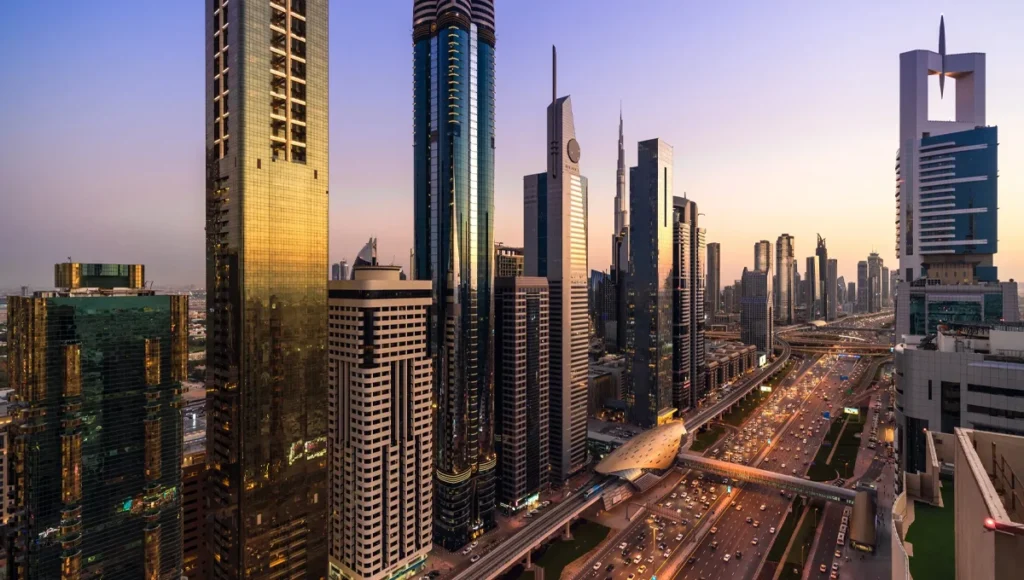
Abu Dhabi: The Steady Contender with Core Strength
While specific 2026 forecasts for Abu Dhabi are less pronounced in the provided search results, its market profile contrasts with Dubai’s. Abu Dhabi’s real estate market is traditionally seen as more stable and less volatile, driven by government-related employment, a high proportion of end-users, and a more measured release of new supply.
Key Market Drivers and Considerations
- Stability and Liveability: The market is underpinned by its role as the nation’s capital, with a focus on long-term living and high-quality infrastructure. Demand is closely tied to economic and population growth in key sectors.
- Supply Discipline: New project launches tend to be more disciplined compared to Dubai, which can help maintain price stability and prevent sharp corrections.
- Performance Indicators: In 2025, Abu Dhabi’s residential demand was reported to have risen around 5-6% annually, indicating steady, if less spectacular, growth compared to its neighbor.
Investment Profile: Who is Abu Dhabi For in 2026?
Abu Dhabi appeals to the conservative investor who prioritizes capital preservation, steady growth, and long-term stability over high-risk, high-reward plays. It is an excellent market for end-users buying a primary residence and for investors seeking reliable, if potentially lower, rental yields from a stable tenant base (often professionals and families). It may offer fewer opportunities for rapid off-plan flipping but presents a lower risk profile.
Ras Al Khaimah: The High-Growth Emerger
Ras Al Khaimah is the undeniable growth story of the UAE’s real estate market. It’s transitioning from a peripheral market to a global investment hotspot, with the ValuStrat Price Index showing a 13.8% year-on-year increase in H1 2025.
Key Market Drivers and 2026 Outlook
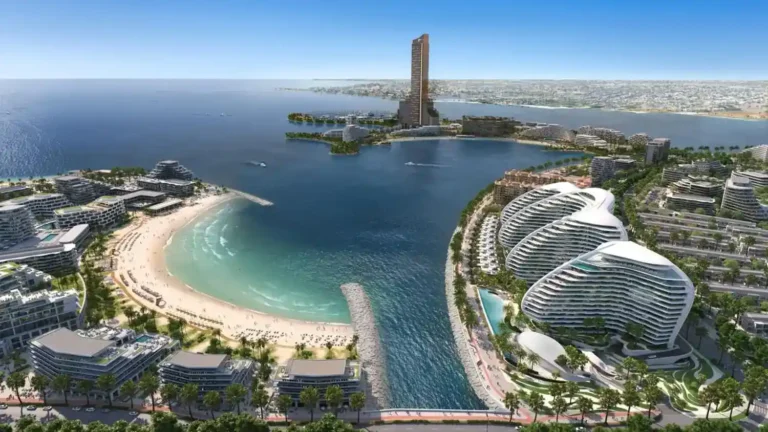
- Transformational Catalysts: The $4 billion Wynn Al Marjan Island resort (opening 2027) is a headline catalyst, but it amplifies a decade of planned diversification in tourism, manufacturing, and infrastructure. This has sparked a wave of launches from major developers and global luxury brands like The Ritz-Carlton and Four Seasons.
- Exceptional Value Proposition: RAK’s primary advantage is accessibility. Beachfront properties on Al Marjan Island launch at a fraction of Dubai’s coastal prices — often under AED 2,000 per sq. ft. versus AED 4,000-6,000+ in Dubai. This creates a rewarding high-growth potential entry point.
- Rapid Market Dynamics: The market is currently dominated by off-plan transactions (85% of freehold sales in H1 2025), with prices in key communities like Mina Al Arab rising 20% annually. Rental yields are highly attractive, averaging 6-8% in prime waterfront areas.
Investment Profile: Who is RAK For in 2026?
RAK is the market for the growth-oriented investor willing to embrace higher potential returns alongside emerging-market dynamics. It’s perfect for those seeking affordable beachfront entry, high rental yields, and significant capital appreciation ahead of major infrastructure completions. Investors must be comfortable with a market that is still maturing and have a medium to long-term horizon to ride the growth curve.
The Strategic Comparison: A Side-by-Side Analysis
The table below synthesizes the investment profile of each emirate to guide your decision.
| Investment Factor | Dubai | Abu Dhabi | Ras Al Khaimah |
|---|---|---|---|
| Market Phase | Mature, Stabilizing | Stable, Core | High-Growth, Emerging |
| Primary 2026 Driver | End-user demand, supply absorption | Economic & population stability | Catalytic projects (e.g., Wynn), affordability |
| Price Outlook | Moderate, selective appreciation | Steady, incremental growth | High appreciation potential |
| Key Risk | Oversupply in specific segments | Slower growth momentum | Execution speed, rapid supply absorption |
| Rental Yield | 5% – 9% (varies by segment) | Stable, moderate | 6% – 8%+ (prime waterfront) |
| Ideal Investor | Seeking liquidity & high yield in a mature market | Conservative, prioritizing long-term stability | Growth-focused, value-seeking, with a longer horizon |
Your 2026 Investment Strategy: Choosing Your Emirates Path
Your personal investment goals are the ultimate compass. Consider these strategic pathways —
- For High Yield & Liquidity: Focus on Dubai’s established rental hotspots like Dubai Marina, Jumeirah Village Circle (JVC), or Business Bay, where demand from professionals and expatriates ensures strong cash flow.
- For Capital Appreciation & Future-Proofing: Look to Dubai’s infrastructure-led growth areas (e.g., Dubai Creek Harbour, Dubai South) or seize the early-entry advantage in Ras Al Khaimah’s master-plans like Al Marjan Island.
- For Portfolio Stability & Preservation: Abu Dhabi’s prime residential communities or Dubai’s ultra-prime villa segments (e.g., Palm Jumeirah, Emirates Living) offer brand value and resilience during market cycles.
Data, Not Speculation, Drives 2026 Success
The UAE’s property investment landscape in 2026 is rich with opportunity, but it demands a discerning approach. Dubai offers a mature, yield-rich market where selection is key. Abu Dhabi provides a bedrock of stability. Ras Al Khaimah presents a dynamic, high-potential frontier.
Navigating these nuances — from analyzing developer track records and payment plans to forecasting infrastructure impact and rental demand — is where expert guidance becomes invaluable. A generalized strategy will fall short; success belongs to those who make informed, location-specific decisions.
Let Pre-Launch Properties, Dubai, Build Your 2026 Investment Strategy
Understanding the market forecast is the first step; executing a successful investment is the next. At Pre-Launch Properties, Dubai, we act as your strategic partner, translating complex market data into actionable opportunities. We don’t just list properties; we provide a data-driven investment roadmap tailored to your financial goals.
Our expertise lies in securing exclusive early access to the most promising off-plan and pre-launch projects across Dubai, Abu Dhabi, and Ras Al Khaimah. We analyze the fundamentals so you don’t have to — vetting developers, assessing supply-demand dynamics, and identifying units with the highest potential for rental yield and capital growth.
Your tailored portfolio strategy starts with a conversation. Let us help you pinpoint the right opportunity in the right emirate.
Secure your investment opportunity today — fill out the EOI form on our website, and our sales team will contact you with full details of projects that are in sync with your ambitions.
 Register Your Interest Now!
Prefer direct assistance?
 Call/WhatsApp: +971 52 341 7272
✉ Email: sales@mbrproperties.ae