The announcement of Nawayef West Heights on Hudayriyat Island by Modon Properties represents one of Abu Dhabi’s most compelling ultra-luxury villa opportunities for sophisticated investors seeking to capitalize on the emirate’s explosive waterfront property market, while the pre-construction window still offers favorable pricing relative to anticipated post-delivery valuations. With five, six, and seven-bedroom villas priced from six million dirhams and scheduled for Q4 2026 handover, this development requires rigorous underwriting frameworks that account for Hudayriyat’s unique positioning, capital appreciation trajectories, rental market dynamics, and risk factors specific to Abu Dhabi’s evolving regulatory and economic landscape.
Understanding how to properly underwrite ultra-luxury villas in Abu Dhabi within the context of a near-term delivery timeline involves examining comparable property performance data, analyzing infrastructure catalysts, projecting cash flow scenarios across multiple holding periods, and stress-testing assumptions against various market conditions that could materialize during the eighteen-month construction window. For investors exploring Abu Dhabi’s hottest off-plan developments, Nawayef West Heights offers a case study in methodical due diligence combining quantitative analysis with qualitative assessment of location-specific value drivers that differentiate this project from comparable luxury offerings across the capital’s competitive villa market.
Project Fundamentals: What Makes Nawayef West Heights Distinctive
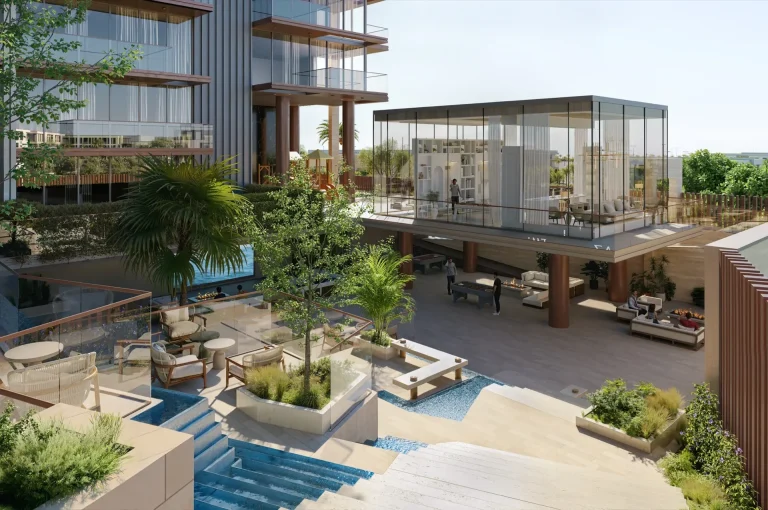
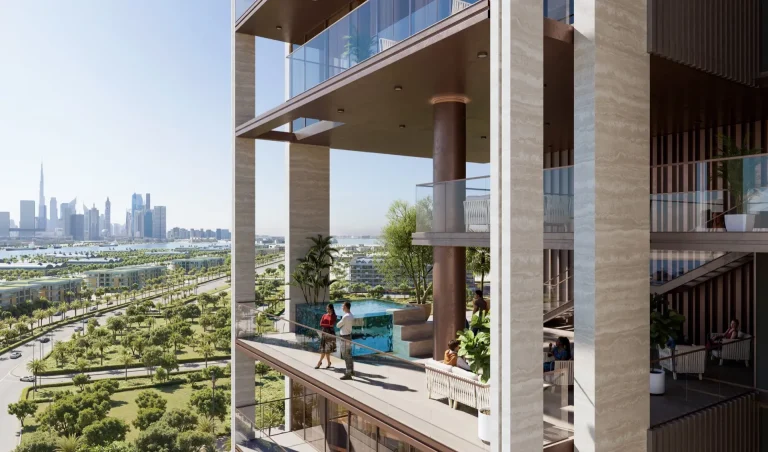
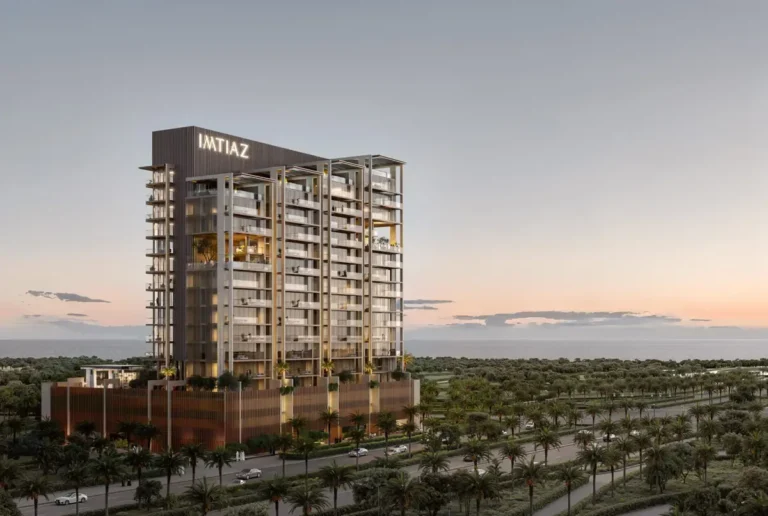
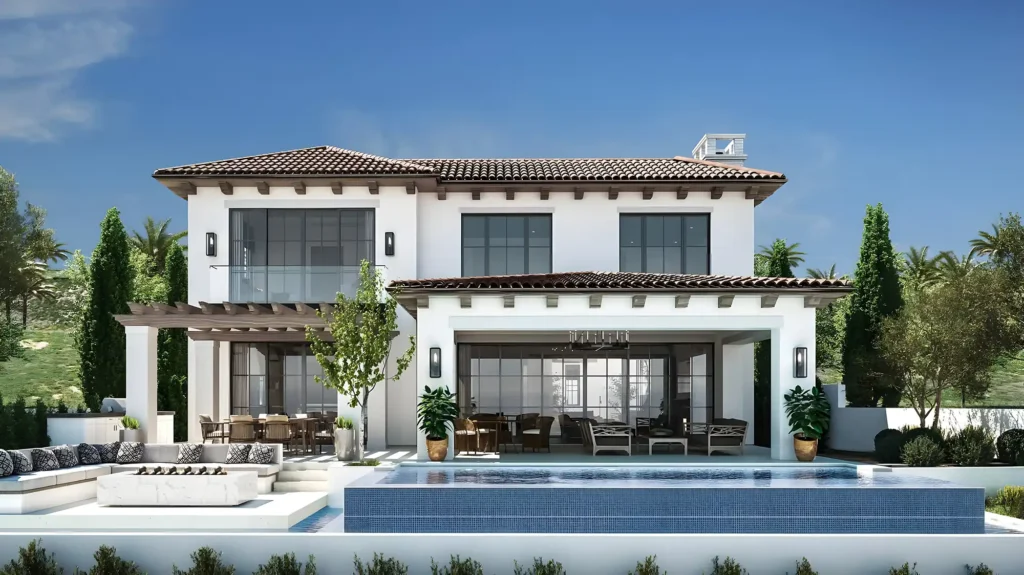
Nawayef West Heights occupies an elevated position on Hudayriyat Island, with rolling hills reaching forty-five meters above sea level, creating unobstructed panoramic views of the Abu Dhabi skyline and the turquoise waters of the Arabian Gulf. This topographical advantage represents a permanent differentiation factor that cannot be replicated by competing developments on flatter terrain, commanding pricing premiums that market data suggests range from fifteen to twenty-five percent relative to comparable villas lacking equivalent sight lines. The development features villa sizes spanning approximately eight thousand eight hundred to seventeen thousand square feet across three bedroom configurations, with architectural design emphasizing European coastal village aesthetics through pale stone facades, deep balconies providing solar shading, and expansive glass panels maximizing natural light while managing heat gain.
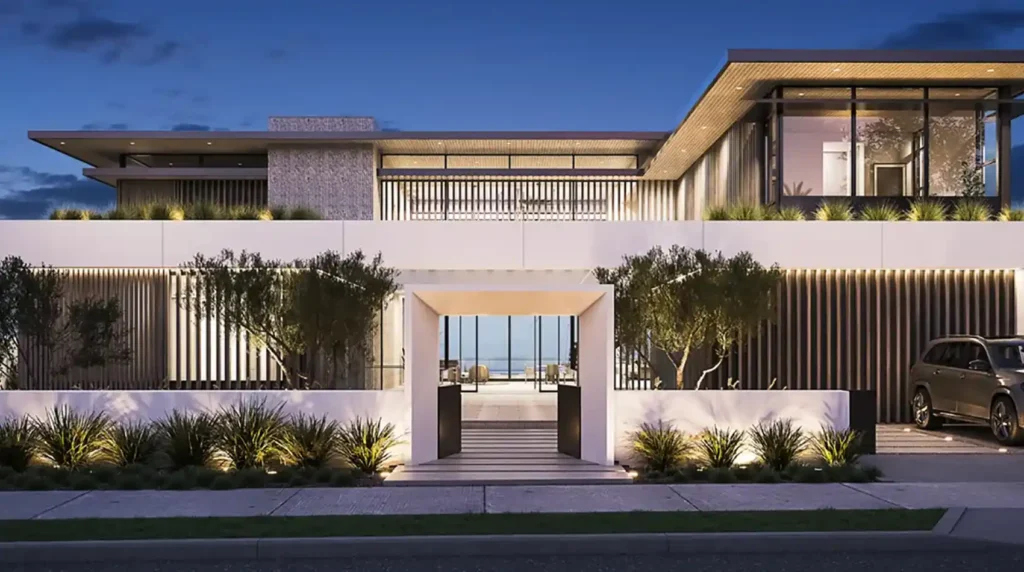
The project’s integration within the broader Nawayef master-planned community creates amenity density advantages that extend beyond individual property boundaries to encompass pedestrian and cycling infrastructure, proximity to Hudayriyat Beach Club, access to the island’s three point five kilometer waterfront promenade, and connections to world-class sports facilities including the Velodrome Abu Dhabi and extensive jogging circuits attracting active lifestyle buyers willing to pay premiums for recreational programming within walkable distance of residences. Each villa includes private swimming pools, landscaped gardens, recreation spaces on lower levels, and super-car garages with hobby areas, delivering specifications that position Nawayef firmly within Abu Dhabi’s ultra-luxury segment, competing directly with premium offerings on Saadiyat Island and select Yas Island locations.
The Q4 2026 delivery timeline creates a compressed eighteen-month window from current market conditions to handover, reducing construction risk while limiting the appreciation runway available during pre-completion periods compared to projects with thirty to forty-eight month delivery schedules. This shorter timeframe requires different underwriting assumptions around interim price movements, financing costs, and market condition changes that could materialize between purchase and possession, making careful scenario analysis essential for investors evaluating whether Nawayef’s risk-return profile aligns with portfolio objectives and capital deployment strategies.
Pricing Analysis: Establishing Baseline Acquisition Costs
Nawayef West Heights villas launch at entry prices of six million dirhams for five-bedroom configurations, with six and seven-bedroom options commanding premiums reflecting additional square footage and enhanced specifications. These headline prices require adjustment for various acquisition costs that increase total capital requirements beyond base purchase values, including four percent registration fees payable to the Real Estate Regulatory Authority, administration charges averaging ten thousand dirhams, and legal fees for contract review and due diligence typically ranging from fifteen to twenty-five thousand dirhams, depending on complexity and advisor selection.
When establishing true acquisition costs for underwriting purposes, investors must account for payment plan structures that influence capital deployment timing and opportunity costs. Modon Properties reportedly offers payment plans requiring a ten percent down payment at booking, followed by construction-linked installments totaling forty percent through the development period, with the remaining sixty percent due upon Q4 2026 handover. This structure means a six-million-dirham villa requires six hundred thousand dirhams initially, an additional 2.4 million during construction, and 3.6 million at completion, creating cash flow implications that vary substantially from traditional all-cash acquisitions or mortgage-financed purchases.
For investors planning to secure financing upon handover, the payment plan enables control of assets valued at six million dirhams while deploying just three million during the construction phase, with the remaining 3.6 million potentially funded through mortgages offering fifty percent loan-to-value ratios for completed properties. This leverage strategy amplifies returns when appreciation occurs but requires careful analysis of mortgage costs, interest rate trajectories, and refinancing risks that could materialize if lending conditions tighten between purchase and handover. Current mortgage rates for luxury properties in Abu Dhabi range from 3.75 to 5.25 percent, depending on borrower profiles and lender relationships, creating annual carrying costs of approximately one hundred forty thousand to one hundred ninety thousand dirhams on a 3.6 million dirham loan that must be factored into cash flow projections.
Comparable Analysis: Benchmarking Against Hudayriyat and Luxury Segment Performance
Establishing realistic appreciation and rental yield assumptions for Nawayef West Heights requires examining performance data from comparable luxury villa communities across Abu Dhabi, with particular focus on Hudayriyat Island projects sharing similar positioning, amenities, and target demographics. Recent market reports indicate that Nawayef West properties within the broader master plan have emerged as top investor choices in the luxury villa category during 2025, suggesting strong demand validation for Modon’s development approach and the island’s lifestyle proposition. Saadiyat Island luxury villas experienced a twenty-one percent annual appreciation during 2025, while Yas Island premium villas recorded seventeen to twenty-two percent gains driven by Disney announcement momentum and entertainment infrastructure expansion.
Hudayriyat Island itself has positioned itself as Abu Dhabi’s rising star in ultra-premium coastal living, with select off-plan apartment projects launching at starting prices from two million dirhams and villas typically priced from six to eight million dirhams. Market analysts project rental yields for Hudayriyat properties to align with other high-end coastal communities at five to seven percent, depending on unit type and specific location within the island’s master plan. The limited supply of master-planned waterfront land in Abu Dhabi strengthens price stability, with ongoing infrastructure delivery and the island’s rising profile as a lifestyle destination supporting sustained appreciation potential for early investors.
When comparing Nawayef West Heights pricing to established benchmarks, the six million dirham entry point for five-bedroom villas positions slightly below Saadiyat Island luxury villas, averaging eight to thirty million dirhams, while commanding premiums over mainland communities lacking waterfront access and integrated recreational infrastructure. This pricing suggests Nawayef occupies a strategic middle ground between ultra-luxury Saadiyat offerings targeting ultra-high-net-worth buyers and more accessible Yas Island family villas, creating broader buyer appeal while maintaining exclusivity through limited inventory and elevated positioning within Hudayriyat’s topography.
For investors examining waterfront wealth opportunities in Abu Dhabi, the comparable analysis reveals that Nawayef’s pricing reflects current market dynamics while offering upside potential as Hudayriyat’s infrastructure matures and the island’s brand recognition strengthens among international buyers seeking alternatives to more saturated luxury markets on Saadiyat and Yas.
Rental Yield Projections: Modeling Income Scenarios
Projecting rental income for ultra-luxury villas in Abu Dhabi requires analyzing tenant demographics, seasonal demand patterns, and comparable rental rates for properties sharing similar specifications and locations. Hudayriyat Island villas target affluent expatriate families employed in Abu Dhabi’s financial, energy, and professional services sectors who prioritize proximity to international schools, recreational amenities, and beach access while seeking villa-style accommodations offering space and privacy unavailable in apartment alternatives. Market data suggests luxury villas on Yas Island generate rental yields averaging 5.46 percent, while mid-tier villas in communities like Al Raha Gardens deliver 6.17 percent, reflecting their positioning between ultra-luxury and affordable segments.
For a six-million-dirham Nawayef West Heights five-bedroom villa, rental yields of five to six percent translate to annual rental income ranging from three hundred thousand to three hundred sixty thousand dirhams, or approximately twenty-five thousand to thirty thousand dirhams monthly. These projections assume full-year occupancy, which requires adjustment for vacancy periods, tenant turnover costs, and seasonal fluctuations affecting demand. Conservative underwriting typically applies ninety percent occupancy assumptions for luxury villas, reducing effective rental income by ten percent to account for transition periods between tenants and potential market softness during slower leasing seasons.
Operating expenses for luxury villa ownership include annual service charges ranging from ten to thirty dirhams per square foot depending on development amenities and management quality, property insurance averaging four to six thousand dirhams annually, maintenance reserves of approximately one percent of property value annually to fund major repairs and upgrades, and property management fees if owners elect to engage professional management rather than handling tenant relationships directly. For an eight thousand eight hundred square foot villa, annual operating expenses could total approximately one hundred forty thousand to one hundred eighty thousand dirhams, reducing net operating income to one hundred eighty thousand to two hundred twenty thousand dirhams after accounting for ninety percent occupancy and typical expense burdens.
These net income projections deliver cash-on-cash returns of six to seven percent when calculated against the 3.6 million dirham equity investment required if financing the sixty percent handover payment through mortgage debt, representing attractive yields relative to alternative fixed-income investments while preserving appreciation upside potential as property values grow. For investors exploring high-yield investment zones in Abu Dhabi, the combination of mid-single-digit cash yields with double-digit appreciation potential creates compelling total return profiles justifying premium luxury allocations within diversified portfolios.
Appreciation Forecasts: Projecting Capital Growth Trajectories
Modeling capital appreciation for Nawayef West Heights villas through the Q4 2026 handover and beyond requires examining both near-term pre-completion price movements and longer-term value creation driven by infrastructure catalysts, demographic trends, and supply-demand dynamics. Historical precedents from comparable Abu Dhabi luxury developments suggest properties typically appreciate ten to twenty percent during construction periods as physical progress reduces uncertainty and buyer competition intensifies for the limited remaining inventory. If Nawayef villas follow similar patterns, a six-million-dirham purchase could reach 6.6 to 7.2 million dirhams by Q4 2026 handover, generating six hundred thousand to 1.2 million dirhams in unrealized gains before rental operations commence.
Post-handover appreciation trajectories depend heavily on broader market conditions and location-specific catalysts influencing Hudayriyat Island’s competitive positioning. The island benefits from several medium-term value drivers, including completion of additional master plan phases expanding retail, dining, and entertainment options, progressive delivery of the Etihad Rail passenger network launching in 2026 with potential station connectivity, and continued tourism infrastructure investment supporting hospitality and leisure sectors, generating employment and visitor flows. Market analysts project luxury villa appreciation ranging from eight to fifteen percent annually in prime Abu Dhabi locations, with waterfront communities consistently outperforming inland alternatives by five to eight percentage points, reflecting permanent scarcity premiums.
Under conservative appreciation assumptions of ten percent annually, a six-million-dirham Nawayef villa could reach approximately 7.26 million dirhams by late 2028, two years after handover, delivering a total appreciation of 1.26 million dirhams or twenty-one percent cumulative gains over the three-year holding period from purchase to exit. When combined with rental income averaging three hundred thousand dirhams annually over the two post-handover years, total returns reach 1.86 million dirhams on the three million dirham equity deployed during construction, generating sixty-two percent returns or approximately eighteen percent annualized internal rates of return before accounting for financing costs and transaction fees associated with eventual disposition.
More optimistic scenarios assuming fifteen percent annual appreciation aligned with recent Saadiyat Island and Yas Island performance could push valuations to 8.05 million dirhams by late 2028, creating two million dirhams in appreciation alone and total returns exceeding seventy-five percent over the holding period. These bullish projections require continued strength in Abu Dhabi’s luxury market driven by international wealth migration, Golden Visa program demand, and infrastructure catalysts, including the Disneyland Abu Dhabi development, supporting broader tourism and entertainment sector growth.
Risk Factors: Stress-Testing Assumptions and Downside Scenarios
Rigorous underwriting requires explicit identification of risk factors that could impair projected returns, with sensitivity analysis demonstrating how changes in key assumptions impact investment outcomes. The primary risks facing Nawayef West Heights investors include construction delays extending the Q4 2026 timeline, market corrections reducing appreciation trajectories, rental demand weakness affecting occupancy and rate assumptions, regulatory changes impacting foreign ownership or taxation structures, and financing availability constraints limiting buyer access to mortgage leverage supporting valuations.
Construction delays represent manageable risks given Modon Properties’ track record and the relatively short eighteen-month delivery window, but any extension beyond Q4 2026 creates opportunity costs for investors as capital remains deployed in non-income-producing assets while markets potentially offer superior alternatives. Delays also affect financing arrangements if mortgage pre-approvals expire or lending conditions change between original underwriting and actual handover, potentially forcing all-cash completions or renegotiated terms, reducing anticipated leverage benefits.
Market correction scenarios deserve particular attention given Abu Dhabi’s rapid luxury appreciation during 2024 and 2025, with double-digit annual gains potentially unsustainable if economic conditions deteriorate or supply additions outpace demand growth. If luxury villa appreciation moderates to five percent annually rather than ten to fifteen percent base case assumptions, a six-million-dirham Nawayef property might reach only 6.93 million by late 2028, reducing appreciation gains by approximately three hundred thirty thousand dirhams and total returns by eleven percentage points. Combined with potential rental weakness reducing occupancy to eighty percent and monthly rates to twenty-three thousand dirhams, total returns could compress to approximately thirty-five to forty percent over the three-year holding period, still positive but materially below base case projections.
For investors evaluating Abu Dhabi versus Dubai luxury villa investments, these risk scenarios highlight the importance of diversification across geographies, property types, and delivery timelines to avoid concentrated exposure to single projects or markets subject to idiosyncratic shocks. The shorter Q4 2026 delivery actually reduces certain risks by limiting exposure to extended construction periods while accelerating the transition to income-producing status, though it simultaneously compresses the pre-completion appreciation window available for value capture before handover obligations materialize.
Investment Strategy Framework: Optimizing Returns Through Strategic Execution
Successful Nawayef West Heights underwriting extends beyond quantitative modeling to encompass strategic decisions around financing structures, exit planning, property management approaches, and portfolio positioning that collectively influence realized returns relative to pro forma projections. Investors should evaluate whether to pursue all-cash acquisitions, maximizing ownership simplicity and eliminating financing costs versus leveraged purchases, amplifying returns through mortgage debt while introducing interest obligations and refinancing risks.
The payment plan structure, offering ten percent down and forty percent during construction before sixty percent at handover, creates natural leverage during the development phase, with investors controlling six million dirham assets while deploying just three million in equity. At handover, buyers face choices between completing purchases in cash using accumulated liquidity or securing mortgage financing for the sixty percent balance. Cash completion eliminates ongoing interest costs but requires substantial capital deployment, reducing flexibility for alternative investments, while mortgage completion at fifty percent loan-to-value preserves three million in liquidity while introducing annual debt service of approximately one hundred forty thousand to one hundred ninety thousand dirhams, reducing net cash flow from rental operations.
Exit strategy planning should commence at acquisition, with investors determining whether Nawayef purchases target short-term flips upon handover, capitalizing on pre-completion appreciation, medium-term holds of three to five years, capturing both rental income and market appreciation, or long-term positions of seven-plus years, prioritizing wealth preservation and estate planning objectives. Each strategy implies different optimal financing structures and risk tolerances, with flippers preferring all-cash or minimal leverage to avoid refinancing complications, medium-term holders potentially maximizing leverage to amplify total returns, and long-term positions prioritizing stability and sustainable cash flow over return optimization.
Property management decisions also materially impact net returns, with self-management potentially saving five to eight percent of rental income but requiring time commitments for tenant screening, maintenance coordination, and dispute resolution that may not align with investor capabilities or preferences. Professional management through reputable firms charging six to ten percent of collected rent provides a turnkey operation while reducing net yields, creating trade-offs between convenience and income optimization requiring case-by-case evaluation based on investor circumstances and expertise.
| Underwriting Component | Conservative Assumption | Base Case Assumption | Optimistic Assumption |
| Purchase Price | AED 6.0M (5BR villa) | AED 6.0M (5BR villa) | AED 6.0M (5BR villa) |
| Pre-Completion Appreciation | 5% (AED 300K) | 10% (AED 600K) | 15% (AED 900K) |
| Post-Handover Annual Appreciation | 5% annually | 10% annually | 15% annually |
| Rental Yield (Gross) | 5.0% (AED 300K) | 5.5% (AED 330K) | 6.0% (AED 360K) |
| Occupancy Rate | 80% | 90% | 95% |
| Operating Expenses | AED 180K annually | AED 160K annually | AED 140K annually |
| Value at 2028 | AED 6.93M | AED 7.26M | AED 8.05M |
| Total Return (3 Years) | ~35-40% | ~55-65% | ~75-85% |
For investors seeking personalized underwriting support and access to Abu Dhabi’s best investment areas, working with experienced advisors familiar with Hudayriyat Island dynamics and Modon Properties’ development approach provides valuable guidance in navigating complex acquisition processes, optimizing financing structures, and establishing realistic return expectations aligned with market realities rather than developer marketing projections.
Conclusion: Executing Disciplined Underwriting for Luxury Villa Investments
The opportunity represented by Nawayef West Heights on Hudayriyat Island exemplifies the importance of rigorous underwriting frameworks when evaluating ultra-luxury villa investments in Abu Dhabi scheduled for near-term delivery. The project’s combination of distinctive positioning, integrated lifestyle amenities, competitive pricing relative to established luxury enclaves, and Q4 2026 handover timeline creates compelling risk-return profiles for investors capable of deploying substantial capital while managing execution complexities inherent in pre-construction acquisitions. Success requires methodical analysis examining comparable performance data, realistic projection of rental yields and appreciation trajectories, explicit identification of risk factors affecting return assumptions, and strategic decisions around financing structures and exit planning, optimizing realized gains relative to pro forma projections.
The compressed eighteen-month delivery window distinguishes Nawayef from longer-dated developments by reducing construction risk and accelerating the transition to income production, though it simultaneously limits pre-completion appreciation runways compared to projects with extended timelines. This dynamic favors investors prioritizing capital preservation and steady cash flow generation over speculative gains, while still offering participation in Abu Dhabi’s exceptional luxury market appreciation driven by international wealth migration, Golden Visa demand, and infrastructure catalysts transforming the emirate’s residential landscape. The waterfront scarcity premium supporting Hudayriyat valuations, combined with Modon Properties’ proven execution capability and the island’s sports-oriented lifestyle differentiation, creates permanent competitive advantages justifying premium pricing relative to mainland alternatives lacking equivalent amenity integration and coastal positioning.
For sophisticated investors seeking to capitalize on Abu Dhabi’s ultra-premium waterfront evolution while maintaining disciplined underwriting standards, Nawayef West Heights offers a blueprint for methodical due diligence combining quantitative rigor with qualitative assessment of location-specific value drivers. The project’s success ultimately depends on careful scenario analysis, realistic assumption-setting, and strategic execution aligned with individual investment objectives rather than reliance on developer marketing narratives or extrapolation of recent extraordinary appreciation rates into indefinite futures.
For personalized guidance on underwriting Nawayef West Heights villas and identifying comparable opportunities across Abu Dhabi’s luxury waterfront market, we invite you to fill up the form on our website prelaunch.ae to receive expert analysis, exclusive pre-launch access, and comprehensive market insights tailored to your investment criteria and risk parameters.
Contact us directly at (+971) 52 341 7272 or sales@mbrproperties.ae to discuss how disciplined underwriting and strategic positioning within Abu Dhabi’s ultra-luxury segment can optimize your real estate investment returns while managing downside risks through careful project selection and execution excellence.
Frequently Asked Questions
What makes Nawayef West Heights a strong investment compared to other Abu Dhabi luxury villa projects?
Nawayef West Heights combines several distinctive advantages, including elevated positioning up to forty-five meters above sea leve,l creating permanent view premiums, integration within Hudayriyat Island’s sports and lifestyle infrastructure offering unique recreational amenities, pricing starting from six million dirhams, positioning below Saadiyat Island ultra-luxury while maintaining premium specifications, anda Q4 2026 delivery timeline, reducing construction risk while accelerating transition to income-producing status. The project benefits from Modon Properties’ proven track record and Hudayriyat’s emerging reputation as Abu Dhabi’s active lifestyle destination, creating differentiation versus generic luxury villas lacking integrated master planning and amenity density.
How should investors project rental yields for Nawayef West Heights villas?
Conservative rental yield projections should reference comparable luxury villa performance on Yas Island, delivering 5.46 percent and premium waterfront communities averaging five to seven percent, depending on location and specifications. For the six million dirham Nawayef villas, this translates to annual gross rental income of three hundred thousand to four hundred twenty thousand dirhams before operating expenses. Investors should apply ninety percent occupancy assumptions accounting for vacancy periods and tenant turnover, deduct operating expenses averaging one hundred forty thousand to one hundred eighty thousand dirhams annually including service charges, insurance, maintenance reserves, and management fees, resulting in net yields of approximately three to four percent on total acquisition cost or six to seven percent on equity deployed if utilizing mortgage financing.
What appreciation rates are realistic for Hudayriyat Island villas through 2028?
Baseline appreciation assumptions should consider recent luxury villa performance showing Saadiyat Island gaining twenty-one percent annually and Yas Island achieving seventeen to twenty-two percent during 2025, while recognizing that extraordinary growth rates may moderate as markets mature. Conservative underwriting applies five to eight percent annual appreciation post-handover, base case scenarios assume eight to twelve percent aligned with established waterfront community performance, and optimistic projections contemplate twelve to fifteen percent sustained through infrastructure catalyst completion, including Etihad Rail connectivity and continued master plan development. The eighteen-month pre-completion period from the current market through Q4 2026 handover could deliver an additional five to fifteen percent appreciation as construction progress reduces uncertainty and buyer competition intensifies for limited inventory.
What are the primary risks investors should consider before purchasing Nawayef West Heights villas?
Key risk factors include potential construction delays extending the Q4 2026 timeline creating opportunity costs and financing complications, market corrections reducing appreciation trajectories if economic conditions deteriorate or supply exceeds demand, rental market weakness affecting occupancy rates and achievable monthly rents if expatriate population growth slows, regulatory changes impacting foreign ownership structures or introducing taxation on rental income or capital gains, and financing availability constraints limiting buyer access to mortgage leverage supporting premium valuations. Additionally, Hudayriyat Island’s relatively early stage of development compared to established communities like Saadiyat creates execution risk around promised amenity delivery and master plan completion, affecting lifestyle value propositions supporting pricing premiums.
Should investors pursue all-cash purchases or utilize mortgage financing for Nawayef villas?
The optimal financing strategy depends on investor objectives, risk tolerance, and alternative capital deployment opportunities. All-cash purchases eliminate interest costs averaging one hundred forty thousand to one hundred ninety thousand dirhams annually on 3.6 million dirham mortgages while simplifying ownership structures, but require deploying full six million dirhams plus acquisition costs, reducing portfolio diversification and liquidity for alternative investments. Mortgage financing at fifty percent loan-to-value amplifies equity returns by preserving three million in deployable capital while introducing debt service obligations that reduce net rental cash flow. Investors targeting short-term exits upon handover may prefer all-cash, avoiding refinancing complexities, while long-term holders can benefit from leverage amplifying total return,s combining rental income and appreciation over extended holding periods.