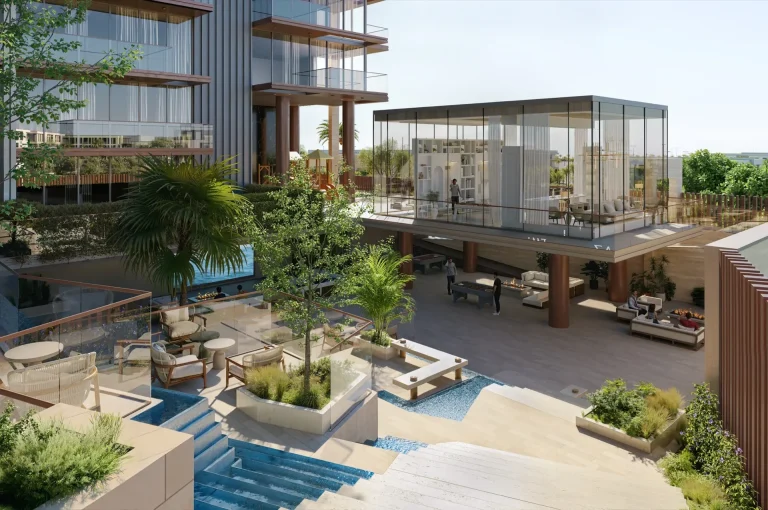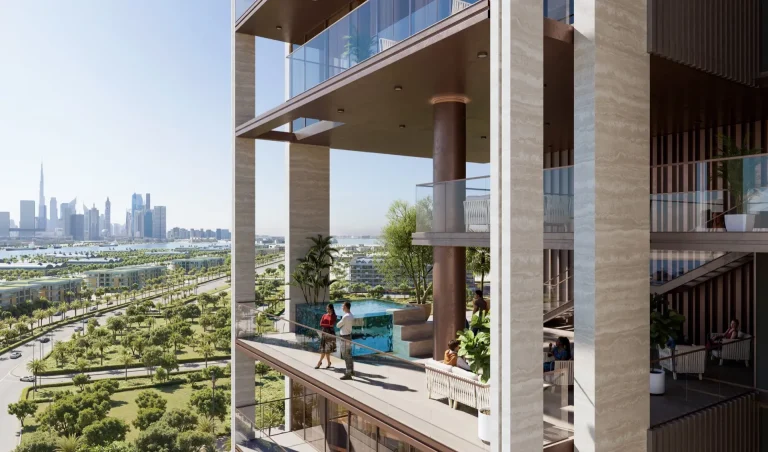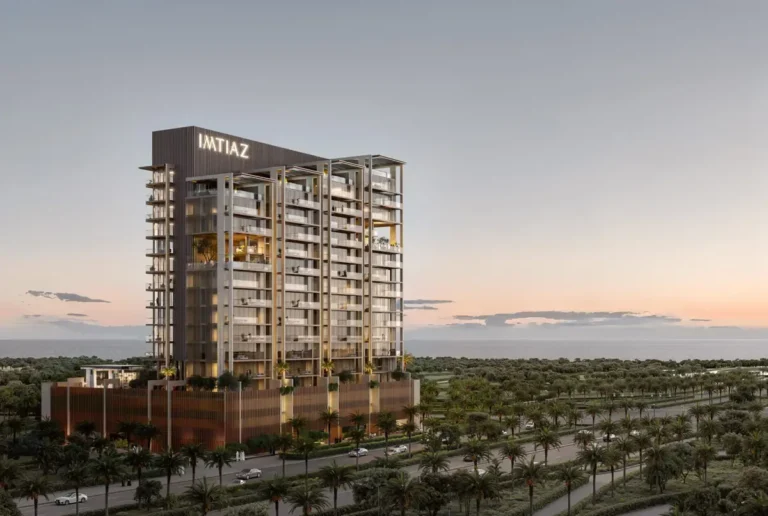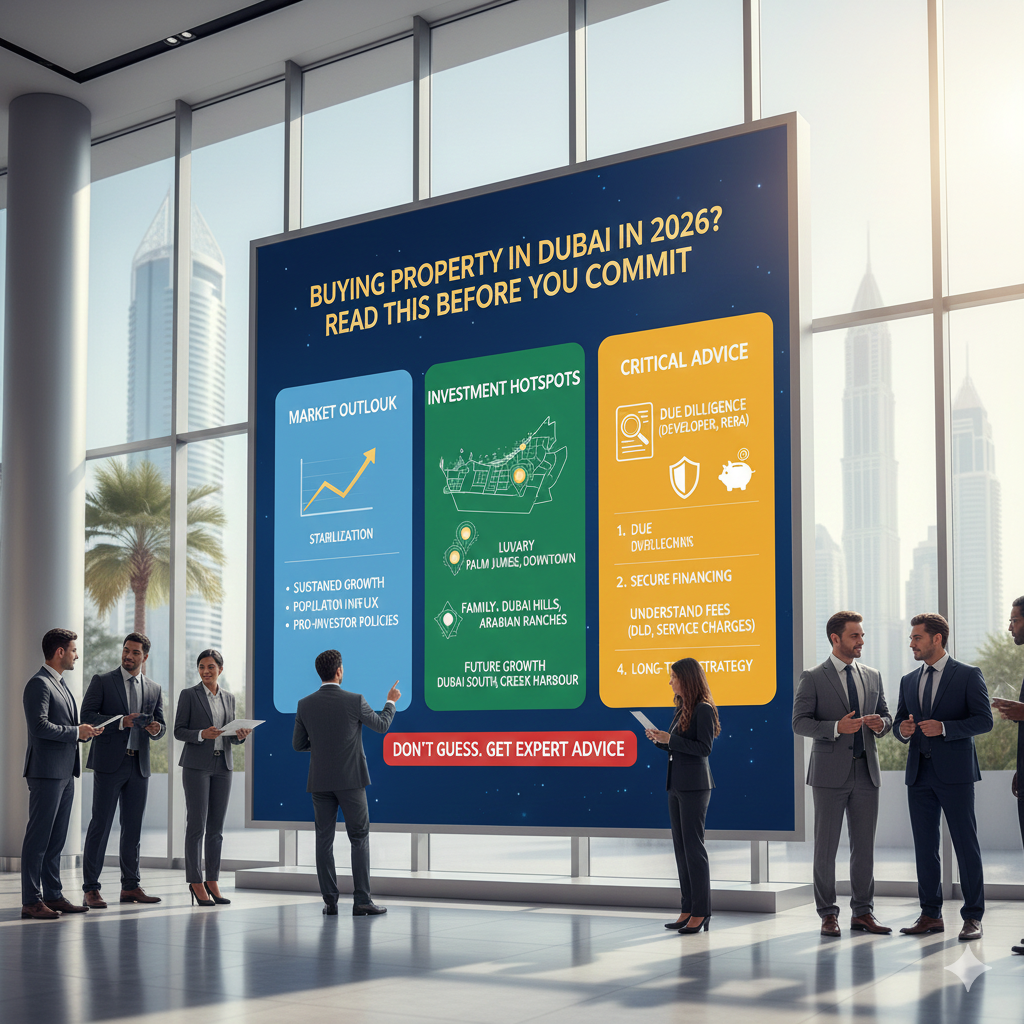
Dubai is moving into 2026 with a market that feels noticeably more “real.” The biggest change is not just price movement—it’s who is buying and why. The 2025–2026 cycle is increasingly defined by end-user demand, community-driven planning, and a more mature approach to value. That’s why Dubai real estate trends 2026 are less about hype and more about fundamentals: livability, infrastructure, and unit-level liquidity.
If your goal is Dubai property investment performance in 2026, the playbook needs an upgrade—because the market is rewarding buyers who choose the right micro-location and product type, not just “Dubai exposure.”
1) End-users are driving the floor (and changing what sells)
In 2025, Dubai accelerated a shift from short-term flipping behavior to long-term residency-driven buying. The result is a stronger “demand floor” that can reduce volatility, especially in communities where schools, parks, healthcare access, and commuting convenience are built into the lifestyle. One widely cited indicator is the scale of transaction activity in H1 2025 (reported at AED 431B across 125,538 deals), which is used to support the narrative of depth and resilience heading into 2026.
What this means in practice: buying property in Dubai in 2026 is increasingly about usability and tenantability, not just brochure promises.
For a 2026 investor framework, start with: Dubai Real Estate Predictions 2026: 5 Game-Changing Shifts.
2) “Community ecosystems” are now the new definition of premium
Luxury is being redefined. Instead of “gold-plated finishes,” premium demand is increasingly tied to community features: walkability, green space, retail access, and family infrastructure. This trend aligns with the Dubai 2040 Urban Master Plan narrative of sustainable, connected districts and quality-of-life upgrades.
To understand how this affects off-plan selection, read: The Impact of Dubai’s 2040 Urban Master Plan on Off-Plan Opportunities.
3) The 15-minute city is becoming an investable theme
As Dubai’s planning priorities tilt toward self-sustaining districts, the “15-minute city” concept becomes more than urban theory—it becomes an asset-selection filter. Communities that reduce car dependency and place daily needs within easy reach tend to attract stable end-user demand and consistent leasing interest.
If you want a practical lens on this trend, use: 15-Minute City Dubai: Walkable Off-Plan Projects.
4) 2026 is likely a “recalibration” year in select mid-market pockets
A key 2026 theme is delivery volume: more handovers can flatten extreme rental spikes and create price sensitivity in apartment-heavy corridors. That does not automatically mean “bad market”—it means opportunity is more segmented. Some areas may see higher competition, while others hold value through scarcity and superior community fundamentals.
A useful approach is to pick the segment first, then pick the community.
| 2026 trend | What it does to prices/rents | Best investor move |
| Dubai real estate forecast 2026 = more handovers | Rents may stabilize; pricing diverges by micro-market | Underwrite conservatively; prioritize liquidity |
| Off-plan property in Dubai 2026 stays dominant | More launches = wider quality spread | Buy developer + location, not marketing |
| Dubai 2040 Urban Master Plan alignment | Lifestyle districts gain pricing power | Track connectivity + green space + mixed-use |
| Villas vs apartments cycle | Villas can outperform if supply stays tight | Match product to demand drivers |
5) Villas vs apartments: choose based on demand, not opinion
In 2026, many investors will ask: villas or apartments in Dubai 2026? The answer is strategy-based:
- If your priority is stable family demand and lifestyle scarcity, villas/townhouses can be compelling—especially where supply remains structurally tight.
- If your priority is entry price and broad tenant pools, well-located apartments can still work—but you must account for delivery competition.
Deep dive here: Prelaunch Villas vs High-Rise Apartments in 2026.
And for villa-specific momentum: Why Dubai Villa Owners Are Winning Big in 2026.
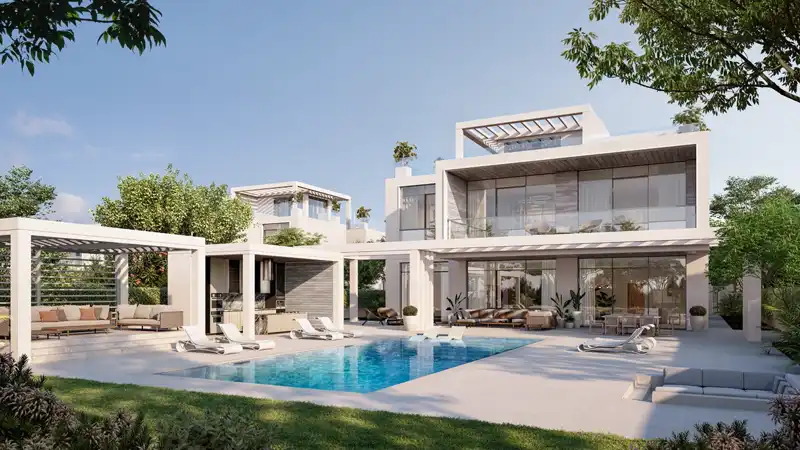
6) The “sweet spot” many 2026 buyers overlook: mid-ticket liquidity
For many portfolios, the most resilient category is not ultra-luxury or ultra-cheap—it’s the liquid mid-ticket range, where resale demand and tenant demand overlap. If you’re optimizing the Dubai property market 2026 risk-adjusted returns, evaluate the mid-ticket segment and prioritize projects with realistic handover timelines and strong end-user appeal.
Start here: Top Mid-Ticket Prelaunch Projects Under AED 2M for 2026 Handover.
The 2026 investor checklist (simple, but decisive)
Before you reserve a unit, validate:
- Unit liquidity: Does this layout resell easily in that community?
- Community demand: Does the area attract end-users (schools, parks, commute)?
- Supply pressure: What else is handing over nearby in 2026?
- Payment plan fit: Installments should match your cash flow, not marketing.
If you align these four, you’re positioned to benefit from Dubai property investment opportunities while minimizing “delivery-cycle surprises.”
Next step
For curated, high-potential opportunities matched to your budget and strategy, fill up the form on our website prelaunch.ae.
Contact us: (+971) 52 341 7272 | sales@mbrproperties.ae
FAQs (2026-focused)
1) Is Dubai still a good market in 2026?
Yes, but it is more segmented. End-user demand supports fundamentals, while supply increases make community and unit selection more important.
2) What are the biggest Dubai real estate trends in 2026?
Dubai real estate trends 2026 center on end-user buying, community ecosystems, 2040-plan alignment, and selective performance differences between villas and apartments.
3) Is off-plan still worth it in 2026?
Off-plan property Dubai 2026 can be attractive if the developer’s track record, micro-location, and payment plan structure are sound—especially in communities aligned with infrastructure growth.
4) Will rents drop in 2026?
Some areas may see rent growth slow or flatten as handovers rise, while high-demand communities can stay resilient. Underwrite using conservative rent assumptions.
5) What’s the safest way to invest in Dubai property in 2026?
Focus on liquidity (resale + leasing), avoid oversupplied micro-pockets, and prioritize community fundamentals tied to long-term planning and connectivity.